






![[G스쿨] 전공 사서 안승민 사서교사대비 학교도서관운영론(5월-6월)](https://i.ytimg.com/vi/8g5qU3DpamY/maxresdefault.jpg)


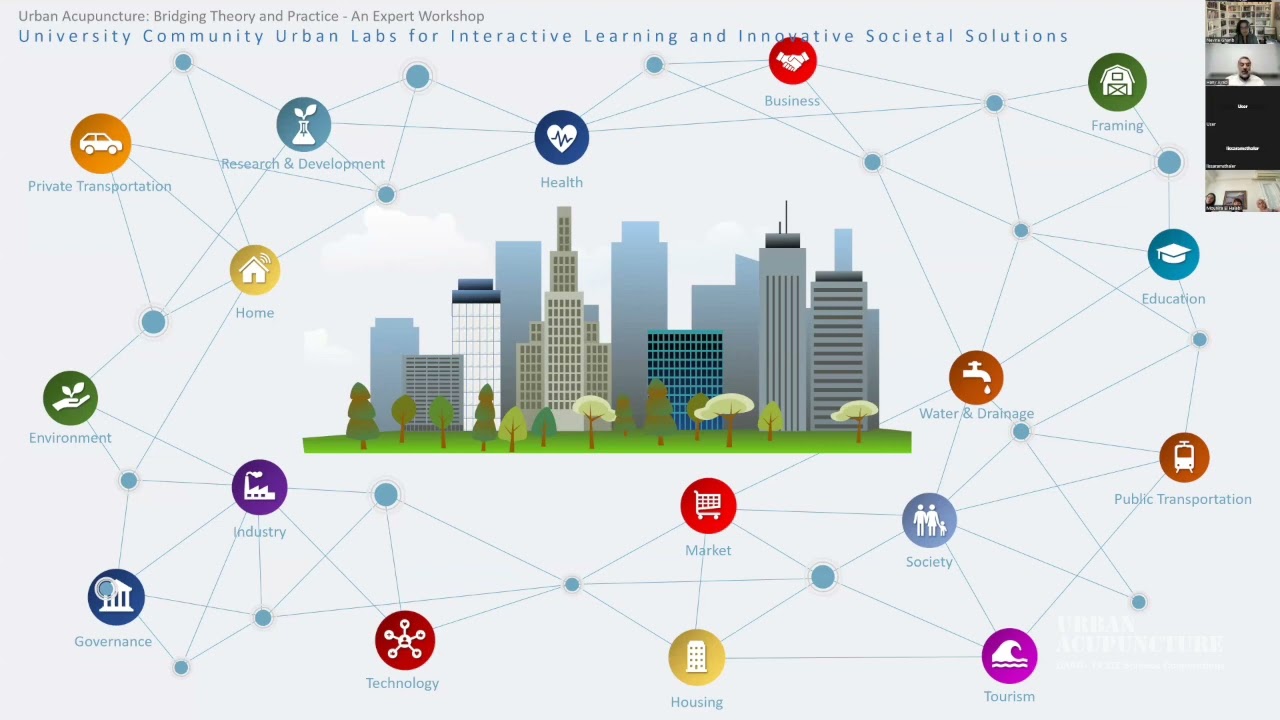















Spatial justice in urban planning requires balancing three dimensions of sustainability—environmental, economic, and social—through democratic participation and public justification, as demonstrated by Elinor Ostrom's principles of commons governance and Patsy Healey's communicative turn in planning, which address the challenges of distributive and procedural justice in managing shared urban resources.
Spatial Justice & the Commons: Urban Sustainability Explained
Added:Elinor Ostrom's Governing the Commons: Basic understanding of common-pool resources (CPRs) and collective action theory.
Susan Fainstein's 'Just City' Framework: Familiarity with the core concepts of equity, democracy, and diversity in urban planning.
Patsy Healey's Collaborative Planning Theory: An introduction to communicative planning and how participatory governance structures function.
Introduction to Spatial Inequality: Understanding how social, economic, and political disparities manifest physically within urban geography.
The 'Right to the City' (Lefebvre & Harvey): Exploring radical geography and how citizens can actively reshape and reclaim urban environments.
Urban Commoning in Practice: Analyzing case studies of community land trusts (CLTs), cooperative housing, and community-managed public spaces.
GIS and Spatial Justice Mapping: Learning how to use geographic information systems to visualize and analyze urban disparities and resource distribution.
Institutionalizing Participatory Budgeting: Examining policy mechanisms that allow citizens to directly decide on the allocation of public municipal funds.
5.6K views0likes16:02Original Release: 2020-08-11
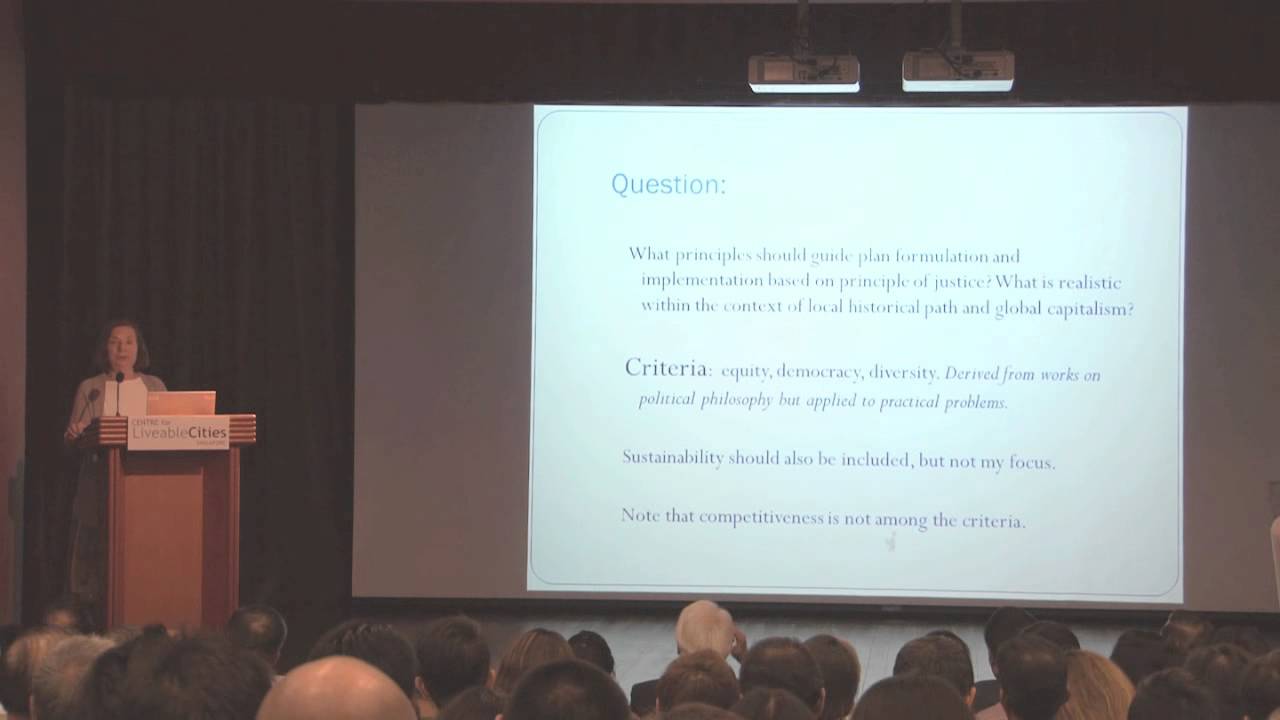
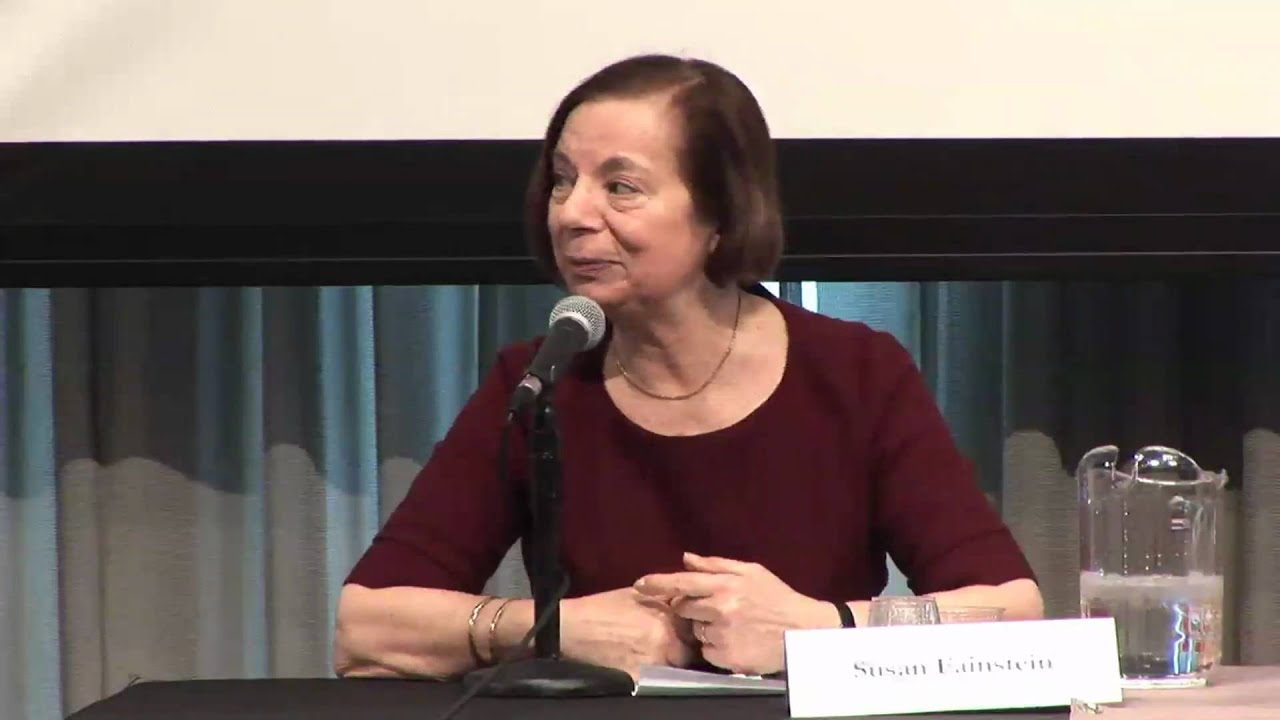
hello my name is roberto rocco and i'm an associate professor of spatial planning and strategy at the delft university of technology in the netherlands in this video we are going to talk about the spatial justice of the commons we are going to understand what the commons are why they are important for how we plan and design our cities why justice is crucial for the governance of the commons and why spatial justice is a central issue for the planning of sustainable cities and communities but if we are talking about sustainable development let's see how sustainability and justice relate commonly we understand sustainable development as development that meets the needs of the present without compromising the ability of future generations to meet their own needs as defined in the famous our common future report of 1987 otherwise known as the bruntland report in this definition we find two fundamental concepts the concept of needs that implies the existence of basic human needs that must be met with our available resources in other words everyone has basic human rights which governments have an obligation to meet with the resources available and the concept of future generations a silent stakeholder who's not here now to claim their rights but this notion also brings the idea that even a narrow notion of physical sustainability implies a concern for social equity between generations a concern that must logically be extended to equity within each generation this means that while we strive for intergenerational justice we must logically also strive for intra-generational justice that is justice among all people living here and now sustainability is a multi-dimensional concept there are many competing models of sustainability with different dimensions but generally it is accepted that sustainability has three main dimensions environmental economic and social it is important to realize that long-term sustainability can only take place when the three dimensions of sustainability happen simultaneously environmental economic and social these dimensions are complementary and inter-reliant social sustainability relies very much on the ideas of inter and intra-generational justice we talked about a while ago this is because justice must underscore all actions taken to promote sustainability apart from the moral imperative of providing everyone with basic basic human rights leaving no one behind justice also helps with acceptability support compliance and suitability of policy but what is spatial justice what is special about justice is there justice to be had in urban development in order to answer those questions let's look at the concept of the commons and how justice plays a role in the governance of the commons more specifically we will look at the tragedy of the commons this is a concept coined in 1833 by british economist william foster lloyd to express the negative effects of unregulated use of common resources now let's see what the tragedy of the commons is all about imagine a field that is holding common by a community of four people the field is called the commons because it it's a common resource shared by the members of that community each person puts one cow to graze in the field by doing so they each earn the positive utility of a cow expressed here as plus one meanwhile they decreased the positive utility of the field here expressed in minus one so each of them earned one and the field lost four now imagine that one member of this community is a bit more entrepreneurial than the others or they had savings and could buy more cows or maybe they earned more cows as an inheritance they put three cows in the field and therefore and the total positive utility of the field here expressed in plus four meanwhile the field's negative utility is minus seven what happened here it is easy to see that the gains are individual but the losses are shared by all the members of that community so what does this really mean there is a very big incentive for the farmers to put more cows to graze in the field and very little incentive for them to control the number of cows because the losses are shared by all so individually they suffer just a fraction of the losses if we follow the neoclassical economic theory of rational choice in which individuals always rationally pursue their greatest advantage regardless of how it affects others we will put as many cows as we can in the field potentially leading to the exhaustion of that field the boundaries of sustainability of the field have been exceeded and no resources will be available for future generations this is unfair for those future generations who won't be able to enjoy those resources it's also unfair for those who were excluded from using the field because for some reason they could not access those resources this is the tragedy of the commons in a world where everyone is supposedly seeking their own self-interest if left unregulated common resources are destined to exhaustion well it's not difficult to see that the same logic applied to our planet our greatest the resources of our planet are not held in common and this is a huge problem both for intergenerational justice and inter-generational justice as those resources are very unevenly and some would argue unfairly distributed later on the tragedy of the commons was conceptualized as a warning against overpopulation and as a defense of private property but this interpretation has been widely rebuffed as misguided here we use the tragedy of the commons to highlight issues of spatial justice so what are the spatial justice issues in the governance of the commons first of all as i said before the distribution of burdens and benefits of development in space among actors may be fair or unfair this is called distributive justice but also how resources are managed and by whom decisions are taken this is called procedural justice the justice in the procedures by which decisions about the distribution of burdens and benefits of development are taken but that's not all people have inherently different economic and entrepreneurial capacities some people have access to more resources from birth others have drawbacks like disabilities or other issues that prevent them from putting cows to graze in the field sometimes people are limited by cultural constraints in some countries for example women do not have access to the same level of education as men this creates all sorts of imbalances and injustices ultimately there is a problem in the distribution of power so let's summarize the problems raised by the tragedy of the commons so you are have the opportunity to explore these issues in depth by yourself later regulation who regulates the uses of common resources property who owns the resources what resources should be considered common the role of the state do we need strong regulation and enforcement who's responsible for regulation and enforcement individual rights versus collective rights issues of planning and ultimately problems about the distribution of power and information look at what happened when china and then british ruled hong kong could not agree on who should regulate a small piece of land in hong kong that legally belonged to china as people could build as much as they wanted or as much as they physically could the most important common resource space was quickly exhausted kowloon world city has since been demolished and now a park exists in that area but there are other examples of irrational use of resources in urban development the handshake buildings of shenzhen are built inside urban villages former rural villages where land ownership is still in the hands of former farmers land in urban villages is regulated differently and landowners are eager to use their available resource to the maximum they're called handshake buildings because you can literally shake hands with a person standing in the next building distribution of resources in cities can be very unequal as the example of sao paulo in brazil demonstrates here you can see the richest neighborhoods in the city with their green streets parks and well-maintained buildings and here you can see what a neighborhood in the periphery of the city looks like with unpaved streets lack of green areas and parks and poor city planning but most cities do not collapse because of the mindless pursuit of self-interest like in the tragedy of the commons why not we will find answers in the work of two women patsy healy and eleanor ostrom among many others who looked at these questions let's start with ostrom the first woman to win a nobel prize for economics for her ideas on the governance of the commons in 2009 by studying the governance of the common by traditional peoples like the australian aborigines picture here she came to the conclusion that traditional societies usually did a much better job in governing and distributing their resources based on her observations astrum came up with a few principles that generally allowed for better governance of the commons symmetric oven asymmetric communication subsidiarity and polycentric governance and in fact most cities around the world are able to regulate the use of resources so as to maximize public goods and distribute the burdens and benefits of development obey not optimally and with varying degrees of success tatsuhili is one of the front runners of spatial planning theory and a strong proponent of the communicative theory in planning for hilly and others one of the jobs of planning is to reconstruct the meaning of a democratic practice based in more inclusive practices of inclusionary argumentation for this reason healy and others put a lot of emphasis in communicative practices in planning this means an emphasis on participation of all members of our community including those voices who are silent or whose knowledge is considered unimportant and indeed as einstein well observed already in 1969 citizen participation presents us with many challenges and there are various degrees of participation ranging from citizen control and empowerment to tokenism and manipulation communicative planning is very close to the idea of the right to the city in which citizens are able and free to shape their cities and communities to their needs wishes and desires the right to the city is a right to participate in the governance of the city and what can we conclude from the justice of the comments it seems clear we need citizen empowerment participation and public debate that is fair and democratic despite a structure inequality we need to seek coalitions to reach some kind of consensus through communicative processes further we need to listen to silent stakeholders especially the planet and future generations but also and most especially those vulnerable voices whose knowledge is not recognized one of the most famous examples of citizen empowerment is participatory budgeting which started to be used in the city of porto alegre in 1988. participatory budgeting is a process of democratic deliberation and decision making in which ordinary people decide how to allocate part of a municipal public budget another example is france's citizens convention for the climate 150 citizens representing the diversity of society were chosen at random in france to define a series of measures to reduce greenhouse emissions by 2030.
community organizers mobilized citizens from favela paraisopolis in sao paulo to fight the coveted 19 outbreak in phase of several challenges in the slums and inaction from the state in this way all citizens felt invested in keeping their communities safe from the virus and to respond quickly to infections citizen empowerment and participation have the potential to create or recreate a public sphere in which the conditions for good governance of the commons described by astron can exist and produce more just outcomes helping solve conflicts in spatial development balancing powers in governance processes increasing accessibility to public goods and ultimately potentially delivering more social spatial justice there are certainly new roles for planners and designers in this type of planning what is your role thanks for listening if you have any questions don't hesitate to write to me bye for now
Up Next
78:54
Urban Planning, Ethics, and Muslim Identity | Dr. Heba Ezzat
@TheThinkingMuslim
66.6K views•2025-08-12

12:54
Triumph of Orthodoxy Icon: Byzantine Art & History Explained
@BenCallan
2.1K views•2024-08-06

9:49
FastAPI vs Flask vs Django: Choosing the Right Python Web Framework
@TechWithTim
302.5K views•2024-05-26

1:42
Game of Thrones Opening Credits: A Cinematic Analysis
@gameofthrones
46.3M views•2011-04-18
Related Study Plans & Knowledge Roadmaps
Structured learning paths in General & Interdisciplinary Studies
general-studies
Elevator Engineering: History, Physics & Cities
01From Hoists to Safety Brakes: The Dawn of Vertical Lift
02Hydraulic vs. Traction: The Engineering Physics of Elevators
03Modern Speed, Safety, and Algorithms
+ 2 more learning modules
12h5 modules
Explore Roadmap
general-studies
Rubber: Material Science, History & Geopolitics
01Origins of Natural Rubber & Mesoamerican History
02The Chemistry of Natural Rubber & Vulcanization
03The Geopolitics of the Rubber Boom & Colonization
+ 2 more learning modules
12h5 modules
Explore Roadmap
general-studies
Containerization: Evolution, Logistics & Trade
01Ancient Trade & Bulk Cargo: Amphorae to Barrels
02The Industrial Revolution & Cardboard Packaging
03The Containerization Revolution: Malcom McLean
+ 2 more learning modules
12h5 modules
Explore Roadmap
general-studies
Textile Tech: Evolution, Labor & Global Impact
01Pre-Industrial Textiles: Handloom & Cottage Industry
02Mechanization: The Spinning Jenny to the Power Loom
03The Factory System & Global Labor Transformation
+ 2 more learning modules
10h5 modules
Explore Roadmap