Elinor Ostrom, the first and only woman to win the Nobel Prize in Economics (2009), challenged the traditional view that state control or privatization are the only solutions to the Tragedy of the Commons; through her field research across diverse communities worldwide, she demonstrated that local communities can successfully self-govern common-pool resources like fisheries, forests, and irrigation systems by developing context-appropriate rules governing access, usage limits, monitoring, enforcement, and dispute resolution, thereby proving that sustainable resource management is achievable through collective action rather than external intervention.
Elinor Ostrom: Governing the Commons Theory Explained
Added:Deep Dive
Garrett Hardin's 'Tragedy of the Commons' theory and its pessimistic assumptions about human behavior.

Is "The Tragedy of the Commons" Real?
27.3K
The tragedy of the commons relies on assumptions about human nature that align with capitalist ideology—specifically that people are naturally greedy and prone to competition rather than cooperation. Harden assumed his hypothetical herdsmen were biologically incapable of caring about sustainability or the common good, always acting in short-term self-interest. This assumption is presented as a given in the thought experiment without historical evidence.
Click to watch →

Elinor Ostrom on resilient social-ecological systems
21.8K
Garrett Hardin's tragedy of the commons theory imagines a pasture open to all herders where each individual benefits from adding more animals while others bear the costs. The theory assumes no governance exists, mobile users who can add animals, stationary grass that cannot escape, and unstated assumptions about distinctive markings allowing ownership identification. Hardin predicted maximum harvesting by everyone leading to destruction of the ecological zone. However, the theory is correct within its specified assumptions—it doesn't claim to apply universally. When assumptions change (like adding communication capabilities), outcomes change dramatically. This illustrates how theoretical predictions depend critically on which variables are included or excluded.
Click to watch →

T11x9 - César Rendueles: comunidad o barbarie (PENSANDO FUERTE - CARNE CRUDA)
8.3K
Garrett Hardin's 1968 article 'The Tragedy of the Commons' presented a pessimistic view that shared resources would inevitably be depleted when individuals act rationally in their own interest. However, Elinor Ostrom's historical research demonstrated that successful commons are far more common than Hardin suggested. Her four major case studies included Tschingel (Swiss Alpine village managing land for centuries), three Japanese villages with 3 million hectares showing ecological resilience, the Valencian orchard where 83 irrigators established water rights in 1453, and Northern Philippines where land tenants united to build irrigation systems. Ostrom identified key principles: clearly defined boundaries, monitoring systems, conflict resolution mechanisms, and most fundamentally, the possibility of deliberation and communication among participants. Commons do not require returning to purely local structures but establishing communication mechanisms between local and global structures. The key question is not about decentralization per se but about the level of democratization and participation that is accepted or required.
Click to watch →

Garrett Hardin on the Tragedy of the Commons
104.9K
Garrett Hardin's concept of the Tragedy of the Commons demonstrates that shared resources are inevitably depleted when individuals act in their own self-interest without considering long-term consequences, and he argues that human nature—evolved for immediate survival rather than long-term planning—makes sustainable resource management challenging; therefore, effective solutions require designing reward systems that align individual incentives with collective welfare, such as tax incentives for family planning, rather than relying on appeals to morality or altruism alone.
Click to watch →

Gardiner The Real Tragedy of the Commons
498
Steve Gardner's 'The Real Tragedy of the Commons' critiques Hardin's 'The Tragedy of the Commons.' Gardner argues that development increases population tends to decrease, but development brings increased environmental impact. Gardner presents Hardin's three key assumptions: (1) population problem has a 'commons' structure generating tragedy; (2) people tend to have large families; (3) problem is primarily in developing nations. Hardin proposes severe solutions: deny reproductive freedom and refuse aid to poorer countries. Gardner argues these proposals have strong moral intuitions against them. The tragedy of the commons is illustrated through herdsmen seeking to maximize gain by adding animals, where each receives all proceeds while overgrazing effects are shared. This is a multi-person prisoner's dilemma: collectively all prefer cooperation, but individually each prefers not to cooperate. Gardner proposes three alternatives: change motives through social norms, appeal to self-interest through repeated interactions, and appeal to fair play through social shunning.
Click to watch →
Deep Dive
The economic classification of goods, specifically distinguishing Common-Pool Resources (CPRs) from public, private, and club goods.

EC465: ปัญหาทรัพยากรร่วม (common-pool resources)
157
Goods are classified by two characteristics: excludability (whether people can be prevented from using without paying) and rivalry (whether consumption reduces availability for others). Private goods are both excludable and rival, while public goods are non-excludable and non-rival. Common Pool Resources are hybrid goods that are difficult to exclude but rival, such as fish in oceans, river water, and forests. Unlike private goods like oil (which can be excluded), common pool resources allow unrestricted access but consumption reduces availability for others.
Click to watch →

Nathan Goodman on the Provision of Public Goods and Welfare in a Stateless Society
139
This section completes the economic classification of goods. Public goods are non-rivalrous and non-excludable (national defense). Private goods are rivalrous and excludable (pencils). Common pool resources are non-excludable but rivalrous (fish in oceans)—Hardin's 'Tragedy of the Commons' argued these require state intervention, but Ostrom showed communities can self-govern through local rules and social norms. Club goods (Buchanan) are excludable but non-rivalrous up to congestion points (concerts, swimming pools). This classification enables analysis of which goods can be provided through which mechanisms.
Click to watch →

COMPLETE PUBLIC FINANCE | CUET PG ECONOMICS 2026 | MAHAMARATHON | CONCEPTS + PYQ
2.9K
Goods are classified based on two characteristics: excludability (whether non-payers can be excluded) and rivalry (whether one person's consumption reduces availability for others). Public goods are non-excludable and non-rival (e.g., national defense, street lights). Private goods are excludable and rival (e.g., clothing, food). Club goods are excludable but non-rival (e.g., Netflix subscriptions). Common resources are non-excludable but rival (e.g., oceans, fisheries). This classification determines how goods are efficiently provided and who should bear the cost.
Click to watch →

Public vs. Private Goods
237K
Goods are classified into four categories based on two key properties: excludability (whether non-payers can access a good) and rivalry (whether one person's use prevents others from using it). Private goods are both rivalrous and excludable (e.g., food, cars), while public goods are neither (e.g., clean air, national defense). Common pool resources are rivalrous but non-excludable (e.g., fisheries, forests), and club/collective goods are non-rivalrous but excludable (e.g., cable TV, membership clubs). This classification framework helps explain why governments typically provide public goods through taxation, as private markets struggle with the free-rider problem where individuals benefit without paying.
Click to watch →
Les biens communs - Économie : échanger autrement n°2
396
Economics classifies goods into four categories based on two criteria: rivalry in consumption and excludability. Private goods are rivalrous and excludable (personal property). Public goods are non-rivalrous and non-excludable (sunlight). Club goods are excludable but not rivalrous (private beaches). Common-pool resources are rivalrous but difficult to exclude people from (fisheries, pastures). This classification framework, developed by economists like Harold Demsetz and Elinor Ostrom, provides the foundation for understanding resource governance challenges.
Click to watch →
Deep Dive
The two traditional policy solutions to resource depletion: state-run centralized regulation and market-driven privatization.

Tragedy of the Commons, part 2: With Math
3.1K
Two primary policy tools address common resource depletion: quantity controls and pricing mechanisms. Quantity controls involve issuing permits (e.g., 8 permits) to limit total usage directly. Pricing mechanisms use taxes that create additional costs equal to the gap between average revenue and marginal cost at the optimal quantity. For the example, setting a $8 tax (AR(8)-MC=12-4) shifts effective costs so that private incentives align with social welfare. Both approaches aim to internalize externalities and achieve the socially optimal outcome.
Click to watch →

Video 1 - Elinor Ostrom - Governing the Commons
1.9K
Garrett Hardin proposed two primary solutions to prevent the tragedy of the commons: (1) State ownership and regulation, where the government takes control of common-pool resources to enforce sustainable use; (2) Privatization, where resources are converted into private property so owners have direct incentives to maintain resource value. Hardin argued these top-down approaches were necessary because he believed individual self-interest could not be trusted to manage shared resources sustainably.
Click to watch →

Economic Solutions to the Tragedy of the Commons Explained
368.3K
Three main approaches address common resource depletion: command and control regulations, cultural norms, and property rights creation. Command and control limits (like boat numbers or fishing seasons) often fail as users adapt by investing in better equipment. Cultural norms, studied by Nobel laureate Elinor Ostrom, can prevent tragedy when stable communities develop shared rules through social approval/disapproval mechanisms. Property rights transformation, exemplified by New Zealand's ITQ system, creates individual ownership stakes that align user incentives with long-term resource sustainability.
Click to watch →

Tragedy of the Commons / Environmental Science / Heal Earth
2.5K
Two primary solutions can prevent resource depletion: (1) Affixing property rights to public spaces, which creates individual accountability for resource management; and (2) Government investment in resource conservation and regeneration. Overall limiting consumption and usage helps avoid resource depletion by reducing over-consumption.
Click to watch →

Common Resources (Common Goods) in Economics
10.1K
Two primary approaches address common resource depletion: privatization and licensing systems. Privatization gives a private owner an incentive to manage the resource sustainably by restricting access. Licensing systems grant fishermen rights to harvest, giving them incentive to preserve the resource since licenses have value and complete depletion would reduce future earnings. These mechanisms align individual incentives with long-term resource sustainability.
Click to watch →
Deep Dive
Basic concepts of Game Theory, particularly the Prisoner's Dilemma and how it models collective action failures.
20. The Prisoner's Dilemma
29K
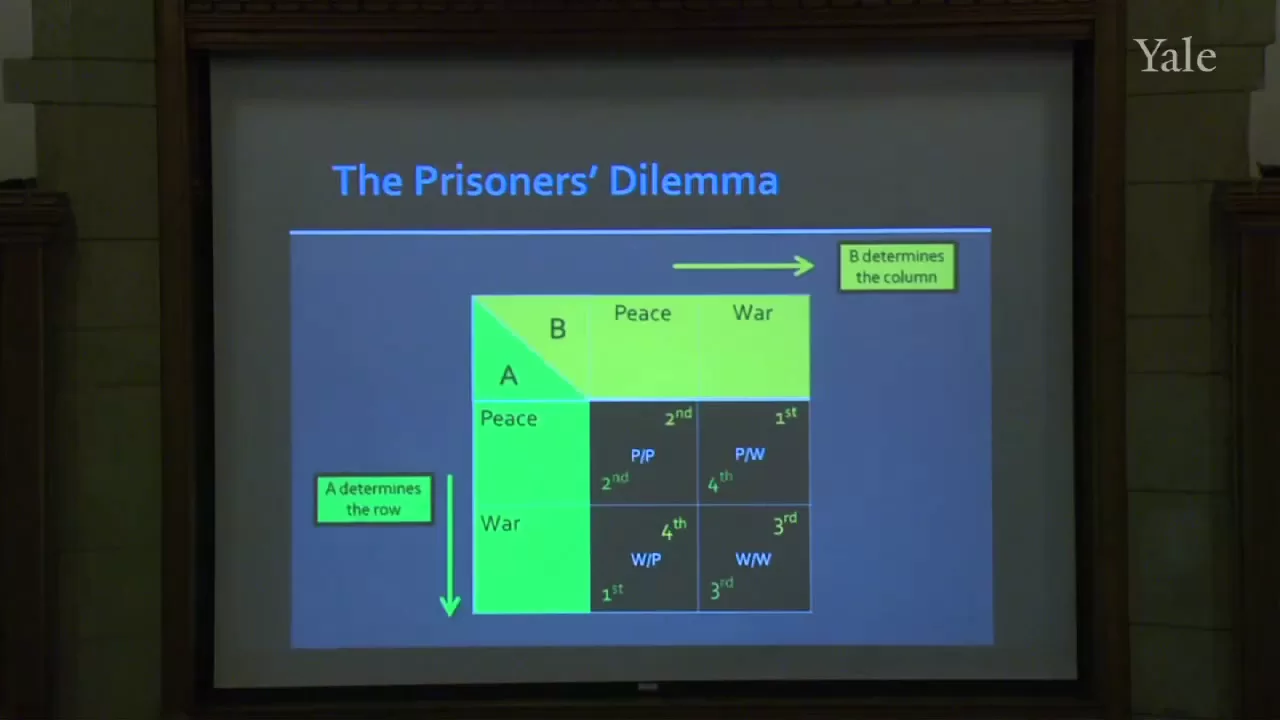
The Prisoner's Dilemma is a game-theoretic structure where rational individuals pursuing self-interest end up with worse outcomes than if they had cooperated, as demonstrated through Plato's Republic and Hobbes' Leviathan; this framework explains why cooperation fails in situations like nuclear arms races, environmental protection, and vaccination programs, and suggests solutions including external enforcement mechanisms, social incentives, and institutional structures to shift incentives toward cooperative behavior.
Click to watch →

Collective Action Game Theory | Multi-Player Prisoner’s Dilemma
9.9K
Collective action games, including multi-player Prisoner's Dilemmas, model situations where individual rationality conflicts with group rationality, such as public goods provision, resource depletion, and social cooperation; these games have two Nash equilibria—one cooperative and one non-cooperative—and can be solved by redesigning payoff structures through institutional mechanisms, social penalties, or reputational incentives to shift the equilibrium toward cooperation.
Click to watch →
Game theory | Simultaneous Games of Complete Information | Sem V | Eco (H)
106
The Prisoner's Dilemma models situations where individual incentives lead to collectively worse outcomes: (1) Group projects where each student wants to shirk while others work hard, (2) Oligopoly markets where firms compete on prices, (3) Bertrand oligopoly with two firms where price competition drives profits to zero. The defining feature is that even though cooperation is collectively better, each player has an incentive to cheat because the reward from non-cooperation is higher than from cooperation.
Click to watch →

Rubens Penha Cysne fala sobre o dissenso entre a identificação e a consecução prática do bem comum.
133
Game theory provides essential tools for understanding why collective action for public goods often fails. The Prisoner's Dilemma demonstrates how individual rationality leads to collectively suboptimal outcomes—regardless of what others do, defecting always yields better individual results, leading both parties to defect and both suffer. Coordination games always benefit from cooperation, while conditional cooperation games require certainty about others' behavior. The tragedy of the commons illustrates how individually rational exploitation of shared resources leads to collective disaster. These frameworks reveal that the gap between perceived welfare (what policymakers envision) and achieved welfare stems from fundamental incentive misalignments that cannot be resolved through individual decision-making alone.
Click to watch →

Non-Zero-Sum Thinking on the World Stage | Glenn Loury & Robert Wright | The Glenn Show
8K
The Prisoner's Dilemma illustrates a collective action problem where two parties would both be better off cooperating, but each has an incentive to defect for personal gain. In the classic example, two prisoners can either both stay silent (both get one year) or one can snitch while the other stays silent (snitcher goes free, other gets five years). This creates an inexorable lure toward non-cooperation despite mutual benefit from cooperation.
Click to watch →
Prerequisite Knowledge
- Concept 01Garrett Hardin's 'Tragedy of the Commons' theory and its pessimistic assumptions about human behavior.
- Concept 02The economic classification of goods, specifically distinguishing Common-Pool Resources (CPRs) from public, private, and club goods.
- Concept 03The two traditional policy solutions to resource depletion: state-run centralized regulation and market-driven privatization.
- Concept 04Basic concepts of Game Theory, particularly the Prisoner's Dilemma and how it models collective action failures.
Subsequent Learning
- Step 01Elinor Ostrom's Eight Design Principles for stable and sustainable local common-pool resource management.
- Step 02The concept of Polycentric Governance and how nested, decentralized authorities cooperate across different scales.
- Step 03The Social-Ecological Systems (SES) framework, which analyzes complex feedbacks between human societies and ecosystems.
- Step 04Applying commons-based governance to modern digital assets, such as open-source software, Wikipedia, and creative commons.
- Step 05Evaluating the challenges and limitations of scaling Ostrom's local solutions to global commons issues like climate change and international fisheries.
Ostrom's Work
Core Findings
Ostrom's Work
0:00Playing Section
- 1
Defines commons and tragedy dilemma.
- 2
Studies global communities managing shared resources.
- 3
Finds self-governance rules prevent resource depletion.
The Tragedy of the Commons and the Limits of Localized Governance
While Elinor Ostrom demonstrated that local communities can successfully manage common-pool resources, critics—often drawing from Garrett Hardin’s classic 'Tragedy of the Commons' thesis—argue that self-governance has major limitations, particularly regarding scale and complexity. Hardin argued that without external coercion (state regulation) or private property rights, individuals are inherently incentivized to overexploit shared resources. Modern critics of Ostrom point out that her 'design principles' depend heavily on small-scale, culturally homogeneous communities with strong social capital. When applied to global, complex, or diffuse resources (such as the atmosphere or international oceans), localized voluntary cooperation often fails. In these macro-level scenarios, critics argue that centralized state regulation, international treaties, or market-based privatization mechanisms are necessary to prevent resource depletion, as trust and mutual monitoring cannot be sustained at a global scale.
Deep Dive
Elinor Ostrom's Eight Design Principles for stable and sustainable local common-pool resource management.
Pavel Kuchar: Governing Markets as Knowledge Commons
116
Elinor Ostrom identified eight key design principles that enable communities to successfully manage common pool resources: (1) Clearly defined boundaries specifying who belongs and what the resource limits are; (2) Proportional equivalence ensuring benefits match contributions; (3) Collective choice arrangements allowing affected users to participate in rule-making; (4) Local monitoring by community members themselves; (5) Graduated sanctions starting with warnings before escalating to strict punishment; (6) Conflict resolution mechanisms for immediate dispute resolution; (7) Minimal recognition of the right to organize from external authorities; and (8) Polycentric governance with multiple nested organizational layers for larger resources.
Click to watch →
EC465: ปัญหาทรัพยากรร่วม (common-pool resources)
157
Ostrom identified eight design principles for successful community resource management: (1) Clear boundaries defining who can use the resource, (2) Congruence between rules and local conditions, (3) Collective-choice arrangements allowing users to modify rules, (4) Monitoring of resource use, (5) Graduated sanctions for violations, (6) Conflict resolution mechanisms, (7) Recognition of rights by external authorities, and (8) Nested enterprises connecting local management to larger systems. These principles explain why some communities succeed while others fail in managing common resources.
Click to watch →
![[S7 Gobernanza de los Comunes] Elinor Ostrom y la gobernanza de los recursos de acceso común](https://i.ytimg.com/vi/qzdKlWeoJQM/maxresdefault.jpg)
[S7 Gobernanza de los Comunes] Elinor Ostrom y la gobernanza de los recursos de acceso común
230
Ostrom identified eight design principles for successful common pool resource governance: (1) Clear boundaries defining who can use resources; (2) Proportional equivalence between benefits and costs; (3) Collective-choice arrangements allowing users to modify rules; (4) Monitoring tracking resource conditions and user behavior; (5) Graduated sanctions escalating penalties for violations; (6) Conflict-resolution mechanisms; (7) Recognition of rights to organize; and (8) Nested enterprises coordinating governance across multiple levels. These principles emerged from analyzing successful cases across diverse contexts.
Click to watch →

From Biology to Culture: The Evolution of Goodness
1.5K
Nobel laureate Elinor Ostrom discovered that groups managing common-pool resources can self-govern successfully if eight conditions are met: (1) Strong identity and purpose; (2) Benefits proportional to costs; (3) Fair decision-making participation; (4) Monitoring with corrective measures; (5) Fast conflict resolution; (6) Self-governance authority; (7) Appropriate inter-group relations; (8) Scale-independent application. These principles explain both presence and absence of prosociality across all life forms and provide a framework for building functional communities at any scale.
Click to watch →

経済学部 模擬講義|同志社大学
11K
Elinor Ostrom received the 2009 Nobel Prize in Economics for her research on commons governance. She identified eight conditions necessary for commons to function sustainably: (1) Clearly defined boundaries - the resource area and membership must be clearly understood; (2) Congruence between rules and local conditions - rules must match ecological and user group characteristics; (3) Collective-choice arrangements - users must participate in rule-making; (4) Monitoring - mechanisms must track rule compliance; (5) Graduated sanctions - penalties must be proportional; (6) Conflict-resolution mechanisms - disputes must be resolved quickly within the group; (7) Recognition of rights to self-governance - external authorities must recognize autonomy; (8) Nested enterprises - commons must connect to higher-level governance structures.
Click to watch →
Deep Dive
The concept of Polycentric Governance and how nested, decentralized authorities cooperate across different scales.
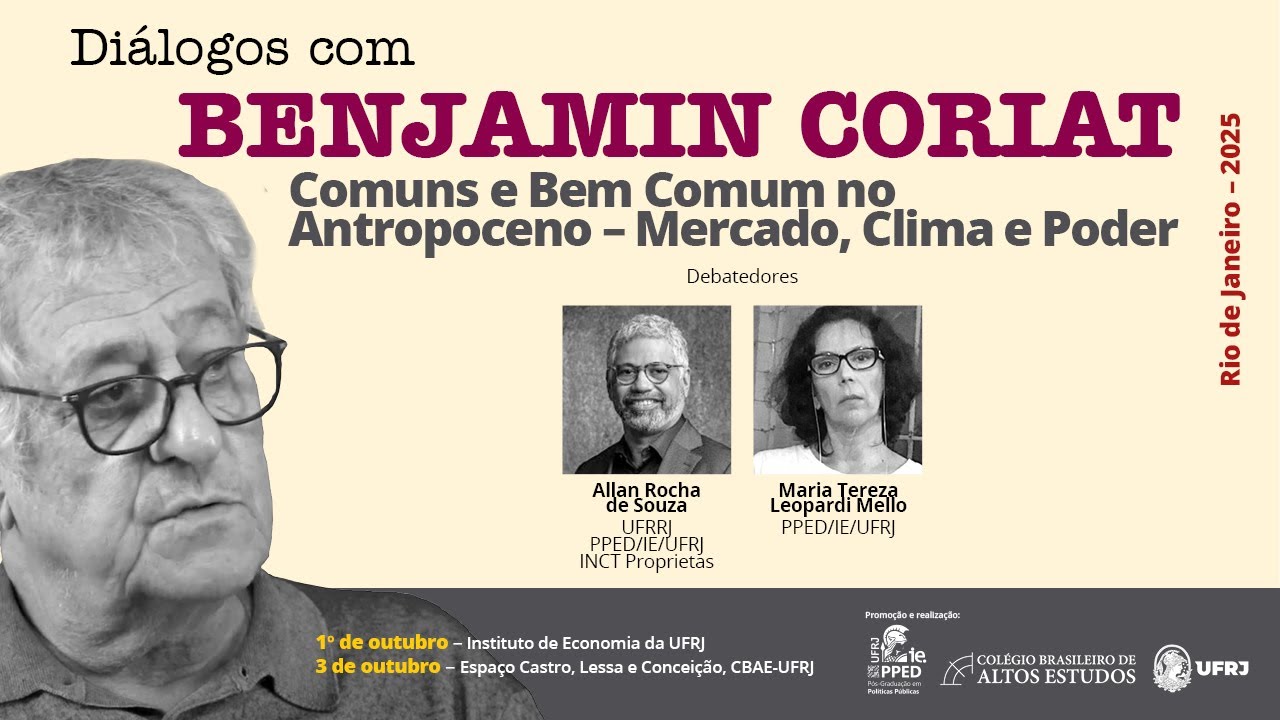
Diálogos com Benjamin Coriat (Dia 2)
133
Elinor Ostrom's polycentric governance framework proposes multiple levels of governance with different competencies and rules, emerging from her research on police systems and global commons including polar regions, oceans, and forests. Unlike single-level governance, polycentric governance allows different levels to address problems based on specific knowledge and capabilities. Climate change cannot be addressed through single-level governance because it operates across national boundaries and involves multiple forms of pollution and ecosystem destruction. Effective polycentric governance requires multiple decentralized authorities implementing recommendations at their respective levels with free entry and exit for groups based on capability. An overarching set of rules provides common objectives shared by all participants. Coalitions of the willing enable action even when major powers withdraw from international agreements. 'Blame and shame' practices where NGOs publicize corporate environmental violations create accountability outside traditional state mechanisms. This approach complements rather than replaces international agreements, providing implementation capacity where political will is lacking.
Click to watch →

Governance of Earth System Tipping Points: What can we do??
3.1K
Polycentric governance distributes and shares responsibility for various tasks across multiple scales and institutions with multiple networked actors at every scale. This approach recognizes that no single institution can effectively govern complex Earth system tipping points alone.
Click to watch →
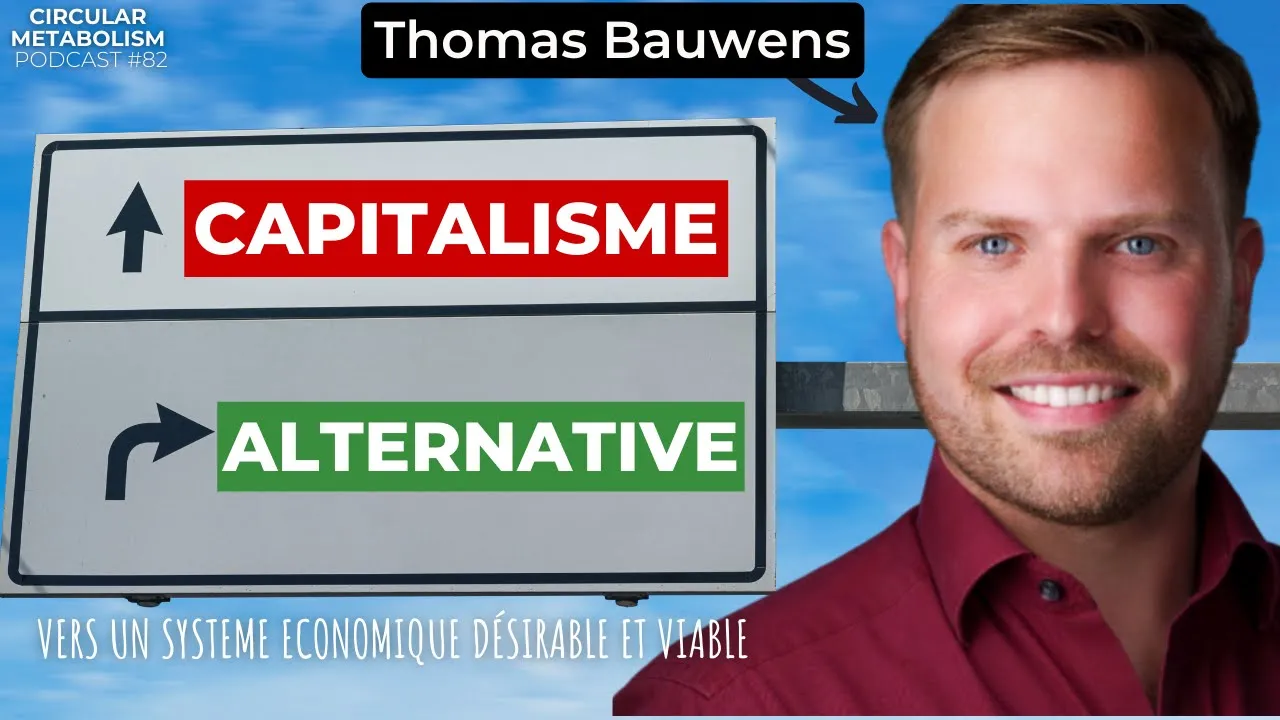
Pour une alternative désirable et viable au Capitalisme (Thomas Bauwens)
4.5K
Polycentric governance is a system with multiple autonomous decision-making centers operating under common rules. It sits between completely decentralized systems (lacking coordination) and completely centralized systems (single authority). Supra-local institutions ensure coordination and coherence among autonomous local entities. This approach allows local autonomy while maintaining system-wide coherence, representing a middle path between anarchy and centralization. The federation of European energy cooperatives (Rescoop.eu) demonstrates this in practice, coordinating activities across national boundaries while preserving local decision-making. This structure enables economies of scale, resource mutualization, and collective bargaining power while preserving local autonomy.
Click to watch →

"Competitive Advantage of Collaboration" David Sloan Wilson at 2018 Business for Peace Foundation
517
Polycentric governance, a concept Elinor Ostrom was known for, means that life consists of many spheres of activity, each sphere has an optimal scale, and good governance requires finding the right optimal scale for each activity and appropriately coordinating among scales. This extends her ideas to the level of large-scale governance. Polycentric governance can be thought of as a multicellular society composed of trillions of cells. Unless the cells are working well, the whole organism cannot work well. There is a bottom-up component in addition to a top-down component. This is why libertarians tend to like Elinor Ostrom because of her focus on small groups and the need to do things at the appropriate scale.
Click to watch →

How Economics Can Save The World - Econ Tips For Work & Life | Erik Angner SVIC Podcast #46
121
Polycentric governance, developed by Nobel laureate Elinor Ostrom, is an approach where interactions are governed by a patchwork of institutions operating at different scales. This challenges the binary of market versus government or individual versus collective. Institutions operate at intermediate scales and need autonomy from government to function effectively.
Click to watch →
Deep Dive
The Social-Ecological Systems (SES) framework, which analyzes complex feedbacks between human societies and ecosystems.

2026 Opening Ceremony International Conference
1.1K
The Social Ecological Systems (SES) framework, developed by Nobel Prize winner Elinor Ostrom, is used to diagnose outcomes in natural resource systems. An SES consists of four component parts: the resource itself (like trees), the resource system (like forests), the governance system (rules affecting behavior), and the people using or benefiting from the resource. The characteristics of each component influence interactions, which produce outcomes. This framework helps identify connections across systems that are producing outcomes and diagnose why some systems fall apart while others thrive for generations.
Click to watch →

History, Theory & Practice: Introduction To Environmental Planning Part 2 #environmental #planning
121
A social ecological system (SES) is a coupled, integrated system in which humans are part of nature, not separate from it. This framework forces planners to break down artificial disciplinary silos between the social and ecological domains. It requires managing critical linkages and feedbacks between them—for example, how urban water consumption affects river health, which in turn affects quality of life and economic opportunities in cities. The framework recognizes that human well-being is inextricably linked to the health of ecological systems they are embedded within, meaning you cannot manage a fishery without understanding fishing communities, economics, and culture.
Click to watch →

Socio-Ecological Systems Analysis, Management & Planning (SES). Research Group of CESAM
367
Socio-Ecological Systems (SES) is an integrated framework for analyzing and managing complex interactions between human societies and natural ecosystems. This approach recognizes that social and ecological systems are interconnected and co-evolve over time. The framework emphasizes understanding how human activities affect ecosystem processes, while simultaneously acknowledging how environmental changes influence human communities and decision-making. SES analysis typically involves examining multiple dimensions including governance structures, resource management practices, ecosystem dynamics, and the feedback loops between social and ecological components.
Click to watch →

WCW 2019 Keynote - Sergio Villamayor Tomas The IAD Family of Tools Europe
148
The Social-Ecological Systems (SES) framework, launched by Elinor Ostrom in 2007, represents an important inflection point in the IAD family of tools. Unlike previous contributions that focused on formalizing institutions, the SES framework makes the idea more complex and addresses criticisms about difficulties developing theory beyond variable identification. Its ultimate goal was to facilitate comparisons across case studies. An early application by Cox et al. (2009) used this framework to profile three local fishing management systems in Mexico, explaining why some had successfully self-organized sustainable resource management while others had not. The framework enables counterfactual analysis by stretching data to infer relationships between variables like trust and reciprocity and outcomes.
Click to watch →
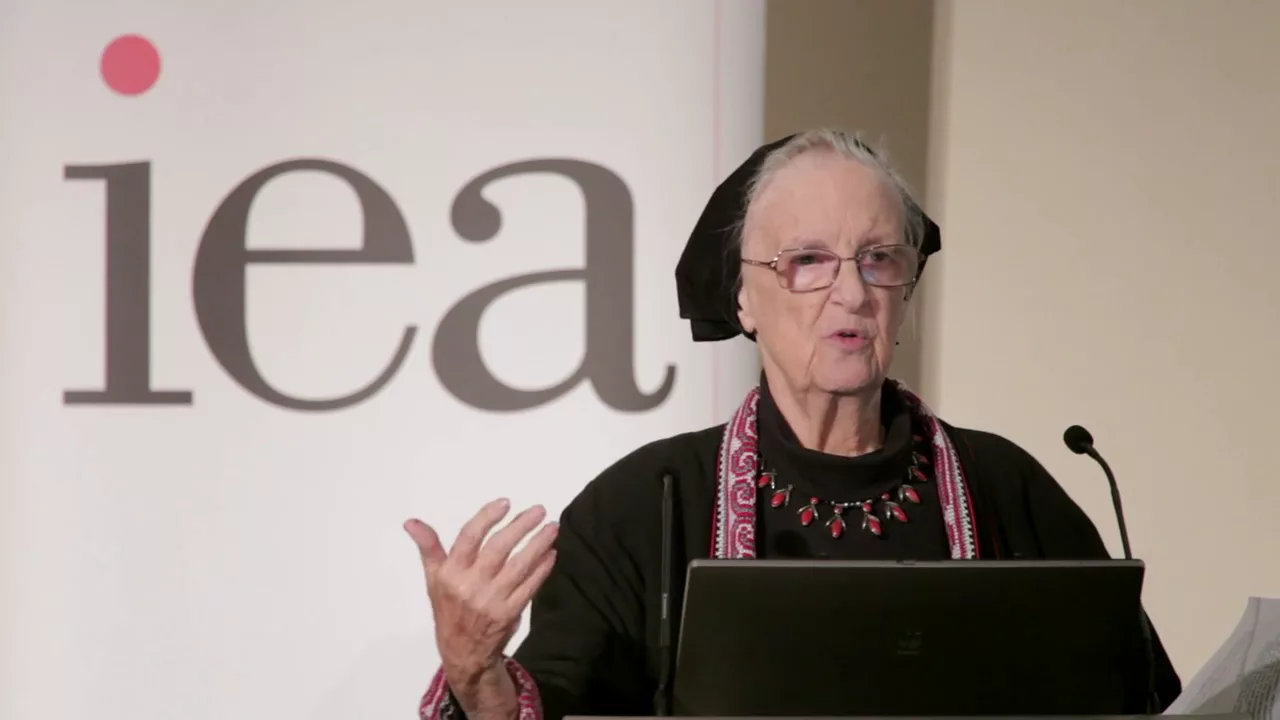
2012 Hayek Lecture: Prof Elinor Ostrom speaks on market failure and government regulation
19.7K
The social-ecological systems (SES) framework provides a multidisciplinary approach to studying human-nature interactions. It organizes analysis into three interconnected tiers: resource systems setting conditions for action situations, governance systems establishing rules and institutions, and action situations involving actor interactions regarding resource units. This framework enables researchers to identify multiple variables affecting outcomes without overgeneralizing or overspecifying cases. The framework addresses academic barriers by providing common language across disciplines, facilitating comparison across diverse systems while respecting their unique characteristics. It helps diagnose why some systems succeed while others fail by identifying which variables remain constant and which differ across cases.
Click to watch →
Deep Dive
Applying commons-based governance to modern digital assets, such as open-source software, Wikipedia, and creative commons.
Les biens communs - Économie : échanger autrement n°2
396
The rise of digital technologies has created new forms of common-pool resources, such as open-source software, Wikipedia, and online knowledge repositories. These digital commons demonstrate that collaborative governance models can function effectively at unprecedented scales. Open-source software development follows principles similar to Ostrom's framework: contributors voluntarily participate, rules are established through consensus, and sanctions are applied through community pressure rather than formal enforcement. Wikipedia similarly relies on volunteer editors who self-regulate content quality. These examples show that the principles of self-governance can extend beyond traditional physical resources to digital domains, though they still face challenges related to scale, sustainability, and preventing free-rider behavior.
Click to watch →

Adventures in New Economics - Wealth of the Commons, David Bollier
445
Digital commons include Creative Commons (170 jurisdictions), Wikipedia (800,000 editors), open access publishing (10,000+ journals), open source software, and hardware (Farm Hack, Arduino, Wiki Speed). A major challenge is preventing commons from selling out to capitalist logic—CouchSurfing transformed from gift economy to consumer-driven service under investor pressure. Solutions include commons-based reciprocity licenses allowing free use by communities/nonprofits while requiring payment from commercial enterprises. Blockchain technology enables distributed trust verification without third-party guarantors, enabling distributed autonomous organizations and alternative currencies like Catalonia's Faircoin. The public trust doctrine guarantees public access to certain resources (beaches, oceans) that states cannot sell, now invoked in atmospheric trust litigation holding governments accountable for protecting the atmosphere as a common resource. The Flock project developed a framework for state support of peer production, commissioned by the Ecuador government.
Click to watch →

Diálogos com Benjamin Coriat (Dia 1)
218
The digital revolution created new forms of commons, particularly with software and the internet. Creative Commons licenses represent a middle ground between absolute private property and no protection, allowing creators to share their work while retaining certain rights. These licenses enable universal access to intangible goods like software and creative works without the risk of resource destruction that affects tangible commons. This represents a second type of commons based on intellectual property that allows access while maintaining creator rights. Commons are characterized by being community-based, self-organized, and operating beyond traditional market and state mechanisms. This self-governance allows commons to protect ecosystems and ensure sustainable use in ways that neither markets nor states can achieve.
Click to watch →

📚 Les "communs" : une alternative au capitalisme numérique ? - REPLAY TWITCH
2.3K
Digital commons require three essential elements: the resource, the community, and democratic governance. Wikipedia, OpenStreetMap, and OpenFoodFacts exemplify successful commons with participatory governance. However, digital capitalism has appropriated commons logic by creating platforms that generate community value while capturing it commercially—Wikipedia benefits Google through search links and AI training while remaining non-commercial. The key distinction lies in whether governance is genuinely shared among contributors or remains proprietary. This tension reveals how commons principles can be co-opted while maintaining superficial appearances of openness.
Click to watch →

ReCoding Good for the 21st Century
162
Creative Commons, founded by Larry Lessig and Eric Eldred, represents an early example of nonprofit organizations operating in digital civil society. It provides an alternative copyright regime with six different licensing choices, including one that allows free use with attribution. Creative Commons has grown to 700 million works licensed in 10 years, operates in 70 countries, and has become the default standard for creative works in Brazil. It demonstrates how nonprofits can structure themselves around digital assets, creating governance frameworks that work in the digital domain where traditional rules about money don't apply.
Click to watch →
Deep Dive
Evaluating the challenges and limitations of scaling Ostrom's local solutions to global commons issues like climate change and international fisheries.
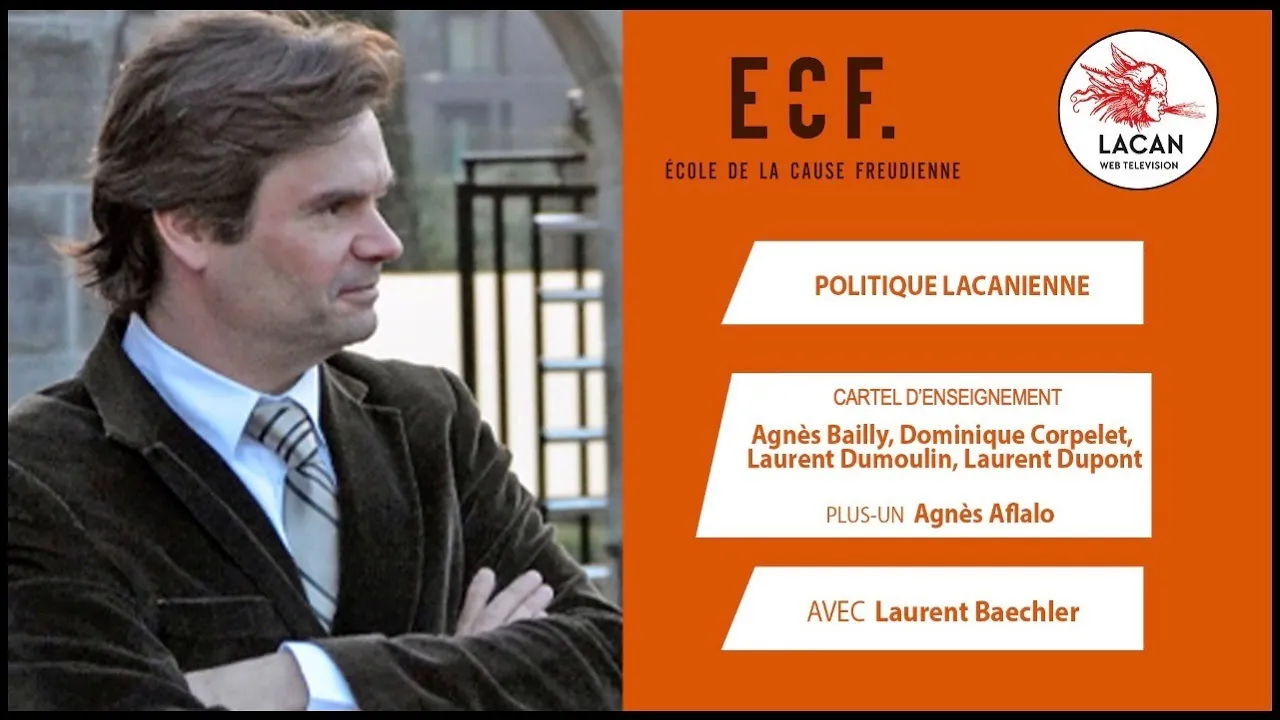
« Politique Lacanienne » avec Laurent Baechler : Élinor Ostrom et l'économie de l'eau (1)
2.6K
Elinor Ostrom herself acknowledged that her model has limited validity. The model applies only to situations with a limited number of actors (typically 50 to 15,000) because coordination costs become prohibitively high with larger groups. It also applies only to renewable resources (like fisheries, pastures, and groundwater) because these can regenerate if exploitation is reduced. The model does not apply to non-renewable resources (like fossil aquifers) or to situations with extremely large numbers of actors (like climate change affecting 8 billion people). Climate change represents a global Prisoner's Dilemma with approximately 8 billion actors (individuals) or 200 actors (governments). Each actor contributes to the problem through emissions, but the costs of reducing emissions are borne individually while the benefits are shared collectively. This creates a situation where no single actor has an incentive to act, even though collective action would benefit everyone. The problem is compounded by the fact that climate change is a global public good: emissions anywhere affect everyone equally, and solutions anywhere benefit everyone equally.
Click to watch →
![[2024 새싹 특강] 커먼즈란 무엇인가](https://i.ytimg.com/vi/x6hz4zAjZIc/maxresdefault.jpg)
[2024 새싹 특강] 커먼즈란 무엇인가
633
In 1990, Elinor Ostrom challenged Hardin's thesis with 'Governing the Commons,' demonstrating through empirical research in Switzerland, Nepal, Japan, Spain, Philippines, and Indonesia that commons can be successfully managed by local communities without privatization. Her work earned the Nobel Prize in Economics. However, Ostrom's research has significant limitations: she only studied small-scale commons that survived through modernization, missing larger historical commons; she assumed communities already existed without explaining how they formed; her cases operated within capitalist societies without challenging the broader system; and she did not address how state and capital forces historically destroyed commons. Both Hardin and Ostrom share a fundamental limitation: they view commons as resources to be managed by human subjects, treating nature as an object.
Click to watch →

Diálogo agenda global y territorios: Unidos por un planeta saludable | El Tiempo
90.8K
Elinor Ostrom's eight principles for local institutional design (clear boundaries, monitoring, graduated sanctions, conflict resolution, local participation) earned her the Nobel Prize in Economics. However, local solutions are no longer sufficient because planetary changes create interdependencies between distant regions. The Amazon's soil productivity depends on minerals from the Sahara, affecting water patterns reaching Colombia's páramos. Arctic radiation changes affect Pacific fishing regimes. These tipping points mean protecting local ecosystems alone cannot ensure survival when global systems are changing.
Click to watch →

Conversation entre Vandana Shiva et Gaël Giraud
16K
Most successful commons-based management occurs at local scales, raising questions about scaling to regional, national, and international levels. Commons differ fundamentally from collectivism: collectivism involves the state absorbing social life and controlling individuals, while commons involve communities organizing democratically to care for resources. The alternative to commons is not collectivism but rather the privatization of everything, which represents the neoliberal fantasy. Commons represent a third way between state control and complete privatization. The state should create conditions for commons to emerge in civil society rather than managing all resources as public goods.
Click to watch →

CARTA: Past, Present and Future of the Anthropocene - Questions, Answers and Closing Remarks
3.7K
Elinor Ostrom's research identified eight conditions for successful commons management that work universally, from parking lots to traditional fishing communities. However, scaling these principles to global challenges requires addressing externalities beyond local sensory perception. Science plays a critical role in creating external linkages to global impacts, but politics remains confined within national boundaries. Effective solutions require simultaneous global action to contain pollution impacts and national jurisdiction to address specific issues like pollution control. The challenge lies in connecting local actions to global consequences in ways that motivate international cooperation.
Click to watch →
Ostrom's Work
Core Findings
Ostrom's Work
0:00- 1
Defines commons and tragedy dilemma.
- 2
Studies global communities managing shared resources.
- 3
Finds self-governance rules prevent resource depletion.
The Tragedy of the Commons and the Limits of Localized Governance
While Elinor Ostrom demonstrated that local communities can successfully manage common-pool resources, critics—often drawing from Garrett Hardin’s classic 'Tragedy of the Commons' thesis—argue that self-governance has major limitations, particularly regarding scale and complexity. Hardin argued that without external coercion (state regulation) or private property rights, individuals are inherently incentivized to overexploit shared resources. Modern critics of Ostrom point out that her 'design principles' depend heavily on small-scale, culturally homogeneous communities with strong social capital. When applied to global, complex, or diffuse resources (such as the atmosphere or international oceans), localized voluntary cooperation often fails. In these macro-level scenarios, critics argue that centralized state regulation, international treaties, or market-based privatization mechanisms are necessary to prevent resource depletion, as trust and mutual monitoring cannot be sustained at a global scale.
Garrett Hardin's 'Tragedy of the Commons' theory and its pessimistic assumptions about human behavior.
The economic classification of goods, specifically distinguishing Common-Pool Resources (CPRs) from public, private, and club goods.
The two traditional policy solutions to resource depletion: state-run centralized regulation and market-driven privatization.
Basic concepts of Game Theory, particularly the Prisoner's Dilemma and how it models collective action failures.
Elinor Ostrom's Eight Design Principles for stable and sustainable local common-pool resource management.
The concept of Polycentric Governance and how nested, decentralized authorities cooperate across different scales.
The Social-Ecological Systems (SES) framework, which analyzes complex feedbacks between human societies and ecosystems.
Applying commons-based governance to modern digital assets, such as open-source software, Wikipedia, and creative commons.
Evaluating the challenges and limitations of scaling Ostrom's local solutions to global commons issues like climate change and international fisheries.
47K views754likes3:04@VanyaBishtOriginal Release: 2018-11-02
hello friends do you know who is the first and only women so far to win the Nobel Prize in Economics the slow and feeble figure among a long list of white dudes is Elinor Ostrom who won the award in 2009 for her analysis of economic governance especially the comments and in this video I am going to tell you about her amazing work so what are the comments in economics comments are defined as goods that are openly available to everyone but they're used by one party limits their availability to others for many years economists were of the opinion that comments especially natural resources like fisheries pasturelands forests etc were in a dilemma as it is in everyone's rational interest to extract as much as they want without thinking about others or about the conservation of the resource itself this is what is popularly called the tragedy of the Commons and to avoid the tragedy scholars have often prescribed solutions such as state control or privatisation of the resources but this has led to problems of its own but then comes along Ostrom who sets off on a journey across the world and spends time with traditional communities whose life an economy may truly depend on a natural resource base such as the mountain meadows of switzerland and japan the irrigation systems of Spain and Philippines the forests of Nepal and the fishing communities of Indonesia Ostrom finds that each of these communities have developed their own set of rules for determining how to use their natural resources rules like who has rights to access and use the resources how much of the resources can be withdrawn who will monitor whether the resource has been used according to the set rules how to punish those who break the roots who will decide who what the rules are and what to do in case of a disagreement combining her observations from different parts of the world Ostrom reach to some groundbreaking conclusions that set the stage for a whole new scholarship around the commons state control or privatization are not the only options available for preventing a tragedy of the commons there another way as Ostrom found in the communities she studied people can often self organize themselves in order to successfully manage their resources without the help of an external agent whether or not a community is able to successfully manage its resources depends on the kind of rules they formulate not every arrangement of rule is successful that is why careful thought must be given in designing the rules rules that work in one place may not work in another therefore careful understanding of the context is required before formulating the rules today common scholarship has expanded much beyond natural resources into areas such as digital Commons urban comments cultural Commons and knowledge Commons addressing challenging issues like how to allow their use in the most equitable manner
Up Next

10:23
Fisheries Economics & Policy: Individual Transferable Quotas
@ConservationStrategyFund
36.4K views•2015-01-27

5:07
Impact of Yuan in Indo-Russian Trade Amid Sanctions
@WION
261.9K views•2022-07-01

10:33
Behavioral Economics Explained: Rationality, Nudges, and Risk
@crashcourse
1.1M views•2016-03-12

113:18
The Age of Easy Money: Fed & Inflation | Full Documentary
@frontline
21.2M views•2023-03-15
Related Study Plans & Knowledge Roadmaps
Structured learning paths in Economics
economics
Sovereign Debt: Defaults, IMF & Restructuring
01Introduction to Sovereign Debt & Government Bonds
02Debt Sustainability & Credit Ratings
03Anatomy and History of Debt Crises
+ 2 more learning modules
12h5 modules
Explore Roadmap
economics
Market Design: Matching Theory & Gale-Shapley
01Introduction to Market Design and Price-Free Markets
02Two-Sided Matching & The Gale-Shapley Algorithm
03School Choice Systems and Mechanism Design
+ 2 more learning modules
10h5 modules
Explore Roadmap
economics
Impossible Trinity: Forex, Capital & Policy
01Introduction to Monetary Policy and Central Banking
02Exchange Rates and International Capital Flows
03The Mundell-Fleming Model
+ 2 more learning modules
8h5 modules
Explore Roadmap
economics
Healthcare Economics: Market Failures & Systems
01Introduction to Healthcare Markets and Market Failure
02Asymmetric Information and Adverse Selection
03Moral Hazard and Insurance Design
+ 2 more learning modules
12h5 modules
Explore Roadmap