









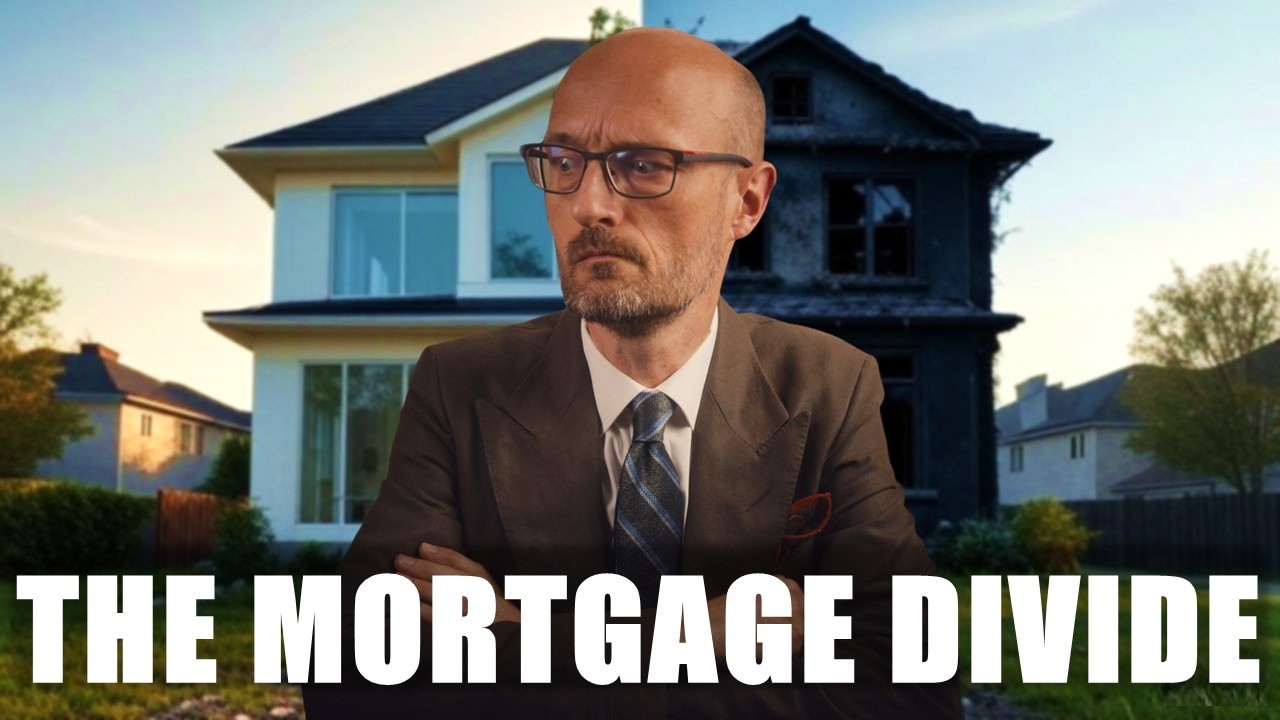

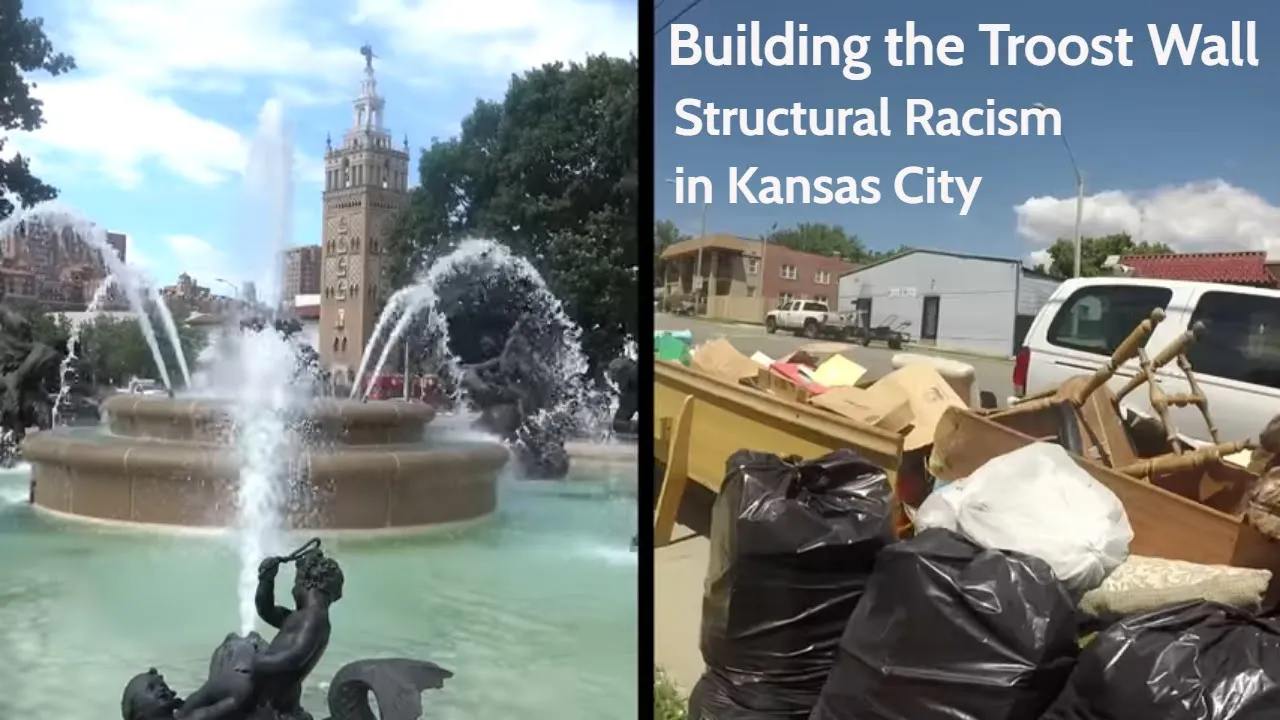


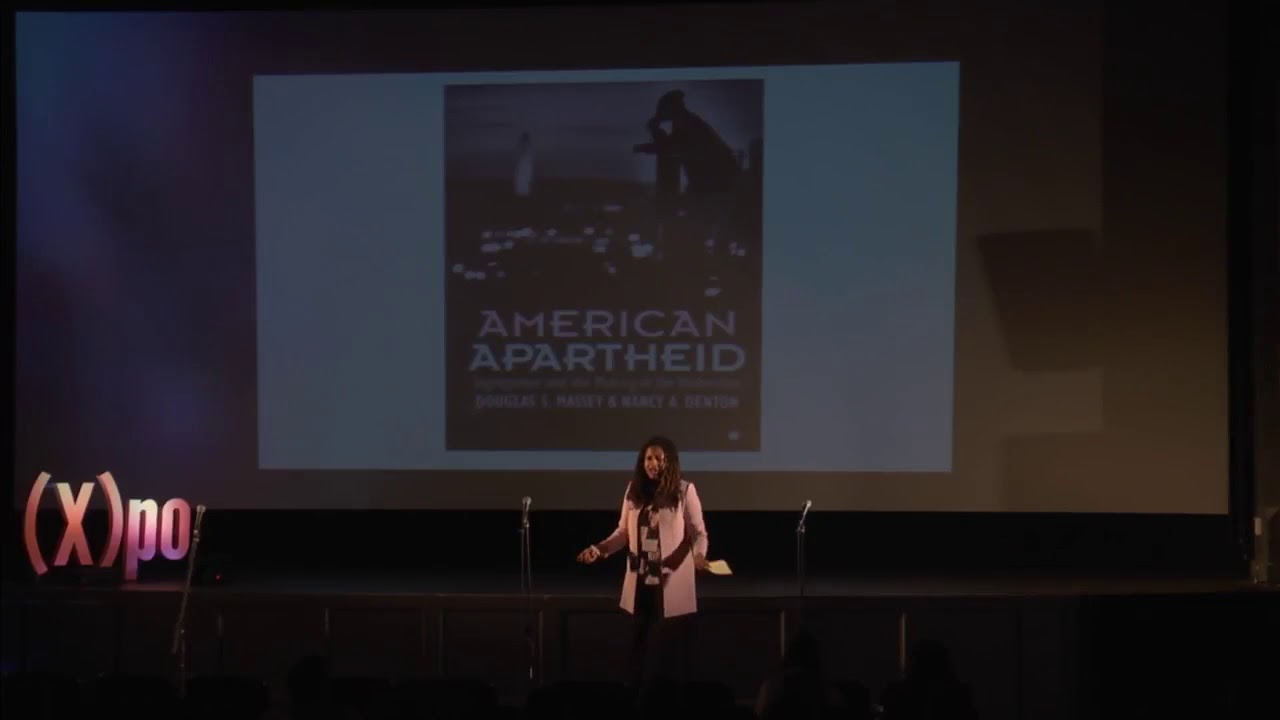










Racial covenants—private property restrictions embedded in deeds that prohibited Black families from purchasing or renting homes—were a primary mechanism of residential segregation in northern cities like Minneapolis, functioning as 'Jim Crow of the North' by creating invisible racial boundaries that hardened over time; these covenants, combined with federal redlining policies that designated Black neighborhoods as 'hazardous' and denied them mortgage access, systematically excluded African Americans from homeownership and wealth accumulation, resulting in persistent racial disparities where only 25% of Black families in Minneapolis own their homes compared to 75% of white families.
Redlining and Housing Segregation in Minnesota Explained
Added:The historical context of the Jim Crow era and how racial segregation manifested both legally and socially across the United States, including non-Southern states.
The concept of systemic or institutional racism, specifically how laws, policies, and institutional practices can perpetuate racial disparities independent of individual prejudice.
The fundamental relationship between homeownership and generational wealth accumulation in 20th-century America.
Basic definitions of 'redlining' (the discriminatory practice of denying financial services based on neighborhood racial demographics) and 'racial covenants' (binding property deed clauses restricting ownership by race).
The long-term economic consequences of housing discrimination, specifically analyzing the modern racial wealth gap in Minnesota and nationwide.
The intersection of historical redlining with contemporary environmental justice issues, such as urban heat islands, lack of green spaces, and air pollution in historically marginalized neighborhoods.
The historical impact of the Fair Housing Act of 1968, its limitations, and current policy debates regarding zoning reforms and affordable housing.
The utilization of geographic information systems (GIS) and digital humanities tools, such as the 'Mapping Prejudice' project, to research property deeds and trace historical segregation in other regions.
3.8M views45.6Klikes57:37Original Release: 2019-02-26
(ominous music) - This mob of over 100 people marched on an African American house in October of 1909 to try to stop this family from moving in.
(ominous music) The leading men of Minneapolis, as the newspaper called them, these are not the kind of people who want to be involved in mob violence.
And they don't have to.
Because they have other tools that they can use.
And there's this tool that they become aware of, it's called a racial covenant.
And so just a few months after this confrontation, you see the first racial covenant appear in a Minneapolis property.
And this is where you first see this racial language.
- [Kevin] Caucasians only, Aryans only, no Negros, or no members of African blood or decent.
- 100% of them were aimed at Black people.
- In many ways racial covenants, this was kind of ground zero of residential segregation.
And the United States and racism has a very, very long history, but this particular deployment of racism is fairly new and this idea was really made material through instruments like racial covenants.
- The law of the streets, the law of the courts working in consort to discourage Blacks from moving into white neighborhoods.
- It starts out as private property developers, but eventually you have the federal government encouraging these racial covenants, demanding actually, that any investment they make is protected with its kind of racial exclusivity.
- When you can covenant entire areas of the city, it makes it off limits, that's pretty powerful.
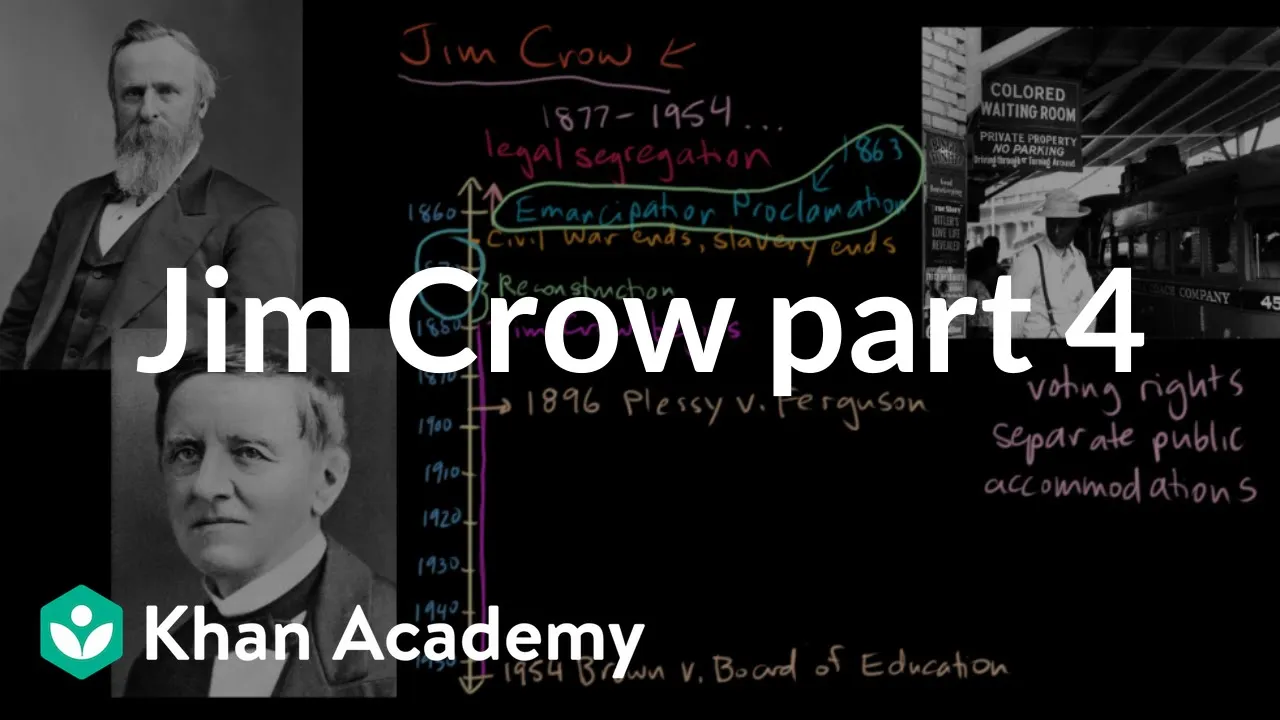
This is Jim Crow of the North.
(bright music) - Hello, I'm Toussaint Morrison, and this is Minnesota the Experience.
TPT is committed to telling the full range of our state's past, including the difficult history.
The Mapping Prejudice Project at the University of Minnesota has documented the widespread use of race-based restrictions buried in the deeds of homes in Hennepin County.
The research offers some answers as to why Minnesota has some of the worst racial disparities in the nation.
Our new documentary explores this history in which amounts to, what some researchers describe, as a hidden system of Jim Crow of the North.
(peaceful music) - By the end of the century it would seem that Minnesota was one of the most enlightened states with regard to race.
You had a leadership of the state that seemed much more amenable to doing the right thing or at least supporting in word policies that respected the dignity of the African American.
Frank Wheaton came from Maryland.
Wheaton came to Minnesota, he saw opportunity out here.
He already had a law degree when he entered the law school at the university.
And when he got out, he had aspirations for political advancement.
He understood how to establish a rapport with the party apparatus.
And as a result of their support, he was able to win an election in south Minneapolis with a constituency made up of white and immigrant voters.
He authored two bits of legislation that dealt with civil rights, public accommodations.
The civil rights bill, the accommodations bill, only dealt with Blacks not being discriminated against in terms of going to restaurants, hotels, riding in street cars or railroads, places like that.
It didn't really deal with other issues like schools and housing and things of that nature.
But for all intents and purposes, a major step forward with regard to civil rights.
- 1910, Minneapolis isn't particularly segregated.
There is emerging African American neighborhoods around Lake Harriet, around West River Road, certainly on the east side of Minneapolis.
- [Kirsten] Prospect Park is this beautiful neighborhood, very close to downtown, very close to the University of Minnesota, right on the banks of the Mississippi River.
It was a very desirable neighborhood and I think neighbors weren't surprised when they saw a house that fit into this neighborhood on what is now East Franklin Avenue.
- [Penny] Madison Jackson, he was a guy who had a law degree but he was a Pullman porter.
He moved his family to Prospect Park and he built a house there.
This was the first Black family there.
- [Marvel] My father had bought a piece of land in what is known as Prospect Park, Minneapolis, and he broke ground to build the house in which I grew up.
Until the house was nearly completed, the completely white community did not realize that a Black family was moving in.
And when we moved in, the whole community became quite aroused that a Black family should be moving in.
- Marvel Jackson, she said when the neighbors across the street saw who they were, she said that lady started screaming when she realized that it was an African American family that was moving in across the street from her.
- [Marvel] I was seven, so I remember them meeting on our lawn as to why we could not live there.
When my father and mother wouldn't budge, they had committees come to meet them.
And I remember sitting on the steps listening to some of the things that were said.
For instance, one of the things, "Our children will not play with your children," and my father was, hadn't thought about the impact on the children.
My father built us a playground like there was no other like it in the whole area and we became the most popular children in the place.
The neighbors couldn't keep their children away.
- [Kristen] A little while after they moved in, the father's friend and coworker also wanted to build a house in the neighborhood.
- [Brittany] William and Daisy Simpson, they were gonna build a house as well, and they were staying in the Jackson house while their house was under construction.
- [Penny] And I think that was the tipping point.
- [Brittany] And that's when the resistance from white homeowners really ramped up.
- [Penny] And this is where the Tribune reports a race war in Prospect Park.
This mob of over 100 people, the newspaper described it as some of the most powerful people in Minneapolis, marched on the Jackson house in October of 1909.
They read prepared statements.
- [Man] It was decided that a large delegation should call upon you to make doubly impressive a fact, namely, that the white residents of this district do not want members of your race domiciled in our midst.
We are not here to argue, but to make a perfectly plain statement of our position in the matter, to wit: That we do not want you.
- [Kirsten] And as men of prudence, judgment, and determination, we will do everything we can to prevent this.
And then there was another threat.
- [Man] Rumors have been brought to our attention that there are parties in this vicinity who are determined that you and those of your race shall not reside in this district, that they have firmly declared themselves ready to take any steps necessary to bring about your removal.
- And you have to understand in 1909 this is a period where lynchings are commonplace.
These were not idle threats.
But the amazing thing to me is that both of these families persisted.
They stayed in their houses.
The Simpsons built a lovely home which is still there today.
Marvel blazed a trail, she was the first African American child to go through Pratt Elementary School.
I learned that her mother had actually dated W.E.B. Du Bois before marrying Madison Jackson.
That gives me clues as to what that household must have been like.
As soon as they became teenagers, all those white friends she had basically abandoned her.
- [Marvel] At that time I determined I was going to get out of that kind of society and go where my people were.
- She went to the University of Minnesota where she dated Roy Wilkins and was engaged to him briefly.
As soon as she finished at the University of Minnesota she got out of Minneapolis.
Her parents had protected her, I think, from a lot of the racism in her childhood, but when you get to be a grownup you certainly can experience this more and she realized there was really no place for her here.
Well, Minneapolis's loss was the Harlem Renaissance gain.
- She ended up moving to New York City.
She ended up working for W.E.B. Du Bois.
She ended up becoming one of the premier African American journalists in the country and then she became one of the first Black journalists to work for an all-white publication.
So she has this incredible career, incredible talents, gifts, passion, and Minneapolis lost her.
Madison Jackson died in 1927.
Once he died and they sold the house, both families left Minneapolis.
And I just wonder what it would have been like if they had been welcomed, if Prospect Park had become an enclave for Black intellectuals and Black civil rights activists.
What would that have been like?
How would the city be different?
And that's what I think about a lot when I think about this story.
- The problem with the Madison Jackson and William Simpson incident is people had to show up in their front yard and threaten them.
And this was in 1909.
I don't think it's any coincidence that in May of 1910 the first racial covenant shows up in South Minneapolis.
(ominous music) I'm pretty sure I know who wrote that covenant, and that was one, Edmund G. Walton.
He was a real estate developer.
The legacy he left on Minneapolis, I mean, there's Edmund Boulevard, there's all these additions with his last name, really probably the most important and the worst was this legacy of racial covenants.
So when people purchase a home, traditionally you get an abstract package and it shows every time your property, the property that you've just purchased, changed hands.
And in Minneapolis, properties that were plotted after 1910 are very likely to have these racial restrictions embedded in the property deeds.
Covenants could be building covenants, they could be setback requirements, but the racial covenants that we're concerned with tells you who can or cannot live, lease, even occupy certain spaces.
- Racially-restrictive covenants, private contracts between individuals that allow them to dictate to whom they'll sell their property.
- Identifying racial covenants, however, has proved remarkably challenging.
The only way to find racial covenants are to read warranty deeds.
We're looking at about three million deeds in Hennepin County between 1900 and 1960 and each deed on average runs about three pages.
So we're in the ballpark of 10 million or so pages of text.
- Robin, stay on Home Garden so let's-- - Penny found but 4,000, 5,000 racial covenants by herself the old fashioned way.
She just went down to the county recorder's office and started going through deeds.
And she found several thousand racially restrictive covenants, and that was enough to get us thinking okay, hey, maybe we can do more than just show that racial covenants were a practice that was used in Minneapolis.
What if we can map all of them?
The first map that Penny made was shocking.
I was shocked when I saw this and I was shocked when she started reading me some of the language of these racial covenants.
- The wording can be very different.
They're working on early 20th century ideas of race.
Chinese, Japanese, Negro, Moorish, Turkish, Mongolian, Hebrew, sometimes Semitic, people of African blood or decent, no Negros or Jews, only Caucasians except for their domestic servant of a different race who might be domiciled with the owner.
- [Kevin] Many of them were written during the period where eugenics is at front and center of American scientific thought and that language is often what you see in these deeds.
- [Kirsten] Only people of the Aryan race can inhabit this land.
- [Kevin] Or the Aryan branch of the Caucasian race.
- I think one of the surprising things that I found in this research is 100% of these covenants are aimed at African Americans.
There's that, that's Black.
Okay, here's the legal description.
- Ah.
- What we're doing with Mapping Prejudice is we're using digital tools to do a lot of the heavy lifting to help us identify the deeds that do contain racially-restrictive covenants.
- Covenants exist across the country.
People say well, why aren't you doing this for Saint Paul too?
I know there are covenants in Saint Paul.
Their deeds are not scanned.
- Which is incredibly unwieldily, right, for traditional research methods where you go down to the archive and you just start going through the material.
You would need an army of undergrads and the better part of a century, and even then I'm not convinced you'd be able to get through all of them.
So we use OCR to translate these digitized warranty deeds into searchable text documents.
Once we have these in text document form, I can write a script that iterates through and looks for predefined racial terms.
And whenever it finds a match, we flag this corresponding deed image.
And once we have this into the still very large but manageable realm of around 40,000 flagged images, we ask volunteers to help us transcribe them.
- And then it says may not be sold, mortgaged, or leased to or occupied by any person or persons other than members of the Caucasian race.
- Oh, yeah. - Yup.
- Okay.
- You can go ahead and click yes.
- [Kevin] And those answers I then export and this actually gives me enough data to build the map.
(ominous music) - Planning has always been intentional.
They've always intentionally manufactured to shape and represent values.
The question is whose values and for whom's benefit.
And I argue historically low income folks of color in particular and, you know, larger racial ethnic groups more broadly have not been at the center of the benefits of urban planning.
- The covenants were first put in in 1910.
But at that point, developers could start buying up large sections of farmland that adjoined the city.
- [Kevin] When a developer buys what used to be a farm on the outskirts of town, they buy it, divide it into six city lots, and sell the individual lots off.
At that point when they start selling off the individual lots, that's really when their racial covenants kind of injected into the property record.
- So people like Samuel Thorpe, Thorpe Brothers could buy this up and just plot it and lay it out as they saw fit and put in covenants.
It was a very efficient way of doing this.
There's this real estate convention.
It's there that J.C. Nichols who runs the Country Club estates in Kansas City gets up and said, "A few years ago I was really hesitant, "but now I can't sell a property without them."
And Sam Thorpe was certainly there.
He was the retiring president.
He comes back and in August of 1912 buys up the land that will become Thorpe Brother's Nokomis Terrace.
And that is the first fully covenanted addition that I know of.
It talks about no colored people or other objectionable types.
Mary Greer was a woman who inherited many of the Dorman Addition properties near West River Road and after 1910, she started putting in racial covenants.
It will never be sold, or transferred, or leased, or conveyed to anyone who's a Negro, and that goes for people who are living with Negros or married to Negros.
She adopted that early on.
Her first one shows up about 1911 or '12 and you see this all through the teens and '20s with her.
And Edmund Walton did the same thing along West River Road.
At one point, I think they said he had bought up 437 acres along the river.
He had gone in 1910 from sort of surreptitiously putting these covenants in not recording them.
Less than a decade later he was bragging about them in the newspaper.
There was an ad and he printed the covenant, which shows you how quickly they were accepted.
- So the Supreme Court even held that restrictive covenants were constitutional.
This was in a case of Corrigan v. Buckley and it was in that decision where the court resolved that restrictive covenants are contracts and as such, they are lawful.
Now forget about the fact that they discriminate and forget about the fact that once we say these contracts exist, we are bringing up a violation issue of the 14th Amendment.
Forget about that.
The key thing is that the Supreme Court validated segregation, validated discrimination.
- [Kirsten] You had the full force of the law, the court system determining who could go where.
- And what will happen as a result of that is you'll see efforts to ensure that a denial to one of the most basic foundations of opportunity for African Americans will be codified in the United States as a result.
- You had not only the courts supporting it, but also a kind of license of sorts of people going to the streets and harassing Blacks who moved into white neighborhoods.
(ominous music) The white neighbors knowing that the Francis couple was moving in, offered them money to not move into the house.
William Francis and his wife, Nellie, who was one of my heroes, rejected that and moved in and as a result faced all kinds of harassment.
The Francis family did not live there for very long because shortly after moving in, William T. Francis was appointed to be the consult to Liberia, in effect an ambassador, and so they moved to Africa.
It's an example of how even the most prominent of African Americans in Minnesota at the time who had established contacts with some of the most powerful people in American politics, Nellie herself had personal audiences with Andrew Carnegie and three U.S. presidents, that despite their successes and their influence could still be exposed to racial animus.
So it shows the intensity of a property values, perception of property values in race.
(ominous music) - [Kirsten] So what racial covenants did is they hardened boundaries, they hardened these invisible racial boundaries.
- It's interesting because even in neighborhoods where there maybe aren't any covenants, just being in proximity to covenants is really powerful for keeping that neighborhood white still.
(sad music) - Homes are often take for granted for some of us.
Instances like the Lee family faced makes us realize that a home is a kind of fragile thing.
It's a one-and-a-half story, quite modest bungalow.
You wouldn't particularly notice it.
But when you know anything about its history and the story of the Lee family, it becomes quite powerful.
- Arthur Lee was a World War I vet.
He worked at the post office.
- [Brittany] He had a good, steady paycheck at a time when 30% of the city is out of work.
So he finds this house that someone is willing to sell him on 46th and Columbus.
- [Penny] It was not covenanted.
- [Brittany] They had the temerity to violate what is, at that point, this boundary in the urban landscape.
So Arthur Lee, he moves into the house.
You know, first the neighborhood association gets together and they try to buy him out.
And they contact the bank, they contact different lawyers, they try legal means.
In July of 1931, by newspaper reports five or 6,000 white people at any given time are milling around his house trying to drive him out.
- [Denise] Black paint was thrown on their house.
- [Kirsten] Their dog is poisoned.
- [Brittany] Vandalism.
Intimidation.
- The family has to sleep in the basement.
They had the sense that they had set these boundaries, that no one was to violate them.
This is just another tool, so to speak, this citizen terrorism.
- [Brittany] And in this particular case, Arthur, who was a World War I vet, right, comes home to believe that his service to our country gave him the same access as his white counterparts, but learned very quickly that that was not the case.
(ominous music) - It was really important for families like the Lee family to have advocates to help them fight.
Being able to have lawyers like Lena Olive Smith and being able to have the NAACP on their side was really powerful in making sure that their voices were heard.
The NAACP was definitely fighting against these racial covenants and these instances of racial housing discrimination.
There's also smaller clubs and organizations that were really focused on fighting this.
Unfortunately, even with all these legal protections and organizations fighting for them, a lot of people don't end up getting the end result that they want.
- [Kirsten] Edith and Arthur Lee and their daughter Mary, they stayed for two years.
They didn't make it longer than two years.
I think the pressure was just too great for them.
- I can only imagine as a parent, as someone who wants to ensure that I'm living my values, like, what it would mean to put my family at risk, what it would mean to always feel like I'm looking over my shoulder just to protect my right.
- [Kirsten] You have this escalation of this sense of threat thanks to racial covenants.
So it's that intensification, that normalization of these racist ideas that leads to the Lee house.
- [Greg] The marker at the corner of the property has a depiction, an image of Arthur Lee.
For those who just walk by, I think it gets them, it gets them thinking about it.
(suspenseful music) - [Newscaster] Ownership is the basis of a happy, contented family life.
And now through the use of a national housing act insured mortgage is brought within the reach of all citizens on a monthly payment-- - In the midst of the new deal when the FDR administration is looking for ways to try to stabilize the housing market, the Fair Housing Act is passed in 1934.
And as part of that, the Homeowners Loan Corporation is also established with the hope that if you could establish longterm mortgages with fixed interest rates you could create pathways to home ownership for most Americans.
- [Newscasters] This time they can buy this house with monthly payments that are less than they now spend for rent.
- When the FHA starts underwriting mortgages in the 1930s, this really is a game changer in a lot of ways.
It takes a lot of risk off the banks, it places it onto the federal government, and now working class, middle class families, they're able to purchase a home.
- Unfortunately as part of that, what the HOLC does is it establishes designations for neighborhoods based on the occupants of those neighborhoods.
- [Kevin] And this is where the term redlining comes into place.
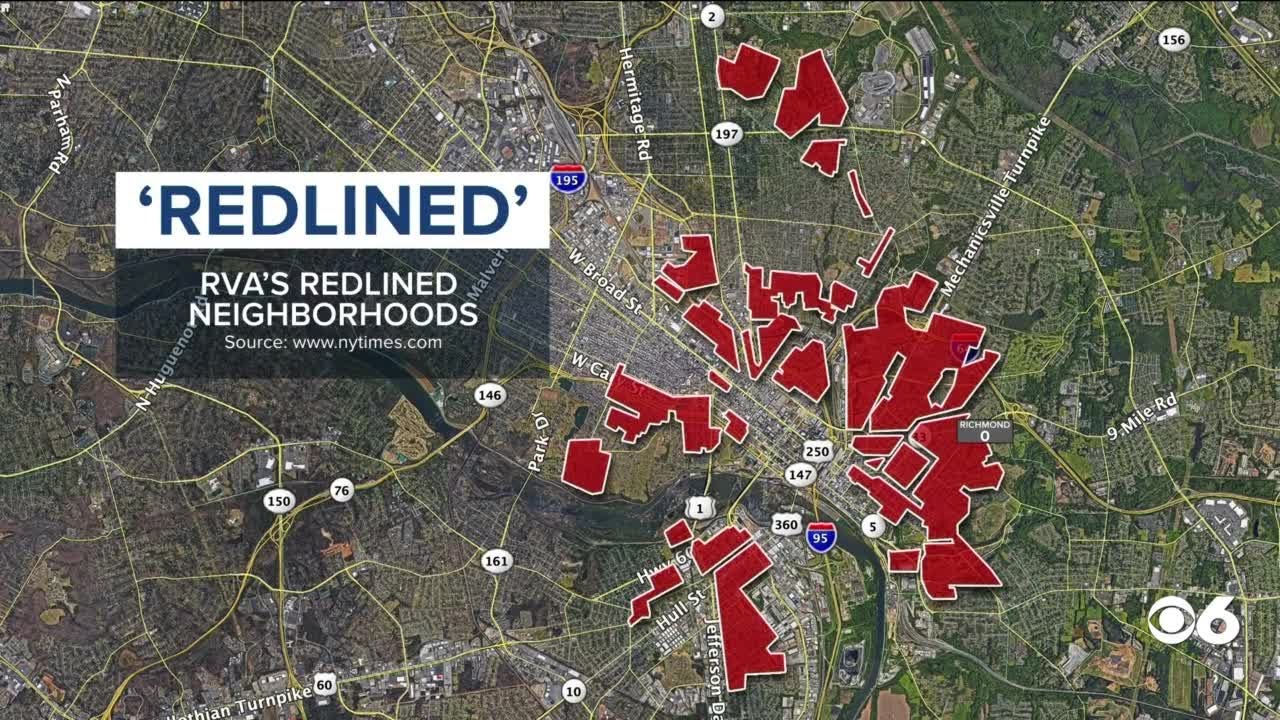
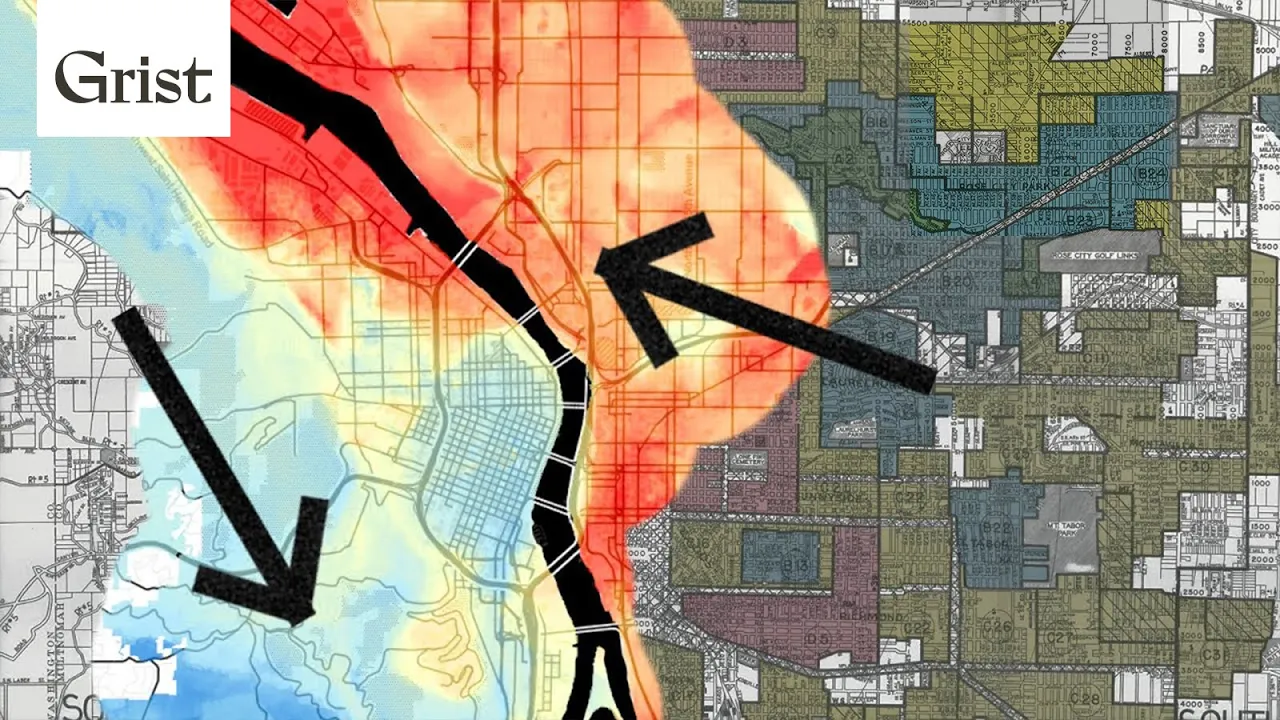
The FHA, they made color-coded maps of all the largest cities in the United States and they broke cities down into four different areas.
Red is considered hazardous, that's the worst; yellow is considered definitely declining, blue is considered still desirable, and green is considered the best.
- And what's so powerful about this kind of scale of measuring investment, it was about value to people.
- [Yohuru] The fact of the matter is that there was no evidence that those people who lived in those communities, predominantly Black and Brown people and foreign-born people, would have defaulted on loans.
- There are no firm realities behind the close proximity to blackness and your property values going down.
That's just not true.
- The FHA is being very upfront and very explicit in how they're linking spacial desirability with racial occupancy.
It's this racialization space idea.
So areas that were predominantly African American or majority minority or really in a lot of cases even if there's a few non-white people there, that's often enough to be redlined.
So when they built these maps, they also explained why each area got the ranking it did.
- [Kirsten] The area around Fourth Avenue South, which is called the Old South Side, this was a nice area, it had nice homes, it's the historic African American neighborhood on the south side of Minneapolis.
- This one part of south Minneapolis was redlined specifically due to, and I'm quoting, a gradual infiltration of Negros and Asiatics.
The FHA refused to give an area a green-lined designation, again this is the best designation that they'll offer unless, and I'm quoting again, restrictive covenants are already in place.
That line is from the FHA underwriting manual.
Racial covenants aren't just about discriminating against people of color.
It's about enriching white people and I think that's the part that often gets lost in this narrative.
And I think it does speak to the ways that white supremacy have been embedded and really built structures and built environments.
I mean, if your grandparents bought a home on Minnehaha Creek, that home's worth half a million.
If your grandparents rented in an area that was redlined and then subsequently destroyed by a freeway project, you're not inheriting anything.
- In a lot of ways, the practice of redlining, which didn't start until the 1930s, institutionalized and spread racial covenants all over the country because suddenly developers got sanction, they got direction from the federal government saying this is best practices if you want to have a really high rating from us, if you want to get the most favorable terms for any loans.
- By kind of de-integrating Minneapolis, which in many ways is what racial covenants are doing, this set the stage and enabled all the subsequent systems of inequality to really take hold.
- [Penny] This very persistent myth that northern cities never had formal segregation.
The South had Jim Crow and look at those signs.
Well, racial covenants did the work of Jim Crow in the North, all over the North.
- Many, many whites simply were not aware that there was a segregation.
So many people in Minneapolis, they'd be outraged once they thought that their friend was being discriminated against.
They knew something was happening but it wasn't happening to your friend.
That's what was kind of this mixed kind of a situation that we had in Minneapolis.
I mean, if you could imagine these people, their parents sent me cookies and cakes all during the war and I was welcome in their house.
There was no question about it.
And then there's other people who were absolutely klansman.
That was what Minneapolis was all about.
But that was my generation in Minneapolis.
We were hemmed in in that ghetto, and that was our life, that was our, that was our world.
- The 1935 land use planning map used to define which places get mortgages versus others circled these areas, called them slums, places where the quote-unquote Negroes lived.
These were places to avoid, right, so they were gonna give you substandard housing and they're gonna contain you.
Access to affordable housing was a challenge.
When you think about the reasons behind the creation of public housing, you had a lot of folks forced to the low-wage sector, and you're thinking about what jobs or opportunities that low income folks of color even had access to at this time.
I would argue that was the creation of public housing in 1938 when the Sumner Field Homes began this really interesting iteration of the redesign of space.
You have 400 units of public housing which was segregated at the time, created.
Then 1953, the city council of Minneapolis refused to scatter another thousand units of public housing outside of the Sumner Field Homes area.
And where did these pressures come from?
You had both internal conservative politicians and outlying suburban communities coming and saying not in my neighborhood and the city council crumbled under the pressure and then took what was 400 units of public housing to over a thousand units in less than a decade.
They have strategically manufactured urban poverty.
(slow music) - This history is very personal for me.
I'm a third generation Minneapolitan.
Both my grandparents were immigrants from Sweden who came to this country with nothing, worked incredibly hard jobs, but both sets of my grandparents in 1942 were able to buy houses in South Minneapolis.
These houses were not part of the city that was blanketed by racial covenants.
Because of those racial covenants, my parents grew up in neighborhoods that were entirely white and in many ways they describe them as a paradise for children.
They had wonderful parks, they had really solid schools that sent them to college.
But no one in their neighborhood ever talked about the fact that this neighborhood was only for white people.
And I want everyone with this map to imagine themselves in this landscape of privilege and disenfranchisement.
(soft music) - [Man] The Justice Department contended that restrictive covenants among private citizens barred Negros and other minority groups from residential areas and are not enforceable by the courts.
Their joint brief described the covenants as an artificial quarantine of minority groups.
- [Kevin] Covenants were one of the big issues that the NAACP was tackling in the first half of the 20th century.
- Thurgood Marshall was leader of the litigation part of NAACP.
When Thurgood was asked upon his retirement what was the most important case, everyone assumed he would say Brown versus Board of Education.
He said no, it was Shelley v. Kramer.
- [Kevin] Shelley very. Kramer in the late 1940s was one of the more seminal civil rights cases that ever made it to the Supreme Court.
It didn't explicitly end racial covenants as a practice, but it was a pretty big blow.
- There could be no enforcement of restrictive covenants.
So you could still write a restrictive covenant, but a person who signed it could breech the contract and sell it to a Black person and they would not be held liable.
- [Kevin] It wasn't as effective as a lot of folks hoped.
What people started doing is instead of suing for breech of contract, they would sue for damages.
So if somebody sells a covenanted home to an African American, the neighbors can sue that person because their property values are now lower.
- Well is there anything the matter?
- There's never going to be any violence in this part of town.
We're peaceful people.
You've got friends here.
I'm your friend.
We just want to know what it is you think you're doing to us.
- If I have a covenanted home and I sell it to somebody who isn't white and I get sued, I lose the house, any equity I've accumulated, the property reverts to the initial granting party, so whoever first put that covenant on the land.
If that person's dead, it would revert to the heirs or assigns of the initial covenanting party.
So the risk of going against these things is just, like, astronomical.
(sad music) - The restrictive covenants has already laid the foundation for a continued denial of equality for African Americans by virtue of these private covenants, which the Supreme Court will determine in 1948 were judicially unenforceable but still legal.
In fact, it plays out in a very powerful way in Lorraine Hansberry's play A Raisin in the Sun.
- You know that money we got in the mail this morning?
- [Travis] Yessum.
- [Lena] Well, what do you think your grandmamma done went and done?
- [Travis] I don't know, Grandma.
- She went and she bought you a house.
(glass cracking) - As that play was being produced you have situations across the country including one in Delaware where a family in Collins Park are forced out of their home by a mob and then ultimately the home is bombed.
But what Lorraine Hansberry captures in there in that wonderful passage where Walter Younger is kind of laying out what the foundations for freedom and equality will be for his family, and it's home ownership.
One day, son, we're gonna sit down and we're gonna achieve all the great schools in America but the pathway to that is the ownership of a home.
And Lorraine Hansberry hit on something very powerful in A Raisin on Sunday because it's playing out about this family seeking home ownership as a pathway to true freedom and true equality.
- [Newscaster] And there is no one factor more representative of or more conducive to the economic well-being of the American citizen than the home in which he lives.
(grand music) - [Kevin] The spread of covenants in the first half of the 20th century is pretty much the same story as the spread of the Twin Cities over the first half of the 20th Century.
The first-string suburbs, Edina, St. Louis Park, Richfield, Bloomington are all blanketed in racial covenants.
They probably have a higher density of restrictions than Minneapolis does simply because there was more development happening in Bloomington around 1950 than in Minneapolis.
And the effects of that are very surprising, right, like that ring is very white and this pushes African Americans into kind of the center of Minneapolis.
- [Yohuru] It denies them access to those mortgages.
It denies them the opportunity to sell their homes, and in that sense it closes off an opportunity to escape those communities, but more importantly, denies them the same pathway to the acquisition of wealth, home ownership, and then of course the sale of those properties and bequeathing those properties to their children.
(gentle music) - My dad made it Tilsen would have open houses on, I think it was 41st and Fourth was the model home.
It was something to behold because as a kid you don't really understand what desegregation meant or what segregation really meant and redlining.
You didn't really know.
But you saw people come in who knew what that meant.
- And in fact, I think the spokesmen billed the Tilsenbilt Homes as possibly the first open housing event in the nation, so it was one of the first times African Americans could buy new homes on the quote-unquote open market.
It's a huge piece of housing history for the construction for the Tilsenbilt Homes that your dad demanded that there be African American men working on those jobs.
- He knew what that economic power could be, what the job power could be, and he did insist on his contractors bringing people of color to the job, and it was extremely, extremely important to him.
And I think the fact that it started here, again is something unique about Minnesota.
- At the same time, the disparities that we have now don't support that it was continued.
- No, it didn't carry out throughout the whole community, that's for sure, or the city, yeah.
It wasn't citywide and so there is that some significant divide that still lasts.
(gentle music) - We moved to Minnesota, so that was 1956.
I felt we were very fortunate to meet the people we met, a wonderful community of Black activists and others.
So I became involved in League of Women Voters NAACP.
We were very much involved in issues dealing with employment opportunities, education for our children, housing discrimination.
- If you are wondering what the Fair Housing March is all about, we are attempting to get a fair housing bill passed in the State of Minnesota now.
I was wondering if you would contribute something to the Fair Housing March.
- I sure will.
- Thank you very much.
- There was this sense that what we needed to do was to really create a lobbying effort at the legislature in the '61 session to get fair housing introduced and passed in that session.
So I was encouraged to be the chief lobbyist for that.
And I invited my friend Matthew Little, Zetta Feder, and my friend Katie McWatt.
We would feel that to deny some parts of the housing market, the effect of the law is fraudulent, in effect.
- Those who own property have the right to sell and the right to rent to whom we please.
And the white people, the white race had better wake up and see the handwriting on the wall before it is too late.
- To see that America, that part of America, Saint Paul, become more truly what we call the American Dream, it's going to be hard.
It's going to cost money.
You have made this mistake, your forefathers have made this mistake and it cannot be remedied without a lot of pain, and suffering, and the expenditure of hard cold cash.
- I felt we were losing the vote and so I went to Governor Elmer Andersen.
He was a very open, fair, liberal Republican, one I knew and had a lot of respect for.
So I went to the governor and I said, "Governor, the housing bill "is gonna be defeated in the judiciary committee "and I'm very worried."
And he went to his desk and wrote a note to each member of the judiciary committee urging them to allow the bill to get out of the committee, that it was only fair and just in his judgment and allow it then to be treated in the full senate.
And the bill passed by one vote, so it then got to the full senate where it passed but again narrowly.
So that's back in '62.
But Minnesota was one of the first states to pass a fair housing.
- Whereas Minnesota's Fair Housing Act becomes operative and implementation of the law must come from the willingness of all of our citizens to cooperate for their common protection as well as the belief that discrimination practiced against any individual is a threat to all, now therefore I, Elmer L. Anderson, Governor of the State of Minnesota, do hereby proclaim Saturday, December 29th and Sunday, December 30th as Fair Housing Sabbath in Minnesota.
- So between '62 and '67, you know, I've been very troubled because there was still so much discrimination in housing.
- [Radio Announcer] This week's program deals with the proposed fair housing bill to prohibit discrimination in the sale or rental of housing.
Senator Mondale is chief author of the bill in the Senate.
- [Walter] This is not an anti-riot bill, but at the same time I think we have to be wise enough and mature enough to realize that these riots tell us something about the deep and abiding frustrations and sense of rage that exists in our American ghettos.
There are compelling problems of injustice and unfairness in employment, and housing, and education, and many other areas that we should have taken care of a long time ago.
(gentle music) - The Fair Housing Act makes it illegal to discriminate based on race, age, later they add sex and disability, and et cetera to ensure that everyone has equal access to housing where they so choose.
And I think that has opened up doors for a lot of families.
What happened to the Black middle class, for instance?
So many folks were able to break into neighborhoods that they weren't, you know, didn't have access to before.
And we should have those choices.
But when you don't have the economic mobility to make those choices, fair housing doesn't look very fair.
- [Kevin] 35W and I-94, expand Hiawatha, expand Olsen Memorial, these were all explicitly and very intentionally run through these Black communities that emerged as a result of this kind of cordon of covenants that had taken place around the city.
- 35W going south, it was a dividing line between the folks on the other side of the freeway and the folks on our side of the freeway.
It's interesting of, you know, it brought people together in one sense and we were able to create our own community around 38th Street and Fourth Avenue.
- My dad and their family are originally from the Central neighborhood and he went to Central High School.
And they'd tell me these stories just about what they called kind of the Black Mecca in the Central neighborhood.
When you talk about the problem we're talking about from a deficits-based language, I also want to make sure we're talking about an asset-based language.
We need to be aware of this kind of assault on the character of these places and take back that narrative in intentional ways.
- We're not gonna be able to everybody out of these discriminated areas because many of them are in the center of our cities and many of these people want to live there and they want this opportunity for home ownership.
And the only way we can do it is by partnership between private industry and the lending business and our government.
- Our community was redlined.
Simple as that.
Now as a community, we made the best of it and we produced a great many influential people, as well.
And a lot of that came from having developed a pretty powerful community.
- [Pastor] And then they agreed.
- [Congregation] Amen!
- When Central High School was shut down, it took the heart and the soul out of this community and I remember them talking about Fourth Avenue and how it was now referred to as Crack Avenue, which talks about the decline in the economy in this neighborhood.
But up and down Fourth Avenue throughout the neighborhood there were tough times.
- So even though covenants are now illegal, kind of this yawning chasm of wealth inequality that emerged as a result of covenants is still very much with us today.
(slow music) 75% of white families in Minneapolis own the homes that they occupy, but 25% of Black families in Minneapolis own the homes that they occupy.
It's actually the largest, in terms of percentage, gap in the country.
And this has huge implications for the racial wealth gap.
- You look at where our high-income communities live, where now there's an investment home ownership for certain communities versus others, were Black folks were able to have participated in that during the rise and proliferation of racial covenants, you might see a different notion of Black wealth.
We have to first acknowledge that history and understand how we're implicated in it to then get to repair the solution.
- You do have a covenant, but it's-- - Mapping Prejudice Project is doing something unlike anything seen across the country, which I think is amazing.
So they're mapping the history of housing discrimination.
They're naming something that has been allowed to exist in the shadows of neighborhood planning and politics.
- The whole point of this map is to get people to read these racial covenants, to get people to read these racially restrictive deeds.
So from the beginning, I wanted to invite as many people as possible into that process.
- I think it's fascinating to see.
There's a genuine curiosity about something that lay hidden for so long and buried.
- And I think doing it is kind of a way to kind of get in touch with history and better understand how things are the way they are now and see the direct connection in systemic racist language that is very much a part of our history and is very much a part of our present reality.
- With the exhibit Owning Up, Racism in Housing in Minneapolis, we're hoping to illustrate the history of housing discrimination and racism and the impact that that had on real families.
We really want to confront visitors with these histories to really take action, take responsibility, and to try to help create change in some way.
- And you're done at that point with that particular deed.
As it turns out, a lot of university professors are incorporating this into their curriculum.
And you've got another one.
- Oh, okay. - Okay.
Once you see that in a deed, you think okay, this is one, but there's thousands out there.
- This has been an amazing experience, I think, for everyone involved.
I mean, it's been amazing to me to see the good will and the energy that people have given us, which has been a huge gift.
But I've also talked to people and I've actually collected some data on what people say their experience has been.
These are mostly white people and they have reported that the experience of reading these deeds has been transformative for them.
- This one is on Lake Minnetonka - [Woman] This one is on Lake Nokomis.
- Their work is a graphic example of this otherwise invisible practice of discrimination.
- Ideally, what we're looking at is changing the grand narrative away from personal, pathology, cultures of poverty, as the saying goes, to saying you know, the system was rigged from the get go.
This is how it happened.
- So at the last moment, city planners decided to reroute the freeway several blocks east, right through a Black neighborhood.
Racial covenants show us how-- - We're showing how incredibly central racial covenants were in terms of laying the groundwork and the foundation for those later manifestations of racism.
We are inviting people not just to know about this but also to take action.
and what we are attempting to do is to build the first comprehensive spatial database or map if you will of racial covenants of any city in the country - I mean, this just gives you a level of precision in data that nobody's really had access to previously.
And when used in conjunction with redlining, I think it can make very powerful arguments about which areas of the city need to be systematically reinvested in.
- So it's real important to speak about the history of the community and figure out what made it click yesterday and implementing some of those same approaches tomorrow.
And I see pieces of that kind of development of the community starting to surface.
- [Brittany] We talk about space and urban planning, we're talking more than just, like, bricks and mortars, and, like, windows.
We are talking about people's lives, their values, and their humanity.
(pensive music) (gentle music) This program is made possible by The Minnesota Arts & Cultural Heritage Fund (Bright Music)
Up Next
5:07
How Redlining Drives Extreme Urban Heat Inequality
@Grist
58K views•2020-08-04

33:02
The Great Schism of 1054: Causes and Consequences
@SacredCathedrals
113.5K views•2026-02-19
91:57
The Geopolitics of the Ukraine War and the Rise of Global Autocracy
@JordanHarbingerShow
468K views•2025-04-19

17:05
Understanding the Cold War: Superpower Conflicts and the Road to Détente
@OverSimplified
46.1M views•2019-01-24
Related Study Plans & Knowledge Roadmaps
Structured learning paths in History
history
Byzantine Iconoclasm: Theology, Art & Politics
01Foundations of Byzantium and Early Christian Images
02The First Iconoclasm: Leo III and the Crisis of Images
03Empress Irene, Nicaea II, and the Second Iconoclasm
+ 2 more learning modules
9h5 modules
Explore Roadmap
history
Iranian Revolution (Causes, Events & Legacy)
01The Pahlavi Dynasty and the Roots of Discontent
02The Spark of Rebellion and the Rise of Khomeini
031979: The Fall of the Shah and the Climax of the Revolution
+ 2 more learning modules
8h5 modules
Explore Roadmap
history
Mali Empire: Mansa Musa, Trade & Timbuktu
01Foundations of the Mali Empire
02The Trans-Saharan Gold and Salt Trade
03The Reign and Pilgrimage of Mansa Musa
+ 1 more learning modules
6h4 modules
Explore Roadmap
history
1947 Partition: Politics, Borders & Legacies
01Foundations of British India and the Divide
02The Political Negotiations and the Mountbatten Plan
03Drawing the Boundary: The Radcliffe Line
+ 2 more learning modules
8h5 modules
Explore Roadmap