














![SOSIOLOGI PERKOTAAN - TEORI RUANG [PODCAST CIC]](https://i.ytimg.com/vi_webp/lf0Z3-dty5Y/maxresdefault.webp)


Sociology examines the interaction between structure (rules and resources that constrain or enable action) and agency (the capacity to act), using various research methods including surveys, focus groups, in-depth interviews, and ethnography, each offering different trade-offs between data nuance and representativeness; this framework helps understand how neighborhood structures and individual choices interact to shape urban outcomes like residential segregation.
Sociology of Space & Place: Structure, Agency, Neighborhoods
Added:The sociological concepts of 'structure' (social forces, institutions, and laws) and 'agency' (individual choice and action).
An introductory understanding of mixed-methods research, specifically how surveys and qualitative interviews complement one another.
Basic concepts of urban sociology, such as residential segregation, neighborhood effects, and socioeconomic stratification.
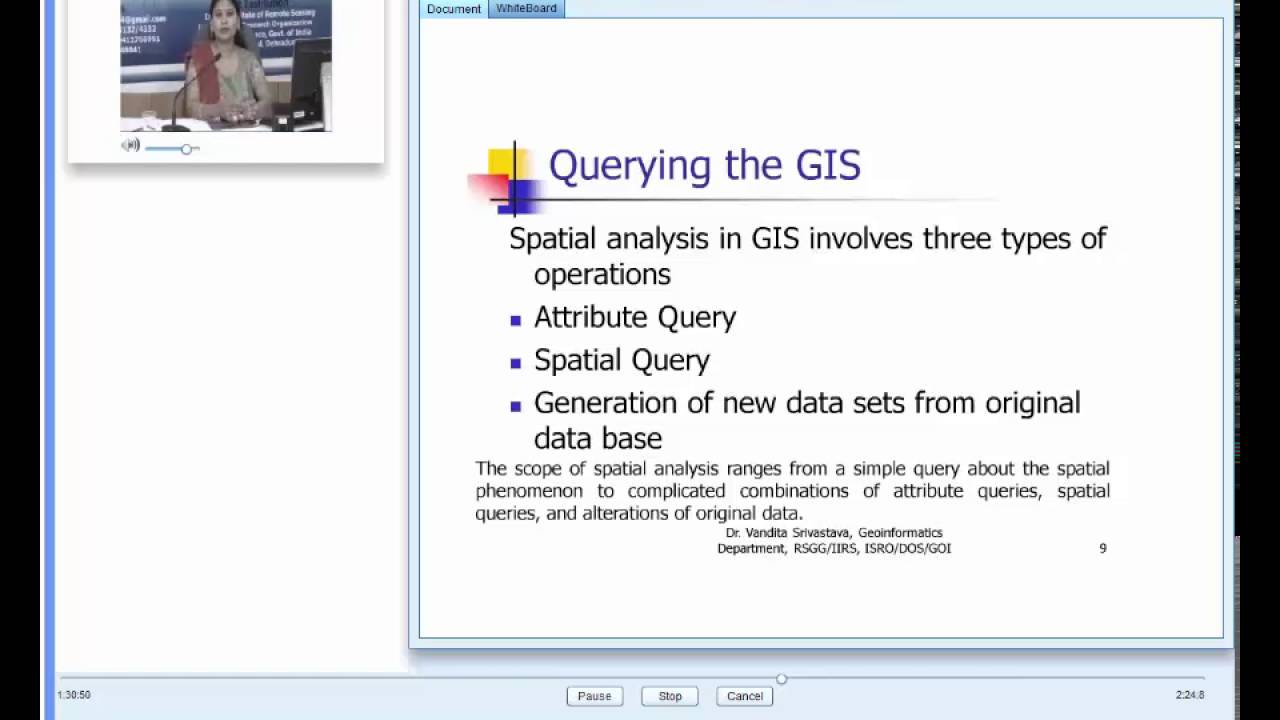
A foundational awareness of spatial analysis and how geographic information systems (GIS) are used to map social phenomena.
Advanced spatial sociology and the application of GIS to analyze systemic housing discrimination and redlining.
Urban policy and planning interventions designed to address neighborhood inequality, such as zoning reform and affordable housing initiatives.
Critical geography theories, such as Henri Lefebvre's 'production of space' or David Harvey's work on capital accumulation and urban development.
Longitudinal studies on neighborhood change, focusing on the long-term patterns of gentrification, displacement, and demographic succession.
136 views1likes59:14Original Release: 2023-02-20
Great. So without further ado, Mike Bader, the director of the 21st century cities initiative and professor in the department of sociology at Johns Hopkins University and most important of all co one of the co-PIs on VC. Uh take it away Mike.
Thanks Ben. Um I appreciate it and thank you everyone for coming. Uh to be honest, I'm a little nervous, more nervous than I think I would normally be for a talk because I um am so impressed by working with everyone uh in this group. And so um but I'm also excited to be able to share a little bit of the perspective that I bring. So um before I do that, I thought it might be helpful to give you all a little bit of a background about myself because I kind of had a circuitous route to where I am now. Um and um I actually started off my undergraduate degrees are in architecture and art history. So for all the architects on the call uh shout out to you. Um and realized in the process that I um was much more interested in the study of space um and the and its uses than I was in the design and and practice of architecture. And so towards the end of my undergraduate career, I ended up switching to sociology and really trying to understand how um space and society affects um people's outcomes and and what um their life chances. And so um so that's that's perspective that I come from. And so um what I thought would that that would be helpful for the group is to kind of break the talk into a uh three different parts. So the first part is really talking about what sociology is at least from my point of view. Sociology is one of those fields that is does not have a strong um kind of cohesive set of norms and practices. Like I would say economics probably has much more of that. Um, but I think there's some things that we generally agree on and so I'm going to try to to describe those and discuss how they're I see them as being important for what we're doing in the work that we're sharing together. The second part is um describing a little bit about the research methods that we use in sociology and the kind of advantages and dis you know the the kind of trade-offs that we make with those and in particular talk about the Baltimore area survey since it's part of what we'll be doing uh to gather data and so I'll talk a little bit about that and then finally I'll get into kind of an example of how um I use the research you know kind of the perspective that I'm going to show you in sociology and give you kind of a hands-on on example of how I approach that. So, um, so I'm going to try to get through this. One of the things that if you have kind of clarifying questions, feel free to to jump in and ask, but if there's kind of larger conceptual questions, we can save those to the end.
That would be helpful because I I kind of want to make sure that, you know, some of the things I might cover later on and things like that. So, um, so feel free to jump in. I because I'm not in my normal desk, I don't have a second monitor. So if you have a question, just jump in and and uh shout. Uh don't I'm not going to be able to see people raising their hands or anything like that. So um so with without further ado, um the um the way I approach sociology and again this is not sociology is a is a discipline that has a lot of heterogeneity in it. So, you know, different folks would would classify and describe this differently, but the way I I really approach sociology is that it's really trying to understand the interaction between structure and agency. And so, if we think about um structure, the this definition comes from a sociologist named Anthony Giddens. It structures are the rules and resources that constrain or enable action. And there's some kind of basic structures that that are very easy to think about. You know, we think about laws. We can think about um rules or regulations, but structures can also be other things that are not as kind of obvious. Um so things like culture or norms or behaviors, but can also be structures that um enable or enable or constrain different actions in in different settings among uh different groups. And one of the things that's important is that structures can differentially enable or constrain actions. So we can have some um structures that enable certain groups while constraining others and vice versa. And so that's something that you know so as we're kind of thinking about what structure is. One of the things we're trying to define is how do people base their actions on what they cons what they how they perceive themselves being constrained or unable to act in certain ways which leads to the second component of what I was mentioning which is the capacity to act which is agency which I define as the capacity to act and so here um we you know it's one of those words that's kind of jumped into uh the common vernacular but the way I think about it is not just the uh we often think about agency as free will but as a sociologist I also think about how much capacity someone has to act in a certain situation and by that I mean do they have the tools necessary do they have the social standing necessary do they have the um ability and wherewithal um in addition to just free will and so that's you know how we how I define agency and how I think most sociologists I think would agree me with me on that um and so when we're thinking about this Right? All structures in society are based on individual actions. Right? We might not be able, you know, if we kind of go back and trace the source of our legislative system or the source of our norms, we can go back and kind of trace that there were individual actions that led to the structures. And more importantly, now there are those individual actions continue to maintain the structures that exist in society.
And so it's only through individual action that we have structures. there is no kind of structure outside of the collected people and how they act in society. Right? So we we on the one hand create the structure.
On the other hand, all of those structures constrain how we act. So there are certain ways we may or may not act. We may or may not, you know, say or do certain things in our classroom because of norms or behaviors. Um we may or may not choose, and I'll talk about this in a second, choose, you know, particular neighborhoods to live in based on perceptions of place. And so all of these things uh the dynamic of sociology and why I find it so fascinating is really trying to understand how our individual minds connect to larger structures. And it's helpful here I think to describe a little bit about the history of sociology which really comes from the the genesis of sociology. It's a relatively new discipline. It really started around the turn of the 20th century. Um and it was kind of a response on the one hand to the growth of psychology. you know, think about Freud as kind of the quintessential example, although there Freud was obviously building on a um body of work himself and then what was called at the time economics, but would probably now be called something more like political economy, which is more like kind of macroeconomics. You think about canes and um and um Keynesian economics and and the kind of idea of understanding how macro structures and states interact with one another. And so sociology was really trying to understand and develop kind of in the gap between these two. So how do we get from the individual brain up to social um structures and society that you know we where we can think about the world economy and so it was kind of built at the at the time of this in the turn of the 20th century to really make sense of the those two fields and saying there's there's something in between those two to really try to understand. And so that's where um sociology really really emerged.
So, um, so I guess I'll stop. Uh, well, actually, let me go through a couple more things and then I can I can stop for questions. I know I saw I don't want to take them, but but I I do want to make sure I don't get too far ahead before we we um move. So, we're thinking about structure and agency, right? The one of the cool things that or one of the things I find most fascinating and one of the reasons that keeps me excited about sociology is that we really need to think about um our research and the data that we gather all the way from the level of individual brain. And so there's a field within uh sociology a sub field called um social psychology which is actually you know half psychology and half sociology all the way up to what we might call world systems theory which is really thinking about how states interact with one another. And so when we think about data, um it's important to be able to gather data at each of those different levels. And so I'm not going to describe all sociological data that exists in the world because um as exciting as I find it, I'm not sure that that would be as uh pleasurable for all of you. But um but I do want to describe some that I you know, kind of a subset that I think are going to be really important for the work that we do together as BAG. And um and in that I think there's really a trade-off that we should always be keeping in mind which is the the um there's a trade-off between the level of nuance that we can get from the data to really understand the processes and the representativeness of the sample that we have to the general population. And these two things aren't necessarily intention but in all for practical purposes they often are. And so if we talk if we think about the highest level of representativeness which is kind of the lowest level of nuance we have surveys and when I'm talking about surveys I'm talking about something very specific which is a representative sample of a population that you are able to ask questions and gather data from that representative population. So one of the things that's hard you know is oftentimes we're like oh we did a survey and then you know I'll ask like well how did you get your sample and I'll be like oh we just emailed it out. I'm like that's that's you know that's not going to help us very much because what we need is a representiveness and the advantage of statistics um and sampling is that we're able to sample from that large population. And so one of the the benefits of this and one of the reasons I strongly believe in surveys and think that they're extremely important is that it's one of the only way and for all intents and purposes I think it's the only way to really gather a representative sample of thoughts, opinions, attitudes, beliefs from a population. And so if we don't use surveys, then we risk being um subject to whoever is able to answer questions or show up to events, which I'll talk about a little bit more. But the problem is we often don't know why respondents answer the way they do, which we often times are trying to imputee or use other data or use other research to kind of explain why certain questions come about. And so as I mentioned, there's not a whole lot of nuance available in what um we're able to gather from surveys.
So if we go down one level in terms of representativeness, but up one level in terms of level of nuance, we have focus groups. And focus groups are especially valuable to help us understand how groups make sense of the world. And one of the advantages of of focus groups is that because you have multiple people interacting, you're not subject you're not kind of constrained by what someone says and kind of within their own mind.
There is some social interaction and dynamic to try to understand how people make sense of something. So if we're talking about for example, what does sustainability mean, right? I mean that might not be a very good question actually to ask for a focus group, but if we kind of started there, how people make sense of that term and what it means to them gives us a sense of not only how individuals think about that idea, but how they process it together and kind of come to consensus about something. And so that can be really valuable for some of the things that we're talking about, especially in terms of um decision- making and being part of the the kind of uh feedback cycle of making sure that they're part of the the the community members are part of the engagement um of that. But one of the problems with focus groups is it's limited to who shows up, right? And so we know that there's large uh disparities in who comes to different types of events. So if you have something at night and you know people who are wealthier, who have more time, who don't need to worry about child care, um who aren't working nights, um who are able to travel to wherever the meeting is or have broadband to get there. So all of those things limit um the usefulness of focus groups in terms of the representativeness of who they're able to represent.
So from there, if we go down one step further, we can think about in-depth interviews. And so when we when sociologists talk about in-depth interviews, um many surveys are also actually interviews, but they're they're systematic. And so in-depth interviews are often much more like a conversation in which you're trying to understand what um how someone is thinking through something. So the follow-up questions aren't necessarily prescripted and you're you're you know, kind of following where the conversation goes with some intention of where you want and what kind of research questions you're asking. Um, but there's a lot more freedom to kind of understand and and and learn things that are not already um designed to be asked about.
Um, and so and this is particularly important uh to get to know how people themselves interpret the world, right?
When we kind of think about what I was saying before about sociology being, you know, the idea of kind of individual people thinking through or feeling um or relating to the world to larger social structures. This is how people make sense of and we can ask people why they do certain things, but it's extremely difficult to do at a large scale. Um one of my colleagues Stephanie Duca in the sociology department has mastered this.
So she can do like 200 interviews at a time, but it takes an entire um army of graduate students and I don't think she sleeps. So I don't think that that is a very long-term or sustainable process.
So oftentimes what we're talking about are several dozen interviews um rather than kind of in the hundreds.
And then finally is um kind of at the at the lowest level of nuance. I mean sorry lowest level of representativeness but the highest level of nuance is ethnography or it's also called participant observation and the idea here is that folks actually embed themselves into the researchers embed themselves into the lives of the people that they're studying um to really understand social processes that are are occurring and what is incredibly helpful about ethnography is that we can see what people do not just what people say um so I'm you know I can say that I believe that exercise is important. If one observed me and how much I actually exercised in my own life, you would find a very different answer about how much my revealed preference of exercise is important to me. Right? And so one of the things that that that ethnography helps us do is understand how people interact and and to make sense of ways that people might not even notice or observe that they're interacting with one another to understand um the world. But the biggest problem with this is it's really limited to where the researcher can be. And this is one of those areas the types methods where it's really hard to do any kind of team work because ethnography is so much based on observing individual situations and the researcher making sense of it in the moment understanding seeing how people interact that it's really hard to kind of build a team-based method of ethnography. And there have been some limited success cases mostly actually in anthropology. uh most of the efforts in sociology have led to great individual ethnographies, but the kind of collective has kind of fallen apart. Um so this is one of the things I want us to make sure that we're thinking about as we do our work together is that when we're thinking about social science research, it's different than community engagement, right? Community engagement is really trying to get people's opinions and and ideas in order that they can collaborate with us. where social science research is really basing our, you know, trying to understand the world in terms of analyzing data and we want to do that ethically, but we're also trying to, you know, kind of make sense and generalize to larger theories about the world. Um, but also be conscious of the level the kind of trade-off between the level of nuance of the data we're able to gather and the representativeness that we're with which we're able to generalize to the overall population. So relying, for example, as I mentioned before, only on focus groups or in-depth interviews will give us a really good sense of how people in both to themselves and to and with each other make sense of things. But it's going to be limited to whoever we're able to get um at a particular place. Whereas surveys can be much more um much better at getting us a sense of whether the kinds of ideas that we're proposing are understood and um evaluated similarly or differently across, you know, large um demographic groups such as by race or gender or age, you know, kind of life course whether they have kids or not.
And so those are the kinds of things that I hope that as we move forward um we will be thinking about as a group.
Mike, can I jump in just for a second?
Yeah. Because I love this framework. The Pakori um um ina in methodology standards for patient engagement tend not to like the focus groups or they tend to po point out their limitations and they talk about a a um a model where you have ongoing engagement um with a group of individuals over time longitudinally as you carry out the research. It's different than community engagement at least as as pakori as I've understood pakori to think about it and I'm and I'm wondering where on your uh schema you would put again pakori patient engagement um as a methodology I mean the so I would put those as focus so the focus groups is just the focus groups could meet over time right so that would be kind of a group so the the key for I mean this is distilling found like a huge amount of like um there's variations within each of these.
And so I would say that that the method that you're I mean I'm not familiar with it myself. I'm not you know not being a physician I'm not kind of familiar with it. So the um but what what it sounds like is that it's a focus group that meets longitudinally. So it's kind of an adaptation of focus groups um where you're meeting with the same groups over time to understand and see how they engage. One of the things, you know, and there's trade-offs to I mean, there's trade-offs to everything. You know, I see Ben on on the call. So, there's trade-offs to everything, right? And so, the kind of advantage of having a single focus group is it, you know, I think that there is a research advantage to that. If you want to really understand how people make sense of things when they're talking to people who they don't already know and already have a a relationship with, there's important information how people are making sense from kind of what are the assumptions that people are making and how do they receive information when they're hearing it for the first time, right? Whereas if you have a group and that group meets over time, they're going to have some kind of social relationships and familiarity with each other. There's so that group itself is going to take on a social dynamic that's going to have its own structure, right? It's going to be a mini structure. is not going to be as large as like racism or capitalism, but it's going to have its own structure.
And so that's going to affect what people are saying and what and what they're communicating. So I think that it's one of those things to be aware of um as we're, you know, I think that there's there's different value to both of those approaches depending on the research question that you're asking.
Thank you.
Yep.
Uh I'll just stop for one second because I'm going to go into, you know, kind of my own research and how I use this in my own work. So are there any other questions just about the general sociology 101 in 20 minutes?
Could you just started talking about it a little bit? Could you talk a little bit about this the structure and agency and how they interplay here? So would you go ahead? Would you use surveys or would you use these methods to clarify agency and then also be cognizant of the structure that they come like how do they interplay?
So for me the the structure and agency are always present. So we want to think about um what we can get is different levels of aggregation to understand how much um or the ways in which structure and agency are playing out. So, um, let me go through an example first because I think it might help kind of clarify. Um, so I'll talk about the study of neighborhoods and how neighborhoods as a structure are both affected by agency but also structure.
And so I think that will help, but but to kind of preview it a little bit, any one of these methods can think about both structure and agency. So, you know, we can think about surveys. We can ask people their preferences. Um, and we can design, you know, survey questions better or worse to get at revealed preferences versus stated preferences.
And there's a big distinction between those two things. Um, and preferences are always a function of both what one desires and one's own utility, but also kind of what one perceives as possible in the world. And so, we could ask survey questions about trying to get out what people perceive the structures are and what their limitations and constraints are. at the same time how they would act under certain situations.
So it's not that any of these is related to structure agency themselves but that we want to think about the level of aggregation so that we can understand how individuals kind of aggregate into structures and structures affect individuals and how those relate and the kind of one of the cool things about sociology is that I work with colleagues across all these different levels to kind of piece together what we think is happening in society. I don't know does that help Antonia?
Okay. Um, so let's move on to uh a little bit of my own research. But before I get there, um, one of the things I wanted to make sure to mention to everyone is, you know, I've talked before about the Baltimore area survey. So that goes again to the kind of highest level here.
Um and um so this is something that we had started independent of BC, but there's actually some funding to ask questions um from BC in the in the survey. And so the Baltimore survey, our goal is to have an annual survey of residents of Baltimore City and Baltimore County that to provide timely data and analysis through community collaboration. And one of the things that we are doing uh with 21CC is we have a community collaboration committee that we work with that helps us identify the concepts um or the themes that that are important to them to really know and gather data about. And then we work with academic researchers and hopefully eventually also uh do some training um you know teach survey methods to to engage students so that we're really getting data on an annual basis that can help communities understand um aspects of the li of their lives that they say are important and they need data um and hopefully that'll also inform policy moving forward. So um so I wanted to mention that is something that will be ongoing. We have enough funding for this year. we have enough funding for next year. Um we're trying to get funding beyond that. Our goal is to try to get it at 21CC is to get this to exist in perpetuity, but we're not quite there yet. But um as we're thinking through, we do have um the possibility of asking survey questions.
So uh to the example um that I mentioned. So most of my research really focuses on neighborhoods as kind of a unit and for kind of a first order approximation of what we might um define as neighborhoods. It's a territorial territorially bounded unit of context that includes people, organizations and physical construction.
And so we think about this structure and agency dynamic. The first, you know, one of the kind of basic ways that we can think about agency is residential choice. And for me, that really involves trying to understand um residential segregation. So, if we think about neighborhoods, right, they're composed of individuals and the and the kind of capital investment and um and um organizations that are present in any given neighborhood. But who ends up in those neighborhoods is a matter of some choice and therefore agency. And so one of the things that you know this gets into some of my research I'm not going to go into it a whole lot but just kind of thinking about the transition of different types of agencies. So one of the things that I've been thinking about a lot and arguing is that we've moved from a as a society from what we call antip what I call antipathy to apathy.
So if we kind of think about the period the kind of from reconstru the post reconstruction era to the 1960s the majority the kind of legal structures were in place to ex to actively exclude people uh of color from white neighborhoods and make sure that they weren't able to enter. So we so I call that period exclusion. Following that, there was a period from about the 1950s to the 1980s where the the major dynamic was white flight um where people leave neighborhoods as where white people leave neighborhoods as people of color enter. And what I um have found in my in my most recent work is that we've kind of reached this era of apathy where the kind of meaning of agency and how people use their agency in relation to neighborhood selection and neighborhood segregation has really changed in which whites don't flee integration necessarily. um but when they move they also don't seek it out and so that has some consequences to kind of now think about structure and agency in this way.
So one of the things that's important when we think about agency is you know we have some idea of our preferences for where we want to go but matching those preferences to particular places is really hard. So if you think about, you know, a metropolitan area, there might be three, four, 500 different neighborhoods, never mind the tens of thousands of housing units that are available at any given time. So I'm not going to be able to kind of maximize, you know, I'm not going to be able to optimize that search to search through all, you know, 10,000 of those option, you know, tens of thousands of those options. And so I'm going to base my idea on some knowledge. But that knowledge of what I have of neighborhoods is based on structured interactions, right? It's based on who I know. So, if I know people in my network and my network because I'm white tend to be tends to be overwhelmingly white, then I'm going to know places that where white folks tend to live. And so, that's going to be one of the ways in which racial segregation is perpetuated even if I have the preference to try to move to an integrated neighborhood, which is not always the case for white folks.
So, I'm going to have some knowledge of places and then I'm going to need to pick some set from which to consider.
Um, you know, some subset of places to consider. And if yours housing searches are anything like mine, the places I like to consider, I then look at and go, "Oh, yeah, that would be great to live there." If I, you know, had a different job than being a professor at Johns Hopkins, which is, you know, already well above the median, but lower than, you know, say, um, some other professions that may be able to afford something else. And so, I'm going to have to go back and think about, you know, after kind of that first round where things don't really work out, I'm going to have to go back and expand my knowledge. I might get a real estate agent to help me do that. I might ask more friends. I might try to expand and like do searches online, things like that. But in order to do that efficiently, right, one of the things I might do is reject or filter out some neighborhoods. And this is where racial composition becomes really important. I mean, one of the ways in which racial composition becomes really important because one of the ways that white folks especially use information is that if they know an area is predominantly African-American or even integrated, they reject those neighborhoods without knowing very much about it. And so that means that they're, you know, they're limiting their choice set down to predominantly white neighborhoods, which they then consider some neighborhoods and eventually if they're successful, um, they're able to to move to a neighborhood. And so we can think there about all the ways that one's agency, right? When we think about kind of trying to maximize my utility is influenced by all the different structures in society that are leading me to have differential knowledge of some places, to be consider some places based on my my racial prejudices, uh to reject other places based on my racial prejudices, and ultimately to move, which then affects the composition of the neighborhood of everyone else in, you know, kind of in aggregate. If we're doing this over, you know, hundreds of thousands of times, then that creates structures in which people are then basing their own knowledge based on where other people have moved. And so we get to that cycle. So, and so hopefully that gives you a little bit of an example of how I kind of think about structure and agency working together.
Um, and so one of the things that um I've I've found in my work, and I can go into much more detail about this, is that whites are are not like in the in kind of starting in the 1980s are not likely to move out because people of color enter neighborhoods, but they're also not likely to seek integration um when they do move. So they're not likely to move the when they move out of neighborhoods, they tend white folks tend to move to neighborhoods that are less integrated than the ones they leave.
And so if you think about what that means, it means that whites are aging in place as people of color integrate the neighborhood. Um, but if new white folks aren't moving in, then you have this co what we as a demographer we call a cohort effect where white folks are aging in place and getting older. And one of the things that happens when you get older, as um, you know, demographers will tell you, is you tend to die. um or you know so if we can kind of think about leaving the neighborhood you know in by moves or you know kind of leaving the neighborhood um in in a coffin um and so and so what ends up happening at the same time people are tending to move when they're young and so if the young people of color who are moving in who are taking the place the white folks are leaving for all kinds of other reasons right so they might be they might have a job or they they might um be moving closer they might need a new house because they're they need a room for a new child or they get divorced and they need to move somewhere. So when all of that is happening, the white folks who are leaving, even if they're not leaving for the purpose of fleeing integration, they're leaving the neighborhood and leaving those houses open and younger people of color moving in, which means that um those younger people of color are having kids, which means that the kind of the demographic of integrated neighborhoods is often older white folks living among younger people of color.
And over time, you know, if everyone stopped moving right now, two or three decades from now, that neighborhood would resegregate even though no one has moved because they're trying to flee integration.
And so that's something that I um that I um have been studying. I can go into it much more um but just to give you kind of a sense of this. So, um, I'm only looking here at the white population because, um, I haven't been able to calculate the, uh, birth and death rates for, uh, black and lat Latinx folks yet.
Um, and other groups are too small actually to look at, um, in the administrative data. But if we look from 2000 to 2010, um, the city of Baltimore lost about 27,000 people.
So, this is often a story 207,000 white people, sorry. So, this is often a story of like, wow, look at how much white flight there is. And there is a lot of white flare. I don't want to deny that there are white folks moving out of Baltimore. But if we look at how many people we were projected to have died, right? So we have to kind of use population projections here to assume, you know, kind of birth and death rates.
We find that about 10,000 of those exits or about 40% are people who I mentioned left not because they fled and moved but because they passed away. And so of the kind of change in neighborhoods about 40% is due to deaths in of and about 60% is due to moves. And so this is something that I think we need to keep in mind as we're doing our work is keeping in mind the fact that um the age composition of neighborhoods matters a lot for what the kind of long-term prospects of that neighborhood are either due to integration or just thinking about kind of who is exposed to different um um consequences and who may be important to bring in and bring to the table to understand their their desires and preferences as we consider um different policies and the effects of those policies. Um, and so one of the other things I've done is tried to classify types of neighborhood change. And I'm going to go really fast here. I'm happy to talk. Um, um, oh, so can I see you asked there could be bursts? No. So, so the 60% that I calculated is is net migration. So it's it's accounting for um births in that in that um the total projection accounts for both births and deaths. So um I'm flying over this and not going into as much detail as I probably should. Um but I'm happy to go into much much more detail and be and nerd out on all of this. Um, so the the takeaway from this map, I I'm not going to go into all of it, but basically, if you think of if you look at the kind of red areas and the green areas, those are the types of neighborhood change that are really based on the on the process of exclusion, right? So those are the neighborhoods where white folks have kind of excluded other folks for a large period of time. And then the blue, yellow, and pink areas are kind of this new area, new type of change that have emerged since the the um 1980s.
And what you'll notice is a lot of the change in where black folks are living is actually in the suburban periphery um not in central cities. And when we look specifically at Baltimore, there are actually very few places. So this pink area is where gentrification kind of racial change. So it's not gentrification because gentrification is based on class, not on race, but we kind of think about the racial change associated. What is far more important in Baltimore is the kind of long-term racial exclusion.
um and segregation than gentrification.
It affects far more people. So, we're thinking about the process of what's going on in Baltimore. And that's kind of the takeaway from this.
So, that's the the agency side of kind of thinking about how neighborhoods end up the way they are and end up being structures. But one of the things that I um consider as well is what happens um how do neighborhoods structure agency um among people who live in them. And so one way that we can think about them is social relationships. We can think about economic opportunities that are in different neighborhoods. So you know whether you're able to find a job or not, whether you're able to purchase groceries, right? Food deserts. This is all part of kind of the economic opportunities. the organizational context um schools um social services um nonprofits matter and then we can also consider the built environment and that's what I'm really going to focus on today even though I've looked at all these other things um the built environment is what I'm really going to focus on today because I think it has the most direct relevance to our work in BAG um and so what I'm going to specifically look at is physical disorder and I'm going to use a scale that was created by a sociologist named Rob Samson who has used this uh since the mid 1990s. And the scale has um seven items in or nine one eight nine items, sorry, in it. And basically the scale I'm I'm going to gloss over a lot, but basically a scale has all of these items in it. Um and they're each weighted in the scale according to how severe they are. So needles and syringes are really uncommon. So they get a higher weight in the scale than garbage, litter, broken glass, which is present on about half of the blocks that I observed. So, it's uh I'm happy to talk about the scale and how we construct it, but that that's the kind of background to note.
And so, you know, I've been talking about neighborhoods, but what is a neighborhood? And, you know, it really depends. And so, uh it depends on several things in very important ways.
So, one I've already mentioned is age.
Um we can also think about neighborhoods dependent on the outcome and exposure that we're interested in. Um and then we can also think about things like physical mobility. If someone has an impairment, a physical impairment, they may not be able to their neighborhoods may be different than um someone who doesn't have that impairment.
And so when we think about neighborhoods, one of the things that we I we try to consider is the is kind of along two dimensions. We we build neighborhoods along two dimensions. One is scale. So how how wide how wide of an area you're drawing? And the second is aggregation. So within a given scale, within a given kind of area, how are you deciding what goes into a neighborhood and what doesn't? And so we have this is a paper from a colleague of mine is now the D school of public health where we can think about different types of neighborhoods. So one of the common ways we think about neighborhoods is is um as a census track. So A over here is a census tract. These are these are census tracks. These are all uh depictions of Manhattan. The second is zip code. So you can kind of think about ways in which you know here the scale has changed and but the aggregation is similar and that we're kind of taking groups of blocks together that are organized spatially.
The second is a circular buffer. So this is basically just taking someone with a point and then drawing a circle around them and saying who how much uh what are they exposed to in that area. And a fourth way that we can think about it is is a similar idea in terms of scale is drawing and saying how far can someone walk to within you know a certain distance say half kilometer.
um but we want to limit it not to the kind of uklidian distance but to the area that they can walk on different blocks and so that's what we call it's based on the street network so it's called a network buffer so these are all different ways we can construct neighborhoods for a given study and so one of the the tensions that comes in is that trackbased sampling is really really helpful um and when I say track based here it can be based on any kind of census aggregation unit and the reason that it's helpful is the census helps us weight the sample to be representative to the entire population as I remember as I was mentioning in that kind of diagram. One of the really the values of of samples is that we can really get a sense of the of of representiveness in the population. And part of that requires sampling to make sure we have enough folks from different demographics and that we reweight back to the population composition of neighborhoods. I mean of of the metropolitan as a whole, but it also locks us into one of those three kinds of neighborhoods that I mentioned before. And so if you think about this, you know, someone if we sample someone who lives on block A and we sample someone who lives on block B and we sample someone who lives on block C, if we're using trackbased measures, we would say that people in block B and block C have the same exposure. Whereas for lots of outcomes like say pollution that we know travels through the air and so is based not on how far someone can walk or whether they live in a particular neighborhood, but on the air, someone exposed in block A and block B are going to have much more similar exposures than someone in block C. And so what we really are looking for is a flexibility to be able to kind of have different units of aggregation to um aggregate back up to those neighborhoods I described before. And so a lot of what I've done is try to think about how we can use creing as a as a way to do this.
And so creing uses a spatial correlation of physical disorder on observed blocks to estimate the unobserved block. So if we have um the blue blocks here are sampled blocks.
The red block is uh someplace that we're trying to estimate. We don't have an observation of physical disorder. So on all the blue blocks, we have the measure of disorder. And what creing does is allows us to estimate the um the level of disorder on that red block based first on the proportional proportional to proximity to the observed block. So the kind of closest block to it is going to be are going to be these two blocks here. So, it's going to say the the weight that is given to um these two blocks and trying to estimate this red block is going to be higher because it's farther. I mean, it's closer than this block over here, which is farther. But the other thing that it does um is that it also weights um inversely proportional to how much the observed blocks are seen together because these are much more clustered than this block over here. So this block is actually giving us more independent information than these blocks over here. And so together these blocks will give us more will have a higher weight on the red uh block. But each one of them may actually give a you know contribute a lower weight because there's less independent information from this block to this block than there is from this block to this block over here. And so that's the idea behind creing. Again I can go into far more details for those of you who might be interested.
But the cool thing that I'm really, you know, that's always really exciting about this is that we're able to take a really small sample. So, a sample of just over 16,000 I mean, 1600 blocks uh in Chicago, which has um around 11,000 blocks uh across the entire city. And we're able to come up with a measure of disorder for every single block in the city of Chicago. Um and so that's what we were able to do here.
And then we're able to do things like um estimate how different level buffers, so the level of physical disorder is related to something that's important for someone's own action and agency in terms of how fearful are they to walk alone in their own neighborhood at night. And so what we can see is that when we draw the buffer, when we use the blocks around someone's neighborhood and draw only the 250 meter buffer, it's, you know, it has a relatively strong association with with fear of walking alone at night.
But as you kind of get to wider scales, that kind of dissipates um from the um the effect of of physical disorder relative to other things dissipates.
So the next step for us was so I should have mentioned that the these were all based on in-person observations of the 1600 blocks which you can imagine was a little bit expensive to try to run. Um and so the next step for us was to try to figure out how we could do these what were called systematic social observations um using Google Street View. We developed a system called Canvas. And for those for anyone if there are any graduate students on here who want to help me you know who know Illustrator and want to help me uh make this bottom logo not so janky. I would be happy to to pay someone. So, please get in touch. Uh but the idea the computer the canvas stands for computer assisted neighborhood visual assessment system. And the idea is that we use the the Google Street View API to basically place someone on a street um and then have them conduct the systematic social observation to find things like physical disorder on blocks. And um the advantage of this is we can do things, you know, I'm I'm interested in the US, but this actually opens up possibilities to do things nationwide. And so one of the things we wanted to do was see, you know, could we do this nationwide? So we came up with a sample across four different very different contexts, New York, San Jose, Philadelphia, and Detroit. And the first thing we did was say, well, how many blocks are street viewable? And so this was um these data are based in uh uh 20 thou the 20 um 13.
So this is probably the coverage has gone up probably even higher than it is here. And so what we find is that you know the number of of places where we have street view observations allows us to make pretty good generalizations about um neighborhoods. And then we um I feel sorry for my raiders but we we rated 187 different items. [laughter] Uh so so the poor raiders would go through and fill out the the canvas instrument for 187 different items. And we looked at the interclass correlation between how well raiders agreed with each other according to different categories of of um items of of measures that we were looking for. And so you can see here kind of rated from the highest to the lowest land use and sidewalks were the rated the most reliably so that the raiders were agreeing with themselves. And then kind of pedestrian aspects, pedestrian access and aesthetics were kind of the least well measured overall. And again, I can go into what some of those specifics are, but just to give you a sense of there is variability in what we can measure using canvas overall.
And so we can combine these two things and canvas, which is what I we proposed actually in our in BC to do moving forward. And so this gives a sense of the Philadelphia sample that we took.
The little green dots here represent neighborhoods. I mean represent street segments that we were able to observe based on a laying down a spatial grid over the entire city of Philadelphia.
The red axis were um places where we didn't observe where there was no street view. So we could not observe the street using canvas.
And this sample was um much smaller than the Phil than the Chicago sample. But we were still able to to measure disorder.
And for those of you who know Philadelphia, this actually ended up being pretty uh doing a pretty good job of representing what Philadelphia looks like in terms of physical disorder. And so this is what we are planning to do in uh I think years three and four of BC.
And so the immediate question would be um you know this would be an obvious case to try to use machine learning to for image detection um um to identify objects and there are folks who do this but you might ask why I have not used machine learning and the qu answer is I don't want to get sued um so if you actually look at Google terms of service uh for Google maps it says there's no scraping so customer will not export extract or otherwise scrape Google maps context content content. You will not bulk download Google Maps tiles or street view images and particularly relevant for the work that we're doing.
This is a specific example. So, this is not the kind of overall policy, but a specific example of what they said we can't do and it says you cannot construct an index of tree locations within a city from street view imagery.
So, this is one of the things they've explicitly said in their terms of service that we cannot do. Now, there's some question about whether they can enforce that, but it's a open legal question right now. And so um I have I am not interested in testing Google to see how serious they are um in the suit.
But what I am interested in doing is trying to build our own version of Street View. And so one of the things I actually have a proposal do today working with uh other BC folks, Pete D.
Carlo Kristen Kohler as well as um some colleague of mine in sociology to build our own street view using our um to basically purchase a uh mobile mapping software, I mean mobile mapping hardware that would be able to take our own 3D images and LAR data and um map out every block in Baltimore multiple times a year. And we know this is feasible and possible at least in theory because Detroit has already done it. So Detroit has the city of Detroit bought their own street view rig, created their own imagery data and image database and also um in addition the hardware comes with LAR um installed and so they're able to also get 3D models point clouds um to know where physical structures are in the environment. And so we are hoping to try to get something like this um off the ground as part of BC um um and 21 CC and so that we can build out something like this in Baltimore and really develop fine grain neighborhood measures that are based not just on um ratings from individual raiders but also from machine learning. So that's where I was going to end and I'm happy to talk more. I'm sorry I've flew through so much of that, but um but I'm happy to talk more.
Hopefully I gave you kind of an introduction to understand like where I'm coming from and what I'm hoping to to do with BC.
So Ken, so so data are not structure agency. So I would say the LAR data measure an aspect of structure which is the physical components of uh the physical environment in which people are moving around. So you know you can't uh physically move through walls or buildings and if you're trying to drive a car it's hard to do it not uh on a street. So so the LAR data is really kind of measuring aspect of structure I would say.
And I'm going to try to see if I can see everyone, but I'm not sure I'll be able to see. There we go. Um, does anyone have any questions?
Tons of questions. [laughter] I don't know if that means I'm successful or unsuccessful. [laughter] Thank you very much. I think uh I think it's very exciting to conduct this kind of survey block by block in Baltimore.
My question would be is BC going to do it for the entire city or are we focusing on the neighborhood? The the issue of scale is still unclear to me.
Um that's that's really related to the BC and then I have a few questions uh regarding your presentation. So yeah. Yeah. So so this is not so the the funding for this will is going to be independent. We're going to leverage as as Ben likes to say we're going to leverage BC to try to get funding for this. Um the the grant that I'm submitting today is an internal Hopkins grant to um rent one of these um platforms and we're going to be able to rent it for five, you know, if we get the grant, we'll be able to rent it for 5 days. And my plan is to street view all of the streets in Old Goucher and Broadway East and hopefully also get um um um East Baltimore Midway as well. So kind of draw the line between um Old Goucher and and Broadway East. So that's what the the internal grant would allow us to do. um if we're able to get the funding to purchase this, we would do every block in Baltimore at least twice at least once a year and ideally so what Detroit has done is they they started off to rating every or observing every block twice a year in the city of Detroit. Um what they moved to because of the kind of rate of change is they now um rate every residential block once a year and all the commercial corridors four times a year. So that we would probably be doing something similar.
So to keep it updated.
Yeah, that would be the goal as long as we can keep funding it. Yeah.
Okay, great. So um and I think um my I know that the lighter equipment is very expensive and [clears throat] uh if you want to manage the continuation of uh the project and I'm I'm curious to know why um not a grant to actually purchase it so that it can be used in continuity. Do you think that renting is more feasible?
So, the the renting is for the internal grant that's due today. So, as soon as I get off of here, I will be writing that. Um, we're renting it because it's an internal grant, so it's only 100. So, the cap is $100,000.
The goal is to show the feasibility so that we can propose to either NSF or NIH likely potentially. I don't think DOE would fund this. Um, NIH or NSF um to purchase the the equipment's about $400,000. Got it.
Um, so we would write a grant, but we want to show that we know what we're doing when we submit it. And so that's what the renting is for.
Great. That's good. Can I ask a couple of questions related to your presentation and work?
Why don't we why don't we do one just because I know some people are gonna have to jump off at at 11. So if you want to ask one and then and then I can see if anyone else has questions.
Sure. Uh, surveys. How do you formulate the questions and um especially related to um housing preference in terms of I didn't see any discussion on how transportation policies and execution of highways have impacted housing um choice is the word I think you used.
Yeah. So the way that we have done that um is is we've basically asked folks we've so we've done it a couple different ways. One is we've given them a map of the city with like 40 neighborhoods labeled and said where would you consider moving? Um and that map doesn't cover all the neighborhoods but it kind of gives a a representative sample of neighborhoods. And then we evaluate the we use regression analysis to figure out who you know kind of the coariantss that are related to where people would consider moving. And so, um, race, um, ends up being the dominant, uh, race and income, uh, housing values end up being the dominant, uh, predictors of where people would consider moving. Um, um, where people are currently is also a huge as, not surprisingly. So, if you live on one side of town, you're more likely to know those neighborhoods. So, you're more likely to consider them than if they're on the opposite side of town.
So, you know, one of our studies was in Chicago. So if you're in on the north side in Chicago, you know far more about north side neighborhoods than you do about southside neighborhoods. And there's also the effect of segregation where white folks tended to live in the north side, black folks tend to live on the south side. And so both of those things kind of combined so that if you lived on the north side, you are very likely to consider neighborhoods on the north side. Um, one of the things we are including in this year's Baltimore area survey is a six item transportation and security a transportation security index. So it asks people kind of how secure they are with transportation both in terms of being able to access it but also whether they're missing they feel like they're missing opportunity. So it gets at both kind of the structural component of like being able to afford transportation but also the kind of interpersonal dynamic of feeling like you're missing out because you don't have it. Um and that scale has been validated elsewhere. And so that's going to be included in the pilot which is running um this summer which is going to be in the field this summer.
Any other questions? I know SA you said you had a couple more, but I want to make sure we just shout out because I can't I can't like not everyone's fitting on my screen.
Michael, I gotta run in a sec, but I I popped in the chat. This may be off topic, but part of what BC will try to do, I think, is talk to neighborhoods or residents about interest in different climate climate mitigation approaches, the equitable pathways.
[clears throat] I would guess that varies a could vary a lot over space depending on factors that I don't understand. Do we have any plans to try to quantify or examine that?
Yep. So that's where I think um it's going to be kind of a multi-step process. So that so I know folks have to leave in just a minute, but let me try to give the 30 second version. So my goal would be to do some in-depth interviews, understand make sure that those are, you know, from diff folks from different parts of the city and then kind of build up to the focus groups we've talked about and then use the information from that to under to get a sense of how people make sense of it and then ask those questions kind of the trade-offs figure out some way to do it effectively on the survey so we can get a representative sample and also see if there's um so the same kind of creing analysis that I did with the physical disorder we can also do with questions that people answer so we can see how much spatial correlation there is across a city and a county.
Thanks.
Yep.
Any other question? Yeah, Chris, I think I see. Yeah, I just um I was interested in some of the work that we had done maybe five to 10 years ago was about value informed mental models where we're trying to do surveys that are then uh sort of tagged and trying to identify what the the embedded values are in their responses to specific questions.
And so here in the Baltimore project, I think we're going to be giving different communities different uh opport options in terms of what they would would be able to do in their own neighborhood.
And and and I guess the question is how do we get from those surveys to something where we could sort of make a statement that they would prefer this over something else?
and therefore the embedded values which start to show up in terms of which um adaptations or resiliency measures would be most um relevant for their own communities.
So, it's a great question and one that I'm I hand waved at in the proposal, but uh so uh so part of it is working, you know, um with different folks, but but the where I would start would be um there's a method called conjoint analysis where you can basically manipulate um different you give people vignettes and you manipulate aspects of those vignettes. Um so you can say you know this this uh mitigation strategy would cost this much but it would you know do x y and z and then you can manipulate those. Um and then from that you can kind of get um a sense of the utility that different people have for different um mitigation strategies given their constraints. And so by experimentally manipulating which ones people get um each person won't get all of them because that would exhaust them.
Um but kind of at a population level as long as it's randomized who gets who gets the different options. At a population level, we can um analyze the kind of trade-offs at the population level. So we won't be able to do that neighborhood by neighborhood, but we should be able to do that kind of by groups um large areas in the city. So kind of think about East Baltimore versus West Baltimore versus Central Baltimore, right? think that might be an area where we could start to get some sense of preferences and be able to distinguish between which options people would choose from that conjoint analysis.
Cool. That's great. We we were doing these in stakeholder meetings which were very um intimate in terms of being able to talk with them directly and get lots of you know direct answers and things like that.
Yeah. Exactly. And so one of the things that be really valuable from doing something like that and building on your expertise and experience with that is that knowing how people are evaluating the the the decisions is going to be really important for how we design the conjoint, right? So that it's kind of represents. And so that's where kind of building on that different level of specificity to representiveness. Having that specificity of how people are understanding that process is gonna be really important for designing the survey based measure really well so that it's actually kind of representing how people are thinking about it.
Cool. I have another seminar to get to so I'm Yeah. Yeah. I'm sure lots of people have to go. I can stick around for a couple minutes though. But um but thank you all so much for
Up Next

7:37
Urban Design Tactics That Shape City Behavior
@Top10sTV
3.3M views•2017-02-03
54:57
Contemporary Sociological Theory: Micro, Macro, Integrative
@NaSESYNC
45.7K views•2016-02-17
19:23
How to Analyze Conversations Scientifically | Elizabeth Stokoe | TEDx
@TEDx
1M views•2014-12-04

9:41
What is Sociology? The Sociological Perspective Explained
@crashcourse
4.6M views•2017-03-13
Related Study Plans & Knowledge Roadmaps
Structured learning paths in Sociology
sociology
Celebrity Culture: From Hollywood to TikTok
01Foundations of Celebrity Sociology
02The Rise of Micro-Celebrity & Digital Platforms
03Parasocial Relationships & Algorithmic Intimacy
+ 2 more learning modules
12h5 modules
Explore Roadmap
sociology
Hostile Architecture: Space, Power & Control
01Introduction to the Sociology of Space
02Social Control and Surveillance in the City
03Hostile Architecture and Defensive Design
+ 2 more learning modules
12h5 modules
Explore Roadmap
sociology
Loneliness Epidemic: Third Places & Isolation
01Foundations of Social Capital and Community Cohesion
02The Death of Third Places and Urban Space Erosion
03The Privatization of Leisure and Atomization
+ 2 more learning modules
12h5 modules
Explore Roadmap
sociology
Sociology of Tourism: Gaze, Power & Heritage
01Foundations of the Sociology of Travel and Leisure
02John Urry and the 'Tourist Gaze'
03Staged Authenticity and Cultural Commodification
+ 2 more learning modules
14h5 modules
Explore Roadmap