



















Conversation analysis reveals that successful communication follows systematic patterns or 'racetracks' with distinct landscapes, where understanding these structures helps identify effective versus ineffective communication strategies; for instance, in professional settings like mediation services, explaining services through process-oriented explanations (describing what is done) produces better outcomes than ideological explanations (describing values), as demonstrated by the significant difference in caller responses between these approaches.
How to Analyze Conversations Scientifically | Elizabeth Stokoe | TEDx
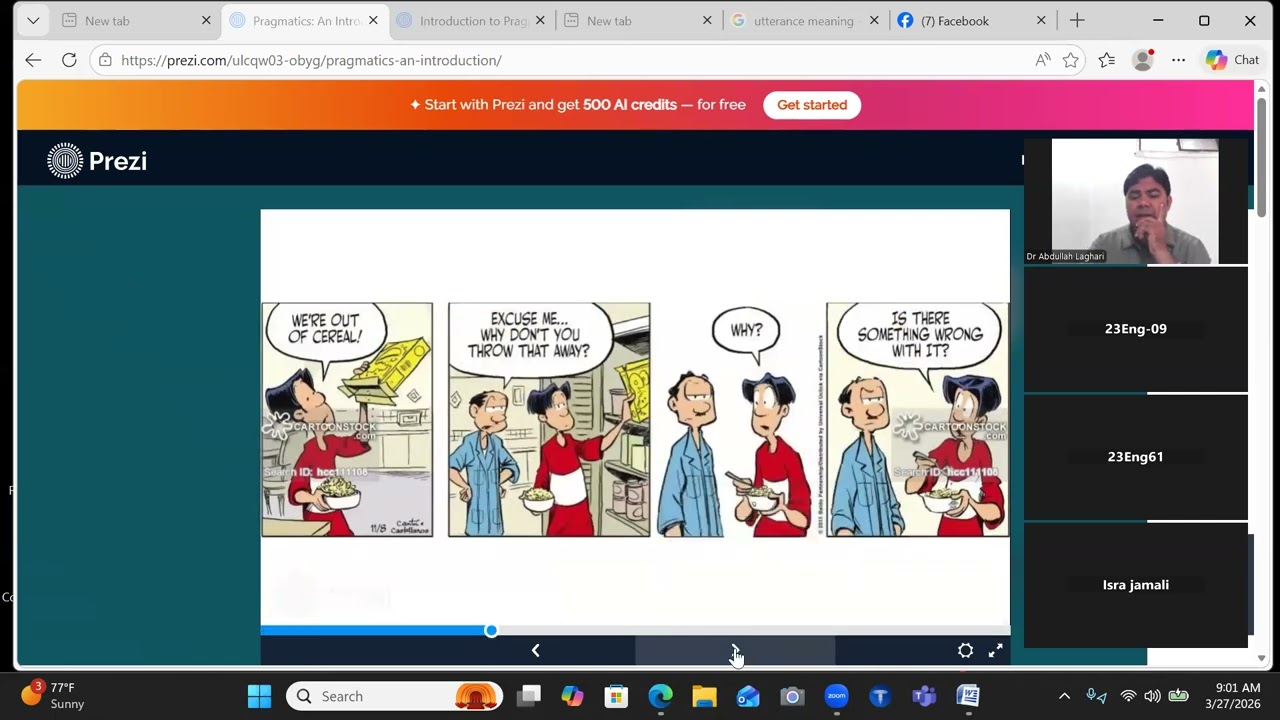
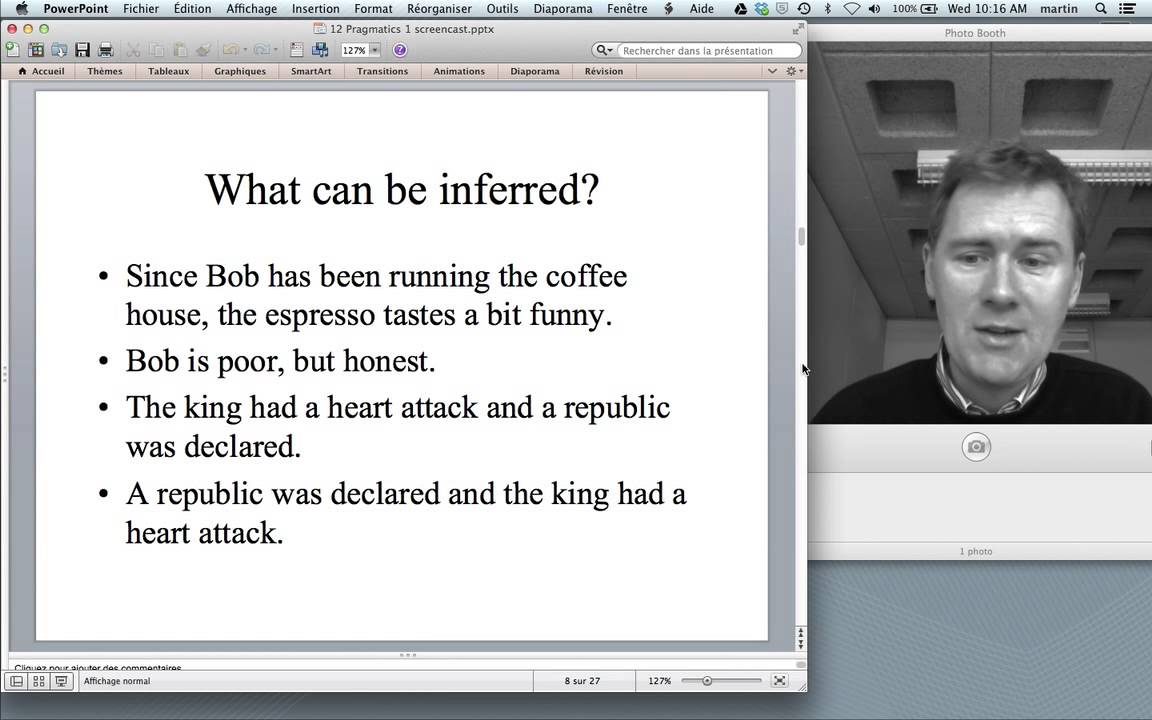
Added:Introduction to Pragmatics: Understanding how context contributes to meaning in communication.
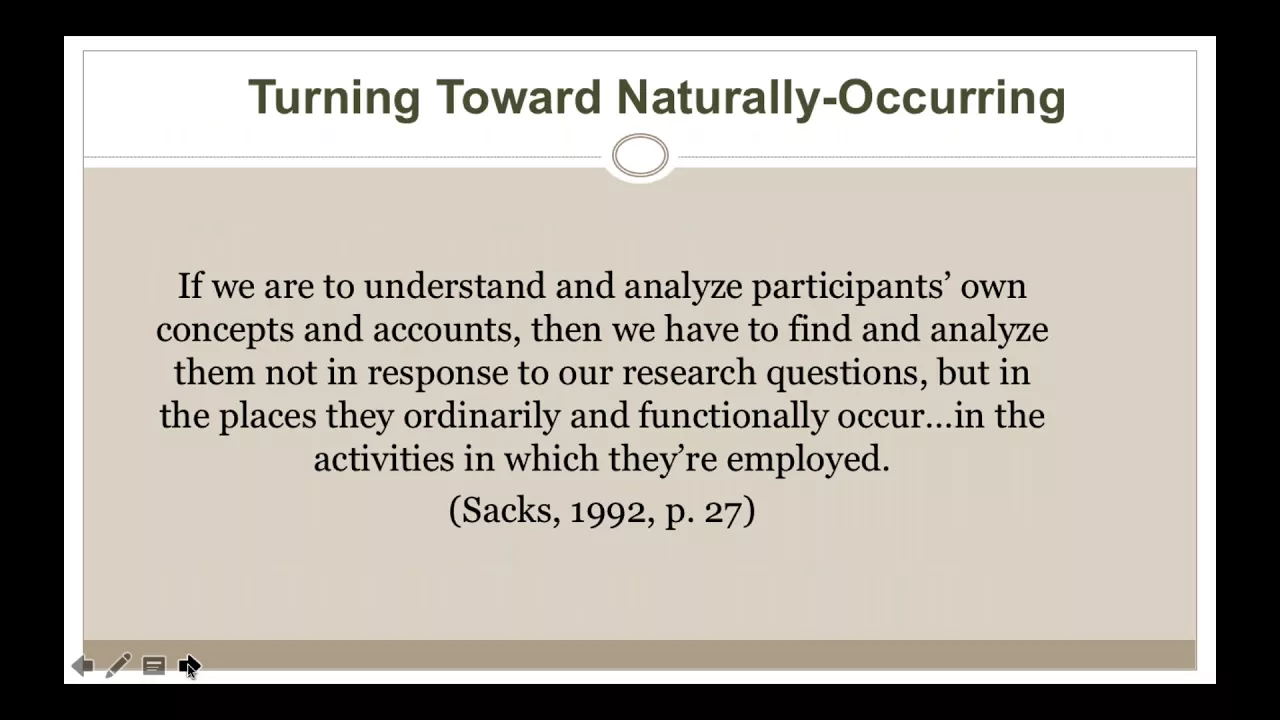
The distinction between self-report data (surveys, interviews) and observational data of naturally occurring behavior.
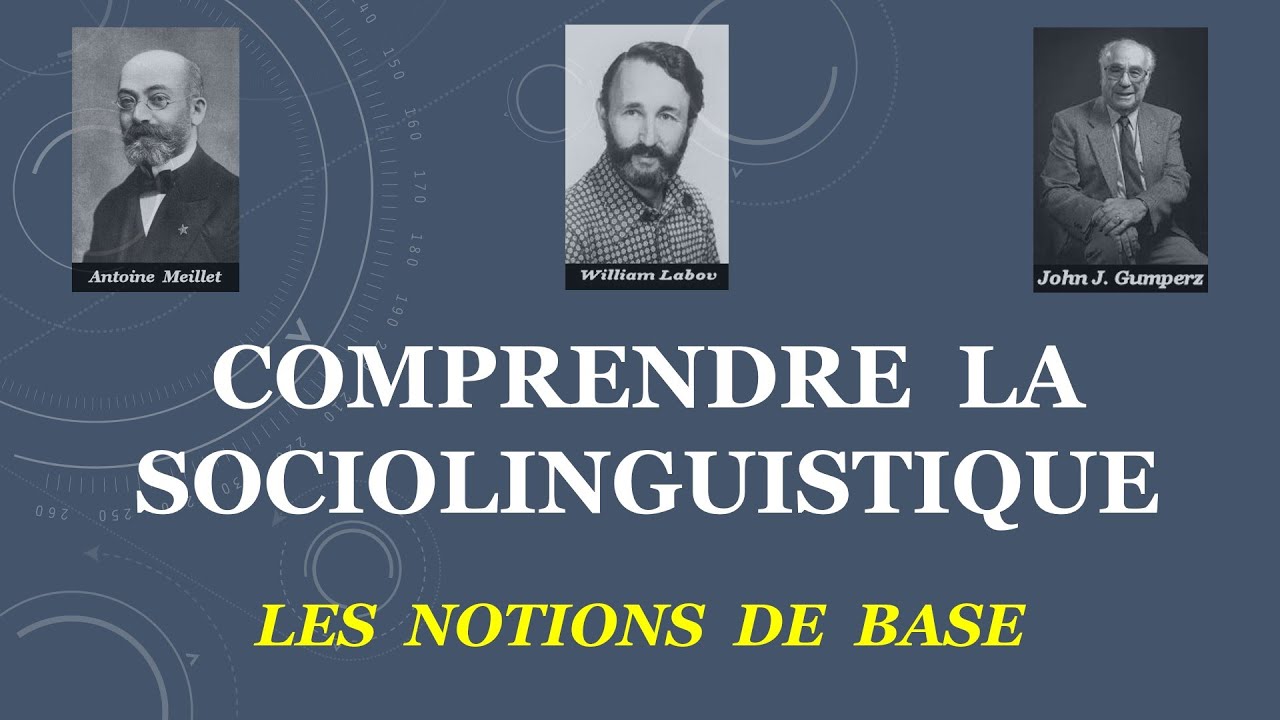
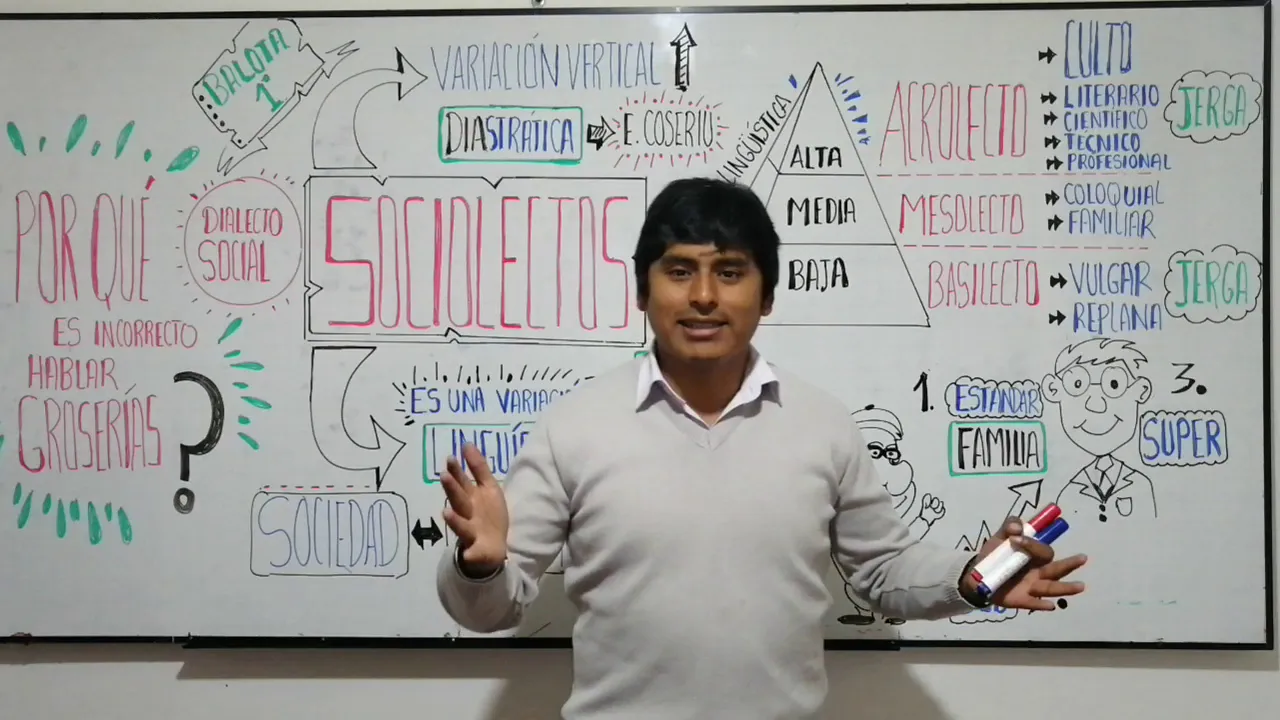
Basic Sociolinguistics: How language functions in social contexts to establish relationships and power dynamics.
The concept of micro-sociology, specifically how social order is negotiated through face-to-face, moment-by-moment interactions.
The Jefferson Transcription System: Learning the specialized notation used by conversation analysts to capture the nuances of speech delivery, pauses, and overlaps.
Sequence Organization and Adjacency Pairs: Studying how turns at talk are ordered and paired (e.g., invitation-acceptance/refusal).
Applied Conversation Analysis (CARM): Utilizing the Conversation Analytic Role-play Method to train professionals in high-stakes fields like medicine, law enforcement, and crisis mediation.
Conversational UX Design: Applying the scientific rules of human interaction to design natural and effective voice interfaces, chatbots, and AI assistants.
1M views9.9Klikes19:23Original Release: 2014-12-04
Translator: Queenie Lee Reviewer: Ellen Maloney One of the questions I often get asked as an academic, especially one who studies things like pauses in talk is: “What is it you actually do, with that face and that intonation?"
Obviously one of the things I'm going to try and do is explain to you, "What is it I actually do?"
But I thought, just for a minute, I would linger on the question.
The question is one of those things which I would call a 'first move,' produced by someone who is a first-mover.
You probably all know people like this in your lives, those people who ask the question which has got some bite in it, some kind of complaint, or some kind of agenda in it.
"What is it you actually do?"
It implies things about what you do with your life.
It puts you in a quite difficult interactional position in terms of what to do next.
Because if you go next and make explicit, the challenge that seems to be in the question, and say something like, "What you mean what do I actually do? I wouldn't you ask that question."
Then the person who went first might say something back like, "I was just asking. It's just an innocent kind of question.
God, you're so touchy! I can't say anything right."
All of a sudden, you find yourself as the person who made a victim of the first-mover rather than that first-mover being the person who produced an overbearing first turn in the first place.
I'm going to come back to first-movers throughout this talk, and at the end, I'm going to try to teach you how to at least have a couple of ways of handling them, and also figure out if you are one yourself.
But to answer the question, or to start answering the question, "What is it you actually do?"
I thought I'd share the moment in which my mom suddenly started to understand at least something about what it is that I actually do.
We were driving to see my late grandmother - who was very old - my mom started to tell me a story about something that happened to herself the previous week.
She said: "I had a fall."
And I said: "No, Mummy, you didn't have a fall, you fell over.
You need to own that fall.
You're not Nan, you don't have falls, you're not old enough to have falls.
There's no point in spending money on anti-ageing face creams, if you age yourself in your language and talk yourself decades older.
You need to anti-age your language, and be someone who falls over and doesn't have falls."
(Laughter) All of a sudden she started to get that the way you describe yourself, and the way we describe other people, has consequences for who we are, and how we live in the world.
Of course, the verbs we use, the language, the grammar we use, sometimes have really important consequences, so I've done quite a lot of work on police interrogations of suspects.
I've got a case in which the suspects been arrested for assault.
The police officer is asking the suspect about various things he may or may not have done to the victim.
He asks the suspect, "Did you push her to the ground?"
The suspect comes back with, "She fell to the lawn."
What you can see is a sort of push-pull in terms of versions of things, and the suspect is replacing the verb 'push.'
How was it that the alleged victim went from vertical to horizontal.
"Did he push her?" We see the agent of that movement.
Or did she fall without him being the cause of that movement?
And of course, the other nice detail changed that the police officer asks about a push to the ground, whereas the suspect says "A fall to the lawn," Lawn providing for a relatively softer landing than the ground, therefore, any injuries the victim might have had probably weren't so bad after all.
These are the kinds of things that I get interested in as a conversation analyst.
What I'm going to do in this talk is chop it into two halves.
In the first half, I'm going to try and show you in a little bit of detail what it is that I actually do.
Studying talk in a systemic and scientific kind of way, and then hopefully show you how this kind of scientific and detailed approach to studying interaction can have big payoffs when it comes to understanding professional or workplace encounters.
To start off with then, I'm going to show you the opening few seconds of two ordinary domestic telephone calls.
We're going to start with Hyla and Nancy.
Hyla and Nancy are American friends, and they're on the phone.
We're going to see their conversation roll out line by line, in time with the transcript to allow you to live through the interaction as it actually happens, which is how we experience interaction.
What you're going to see is that their turns as they start this conversation is going to bounce back and forth.
It's going to be quickly moving along with their interaction.
Here comes Hyla and Nancy having a familiar kind of conversation, you might have had yourself many times today already.
[1 ((ring))] Nancy: Hello? Hyla: Hi. Nancy: Hi.
Hyla: How are you. Nancy: Fine. How are you?
OK, that's it, so far.
You can see there are also dots and dashes and stuff on the transcript, which is to do with intonation and phonetic information, which I will point out when it becomes relevant, but for now, you can just see that they bounced along through the interaction.
It turns out when we study hundreds of types of these kind of encounters, openings of ordinary telephone calls, there have a really systematic structure to them, which you can recognise.
First of all, we have a summons: the phone rings and an answer; then we have greetings and identification- you could all hear Nancy's "Hi!" at line four, was a recognition as well as a greeting, and quite in contrast to her "Hello?" at line two, which was an answering 'hello.'
And then we have initial inquiries, the 'how are you's': "How are you?" "Fine," before you get into the main business of the call.
The fact that these openings of calls roll out in a systematic way, is going to allow us to see what happens when we get some kind of divergence in the pattern.
Next, we're going to scoot over the Atlantic to the UK, and we're going to see Dana and Gordon.
Dana and Gordon, boyfriend and girlfriend, maybe not for much longer as you'll see.
Before Dana has even started to speak, we're going to see that there's trouble ahead in this call.
They are students, they're home for the holidays, and here's Dana trying to talk to Gordon.
(Ring) Gordon: Hello.
ES: OK!
(Laughter) I know, as a conversation analyst, that there's trouble ahead.
(Laughter) The reason I know this is because of line three: something doesn't happen.
What doesn't happen at line three is a return greeting.
Instead, there are seven tenths of a seconds of silence, and that's enough to know: troubles ahead.
Let's see what is going to unfold. Here is line four. Here is Dana.
Dana: Hello.
ES: She's returning the greeting but we can see it's delayed.
What she's not going to do next is move in to the sort of, "How are you's?"
Instead, she's going to become a first-mover.
Here comes Dana's inserted question.
Dana: Where have you been all morning? ES: Where have you been all morning?
(Laughter) We can all recognize that as not an innocent information-seeking question, (Laughter) but a question that has got some bite in it.
Where have you been all morning, I've been trying to get you all morning, I'm your girlfriend, I ought to know where you've been all morning.
What can you do when confronted with a first-mover?
Gordon could say next, "But what you mean? You don't own me" What do you mean, 'where have I been all morning?'"
He could start that, and you're into some kind of conflict.
Instead, another way to handle a first-mover is to do this: Gordon: Hello.
(Laughter) I'm delighted to hear from you!
Gordon is going to just do what Nancy did: "Hi!"
I'm just going to do what comes next in the interaction.
Then he's going to add a little detail.
Gordon: Uhm... (Laughter) ES: "Uhms" like this tend to crop up at places in interaction to mark the prior is inapposite or unexpected in some kind of way.
So here, Gordon is pushing back, first of all, on the first-move with the "Hello!" – I'm just doing what normally happens here – and then "Uhm" – I wasn't really expecting you to ask that question next – before he answers the question, and here comes the answer to the question.
Gordon: I've been at a music workshop.
He's going to try and move the conversation along into initial inquires.
Gordon: How are you?
If Dana was now happy and satisfied that she now knows where Gordon was all morning, and was just going to go: "Fine, How are you?"
and bounce back into the kind of normal structure we might see, we would see that at eight, but instead, we see silence.
This time half a second, so we know there's still trouble in the call.
Here comes Dana with her reply, which probably isn't going to be, "Fine, How are you?"
Instead, she's going to say: "I'm OK," which is quite hearably not fine, and she's not doing the reciprocal "How are you?" back to him either.
Gordon really is very hearable that Dana is not fine, there are trouble ahead and problems, and she wants to have a conversation and he could ask her at ten, but instead, he says, Gordon: Good.
(Laughter) Gordon is really pushing back on Dana's project.
Dana's got a project, which is to have a conversation with Gordon about some trouble, and Gordon has got a project which is to not go there with Dana.
I want you to try and think of our encounters that we have as being like a racetrack, with a landscape and a distinct kind of architecture.
We start at the beginning of the race with our recipient or recipients, and along the way, we proceed along the racetrack, completing projects of various kinds, as we've just seen Hyla and Nancy and Dana and Gordon do.
If you just think about your everyday encounters, there are lots of different types of racetracks: they might be the telephone calls you have with the service, doctor-patient conversations, they might be first dates, the conversations we have at the checkout at the supermarket.
But all of these things will have a distinct landscape to them, and projects along the way; greetings and questions, answers and requests and offers, flirts and assessments, and stories and partings.
What we've seen so far is that Hyla and Nancy are kinds of moving smoothly, progressing around their racetrack, whereas Dana and Gordon are kind of on the rumble strip at the side of the racetrack, bumping along.
They may or may not get smoothly progressing around the racetrack ever again.
(Laughter) Conversation analysis then: what do we do?
What we do is record hundreds of examples of the same type of encounter, and then what we do is take those recordings and transcribe them in a lot of forensic, and linguistic phonetic kind of detail, then look at the entire landscape of the encounter to establish the component activities that comprise it.
If we can see from Dana and Gordon's call that before Dana's even spoken after that seven tenths seconds of silence, there is going to be a problem in that encounter.
We can start to see that there might be a really big payoff to looking at professional encounters, workplace encounters to try and identify what is working and not working in those encounters.
I've done lots of work on things like police interrogations of suspects, commercial sales calls, a whole bunch of other kinds of workplace encounters, but I'm going to show you just one example of the power of conversation analysis to identify things that may work or may not work in encounters.
The setting is one that's probably going to be unfamiliar to you, which is good because it puts you in the position of the person who's being talked at in this call.
The call is from a big collection of recordings that I've got of initial inquiries into community mediation services, and these are services that exist to try and help people who've got a neighbour dispute.
This is a really hard sell for a mediation service, who first of all is not the go-to service for someone with a dispute.
It's an unknown service.
They're basically talking to somebody who has already phoned another organisation, that organisation got some kind of bite that mediation services don't have.
Zooming back and thinking about the sort of racetrack and the landscape of these initial inquiries, one of the projects that we're going to zoom in on is the point at which the mediator starts to explain what it is that mediation is and can offer.
It turns out, when you look at hundreds of instances of these explanations, that there's basically two main ways in which the explanation happens: one way nudges the client, the caller towards being a client, nudges them towards being a "yes"; and the other way leads you almost immediately to the end of the race.
I'm going to show you an example of a mediator explaining the service to a prospective client.
M: What we do as a mediation service, we help people sort out their own differences, so we wouldn't take sides, we wouldn't try and decide who's right or wrong, but would... would try to help you both sort out the differences between you.
ES: Here we have the explanation.
These conversational materials provides us with a naturally occurring experiment.
How do you know whether or not your explanation of a service is working?
This and many other mediators have a very similar kind of way of explaining mediation which I would call a sort of philosophical or ideological explanation about the ethos of mediation.
"We help people sort their own differences out, we don't take sides.
It's voluntary, we don't judge." This kind of explanation."
That's one way to do it.
Another way to do it is a sort of process-oriented explanation, so we do this, we do that, then we do this and this is how we go forward.
A procedural explanation of mediation.
The outcome of the success or failure, the effectiveness or otherwise of this encounter is going to be right in the interaction.
You don't need anything else, you've got the experiment right here.
Because if the caller is going to go with this explanation, we should be able to see that happening at line seven.
So at line seven, if the caller is enthusiastic, then we might get something like, "Great, that sounds just like what I need," or, "Thank you very much," "Book me in," or, "Tell me more."
This is what happens at line seven.
[7 (2.5) ] (Laughter) A really sort of tumbleweed dust bunny kind of silence at line seven.
If zero point seven seconds of silence was enough to know that things between Dana and Gordon were probably rather doomed; then 2.5 seconds of silence tells us that this is highly unlikely to be a positive response forthcoming from the caller.
This is what the caller says in response.
C: Well, to be honest, I don't think she'd cooperate.
ES: Here we can see that the mediator does not know their racetrack.
They don't know first of all, that this explanation of mediation to somebody who wants someone to be on their side, as an advocate for them constraining the behavior of the vile neighbor next door, this isn't going to work.
Yet so many mediators explain the service in this way.
Not only in their initial calls, but also on their websites and leaflets and so on Presumably the mediator thinks they're doing their good job, because they wouldn't presumably try to sell their service in a negative way, but they don't know their racetrack; also, they don't know that the most likely way from the caller is the other person won't.
There is a magic bullet that deals with this: It's a one-word magic bullet which I'm not going to tell you now but you can ask me about later if you want to.
One word will kind of fix this, but this mediator doesn't know the end of the race is nigh, and the caller is not going to become a client.
These are the kinds of things that we can really get interested in as conversation analysts.
We can zoom in on particular projects on racetracks, whether that be mediators and clients, or doctors and patients look at a particular question design or a way a request is done, try and figure out what is effective and what is less effective.
What I've been doing for the past two or three years is evolving an approach to communication training.
You can see how this work can underpin the basis of a really research-grounded training approach for practitioners.
I call it the conversation analytic role-play method or CARM, because the method works on the basis of presenting materials in the way that you've kind of been seeing already.
What you can do is do the research, find out how the interaction works on the particular racetrack you're interested in.
Then find extracts of where we see one or another outcome, present to practitioners in real time line by line people doing the job they do, stopping it, getting them to think about what they might do next, seeing that what the practitioner really did next and evaluating it.
This is how the method works.
Let's go back to the racetrack.
Conversation analysts can identify, in slow motion, scientifically and systematically how conversation works.
We can often upend what we think we know about, say, how to build rapport or how body language works.
One of the projects that we can zoom in on is the moment where people want to find out each other's relationship histories.
I've got this gorgeous example of a woman who is trying to figure out what relationship history the person sitting opposite her has had.
She starts to ask, "Haven't you ever been...? Haven't you ever been...?"
She stops and then she says, "Have you been married?"
She starts off asking a negative question- "Haven't you ever been married?"
That's definitely a first-mover kind of question.
What do you mean? Should I have been? You're feeling defensive.
But she stops herself and repairs, we often do this in interaction.
We'll start something, stop it, and do something else.
She stops herself being a first-mover, and deletes the "ever" and the negative grammar: "Haven't you ever been married?" to, "Have you been married?"
That's a much more positive question, so that's one thing you can do if you're a first-mover, try to stop yourself by asking positive rather than negative questions.
If you are confronted regularly by first-movers.
"What is it you actually do?" What can you do to that?
I think you take a leaf out of Gordon's book.
Be nice in response, push back, and then hopefully you will teach the first-mover something about what they're doing.
And if you do both of those things- stop yourself from being a first-mover and push back against the first-mover- then hopefully your future racetracks will be smooth.
Thank you.
(Applause)
Up Next
19:46
Gentrification Explained: Six US Cities Compared
@GeographyKing
94.9K views•2019-08-03
54:57
Contemporary Sociological Theory: Micro, Macro, Integrative
@NaSESYNC
45.7K views•2016-02-17

21:18
Sexism and Epistemic Injustice: How Male-Centered Culture Shapes Knowledge | Soraya Chemaly | TEDx Talk
@TEDx
395.5K views•2015-07-28
9:41
What is Sociology? The Sociological Perspective Explained
@crashcourse
4.6M views•2017-03-13
Related Study Plans & Knowledge Roadmaps
Structured learning paths in Sociology
sociology
Celebrity Culture: From Hollywood to TikTok
01Foundations of Celebrity Sociology
02The Rise of Micro-Celebrity & Digital Platforms
03Parasocial Relationships & Algorithmic Intimacy
+ 2 more learning modules
12h5 modules
Explore Roadmap
sociology
Hostile Architecture: Space, Power & Control
01Introduction to the Sociology of Space
02Social Control and Surveillance in the City
03Hostile Architecture and Defensive Design
+ 2 more learning modules
12h5 modules
Explore Roadmap
sociology
Loneliness Epidemic: Third Places & Isolation
01Foundations of Social Capital and Community Cohesion
02The Death of Third Places and Urban Space Erosion
03The Privatization of Leisure and Atomization
+ 2 more learning modules
12h5 modules
Explore Roadmap
sociology
Sociology of Tourism: Gaze, Power & Heritage
01Foundations of the Sociology of Travel and Leisure
02John Urry and the 'Tourist Gaze'
03Staged Authenticity and Cultural Commodification
+ 2 more learning modules
14h5 modules
Explore Roadmap