














![Políticas Linguísticas - [Unidade III - Aula 02]](https://i.ytimg.com/vi/5H6ugYXRalQ/maxresdefault.jpg)








Sociolinguistics is the study of language variation in society, examining how language differs across geographic regions, social groups, and individual speakers. Key concepts include sociolinguistic variables (linguistic units with multiple realizations), speaker internal variation (individuals using different varieties depending on context), and the distinction between overt prestige (standard varieties associated with social advantage) and covert prestige (dialects marking group solidarity). Common myths about dialects—such as the belief that dialects reflect failure to speak correctly or that they are inherently inferior—are debunked, as all varieties are equally systematic and grammatical. Language variation operates through both language-internal factors (phonetic, syntactic, semantic constraints) and language-external factors (age, gender, socioeconomic class, ethnicity).
Sociolinguistics: Study of Language Variation and Social Identity
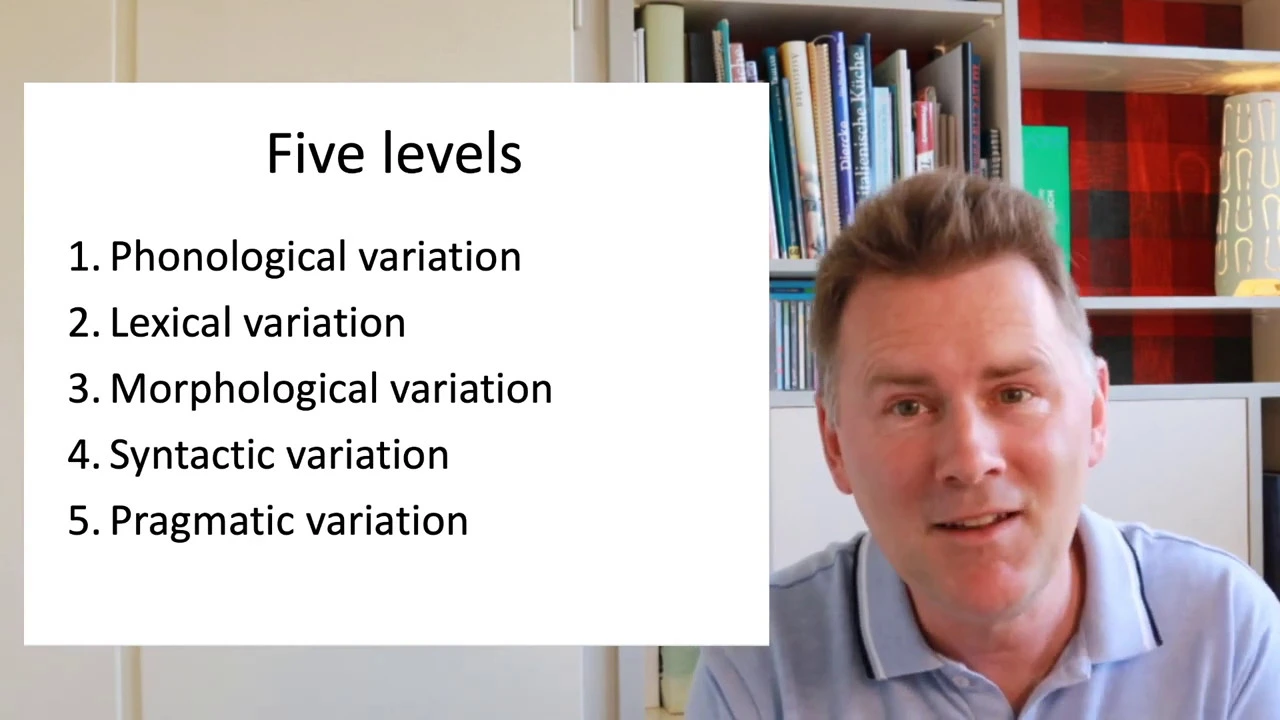
Added:hello there and welcome back to the introduction to English Linguistics in this video I'd like to get started on a new topic namely social Linguistics what is social Linguistics it's the study of language in society and more specifically we can say that it is the study of variation in language what's variation in language Let me give you a very simple example namely the word secretary when you overhear a conversation people talking about secretaries uh you will find that they pronounce the word secretary in slightly different ways for instance they might say secretary they might say secretary with a final e that's a little higher or they might adopt a tric cabic pronunciation like secretary social linguists are interested in this kind of variation they're asking who are the people that use one pronunciation rather than another and uh to the extent that we have people that switch back and for forth between several pronunciations what are the situations in which they choose one pronunciation rather than another one why is this important why should we bother analyzing this kind of variation well if you think of it the way you talk pronunciations word choices that you make your grammar all of that says something about who you are as a person your social identity it's kind of like your clothes the friends that you hang out with the job that that you're doing uh but language in a way is even more fundamental um there are strong social beliefs and attitudes associated with certain ways of speaking people judge other people on the basis of how they talk and uh these attitudes are very real yeah but it's important that uh it's important to remember that these are socially constructed Norms they're not objective facts about language itself people maybe very critical about a dialect that they're hearing but that doesn't mean that this dialect is somehow deficient in an objective way so I've used the term dialect and um because dialects are well dialect is a term that is charged with so many ideas that are not actually true I would like us to avoid this term in this class and talk about varieties of language instead so dialects you can think as varieties of language that are characteristic of certain groups of speakers so we have geographically defined groups so there we could talk of regional dialects but people also talk alike uh when they share certain social factors and there we might talk of social dialects or socials so people talk differently depending on their socioeconomic class their ethnicity their gender gender their age or even their sexual orientation right bottom line is people talk differently either because they live in different areas or because they share different social characteristics and so there's variation in language but not only is there variation between different speakers but also within you as an individual there is variation there are certain ects varieties of language within a single speaker and this is something we could call your linguistic repertoire as an individual you have command of several varieties of language these might be different languages alog together in all likelihood you're capable of speaking two or more different languages um you're probably also capable of using several dialects of the same language um maybe the dialect of the region in which you grew up and then a stand variety that is spoken more widely in the country and then even within the same dialect there is variation going on variation in terms of style and register so what's style um your language variety shifts with the situation in which you find yourself so um changes in situational context whether you're talking to your mom or your friends or your professor or a complete stranger asking for directions um you talk a little differently the things that come out of your mouth sound a little differently this is something that all speakers do there are no single style speakers everybody shifts according to the situation here are some of the things that shift by uh style uh people Styles shift for instance by adjusting their pronunciation they choose a full form like he would have or a more contracted form H uh they use running or running depending on the different context depending on who they're with uh they choose different words I can phrase something very formally or very informally I can say something very politely or very impolitely um and I also adapt my grammar to different situations right now I'm in a situation I'm lecturing to you guys so my sentences tend to be a little longer and more complex if we meet up later for a beer my sentences will become increasingly shorter until I only say single word utterances like good or phrases like more beer things like that okay I promised a number of myths about dialects so dialect is a term that is used quite a lot in public discussions about language and it's not really clear what people mean by it but a lot of ideas that circulate about dialects are clearly and demonstrably wrong for instance it's a myth that a dialect is always what somebody else speaks uh people are convinced that they themselves speak the language proper and other people speak dialects well the fact of the matter is that everybody who speaks a language speaks a certain variety of that language you can't escape that everybody speaks a certain variety of a language but then people come around and say well you know listen to my speech you can't notice any features of of dialectal influence there well it's a myth that dialects always have highly noticeable features that set them apart some dialects certainly do they have very recognizable features that catch a lot of attention and the speakers usually catch a lot of flack for that but the status of a dialect is really related to public commentary about it or the fact whether its features are really recognizable as such then uh it's a myth that dialects are spoken by socially disfavored groups certainly socially disfavored groups are easy targets always uh and all the more so if they speak a dialect that's easily recognizable as such However the fact of the matter is that there are socially favored dialects as well as socially disfavored Di dialects so some varieties carry a whole lot of what I will later describe as overt Prestige then another myth is that dialects reflect failure to speak correctly dialect speakers they just can't get their grammar right no that's not the case dialects are every bit as grammatical as other varieties of language so dialects are acquired by adopting the speech features of other speakers the speakers that you find yourself surrounded with and uh it's not that you acquire a dialect by failing to learn standard a standard variety of a language then um a really persistent myth is that dialects have no systematicity that they're just random deviations from standard speech that's not the case so um can tell you a little story here uh a physicist colleague of mine one approach me and said Martin dialects they are like simplified grammars right they some complexity is deteriorated some rules are lost and uh it's it's all just a bit more random that's what dialects are right and I told them no that's not at all what dialects are uh dialects are every bit as systematic and regular as your standard variety of a language um and uh there's nothing random in dialects another myth uh dialects inherently carry negative social connotations that's not really true uh the social value of a dialect is derived from the social evaluation of its speakers so if a dialect has a bad reputation in all likelihood that's because there's something going on in the region uh that makes these people have a certain reputation and the language just you know uh is blamed for that then a last myth is that dialects are deviations from the standard which represents the correct form of a language how a language has always been and how it needs to be preserved that is completely wrong um the standard first of all is also a dialect one that happened to be chosen as the standard by historical accident and then um the standard is not how things have always been it's rather that's something very recent the dialect is how language has been for a very long time and the standard is really just the deviation from the dialect on which it is based so this myth has it completely upside down dialects are basic standard is an artificial and derived thing that is yeah uh has less fewer historical Roots than dialects okay I just had to get that off my chest we can now move on respond to more productive matters and talk about ways in which dialects can differ there are certain features uh namely pronunciation vocabulary grammar and also conversational practices how you open or close a conversation for instance so I'll go through these uh one by one here are some pronunciation differences um the guy that you see there in the uh Pink what is that even it's not a pair of pants it's more of a cloth really okay the guy there his name is either God or God or Gad depending on where you live the yellowy stuff that you see at the bottom of the slide there it's called but or ba or butter or if you live in New Delhi you might also call it Baka right pronunciation variation let me talk a bit about pronunciation differences in British English uh traditional dialects in the British Isles um they pronounce words like son or bus or mother in different ways what you see in this first map here is that speakers in the sou in the South they tend to say sun or bus and speakers in the north they tend to say sun or bus and I brought a little sound clip here I hope you can hear it all right I'll make it loud the speaker says I'm lucky okay what it comes out as is yeah so we can say uh we can be pretty sure that the speaker lives up here in the north uh the second map here shows the pronunciation of the vowel in last dance or path okay so in the South there are islands where people say lost or dance or path then uh some people say last and some people say last let's say what what this speaker has to say single finest answer single finest answer single finest answer okay that's the single finest answer and to me that sounds like a short a yeah answer here's another map this time of the United States and um in the US there is something called the pin pen merger or the pen pin merger um what is that well uh some people in this area here they pronounce the words pin and Pen exactly the same so when they're asking for the thing that you can write with they would ask you oh could you give me the pin please I'm not just making this up let me play you the sound bit here of a speaker who is talking about chickens chicken Joe is my cat one of my cats he got his name because he likes to sleep in the hen house when it got cold we'd go out looking for him we couldn't find him we'd go and open up the hen house like there he would be out there in the hen house cuz H are very warm if you didn't know that okay um so this speaker talks about the hen house yeah not the hen house the hin house and that's because he has the pin pen merger and I can actually tell you that he lives in the Greater Houston area down here that's the pin pan merger okay there's not only pronunciation variation there's also lexical variation people using different words depending on where they live here's again a map of the United States and in the US people have a category label a word for the drinks that you see up there seven up Dr Pepper what's that Miller's root beer or something uh Pepsi Coke the works yeah sugary carbonated stuff comes in little cans what you call that well people in the South the pinkish area there they call it Coke even if it's Pepsi even if it's Dr Pepper if it's seven up yeah that's a Coke people in California and in the Northeast Boston Philadelphia um they call it soda yeah so seven up Coke all of that is called soda and then there's people in the north and Northwest who call it pop lexical variation in American English also some other things going on there the black stuff I wonder what those people are saying right um let me come to grammar variation and here's a clip of uh the grammar Sheriff um the real Sheriff says sorry stranger but I'm the only sheriff in this year town and the grammar Sheriff says I know I'm just the grammar sheriff and the real Sheriff says that don't seem like no kind of sheriff to me and then the grammar sheriff shoots the real Sheriff because if you mess with grammar the grammar Sheriff will come after you so be very alarmed okay what the real Sheriff does here is something that is called negative Concord negating a sentence in more than one place yeah here you say that don't seem like no kind of sheriff to me double negation uh the grammar sheriff is very opposed to to that kind of thing uh well you should maybe tell the grammar Sheriff that negative Concord is something that's very very common around uh varieties of English around the world so in this map all the red color dots that you see are varieties of English that have negative Concord as a grammatical rule okay you have to do it um the orange varieties and yellow varieties have it to some extent and it's only the non-colored varieties that don't have it they're not so frequent they're in the minority right that's negative Concord all right let me come back to the fundamental idea uh for this video namely that social Linguistics is a study of variation in language um many linguistic structures have variants these variants Can U pertain to pronunciation they can be phological so there's a difference between saying car and car uh between tomato and tomato uh there's also morphological differences uh you can say something like I'm not too Keen about that or I ain't too Keen about that you can be prouder or more proud and even in syntax there's variation you can say something like my brother's car or the car of my brother or I gave John the book versus I gave the book to John language allows you to say the same thing in two or more different ways that is a fundamental thing there's variation and um it means that quite often you have one linguistic element or one linguistic category that has two or more different realizations one category several possible realizations that is what social linguists are interested in that's what they mean when they're talking about variation in language and an important Concept in this regard is the so-called sociolinguist variable social linguistic variable um a linguistic unit that can be realized in two or more different ways quite often it's it's a binary choice so you have the possibility of doing one thing or another yeah think of the r in car you can either pronounce it car or you can leave it out car um sometimes they have more um variants but we'll get to that um there's speaker internal variation so speakers sometimes produce one variant or another so you are not strictly at one end of the spectrum but rather you're probably somewhere in the middle so quite often you say I'm not but on some occasions you say I ain't this means that speakers cannot really be divided into discrete categories you say in this dialect it's like this in that dialect it's like that but rather speakers need to be placed somewhere along a Continuum and we need to explain why speakers are somewhere on the Continuum where they are so that in a way is the central question of social Linguistics how can we explain uh that a speaker produces one variant rather than another so and so often there are certain factors that explain language variation uh and there are two broad types there namely language internal factors and language external factors language internal factors are factors that have to do with the structures and meanings of language itself so um coming back to this um variety uh this uh variable of saying either prouder or more proud if you have an American speaker they will probably uh form the um comparative of clever as more clever why well because if they say clever that sounds like they had a potato in their mouth it's awkward for them to produce and so because of this phological difficulty they opt for more clever rather than cleverer in um a syntactic variable so for instance the choice between the DI Transit postive construction and the prepositional dative construction here the examples I have I gave the book to the old man at the counter that's the prepositional dative construction we could also choose I gave the old man at the counter the book but notice that this sentence is somewhat unwieldy because we have a very long and heavy syntactic constituent in the middle and that is difficult to process that is difficult to produce so because of this syntactic characteristic people tend to opt for the um prepositional dative here and put the old man at the counter at the end that's a syntactic explanation um final example here with two uh English genitives um the cost of living could be also expressed at the living's cost but really the second construction here with the genitive S it's really reserved for uh animate possessors like John's office or my brother's car uh things that don't live living although it sounds like that it doesn't live um there we choose the other construction and that is a semantic explanation right language internal factors that explain variation social linguists for the most part are really interested in language external factors factors that relate to the social world uh the social situation of a speaker in life so these are factors that are not per se linguistic they relate to non-linguistic issues and uh so they concern for instance differences in the speech between young speakers and older speakers young speakers use Ghana uh more often than older speakers so their age is an explanation um gender that's something that has been studied a whole lot so female speakers um at least for a certain time period in American English they used hedge uh statements with Tag questions more often than their male counterparts so things like isn't it didn't she and so on and so forth um so their gender is an explanation um geography yeah that's a trivial uh explanation Americans speakers say tomato Brits say tomato uh and then socioeconomic class that's also one important aspect of variation in language um if you are a British upper class speaker you're probably not watching this video but if you are uh you're more likely than middle class speakers to pronounce the word very as very yeah with a Trill and because I'm doing this awfully I brought somebody who does it much better listen to this let me answer that very deeply because I feel very strongly about it okay um you may or may not have recognized Maggie Thatcher saying that she's very uh concerned right so um if we observe these differences and if we can relate them to language internal and language external factors we can say that there are effects of these factors so for instance if uh the realization of a sociol linguistic variable depends on um say gender we get a distribution like this one here so female speakers use something more frequently than male speakers yeah so old and young females pattern together old and young males pattern together um you could also imagine that there's just an effect of age and the gender doesn't play a role so in this case uh young people both male and female would use something very often and um old people would use it less okay so this would be something like Ghana um that's just an age factor and and uh this here would be something like Tag questions okay so Tag questions both young and old women use more Tag questions than men I mean these are madeup examples but you get the idea effects of these language external factors now um sometimes of course things are more complicated than this for instance say that uh sometimes an explanatory Factor has an effect but only in connection with with another Factor this is what's called an interaction effect um look at this graph here we see that uh in females and males there's really just one group that does something very often yeah young females pattern as a single group and um males there the old and young males are patterning alike and also the old females they're talking just like the men okay what kind of phenomenon would this be well uh think of for instance um the use of like and that was like totally awesome yeah that's something that young uh females produce much more often than uh other segments of the population um okay to to create some gender justice here there's also things that just young men say um the counterpart to like would be the nice little word dude okay dude you should check that out so those are interaction effects um where an explanatory Factor has an effect but only in connection with another Factor so um let's look at some real data here is data that people recorded of people saying the word hammer and and other words that start in an age and um you see that the data were recorded in two uh British cities in uh Norwich which is here and in Bradford which is up there and we see that in both communities the effect is approximately the same uh age dropping yeah pronouncing Hammer is hmer with a glottal stop at the beginning uh is much more common in um lower classes okay so the lower your class the more likely you are to drop your ages and um so in both communities well Bradford has a little uh a little more age dropping but the effect is the same in both communities upper middle class people don't do that a whole lot lower Working Class People do it the most um okay I can't possibly finish this video without mentioning bov's fourth floor study okay that's a classic that's something that um that's something that will be on the exam can tell you now so um what did he do well Bill leov wondered does the use of post vocalic R yeah the r in in car and in fourth and in floor uh does that correlate with social PR in New York City does it say something about you whether or not you're pronouncing it and um Well turns out um it does how did you find that out well uh he decided that it would be a good idea to no talk to sales assistants in different department stores and he chose three different types of Department store a fairly cheap chain of department store s Klein uh a more upscale department store Macy's and then a really upmarket department store saxs so um he went into the department store uh and looked for an item that was situated on the fourth floor because he wanted to elicit the answer fourth floor in response to a question like where are the ladies Coates so he would approach an unwitting sales assistant and ask them excuse me um where are the ladies coats and the sales assistant would say something like yeah on the fourth floor and uh then bov would come back and say well excuse me he was younger at the time but he faked being a little hard of hearing um and the sales assistant would repeat on the fourth floor and uh he would say excuse me and they would they're on the fourth floor yeah so um what he elicited was this pronunciation of fourth floor both in a casual way First Response and in a more careful way in response to the third question and what he found was that first of all there's a difference between the three types of department store um the final R yeah it's a in New York City speech in the 1960s that is very Posh and um prestigious thing to have in your pronunciation you find it less in a cheap department store you find it quite a lot in the more upscale Macy's department store and you find it really really frequently in the up Market department store okay now what happens um if you're um rephrasing your question and asking people to be more careful in how they pronounce something is well in the cheap department store you get a slight increase in the middle brow Market you also get a fairly substantial increase and uh well the up market sales assistants they're already very careful in their first response there's only a small increase um here I've graphed you these results this would correspond to the interaction effect that we saw just a minute ago with the like uh that was like totally awesome so get a huge increase in the two lower class department stores and uh not much of an effect in the high-end department stores but the main conclusion of the fourth floor study of course is that the articulation of postvocalic R in New York City in the 1960s is socially stratified whether or not you pronounce this R says something about your social standing right now um coming to no from socially prestigious features to socially stigmatized dialect features uh I already talked about double negation negative Concord grammar Sheriff you know look out for the grammar Sheriff they didn't do nothing um but other stigmatized dialect features are regularized verb forms like we know they were right or so I says to her um past tense as participles I should have went yeah um subject verb agreement uh as in we was there instead of we were there um sound substitutions like running or they or thing yeah those are dialect features that stand out that are easily recognizable as such and therefore they lend themselves uh as useful tools for for stigmatizing certain segments of the population yeah right a question that you might ask yourself is okay if this is so bad if this is so stigmatized then why do stigmatized varieties and stigmatized features persist why do people not just switch to something that is more advantageous and more prestigious in society well in order to answer this question we need to distinguish between two kinds of being cool yeah two kinds of prestige on the one hand there's overt Prestige which is associated with standard and socially prestigious varieties you know being cool in a job interview being smart in a job interview um so it's a symbol of status in mainstream Society it's the kind of language that you use in official situations when you want to impress somebody who's socially Superior and whatnot but there's also something called covert Prestige being cool among underdogs okay you don't always want to suck up to the people who are socially mainstream but rather quite often you also want to mark your solidarity with a locally defined group that does not necessarily aspire to the American dream or the the socially top tiers of society so here cover Prestige is a symbol of social identity you and I we belong together we're The Underdogs we don't have anything to do with the hups which are corrupted and whatnot you know that's the reason that people keep using things like stigmatized dialects to Mark solidarity to Mark group coherence with the people in their vicinity over Prestige cover Prestige right I'd like to come to a close here social Linguistics that's the study of variation in language and I hope to have given you a rough idea of what this variation entails we have variation in pronunciation in the choice of lexical items in the choice of grammatical forms um didn't talk so much about variation in conversational practices but we might get to that uh and important concept that I introduced is the social linguistic variable uh the ability to say the same thing in two or more different ways and uh the important conclusion that I would like you to take away from this video is that linguistic variants are not inherently good or bad uh it's just that speakers attach social values to ways of talking and this attitude is socially constructed um important Tools in this regard overt Prestige um and covert Prestige all right we'll continue with socio Linguistics next time and um I hope you'll watch that video as well bye
Up Next
Phonology in Linguistics: Sounds, Phones, and Phonemes
@crashcourse
366.6K views•2020-11-20
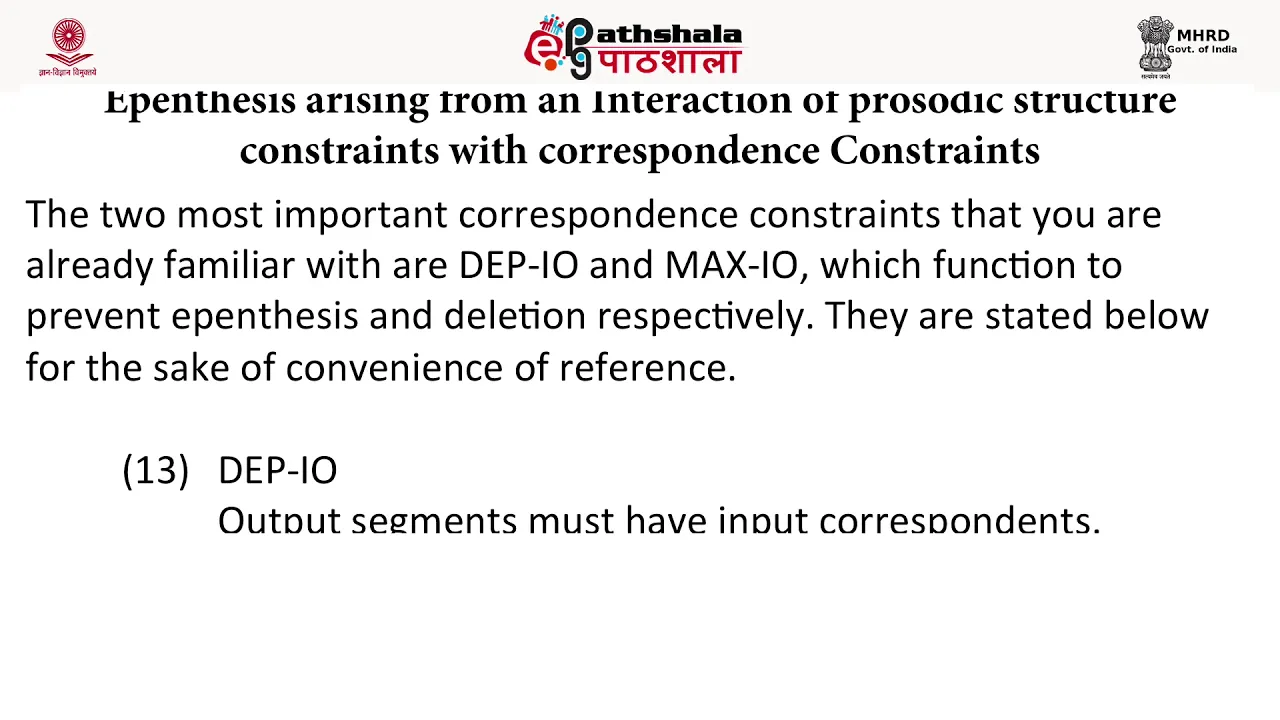
Constraint Interaction in Optimality Theory: Epenthesis & Deletion
@Vidyamitra
180 views•2018-08-20

Cognitive Linguistics: An Introduction to Key Concepts
@MartinHilpert
96.1K views•2015-02-25

Accent Expert Explains U.S. Regional Dialects | Part 1
@WIRED
9.3M views•2021-01-21
Related Study Plans & Knowledge Roadmaps
Structured learning paths in Linguistics