





















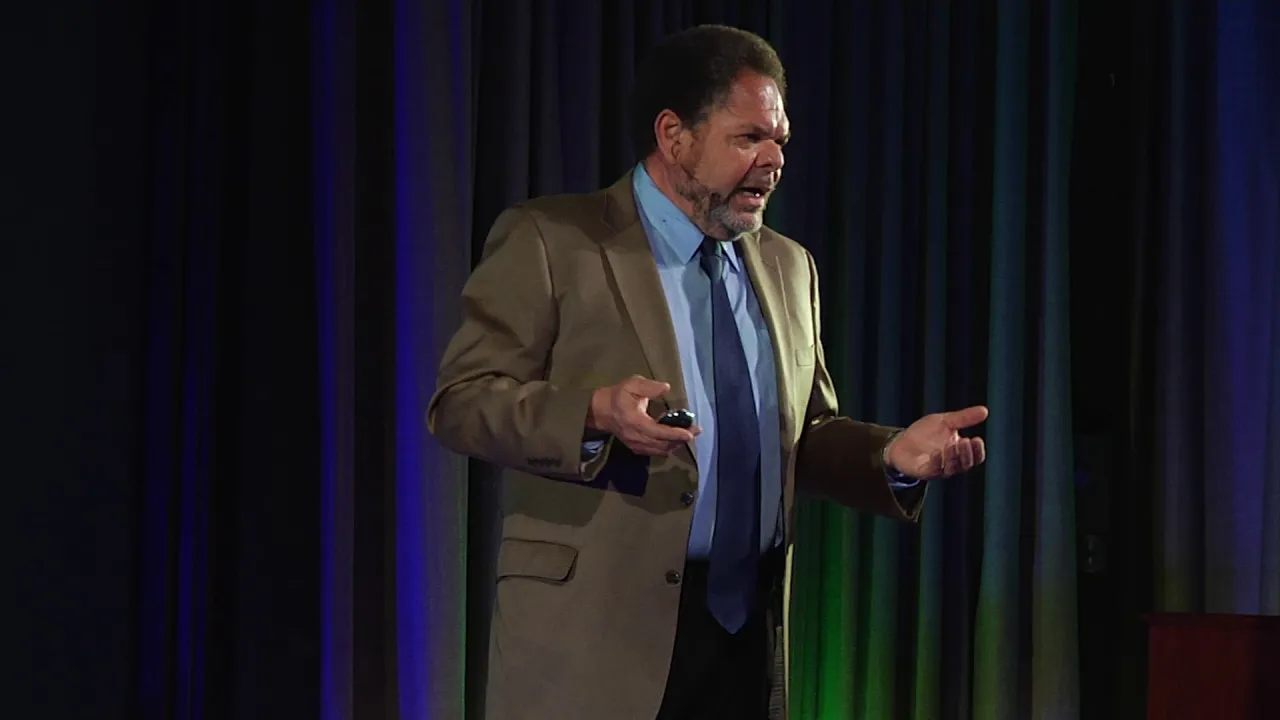
Forensic linguistics uses sociolinguistic analysis to identify individuals based on their unique language patterns, which are shaped by personal characteristics such as age, gender, race, education, and social environment; this technique can help de-anonymize online communications by analyzing vocabulary, formatting, and community-specific language features to reveal demographic information about anonymous writers.
Forensic Linguistic Profiling: What Your Language Reveals About You
Added:The foundational definition and scope of Forensic Linguistics as a discipline applying linguistic theories to legal and criminal contexts.
The linguistic concept of 'idiolect,' which refers to an individual's unique and distinctive use of language, vocabulary, and grammar.
An introductory understanding of stylometry, the statistical analysis of variation in written style to determine authorship.
Basic knowledge of cybercrime environments, including digital communication channels, online anonymity, and how digital footprints are created.
Advanced computational linguistics and Natural Language Processing (NLP) tools used to automate authorship attribution and profile cybercriminals at scale.
The legal admissibility of linguistic evidence in courtrooms, including standards of evidence like the Daubert standard.
In-depth analysis of landmark historical cases resolved through forensic linguistics, such as the identification of the Unabomber (Ted Kaczynski).
Ethical and privacy implications of linguistic profiling, algorithmic bias, and mass digital surveillance of public communications.
80.7K views1.4Klikes13:37Original Release: 2017-01-27
Translator: Ailie McCorkindale Reviewer: Ellen Maloney I'll start by saying I really do actually like the internet.
Over the next 10 minutes, it's going to seem like I really don't.
The internet is fantastic, there's loads of great things out there.
You can communicate with friends all over the world, watch cat videos, you can learn new skills, watch cat videos, you can spread ideas, political, social ideas.
If I'm honest, for me it's predominately cat videos.
I like procrastinating a lot.
But there are some wonderful things out there, and one of the most wonderful things about the internet is the potential within each of the individual users.
A few years ago, everyday Twitter users took on the Daily Mail columnist Jan Moir for her homophobic, hate inspired speech referencing Stephen Gately's death.
Here was a group of people who saw an injustice and decided to challenge it using the internet to level the playing field.
On a much larger scale in 2011, the Egyptian people used the internet to take on their own government and regardless of what happened next, the usage was twofold.
First was it was a place where political and social ideas could be shared, and the second was that place was free from the government, and free from police, those ideas could propagate and grow.
Without the benefit of the anonymity of the internet there wouldn't have been the same outcome.
We're currently living in this absolutely fantastic brand new digital age where each of us is a digital pioneer.
We can challenge institutions, share new ideas, do incredible things.
This is Manifest Destiny 2.0 But there are problems.
I wouldn't be stood here today doing this talk if there weren't problems.
And one of those problems is the growing trend of cyber crime.
Last year in England and Wales alone, there were nearly six million cases of cyber crime and that ranges from everything from identity theft and fraud, all the way to pedophilia, trafficking, terrorism.
And furthermore, that number is growing exponentially year after year.
In fact, one in ten of you will be affected by cyber crime in your lives.
And you're 20 times more likely to be robbed online than you are to be mugged in the street.
And these numbers are getting higher.
Part of the problem with this, is the internet gives a level of anonymity that perhaps you can't have elsewhere.
All it's going to take is a fake account, one fake email address, and you can be anybody.
There are no ramifications to your actions if nobody knows it's you.
So, with this growing threat, what is the solution?
Well, I personally believe one of those solutions could be forensic linguistics.
So forensic linguistics, other than sounding great on a business card, is actually a pretty simple thing.
It's an offshoot of sociolinguistics, which, again, is a complicated term for something that you all know already, which is that you learn your language from those people who are around you.
And if that's the case, then each of your languages will be different to the person that you are sat next to.
So you will speak differently to your grandparents.
Your age, gender, race, sexuality, class, education, where you were born, where you were raised.
It's all going to directly affect your language, both written and spoken.
And this is sociolinguistic variation, and we can prove this through something called corpus linguistics.
Which again, technical term for something that's not that technical.
A corpus is just a big group of data, and if we analyse enough linguistic data we can start to get key phrases, key terms, key words, key terminology and find out what's common, what's uncommon, what's specific to certain social groups.
I'll give you an example, and I'm going to apologise in advance to every young person watching this.
Especially to Matilda.
The phrase 'En Fleek' is unlikely to be uttered by anybody over the age of 30 It's even less likely to be uttered by any grey-haired person over the age of 70, unless you are particularly cool.
Maybe, I don't know.
(Laughter) So if we have an anonymous individual using the words 'En Fleek' in online discourse, chances are we are dealing with either somebody under the age of 30, or a prospective TEDx talker who's trying to find cool, hip words to say to impress his crowd.
(Laughter) And it's working, I can tell.
(Laughter) So what this leads us to is you starting to profile the language people use.
And that could be other things as well.
Emojis, a completely new thing that's happened in the last few years.
Some sections of society will not use those terms.
And this is something called inter-author variation and this is how everyday things that affect my life, my age, my gender, my race, my sexuality, that changes how I speak and it makes me different to everybody else in this room because nobody else has lived the life I have lived, and vice versa.
It's what makes you different to your best friend, to your brother, sister, partner, mother or father.
They're all going to be different to you, because you've had different lives.
So your language is going to be different as well.
But not just from those around you, also from an anonymous individual online.
Another thing a linguist could do is analyse that community of practice.
So a community of practice, again technical term, simple thing.
It's the common linguistic practice that's used within a community.
And you'll have encountered this every day of your lives.
If you've ever started a new job, perhaps, there are key words, phrases, or terminology that you don't get.
Maybe your colleagues have in-jokes that you're not a part of and you're a bit of an outsider.
And that also represents in your language.
Well, what analysing community of practice could tell you is how old the group is, have they been friends for a long time or are they friends in a specific way?
Who is the newest member of that group, and who is the oldest? Who is the leader?
Is there anything that that group talks about or uses that would make them specific to a subcult or subgroup of society?
So essentially an age thing, like 'En Fleek'.
That's the community of practice.
Forensic linguistics is the application of all of those theories to aid or assist the judicial system.
For example, as a society we are spending more and more of our time online.
It's a fact.
We have social media, some of us rely on the internet for our social lives.
Others rely on it for their love lives.
Some of us for our professional lives.
(Laughter) Easy laugh.
But we rely on it all the time.
We're projecting a version of ourselves onto the internet.
For lots of us our professional and mental well-being relies on that internet, and with that comes a lot of threats.
Take for example online harassment.
Which is a serious issue.
Especially when you take into account over half of all under 18s admit to being harassed online.
40% of over 18s who use the internet - which is a fair number - admit to being harassed online.
And those numbers are increasing as well.
And part of the main damaging thing about online harassment is the universality of it.
So there is no traditional bullying rota where you go home at night and it stops.
We have access to 4G, tablets, smartphones, laptops.
You can be affected by this anywhere at anytime from anywhere in the world.
For me the most startling statistic of all is the perpetrators of these crimes.
38% of people who are bullied online or online harassed are done so by a stranger, and 28% by someone they've never met and they do not know.
They know nothing about that person apart from the hate they are giving them.
28% of people who are bullied online have no idea who is doing it.
The link to forensic linguistics there isn't a huge one, but it starts from necessity. Cyber crime is increasing.
A portion of cyber crime is online harassment.
A portion of online harassment is anonymous.
So what you can do is start to analyse the language of those people involved.
You can find out their age, gender, what country they were born in, what education they have.
You can start to break down every little part of their writing to find out more and more information and when you get enough of that, that anonymous person on the internet has just become a lot less anonymous.
You could figure out if you are receiving 12 different hate mails a day; Do 12 people hate you enough to send you emails?
Or does one person hate you enough to send you 12 from 12 different accounts?
One of those is a more serious crime, one will help you sleep a bit better, knowing you are a little less hated than perhaps you thought.
And what if there is a group?
Well, we could analyse that community of practice.
We could figure out who the newest member of the group is, and if we know the newest member, we know the weakest link in the group.
We know who is the weakest link of the chain.
The leader will recognise you immediately as an outsider, but somebody new? They might not recognise that straightaway.
Your linguistic weaknesses, They wouldn't recognise the way the leader would.
So you piggyback that naivety right into the heart of the group, gather as much information as possible and then make your legal challenge.
And we musn't stop here, we musn't stop at just online harassment.
There are pedophilic transcripts, there's chatrooms, where people are trafficking weapons, drugs, and people.
There's also chatrooms where you can be radicalised on the internet through hatred Terrorism spawned in the deepest, darkest recesses of the internet.
With every word they give, they give a little more information about themselves which when put together we can profile to turn online anonymous activities into online activities and one of those is a lot easier to police.
Don't misunderstand me, forensic linguistics is not the silver bullet technique that is going to solve cyber crime, it's absolutely not.
But it is a tool, and it's a tool that can be learned, and a tool that can be taught, and a tool that can be used in collaboration with other techniques to help counter this growing threat.
It's a way we shine a light into the darkest recesses of the internet and reveal some of the anonymity that these individuals hide behind.
So that's the theory of it.
But actually, I'd quite like to talk you through how you go about doing it So this is a little section of what I said earlier.
And yes, it's all scripted by the way - even this relaxed, 'off the cuff' bit has been peer-reviewed very strongly - and it actually went really well with Guardian readers.
(Laughter) Oh, there's a few of you in.
So we're going to start easily, let's go with formatting which many people don't even realise they do.
If we look at formatting here: I've got an indentation, I've got correct use of punctuation, Oxford comma.
I've got the right number of ellipses, by the way, people, it's three.
The more dots doesn't mean it's a bigger pause.
I've got stage directions.
So straightaway we can learn a bit more about the author there How about the vocabulary?
Well we've got 'En Fleek'. which is used by young people.
Probably not as many young people after this talk, but still young people.
I've got young teenagers, furthermore, conjunctive.
I've also got 'hip' in inverted commas.
So what does that tell you about the author?
Post-modern detachment perhaps? Sense of self-aware irony?
Sense of humour?
To an audience.
And the community of practice: utter, author's, vocabulary, feature, forensic linguist, linguistic profile, feature the author.
All these words together, is a really specific community of practice It's not just linguistics, it's sociolinguistics.
So when you put this together, from one paragraph, what do we have?
We've actually got quite a lot.
We've got an individual.
We don't know male or female, there's not enough for that.
We've got an individual right there, talking to a group.
The formatting, they have used prose before.
They've actually got the British spelling of the word grey as well.
So we can rule out an entire country almost straightaway.
So what do we have altogether?
Well, we've got a youngish, probably cool, we'll go with youngish, individual.
(Laughter) Thanks for laughing again.
(Laughter) Youngish individual, post-modern sense of irony, detachment.
Worked with English prose to quite a high level.
Doing a talk about a specific area of linguistics.
And how many of them are there?
Thank you very much, I've been Harry Bradford. Thank you.
(Applause)
Up Next

12:47
West Memphis 3: Lawyer's Pursuit of Justice in Arkansas
@InsideEdition
61.4K views•2024-10-06

12:54
Triumph of Orthodoxy Icon: Byzantine Art & History Explained
@BenCallan
2.1K views•2024-08-06

11:43
Indigenous Astronomy: Rethinking Space Ethics | Karlie Noon TEDx
@TEDx
15.1K views•2025-11-30

1:42
Game of Thrones Opening Credits: A Cinematic Analysis
@gameofthrones
46.3M views•2011-04-18
Related Study Plans & Knowledge Roadmaps
Structured learning paths in General & Interdisciplinary Studies
general-studies
Elevator Engineering: History, Physics & Cities
01From Hoists to Safety Brakes: The Dawn of Vertical Lift
02Hydraulic vs. Traction: The Engineering Physics of Elevators
03Modern Speed, Safety, and Algorithms
+ 2 more learning modules
12h5 modules
Explore Roadmap
general-studies
Rubber: Material Science, History & Geopolitics
01Origins of Natural Rubber & Mesoamerican History
02The Chemistry of Natural Rubber & Vulcanization
03The Geopolitics of the Rubber Boom & Colonization
+ 2 more learning modules
12h5 modules
Explore Roadmap
general-studies
Containerization: Evolution, Logistics & Trade
01Ancient Trade & Bulk Cargo: Amphorae to Barrels
02The Industrial Revolution & Cardboard Packaging
03The Containerization Revolution: Malcom McLean
+ 2 more learning modules
12h5 modules
Explore Roadmap
general-studies
Textile Tech: Evolution, Labor & Global Impact
01Pre-Industrial Textiles: Handloom & Cottage Industry
02Mechanization: The Spinning Jenny to the Power Loom
03The Factory System & Global Labor Transformation
+ 2 more learning modules
10h5 modules
Explore Roadmap