


















![[수면다큐]⏳ 시간여행 – 과학이 말하는 진실은?|자기 전 틀어놓는 영상](https://i.ytimg.com/vi/hZXm9H6Od1g/maxresdefault.jpg)





Modern space exploration risks repeating colonial exploitation patterns, but Indigenous cultures offer alternative frameworks rooted in holistic environmental stewardship and interconnected worldviews that view space as an extension of Earth rather than a frontier to conquer.
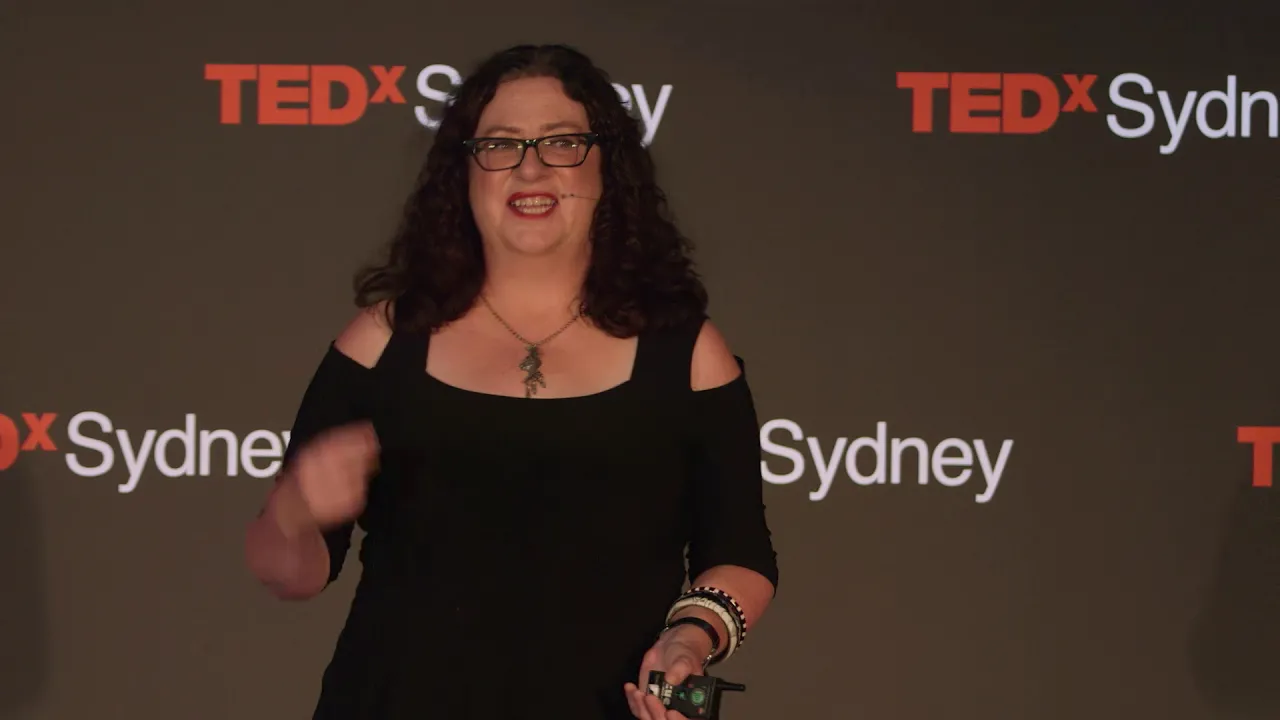
Indigenous Astronomy: Rethinking Space Ethics | Karlie Noon TEDx
Added:The history of modern space exploration, including the Cold War Space Race and the transition to the current commercial spaceflight era.
The definition and historical impacts of colonialism, particularly regarding land ownership, resource extraction, and indigenous displacement on Earth.
The basic concept of Ethnoastronomy, which examines how different historical and indigenous cultures understood, tracked, and related to the night sky.
Fundamental principles of environmental ethics, specifically contrasting resource exploitation with conservation and ecological stewardship.
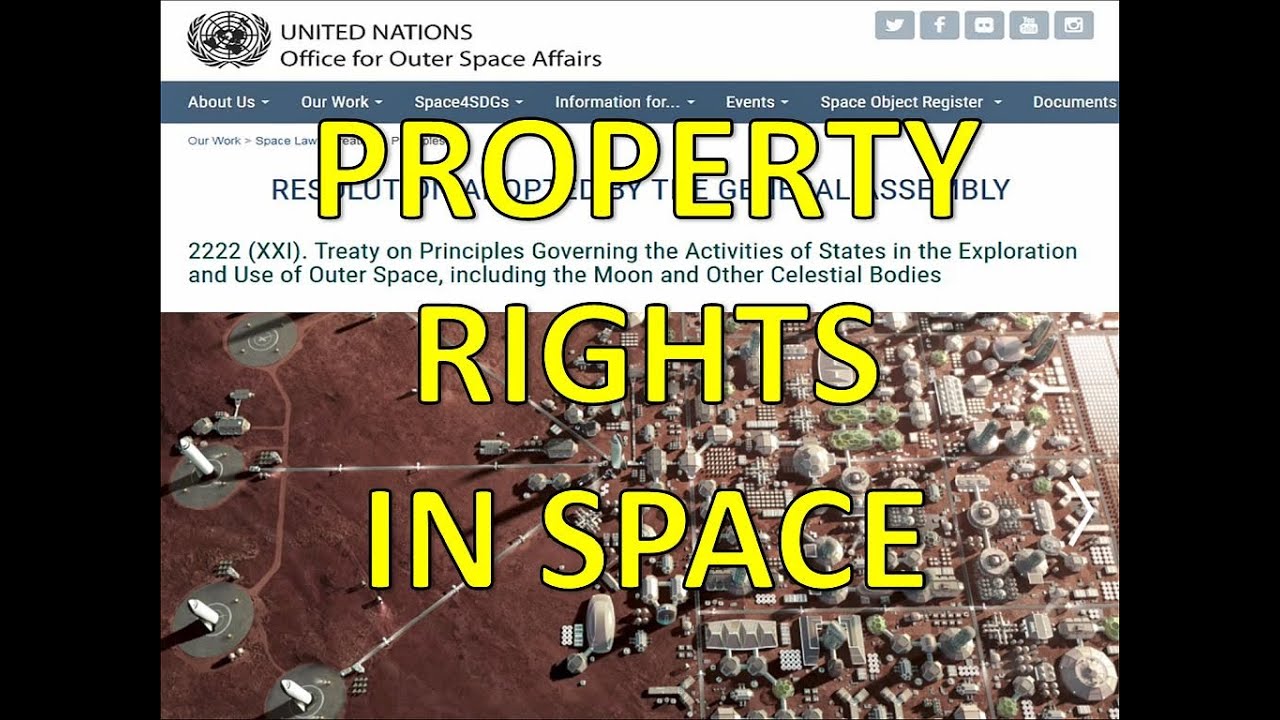
International Space Law and Policy, focusing on the limitations of the Outer Space Treaty of 1967 regarding private property rights and space mining.
Astroethics and Planetary Protection, exploring the ethical codes governing the search for extraterrestrial life and preventing biological cross-contamination.
Cosmic Environmentalism, studying practical applications for managing orbital debris (space junk) and mitigating light pollution from satellite constellations.
Traditional Ecological Knowledge (TEK) integration, examining how modern scientific agencies like NASA are increasingly collaborating with Indigenous scientists for climate and space research.
15.1K views291likes11:43Original Release: 2025-11-30
[Music] Have you ever considered what indigenous culture can teach us about space travel?
In 2020, the former US President Donald Trump gave a speech to Congress asking them to fully fund the Artemis program to help ensure that the next man and the first woman on the moon would be American and so that their nation would be the first nation to plant their flag on Mars.
He went on to explain that his American ancestors had braved the unknown, tamed the wilderness, and settled the Wild West. And that Americans are pioneers. They are pathfinders who settled the new world.
Interestingly, the term new world is the very same term used by Christopher Columbus to describe the Americas in 1492, signaling an error of European colonial conquest over those lands.
This parallels the notion of terranalius here in Australia, a legal concept used by the British Empire to justify the seizure of indigenous lands, thereby denying Aboriginal and toouristr islander humanity and sovereignty.
And I don't believe it's a coincidence that on that day in a speech about space exploration, the former US president used terms that have historically been used for exploitation. You see, some of the biggest players in the modern-day space industry echo this romanticization and even practice of colonialism.
For example, CEO of SpaceX, Elon Musk, one of the planet's richest people, is pouring his resources into an ambitious plan to terraform Mars, all the while occupying the entire low Earth orbit with mega constellations, changing and polluting our skies forever. Another billionaire, founder of Blue Origin, Jeff Bezos. He imagines a future where we must expand out into the solar system so that his great great grandchildren can use more energy than he does. Given that these endeavors are so concerned about being the first, occupying the most space, and using more and more resources than one planet can provide. What they call space exploration is starting to look a lot more like space exploitation.
And this is of course despite the vast amounts of evidence for the ongoing catastrophic consequences of colonialism, environmental destruction, loss of species, racism. But does it have to be this way? Of course not. Space exploration itself is not the problem.
Venturing beyond Earth, it shows us and advances our understanding of our place within the universe. It helps us monitor and protect our planet. And it can even unite humanity under a shared purpose. The challenge is doing it in a way that respects and sustains space for future generations.
The ancient wisdom and timeless narratives of indigenous cultures around the world can help us achieve this. Every indigenous culture has shared stories of space travel for thousands of generations and it offers us a profound perspective on humanity's relationship with the cosmos.
For example, in an essay written in 1987, a group of Inuit people remark that they do go to visit the moon and the moon people all the time. The issue is not whether they go to visit their relatives, but how they treat them and their homeland when they go.
For the PBLO people of the Southwest Americas, they speak of ancient star kin called cacas and they describe them as the spirits of all things in the universe. The cacas use ladders constructed by the PBLO people to climb down onto the land to join them. And the PBLO people can also use these ladders to join the sky realm if ever needed.
For the Tiwi people of northeast Arnamland, rain is the mediator between land and sky. For the cool nation in South Australia, it's the rays of the setting sun. And for many mob across Australia, whly winds are said to teleport people up into the sky.
And it's an incredibly stark contrast to the remote, exploitative, militarized betrayal of outer space enacted by the modern-day space industry. In fact, even the term outer space is in direct opposition to what indigenous communities say about their relationship with the sky.
A collective called the Bwaka group from northeast Anabland say that country includes the stars, the moon, the milky way, the solar winds and storms, the intergalactic plasma and that land, sea and sky country are all connected. So there is no such thing as outer space or outer country.
So what do we do? Some have suggested using designated zones uh using categories such as tourism facilities, naturally protected zones and mining. But as astrobiologist researcher Aleandro Marino points out that similar designated protected zones here on Earth have not been shielded from human activity. For example, Australia houses some of the world's most richest biodiversity.
However, over the past 236 years, Australia has also become world leaders in unprecedented rates of animal extinction. And this is a direct consequence of colonialism. Practices such as introduced species and farming techniques that were really never suited for these lands have created this.
History shows us that conservation efforts that try to cut up the pieces of the land are not sufficient in protecting species or habitat. We need to find ways to work that are more holistic and sustainable.
Last month, I partnered with the Center for International Governance Innovation to outline a policy document targeting governments and industry members of the space industry to point out ways they could avoid their current astrocolonial trajectory.
The main outcomes of this document is for the industry to engage and embrace indigenousled astroenvironmentalism.
For 65,000 years, Aboriginal and Toouristra Islander communities have developed and refined the practice of caring for country. Grounded in the understanding that we are a part of country, not its owners.
This custodianship has helped these communities navigate drastic climate shifts, mass animal extinctions, and of course, even the profound disruption of colonialism, all the while maintaining the protection of country for future generations.
And I encourage you all to look up at your night sky. What looks back at you is not a frontier to be conquered. It's a part of our shared heritage. And it's more ancient than we can possibly imagine.
Every culture on Earth has looked up at those same stars and have not felt emptiness but home. Not resources but relatives. And so we're now standing on the edge of becoming a space fairing species.
We must answer the question, will humanity take colonialism into the cosmos? Or will we follow a path that honors the wisdom we have always known that to be a pioneer is not simply to explore but to protect. Thank you.
[Applause]
Up Next
51:26
Space Ethics 101: A Physicist on Settling Beyond Earth
@TheRoyalInstitution
18.8K views•2024-01-16

12:54
Triumph of Orthodoxy Icon: Byzantine Art & History Explained
@BenCallan
2.1K views•2024-08-06
11:08
Lunar Mining Risks to Heritage Sites | Space Archaeologist Alice Gorman
@TEDx
48.3K views•2019-03-26

1:42
Game of Thrones Opening Credits: A Cinematic Analysis
@gameofthrones
46.3M views•2011-04-18
Related Study Plans & Knowledge Roadmaps
Structured learning paths in General & Interdisciplinary Studies
general-studies
Elevator Engineering: History, Physics & Cities
01From Hoists to Safety Brakes: The Dawn of Vertical Lift
02Hydraulic vs. Traction: The Engineering Physics of Elevators
03Modern Speed, Safety, and Algorithms
+ 2 more learning modules
12h5 modules
Explore Roadmap
general-studies
Rubber: Material Science, History & Geopolitics
01Origins of Natural Rubber & Mesoamerican History
02The Chemistry of Natural Rubber & Vulcanization
03The Geopolitics of the Rubber Boom & Colonization
+ 2 more learning modules
12h5 modules
Explore Roadmap
general-studies
Containerization: Evolution, Logistics & Trade
01Ancient Trade & Bulk Cargo: Amphorae to Barrels
02The Industrial Revolution & Cardboard Packaging
03The Containerization Revolution: Malcom McLean
+ 2 more learning modules
12h5 modules
Explore Roadmap
general-studies
Textile Tech: Evolution, Labor & Global Impact
01Pre-Industrial Textiles: Handloom & Cottage Industry
02Mechanization: The Spinning Jenny to the Power Loom
03The Factory System & Global Labor Transformation
+ 2 more learning modules
10h5 modules
Explore Roadmap