













![🔴[DIRECT] L'invité de #MNF: Tariq Ramadan sur la géopolitique; Trump; l'islam; Pastef au pouvoir](https://i.ytimg.com/vi/JWkxY3aKjoo/hqdefault.jpg)






Stylometry is a linguistic technique that analyzes unique writing characteristics—such as average sentence length, word arrangement, and vocabulary patterns—to determine authorship, and when applied to Shakespeare's works, it confirms that Shakespeare wrote his own plays while also revealing evidence of collaborations with other playwrights like Christopher Marlowe.
Did Shakespeare Write His Plays? Stylometry Explained
Added:An overview of the Shakespeare authorship question, including the mainstream consensus and key alternative candidates like Edward de Vere or Francis Bacon.
The concept of an 'idiolect' in linguistics—how individual habits of speech and writing create a unique personal linguistic profile.
Basic statistical concepts, particularly frequency distribution and patterns, which underpin how qualitative text is converted into quantitative data.
An understanding of function words (e.g., 'and', 'with', 'of') versus content words, as they are crucial markers in stylistic analysis.
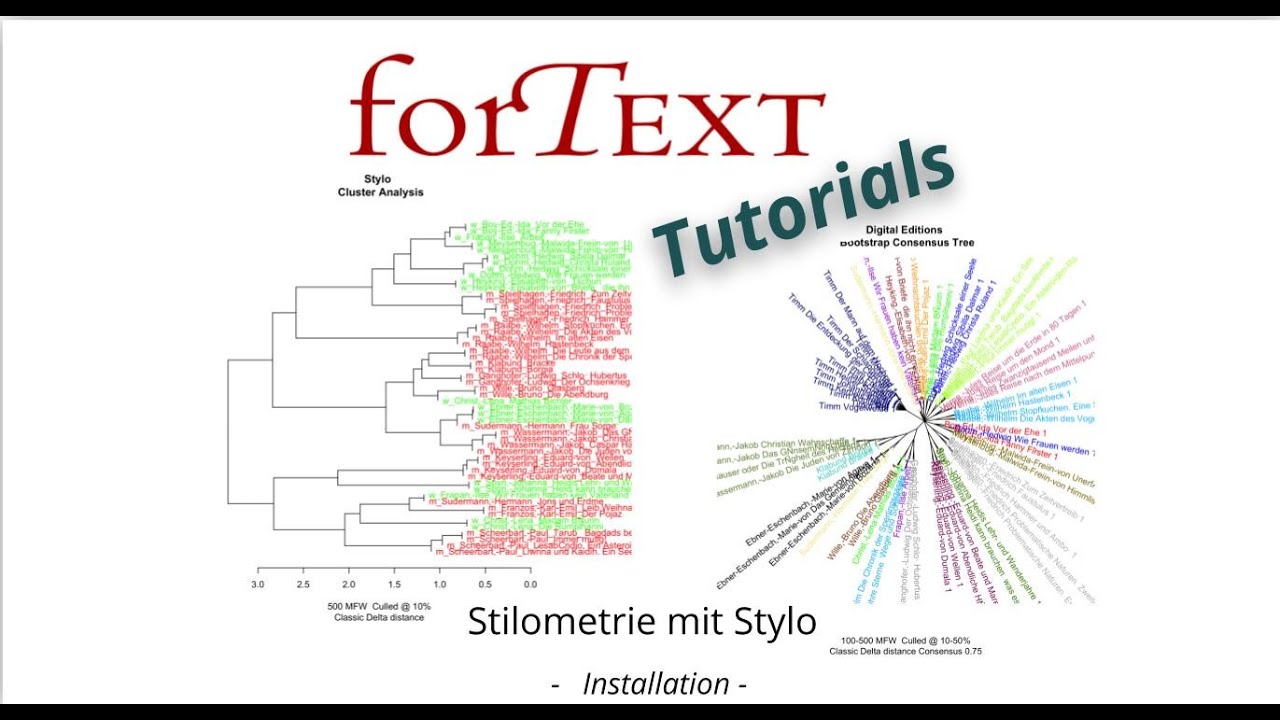
Practical application of computational stylistics using specialized software and programming libraries, such as the 'stylo' package in R or Python's NLTK.
Forensic linguistics, exploring how stylometry is used as evidence in modern legal cases, investigative journalism, and identifying anonymous authors.
Advanced machine learning and Natural Language Processing (NLP) algorithms used for text classification, authorship attribution, and plagiarism detection.
Case studies of other famous literary mysteries solved or analyzed via stylometry, such as the Federalist Papers, the works of Elena Ferrante, or J.K. Rowling's pseudonym.
1.1M views15.6Klikes4:06Original Release: 2015-02-24
"Some are born great, some achieve greatness, and others have greatness thrust upon them", quoth William Shakespeare.
Or did he?
Some people question whether Shakespeare really wrote the works that bear his name, or whether he even existed at all.
They speculate that Shakespeare was a pseudonym for another writer, or a group of writers.
Proposed candidates for the real Shakespeare include other famous playwrights, politicians and even some prominent women.
Could it be true that the greatest writer in the English language was as fictional as his plays?
Most Shakespeare scholars dismiss these theories based on historical and biographical evidence.
But there is another way to test whether Shakespeare's famous lines were actually written by someone else.
Linguistics, the study of language, can tell us a great deal about the way we speak and write by examining syntax, grammar, semantics and vocabulary.
And in the late 1800s, a Polish philosopher named Wincenty Lutosławski formalized a method known as stylometry, applying this knowledge to investigate questions of literary authorship.
So how does stylometry work?
The idea is that each writer's style has certain characteristics that remain fairly uniform among individual works.
Examples of characteristics include average sentence length, the arrangement of words, and even the number of occurrences of a particular word.
Let's look at use of the word thee and visualize it as a dimension, or axis.
Each of Shakespeare's works can be placed on that axis, like a data point, based on the number of occurrences of that word.
In statistics, the tightness of these points gives us what is known as the variance, an expected range for our data.
But, this is only a single characteristic in a very high-dimensional space.
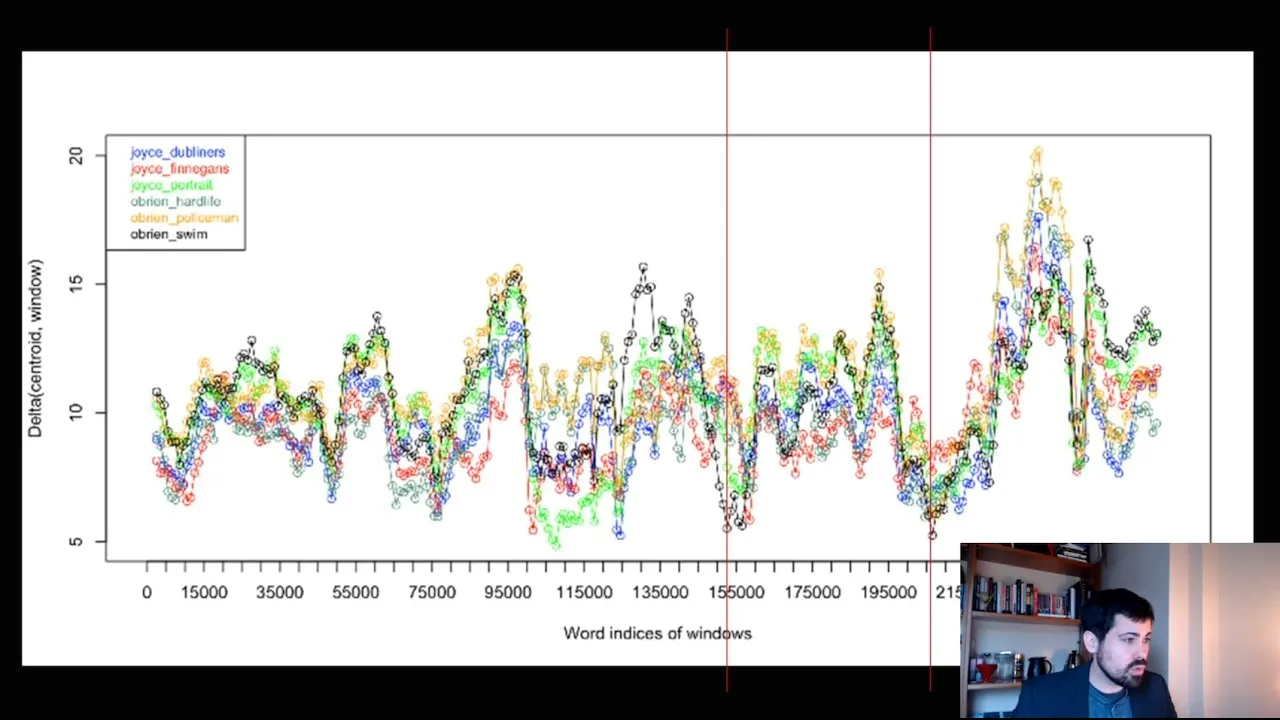
With a clustering tool called Principal Component Analysis, we can reduce the multidimensional space into simple principal components that collectively measure the variance in Shakespeare's works.
We can then test the works of our candidates against those principal components.
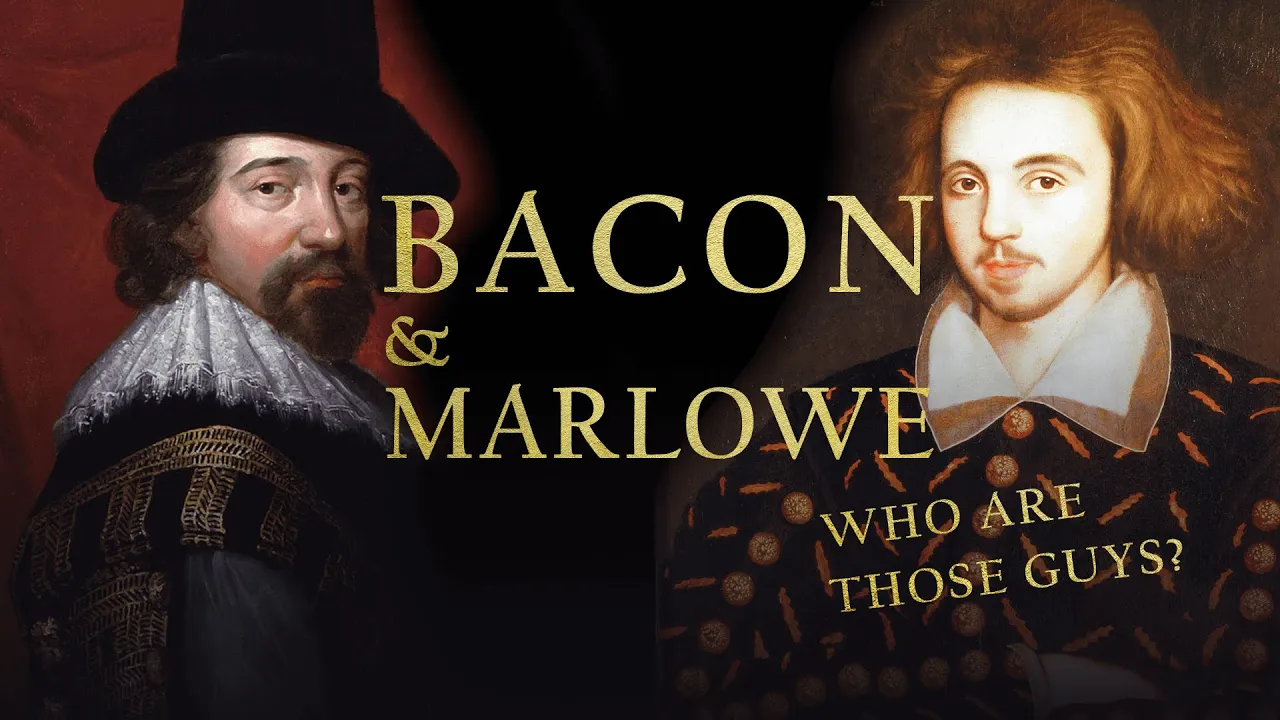
For example, if enough works of Francis Bacon fall within the Shakespearean variance, that would be pretty strong evidence that Francis Bacon and Shakespeare are actually the same person.
What did the results show?
Well, the stylometrists who carried this out have concluded that Shakespeare is none other than Shakespeare.
The Bard is the Bard.
The pretender's works just don't match up with Shakespeare's signature style.
However, our intrepid statisticians did find some compelling evidence of collaborations.
For instance, one recent study concluded that Shakespeare worked with playwright Christopher Marlowe on "Henry VI," parts one and two.
Shakespeare's identity is only one of the many problems stylometry can resolve.
It can help us determine when a work was written, whether an ancient text is a forgery, whether a student has committed plagiarism, or if that email you just received is of a high priority or spam.
And does the timeless poetry of Shakespeare's lines just boil down to numbers and statistics?
Not quite.
Stylometric analysis may reveal what makes Shakespeare's works structurally distinct, but it cannot capture the beauty of the sentiments and emotions they express, or why they affect us the way they do.
At least, not yet.
Up Next

11:20
Spectrogram Analysis and Vowel Formants in Praat Tutorial
@FloridaLinguistics
237.2K views•2011-12-08
36:52
Constraint Interaction in Optimality Theory: Epenthesis & Deletion
@Vidyamitra
180 views•2018-08-20

8:46
How Language Shapes Thought: Cognitive Science Explained
@TEDEdStudentTalks
285.5K views•2017-04-27

21:32
Accent Expert Explains U.S. Regional Dialects | Part 1
@WIRED
9.3M views•2021-01-21
Related Study Plans & Knowledge Roadmaps
Structured learning paths in Linguistics
linguistics
Optimality Theory: Tableaux & Constraints
01Phonological Basics: Sounds, Syllables & Rules
02Foundations of Optimality Theory: GEN, CON, and EVAL
03The Constraint Inventory: Markedness vs. Faithfulness
+ 2 more learning modules
15h5 modules
Explore Roadmap
linguistics
Morphosyntactic Alignment: S, A & P Systems
01Foundations of Syntax: Transitivity and Arguments
02The Linguistic Variables: Mapping S, A, and P
03Nominative-Accusative Alignment
+ 3 more learning modules
12h6 modules
Explore Roadmap
linguistics
Analyzing Sign Language: Phonology & Syntax
01Foundations of Sign Language Linguistics
02Phonology: The Five Parameters of a Sign
03Morphology: Word Formation and Classifiers
+ 2 more learning modules
14h5 modules
Explore Roadmap
linguistics
Pragmatics: Speech Acts, Grice & Politeness
01Introduction to Pragmatics: Meaning in Context
02Grice’s Cooperative Principle & Implicature
03Speech Act Theory
+ 2 more learning modules
14h5 modules
Explore Roadmap