



















The languages we speak significantly influence how we perceive and understand reality, as demonstrated by research showing that speakers of languages using absolute cardinal directions (like Kuuk Thaayorre) excel at spatial navigation, while speakers of languages without number words (like Pirahã) struggle with exact numerical concepts, indicating that language doesn't just express thoughts but actively shapes the very thoughts we can construct.
How Language Shapes Thought: Cognitive Science Explained
Added:Introduction to Linguistics: Basic understanding of phonology, syntax, semantics, and lexical structures across different languages.
The Sapir-Whorf Hypothesis: Familiarity with the concepts of linguistic determinism (strong version) and linguistic relativity (weak version).
Fundamental Cognitive Processes: A baseline understanding of how human perception, memory encoding, and categorization function in psychology.
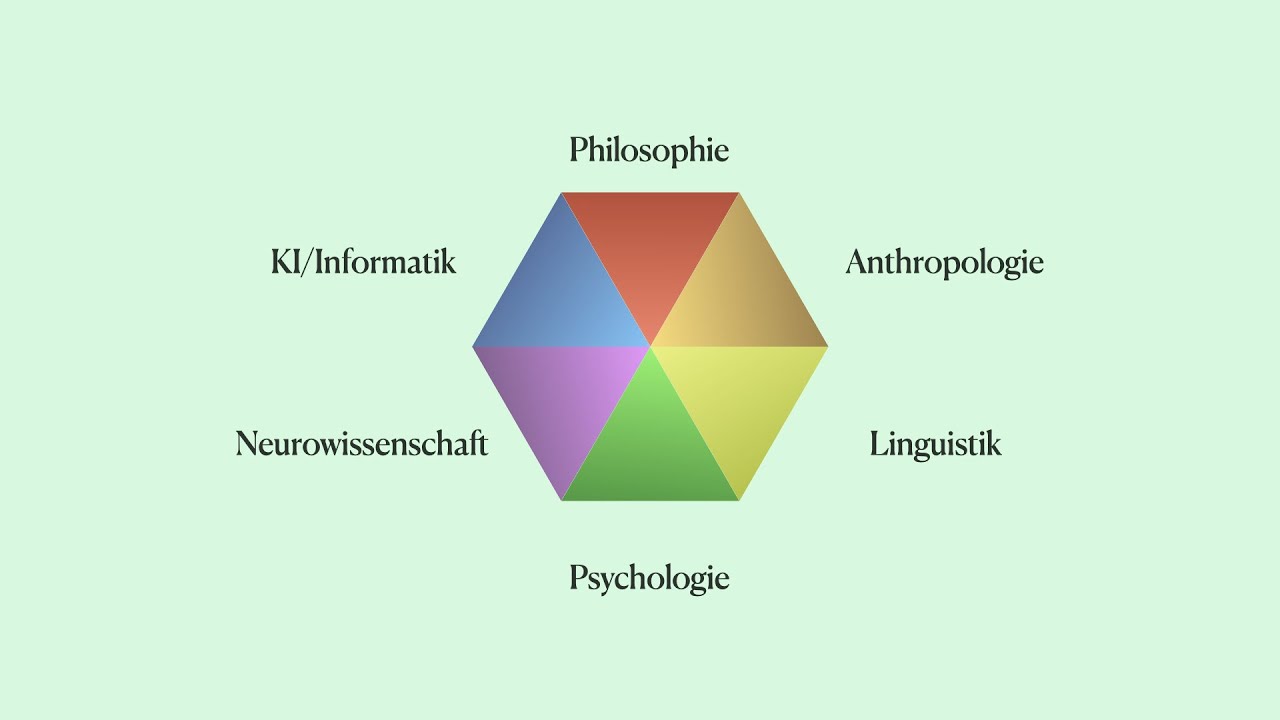
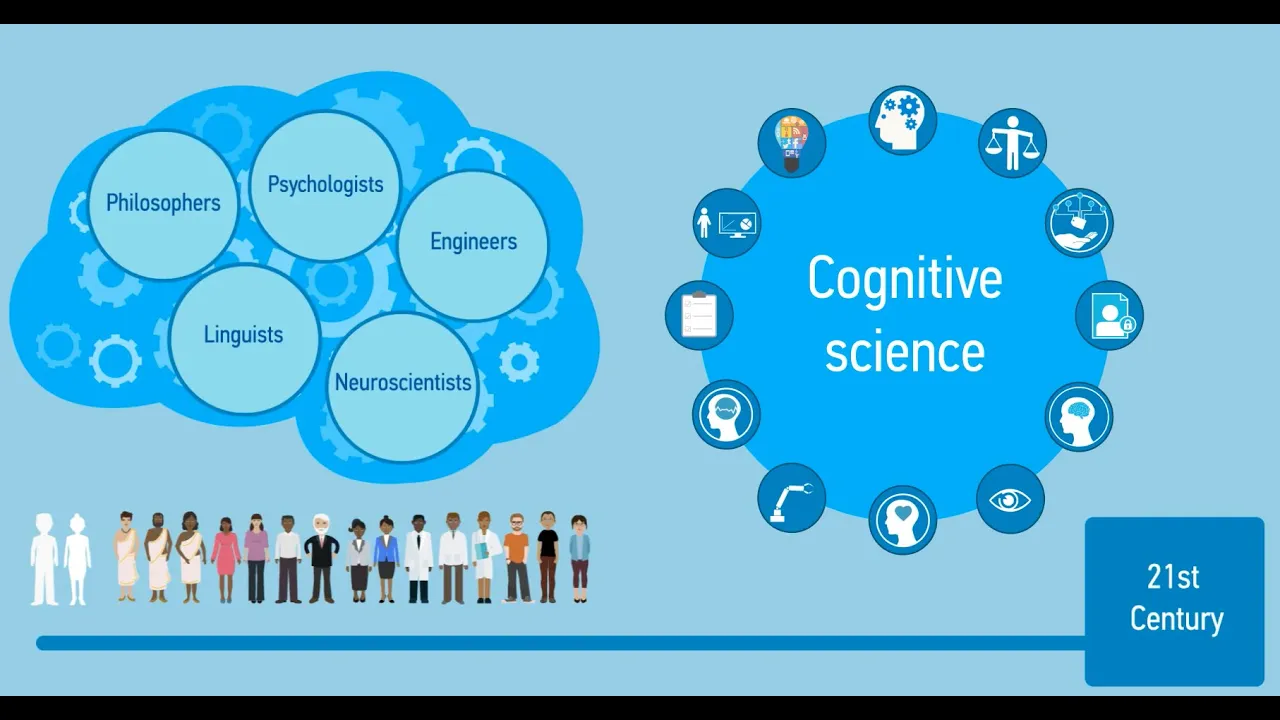
Introduction to Cognitive Science: Knowing how psychology, neuroscience, philosophy, and linguistics intersect to study the mind.
Bilingualism and Executive Function: Investigating how managing multiple languages influences cognitive flexibility, working memory, and attention control.
Neurolinguistics: Exploring the brain structures and neural pathways that facilitate language processing and perception.
Cross-Cultural Psychology and Spatial Cognition: Studying how different cultures perceive space, time, and color based on their specific linguistic frameworks.
Natural Language Processing (NLP): Applying theories of human linguistic cognition to artificial intelligence and computational models of language.
Sociolinguistics and Behavioral Economics: Examining how language framing, metaphors, and terminology shape decision-making and social policy in real-world contexts.
285.5K views0likes8:46Original Release: 2017-04-27
Let us begin with a scenario.
You are standing next to a six-year-old boy in Pormpuraaw, an isolated Aboriginal community in Australia.
When you ask him to point north, he points precisely and without hesitation.
Your compass says he’s right.
You then ask the same question to a group of your teachers.
Not all of them know the answer and the ones who think they do end up pointing in several different directions before eventually reaching a state of confusion.
Why is it that a six-year-old boy in one culture can do something effortlessly that educated, experienced adults in another culture struggle to do?
The surprising answer, as Lera Boroditsky reported in the Wall Street Journal in 2010, might be the substantial influence of our native language over our thought processes. I will be using some of her ideas to help me make my points.
The relationship between language and thought has provided a rich topic for anthropological, psychological and linguistic research.
Language, like culture, is a system we all create and define together, but unlike culture it is tightly structured.
The idea that language might shape thought has often been seen as crazy and irrational, and untestable at best.
However, a new flurry of cognitive scientific research has caused a shift in consensus and led us to wonder: Do the languages we speak have an effect on the way in which we construct our individual perceptions of reality and how we see the world?
Consider a snippet from one of the most well-known nursery rhymes in the English-speaking world; “Humpty Dumpty sat on a wall”, from this one line alone, we can reveal so many of the differences between languages.
If you were singing "Humpty Dumpty" in English, you would have to mark the verb for tense and say “sat” rather than “sit”.
to indicate timing.
But in Indonesian you don’t need to, and in fact- you can't, change the verb to mark tense.
In Russian, the word that you would use would reveal the gender of your protagonist.
So your verb would be slightly different if it was Mr. Dumpty instead of Mrs. Dumpty doing the sitting.
Lastly, in Turkish, you would have to include in your verb how you obtained the information that you were talking about. So you would use a slightly different word if you saw Humpty Dumpty sitting with your own eyes than if you read or heard about it.
So, as we can see each language requires very different things from its speakers.
But does this mean that speakers of English, Turkish, Russian and Indonesian end up comprehending their experiences differently just because they speak different languages?
Let’s do another one.
Suppose I want to tell you that I saw Uncle Mike on 47th street.
In Mian, which is a language spoken in Papua New Guinea, the verb that I would use would reveal whether the event happened just now, yesterday or a longer time ago, whereas in Indonesian it wouldn't even reveal if it was still going on.
In Russian, the verb would reveal my gender.
And in Mandarin Chinese, I would have to specify in my word choice for "uncle" whether my uncle is maternal or paternal and whether he is related by blood or by marriage, because there are different types of words for all these types of uncles.
But while the rules of all those languages seem to add specific information to the content of my sentences, some languages actually remove information all together.
In Pirahã, which is a language spoken in the Amazon by a tribe of the same name, I couldn’t say 47th because there Because the Pirahã have no words for numbers.
In fact, in this way and many others, Pirahã departs from what were long thought to be essential features for all languages.
As Rafaela von Bredow reported in Der Spiegel, The Pirahã use only three pronouns.
They hardly use any words associated with time or color, and past verb conjugations don't exist.
But what has perflexed linguists the most is that the Pirahã appear to have no words for numbers.
They do not use words such as “few” or “many”.
There is one word, “hói”, which comes close to the numeral 1.
However “hói” can also be used to describe relatively small quantities, such as two small fish as opposed to one big fish.
Peter Gordon, a psycholinguist at Columbia University, and Daniel Everett from Bentley University visited the Pirahãs attempting to test their mathematical abilities.
They were asked to repeat patterns made between 1 and 10 or to remember whether Gordon had placed 5 or 8 objects in a can.
The results were fascinating; the Pirahãs simply could not grasp the concept of numbers.
As Everett stated as a conclusion to his research, “a people without terms for numbers does not develop the ability to determine exact numbers”.
Which compels us to deduce, that people are only capable of constructing thoughts for which they possess actual words, and ultimately, that language is not just a way for us to express our thoughts; it actually plays a substantial role in creating them.
It is not that the Pirahãs are not intelligent enough to grasp mathematical concepts; This anomaly does not lie on their mental capacities being lower than average.
It lies on the origins and purpose of their language.
All languages are created and moulded by the culture of their speakers, and Pirahã is no different.
Everett explains the cultural core of this very language with one simple formula “Live here and live now.” The only thing of importance that is worth communicating to others is what is being experienced in that very moment: and that's why all experience is anchored in the present.
This also explains why the Pirahã appear to have no creation myth explaining their existence.
When asked about it, they simply replied: "Everything is the same, things always are."
It is the employment of this carpe-diem culture that restricts abstract thought and complicated connections to the past, limiting the language accordingly.
Now, while we explore Pirahã as an example of how language can limit cognition, the Kuuk Thaayorre language spoken in this region of Pormpuraaw actually serves as an example of language improving it.
Unlike English, Kuuk Thaayorre language spoken in Pormpuraaw does not employ relative spatial terms such as left and right.
Kuuk Thaayorre people actually talk in terms of absolute cardinal directions, that is, North, South, East, West.
In English, we also use those terms, but only for large spatial scales, but in Kuuk Thaayore they're used at all scales.
So what this means is that in Pormpuraaw, one might say “the fork is southeast to the knife”, or “the boy standing to the west of Julie is my brother”.
As a result, people who speak such languages that employ absolute cardinal directions are remarkably good at keeping track of where they are, because they need to this just to be able to speak properly.
It is the requirements of their language that enforce and train this cognitive prowess.
Research has also shown that language can influence how we perceive and understand the concept of time.
Alice Gaby from the University of California, Berkeley, gave speakers of different languages a set of cards showing temporal progressions; such as a man ageing, or a crocodile growing.
The speakers were then asked to take the shuffled photographs and arrange them in correct temporal order.
English speakers given this task will arrange the cards so that time proceeds from left to right.
But Hebrew speakers who write from right to left, will tend to arrange the cards so that time proceeds from right to left.
Which shows us that writing direction in a language can actually influence how we perceive and understand the concept of time.
For example, in English the future is said to be in front of us and the past is said to be behind us.
And in a study carried out by Lynden Miles, it was proven that speakers of English will tend to sway their bodies forward when discussing the future and backward when discussing about the past.
But in Aymara, a language spoken in the Andes, the past is said to be in front of us and the future behind us, and similarly, as proven by Eve Sweetser, speakers of Aymara will tend to sway their bodies forward when discussing the past and backward when discussing the future.
But even more incredible is that language can go beyond affecting our own abilities and conceptions, to empower us to mould how an event appears and influence how others experience it.
Lera Boroditsky outlines this with one simple example.
Consider former vice-president Dick Cheney’s quail-hunting accident, in which Cheney accidentally shot Harry Whittington.
In this case, one could say that “Cheney shot Whittington” identifying Cheney as the agent of the event.
One could also say “Whittington was shot by Cheney” still indicating Cheney as the agent, but distancing him from the outcome.
Lastly, one could say “Whittington got shot”, leaving Cheney out altogether.
Cheney himself said, “Ultimately I’m the guy who pulled the trigger that fired the round that hit Harry,” interposing a long chain of events between himself and the outcome.
President George Bush said— "he turned around, and he heard a bird flush, and he pulled the trigger and saw his friend get wounded”— transforming Cheney from agent to mere witness in less than a sentence.
These are all just a few of the many fascinating findings of linguistic differences in cognition.
The languages we speak not only help us express our thoughts, but actually shape the very thoughts we wish to express.
The patterns that our languages are made of immensely shape how we construct our individual perceptions of reality, build our opinions and interpret the incredibly complex knowledge systems that we have.
Thank you.
Up Next
11:49
How Language Shapes Thought: Multilingualism Benefits | TEDx Talk
@TEDx
1.9M views•2015-06-23
36:52
Constraint Interaction in Optimality Theory: Epenthesis & Deletion
@Vidyamitra
180 views•2018-08-20

8:59
Forensic Linguistics: How Language Solves Crimes | PBS
@pbsstoried
1M views•2024-01-25

21:32
Accent Expert Explains U.S. Regional Dialects | Part 1
@WIRED
9.3M views•2021-01-21
Related Study Plans & Knowledge Roadmaps
Structured learning paths in Linguistics
linguistics
Optimality Theory: Tableaux & Constraints
01Phonological Basics: Sounds, Syllables & Rules
02Foundations of Optimality Theory: GEN, CON, and EVAL
03The Constraint Inventory: Markedness vs. Faithfulness
+ 2 more learning modules
15h5 modules
Explore Roadmap
linguistics
Morphosyntactic Alignment: S, A & P Systems
01Foundations of Syntax: Transitivity and Arguments
02The Linguistic Variables: Mapping S, A, and P
03Nominative-Accusative Alignment
+ 3 more learning modules
12h6 modules
Explore Roadmap
linguistics
Analyzing Sign Language: Phonology & Syntax
01Foundations of Sign Language Linguistics
02Phonology: The Five Parameters of a Sign
03Morphology: Word Formation and Classifiers
+ 2 more learning modules
14h5 modules
Explore Roadmap
linguistics
Pragmatics: Speech Acts, Grice & Politeness
01Introduction to Pragmatics: Meaning in Context
02Grice’s Cooperative Principle & Implicature
03Speech Act Theory
+ 2 more learning modules
14h5 modules
Explore Roadmap