
























Personal space, or proxemics, is a learned behavior shaped by both age and culture that influences how humans perceive safety and comfort in social interactions; different cultures have varying norms about acceptable physical distance, with contact cultures (like Southern Europe and South America) preferring closer proximity and non-contact cultures (like Northern Europe and North America) maintaining greater distance, and understanding these differences can improve communication and relationships in various environments.
The Science of Personal Space: How Culture Shapes Proxemics
Added:Introduction to Nonverbal Communication: Understanding how eye contact, gestures, posture, and body language convey meaning without words.
The Concept of Socialization: Grasping how individuals learn, internalize, and perpetuate the norms and values of their specific cultural background.
The Nature vs. Nurture Debate: Distinguishing between innate human biological responses and learned cultural behaviors.
Introduction to Cultural Relativism: The academic practice of evaluating a culture's practices by its own standards rather than through the lens of one's own culture.
Edward T. Hall's Four Distance Zones: Studying the specific spatial boundaries (intimate, personal, social, and public) and how they vary globally.
High-Context vs. Low-Context Communication: Exploring how spatial distance aligns with verbal and situational communication styles in different societies.
Environmental Psychology and Architectural Design: Investigating how public spaces, offices, and homes are designed to accommodate or influence cultural proxemic preferences.
Cross-Cultural Business and Diplomacy: Applying knowledge of personal space to improve international negotiations, leadership, and global team collaboration.
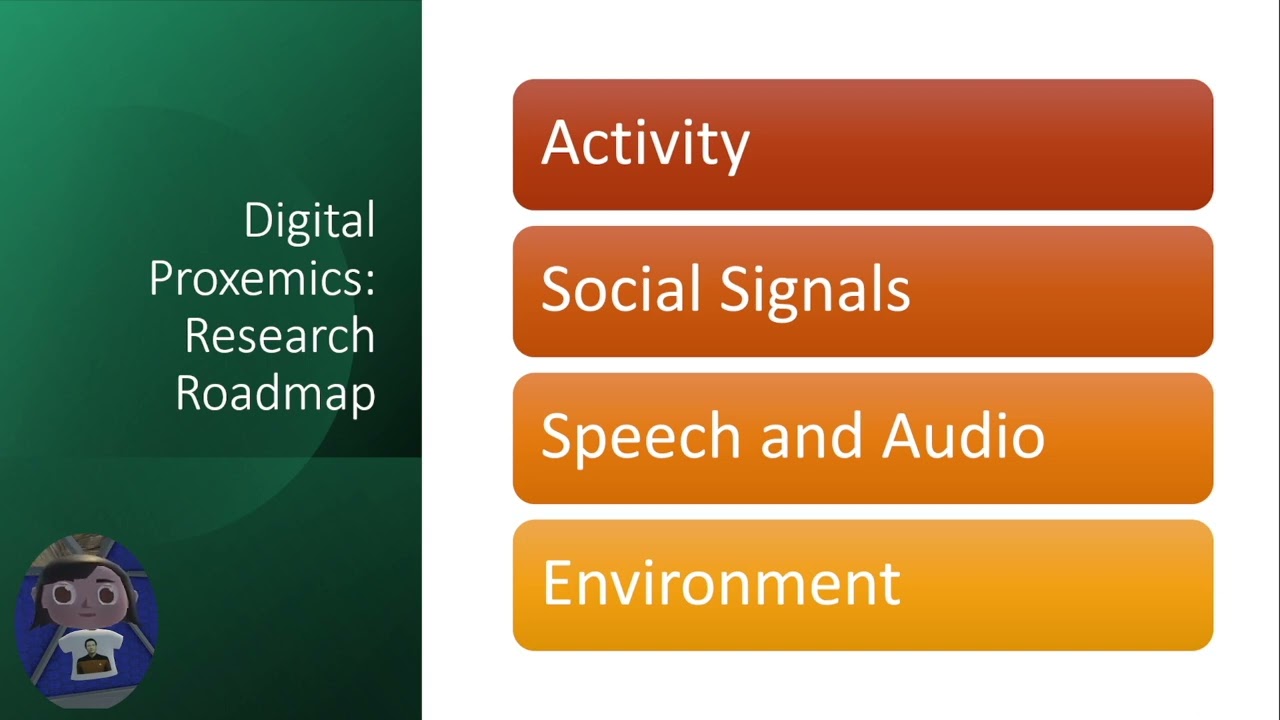
Virtual and Digital Proxemics: Examining how boundaries of personal space are maintained, breached, or redefined in digital environments and virtual reality.
121 views6likes7:15Original Release: 2025-04-15
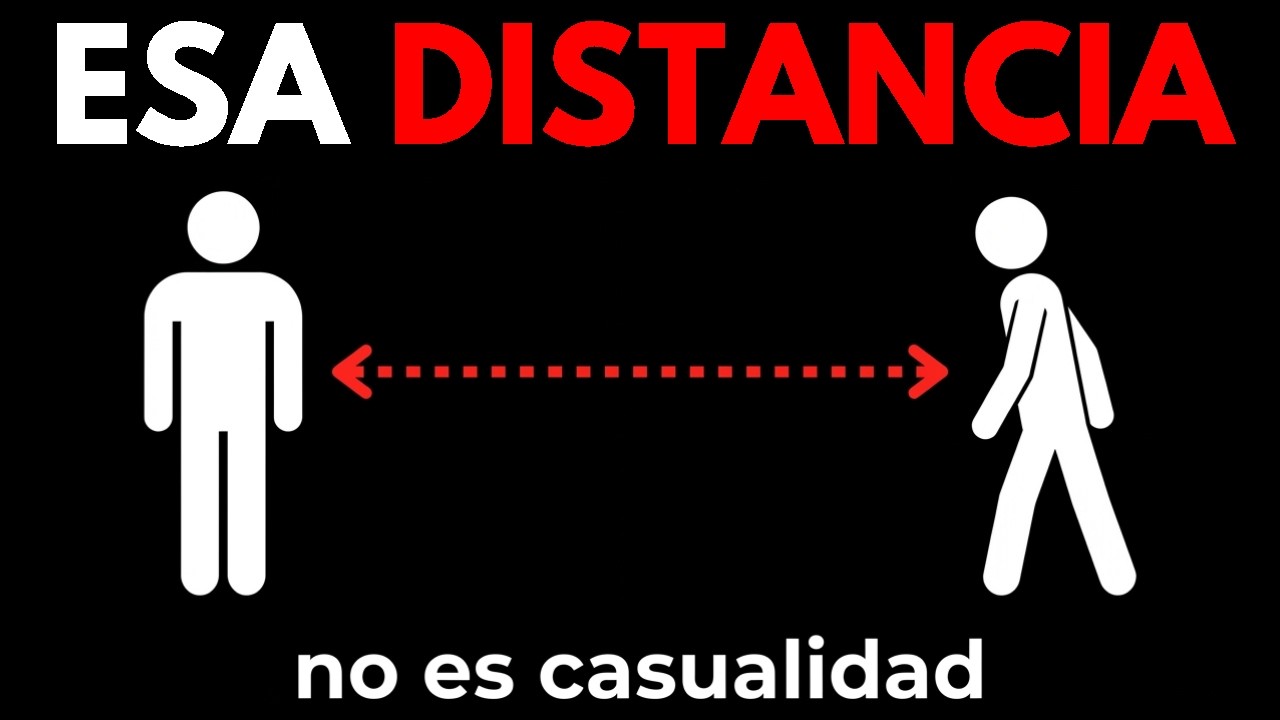
[Applause] So several months ago, the two of us had been attending classes at the top of a large 23story building. So naturally, we took the elevator, which would inevitably stop multiple times on our way up and down each day. We began to notice that we would stand next to each other as one unit and as far away from a stranger in the elevator. And on busy days when the elevator would begin to crowd and we were standing so close to so many people, we would squeeze our shoulders and windside each other while others in the elevator seemed totally comfortable and unaffected. To explore the situation in more detail, we had to invite you guys to participate in an activity. Imagine that this is a classroom and you walk in and spot 4 is occupied by a stranger. Which spot would you guys choose to sit in? Who would choose spot one, two, or three? Now imagine another scene with a similar table but spot four and two are occupied. How many would choose spot one, five, three or six? The same social instincts are present in the elevator we mentioned earlier. Picture you are standing alone in the center of an elevator. If someone walks in, you are most likely to reposition yourselves at a maximal diagonal distance from each other. If you were to not readjust or stay in close proximity, this may feel awkward or uneasy for the person walking it or even signal a threat. And so as more and more people come in this and there's a constant reshuffleling of these dynamics and these sort of elevator pattern or formations emerge. So why do we all choose those spots? What makes us feel the need to maintain such distance especially in a small space like an elevator? This this phenomenon isn't random. is rooted in the concept of personal space, a crucial aspect of human interaction that influences how we perceive safety and threat. Our personal space gives us a sense of comfort. And when those boundaries are crossed, even in a small space like an elevator, we can sometimes feel threatened or uneasy. So this concept was coined by Edward Hall as proxmics, which is the study of how our culture influences our perceptions of personal space. Many of you might have heard of four main zones of personal space. Intimate is from 0 to 0.5 m. Personal is from 0.5 to 1.2 m.
Social would be from 1.2 to 3.7 m. And public is greater than 3.7 m or from us to you guys. So when someone is standing really close to you, what do you assume?
Are they just pushy, have bad hearing, or is this behavior typical of their culture? This situation exemplifies a common phenomenon in in human interactions. When two people from different cultures converse, cross-cultural miscommunication is really likely to occur. This is because perceptions of personal space vary between different cultures. Above is a generalized perception of different generalized categorization of different countries. Contact cultures include South America, Southern Europe, and the Middle East, while non-cont cultures include Northern Europe, Asia, and North America. And to look at this closer, we found a study that was conducted on the proximic behaviors of 122 people from different regions around the world. So in this study, the nor the northern Europeans, which in this case included the British, Germans, and Americans, ended up being part of the non-tap group, which meant that physical touch and proximity was limited. They tended to keep more distance between each other and limit eye contact. On the other hand, southern Europeans such as the French and Italians are part of the contact group. In this case, physical proximity and touch and loudness are more common. This contrast was partly caused due to their different experiences.
Southern Europeans felt that m um maintaining a close distance conveyed warmth and connection and a louder voice conveyed excitement or interest. For them, a greater distance and lack of eye contact conveyed indifference with some subjects even labeling this behavior as unfriendly. Northern Europeans, on the other hand, were more uncomfortable with this closeness, associating it with intrusiveness or tension. Now, obviously, this study is highly generalized. Now, you might be wondering, well, isn't this obvious?
While proxymix may seem instinctual, Edward Hall actually suggests that these distances are learned and developed as one gets older. And children, as we all know, constantly invade each other's personal space, pushing and reestablishing boundaries. And we can imagine that if we were to take a bunch of children and put them in the original elevator example or the table example, they would be much more comfortable and even more sociable. So therefore, as kids when we grow up, we are naturally picking up innumerable amounts of cultural habits that we don't even notice they are taking over and replacing our natural tendencies. So while proxmics may seem obvious and innate, it's actually defined as we grow old.
So proxymics influence how we communicate, collaborate and form relationships. It begins with personal space which influences our comfort levels in a conversation. How close or are someone stand influences how open and reserved we feel. And these in turn influence things like workplace and classroom dynamics. For example, in the workplace, proximics might influence leadership styles or business negotiations and influences whether a team can collaborate efficiently or whether they suffer from miscommunication. Similarly, in the classroom, your positioning with your teacher or peers might influence your relationships, learning experiences, or confidence levels. These habits become ingrained in our social expectations.
And the way we navigate physical space sets off a series of reactions that shape not just individual interactions, but entire social and professional ecosystems. So, in conclusion, proxy is a learned behavior shaped by both age and culture that influences how we perceive personal space. Are these two the only factors that influence us?
Well, of course not. Depending on the person, other things like gender, physical environment, and family situations might also be of importance.
But overall, it's important to note that out of all the factors, studies have shown that the two we mentioned are the most significant. Therefore, our non-verbal communication gets refined by the people and expectations around us. And by recognizing these differences, we can better understand and design interactions with others. We can take note of how in certain spaces we we may be driven to collaborate or interact or um create a sense of privacy and these social dynamics are so deeply ingrained that we don't tend to notice or even um like react to them except for example during the co 19 pandemic when social distancing and lockdown forced us to reconfigure our spatial practices. So suddenly we were asking ourselves is this person standing too close to me?
Should I move away?
So, the next time you're in a public space, try taking proxy into account.
Notice how far or close you're standing with someone. Notice how different places or situations might impact how you or others feel. Maybe try changing or shifting your boundaries and see what happens. Thank you.
Up Next

60:34
Why We Eat the Way We Eat: Food Culture with Ruby Tandoh
@ThisIsTASTE
130 views•2025-09-26

9:30
Parasocial Donations on Twitch: A $155,000 Case Study in Streamer-Viewer Dynamics
@PyrocynicalVEVO
415.5K views•2024-02-25

21:18
Sexism and Epistemic Injustice: How Male-Centered Culture Shapes Knowledge | Soraya Chemaly | TEDx Talk
@TEDx
395.5K views•2015-07-28

9:41
What is Sociology? The Sociological Perspective Explained
@crashcourse
4.6M views•2017-03-13
Related Study Plans & Knowledge Roadmaps
Structured learning paths in Sociology
sociology
Disaster Sociology: Risk, Power & Recovery
01Foundations of Disaster Sociology
02Structural Vulnerability & Social Inequality
03Ulrich Beck and the 'Risk Society'
+ 2 more learning modules
15h5 modules
Explore Roadmap
sociology
Celebrity Culture: From Hollywood to TikTok
01Foundations of Celebrity Sociology
02The Rise of Micro-Celebrity & Digital Platforms
03Parasocial Relationships & Algorithmic Intimacy
+ 2 more learning modules
12h5 modules
Explore Roadmap
sociology
Hostile Architecture: Space, Power & Control
01Introduction to the Sociology of Space
02Social Control and Surveillance in the City
03Hostile Architecture and Defensive Design
+ 2 more learning modules
12h5 modules
Explore Roadmap
sociology
Loneliness Epidemic: Third Places & Isolation
01Foundations of Social Capital and Community Cohesion
02The Death of Third Places and Urban Space Erosion
03The Privatization of Leisure and Atomization
+ 2 more learning modules
12h5 modules
Explore Roadmap