











![[Think Academy] 5 Skills Successful Students Have ---Eddie](https://i.ytimg.com/vi/WmeieJQXdOU/maxresdefault.jpg)
























Sociology is the scientific study of society and human behavior, characterized by its broad scope that examines all aspects of society at all scales—from individual interactions to national differences—through the sociological perspective, which involves seeing the general in the particular and seeing the strange in the familiar; this discipline emerged in the 1800s from Auguste Comte's vision of a systematic science for studying society, and focuses on understanding social problems, patterns, and inequalities through objective observation and analysis.
What is Sociology? The Sociological Perspective Explained
Added:A basic understanding of the distinction between the natural sciences (e.g., biology, chemistry) and the social sciences.
Familiarity with the concept of 'society' and the general idea that human behavior is influenced by group dynamics.
An openness to critical thinking, specifically the willingness to question 'common sense' explanations of human behavior.
Basic awareness of scientific inquiry and how systematic observation differs from personal anecdote.
The three major sociological theoretical paradigms: Structural Functionalism, Conflict Theory, and Symbolic Interactionism.
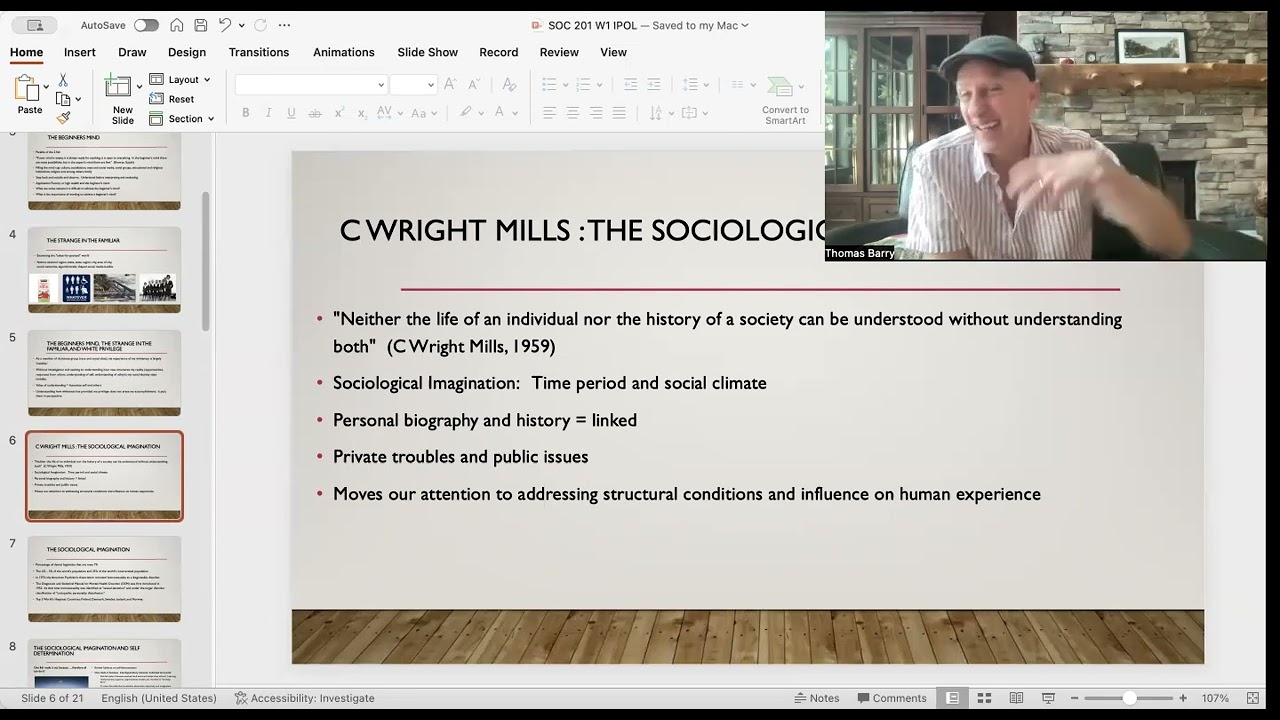
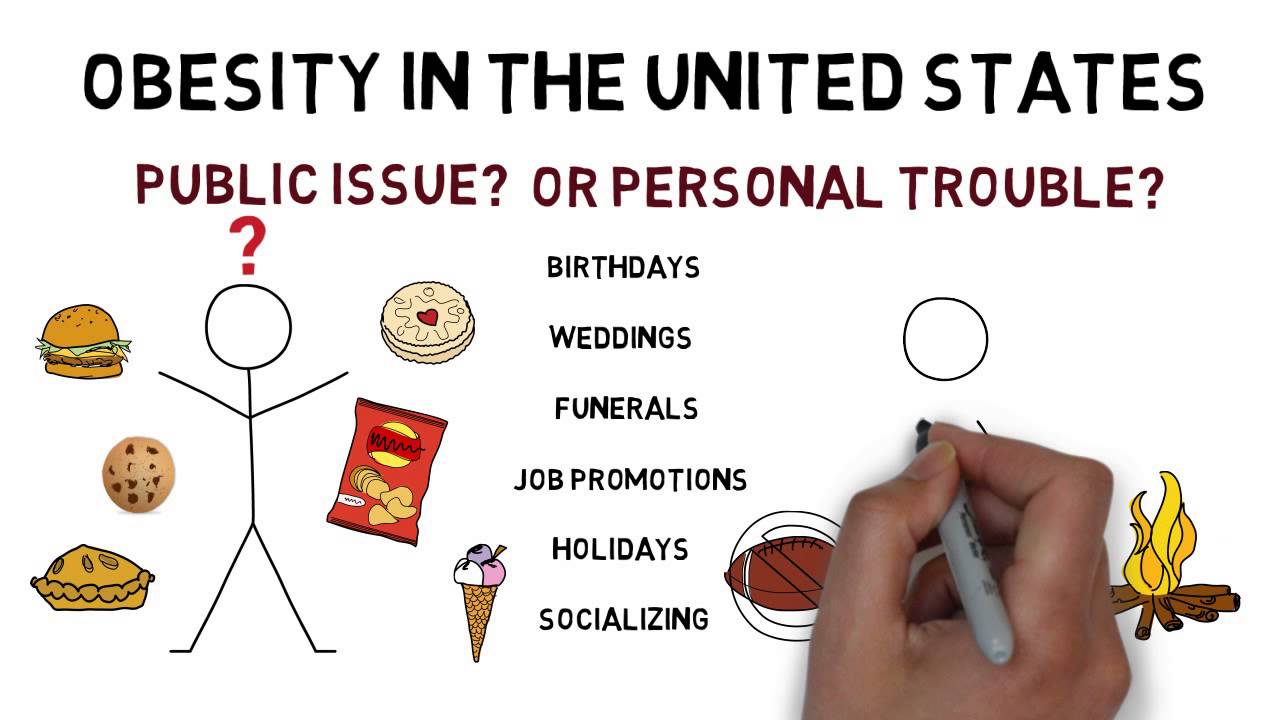
C. Wright Mills' concept of the 'Sociological Imagination' and how to apply it to connect personal troubles with public issues.
Sociological research methods, including quantitative, qualitative, and mixed-method approaches to studying social phenomena.
The core concepts of social structure, culture, and socialization, and how they shape individual identity.
Analysis of social stratification, inequality, and institutions (such as education, family, and religion) using sociological lenses.
4.6M views77.8Klikes9:41Original Release: 2017-03-13
Hello, I’m Nicole Sweeney and I have a question for you: Have you ever wondered how the world works?
I’m not talking about atoms and molecules, or wave functions and chemical reactions; I mean the world of people.
For example, have you ever wondered who goes to college, and why?
What is it that makes people march in the streets?
How do you know to raise your hand in math class, but not at the dinner table?
Why do some people like Broadway musicals, and some people like hip-hop, and some people like both?
Well, we're gonna find out about all of that stuff and so so much more.
Especially, you!
You’re going to learn about you, and your place in the world because this is Crash Course Sociology.
[Theme Music] Sociology got its start thanks to a French philosopher named Auguste Comte in the 1800s.
He wanted there to be a systematic science for studying society, a way to investigate and solve its basic problems.
And while sociology today is very different from what Comte imagined, that’s still kind of what it is.
Sociology is the scientific study of society and human behavior.
But isn't society this great big thing?
I mean, society is whole cities; it's the economy; it's politics.
And what does all that have to do with raising your hand at the dinner table?
A lot, as it turns out.
A society is just a group of people who share a culture and a territory.
And culture is in everything, from the biggest questions in politics to the smallest interactions between people.
So yes, society is big, but it's also very small.
Want to see how? Let’s go to the Thought Bubble!
Imagine you're sitting alone in your room, singing along to your favorite Broadway show at the top of your lungs.
Not another person in sight.
Society isn’t anywhere to be found.
Except that it is.
Even if you ignore the house that you’re in – and the parents, siblings, or roommates you're probably bothering while you’re singing so horribly – there’s still the song that you’re singing, and the music that goes with it.
Those things, along with literally every object in the room that you didn't make yourself, are all products of society.
And you might be all alone when you’re belting out Hamilton, but you weren't alone when a friend first introduced you to the musical, and its songs.
And for that matter, your taste in music isn't purely yours either.
What kind of music you like can be influenced by anything from what you were exposed to as a kid, to what your friends like now, to what neighborhood you grew up in, or what schools you went to.
Society is tricky; it gets in places you might not expect.
Thanks Thought Bubble!
So when we say that sociology is the study of society and human behavior, that means that sociology is incredibly broad.
In fact, it may be the broadest of what we call the social sciences.
The social sciences include disciplines like economics and psychology, and while they all have different focuses and perspectives, they're all trying to understand the social world objectively, through controlled and repeated observation.
So what makes sociology different from any of these other social sciences?
Well, like the others, sociology is looking for patterns – recurring characteristics or events.
But it looks for all kinds of patterns in all kinds of places.
Sociology looks at all aspects of society, and at all scales, from two people talking, to differences between nations.
It's this scope that really sets sociology apart, especially in what’s known as the sociological perspective.
And the sociological perspective means two things: 1, It means seeing the general in the particular, and 2, it means seeing the strange in the familiar.
Seeing the general in the particular is a way of saying that sociology tries to understand social behavior by placing it in its wider social context.
To go back to you belting out Broadway tunes in your room, the sociologist who overhears you from the sidewalk might notice not just your choice of what to sing, but how that individual choice may have been influenced by your class, neighborhood, race, gender, or age.
To take another example, a sociologist might not care whether or not you, in particular, decide to get married, but she might be interested in learning more about a declining marriage rate in your society – and, say, what's causing it and whether it’s having any societal impacts.
Or maybe she’s more interested in the fact that, in the US, people tend to marry partners of the same class and race as them.
In both of these cases – what people sing or whom they marry – the sociologist is interested in a general pattern, a pattern composed of a massive number of particular individual choices.
Each individual forms a part of the pattern, and in looking at their individual choices, a sociologist can see elements of the whole pattern, like seeing how a single stone fits into a mosaic.
Seeing the strange in the familiar is the second part of the sociological perspective, and it’s maybe more difficult to do.
To see the strange in the familiar is to approach the everyday world as though you were seeing it for the first time, as if you were from another world.
This is hard, but it's also incredibly important, and kinda cool.
When we asked, at the very beginning, why you raise your hand to ask a question in your math class but not at your dinner table, that’s a very small example of trying to see the strange in the familiar.
And this is so hard to do because your own society tends to look normal to you.
You take it for granted.
As you're socialized into it, you're taught a common-sense understanding of society, and that's not a bad thing!
After all, you need a common sense understanding of society in order to live in it, right?
You need to know that you shake hands when you meet someone new, and that red means stop, and that you should try to show up on time to things.
But if sociology is going to study society, it needs to be able to look at these things as strange and unfamiliar, in order to really understand how they work, and to uncover patterns of behavior in a culture.
Common sense has to just get us through the world; but sociology has to know what's true.
And this is important, because a society’s common sense doesn’t consist only of harmless conventions, like shaking hands.
Just 200 years ago in the US, it was common sense that only white men were capable of participating in society.
It was common sense that slavery was right, and that women shouldn't be allowed to vote.
These things were common sense then in the same way that their opposites are taken for granted now.
And the sociological perspective – seeing the general in the particular and strange in the familiar – helps us to understand problems like this, because it helps us see some of the key concepts in the study of society.
Among these concepts: social location, marginalization, and power and inequality.
If you imagine a map of society, laying out all the different social groups and their relationships to each other, then your social location is your spot on that map.
Your social location is a way of classifying yourself, by race, social class, gender, sexual orientation, religion, etc. Understanding social location is important because, just like the sociologist looks for the general in the particular, a person’s life and choices will be influenced by their social location.
This is true in a bunch of ways: Most obvious is that your social location can limit your choices.
Some groups have legal rights and privileges that others don’t.
For instance, until a few years ago, gays and lesbians could not legally marry in the US, so their social location limited their choices.
But social location also impacts what you learn, and what you’re taught about society.
Whether or not you you go to college, for instance, can be heavily influenced by whether the social class you grew up in tends to see college as a real or valuable possibility.
And social location also affects what others have learned, and are taught, about you.
Take, for instance, the consistent finding that resumés with names that sound African-American tend to get called for interviews much less often than those with white-sounding names, even though the resumés are otherwise identical.
In all these ways, social location can contribute to the marginalization of a social group.
If a social group is marginalized, it means that it occupies a position outside the centers of power.
Marginalized groups are often racial, ethnic, sexual, or religious minorities, and marginalized groups tend to have a clearer view of how power operates.
Heterosexual people, for example, often don’t recognize what a social power it is to have their relationships socially sanctioned, and to be able to display affection in public, in ways that LGBT people often can’t.
If marginalization is a matter of being outside the centers of power, that draws our attention to another fact: the fact that there are many different kinds of power, and many different kinds of inequality.
There are, of course, the obvious kinds, like economic power and income inequality, or political power and politically-enforced inequalities, like segregation or slavery.
But then there are the less obvious kinds, like social or cultural power and inequality.
For instance, people who speak with non-standard accents or dialects are often judged harshly for them and can be seen as less intelligent or less mature.
Sociology can help us identify and understand all of these things, and maybe even try and fix them.
And that’s the point: Sociology is about understanding society, and society's where we all live, so we'd like it to work as well as possible.
Good sociology can help us to create good public policy.
And if we think back to Comte, his desire was to do just this, to understand and maybe fix his society's problems.
The late 18th and 19th centuries were a time of massive economic, social, and political upheaval in Europe.
This was when industrialization really took off, with factories sprouting up like weeds, connected by larger and larger rail networks.
At the same time, the population of Europe exploded, growing faster than at any time in previous history.
This was especially true in cities, where industrial production was centralized.
And all of these massive economic and social changes came with political shocks, too: This period saw the advent of mass democracy, the fall of kings, and the rise of the nation-state.
This, combined with the rise of science as a discipline, was the context in which sociology arose.
The first sociologists looked around at their quickly changing societies and were driven to try and scientifically understand them.
We said earlier that society wasn't just big things like revolutions, industrialization, demographics.
But it is also these things.
It's both the big and the small, because they’re related.
Sociology is about understanding the whole thing, at every level, and how those levels interact.
It's about understanding why you don’t have to raise your hand at the dinner table, and why so-called common sense can lead to massive policy mistakes.
Welcome to the science of sociology.
Today we talked about what sociology is and what it does.
We discussed what it means to be the study of society and why that's broader than you might think.
We introduced the sociological perspective and discussed how sociology differentiates itself from the other social sciences.
And finally we discussed what sociology can do, and how that concern with social problems was at the center of sociology's beginnings.
Next time, we'll introduce different theories of society, the basic paradigms of sociology.
Crash Course Sociology is filmed in the Dr. Cheryl C. Kinney Crash Course Studio in Missoula, MT, and it's made with the help of all these nice people.
Our animation team is Thought Cafe, and Crash Course is made with Adobe Creative Cloud If you'd like to keep Crash Course free for everyone, forever, you can support the series at Patreon, a crowdfunding platform that allows you to support the content you love.
Speaking of Patreon, we'd like to thank all of our patrons in general, and we'd like to specifically thank our Headmaster of Learning David Cichowski.
Thank you for your support.
Up Next
9:36
Socialization Types: Family, Peers, School, Media, and Institutions
@crashcourse
1.4M views•2017-06-20
54:57
Contemporary Sociological Theory: Micro, Macro, Integrative
@NaSESYNC
45.7K views•2016-02-17

11:31
Food Access and Agricultural Revolutions: A Geography Lesson
@crashcourse
117.1K views•2022-02-15

26:39
Gentrification in Mexico City: The Digital Nomad Housing Crisis
@Channel5YouTube
3.8M views•2024-10-09
Related Study Plans & Knowledge Roadmaps
Structured learning paths in Sociology
sociology
Celebrity Culture: From Hollywood to TikTok
01Foundations of Celebrity Sociology
02The Rise of Micro-Celebrity & Digital Platforms
03Parasocial Relationships & Algorithmic Intimacy
+ 2 more learning modules
12h5 modules
Explore Roadmap
sociology
Hostile Architecture: Space, Power & Control
01Introduction to the Sociology of Space
02Social Control and Surveillance in the City
03Hostile Architecture and Defensive Design
+ 2 more learning modules
12h5 modules
Explore Roadmap
sociology
Loneliness Epidemic: Third Places & Isolation
01Foundations of Social Capital and Community Cohesion
02The Death of Third Places and Urban Space Erosion
03The Privatization of Leisure and Atomization
+ 2 more learning modules
12h5 modules
Explore Roadmap
sociology
Sociology of Tourism: Gaze, Power & Heritage
01Foundations of the Sociology of Travel and Leisure
02John Urry and the 'Tourist Gaze'
03Staged Authenticity and Cultural Commodification
+ 2 more learning modules
14h5 modules
Explore Roadmap