














Thomas Nagel argues that scientific objectivity relies on visual metaphors because the human brain allocates 30-40% of processing power to visual information, yet this creates a fundamental paradox since vision is inherently situated (dependent on viewpoint). To resolve this, Nagel proposes the concept of 'the view from nowhere'—a linguistic and cognitive strategy that suppresses the entailment of situatedness while still leveraging the explanatory power of visual metaphors, allowing for universal scientific claims that transcend individual perspective.
Thomas Nagel's View From Nowhere: Visual Metaphors and Objectivity
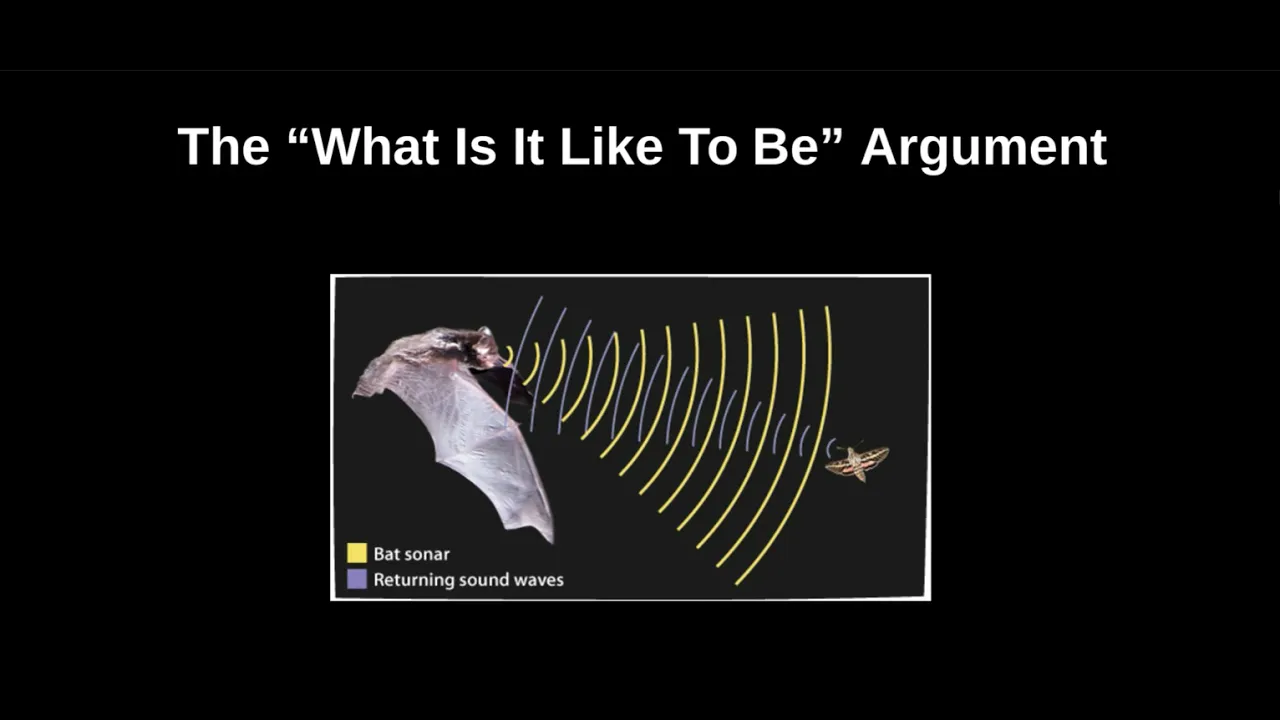
Added:Thomas Nagel's fundamental distinction between subjective and objective viewpoints, particularly his seminal paper 'What Is It Like to Be a Bat?'
Basic epistemological concepts of scientific realism, objectivity, and the historical pursuit of a 'God's eye view' of reality.
The role of conceptual metaphors in cognitive linguistics and philosophy, specifically how visual language (e.g., 'insight', 'reflection') shapes theories of knowledge.
The core thesis of Nagel's book 'The View from Nowhere', which examines the tension between a first-person perspective and a detached, objective world view.
Richard Rorty's critique of visual metaphors in Western philosophy, particularly his work 'Philosophy and the Mirror of Nature'.
Feminist epistemologies, such as Donna Haraway's concept of 'situated knowledges', which challenge the illusion of infinite, disembodied vision.
Theories of embodied cognition and enactivism in cognitive science, which argue that mind and knowledge are fundamentally situated and physical.
The implications of the paradox of suppression on the 'hard problem of consciousness' and contemporary debates between physicalism and dualism.
4K views19likes7:59Original Release: 2008-11-01
in Thomas Nel's Books A View from nowhere and I think in some of his earlier essays he talks about uh objectivity particularly scientific objectivity and kind of critique I guess but uh or or at least an analysis of what we mean when we talk about scientific objectivity uh and the the the title that he uses there the view from nowhere is really uh significant in terms of what he's doing there cuz I think what he's doing is he's pointing out kind of anomalies in the kind in the metaphor that we use to describe certain knowledge forms certain aspirations to knowledge and then suggesting how we try to solve those problems there's still paradoxes in our Solutions which he points out to and this idea the view from nowhere is the indicator of that what basically saying or at least what I'm taking from what he's saying is that uh is that when we make uh the strongest kinds of knowledge claims that we make tend to rely on visual metaphors and we do that because our visual system is the dominant one in terms of our understanding between 30 and 40% of the processing power of the human brain apparently is given over to uh the processing of visual information it's that's the same with blind people also it isn't it isn't just about what to the eye the actual processing itself is is is that kind of processing uh and given that amount of processing power we that's that's the power that we mobilize when we try to make uh most powerful CLS without knowledge we tend to use visual mehs uh and so we say I see what you mean when we want to really maintain Clarity of understanding or suggest that we genuinely understand if we want to back off from that little bit we might say I hear what you're saying which doesn't confer quite the same level of shared knowledge uh so so visual metaphors tend to be deployed for um strong claims for knowledge the difficulty with visual metaphors uh is that vision also comes with other entailments as well as its uh enormous processing power and the evidence of our eyes if you look around the density of information that's presented one moment to the next it's just mindboggling really you know I'm standing in this field and I can see probably 50 trees around me the number of leaves I can see on those trees the movements I can see between the leaves and those trees the fact that I can identify visually these trees as as holes as gouts I can also identify branches and leaves and so on I mean it's just mind noming really the complexity of information so um so it's not surprising that we draw upon visual metaphors for complex knowledge or for robust knowledge but as I said there are entailments of visual information which are could be problematic and the most important one is that vision is Viewpoint uh whenever I'm looking I'm seeing things from where I am I can move around things I can see things from more many different sides I can stand next to you so I can see more or less what you're seeing I can make these kind of moves to a c to u to uh to change that Viewpoint or to add to that viewpoint but ultimately my vision is situated and so uh when deployed as a metaphor there's a temptation to assume that all knowledge is situated which is fine cuz certainly there is you know a place for situated knowledge in the world but if we want to make robust claims for knowledge we don't want to say it situation we want to say it's General we say we want to make to say things like wherever you stand this knowledge will stay the same the boiling point of water at at sea level we want to make claims about that the uh the force of the speed of acceleration of an object due to gravity we want to make claims about that we don't want it to be the view from where I am we want it to be General Universal if you like uh so how do we get around that how do we make uh how do we stay within the visual metaphor or so such that we can use its explanatory power but not uh lock ourselves into situatedness and Nagel says that what we do there is a kind of linguistic trick cognitive trick in which we suppress that particular entailment of visuality the situatedness of it and still seem as we still sort of use it as if we have a viewpoint but as the name of the title of the book suggests it's the view from nowhere the view from uh there is not there's no there there in terms of its understanding in terms of it situatedness it's the view from wherever you are wherever you have to stand you'll see the same thing so it's a kind of universalizing claim there uh other variants on that Donna har makes some good variants on that and one of two other the feminist writers um Julia Christa cisu and I think of where they point out that quite often what's deployed uh as an entailment to shift the understanding of what shift is situated this a little bit is to kind of imply that the Viewpoint is elevated because if we are elevated if you are literally elevated in the world if I'm standing sitting at the top of a tree that's this tree here then certainly I can see over things I can see further have a greater access to visual information at someone at ground level uh so by extension uh if I'm able to to deploy a kind of elevated metaphor within this uh deployment of visuality as knowledge then I can make kind of claims for uh objectivity I can make claims that my viewpoint has greater access than someone else's Viewpoint it has more application uh Donna harway calls this the god trick the idea that God is in the sky and can see everything is omniscient um and omnipresent so the view from nowhere in that sort of take of it becomes kind of the view from the view from the top or the view from everywhere possibly um yeah so both of those solu are kind of solutions to uh a problem within the metaphor of visuality visuality is incredibly rich as a means of accessing information so when we use visual metaphors we acquire we mobilize that richness but because visuality is also Viewpoint we have to find ways to get around that and the two or possibly three key solutions to that problem of viewpoint inness and visual information is nagle's View from nowhere Don harway and other elevator Viewpoint the god trick and a possible variant on that which is a kind of view from everywhere the omniscient allseeing eye
Up Next
6:13
Testimonial Injustice Explained by Miranda Fricker | Epistemology
@gendertalks8837
10.9K views•2020-06-16

164:01
John of Damascus on Holy Images: A Theological Defense
@BannedBooks
139 views•2026-04-25

10:02
Situated Knowledge: Epistemology, Spatial Metaphors, and Objectivity
@conferencereport
5K views•2009-11-02
4:57
The Myth of Sisyphus: A Greek Legend of Eternal Punishment
@TEDEd
8.6M views•2018-11-13
Related Study Plans & Knowledge Roadmaps
Structured learning paths in Philosophy
philosophy
Frankfurt School: Critical Theory & Culture
01Foundations of the Frankfurt School and Critical Theory
02Horkheimer & Adorno: The Critique of Instrumental Reason
03The Culture Industry and Mass Deception
+ 2 more learning modules
12h5 modules
Explore Roadmap
philosophy
Philosophy of Language: From Frege to Austin
01The Linguistic Turn: An Introduction to Language in Philosophy
02Gottlob Frege: Sense and Reference
03Early Wittgenstein: The Picture Theory of Meaning
+ 3 more learning modules
15h6 modules
Explore Roadmap
philosophy
Feminist Epistemology: Standpoint & Injustice
01Introduction to Epistemology and Feminist Critiques
02Sandra Harding and Standpoint Theory
03Donna Haraway and Situated Knowledges
+ 2 more learning modules
12h5 modules
Explore Roadmap
philosophy
Environmental Philosophy: Ethics & Deep Ecology
01Foundations of Environmental Ethics & Anthropocentrism
02Biocentric Individualism and Animal Liberation
03Ecocentric Holism and Deep Ecology
+ 1 more learning modules
10h4 modules
Explore Roadmap