











![Герменевтическая несправедливость | В гостях Михаил Хорт [S01:E93]](https://i.ytimg.com/vi_webp/HCuX7P2FUkw/maxresdefault.webp)


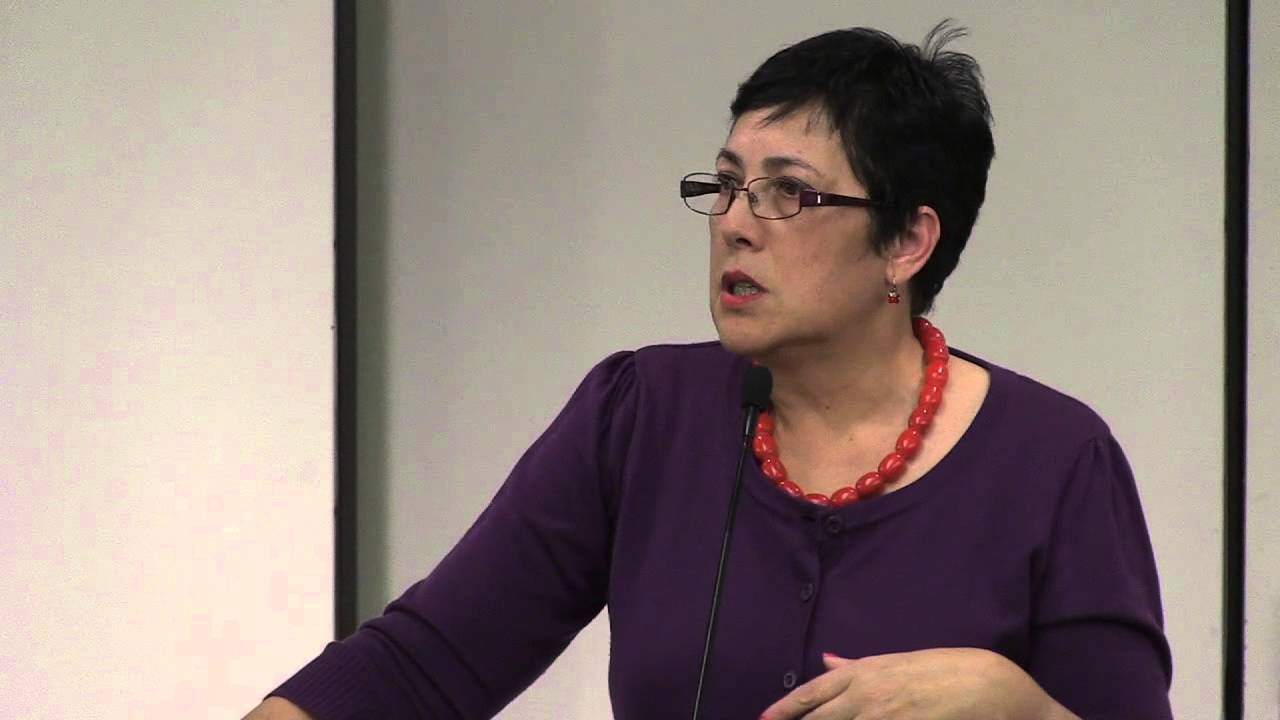









Situated knowledge is an epistemological approach that acknowledges all knowledge is produced from specific social positions, meaning that one's subjective location affects interpretation; while various metaphors (spatial positioning, vertical elevation, the 'god trick,' and Thomas Nagel's 'view from nowhere') attempt to transcend this situatedness, all knowledge ultimately remains embedded within cognitive, physical, and material frameworks, making complete objectivity unattainable.
Situated Knowledge: Epistemology, Spatial Metaphors, and Objectivity
Added:Basic Epistemology: Understanding the classical definition of knowledge, truth, and traditional scientific objectivity (often referred to as the 'view from nowhere').
Feminist Standpoint Theory: Familiarity with the idea that knowledge is socially situated and that marginalized groups have a unique perspective on power structures.
Introduction to Post-Colonial Theory: Awareness of how Western colonial powers historically monopolized 'universal truth' and suppressed indigenous or non-Western systems of knowledge.
The Concept of Metaphor in Philosophy: Understanding how conceptual metaphors (specifically spatial ones like 'horizon', 'perspective', or 'center/margin') shape theoretical reasoning.
Donna Haraway's 'Situated Knowledges': A deep dive into Haraway's seminal 1988 essay to analyze her critique of the 'god trick' in science.
Epistemic Injustice: Exploring Miranda Fricker's framework of testimonial and hermeneutical injustice to see how situated knowledge is discounted in institutional settings.
Decolonizing Methodologies: Studying Linda Tuhiwai Smith's work on research methodologies that challenge imperialist and positivist paradigms.
Spatial Epistemology and Critical Cartography: Investigating how maps, geography, and GIS technologies embody subjective power dynamics rather than objective realities.
Algorithmic Bias and AI Epistemology: Applying situated knowledge theory to critique how data collection and machine learning algorithms replicate the social biases of their creators under the guise of objective code.
5K views35likes10:02Original Release: 2009-11-02
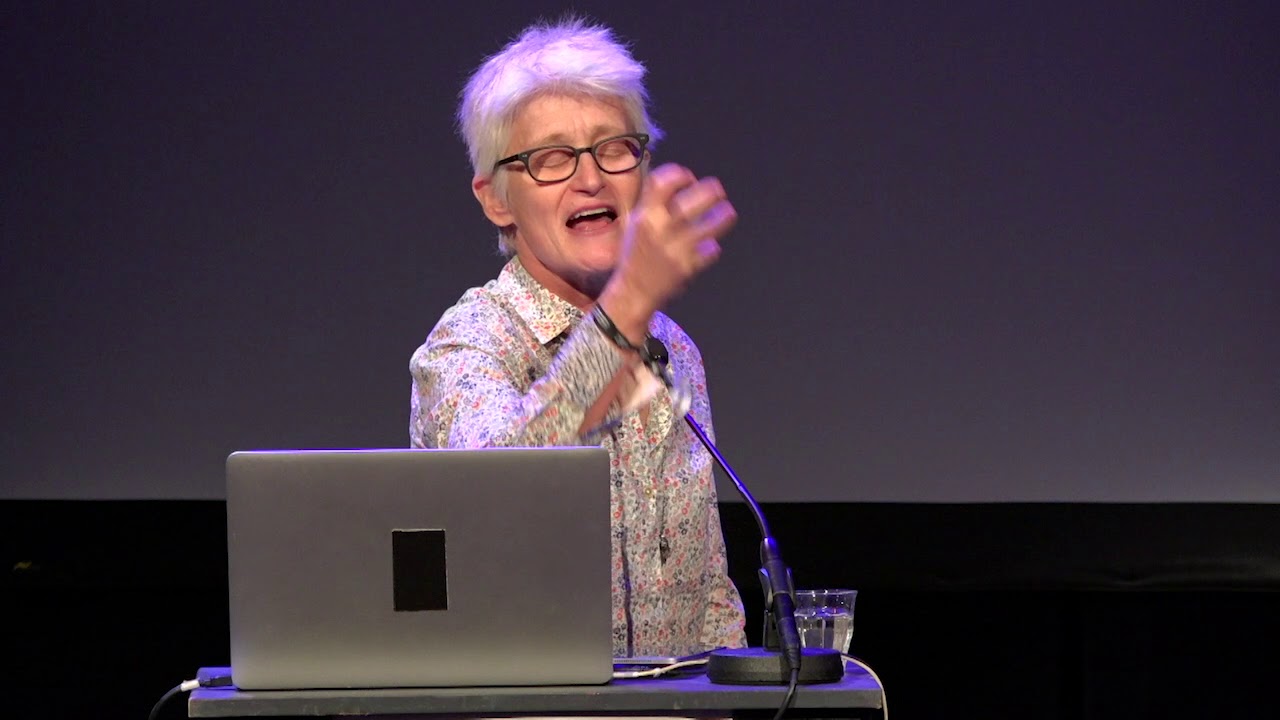
i made a few videos about knowledge recently uh particularly to do with well what yeah to do with kind of uh in relation to feminist science and feminist epistemology and just asking myself what that really meant but one of the other terms that i keep coming across when i'm thinking about that is this this idea of situated knowledge which i kind of understand but um i don't understand fully i don't think i don't feel i've got a complete purchase on it so i mean the first thing to say about the idea well in terms of its definition situated knowledge is knowledge that has it's an approach to understanding which acknowledges that all all knowledge is narrated from a speaking position that's the idea of it at least that particularly in relation just knowledge that's social facts that kind of thing the subjective position that you take to those facts is going to affect your interpretation of them uh so your position your situation your social location if you like uh produces a particular take on that knowledge and that's as i say sometimes referred to as situated knowledge uh and that that understanding of situation feeds off well yeah kind of feeds into this this understanding of feminist epistemology but also features within um uh kind of post-colonial understandings of of ethnicity and how ethnicity relates to particular kind of knowledge gathering processes but what i always think about when i come across this term situated knowledge apart from not having a fully fledged understanding of it is that it's it's this it's this spatial metaphor that it's playing out in really which i have problems with or which i can't help acknowledging because as soon as you start saying that that knowledge is situated you are envisaging knowledge as being a kind of a series of objects or as a series of locations or as a zeros of entities in some kind of space and you're you're saying that the the knower or the person who's accessing that knowledge is uh is singularly placed within that space you know i kind of imagine it as being in a field and looking around and there's there's all these items of knowledge or red around you and from where you're standing of course some of those items of knowledge are in clear view some of them might be in the shade something might be hidden behind other other entities some of them might be so distant that they become blurry and indistinct or they might be so distant that it's hard to distinguish one from another or they might be so distant they're over the horizon of your understanding entirely um and of course if you're standing in a different location in that space then a whole different set of alignments of those knowledge items is relevant you know different items of knowledge are closer to you and the more available and so on and so that so the idea of situated knowledge really demands this highly spatialized schema metaphorical schema for its understanding i know some of the ways well another kind of metaphor which plays into that and which in some ways tries to avoid that is by instead of thinking about this these knowledge objects as arrayed in a plane on which you are standing you kind of imagine yourself rising above that plane so um so you can look down on these objects from a greater and greater elevation and just as you know if you if you were in that position if you did you were standing in a field you started to rise sure enough more knowledge objects would come into view you'll be able to see over one object to the to what they've been beyond it you'd be able to see further uh out to a more distant horizon um you would have greater access but you would still be uh there would still be a certain sense of situation about you because your you know your your location the alignment between these objects would still be the case so although this vertical elevation which we which you find played out in that famous quote which is attributed to newton i think it actually lies elsewhere this this thing to do with uh if i've stood on the shoulders of giant no if i have seen further than other men it's because i stood on the shoulders of giants i mean that's that's a almost literal playing out of this uh metaphorical schemer in which greater elevation gives greater access to imaginary objects of knowledge so the the situation the knowledge is still situated on a horizontal player but because you've risen through some kind of imaginary vertical plane the uh the access to knowledge is greater i think you get a further yeah it also features in things like ideas of higher understanding or um yeah all those kind of metaphors play out on that vertical plane as well i think you also get this the same metaphor starts to kind of unravel i think but it's still kind of struggled for in some writings i know um donna haraway indicates that that vertical dimension which when she talks about what she calls the god trick which is this idea that in some in some kinds of writing i don't think she's specifically talking about empirical scientific writing but in some writing which um aspires to the condition of of uh empirical scientific objective writing that the form that that writing text suggests as if it has been written from an elevated position so it's it sounds like it's being written i'm not sure if i can certainly more clearly it's not really but but some scientific quasi-scientific writing sounds as if it's been written from an elevated position when it probably hasn't in actual fact it's as as situated as any other kind of any other kind of um social facts certain kinds of social facts but the but the trick is that you assume the position of god you you are imaginatively rise above the surface of this of the earth on which these knowledge items are strewn and uh and describe what you claim to say from that position uh so she calls that the god the god trick uh you also find it i think in a slightly more justified way in what's he called thomas nagle's writing he's writing about the philosophy of science and he says that um the objective writing that or the the kinds of discourse which accompanies the expression of objective truths or you know that kind of aspiration at least uh is the view from nowhere he calls it in a book called the view from nowhere and the idea is that in addition to being situated or rather than being situated at a particular location on a horizontal plane and as an alternative to being even just rising above that position you kind of take the eye out of that entirely or you detach this you destabilize that visual metaphor you just destabilize that situated located metaphor entirely and imagine what the view would be like from nowhere there is no view there is only the occupation of different kinds of spaces there is only relationship between items of knowledge there is no alignment and or no specific alignment that would be inevitable if one was situated anywhere on that space including an elevated space i suppose the question for me there is is that knowledge still situated and i think there is an argument to be made that still that there is the situation that situatedness is unavoidable or or do i mean that i think i do mean that i think i don't really want to make a claim that the knowledge is relative or or it's not one of those kind of claims but i think there is i think there is it is possible to make a claim that all knowledge is situated to the extent that however whatever kind of cosmic tricks you play with imaginary extra dimensions you know whether you imagine yourself rising from this two-dimensional plane and playing the god trick on the on the world or whether you imagine yourself kind of occupying a thomas nagel type fourth dimension where you're simultaneously everywhere and and and playing the game of relations to understand um facts and truths that way or even if you conceive of different uh additional kind of dimensions you're always situated within the framework of your of the cognitive and indeed physical and material uh game that you're playing so it might be absolutely completely factually true and empirically and objectively verifiable in the in the most hard scientific way the kind of truths that you're finding by this bro these processes but you could but i don't think it's possible to ever claim that you're not situated in some kind of imaginary epistemics multi-dimensional space i don't think i'm not sure if that makes any sense at all actually
Up Next

25:02
Sandra Harding and Feminist Epistemology in the Science Wars
@KingCrocoduck
58.8K views•2017-05-12

164:01
John of Damascus on Holy Images: A Theological Defense
@BannedBooks
139 views•2026-04-25

7:59
Thomas Nagel's View From Nowhere: Visual Metaphors and Objectivity
@conferencereport
4K views•2008-11-01
4:57
The Myth of Sisyphus: A Greek Legend of Eternal Punishment
@TEDEd
8.6M views•2018-11-13
Related Study Plans & Knowledge Roadmaps
Structured learning paths in Philosophy
philosophy
Frankfurt School: Critical Theory & Culture
01Foundations of the Frankfurt School and Critical Theory
02Horkheimer & Adorno: The Critique of Instrumental Reason
03The Culture Industry and Mass Deception
+ 2 more learning modules
12h5 modules
Explore Roadmap
philosophy
Philosophy of Language: From Frege to Austin
01The Linguistic Turn: An Introduction to Language in Philosophy
02Gottlob Frege: Sense and Reference
03Early Wittgenstein: The Picture Theory of Meaning
+ 3 more learning modules
15h6 modules
Explore Roadmap
philosophy
Feminist Epistemology: Standpoint & Injustice
01Introduction to Epistemology and Feminist Critiques
02Sandra Harding and Standpoint Theory
03Donna Haraway and Situated Knowledges
+ 2 more learning modules
12h5 modules
Explore Roadmap
philosophy
Environmental Philosophy: Ethics & Deep Ecology
01Foundations of Environmental Ethics & Anthropocentrism
02Biocentric Individualism and Animal Liberation
03Ecocentric Holism and Deep Ecology
+ 1 more learning modules
10h4 modules
Explore Roadmap