



















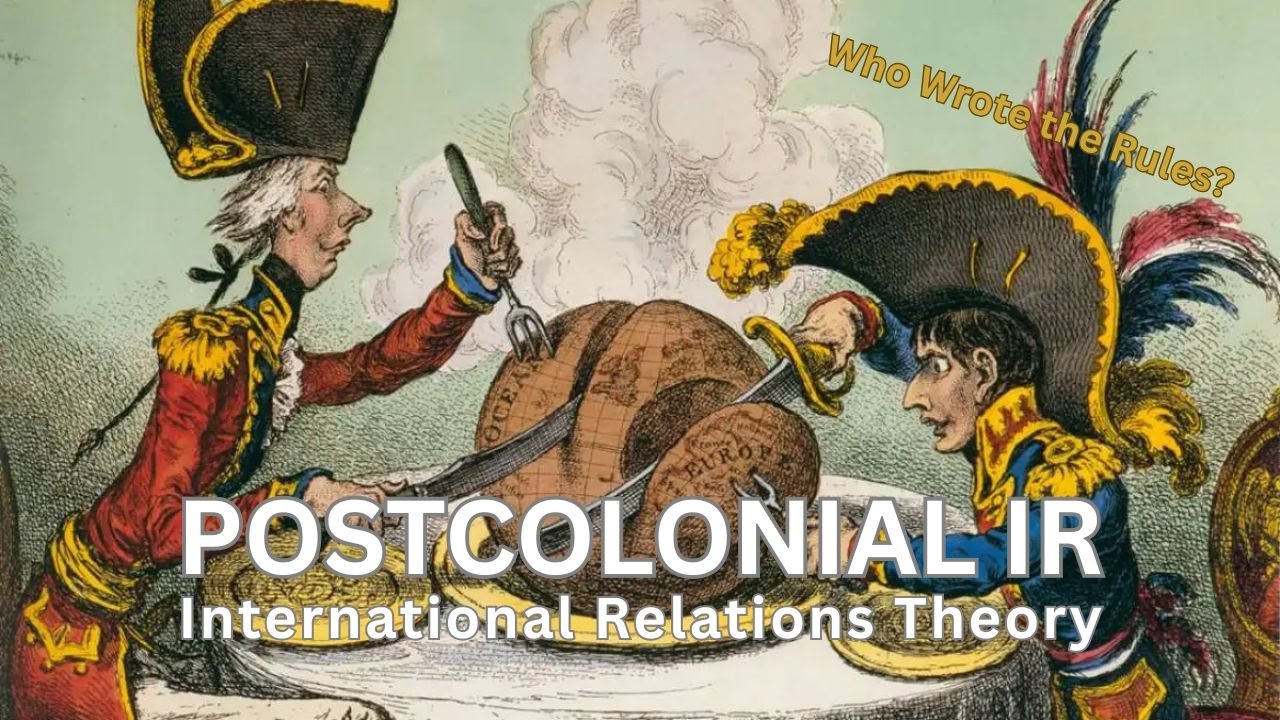




Postcolonial theory examines how colonial power structures continue to shape global culture, identity, and representation; key scholars like Edward Said (Orientalism) and Gayatri Spivak (Can the Subaltern Speak?) argue that colonial powers created imbalanced representations where 'the West' was portrayed as rational and normal while 'the East' was depicted as exotic and inferior, and modern postcolonial analysis uses frameworks including awareness of exoticized representations, examination of language's role in power dynamics, exploration of hybrid or unstable identities, and analysis of cross-cultural collaborations to critique cultural texts.
Introduction to Postcolonial Theory: Key Thinkers and Cultural Analysis
Added:A foundational historical understanding of Western imperialism, colonization, and the decolonization movements of the 20th century.
Familiarity with basic literary and cultural criticism, specifically the concept that cultural texts reflect and shape societal power structures.
An introduction to Michel Foucault's theories on discourse, power, and knowledge, which are central to Edward Said's formulation of Orientalism.
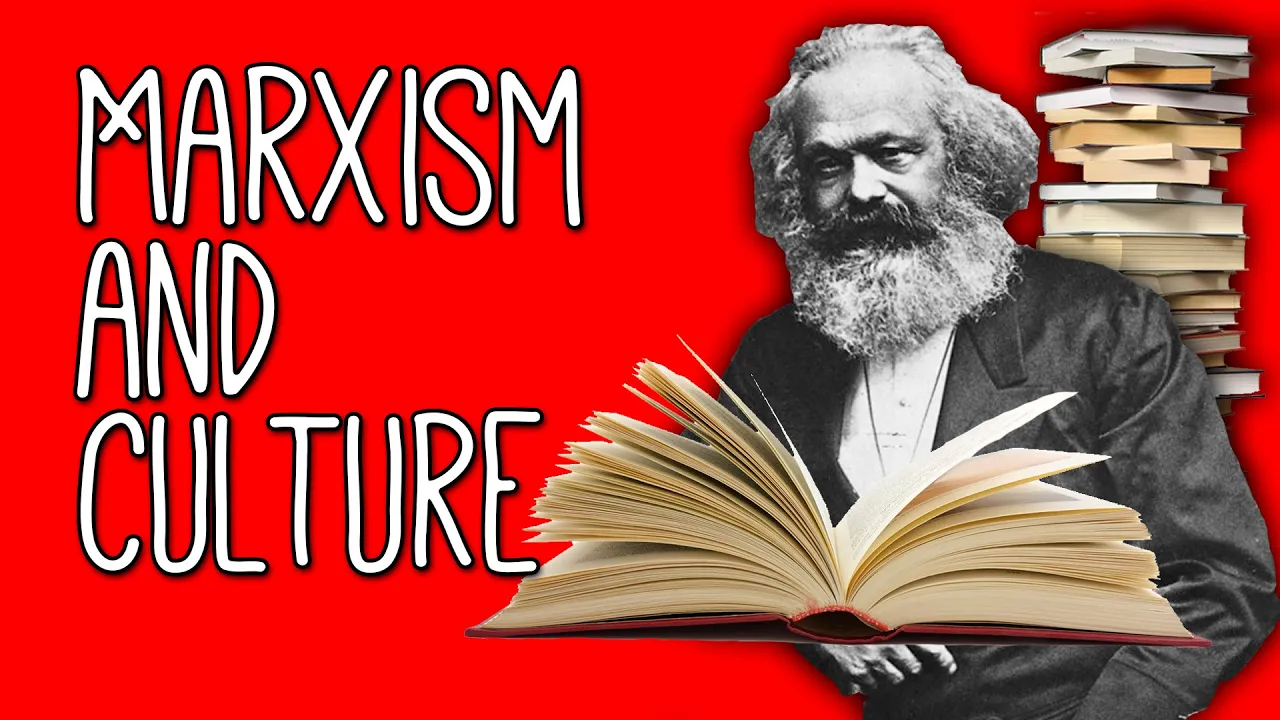
Basic knowledge of Marxist cultural theory and Antonio Gramsci's concept of cultural hegemony, which influenced Stuart Hall and Subaltern Studies.
Close reading and academic analysis of foundational primary texts, such as Edward Said's 'Orientalism' and Gayatri Spivak's 'Can the Subaltern Speak?'.
Exploration of the 'Decolonial Turn' (e.g., Walter Mignolo, Aníbal Quijano) and how it differs from postcolonial theory by advocating for active delinking from Western epistemologies.
Application of postcolonial frameworks to contemporary global issues, including neocolonialism, globalization, climate justice, and the politics of global migration.
Advanced study of Homi Bhabha's concepts of hybridity, mimicry, and the 'Third Space' within the context of diaspora and transnational identity.
Conducting independent cultural analysis by applying postcolonial lenses to contemporary films, digital media, or literature.
325.8K views9.1Klikes17:23Original Release: 2018-10-24
Hi, my name's Tom and welcome back to another episode of What the Theory?, my ongoing series in which I aim to provide some accessible introductions to key theories in the humanities. Today, as per a number of requests in comments to some of my other What the Theory? videos, we're gonna be taking a look at postcolonialism.
Now, if you've yet to check out my video on colonialism and colonial ideology, then I would suggest watching that before you watch this one. It's not essential, however, I will link it up in the top corner. And, before we get going, just a quick note to say that I'm not entirely unaware of the irony of me, white English bloke, supposing to explain postcolonialism. However, it felt like the only way to avoid doing so would have been to leave it out of the What the Theory? series altogether which felt equally wrong. And so, what I've aimed to do throughout this video is to draw upon scholarly voices and other voices of those who might have a far more visceral understanding and experience of postcolonialism than mine which can only ever really be academic.
As always, I'll be very happy to discuss the inconsistencies and problems with this approach down in the comments, as well as any suggestions for any future videos you'd like to see. With that out of the way, however, let's crack on.
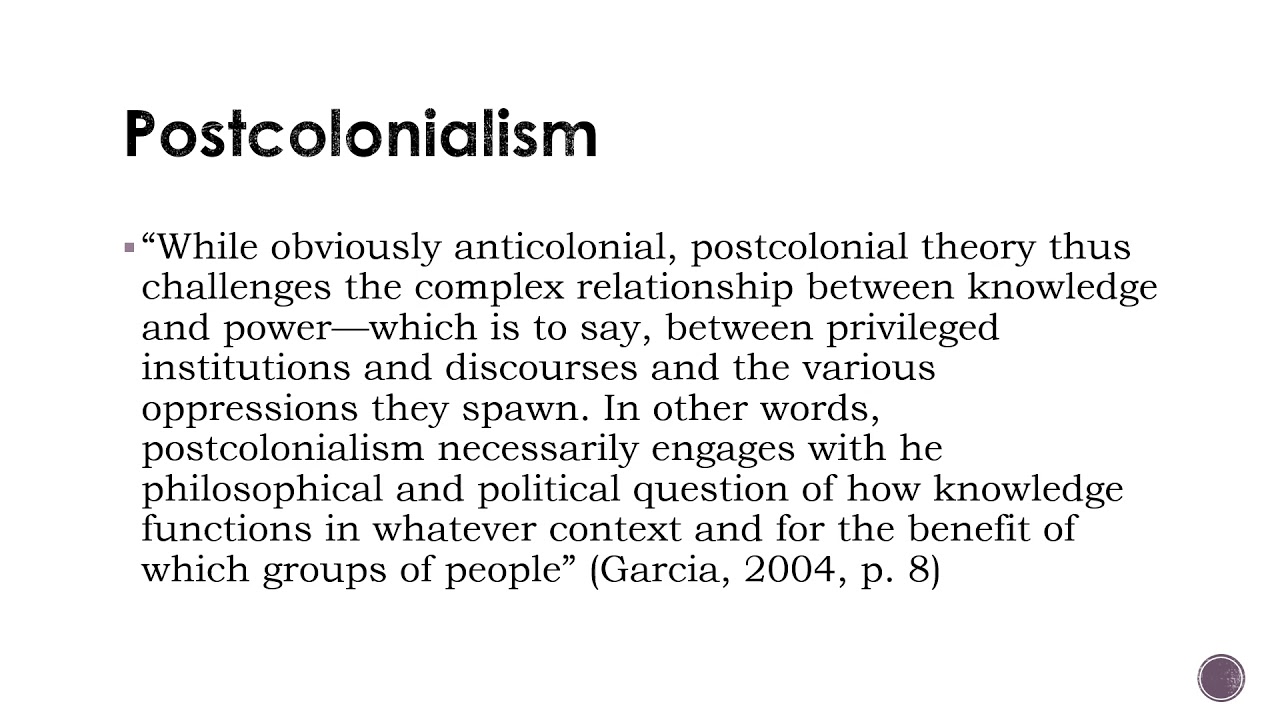
So, in the previous episode of What the Theory, we were largely interested in the process through which a number of European nations came to have military and political dominance of much of the globe and the ideologies which supported or attempted to legitimize their doing so. Over the second half of the 20th century, however, many then colonized nations gained their independence from their colonial rulers, sometimes through a peaceful handover of power yet, often, through a protracted popular uprising. In the present day, then, that particular form of colonialism, in which one nation rules over another, is, though not entirely absent, somewhat less common. Nonetheless, the absence of a formal colonial system has not led to a completely equitable geopolitics or global culture. We only need to look at the disparity in wealth between, say, Europe and Africa or North America and Central and South America to see that that is the case. In short, colonialism has a clear and persistent legacy. And postcolonialism is an umbrella term which we use to describe a set of theory and practices which seek to explore the legacy of colonialism in the present day.
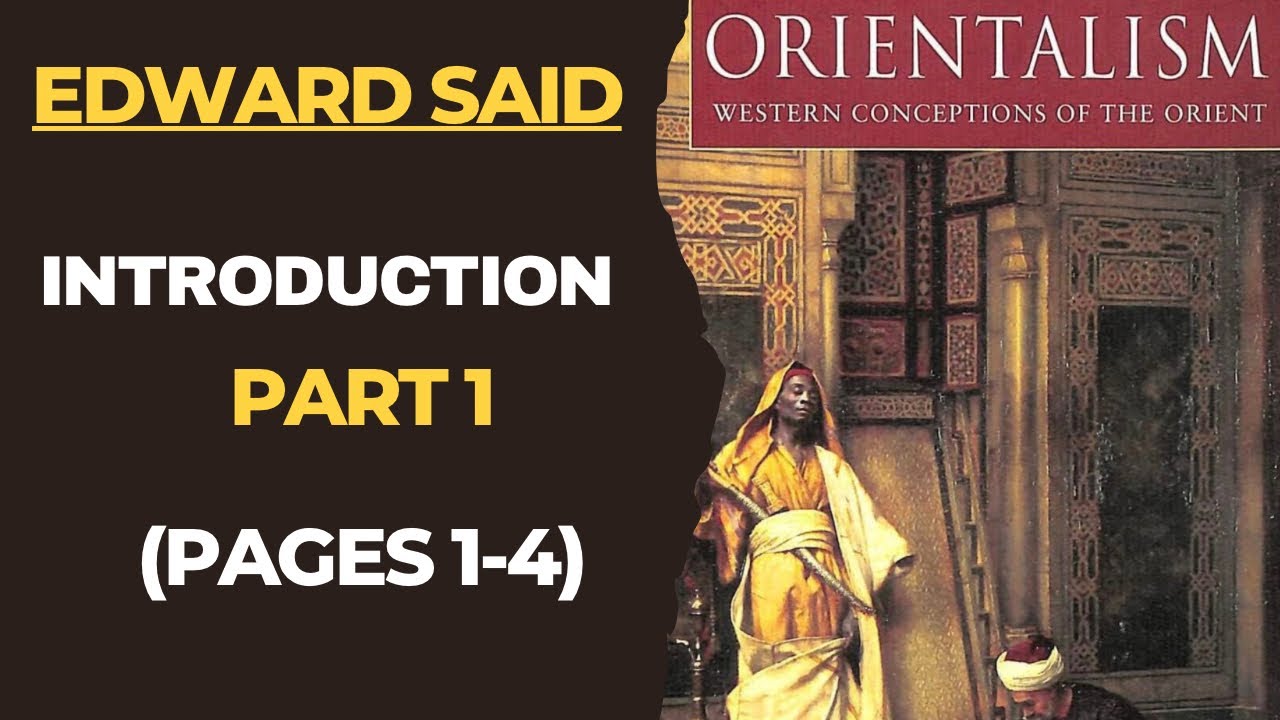
And much of this does attend to the political and economic legacies of colonialism. However, as this is What the Theory?, today we're going to largely be focusing on the cultural legacy of colonialism and some of the ideas and theories that have come to be used to explore the cultural legacy of colonialism in the present day. Now, claiming a single theorist or a single book as being the originator of an entire field is usually a gross simplification of the truth. However, Edward Said's 1978 book Orientalism can certainly lay claim to popularizing some of the key ideas which now sit as the foundation of post-colonial theory. Within it, Said argued that "ideas cultures and histories cannot seriously be understood or studied without their force, or more precisely their configurations of power, also being studied". For those of you who have watched my video on Cultural Hegemony (which again I'll link above), this idea will be familiar.
It's the suggestion that, if a certain group within a society has more political or economic power, they will likely also have an inequitable amount of power in framing or deciding what the culture of that society, in which both they and the more disempowered groups within that society, live. Said thus argues that, as a consequence of many years of colonial rule, "the West" — a term which is largely used to refer to nations which weren't colonized — has had a significant amount more power in dictating global culture than "the East" — a term which tends to be used to describe nations which were colonized.
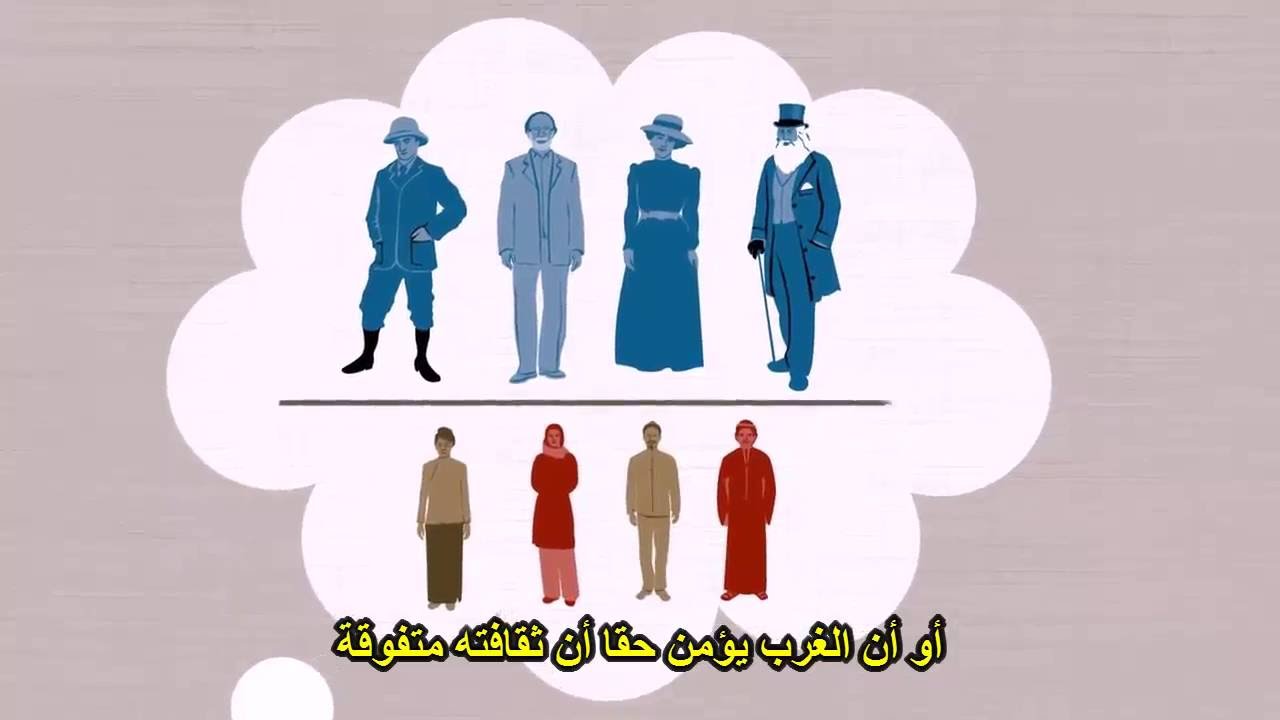
And, in particular, Said suggests that what happened was that "the West" essentially took away "the East"'s ability to represent or define itself and that, instead, "the West" came to define "the East" in a manner that was useful for its own terms. In Said's own words, "the imaginative examination of things oriental was based more or less exclusively upon a sovereign Western consciousness out of whose unchallenged centrality an oriental world emerged". The central thrust of Said's thesis here is that, in a global culture dominated by "the West", "the East" has usually been represented (often by "the West") as being illogical, mysterious, strange, driven by base human passions. In contrast to this, "the West" has often been represented as logical, cultured and, in short, the norm.
In her 1988 essay Can the Subaltern Speak?, another key text in the development of postcolonial theory, Gayatri Spivak argues that the result of this process was "to constitute the colonial subject as Other". Now, there are two ideas at play here in the very foundations of postcolonial theory. The first is the idea that this notion of "the West" and "the East" or the "non-West" is a complete fabrication.
In Stuart Hall's words, it is "as much an idea as a fact of geography". But it also points to the specific manner in which this false binary has been used. In short, to portray "the West" and, vaguely speaking, European-descendant cultures — although that's a problematic notion in and of itself — as being the norm and usual, whereas cultures from other continents are largely defined as being strange and other. So, this notion of the othering of non-Western culture can already be something that we can use as a point of analysis for cultural texts. Gautam Basu Thakur's 2016 book Postcolonial Theory and Avatar, for example, very much utilizes this notion of "othering" in order to provide a postcolonial critique of James Cameron's Avatar. Thakur argues that, though broadly speaking the film is anti-colonialism, through its placement of the human being as the protagonist of the film, it "reproduces a narrative of European privilege and subject-production". In short, Thakur argues that, by placing the (albeit eventually-relenting) colonizer as the protagonist of the film, it reinforces the centrality of the West in conversation surrounding colonialism, demoting the film's allegorical representation of the non-West to the role of the strange and the other. However, for the purposes of today's video, I think it is useful for us to have some other suggestions of what we might be looking out for when we're seeking to analyze a cultural text through the prism of postcolonial theory. So, in his book Beginning Theory, Peter Barry very usefully lays out four characteristics which he sees as being things which recur throughout postcolonial analyses. Number One: "an awareness of representations of the non-European as exotic or immoral Other".
Number Two: an interest in the role of language in supporting or subverting that power dynamic. Number Three: "an emphasis on identity as doubled, hybrid or unstable" and Number Four: "a stress on 'cross-cultural' interactions". The first of these very clearly suggests that, following Said and Spivak's ideas, when undertaking a critique through postcolonial theory, we should always be looking for whether the cultural text we are analyzing is supporting or contesting this notion that the West is central and normal and the non West other. The second seeks to foreground the role of language in supporting or contesting that same power dynamic. See, under colonialism, many colonized nations were forced to take the language of their colonizer as an official language, using it for education say and also for the codification of law. So this second characteristic of postcolonial analysis asks us to consider how language might be supporting or contesting that colonial legacy. The third is really complex and fascinating and stems from the ideas of Homi Bhabha who's really interested in how colonialism can be perceived as a mixing-up of cultures, that of the colonizer and that of the indigenous people that lived there previously and were colonized. And how this mixed identity that many people who lived in colonized nations had, what the effects of that might be upon both individual identity and communal identity. And the fourth, in my experience at least, largely manifests as what we call a "cultural materialist" inquiry. Cultural materialism is something I'm planning on making a video on soon. And what it essentially asks us to do, is to consider how the creative process itself might be considered perhaps an echo or a complete subversion of those colonial power dynamics. For instance, when a non-western piece of culture is adapted into a Hollywood movie, who has agency in that creative process and where is the money flowing to? Now, my initial instinct when looking for a cultural text to analyze so that we had an example in this video of how these ideas can be used, was to take a look at a cultural text which, through the lens of postcolonial theory, we might view as somewhat problematic (in a similar manner to Thakur did with Avatar). However, many cultural texts can, themselves, be read as critiques of contemporary culture through the lens of postcolonial theory. And taking a look at one of these texts allows us to have a slightly more positive analysis of a piece of culture.
And so, I wanted to draw upon a recent cultural text which seems to have many of the concerns of postcolonialism very much at its forefront, and that is Marvel's 2018 box-office smash hit Black Panther.
So, for the remainder of this video, what we're gonna do is take some of these ideas surrounding postcolonial theory that we've been looking at, and use them as the starting point for a discussion around Black Panther. So, without giving a complete rundown of the plot, because that's not entirely necessary here, Black Panther takes as its protagonist T'Challa, who, as well as being the king of the african nation of Wakanda, is also a superhero. But it's Wakanda itself, and its use as the basis of a postcolonial critique of the contemporary world, that I'm mostly going to focus on discussing today. See, Wakanda is a resource-rich nation which is far technologically superior to any other in the Marvel Cinematic Universe's version of Earth. And, as Dwayne Wong (Omowale) argues in an article for The Huffington Post, this allows us to imagine what might have been if European nations had not stripped Africa of its resources and what might have been achieved if African nations had been allowed to develop on their own terms. In addition to this, positioning Wakanda as being far more technologically-advanced and wealthy even, say, than the United States, flips the real world on its head and allows us to explore a world in which a non-Western nation held more power within the global culture. In relation to Barry's first characteristic of postcolonial analysis, then, what this does is to decenter Western hegemony by placing a fictional nation based very much in African tribal traditions at the center of geopolitics. Furthermore, in Wakanda's initial deceit to the rest of the world, in which it presents itself as an impoverished pre-industrial nation, Black Panther directly plays upon Western perceptions of Africa as a continent as being intrinsically unable to develop and maintain its own wealth. And, moving on to Barry's second characteristic of postcolonial analysis, we can also see that language plays a key role here. On the suggestion of John Kani who plays T'Challa's father T'Chaka, filmmakers utilized the real South African language of isiXhosa as the language of Wakanda. This is important because, as John Eligon reports in the New York Times, "isiXhosa is very much associated with the South African fight against white colonizers. [...] It was Xhosa people who engaged in a century of fighting against European colonial invaders in the Frontier Wars. More recently, some of the country's most prominent anti-apartheid crusaders were Xhosa, including Nelson Mandela". Language is thus here used in order to carry real-world histories of resistance to colonialism into Black Panther's text. In relationship to Barry's third characteristic of postcolonial analysis, we can see that, within Black Panther, the idea of identity as being hybrid or unstable is central to the conversations and arguments which happen surrounding Wakandan foreign policy. See, T'Challa initially very much supports the continuation of Wakanda hiding away from the world and looking after its own citizens whereas Killmonger, one of the villains of the film, argues that Wakanda has a moral obligation to equip oppressed people of African descent around the world with vibranium to help them overthrow their oppressors. Killmonger and, eventually, T'Challa, therefore exhibit elements of a pan-African worldview. Pan-Africanism being the notion that there should exist a global solidarity between all people of African descent whether still living on the continent itself or part of the diaspora.
And, implicit in this worldview is the notion that identity can be hybrid or dualistic; that one can be living in America, say, but also retain an element of that African identity. Finally, considering Barry's fourth characteristic of postcolonial theory — that idea of exploring cross-cultural collaboration — we have to see that Black Panther is intrinsically such a collaboration. Marvel Studios (and Disney which owns it) are American companies and in Black Panther they are drawing heavily upon cultural fragments from nations within Africa. Now, there is a long history of such collaborations being highly problematic: see, for example, the casting of Scarlett Johansson in the 2017 adaptation of the Japanese manga Ghost in the Shell. However, to draw admittedly on the opinion of only one person, Nteranya Arnold Sanginga commented on the release of the film that "I among many others have also appreciated the manner in which the movie has included a range of Africans.
Blurring the idea of what it means to be African and participate in such an installation". The fact, here, that the film was used as a platform for the talent of African creatives and those within the diaspora, goes some way to ensuring that the film does not solely take cultural fragments from Africa in order to line the pockets of westerners. I'm sure there are many opposing opinions to many of the observations that I've drawn upon about Black Panther, almost definitely by people far more qualified to make them. And, please, if you have your own thoughts on the film then it'd be really interesting to have a discussion about it down in the comments. However, what I hope you'll be able to see is how we can use the ideas of postcolonial theory to analyze and start conversations about cultural texts whether, as in the case of Black Panther, they seem to very much forward some of these ideas within the cultural text itself or whether, as in the case of Avatar, they seem to reinforce that colonial legacy.
Thank you very much for watching this video, I hope you've enjoyed watching it as much as I've enjoyed making it. I'm currently lining up my next What the Theory? video which I think will either be Aesthetics, Poetics or Cultural Materialism. If you have any strong thoughts on which I should do next, then do let me know down below. And, if you'd like to see future videos, then please do consider subscribing. That said though, thank you very much once again for watching and have a great week!
Up Next

37:44
Mestizo: Race, Identity, and Casta System in Latin America
@audiopedia5493
7K views•2014-07-24

38:41
Astrobiology Through an Anthropological Lens: Field Insights
@georgiatechastrobiology
128 views•2021-04-14

4:45
Proxemics Explained: The Study of Personal Space
@Vox
536K views•2016-07-05

10:38
Psychology of Internet Trolling and Pranks Explained
@AzzyLand
10.7M views•2017-12-20
Related Study Plans & Knowledge Roadmaps
Structured learning paths in Anthropology
anthropology
Space Anthropology: Analogs, Culture & Habitats
01Foundations of Space Anthropology & Cosmic Imaginaries
02Extreme Isolation & Micro-Societies in Orbit
03Space Analog Habitats & Earth-Based Simulations
+ 2 more learning modules
15h5 modules
Explore Roadmap
anthropology
Legal Anthropology: Customary Law & Pluralism
01Foundations of Legal Anthropology and Social Justice
02Legal Pluralism: Coexisting Legal Systems
03Customary Law and Indigenous Dispute Resolution
+ 2 more learning modules
15h5 modules
Explore Roadmap
anthropology
Global Tourism: Gaze, Authenticity & Heritage
01Introduction to the Sociology of Tourism
02The 'Tourist Gaze' (John Urry)
03Staged Authenticity in Tourism
+ 3 more learning modules
14h6 modules
Explore Roadmap
anthropology
Modern Kinship (ART, Adoption & Chosen Family)
01Foundations of Kinship and Family
02Assisted Reproductive Technologies (ART) & Relatedness
03Transnational Adoption and Global Kinship
+ 2 more learning modules
12h5 modules
Explore Roadmap