























![🖥️ LENGUAJE CORPORAL en VIDEOLLAMADAS Y CONFERENCIAS ONLINE [👍 Mejora tu Expresión]](https://i.ytimg.com/vi/iixbor8MdEI/maxresdefault.jpg)

Proxemics, the study of personal space developed by anthropologist Edward Twitchell Hall in the 1960s, examines how humans navigate shared space through eight key modes of analysis including posture, touch, eye contact, body heat, and loudness, revealing that personal space operates on a measurable scale from intimate (0-1 foot) to public (beyond 10 feet), which has practical applications in fields like theater, intercultural communication, and video game design.
Proxemics Explained: The Study of Personal Space
Added:Fundamental concepts of nonverbal communication, including how physical cues, gestures, and expressions convey meaning alongside spoken words.
The basic principles of cultural anthropology, specifically how cultural backgrounds shape human behaviors, expectations, and social norms.
The concept of social conditioning and how individuals unconsciously adopt behavioral rules from their environment.
An introductory understanding of interpersonal dynamics and how comfort levels dictate physical proximity between individuals.
Cross-cultural analysis of proxemics, exploring how spatial boundaries differ drastically between high-contact and low-contact societies.
The application of proxemics in environmental design, urban planning, and architecture to optimize public and private spaces for human comfort.
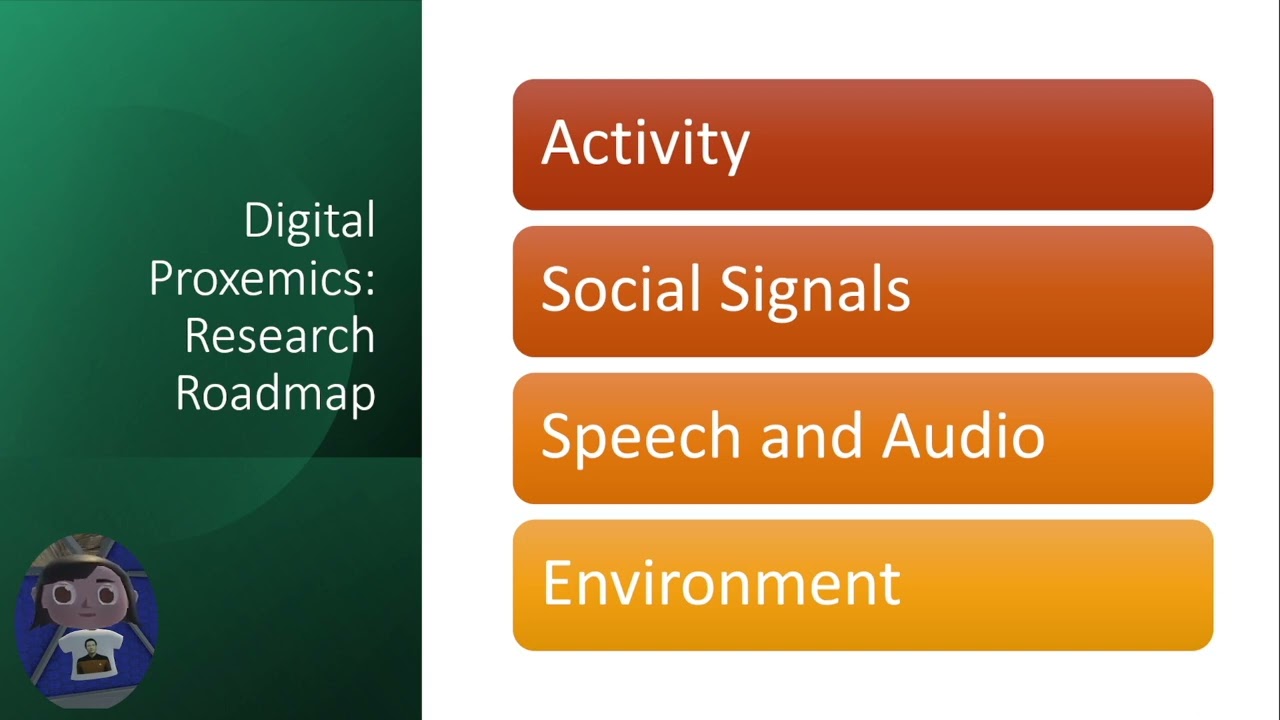
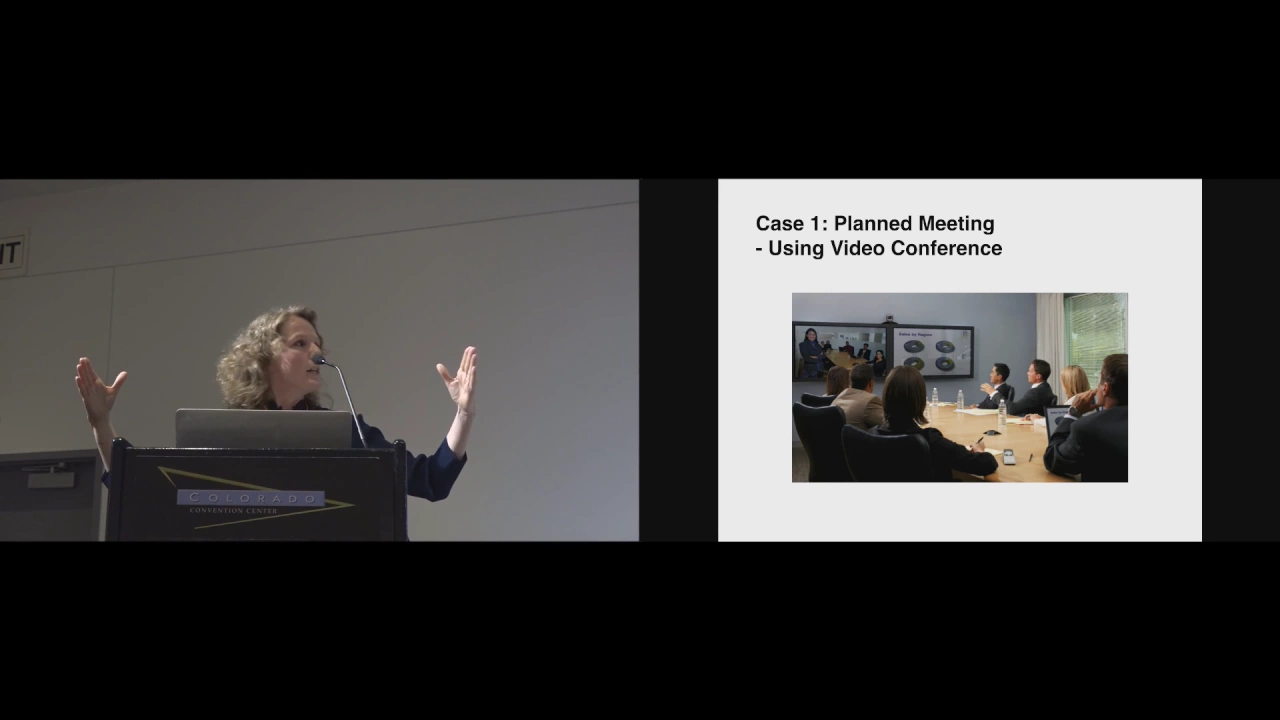
Digital proxemics, examining how physical space dynamics translate into virtual environments, video conferencing, and avatar-based interactions in video games.
The strategic use of spatial communication in professional fields such as negotiation, leadership, law enforcement, and public speaking.
536K views8.8Klikes4:45Original Release: 2016-07-05
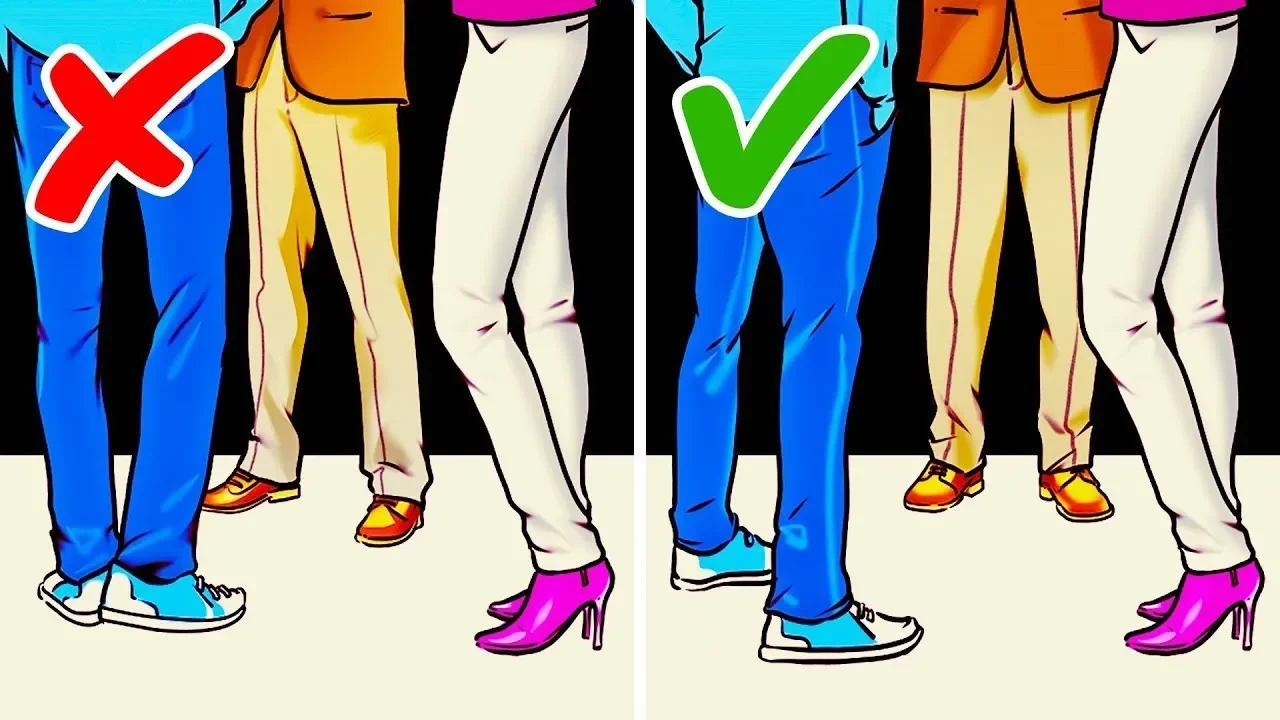
This is a perfectly normal elevator ride.
This elevator ride is incredibly uncomfortable.
What if you could measure these awkward moments?
What if you could transcribe them like a conversation?
In the 1960s, an anthropologist did just that.
Edward Twitchell Hall was known for conceptualizing the personal space bubble, and he also created a whole system of notation to record how people navigate shared space.
Hall had been around the world and taught thousands of foreign service personnel how to communicate in different cultures.
He believed culture and communication were inseparable, and that communication was as present in silence as in speech.
He once wrote, "Man has developed his territoriality to an almost unbelievable extent.
Yet we treat space somewhat as we treat sex.
It is there but we don't talk about it."
Hall called his study "proxemics," and it dissected personal interaction with eight key modes of analysis that each had their own code for recording.
1) Posture and sex These drawings used simple lines to show if it was a man or a woman, and if they were standing, sitting, or lying down.
Every symbol got a number, too, so each position could be clear in an instant.
2) How people interacted Sociofugal relationships preserved an individual's privacy.
Sociopetal ones encouraged interaction.
Drawn as if from above, he could show if people were facing each other or not.
Here's a couple side to side; here's one back to back.
And they could measure the effects of space on interaction.
3 and 4) Touch and space He built a grid to describe every touch.
00 was closest with a caress; 66 meant no contact at all.
And in between was the nuance of human interaction.
22 might be a hug; 33: a high five.
5) A visual code Even eye contact could be quantified.
From the center of one retina to the center of another, it could be dazzlingly direct, or it could be the peripheral vision that dodged real connection.
6) Body heat Body heat could be recorded too as another way of measuring connection.
Hall quoted one subject who said she could feel her dance partner's stomach heat up.
7) Smell He even monitored smell and breath, giving it its own code.
DBO means smell as "differentiated body odor."
A wafting smell could be as loud as a word.
"This is the section about smell, isn't it.
Sh--" 8) Loudness Now, if somebody said: "Jeremy, I got you the documents."
it could be coded on a scale to measure the nuance.
"Jeremy, I got you the documents.
[louder]" Now observers could describe interactions like a meeting without needing to use words.
Instead, they could show a man sitting in a group, touching no one, with indirect eye contact, no heat or smell, and a soft voice.
And together, all of these precise measurements helped discover the personal space bubble we all know.
Hall refined it in other papers and books, but his personal space bubble is the one we know well, as he defined it in his book, "The Hidden Dimension."
Surrounding a person, he found a 1 foot bubble split in two for intimate space, a bubble of personal space followed out to 4 feet; beyond that was the social space of 4-10 feet and public space beyond that.
It became how we think of space, just because one person bothered to observe it.
Today, we still use proxemics to understand space and people.
It's guided us not as a rulebook, but as a theory.
For everyone from theater directors, to intercultural communicators, to video game designers.
"He's nice, bit of a close talker."
"A what?"
"So how long you folks in town?"
[Laughter] It won't make the elevator ride more comfortable.
But now at least you know how to describe it.
So Hall had a lot of different inspirations for proxemics, but I wanted to talk about one that was kind of unexpected: an ornithologist.
He was inspired by H.E.
Howard who wrote about territory in bird life.
Up Next

5:23
Ethnography Explained: Qualitative Research Methods
@researchmethodsandstatisti2134
63.9K views•2016-09-11

38:41
Astrobiology Through an Anthropological Lens: Field Insights
@georgiatechastrobiology
128 views•2021-04-14

5:21
Digital Ethnography: Research Methods for Online Communities
@LoriOstergaard
6.9K views•2011-03-23
10:38
Psychology of Internet Trolling and Pranks Explained
@AzzyLand
10.7M views•2017-12-20
Related Study Plans & Knowledge Roadmaps
Structured learning paths in Anthropology
anthropology
Space Anthropology: Analogs, Culture & Habitats
01Foundations of Space Anthropology & Cosmic Imaginaries
02Extreme Isolation & Micro-Societies in Orbit
03Space Analog Habitats & Earth-Based Simulations
+ 2 more learning modules
15h5 modules
Explore Roadmap
anthropology
Legal Anthropology: Customary Law & Pluralism
01Foundations of Legal Anthropology and Social Justice
02Legal Pluralism: Coexisting Legal Systems
03Customary Law and Indigenous Dispute Resolution
+ 2 more learning modules
15h5 modules
Explore Roadmap
anthropology
Global Tourism: Gaze, Authenticity & Heritage
01Introduction to the Sociology of Tourism
02The 'Tourist Gaze' (John Urry)
03Staged Authenticity in Tourism
+ 3 more learning modules
14h6 modules
Explore Roadmap
anthropology
Modern Kinship (ART, Adoption & Chosen Family)
01Foundations of Kinship and Family
02Assisted Reproductive Technologies (ART) & Relatedness
03Transnational Adoption and Global Kinship
+ 2 more learning modules
12h5 modules
Explore Roadmap