











![Герменевтическая несправедливость | В гостях Михаил Хорт [S01:E93]](https://i.ytimg.com/vi_webp/HCuX7P2FUkw/maxresdefault.webp)







Patricia Hill Collins's Black Feminist Epistemology argues that knowledge is fundamentally situated and shaped by the power relations and social locations of those producing it; she critiques mainstream epistemology for being dominated by elite white male perspectives that systematically distort or exclude marginalized voices, and proposes an alternative epistemology grounded in lived experience, communal dialogue, and personal accountability that emerges from subjugated communities and can contribute to a more inclusive understanding of universal truth.
Patricia Hill Collins: Black Feminist Epistemology Explained
Added:Basic Epistemology: Understanding the philosophical study of knowledge, including how knowledge is defined, acquired, and validated.
Introduction to Feminist Theory: Familiarity with general feminist critiques of traditional, patriarchal frameworks in academia and science.
Intersectionality: Kimberlé Crenshaw's framework of how social identities (such as race, gender, and class) overlap and interact to shape individual experiences.
Traditional Standpoint Theory: The foundational concept in sociology and philosophy that knowledge is socially situated and that marginalized perspectives can offer unique insights.
The Matrix of Domination: Exploring Patricia Hill Collins' specific model of how interlocking systems of oppression are organized and maintained on personal, cultural, and structural levels.
Epistemic Injustice: Investigating Miranda Fricker's theories on testimonial and hermeneutical injustice to understand how marginalized knowers are discredited.
Qualitative Methodologies: Applying lived experience and dialogic validation as rigorous methodological frameworks in sociological research and ethnography.
Decolonizing Knowledge Production: Examining broader post-colonial and decolonial critiques that aim to decenter Eurocentric, positivist paradigms in global academia.
13.2K views0likes31:12Original Release: 2014-03-20
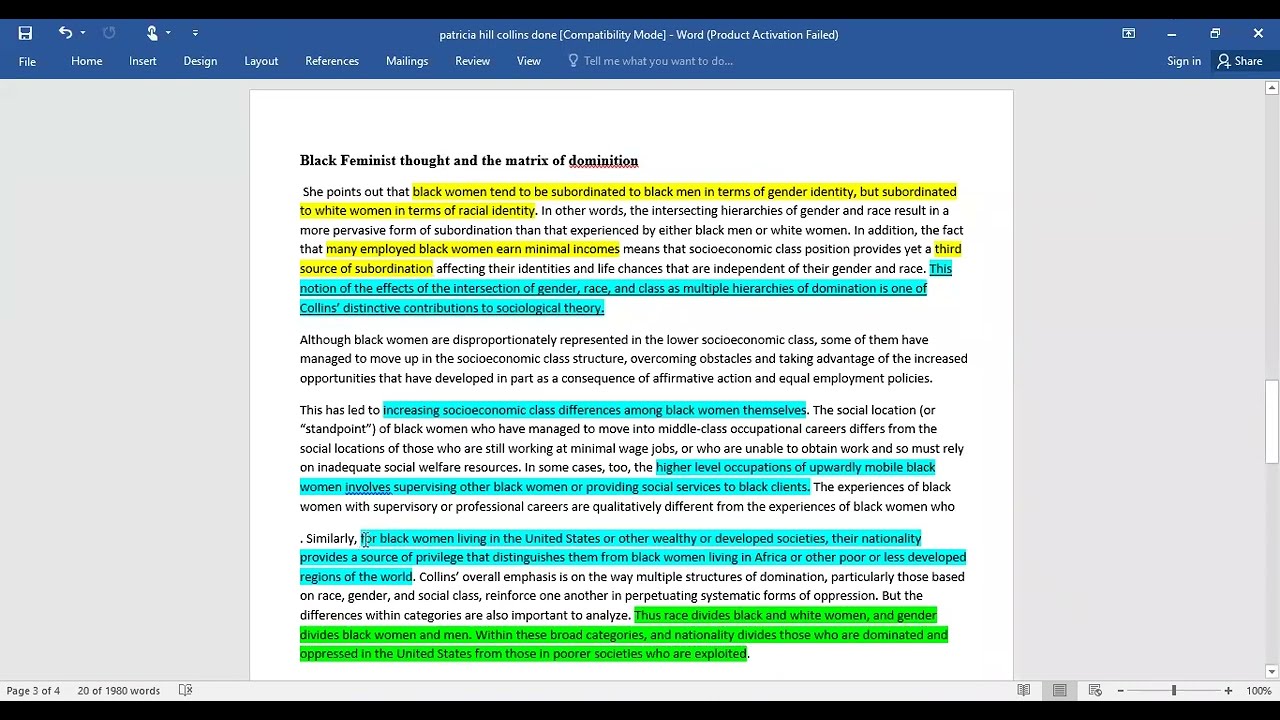
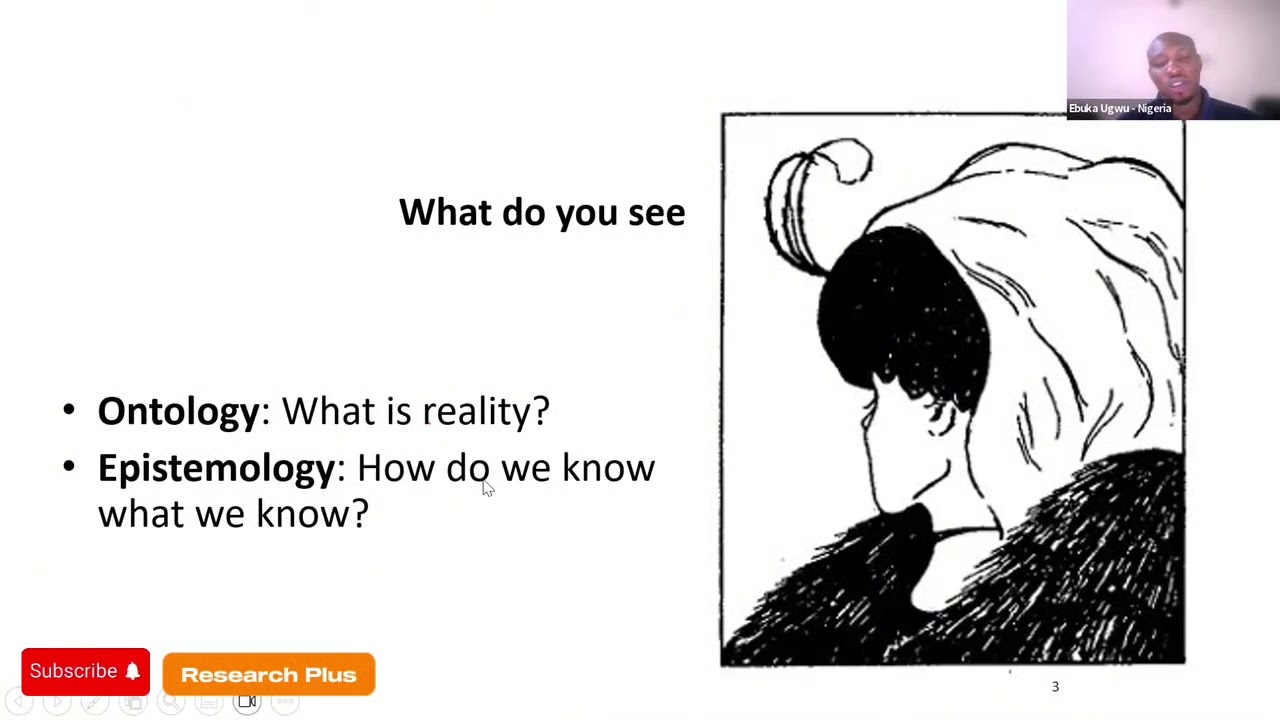
hello and welcome to the week four supplemental lecture on Patricia Hill Collins's black feminist epistemology uh this is one of the pieces we're looking at this week that provides an example of something called standpoint Theory uh the notion that knowledges are situated and reflect the particular standpoint and interests of the people who are putting those systems of knowledge and knowledge claims forward Patricia Hill Collins is going to analyze this in the context of African-American women's experience in the US but it's is also going to draw some conclusions for the way in which one might begin to think about reconstructing foundations for a universal Knowledge from the overlapping knowledge of many many different particularities one of the things that's most interesting about this piece is that by the end of it she ends up putting forward a description of very grounded very particular knowledges that emerge from very specific communities that have overlapping but by no means identical experiences that have different expertise if you translate it into that vocabulary but that when you line all of those communities experiences up you can see from what is validated by all of their different knowledge systems what might be accepted as a kind of a universal that's built out of particularity if you read it in conjunction with the Pani and take a look at his conception of scientific Authority and how that's built up by by lots and lots and lots of communities of scientists with their specializations and only partially overlapping experiences it's a surprisingly similar description what differs is who's included in the group whose knowledge gets to count uh so maybe keep that in the background while we're going through the text so as I said this is this text is an example of something called standpoint Theory you have standpoint theories put forward from a variety of different standpoints so this isn't the only one or the only example of this kind of theory and in fact Collins will criticize some other types of standpoint Theory as she goes through this piece uh particularly concerned about forms of theory some of which we've slightly seen Tendencies toward and some of the other things we've read this term where people try to create the argument that there's a best possible standpoint based on who's most oppressed within a particular society but we've seen elements of standpoint uh Notions coming out in the kof's piece trying to explain why they think you get more interesting theory if you're looking at the world from the perspective of the global South and that is about forms of Oppression making things more clear and also in the piece by Watson Von and Turnbull this week so Collins says as critical social theory us black feminist thought reflects the interest and standpoint of its creators tracing the origin and diffusion of black feminist thought or any comparable body of specialized knowledge reveals its Affinity to the power of the group that created it because Elite white men controlled Western structures of knowledge validation their interests pervade the themes paradigms and epistemologies of traditional stat scholarship as a result us black women's experiences as well as those of women of African descent transnationally have been routinely distorted within or excluded from what counts as knowledge okay so she's concerned that existing systems for deciding what is valid knowledge what's a valid way of deciding what's true have been distorted by racial and class dominations also dominations around sexual orientation and that this systematically distorts or suppresses views from other perspectives she uses the term subjugated knowledge and this is a term that comes up in a few of the pieces that we're taking a look at this week so again the idea that you've got popular ations that are disadvantaged within a broader social environment and that these populations have access both to the dominant form of knowledge and to whatever particular forms of knowledge are specific to their own communities and therefore can't avoid a confrontation between the two and this may give some sense of how both of them work in a way that might not happen if either of them were looked at in isolation the the Turnbull Watson Baron piece also talks about about this this week she talks about the core themes for black feminist epistemology things that people are concerned about that they'd want to write about that they'd want to analyze being work and family and sexual politics and motherhood and political activism and she says it relies on paradigms that emphasize the importance of intersecting oppressions in shaping The Matrix of us domination and she'll talk through this piece about the fact that you both have racial domination and gender domination creating some factors that make black feminist perspective similar to feminism or similar to the perspective of black men but subtly different as well because of the overlap in experience she says but expressing these themes and paradigms has not been easy because black women have had to struggle against white male interpretations of the world so she says black feminist thought can best be viewed as subjugated knowledge as knowledge that's had difficulty gaining access to a official institutions that would legitimate its interests and concerns and perspectives and therefore it develops alternative ways of validating knowledge and she's going to be concerned to flesh these out so she says the suppression of ideas the difficulty of getting them legitimated and validated in mainstream institutions leads to expression in other places in music and literature and daily conversation in everyday behaviors of various sorts it's only very recently that people have gained sufficient access to higher education or to news media to mean that those institutions Also may become places where at least certain aspects of subjugated knowledges can be expressed she says in certain ways black feminist thought is now highly visible but this doesn't mean it's not subjugated it's distorted and it's still having to confront systems that don't want to validate what it has to offer in particular ways and she says it's very challenging to study as a result that the conv social science training that she received isn't adequate because subordinate groups have developed Alternative forms for the production and validation of knowledge okay and these are claims that can sometimes feel sort of red raged to a bull uh they sound sometimes as though they are dramatic rejections of things that are essential you know viewed as essential to rationality or thought as such go with her for a little bit and see where she goes and what she means she gives a few she talks about epistemology so epistemology is the study of how we know what we know and she talks about it involving an overarching theory of knowledge and the standards that are used to assess that knowledge so that we can understand why we believe what we do it is not a political she says power relations shape who is believed and why and what sorts of knowledge we think is epistemologically valid and she says black women intellectuals specifically confront conflict between two epistemologies that represent white male interests on the one hand and black feminist interests on the other so they're constantly having to translate between or move back and forth between two competing epistemological Frameworks two competing Frameworks that have different explanations for how we know what we know for why we're authorized to believe what we do and why we're entitled to say that certain things are true or not she also uses the term Paradigm if you looked at the reading this week you'll have seen this term now and she says that she's using it to talk about broader epistemological Frameworks and she specifically mentions the term intersectionality that we'll revisit at various points during the course intersectionality is the idea that you can have groups that are affected by multiple forms of Oppression or multiple identities or multiple needs and it means that when someone is speaking in a very univocal way for example about feminism as such it may mean that they are are not fully representing the values of all women there will be subsets of women that have different kinds of needs due to different kinds of Oppression and intersectionality is an attempt to thematize that and not only with reference to women but with reference to other groups and then she also talks about methodology your methodology are your principles for your conducting for conducting your research and how your paradigms are applied so she's mainly concerned in this piece with knowledge validation and she says there are political and epistemological standards that are embodied in official institutions particularly scientific institutions universities also government institutions these are institutions that are controlled she says by Elite white men and that the knowledge validation then promoted by these institutions reflects the interests of elite white men now she makes a careful qualification here she says she doesn't mean to say that these institutions are necessarily run by white men it's possible to enlist other people to run institutions and yet the institutions can still embody values that disproportionately benefit the interests of elite white males she also says that actual white men might reject this entirely they might side with communities with subjugated forms of knowledge so the fact that someone is a white man even a privileged white man doesn't mean that they individually are supporting the sorts of things that she's going to criticize okay so these are structural categories they describe institutional Tendencies and who benefits from those institutional Tendencies they're not about the individual people that are caught up in various positions in this and she says there are two political criteria for knowledge validation the first is validation by experts who bring with them a host of sedimented experiences that reflect their group location in intersecting oppressions she says a scholar Mark making a knowledge claim typically must convince a scholarly Community controlled by Elite white avowedly heterosexual men holding US citizenship that a given claim is Justified at the same time you have a knowledge validation process that reaches outside that expert community and Spills over into the broader Community she says in which it is situated and from which it draws its basic taken for granted knowledge she says this means that scholarly communities that challenge basic beliefs held in US culture at large will be deemed less credible than those that support popular ideas so the fact that you are a scholar and you're in a scholarly Community even if the experts in your community are perfectly happy with the arguments you're making if those arguments sit in tension with values that are in the ascendants popularly your scholarly Community as a whole is likely not to be very well respected and we can see this sort of play out certain scholarly communities um periodically sort of pop up in the media as objects of scorn by different governments as they come in and out of office and then there's the issue of suppression of knowledge claims now and in the past she says that General us culture is resistant to new knowledge claims that challenge popular Notions of black female inferiority she says there's specialized challenges to existing assumptions unlikely to arise in white male controlled spaces due to what she calls a basic lack of familiarity with black women's realities so in these spaces even if you've got people who are interested in studying black women's experience their own cultural frames their experiences are likely to lead them to draw conventional conclusions these are not spaces that are likely of their own to generate specialized challenges to these assumptions about black female stat status she also talks about a history of exclusion from education and employment that's only recently begun to be successfully contested as a result of this Alternative forms of knowledge validation have been necessary for this particular Community okay but these forms of knowledge validation while they were necessitated by the exclusion of the community are also generally rejected as invalid they denied the status of being research by the expert institutions that validate these claims she says black women who do obtain academic credentials face heavy pressure to support the system and are rewarded for accommodating mainstream conceptions of black female inferiority epistemological validity is denied to black women's standpoints so for example you have things like a welfare abuse narrative that is validated over a narrative that talks about social issues or structural issues confronting single parents she says in this climate black women academics who choose to believe other black women can become suspect okay so even if you get past the barriers to education and employment get a position in a center where knowledge claims are normally validated youve still got a very careful line to walk then she talks about positivism and this is a term that often comes up as a kind of term of abuse for a a particular type of research you can think back as you read this description in these definitions how it maps on to some of the classical conceptions of science that we looked at in week two and also how it maps on to some of the definitions that we're looking at this week she says when she talks about positivism she's not saying that all aspects of it are bad and she's also not necessarily saying that non-positive Frameworks are automatically going to be better but there're particular strains in what she calls positivism that she thinks are particularly destructive from the standpoint of a researcher trying to respect the black feminist standpoint so she defines positivism as a system in which science is understood to be created through objective generalizations she says all human characteristics except rationality are eliminated from the research process there are strict methodological rules and those rules are designed to remove all those qualities except rationality they're designed to get rid of values or interests or biases that come from the scientist's particular Background by decontextualizing themselves she says they allegedly become detached observers and manipulators of nature she says It's associated with an objectification of what's being researched so literally there is an object of research and the researcher is a subject contemplating that object from which the researcher is removed moved removed emotionally and without an ethical or value based orientation to the subject of research and then she says adversarial debates whether written or oral become the preferred method of ascertaining Truth the arguments that can withstand the greatest assault and survive intact become the strongest truths okay so these are her definitions and you may see which ones you can recognize in the other readings that you've done for this course but she says they're competing epistemologies she says these criteria ask africanamerican women to objectify ourselves devalue our emotional life displace our motivations for furthering knowledge about black women and confront in an adversarial relationship those with more social economic and professional power so African-American women who have made it into academic positions in the US she says have a very ambivalent relationship to positivism on the one hand they've had to demonstrate competence in it that's the ticket to the ball that's how you get in the door but they are also trying to contest its legitimacy at the same time they have access to an alternative epistemological standpoint so positivism is not the only system into which these women are socialized she says an experiential material base underlies a black feminist epistemology namely Collective experiences and accompanying worldviews that us black women sustained based on our particular history the historical conditions of black women's work both in black civil society and in paid employment fostered a series of experiences that when shared and passed on become the collective wisdom of a black woman's standpoint moreover a set of principles for assessing knowledge claims may be available to those having shared experiences these principles pass into a more General black women's wisdom and further into what I call here a black feminist epistemology okay so there's the mainstream institutionalized base that's recognized in a certain official position and then there is a lived experiential base passed on generationally that is the product of a lived community and she's going to try to unpack what it means to talk about the epistemology that arises from this lived experience and she's going to go through several elements of it she say one of them is lived experience as a Criterion of meaning and the privileging of lived experience over learning that is abstracted from that lived experience she talks about the distinction made between knowledge and wisdom in the community and this whole section from this point forward is shot through with quotations from people in the communities whose position she's trying to explicit whose position she's trying to articulate and make explicit so she says denied the protections of privilege people in this community favor expertise from lived experience over formal learning she talks about this as a fundamental epistemological tenant in African-American thought systems and she points to a text that we had a look at last week the Sojourner truth's use of her experience to deconstruct images of Womanhood if you didn't manage to get to this in the social movements handout it's the very last reading it's short and it's well worth a look and it demonstrates the Point that's under discussion here she says women as a group are more likely to appeal to lived experience there's research on this from various feminist Scholars she said it's often explained as a consequence of being socialized to attend to relationships she says these forms of knowledge allow for subjectivity between the knower and the known rest in the women themselves not in higher authorities and are experienced directly in the world not through abstractions she says that this is further reinforced for black women not just by their experience being women and being subject to those kinds of socialization pressures but through a whole series of other influences and she mentioned specifically African influenced belief systems activist mothering Traditions that stimulate politicized understandings of black women's mother work and a social class system that relegates black women as workers to the bottom of the social hierarchy she also talks in a more positive sense about institutional support for this idea of lived experience and meaning and she talks about families churches and Community organizations that tend to be female centered and that function as incubation sites for black feminist epistemology within the African-American Community the next thing she's going to look at is dialogue as a way of assessing knowledge claims you've got lived experience as a as a validated basis for knowledge claims dialogue is how that experience is assessed and she says it's assess to dialogue in community rather than you know thought in isolation she says a primary epistemological assumption underlying the use of dialogue and assessing knowledge claims is that connectedness rather than separation is an essential component of the knowledge validation process she talks about this having an African cultural basis in societies where although women were subordinate there was a commitment to what she calls holistic worldviews that seek Harmony and she says this kind of dialogue is not modeled on the kind of argumentative debate that's favored in certain academic context it's dialogue and it in principle requires everyone's participation she also notes here that there are feminist Scholars who argue that this is a general tendency for women uh that they may be more likely to use dialogue to evaluate knowledge claims then she talks about an ethics of caring and an emphasis on individual uniqueness the expression of emotion in dialogue and a capacity for empathy and she says this is expressed in black civil society in call and response discourses in church services that demonstrate and illustrate and practice a dialogue of reasons and emotions she says this is not gender specific in the African-American Community but she believes that women draw on this kind of connected knowledge more she says that few white institutions validate is beyond the family but that in African-American communities the churches and other community organizations support and validated so she thinks it has a broader base and is reinforced and supported in more ways and then she talks about the value of personal accountability for knowledge claims she says the evaluation of knowledge claims also evaluates the person and evaluates them personally so to speak she says All Views expressed and actions taken are thought ought to derive from a central set of core beliefs that cannot be other than personal knowledge claims made by individuals respected for their moral and ethical connections to their ideas will carry more weight than those offered by less respected figures and she talks about an example of running a seminar for African-American women where she presented them with a text written by a black male scholar who was writing about black feminism and ask the students to evaluate the text and before they evaluated the text asked a set of biographical questions about the scholar they wanted to know who he was as a person in order to decide how to interpret what he was saying and again she brings up church services as a place where this particular ethic this value is cultivated she says neither emotion nor ethics is subordinated to reason in the services now there's been a historical shift that has increased the capacity for for black women to function as agents of knowledge in a legitimated way in legitimated spaces spaces that are legitimated by the dominant group she talks about the social movements of the 60s and 70s uh that have resulted in more us black women becoming legitimated agents of knowledge and able to move into dominant spaces this subjects them to conflicting epistemological demands so on the one hand their demands by ordinary African-American women based on the systemology that she's just been talking about the last several sections there are demands from black women Scholars who are a diverse group although they share certain things in common and then there are the epistemological demands of the dominant groups and she says the difficulties these black women now face lie Less in demonstrating that they could Master white male epistemologies than in resisting the hegemonic nature of these patterns of thought in order to see value and use existing alternative black feminist ways of knowing okay so the tricky thing is no longer getting in showing the Mastery of the dominant forms of knowledge it's that once you've developed that Master you've got to figure out how you're going to reach out for other ways of knowing and she said this is a tension that can generate creativity but it also creates enormous strain a knowledge claim that meets the criteria of adequacy for one group she says and thus is judged to be acceptable may not be translatable into the terms of a different group group okay and wrestling with how to deal with it this she suggests that it is possible to come up with a notion of particularity that provides the foundation for a sort of reconstructed vision of universality and this is not miles away from the things that Watson Von and David Turnbull are talking about this week so she talks about putting truth together from a series of partial perspectives and this is a thing that really quite strangely because Michael palan is writing something quite different different but his notion of distributed Authority within the scientific Community is sort of formally very very similar to this and it's sort of interesting to think the two of them together um particularly given that standpoint Theory tends to draw a lot of fire from people who view themselves as Defenders of a particular conception of science so she says there's a possible alternative path to get to universal truth she's not rejecting the possibility of them she says epistemology should reflect a convergence of black and female experiences race and gender she says may be analytically distinct but in black women's everyday lives they work together the similarity the overlap between feminist scholarship and the sorts of things that she's been saying in this piece and other authors like her say suggests the actual Contours of intersecting oppressions can vary dramatically and yet generate some uniformity in the epistemologies used by subordinate groups groups okay so even though the communities are very different even though their experiences are very different being subordinated in the way they are may be generating some similar epistemologies it may not be so difficult as it seems to get these different standpoints to speak to each other it doesn't have to mean the fact that you're doing a standpoint Theory doesn't have to mean that you cannot communicate with other standpoints in some meaningful way she says thus the significance of a black feminist epistemology May lie in its ability to enrich our understanding of how subordinate groups create knowledge that Fosters both their empowerment and social justice then she begins to criticize certain specific kinds of standpoint Theory to construct a sort of a clearer sense of what she's after rather than emphasizing how a black woman's standpoint and its accompanying epistemology differ from those of white women black men and other collectivities black women's experiences serve as one specific specific social location for examining points of connection among multiple epistemologies okay so you're reaching out toward other epistemologies at the same time you're developing the principles from your own standpoint and then she specifically says it's not meaningful it's not sensible to speak of a single privileged perspective on oppression as though you could quantify and establish which group was the most oppressed and sort of compete for who has the purest View of Oppression by Dent of purportedly being more excluded from everyone else she doesn't like this as a way of talking about the relationship among oppressed groups and then she has a long very interesting quote and again it's interesting to think in relation to the Pan about what objectivity might mean within the context of a standpoint Theory because again standpoint theories are often understood as undermining the basis for talking about objectivity and so she's trying to address how that need be the case she said instead those ideas that are validated as true by African-American women African-American men Latina lesbians Asian-American women Puerto Rican men and other groups with distinctive standpoints with each group using the epistemological approaches growing from its unique standpoint become the most objective truths okay you have a distributed system for deciding on truth you have a lot of specialized groups within that distri red system they've each got their own expertise but the ideas that can run through each of them and get some validation across them start looking objective across the group okay with a different meaning of objectivity it's an objectivity that emerges from within the various collectivities in their diversity rather than an objectivity that floats above them as a voice from nowhere she says each group speaks from its own standpoint and shares its own partial situated knowledge that because each group perceives its own truth as partial its knowledge is unfinished each group becomes better able to consider other group's standpoints without relinquishing the uniqueness of its own standpoint or suppressing other groups partial perspectives partiality and not universality is the condition of being heard individuals and groups forwarding knowledge claims without owning their position are deemed less credible than those who do okay so a collectivity of different Divergent diverse situated knowledges functioning together sharing ideas can generate a kind of an imminent objectivity while rejecting the sort of voice from nowhere floating objectivity that denies its own position and then she says there's a real challenge to dominant forms of thought from this possibility for alternative epistemologies she says if the epistemology used to validate knowledge comes into question then all prior knowledge claims validated under the dominant model becomes suspect alternative epistemologies challenge all certified knowledge and open up the question of whether what has been taken to be true can stand the test of alternative ways of validating truth the existence of a self-defined black women standpoint using black feminist epistemology calls into question the content of what currently passes as truth and simultaneously challenges the process of arriving at that truth okay we can discuss this further in class
Up Next

21:18
Sexism and Epistemic Injustice: How Male-Centered Culture Shapes Knowledge | Soraya Chemaly | TEDx Talk
@TEDx
395.5K views•2015-07-28
54:57
Contemporary Sociological Theory: Micro, Macro, Integrative
@NaSESYNC
45.7K views•2016-02-17
19:23
How to Analyze Conversations Scientifically | Elizabeth Stokoe | TEDx
@TEDx
1M views•2014-12-04
9:41
What is Sociology? The Sociological Perspective Explained
@crashcourse
4.6M views•2017-03-13
Related Study Plans & Knowledge Roadmaps
Structured learning paths in Sociology
sociology
Celebrity Culture: From Hollywood to TikTok
01Foundations of Celebrity Sociology
02The Rise of Micro-Celebrity & Digital Platforms
03Parasocial Relationships & Algorithmic Intimacy
+ 2 more learning modules
12h5 modules
Explore Roadmap
sociology
Hostile Architecture: Space, Power & Control
01Introduction to the Sociology of Space
02Social Control and Surveillance in the City
03Hostile Architecture and Defensive Design
+ 2 more learning modules
12h5 modules
Explore Roadmap
sociology
Loneliness Epidemic: Third Places & Isolation
01Foundations of Social Capital and Community Cohesion
02The Death of Third Places and Urban Space Erosion
03The Privatization of Leisure and Atomization
+ 2 more learning modules
12h5 modules
Explore Roadmap
sociology
Sociology of Tourism: Gaze, Power & Heritage
01Foundations of the Sociology of Travel and Leisure
02John Urry and the 'Tourist Gaze'
03Staged Authenticity and Cultural Commodification
+ 2 more learning modules
14h5 modules
Explore Roadmap