











![[생윤] 3-2 사회 정의-분배적 정의 '노직, 왈처'편](https://i.ytimg.com/vi_webp/VG1RbhF-kXc/maxresdefault.webp)


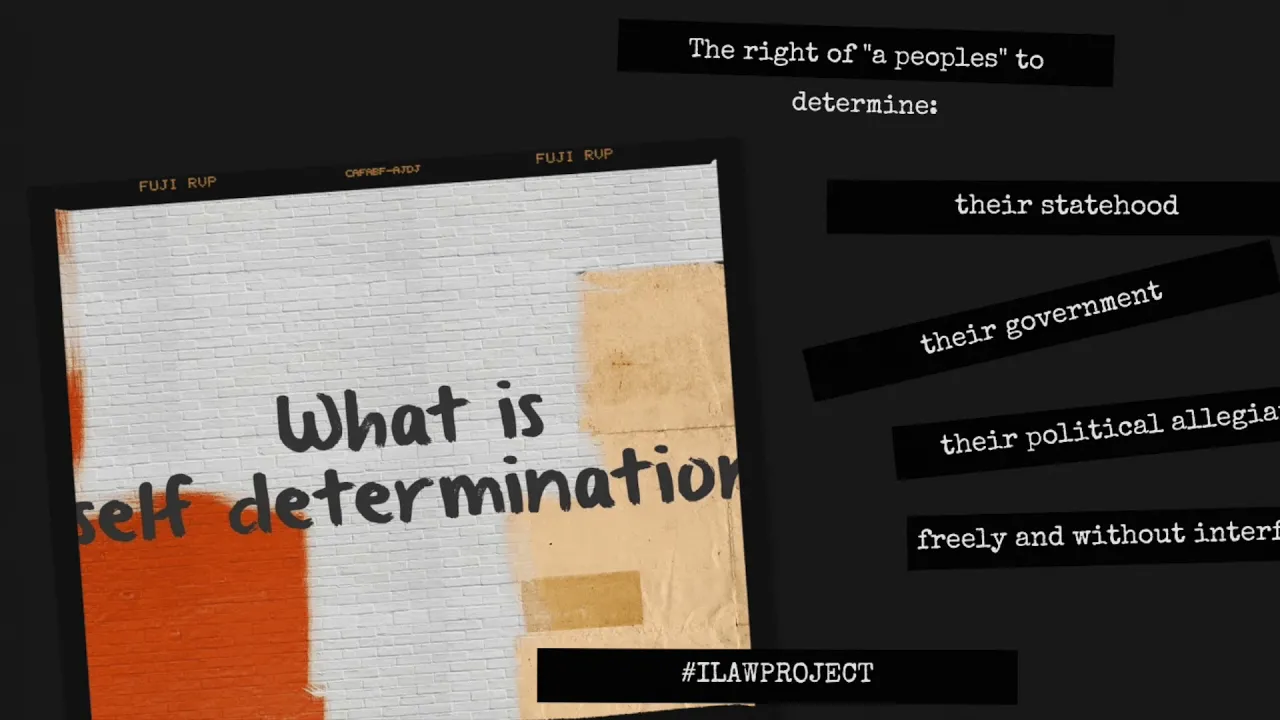
The right of self-determination is a fundamental human right protected under international law, specifically the International Covenant on Civil and Political Rights (ICCPR), which the United States ratified in 1992. This right allows all peoples to freely determine their political status and pursue their economic, social, and cultural development. Unlike civil rights, which require appealing to authorities and can be denied, self-determination is an inherent right that cannot be lawfully denied. When Black people collectively assert this right, they can legally take control of their communities, establish their own governance structures, and achieve true liberation without relying on the mercy of civil authorities.
Black Summer 2025: Self-Determination & Reparations Webinar
Added:The distinction between domestic civil rights (legal protections granted by a specific nation-state) and universal human rights (inherent rights governed by international frameworks).
The foundational concept of 'self-determination' as established under international law, particularly in the United Nations Charter and the International Covenants on Civil and Political Rights.
The historical context and legal definitions of reparations, including the pillars of reparative justice such as restitution, compensation, rehabilitation, and guarantees of non-repetition.
An understanding of how international treaties and ratified laws are integrated into, and sometimes clash with, domestic legal systems.
Analysis of practical frameworks for implementing reparations, such as the CARICOM Ten-Point Plan for Reparatory Justice or local municipal reparation initiatives.
The study of transitional justice mechanisms and how societies reconcile systemic historical injustices with modern legal and economic systems.
Strategic litigation methods in international human rights courts (e.g., the Inter-American Court of Human Rights) to enforce self-determination claims.
Economic and political design theories for structuring self-governing communities and community-controlled resource allocation.
783 views46likes1:51:25Original Release: 2025-04-14
Come right down. Come right. Make sure it's showing on Facebook. Come right.
Okay. Going in there. Yes, sir.
It's there. All right, everyone.
Welcome to our human rights policy officers Afro Descendant Union hosted web conference on the right of self-determination. I decided to stream live on Facebook today. I was inspired by a conversation that I had with a doctor of law today and it seems to be that there's not a lot of understanding even in well definitely even in the revolutionary circles the nationalist circles the conscious movement in general on the right of self-determination which we always show on this conference how that's by design.
We don't know that we have the right of self-determination. You don't understand human rights. Even though Malcolm has been pushing it, Elijah Muhammad pushed it to him. He pushed it to the world then to our population in America. Then Dr. King followed up right before he was assassinated by the government and started promoting human rights instead of civil rights. Not saying we do them together. He said, "No, forget civil rights. Let's deal with our human rights. Why? Because human rights put us on an international level that can't be denied by civil authority. But our people are still even our top activists are still stuck in civil rights actions.
Even those who engage in a struggle for self-determinations, self-determination and reparations, which are international law or legal terms. Reparations came from the international law. It's a human right.
Reparations is actually a human right.
But our activists are engaging in civil rights actions to try to attain a human right. First of all, if it's a right, you don't have to engage in actions to attain it. You assert that right. And if anyone denies that right, they're in the wrong. So you have a right to resist. So the purpose of this conference is to introduce, it's called an orientation to introduce our people to the right of self-determination. Believe me, if you knew you had a right of self-determination, if our people collectively knew that they had something called the right of self-determination, we would not be in the situation we are in now. If we knew we had the right of self-determination when we mobilized in Ferguson because of the murder by police of Mike Brown, we wouldn't be in the condition we're in now. Ferguson would be a black city control. It be a black nation.
Baltimore would be a black nation.
Whoever black people marched because of George Floyd would be black nations independent. No more police unless they are our police forces that we created.
If we knew we had a right of self-determination. If we knew we had a right of self-determination, we wouldn't be talking about reparations. We would have reparations. But we don't know. So we don't act upon that. 100 or so years ago, our people didn't even know they had a right to govern themselves. So you had no black cities in America. Very few, if any. 100 or so years ago.
Some clever black person picked up a law book. Hold on. We got a right to be the governor, the mayors of these cities ourself. So they asserted that right.
They got people brave enough to stand up for that right. They stood up for them.
And now we have 600 800 black cities. But first they had to know they had the right. When Dr. King and them were mobilizing people for equality, integration, equal education, people didn't know they had a right to equal education. But Dr. The king and them had to inform people of that right.
Then they had to stand up for that right in order to get it recognized. Now our people need to recognize, look, we have a right of self-determination. We can end all of that. Like Dr. King finally came to the conclusion. But let let me share the screen. Bear with me, please. I'm going to take some minutes of your time, but bear with me. It's worth it. It's worth it. Let me start sharing the screen. Let me share a few things.
from some things from the government of the United States itself, some things from international lawyers. I was talking to a doctor of law. He didn't understand some of these things. I'm getting ready to show you. First of all, let me let me play this. My favorite video. No, it's not little baby or anything. It's my favorite video right now. Let me play it right quick. this for 30 seconds.
Uhoh. Here we go. Bear with me. Hope it works.
We have elected America. They control the House, the Senate, and the presidency.
It's their government. What leverage do we have?
But I'm also confused about the leverage that we allegedly have in the face of such an overwhelming mandate that was given to Republicans by the American people.
Could you all hear that, comrad? No. Um, my resources are going down here because I mean it was clear. Yes. Okay. Loud and clear. I hope you all heard that. I hope you all were listening to the stream heard that. That's the Democratic Party leader of I think the House, Hakeim Jeff, saying, "What leverage do we have?
How can we stop Donald Trump? What leverage do we have?" Man, he got crucified by the public when he made that statement. Well, he was just admitting the truth. You can't stop Donald Trump.
You can't stop the Republicans with civil rights. You can't stop the the Republicans. You can't stop anything Donald Trump is trying to do.
You can try to throw some sort of obstacles in a way, you're going to quickly overcome them, but ultimately you can't stop them. Not with civil rights. Not with civil rights. On this call, we're going to introduce you the only way you can you can stop Donald Trump. Lawfully. Now, you can stop him by trying to s do something crazy like that. I'm talking about lawfully the only way to stop Donald Trump and the only way to get guarantee justice for black people in general anyway. The only way to guarantee that. It's called the right of self-determination. Bear with me.
I want to share this because today someone who I thought knew law pretty well was saying how international law doesn't apply but international law does apply in the United States. United States are signatories of numerous international treaties and they have ratified some of these treaties. Number one treaty that we're talking about is called the international covenant on civil and political rights. Am I sharing the screen? I just want to read this. This is this is from Yes. Yes. This is from ACLU, American Civil Liberties Union.
This is the biggest law, not law firm, but law organization that fights for civil rights. The biggest I remember a couple years ago, a few years ago, their budget for the year was $39 million. ACLU, you've heard of the ACLU. And the person I was talking to was involved in civil rights law, but he didn't know this right here. Listen, this this is what the ACLU is talking about. This international human rights treaty. It says the ICPR, which is the International Covenant on Civil and Political Rights, is a key international human rights treaty providing a range of protections for civil and political rights.
The ICCPR together with the Universal Declaration of Human Rights and the International Covenant on Economic, Social, and Cultural Rights are considered the International Bill of Human Rights. The ICPR obligates countries that have ratified the treaty to protect and preserve human rights. Obligates, listen, because this brother didn't know that they're obligated to follow these international laws.
Why does the US have to comply with the ICCPR? This is a heading in this article. This is what ACLU is saying.
Why does the US have to comply? The US ratified the ICCPR, which is the International Covenant on Civil and Political Rights in 1992.
Upon ratification, the ICCPR became the supreme law of the land under the supremacy clause of the United States which gives ratified treaties the status of federal law. This doctor of law I was talking to was saying no international law don't trump federal law. It is federal law. Once they ratify a document, a international treaty, it becomes federal law.
We got to understand this people because we got some key fighters in our liberation struggle. But you can't fight properly if you don't even know your political rights. Dr. King and them had to know civil rights in order to engage in a civil rights struggle. We got to know human rights as suggested by Malcolm X and Dr. King before they killed him. In order to engage in a human rights struggle, revolution is a human right.
Self-determination is a human right.
Reparations is a human right. They can't be fought under civil right or civil rights struggle. Bear with me. Bear with me. This is the document that they're talking about. If you look on your screen, it's called the International Covenant on Civil and Political Rights.
This is the Supreme Law. According to the ACLU, according to the top civil rights organization, law organization, the top civil rights law organization says this is the top legal document of the United States and it's called civil rights as well.
International covenant on civil and political rights. Bear with me. We got to get this straight. Article one, all peoples have the right of self-determination.
By virtue of that right, they freely determine their political status and freely pursue their economic, social and cultural development. Now what does that mean? That mean as all peoples, all peoples in the United States, you got a few peoples in the United States or a number of people. You got white people, you got indigenous people, you got afro descendent people, black people who came from Africa were enslaved. We have a right of self-determination. all these groups. We can declare our status. We can say, "Look, I'm tired of being a minority under white rule. I declare my political status or we as a collective declare our political status as independent and we're going to govern ourselves." So now Trump can't touch us.
Pick even the local county, state governor, whatever. Nobody can touch you if you are majority black in that area, in that city, in that zone. Hope you all are understanding. It's called the right of self-determination. This is what the ACLU is saying. ACLU says this document that I'm reading is supreme law. It's federal law. So federal law gives us a right to stand up and take over where we live and say, "Look, we we declare independence."
this. But but I'm going give you some more words from some doctors of law and some words from the government itself concerning self-determination and how it how easy it is for black people to make a simple move and declare independence and take over where we live. Bear with me. Here's a document I often share on here and this is the reason why we are ignorant of our right of self-determination. This is was published by a scholar out of Princeton University and Tel Aviv University, a Caucasian scholar. The title is called We the Peoples. The strange demise of self-determination. Yes, it was a demise of self-determination. 100 years ago, everybody based their struggle on self-determination. 60 70 years ago, all oppressed people on the planet based their struggle against oppression on self-determination because self-determination gave them the right to have their own power. To stop begging civily under civil rights for just treatment, to stop begging for reparations from a civil authority because we have a right to govern ourselves and repair ourselves. All struggles across the planet even in Europe, Europe, Africa, Asia, South America were based on the right of self-determination. No struggle whatsoever said inclusion. Include us in your affairs, oppressor. We want to be included with the oppress oppressor.
Nobody said we want to integrate with the oppressor. Nobody does that besides negroes in America.
Nobody. Because everybody knew their right of self-determination. And even some of our original leaders in America was trying to assert the right and promoted the right of self-determination. Whether it be Martin Delaney, Marcus Garvey, Elijah Muhammad, the Nation of Islam, the Republic of New Africa. But all of a sudden, as his author is saying, there's a demise.
Nobody's talking about we're talking about inclusion, talking about inspiration. Bear with me.
strange demise. Now, even our leadership doesn't even know about the right of self-determination. And we're not talking about the Quanza definition. Let me break this down right quick. He says, this is scholar from Princeton. I further suggest that powerful state actors, persuasive academics have sought to tame self-determination as principle and practice, retaining the term but altering its meaning from a source of threat into a resource for containing it. So here we go. If I ask you, have you ever heard of self-determination?
Some people will say yes. They ask what a definition is. A tame definition that they got from Quantum. The wrong definition. That definition is a tame version that contains the threat of self-determination. The real meaning of self-determination which we just read to you means taking over, taking power, becoming independent on your own. White folks no longer have power over you. So now if we take the Quanza definition, white folks remain in power. They remain the master of the plantation be yet we get to give him the name Toby back now I can call myself Kente but I'm still on the plantation that's the self-determination that's pushed in Quanza the self-determination we're talking about here is the international term self-determination that billions of people including white folks in America use to attain their independence with mear with me so we're not talking about the quasa This is a white scholar writing on this.
It's not a black power advocate is a white scholar. He says at the twilight of World War I, US President Woodro Wilson enthroned the people's right of self-determination as a paramount principle of international legitimate and warned. Selfation is not it is an imperative principle of act which statesmen were henceforth ignore at their peril. So look, you can you can reject self-determination, but it's the people's natural right, God-given right, and it's in their nature to fight to govern themselves and give themselves justice. So if you try to deny that lawfully you're in the wrong naturally you're in the wrong and that struggle will always continue at your peril because all self-determination struggles end up in a victory for those who are waging the self-determination struggle because it lawfully can't be denied even if you have to fight for it. Listen, he writes, "Robert Lancing, Wilson's Secretary of State, acknowledged the power of self-determination, but lament.
The phrase is simply loaded with dynamite. What a calamity that the phrase was ever uttered. What misery it will cause." Bear with me. Now, this the secretary of state, the President Wilson is promoting self-determination. But he was in Europe promoting. His secretary of state was like, "Hold on, Mr. President. That's loaded with dynamite."
What a calamity that you said that. What misery it's going to cause. Because the secretary of state wasn't referring to the Europeans that President Woodson was talking about. He was talking about the people in America and elsewhere, but namely indigenous people in America and Afro descendant black people in America.
What if we decide to assert self-determination? Boom. The dynamite.
It blows up America's authority.
misery will bring to the system to their control over us because now they cannot assert control over us. Usurp our power and use our power for their benefit. So it brings misery to the luxurious powerful life that they enjoy by keeping us away from our self-determination.
Y'all understand what I'm saying? So here's the president saying self-determination 107 years ago. His secretary of state said, "Hold on, Mr. President. We can't let them we can't that that's we should never said that."
President Listen. So immediately they actually put was to make sure they crushed because the president said, "Oh, you're right.
Well, let's just make sure nobody asserts the right of self-determination." And that's what this scholar is talking about in this article, how they put forth mechanisms to make sure in 2025 nobody knows about the right of self-determination. to make sure in 2014 and 2015 when we hit the streets by the millions in 2020 for George Floyd for Michael Brown for Eric Garner for Freddy Gre we don't know about the right of self-determination hit the streets by the millions and taking over city using our right of self-determination we'll just protest go back home they still in power and still keep killing black people because we didn't know the right that we had to take over those cities is called the right of self-determination bear with me it's loaded with dynamite And we're here to give everybody listening a sticker dynamite. Want you to pass on a sticker dynamite to everybody else that you can reach because we blowing up this thing this year. We're going to explode this year.
Bear with me. He writes, "No phrase has had greater political resonance in the last 100 years than self-determination." No phrase. No phrase. So why you never heard of it then? Why you never heard of it? Why the only phrase we know in America is integration? That's the greatest phrase in our struggle.
Integration. Now we say inclusion. Nobody on the planet said integration besides us. Somebody fooled us and tricked us into saying integration. Now we got to get in line with everybody else. Bear with me. Bear with me.
Later championed by Wilson, self-determination likewise loomed over the deliberations at the 1919 Paris Peace Conference. The conference did not deliver on the promise of empowering all peoples, but it let the genie out of the bottle. See, in 1919, he was talking to Europeans. Now, they got free based on self-determination. He wasn't really even talking to Asians, to Africans, to South Americans, to us in America, North America. But we heard it. People in Asia heard it. People in Africa heard it.
people in South America heard it and they based their struggle on they rose up and there's nothing that the Europeans could lawfully do to oppose them. They tried to oppose them but there was nothing they lawfully can do.
So when Wilson said this, they had about 40 nations in the world. Only 40 countries. After he said self-determination, everybody rose up and now we have about have about 200 countries. Billions of people stood up because the genie was let out of the bottle. But seems like they put that genie right back in the bottle when it concerns black people in America. So now we standing up by the millions in cases of like George Floyd protest. Yet we are not asserting what could put us in immediate power. That's what we're talking about on this card, brothers and sisters. Bear with me. Bear with me. We got to be thorough with this. Look at your screen. I'm sharing something from Dr. King. This is a trans. This is the Dr. King that nobody knows besides a few people. And his comrades know this.
Andrew Young knows this Dr. King. Jesse Jackson knows this Dr. King. John Lewis, all they knew this Dr. King. They didn't promote this Dr. King. They didn't even agree with this Dr. King themselves.
I'm sharing some of the words that were said at a conference. Not a conference.
It was a conference. A is a strategy meeting. Not a conf a strategy meeting held by the Southern Christian Leadership Conference in Frogmore, South Carolina in 1967, just some months before the government killed Dr. King.
The government of America. I like to push that home so you can know. The government killed him. He said, "We have moved from the era of civil rights to the era of human rights." There we go.
Now, everybody taking action right now.
They evoking the spirit of Martin Luther King in their civil rights actions. But how can you invoke the spirit of a man in your civil rights actions when he condemned civil rights actions? Yeah, he was the number one civil rights activist that we know in history. All over the world, they know Dr. King got streaks named after Dr. King. Even in French countries in Africa, they got streets named after this man. But here he goes says, "Look, we've moved from the era of civil rights. So what are you doing engaging in civil rights struggle? What's the difference between a civil rights and human rights?" Malcolm X pointed it out years earlier. Civil rights, you're trying to appeal to them. You're marching, you're protesting, you're boycotting, doing all these civil rights actions, trying to reform the government to make a civil authority decision to do right. As Malcolm said, it's in their jurisdiction. You're relying on Uncle Sam to do right by himself. Human rights is outside of Uncle Sam's jurisdiction.
He can't stop your assertion of human rights. And we have a human right of self-determination to have our own power. He can't stop that when we deal with human rights. Bear with me. Read some of his words. Not all of these, but some of them. We must recognize that.
This is this is King talking. We must recognize that if we are to gain our God-given rights, now principalities and powers must be confronted and they must be changed. Let me skip down. He says now when we see that there must be a radical redistribution of economic and political power. Radical. He said see people hate radical. Are you radical? You mother let me go ahead. Then we see that for the last 12 years we we have been in a reform movement. We were seeking to reform certain conditions in the house of our nation because the nation wasn't living up to the very rules of the house that it has prescribed in the constitution. Then after Selma and the voting rights bill, we moved into a new era which must be an era of revolution. I think we must see the great distinction between a reform movement and a revolutionary movement.
Am I still on comradi? I'm right there.
Can you hear me? Yes, you are. Yes, I'm I'm here. You can hear me.
Okay, we got to bring this home. Got to bring this home. This is Dr. King talking. We've moved from an era of reform to an era of revolution. We got to see the distinction. This is what Dr. King saying. Reform, that's civil rights. You're trying to reform this thing. Human rights is revolution. They can't stop it.
Civil rights says you got to acknowledge their power, meaning white power, they're the majority, and you got to submit to whatever they decide with their power. Human rights says black people, even if we are a minority, we have a right to have our own power. Now, which one would you rather have? Minority status under white power or black power?
Which one would you rather have? Would you rather rely on them to make a decision, a merciful decision to appeal to their mercy, or whether or would you rather have the your own mercy and give yourself a merciful decision? Which one would you rather have? I know for a fact everybody listen would rather have black power. You can't get black power under civil rights, brothers and sisters. It's impossible. You can't have black power under civil rights. We talking about a black summer here. Black summer is coming up. Bear with me. Here's another doctor of law and I hope that doctor of law I was talking to is listen a doctor of law right here about self-determination how it can be applied in America how America must submit to our assertion of self-determination lawfully unlawfully they can oppose it but it would be unlawful this is written by another white person this is a white female attorney salute to this white female attorney she wrote this article called do Africanameans have the right to internal self-determination. Hope everybody's listening. Bear with me if you're on social media. Bear with me if you're on a stream on YouTube. Bear with me because after tonight, you're going to know what to do. And hopefully you after you know what to do, you will do it and you'll understand the power that we actually have. We got more power than just marching going home. We got more power than that.
This white attorney, female attorney wrote, "Do AfricanAmericans have the right to internal self-determination?"
See, I was challenged today by a doctor of law who don't didn't know this part.
Here's a white female doctor of law.
She's saying, "Look, do African-Americans have the right to internal self-determination." She wrote this in 2015 because in 2014, as she says in the first paragraph, Michael Brown, an African-American teenager, was killed by a white police officer. Brown's killing and the subsequent deaths of Eric Garner, Tamir Rice, and others ignited a firestorm in American society. Oh yeah, it lighted a firestorm. We never seen people mobilize like Ferguson till Ferguson happened. Then we saw happen because of Eric Garner, Tamir Rice. Then we saw it jump off in Baltimore, Maryland, and other other places. Then we saw it jump off everywhere because of George Floyd. Firestorm.
But this white doctor of law, female doctor of law, saying, "Look, let me write this article and give I get I downloaded this from London School of Economics and Political Science." See, people that study political science know this. We're trying to be political activists. We don't even know this political science. She says, "Some feel that the American legal system is broken and thus cannot address the challenges that these events have raised."
So she's given some consultation because based on her knowledge of history, the marching and protest is not going to stop anything. And she was right. She wrote this in 2015. They kept killing us. But based on her knowledge of law, there's something that we can do. It's called self-determination. Bear with me. Some feel that the American legal system is broken, she writes, and thus cannot address the challenges that these events have raised. Others argue that the domestic system is working perfectly and that it that it has been designed to work against blacks and other minority groups. That's the my argument right there. It has been designed. Everybody listening, please write this term down and look it up later. It's called tyranny of the majority. Look it up. Tyranny of the majority. It's a political science term.
You find it in political science. is defined as an inherent error or weakness in majority rule in which the majority of a population gets what it wants even against the interest of the minority factions. It is akin to tyranny and oppression. Meaning that if you are a minority, you're always going to get the shortening of the stent because majority rules. Even if what the majority wants will take your life, majority rules.
Majority has no concern about reparations for black people. So majority rules, you will never get it.
The majority has no concern about wrongful convictions. It's not affecting them. They have no concern about gentrification. They the ones gentrifying us. So you'll never stop it. They don't care about police brutality. They think we're animals anyway. You never stop it. How many of us listen think we can appeal to the morality and the sense of love in white people? The majority. How many think that King thought that but he quickly rescended that thought? Well, it took him some years but he rescended that. Anyway, she writes, "If the domestic legal system is not seen as one that can affect change, one must ask what other avenues are open to minorities in America." That's what we're here today for, brothers and sisters. What other avenues? This domestic legal system, you can't affect change in it. You can't stop Trump. You can't stop systemic racism. But what else can we do besides keep voting for less of evil? She says this white doctor of law says one such option is the right to self-determination. Self-determination has been poetically described as the right of a people to decide their own destiny. More prosaically, it ensures a people's right to govern themselves or to participate in their own governance.
So, she's advocating for black people.
Look, you have an option. You have to keep voting for less of evils, protesting, boycotting, etc. trying to get justice. You have what's called the right of self-determination. You can stand up and declare independence and begin governing yourself. This is a white attorney talking.
a white attorney giving advice to black people because she see us mobilizing and she has a knowledge of law. She has a knowledge of history that history says we it ain't going to work what we're doing. We know that ourselves but we don't know any other way. So we're here to let you know there is something called the right of self-determination.
Bear with bear with me. Share this right. That was I downloaded that from London School of Economics and Political Science. London School of Economic and Political Science. They they learning this all the way. Here we go. All the way in America.
We don't even know about this.
God got us stupid for a reason. For a reason. Look at your screen, brothers and sisters. I bring this home because today somebody surprised me. I mentioned this to the person I was talking to. I said, "Look, a group of lawyers got together, doctors of law, professors of law, attorneys, judges, one of them is now the attorney general.
They came together at Hamlin University School of Law, May the 14th, 1993. This is the proceedings of the conference on AfricanAmericans and the right to self-determination." You mean some doctors of law came together to have a conference to talk about black people's right determination in 1993?
Why did they do this? Bear with me. Why did they do this? They read I'm reading from with their words. Historically, they say the rights of African-Americans in the United States have been discussed almost entirely terms of United States constitutional law, US civil rights. And that's what the person I was talking to today said, "No, nothing trumps the Constitution." No, I ain't said trump the Constitution, but self-determination is part of the Constitution. Listen what these lawyers are saying rather than in the broader international legal framework, human and collective rights.
However, important recent developments and perspectives raise questions. September 1992, the United States ratified the international covenant on civil and political rights developed under the opaces of the United Nations. This covenant protects the right to self-determination. Listen now, the right to non-discrimination, the right to remedy, which is reparations. This covenant protects that.
So these doctors of law said look if the United States just ratified it which we just showed you when they ratified it become supreme law. So doctors of law judges lawyers attorneys professors of law they said look if it's not a supreme law we still addressing black issues under constitutional right under constitutional rights civil rights and constitutional law rather than in this human rights framework of self-determination. These doctors of law are saying this at this conference. And look, now black people can if we have a grievance for anything, we just simply say we assert our right of self-determination. We take over. So forget police brutality because now we control the police in this city. We run this city. This is what these doctors of law, a whole bunch of doctors of law got together and discussed this doctors of law. This wasn't a black power conference. It was discussing black power. That's what self-determination is. But it wasn't a black panther conference. It wasn't a Native Islam conference. It wasn't a hate the white man conference. It wasn't a black nationalist conference. It wasn't a conference. It was a conference of doctors of law coming together because America had just ratified the most powerful tool that we have as black people. Yeah, we don't even know about it. How many people listening ever heard of the international international covenant on civil and political rights?
How many people listening? I guarantee you 99% haven't heard of it. But here's Doctors of Law. They immediately organized this conference as soon as America ratified it because they said, "Look, now we got a tool as black people. Now we have a tool instead of relying on them. Let's just simply assert our right of self-determination."
That's what the female white female attorney was saying in the last article I shared. You can govern yourselves. You ain't got to keep marching because of police brutality. You ain't got to keep asking for reparations. You ain't got to keep marching because of wrongful convictions. Stand up as a collective.
assert your right and take control.
We're going to tell you how to do that in a minute. I'm just showing you how this is the law. This it's a supreme law in America. These are the discussions of lawyers of doctors of law. It's not discussion of a radical person named Ram Zoo or human rights policy officers. This is what the doctors of law are saying themselves.
But they are not activists like us.
They're just doctors of law. It's time for us as activists, those who claim to be about that life. It's time to us to stand and assert the rights that we learn that we have. I know you don't know it now, but you're learning right now. So, you got to do something about it. Listen, this is what doctors of law are saying. This is what they are saying. Listen, if so, then our gathering here is historic because it represents the effort of African-American and need American thinkers to free their minds because we trapped. They saying we're trapped in a dis what they say we're trapped in an enslavement paradigm stuck. We think we got to twist our minds trying to figure out a way of civil rights action to take to stop Donald Trump right now. That's what we doing. That's what our best minds and best leaders are thinking right now.
They're twisting their minds. What can we do to try to stop this man? Cuz they're dealing with civil rights. But now our minds on this call, we're free.
All we know we have to do is assert the right of self-determination. He has no more power. But we got to organize. Come on, bear with me. free their minds from the intellectually crushing and oppressive paradigms that have served only to loop back toward the past.
That's what we doing. We're looping back doing the same thing we did 50 years ago, 40 years ago, 30 years ago, 20 years ago, 10 years ago, 5 years ago.
says, "Thus assuring that in relation to American pluralistic societal development, we shall continue to turn in purposeless circles around our original strange attraction to various forms of enslavement, servitude, domestification, and consequent materialism and dehumanization."
Purposeless circles. If you look at all of our struggles, look at them. We doing the same thing over and over again.
Purposeless circles. Look at our reparation struggle. We're doing the same thing we was doing for reparation 30 years ago, 20 years ago, 10 years ago. Purposeless circles. Purposeless circles. I got to criticize. I love you all. That's how I got to criticize it so we can get somewhere. You can't get nowhere without critique. Bear with me. Our attempt today, this is these doctors of law talking. I will attempt today to begin the process of reorienting intellectual thought around the right to self-determination. That's what we're doing, brothers and sisters. We trying to reorient your intellectual thought because everybody listening, you're intellectuals. Everybody on Facebook, social media, intellectuals. I Yeah, you're intellectual. I see your post.
Y'all deep. Y'all woke. But it's not orient to towards something that can liberate us.
You giving us some knowledge, but now I become a slave with a bunch of books, a bunch of knowledge, controlled by somebody that may even have lesser knowledge than me. Donald Trump ain't got more knowledge than none of us on this call, on this conference, but he got but he in control. Them white folks don't know nothing, but they in control. We want our intellect to revolve around something that can liberate us immediately. So they say our attempt to begin the process of reorienting intellectual thought around the right to self-determination is first of all an act toward intellectual liberation. You trying to free your minds now this intellectual liberation because now you know oh man is something that we can do. I know I didn't know anything. I thought I was deep. I knew all this stuff. I'm in Egypt right now as we speak. I know kinmetic knowledge.
We didn't we built the pyramids. We did all this hotel brother. I was deep. But my intellect wasn't liberated because I didn't even know how to get free for black people, how to liberate black people. What can we do in America besides marching, protesting, going to meetings every week, every month, every year, having conferences. I didn't know anything. So this is an act toward intellectual liberation first. Now you know that that's something you can do.
Now you can think beyond civil rights actions. It says and is a historical landmark suggesting that we have finally broken free of the enslavement paradigm.
This is lawyers talking now. It's not round so people get on say you keep criticizing people putting us down.
Well, here's some lawyers. Let these lawyers put you down. They say you you are an you are a slave. That's what law these lawyers are saying that you are a slave woke person. If you're not dealing with self-determination, you're still a slave. He says enslavement paradigms and can now begin to contribute positively and meaningfully to African-American freedom. These are doctors of law talking. They said, "Look, if it wasn't dealing with self-determination, it didn't contribute positively. It didn't contribute meaningfully." So, somebody criticized me because yesterday on a conference, I said, "Look, the black struggle's been going on for a long time, and we ain't got an inch of progress as far as liberation." I said, "Study history.
There's no movement in history on the whole planet that lasted as long as ours and don't have a inch of liberation."
That means we're doing something wrong.
So here's these doctors of law. Let them speak for me. Since saying because you based it basing it on the wrong thing. So you can't contribute positively. You taking your f people deeper onto the plantation with civil rights. You increasing Trump's power by saying we're going to protest Trump. If you're protesting Trump, that mean you acknowledging the power that he has and you're demeaning the power that we have to take power.
So, how can you contribute meaningfully engaging in civil rights actions? Bear with me. Bear with these are doctors of law speaking. Let me close this document out. I'mma read something from the attorney general of Minnesota right quick. He's Yeah, he he was at this conference.
Listen, Keith Ellison, look him up. Good brother. He tried to join our movements and stuff. He joined the Nation of Islam one time. I don't know why he quit. Maybe he didn't see progress. I don't know.
I know why I left some of these organization. I can't keep just going to meetings. Bear with me. This was this is what Keith Ellison, attorney general, said. Bear with me. Let me me. He said, "So integration is something that has really not been fulfilling and rewarding. But any effort to separate also has been met with equal, possibly more aggression." That's why some people that do know about self-determination, they're afraid of the aggression of the government. Even though they government can't lawfully oppose us, they'll try to oppose. So you're afraid of the aggression. So he said, "Okay, integration not going to get us anywhere. When we try to separate, yeah, they're going to come with some aggression."
says, "So given those two dynamics, it is clear that the status of the African-American citizen is still that of being a subject of the state and not a citizen of it. And on that ground, the right to self-determination certainly needs to be recognized and even fought for. We're not saying you're not going to have to fight for it, brothers and sisters. Dr. King had mobilized hundreds of thousands of people to march for civil rights. Yeah, they had to struggle. Some of them got busted upside their head.
Some of them got put in jail. A couple of them died. Only a couple of few out of hundreds of thous of millions. But some of them had to pay that price. But it was worth struggling for to them. So now we're talking about the ultimate weak right that we have to be liberated.
It's right is worth being fought for.
This is what the attorney general is saying. Keith Ellison, she said, "Because you ain't gonna get nowhere remaining integrated in American society fighting for civil rights, you're not going to get anywhere. And if you're not getting anywhere with that, then fight for your right of self-determination. Stand up to assert it. Even if you have to fight for it, at least it's progressive. You ain't progressing under civil rights. Bear with me. These are just download this document. Look it up. It's called the proceedings. Want y'all look it up. read it on your own. It's a good document. You can't read it all on this conference on this. It's called Proceedings of the Conference on African-Americans and the Right to Self-determination. Hamlin University School of Law, May the 14th, 1993. These are doctors of law, brothers and sisters. This is not a whole bunch of people radicals saying we want to be independent from white folk. These are doctors of law discussing, look, black people, they're saying you have a right of self-determination. You can stop marching. You can stop protesting. You can stop voting and hoping you can hold your own vote. Matter of fact, you can take over where you live. These are doctors of law saying this. I'm just repeating what this what they said and what they recommended. Bear with me. Here's another doctor of law. Am I still sharing the screen?
Yes, you are. Yes. Another doctor of law. I got to be thorough, brothers and sisters. You got to leave here with a PhD and knowing what to do cuz right now we in remedial [ __ ] classes in school concerning political actions.
And it's evident because we ain't got nowhere. Most powerful, influential people on the earth, yet we the biggest slaves, biggest subjects because we don't know what to do. As it says in the first book of Isaiah, we got to learn what to do.
That's what God was telling people.
Said, "Look, I don't care about you keep having these meetings, these gatherings." That's what God said. He said the same thing that can be applied to us today. He don't care nothing about that. They got to learn what to do, how to fight for the oppressed. That's what a good book says. On your screen is a document I'm sharing, a publication that I downloaded this from Temple University School. It's written by a professor of law at Georgia State University Law School. It's called All Peoples Have a Right to Self-Determination, Henry J.
Richardson III's liberatory perspective on racial justice. They saying to get racial justice is simply assert your right of self-determination. But I'm going to read a few things. Now, I'm sharing this from all these doctors of law. Yet, some of our doctors of law don't even know this. Here are doctors of law from universities that are judges, etc. saying, "Look, black people, you can assert the right of self-determination because self-determination is supreme in American law. They can't lawfully stop that." Yeah. One doctor of law today told me that's just a theory. That's not a theory. That's the law. Here are other doctors of law saying the same thing I'm saying.
Then I'm going to say what the government says about it. Then I'm going to close out open up the floor. All peoples have a right to self-determination. Henry J. Richardson the third's liberatory perspective on racial justice. Written by Natsu Taylor Sato, a Asian-American professor of law at Georgia State University Law School.
Her subtitle says this. Notwithstanding oppression, subordinated peoples can have a jurisputence on which they act without a dominating people or group's permission. Who's the subordinated people? Black folks. We're subordinated.
Somebody came and unlawfully dominated us.
Unlawfully. Now there's a jurisput. It's called international law called human rights law. And we can take action based on human rights law. We don't have to ask the dominating people's permission because they are unlawful in the first place. They're unlawful in the first place. These are doctors of law talking.
She's saying this because she knows the response of people. She knows soon as we say self-determination, most people going to say, "Well, they ain't going to allow you to do that. We're going to have to get permission." Did they get permission to snatch us up from Africa to kill us to take us take over our land in America?
They have permission to do that.
They ain't ask for no permission. They just dominated us. Did they ask for permission to rape your grandma? Your great great great grandma.
Did they ask permission to rape her?
Hey, they were raping men, too. Did they ask permission for that? Did they ask permission to force labor? Put our people under forced labor for hundreds of years. They didn't ask permission for that. So what would look like asking for permission to get our rights back to assert our rights especially when the so-called oppressor is the one who acknowledges the rights themselves nowadays. So whose fault is it now if we don't assert our right of self-determination? It's not their fault. There's a quote in the not to get religious but there's a quote in the Quran I like to apply to this. The devil, it says at the end of the affair, the devil would say, "I had no power besides the power that they gave me." Caucasians, Donald Trump, whoever, this inherent racist system in America has no power except the power that we give them. We got power under civil rights.
No, we don't have power. Under human rights, yes, we have power. That's what these doctors of law are saying. under the right of self-determination. Bear with me. Read a few statements. Man, she goes deep in. She even mentions the same thing about the what happened in Ferguson, Missouri, Baltimore, Maryland.
All she mentions the same thing as a justification for black people to at least use that for a mobilization to get free. She using the same thing the other white doctor of law used. Look, based on that, it's evidence you all don't like what's going on. So if you don't like what's going on, let me tell you something that you can do to make sure it happen. It doesn't happen again. We don't want it to be repeated again. We want to stop it.
She writes, "Are African-Americans and other peoples of color in the United States engaging in or even considering Look, we independent, but we're going to associate and integrate with the Kina Faso or any other state. It says or the emergence of any other political status freely determined by a people constitute modes of implementing the right of self-determination of that people. In other words, self-determination involve can take many forms, but they all involve empowerment rather than equal treatment at the hands of the state. We talk about moving with power. We got a power to determine how we want to engage with the United States. It's up to us to determine that not asking for equal treatment.
We're moving with this. That's this what black power is. Black power is self-determination. So all of you who like screaming, I like screaming black power myself. So all you like saying black power, this is determination.
Black power is actually a self-determination phrase. This thing with words from the US government. Somebody says self-determination doesn't apply. The US government don't listen to self-determination. Yes, it does apply.
As we just pointed out earlier, they have subscribed and ratified the international covenant. They're under the supremacy of the international covenant on civil and political right.
They must acknowledge and supposedly protect the right of self-determination.
So if you look at your screen, I'm sharing a document from the hearing.
This is the proof here proceedings and transcript of a hearing that the United States government had in 2016 called US policy toward national self-determination movements. What does the United States government say about self-determinations? Self-determination movements. Overall, they say, of course, that since they ratified these documents, they must agree with it. But they discussed on how it's been part of their policy to support self-determination movements around the world if it's in the interest of America. For instance, if America don't like Iran and there's a group of ethnic group inside Iran that want to assert their right of self-determination and break up the power of Iran, America will support that one. When it comes to self-determination movements inside of America, they don't support it.
They got to support it lawfully, but they work against it under the table.
Bear with me. Here's what the chairman of this hearing is saying, Dana T.
Roorabach, a 29year congressman at this time, at the time of this, he says, as advocates of democratic government and human rights, we cannot help but have sympathy with the grievances of many of these self-determination movements. Now this is the chairman US government chairman of this hearing congressman Roabaka saying look America has subscribed to human rights who are advocates of human rights. So we have to have sympathy with the grievances of many of these self-determination movements. He says they are often based on legitimate complaints and aspire to change a political structure that they quite often had no voice in creating. That's our number one justification brothers and sisters. If we did not create this political call, the American government, then we have a right to develop our own political structure. It's called the right of self-determination. That's what he's talking about. Bear with me. Let me read a few of his other words. What is wrong with new states? That's what he's saying. Because we're going to create a new state in America. Maybe some new states, meaning some new independent black nations in America, whether it be a city or a block or east side, west side, north side, or south side. So, he's saying, "What is wrong with new states? What is wrong with change borders that have been created by monarchs back two centuries ago? We gonna change some borders this year. And after all, our country is a self-determination movement. Bear with me. He said, "America is a product of self-determination itself." Because the number one action, brothers and sisters, of self-determination is to simply declare independence as a collective.
That's the number one action. And that's what America did in 1776. July the 4th, 1776. That's what we're going to do on July the 4th, 2025.
Bear with me. He's going to how easy it is because it's a collective, right? So, you have to show that it's the public popular will of the people that you're talking about gaining independence, their own power. Do the people really want that? How do they make that decision? How do we know that they want self-determinations? He's going to go over give an example in San Diego. He says, "And if the majority of people in San Diego end up being people who would prefer that they live in Mexico, I'm sorry. They have a right to vote on it."
And it's adios San Diego. He's talking about how all peoples in America can assert their right of self-determination in various ways. He's talking about San Diego, which may be Mexican people who San Diego really belong to them anyway. It was illegally taken from them. He said if they want to become part of Mexico, they can have a vote on it and just separate from America. And it's adios. All they had to do is vote and show that it's the public popular will of the people of San Diego. All we have to do as black people, wherever we live, is to show that it's our popular will to say adios to American racism.
It's our popular will to say adios to Donald Trump. All we have to do is show it's our popular will to say that look, we want reparations and we take that reparations. It's our popular will to say look, we want to end police brutality and wrongful convictions. And if it's our popular will, then we now control the police force and we create our own police force. If those jail houses or prisons are located in our city, then we free those who deserve to be free. That's pride of self-determination. This is what the United States government is saying at a hearing in 2016. This is not a Black Panther hearing, Nation of Islam hearing, Republican new Africa hearing, black power pan-Africanist hearing. This is a hearing from the United States government saying, "Look, if you all don't like what's going on in the United States, assert your right of self-determination. make a collective decision and say adios. Rocket science. Now we're ready to close out. I want to share this example. The closest example we have of self-determination is what happened in Mexico just about four years or so. And go you got they got Afro descendants down there as well.
People who are descended from slaves. So some of those descendants of slaves.
Here's the title of the article.
New Afro descendant municipality emerges in Mexico amid invisibility and discrimination. Look these look what these black people in Mexico did. It said July 31st was a historic day for the Mexican town of Yuatan Guerrero. After almost 10 years of filing formal requests, it detached itself from the municipality of Azoyu to become part of a new self-proclaimed Afroescended municipality. Listen, skip down. Lack of resources and centuries of racial discrimination were among the causes that triggered the request that state Congress never answered. They never answering our request. Brothers and sisters, keep requesting that they let our political prisoners free. Keep requesting for reparations. Keep requesting for them to stop police brutality. They write this. So based on article 39 of the Mexican constitution, which establishes people's right, people's self-determination, nine communities join to form the new municipality. So based on their right of self-determination because in 1981 Mexico government ratified the international covenant on civil and political rights and the first thing it says is self-determination. So they incorporated it in their federal law just like when the United States ratified the international covenant in 1992. They incorporated that document into federal law. So self-determination is now federal law. So just like these people here in Mexico afro descendants black people decided to say let's just detach ourselves and look we our own we declare independence we're running this ourselves based on self-determination we have the right to do the same thing that's example in Mexico but you see the US congressman just said the same thing we can detach ourselves it's not rocket science we have to keep begging pleading for mercy let's give ourselves mercy that's what this call is about learning that we have a right of self-determination. We can do whatever it takes. Whatever it takes by any means necessary. Let me show forgive me. Let me share this right. Forgive me, please. I want to share this right quick. We're not advocating like I I this conversation, this topic came up today during a discussion. I said, look, we're not advocating a armed revolution. We're advocating a nonviolent revolution. But actually, according to international law, we have a right to use armed force.
According to law, which United States has subscribed to, if they forcibly deny us our independence in America, we actually can pick up guns and start busting shots if we want to. We can.
This document I'm sharing right now, look it up, Google it, read it. to the status in international law of national liberation movements and their use of armed force. The status in international law.
Listen, cuz that's what we're called now. Liberation movement. When you say you're asserting, you are asserting your right of self-determination. You become a national liberation movement. Bear with me. Look who published this. Look who published it. I hope you can see your screen. Was it published by the Black Power Association? Was it published by the Angry Black Nationalist Association? Was it published by the Nation of Islam, the Black Panther Party? Was it published by the Republic of New Africa? Was it published by Panaffricanist organization? No. It was published by International Association of People's Lawyers. These are lawyers who know the law. They know that according to law, even in the United States, we have a right to self-determination. We have a right to take over where we live. If it's denied forcibly, we have a right to engage in arm struggle. I'm not advocating arm struggle. I'm saying we have a right to engage in it if it comes to that because the doctor of law today said, "Well, they can lock you up under constitutional law." No. When you assert the right of self-determination as this document from people's lawyers say and the other documents say, we now become a international person. We're engaged in a national liberation struggle. We're outside of their jurisdiction. Well, same thing Malcolm X said 60 years ago or so. We're outside of their jurisdiction now. We're engaged in a human right international law. So, just showing you all this, brother. This document saying, look, we can do whatever we have to do. This is the law. This is the law.
Bear with me. We're going to close this out now. Engage in a conversation, discussion. Also, the floor will be open for questions, answers, input, critiques as well. I may leave Facebook open a little bit to see if there's any questions on Facebook. If you got any questions on Facebook, ask them now so we can address them first before I close out the live stream on Facebook. But everybody listening, there's something going on this summer. We're calling it Black Summer 2025. On July the 4th, July the 4th, we're calling on black people everywhere to rise up. We need you, if you're lifting in your community, in your city. Let's rise up and do what these doctors of law have suggested. Let's do what even the American government itself members have suggested. Let's do what God himself suggests. Let's follow the leadership of Malcolm X and Martin Luther King. Let's pick up that baton. Let's do what our natural sense of concern and love for ourselves dictates that we do. And that's to separate from this government to take control to stop what's going on.
Brothers and sisters, do what the hysteria dictates. The hysteria that's going on right now because of what Donald Trump is doing. It d it takes you got to do something because they just admitted they can't do nothing under civil rights. Only thing you have left, black people, is the right of self-determination to stop what's going on, to stop what Donald Trump is implementing, to stop the systemic racism in general. That's all you have is what we're talking about. It's all you have. So when you stand with us, organize with us to stop that, to get us some final justice.
I'm sure everybody listening, you understood what we went over. You agree with it and you are willing to stand up for yourself and your time and your people. You love yourself enough to do that. So, we're going to open up the floor for questions and answers. But in Black Summer 25, go to my page. You go to Black Summer page on Facebook. Go to my Facebook profile page. You see my news feed or whatever you call it. You see different posts about what's going on in Black Summer. Call the hotline which Conrad Malaki is putting on Facebook feed and she's putting in the chat box here.
888999-6530 if you want to get involved.
8889996530. Everybody needs to stand up and organize. I know some people listening right now. You just breezing through my Facebook page. What Ramsey you talking about? Oh man, he was talking some strong talk. I'm out of here. Ain't gonna participate though. If you don't participate, if you don't participate, I swear I pray that Donald Trump knock on your door or send the agents at your door.
It's coming, brothers and sisters. It's coming. I pray that you suffer for not participating. And that's what you going you're going to suffer.
But I pray it go comes to you, not everybody else that participates. We got it, brother. It's a numbers game. Those who stand is for it. Those who sit down and don't do anything, that means you are against it. It's either or. It's either or because those who are sitting down is saying, "Look, we don't agree with that.
We don't agree with self-determination.
We don't agree with black independence.
We think we should remain under white folks. We think we should remain under Donald Trump. We think we should remain subjects. Should remain minority class forever. I think we should just keep begging for reparations forever. Begging for justice forever. That's what you're saying when you don't stand up. So everybody that's listening, it's a must that you stand up. It's a must. We're not asking. We're saying you have to come right down quickly. Give us some guidelines to make this go through quickly. Then we're going to go to people on Facebook. We're going to go to the people streamed by Afford Ali on on YouTube. And then those on this those on this conference. Yes sir. Salute to the officers and welcome to any guest that's on this conference. I'm here to give some simple instructions but the most important thing is that you share this information with your friends and family to make sure they understand and they know that this exists. Make sure you share the website. You share this web conference. It's Sundays is afro descended union to uh Thursdays is just a community call for everyone orientation into the right of self-determination. So you understand and know what it is you can do being that the Democratic party which is a minority party and we being some being part of the minority party that they're the minority there's nothing can be done through that way. So, as they throw in the towel, but right now I'm going to give us a couple some of directions.
First of all, if you have a question or comment or an idea or want to do a shout out, let us know how you found out about the conference. You tap your screen, you highlight your mic, you tap your screen or excuse me, raise your hand, you'll be called on, tap your screen, highlight your mic, ask your question, comment or shout out to go back on mute. No one is to just blurt out in this conference.
just kind of be respectful to the others cuz someone else might be wanting to say something and you cut over top of them.
And most importantly, we're not talking about fear what they're going to do or not going to do. Also, if you don't want to speak out in the chat, you I mean, if you don't want to speak out verbally, you can put it in the chat and it will be read out for you. This is it, ladies and gentlemen. This is the game changer.
This is what's going to make all the difference in the world to all the people who is being oppressed. And there's a lot of us being oppressed. So with that being said, I'm gonna turn it back over to Comra Ramse.
But remember, raise your hand when you're ready to speak and let comrade Ramsey call on you. Salute.
Salute. Comrade Dan. First of all, is there anything on Facebook you see Comrad Malakia? I know it's probably hard to even see the comments until we shut it down. Any questions? Those who on Facebook, you can come to justice.Uu.
Okay, no questions. So, we're going to shut the Facebook stream down right now. Bear with me. Hold on for a second, everyone.
I think I ended the Facebook stream.
Yeah, all right. All right, we're now back on the conference end of the Facebook stream. You after this conference, go ahead and make some comments on there so the algorithm can pick it up. Salute, comrade. I have I have something before we bring comrade Desiree up. Uh could you explain how when and what happens when you uh assert your right to self-determination and how it takes you out of the civil rights and this local government's jurisdiction for the people who may still have that fear of whatever they going to do and not going to let us do to what we have the power to do. Salute.
Yeah, sir. But when you search your right of self-determination, number one, that's an international right. It's collective right now. You can't just do it as one person. as a collective. It takes you out of their jurisdiction. You're now an international person. You're on your own under your own laws. Whatever territory you declared that on, there's nothing that they can do to to stop you. Now you just independent of that. But it has to be a collective assertion by the people on whatever territory that they live on. It can't be just one or two people. So that's as simple as it gets. Then you just begin governing it yourself, running it yourself. If you can get if it's a black city, can get the black people to agree with it that's already in government, then it's easier. But if not, you you just set up your own police force, begin policing it like they're doing now in some place in little neighborhood in Ohio. Do the same thing on a on a on a bigger scale. Block by block. Start policing it. Start controlling the territory. Like in Detroit, block is every not every block, but some blocks have got houses, many houses that's empty.
Now they're your houses. Now you you control them under the local new housing authority. You give those out to those in need. You got your own police force.
Just just force. Just start governing the city. City is already really running by itself because government official, they just sit in an office and claim a title. They don't really run anything.
The city's already on automation. But now you control it once you declare independence over that. I don't know if that was clear, comrade, then.
Yes, sir. Yes, sir. It's clear. The basic uh thing that I they need to hear is that once you assert your right that you're no longer in their jurisdiction.
That's what they people have to understand that they have no more authority over you. So lawfully, there's nothing they can do. This is written.
It's law. It's been ratified by the United States. So that the United States government, they have been known to go back on their treaties or whatever. But this one, they can't go back on. This one cannot be changed. cannot be rescended because there's other government bodies that's uh supporting this. Salute. Yeah. They can't lawfully oppose what we are doing just like the government themselves said. All we got to do is say idios to them have a vote or express the popular will and there's nothing that they can do to stop it.
They said that these different doctors of law that we shared today said the same thing and suggested look you have a right of self-determination black people just go ahead and utilize that comrade desire go ahead can you hear us any other comments questions inut critiques, shout outs, you're free to speak. But mo but most everybody on this call, you already know what we're talking about, you know what to do. We hope the people that's listening that listen on the stream, I hope the people that's listening via Afro descendant Ali stream, hope they are understanding what we're talking about and they are willing to stand up. We supposed to leave this call or be empowered and gain understanding more and more understanding and clarification on this call so that we can have confidence and have an understanding enough to go and alert others make others aware that they have a right of self-determination. This has to spread because actions is people want to take action. They just don't know what to do and people are tired of impotent actions that that don't birth any change.
Like that young lady, millennial said on that Roland Martin stream, she was actually in the studio with Roland Martin. She said, "No, we can't do it again like we did for George Floyd. We nothing happened after that. We hit the streets by the millions. Something has to be produced by our mobilization. Conrad Winona salute. We're now in discussion session.
Thanks for showing up. I probably saw us on Facebook. We The floor is not open.
Anyone who wants to make any comments, suggestions, input, critique, shout outs, you're free to speak. Con, go ahead. Was on Facebook live. You want to say anything? The mics are open, unlocked.
You want to say something?
All mics open. Open mics. They're open.
No one's open.
Nobody may be having issue with her phone.
Be open. Let me see. Are they open?
That's right. Go ahead.
It was I'm not on my phone. I'm on my computer. And the computer tells you right ahead. It wasn't open. You're welcome.
Anyway, you know, just being thankful, you know, you know, being here, I have a couple of questions that I want to ask, but of course, I'm going to read something positive for the brothers and sisters people that's 20 living for something. A man should have a purpose and that purpose he should always keep in you with the hope of achieving it in in the fullest satisfaction to yourself and with the knowledge of what is good and when what is bad looking toward the particular object of your dream or is now question that I want to ask the go when it comes to a point but just yesterday they had a meeting with Afro Nation and I know that you primary Ramoo um they didn't really get a chance for people to ask questions one of the questions ask about Donald Trump um putting cameras on other countries And go back to my point say here we are as far as government. So why we play tariffs and also start lawsuits when it comes to patent and also in conventions that are being utilized right now and they turn around and capitalize that generational when that inventions came from my ances and they give political prisoners of cash money. Why is that something else we're not fighting um for as well? Because aren't we as well political prisoners within the um um uh um uh cong the the foundation of dealing with the neoc colonialism all together dealing with the this fake government And we have on our own land. Anyway, that's the question that I want to ask.
Okay. Which question said again? The question I said the question of the government. Well, not about government right now because they talking about the reparations and everything that's going on. Why can't we turn around and file paperwork right now? Not only for the stolen patents they have taken from our ancestors as inventors but also the material that is being utilized right now that our ancestors created just one for example the refrigerator. Yeah. Let me let me address it. Let me address that.
Okay. Well, you got to choose your fight. We're talking about a liberation struggle of a whole people having separating from that system. So we're spending time on doing that. Others in the meantime, they can spend their time on such actions, you know. So you got to limit your your your scope if you want to be effective, you know. So let others can do that. But and that's a worthwhile fight inside of their system. But we're trying to liberate ourselves from that system and we don't have the resource or the time actually ourselves to engage in in lawsuits etc. We're trying to get rid of that whole legal system.
Period. And far as being governments, yeah, there are many governments that provisional governments. You're not really a provisional government until you have a land. You're not you don't have a nation until you have some territory. So, we have many organizations that call themselves a government have government structures.
Whereas the land that they govern just provision provisional governments and governments on paper and organizations, but you have to have some control over some territory. That's why the Republic of New Africa, they propose to take over the five southern states to have a vote five southern states. The people vote for independence to control that. Then there have an actual government to to a land to be a nation upon. Until that happens, then we're just governments. I don't know if you call it in concepts or in word, but not indeed. Not indeed. Conrad Winona, go ahead. Do you want to say something?
Let me see if I could do this right.
I heard you.
Can you hear me? Yes, ma'am.
Oh, okay. I'm sorry I got kicked offline. Um, salute salute everyone. I miss you guys. I miss coming on and talking and asking questions.
Um, the question I have, I believe I probably asked this before, but in light of different I'm definitely down for asserting our rights to self-determination in America, I definitely see the need for it. That's why I when I was there, um, I did what I could do in terms of trying to educate people and about their rights to assert their rights to self-determination.
Um, as you know, I'm on the continent right now. I'm in Nigeria and it's it's a whole different ball game here. And um, I'm just curious as to how would a Nigerian assert their right of self-determination here? Um, there's talks of the they're trying to separate the country from the Muslims and the Christians and the tribes, the house households, yerubas. It's just a lot of division going on. And I'm just, you know, since I'm here, I'm just curious, how would that how would asserting one's right or self-determination play out for a Nigerian?
Good question. Good question. Nigeria is a Devin, your mic is open. I'm close it now. Yeah, Nigeria is a second home of mine or third or fourth home of mine as well. Matter of fact, my driver's license used to be Nigerian.
But Nigeria is in a interesting position. Same position that many others are in. But Nigeria is a can I say the case is more the elevated case so to speak.
You have the northerners, you have the southerners. It's divided Christians and Muslims resource wise. A lot of oil of course is in the south, not much in the north. Then you have the I think the BAFA people that once tried to declare independence as well in Nigeria and all over Africa and all over the world. Self-determination was really proposed for races of one race against another race like white race or the black race being independent of the white race because you can distinctly tell that they are separate people and one of them came and dominated another and some of the white population they promoted it but the fight was easier in Africa because it was white colonizing and black colonized people.
So now the argument in Africa was that look before you all came and colonized us, we were not one Nigeria either. We were different tribes running our own areas of land. So Nigeria itself is still a construct of the colonizers. Before the colonizers came, it was no Nigeria, there was no Zimbabwe, there was no Ghana, there was none of these places.
So, but when the colonizer left, he left those people with those same borders that he created himself that didn't exist when the people were self-determining before the white man came and colonized them. But so now in Nigeria, you got people arguing against each other. They do have a right to assert that self-determination, but the way Nigeria goes, it might been be a bloody revolution for for that to happen. It depends on who controlling the government, who controls the military. But definitely people have a right to separate themselves in certain factions on certain parts of land in Nigeria just like they have the right to do it elsewhere. I lived in Zimbabwe.
Zimbab the indelly in Zimbabwe. They have a right to separate from the Shona majority if they want to. That's the really their right. But the general practice in international community of nations is to keep those same colonial borders and the people say they all black. He just black this y'all free.
But that wasn't a real case before colonialism happened. So colonization happened. But I don't know in the Nigeria it doesn't look too good. If it jumps off I know it be looks like it'll be bloody. And I pray that it doesn't get like that. Maybe the people just rise up and have a peaceful solution.
Say look you go your way we go our way.
Like it did in well there still was a struggle in Sudan but eventually Sudan came to a peaceful solution. Okay.
North, South Sudan, and the regular Sudan. So, I don't know what Nigeria will do. But the people themselves can always rise up in massive numbers and make that decision instead of a few political players trying to push that agenda. That's all I know know about that situation. Input I have suggested or think thoughts on that.
Thank you. Thank you for my comment.
Thank you so much.
Say that again. I couldn't hear you.
No, I say thank you so much for all that you do, comrade. I appreciate that you inputting feedback. Okay. Thank you.
Thank you. Nigeria, my brothers. Yeah. a Nigerian my Nigerian brother was just here some weeks ago in Egypt visit him after Ali go ahead yes sir Great work. Great work. We appreciate you, brother. We appreciate you. Great work, Dr. Senator Alise. You want to say something else? Okay. I I want I want to to address something you just said. You know how like in Spences in South Africa and all them we're trying to make this thing actually black summer international because even in Africa we say they are enjoying their right of self-determination but they're not enjoying the full meaning. So we have to make it a self-determination struggle again for Africa the new self-determination. We have a self-determination renaissance struggle in Africa because self-determination according to the international let's let's read what what it says. Hold on.
Let me share the screen again if y'all can bear with me. Let's read the screen.
Let's read what the international covenant says. This the definition of self-determination. All peoples have the right of self-determination. By virtue of that right, they freely determine their political status and freely pursue their economic, social, and cultural development. Stop.
Okay. Economic development. Name one place in Africa that controls the economic development besides those that's fighting right now Niger Mali and Bikina Faso they don't they've been sabotage controlled by France UK America and and other colonizing countries and imperialist countries they don't control the economic development matter of fact the whole world is under America's economic strangle hold because of the US dollar and if you try to go against that dollar you see what they do did to people like Saddam Hussein Muar Kaddafi. So Africa does not enjoy economic self-determination because they don't enjoy control over their economic development. And when they try to control their economic development, that's when they step in and try to kill our leaders and sabotage their systems. You see, right now, they done tried about 20 times to kill that young brother Ibrahim Trarore just for trying to control the economic development for his people's benefit.
They trying to kill this man for that. Just because Patrice Lam proposed, he didn't even get to do anything. He proposed controlling the economic development of the Congo, which is the richest country in the world. He proposed to control the economic development. They chopped that man into little bitty pieces and dipped his body in acid. And the white men that did it admitted to what they did just because he proposed to control the economy. They allow they let him have political status. Okay. Have political status.
You're independent, Mr. African president. As long as we control your resources. So nowhere in Africa is enjoying the full self-determination that international law is speaking about is advocating. They don't control that development. So they don't control their social development either because they can't they don't control the way the society developed. It's developed upon economic control and domination of others. So we got we promoting this revolution worldwide because worldwide nobody's enjoying full self-determination and they must rebel against imperialists who take it upon themselves to make themselves the gods of the economy of the world. So yeah in Africa they're not enjoying it just like we're not enjoying our full self-determination. No bit of self-determination in America. Even in Africa they're not enjoying full self-determination. So this is for South Africa. This is for Nigeria. And if they were enjoying full self-determination, then Africa wouldn't be in the position that it's in now. They Africa is so poor. People are so poor right now because somebody else controls the economy. And when they control the economy, the people work for almost free for little or nothing. They extract the resource for little or nothing. The people don't benefit from the resources.
All that mining going on, nobody benefits. They let a few players and few corrupt government officials benefit from it. Nobody benefits from the oil of Nigeria. Nigeria should look like a big Dubai. It should look like a big Dubai.
Nigeria got places that look like Dubai, but 99% of the country look like the slums and people are poor and suffering because they're stealing all the wealth. The few people are taking all that oil wealth into their own hands. So now revolution is coming, self-determination is coming. Those leaders who don't stand up against imperialism, they got to fall by the wayside or get taken out or get taken just like they took them out in those mildly [ __ ] sellouts got to get taken [Applause] out. Any other comments? Any questions?
Black summer. It's a black summer everywhere in America and Africa and Asia and South America. It's a black summer.
I got my hand up.
Go ahead, comrade Steven.
Um, so, so unless I missed it, how many places now are asserting their self-determination rights? That's that's like that can be used as as an example where it's actually happening and working. There's 200 places around the planet that's asserting their right of 200 places. about 200 nations. All the nations are asserting the right of self-determination.
200 nations. Okay. Well, basic once that word self-determination was mentioned, there was about 40 nations. Once they mentioned self-determination, yeah, then everybody stood up and started fighting for self-determination.
And now we have about 200 nations all because of self-determination. I can for instance, even Ukraine used to be part Let me share something right quick for you, brother.
Good question, comrade Stephen. Let me share something. Am I sharing the screen?
It's trying. Yes.
Okay. Yeah. Right now, America's assisting Ukraine to try to what aggress aggressive actually trying to contain Russia. That's why the war what the war is about in Ukraine. America was illegally trying to contain Russia by partnering with countries and giving countries of weapons and setting up missiles to surround Russia. So anyway, Russia got in the fight. So anyway, that's what the fight Ukraine is about.
But Ukraine used to be part of the Soviet Union until they utilized their right of self-determination and declared independence in 1991.
This is their declaration of independence. I'm sharing on the screen.
It's only like two sentences. Let me read this. in view of the mortal danger surrounding Ukraine in connection with the state coup in U and the USSR the Soviet Union on August the 19th 1991 continuing the thousand-year tradition of state development in Ukraine proceeding from the right of a nation to self-determination in accordance with the charter of the United Nations and other international legal documents and implementing the declaration of state sovereign sovereignty of Ukraine. The veravna rod of Ukraine Soviet Republic solemnly declared independence of Ukraine. See, they said they're basing it on the right of self-determination just like many other nations did. They say, "Okay, we got a right of self-determination. All y'all signed on to this. United States, you signed on to it. So, you and you signed on to it.
France, you signed on to it. Great Britain, you signed on to it. So, if we got a right of self-determination, then we declaring our independence." And they did. And guess what? Who's the first person who acknowledged it? Russia. The Soviet Union. They said, "Okay, we ain't going to fight against you. You got a right of self-determination. We as the Soviet Union, we agree to it. Be independent then." Bye. They acknowledged it. Same same way the United States lawfully must acknowledge us. They may unlawfully oppose it, but lawfully they must acknowledge our independence when we declare it. So, examples are all over the place. All these different nations were once part of one big colonized entity until they learned of the right of self-determination or until it started being promoted. They say, "Okay, we're gonna stand up and declare our own independence." So now you probably heard of the term, I don't know if you heard of it. They used to say the sun never sets on the British Empire. That's what they used to say. The sun never sets on the British Empire because all the whole world was almost the British Empire.
They controlled everywhere to nations started rising up based on self-determination and declaring their independence. So examples that we see there's no example in the United States because nobody has done it yet. Just like there was no example in Ukraine till somebody did it. There's no example in South Africa, Zimbabwe, Kenya, Vietnam, Philippines, Thailand, Malaysia, Singapore. I could go on name the 160 countries that there was no example until somebody there did it. So now you Stephen, you are setting the example yourself for America in Detroit. It has been proposed by other organizations such as the Republic of New Africa, the Nation of Islam, but they never follow through, comrade Stephen. So we we got to follow through. Go ahead, Stephen. Is the Bahamas is the is the Bahamas one there?
Because they Bahamas the Bahamas Bahamas guess the Bahamas we put yes Bahamas can be considered yes they they operate under um self-determination Bahamas every every nation is independent operate on the same principle just like we United States itself like we read from that document US hearing on self-determination movements the congressman said and after all our country is a product of the self-determination movement because they declared independence from Britain, from the UK, everything. Hey, we go back to the biblical days. Even though it wasn't the term, they didn't use that term. Maybe they use the term in Hebrew language.
What did God tell the children of Israel to do? Take possession and declare independence. Create your own government.
Governselves.
Self-determination. That was that was the whole movement. That's that was the movement of Jesus was self-determination. That's why they charged him with trying to take over the government. He was trying to rally the people to assert their right of self-determination and take power from the Roman colonizers. So they charged him with trying to take over the government. And Jesus quoted the law. He said, "The law says the people have the power." The law says ye are gods. If you translate that into proper English, it says the law says the people have the power. Power was translated as Elo. Eloh that's God power. People have the power.
Elohim was people with power. So Jesus said the law. He didn't say the scripture says the law says they said Jesus what are you doing trying to get the people to stand up and take over this area. He says the law says the people have power. The people are the power. That's what we're saying. We have power brothers and sisters. So go ahead and possess the land. Any other comments?
And what they al also Stephen since we on that I know Stephen is a brother of the scriptures and some of us may be I'm I call myself a brother of the scriptures as well. The Bible also says when Joshua and Caleb first led or I think it was Joshua may have been leading that charge when they finally decided to take over what did they have?
They had the covenant. The covenant was the law. They had the ark of the covenant. They had the priests. Priests were the interpreters of the law. They were carrying the covenant which was the law inside of a chest. And the people got behind the law. Say, "Okay, the law up front. We're behind the law and we're going to chant down the walls of Jericho and take over that city." They were behind the law. Same thing with us to this day. We get behind the covenant again. It's called the International Covenant on Civil and Political Rights.
See how it all plays again? Matter of fact, it's us. Some some religious teachers, scholars say that stuff in the Bible didn't happen. is written about us happening today. And now today, we got a covenant that we're getting behind. We're getting ready to chant down the walls of Jericho and take our power. Same thing. Same thing. Any other questions? Any [Applause] Conrad Amina has a question in the chat. Go ahead, Conrad Amina. You should read the question again.
She says, "Although Camala wanted our vote, she believes in self-determination."
Yeah. I mean, I guess she has a comment.
Excuse me. Yeah. Yeah. Camala Harris, she used that to get the vote of those who are sympathizing with the Palestinians. So, she said self-determination.
Then she turned around and says, "Israel has a right to defend itself. Here goes $20 billion, hundred billion dollars to blow up the blow baby's heads off their shoulders." But she was saying that because a lot of the her constituents were sympathizing with the Palestinians.
So you said the Palestinians have a right of self-determination, which means they have a right to do what Hamus did.
Hamas broke free October the 7th and did what they had to do. And there was no such thing as innocent civilians. Those civilians were weapons of war. They were occupying, illegally occupying land.
They were combatants. And matter of fact, if you even view the history, those civilians kill more people than the soldiers do. Look at the history of what's going on for years. Those same civilians that's been illegally taking people's houses, moving from Europe, moving to some Palestinian's house, kicking them out, killing some of them, they were not innocent on October the 7th.
They're not innocent. If somebody kills somebody, takes their car and I'm driving around in that car and they come and somebody come and fight back trying to take their car, I'm not innocent. If I'm even if I'm riding with the person who I know stole that car, I'm not innocent. Matter of fact, if the police catch me, I'm going to jail, too. I'm in trouble, too. I'm not innocent. So, she was saying that because the whole world, and she's a lawyer, too. The whole world recognizes that the Palestinians have a right of self-determination. And as we show in that last document I shared, because they have a right of self-determination and it's being denied, they have a right to armed resistance. They have a right to blow up what they can. They have a right to shoot up what they can in order to try to get their self-determination. They're justified in doing what they did on October the 7th.
That's what that document I was sharing was was talking about was pointing out.
Just like if they deny us our right of self-determination, we going to blow up what we have to blow up if we have to. We're not advocating that. But if it comes down to it, we got to do what we have to do. Comrade Shams power race first. Black power race first. Yeah. Trump went to United Nations and tried to withdraw the United States from from being under international law, but he failed to realize that it's a family and nations and the people themselves that back up and bind that law. He forgot that. He left that part out. He forgot all about that. He can withdraw all he want to.
There's a document that I have on my site that describes exactly what he did when he went to the United Nations and it shows that even without him belonging or having any affiliation with the United Nations or warning or accepting any international law, nation, states and people have the right to defend themselves.
the the international community, the family and nation, those who who going through the same pl have the same interest have the right to back them up as well. Black power race first. Black power first. If he withdraws, like I said, they're still under international law. If he withdraws, that makes the United States itself illegitimate because they utilize the self-determination themselves. If he withdraws, a lot of that interest falls.
if he withdraws. He did withdraw from the human rights council because he doesn't want to be held accountable. So he withdrew from the council because the council they monitors they pass and they publish reports. He don't want to be part of an organization that keeps publishing reports against the United States. So I understand him doing that being a violator of human rights. But he still can't stop the implementation or assertion of human rights lawfully. He can't suspend what the United States have already done as far as ratifying things and making them supremely law. He can try and even if he does try, it's our natural god-given right.
Anyway, any other questions, any comments, any input. We appreciate everybody for participating. This is an extraordinary conversation. We appreciate everybody for engaging in this conversation. We appreciate those who listen online. We appreciate those who are still listening and did listen with Afro descendant Ali and those who will see that live stream there as well at a later time. This is simply a discussion advocating explaining and advocating what we have a right to do.
We're not explaining and advocating things that we have already tried within the civil rights arena that says proven ineffective and has no power especially under Democratic party or even even as a minority population in the United States states. It has no weight unless we can affect the hearts of white folks. I'm not trying to affect the hearts of white folks. I'm trying to affect the heart of black people because I know where your heart is. I know you want the best for yourself. So now we can make that collective decision without relying on a majority inside of a civil rights Jewish students arena. So we are promoting this conversation. This conversation is promoting those actions that discussion. Self-determination equals black power. Self-determination equals justice for us if we simply assert it.
So please leave this call with that in your mind and knowing that it's collective know that you have to reach out to others. Explain the right of determination to as many people as you can. Post these things on social media.
Go to the comments section. Post the Black Summer flyers. Start the discussion on any medium possible that you can. It's spreading. It's spreading. It's spreading. Brothers and sisters, don't believe what you're doing is not having an effect. It's, believe me, it's having an effect. Had some great conversations today. It's having an effect. A lot of people are coming aboard. Some of them might not be as strong as what we're doing in Detroit.
They might have a limited assertion of self-determination based on the participation there and based on the leadership of that city.
But we're going to try to set the pace, set the tone in Detroit, a strong tone so others won't have to be weak. I think we can do that. I think we can do that.
We got brother Steven right there on the ground. Got comrade Amina right there on the ground as we speak. Let's make this happen. It has It's the reality. It's the destiny of our people. I know you know. I don't care if you're not religious. Dig deep in your soul. You think we supposed to be oppressed forever, ever, ever?
I know you know better than that. Yo, deep in your spirit says, "Look, black people is not going to be going through this forever." But it doesn't happen in a vacuum. Somebody has to take action. Look at the scriptures.
God who saved them. They say he split a sea and everything. He could just give them justice. They had to take action to get justice. Almighty God didn't even give them justice. He said, "You have to do something, children of Israel." It's the same thing with us. We have to do something if we want justice. So that's what we promoting for our people to do something. Then that sea will part and it will drown out Pharaoh. In the scripture, the sea just a symbol of the people. When it parts, that minute they consent. They are consenting right now to Pharaoh. Once we get them to assert their right of self-determination, that consent is withdrawn and Pharaoh is drowned immediately. He has no more power. With that said, brothers and sisters, let's take action. and see you all again on other conferences. Maybe this one again Sunday will be on the human rights policy officers conference on Tuesday. Be on the other public call on conference on Thursday.
Everyone have a blessed, peaceful, safe night. Love you all. Until then, salute. Love you. Salute. Salute. Salute. Salute everyone.
Up Next

26:19
The Soul of a Library: Borges, Preservation, and Meaning
@JacobGeller
706.8K views•2020-02-10

12:54
Triumph of Orthodoxy Icon: Byzantine Art & History Explained
@BenCallan
2.1K views•2024-08-06

9:49
FastAPI vs Flask vs Django: Choosing the Right Python Web Framework
@TechWithTim
302.5K views•2024-05-26

1:42
Game of Thrones Opening Credits: A Cinematic Analysis
@gameofthrones
46.3M views•2011-04-18
Related Study Plans & Knowledge Roadmaps
Structured learning paths in General & Interdisciplinary Studies
general-studies
Elevator Engineering: History, Physics & Cities
01From Hoists to Safety Brakes: The Dawn of Vertical Lift
02Hydraulic vs. Traction: The Engineering Physics of Elevators
03Modern Speed, Safety, and Algorithms
+ 2 more learning modules
12h5 modules
Explore Roadmap
general-studies
Rubber: Material Science, History & Geopolitics
01Origins of Natural Rubber & Mesoamerican History
02The Chemistry of Natural Rubber & Vulcanization
03The Geopolitics of the Rubber Boom & Colonization
+ 2 more learning modules
12h5 modules
Explore Roadmap
general-studies
Containerization: Evolution, Logistics & Trade
01Ancient Trade & Bulk Cargo: Amphorae to Barrels
02The Industrial Revolution & Cardboard Packaging
03The Containerization Revolution: Malcom McLean
+ 2 more learning modules
12h5 modules
Explore Roadmap
general-studies
Textile Tech: Evolution, Labor & Global Impact
01Pre-Industrial Textiles: Handloom & Cottage Industry
02Mechanization: The Spinning Jenny to the Power Loom
03The Factory System & Global Labor Transformation
+ 2 more learning modules
10h5 modules
Explore Roadmap