


















Power sharing has become a leading prescriptive device for divided societies, yet it faces significant challenges across its entire life cycle: adoption difficulties (as seen in Syria), functional problems (as in Lebanon), and reform resistance (as in Bosnia). Despite continued support from international mediators and scholars, the pace of power-sharing adoption has stalled, and there are emerging signs of 'inclusion fatigue' as geopolitical dynamics shift away from negotiated settlements toward military solutions. The concept itself suffers from linguistic complexity, with terms like 'power sharing' translating differently across languages and contexts, leading to misunderstandings and conceptual ambiguity. Power-sharing scholars must recommit to making the normative case for inclusion rather than relying solely on instrumental arguments about process sustainability, while also addressing the linguistic and conceptual challenges that hinder effective communication and implementation.
Power-Sharing & Inclusive Conflict Management | Keynote Lecture
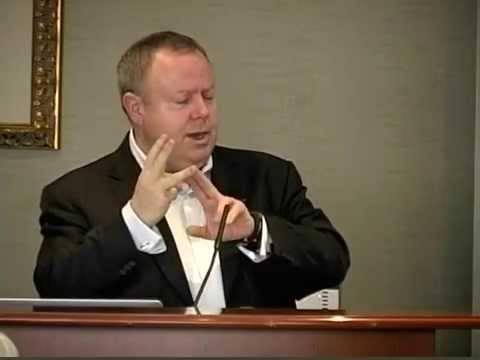
Added:so welcome back um and this is our final session of the conference for the center for peace and conflict research for 2024 and so this is our session in which Professor Alison mullock is going to deliver a keynote asking still a case for political prescription power sharing and the future of inclusive conflict management management so Allison is a professor of political science at Brandon University Canada she's co-editor-in-chief of nationalism and ethnic politics her research considers the interplay between adoptability functionality and adapt ability in the life cycle of power sharing peace agreements she's the author of over a dozen articles and five books the latest of which explores power sharing in the global South a HIIT orto neglected area of study with profound policy implications she's also the principal investigator in three ongoing projects examining citizens inclusion in power sharing agreements pow sharing in Refugee governance and power sharing in Lebanon Iraq and Syria so this afternoon um she's going to deliver her keynote speech to us so I'll hand over to Allison great thank you thanks everyone and I've opted to go sort of old school and for forgo uh slides as well so so do bear with me I'd like to start by thanking Don and Molina and everyone involved in organizing this conference and there's been some really excellent presentations over the last two days I feel like I've learned a lot and I'll be heading home um with lots of notes and ideas so thank you for inviting me so when Da first extended the invitation to join you here and shared with me the theme of research at work I saw it as an opportunity to reflect on my growing discomfort as a scholar of pow sharing with the state of pow sharing in the world today and so we don't have to look far to see that power sharing is in trouble uh as we heard on the last panel um about Northern Ireland um you know the the assembly is now back up and running after after some 720 days of absence but it's off to a bit of a rocky start and we're not yet sure um what they will be able to get done with the time they have in this Mandate of course it's not just Northern Ireland Lebanon has been without a president since October 2022 and without a council of ministers uh for even longer this has had devastating consequences for Citizens the country faces a set of intersecting political economic and human Arian crisis so an unprecedented Financial collapse characterized by hyperinflation currency devaluation gas and electricity shortages food insecurity and the doubling of multi-dimensional poverty in a three-year period and of course it is now facing a war on its Southern flank with Israel and I could identify similar patterns of crisis in any number of cases we could look to Bosnia and herzo North Macedonia new calonia Burundi Iraq um Belgium went some 650 days with trying to form a government after its 2018 elections so Powers sharing governments it would seem just don't work but there's more it's also a very difficult system to reform citizens took to the streets in the hundreds of thousands in Lebanon and Iraq in 2019 to demand political reforms and the end of sectarian government it hasn't happened the European Court of human rights has issued multiple rulings on the discriminatory features of the Bosnian Constitution namely its three-person presidency and its Upper House nothing has been done indeed John Nagel has coined the term zombie Powers sharing to capture this very State of Affairs as he puts it quote rather than transformation and change consociations tend to develop aifi properties rendering them resistant to practically any reform um so many sharing systems now appear stuck with institutions that have long outlived their usefulness so despite these twin problems of function and reform or luck thereof power sharing continues to be a leading prescriptive device for divided places and especially so at War's end International mediators and advisers as well as some domestic constitutional designers continue to prioritize pow sharing Solutions it has been on the table as an abstract or aspiration ational concept for Syria since 2012 it has been a central Dimension to any reunification to the for Cyprus for decades in both cases agreement remains elusive so we can identify problems uh across what Jo Maceno and I have called the pow sharing life cycle right there are problems at the level of adoption as in Syria at the level of function as in Lebanon and at the level of Reform uh as in Bosnia and even in plac where change does eventually come it is often after much protracted negotiation and often only partially implemented as we know from Northern Ireland so the puzzle before us today is given these problems why does power sharing continue to be seen as a form of political prescription and should it so is power sharing worth saving so for the past six months or so I've been interviewing International mediators and advisers about these very questions and in fact across the sort of four different categories that Katherine mentioned in her talk uh yesterday so this is part of a collaborative project funded by the Swiss Network for international studies and headed up by the organization Swiss peace and it brings together Scholars from Canada uh from Switzerland uh Lebanon and Iraq together and so the project focuses on the relationship between adoptability and durability of power sharing agreement specifically in Lebanon Iraq and Syria and in the latter case about why power sharing has been on on the table but been unable to uh get any agreement so why it remains unadoptable and so our data collection is ongoing we've just started around of focus group discussions to gauge Civil Society perceptions on pow sharing durability so my remarks are necessarily uh preliminary um and but I thought I would share with you some of our early insights from the interviews all told we did about 50 or 60 with those involved in either the adoption or function of powers sharing at both a domestic and international level I'll focus in particular on the role of internation International mediators and advisers uh in part because those are the ones that I along with sa and Kyle from the project talked to uh so we canvased uh those uh in particular for Syria and Iraq but also other conflict sites around the world um in part to get a sense of whether the patterns we were seeing uh in Syria and Iraq were also found elsewhere and in part because International mediators rarely stick to one conflict site right there's quite a bit of of travel there as well so our interviews focused on a set of thematic clusters how power sharing is put on the agenda and by whom Dynamics at the table the role of external actors including Regional players any lesson learning across cases and the connection between pow sharing and durable Peace So with my time today and keeping in mind the theme of research at work I'll divide sort of my talk into sort of two broad sections first sharing some of those insights from those interviews about uh power sharing as a prescriptive device uh and then turning to sort of a few sort of more T much more tentative and reflexive comments on the role of powers sharing researchers in navigating the gap between the Theory's commitment to inclusion and social justice with its real world practice which increasingly delivers anything but okay first let me then start by positioning the claim that power sharing is and remains a form of political prescription today so power sharing has its origins in empirical Theory specifically Aaron larts work on consociational Democracy um and liart was puzzled by uh evidence of democratic stability across a set of Western European states that seemed to go against existing typologies of political systems so countries like the Netherlands and Belgium Switzerland and Austria fit neither the anglo-american nor the Continental European types identified by Gabriel alond So Li part's insights were Toof full he argued Not only was Democratic stability attainable amid conditions of plurality and division but that democracy did not have to follow traditional majoritarian government versus OPP opposition adversarial model right a more consensual system could be found right what he called consociationalism and so I've been using the term Powers sharing deliberately as a kind of umbrella concept for a variety of different institutional configurations that support inclusive governance in divided settings but to be sure consociationalism is that leading form of power sharing um even though it too can be designed in Myriad different ways um broadly we can classify though into those that predetermine which groups will share power uh and in What proportion called corporate consociation and those that uh allow the level of representation for groups on the basis of election results what is called liberal consociation there is a wide diverse and often divided literature that I don't have enough time to delve into suffice it to say that it deals primarily with the question of how to live together after conflict right and it's a first order question to which we come back time and time again so scholarship in this area is broadly driven by the desire to find solutions to complex pressing real world problems and um I think I I just want to highlight sort of an an example of uh scholarship in this area which is an article by John M and Brendan o um called Iraq's constitution of uh 2005 liberal consociation as political prescription and indeed my my talk is sort of inspired by that claim about political prescription so that piece lays out the benefits of liberal consociation and makes an explicitly prescriptive case for it and I think this is the kind of research that effectively integrates empirical and normative analysis and in this case they positioning the institutional rules of Iraq's Constitution admittedly negotiated on an expirated timeline with quite a bit of American pressure but not only as promising for Iraq but also as a potential model for other divided places as well indeed they explicitly frame their analysis of the constitution in terms of what prescriptive lessons it offers to other places so they argue quote progress in Iraq will require the maintenance and extension of the principles of liberal consociation already present in Iraq and that this is likely to be as true for places such as Sri Lanka Sudan and Cyprus as it is for Iraq so while there is no consensus in the literature as to which institutions are best so don spoke of them the the sort of the Silver Bullet we that still uh eludes us but there is a shared sense that institutional choices offer solutions to important societal problems and that we have a political obligation as Scholars to consider the political implications of our research and it's not a coincidence that the field has a not insignificant number of so-called academic practitioners right those who keep a foot in both worlds and McGary and O amongst them so in addition to academic scholarship there's also increasingly practitioners support for Powers sharing as political prescription and I think this is happening across a variety of mediation spaces but I'll just focus a little bit on the UN to make the point point so according to the UN manual for mediators quote of critical importance is finding a model for power sharing that fits the unique characteristics of the situation the manual uh positions learning across cases as important and that it sees the role of the mediation support unit as helping to sort of draw those uh analogies or comparisons across cases so in their support for the UN mission in Iraq uh the mediation support unit would drop analytical advisory papers on Powers sharing drawing lessons and good practices from Northern Ireland Bosnia Cyprus and so on and even the UN guidance on gender and inclusive mediation strategies notes that powers sharing agreements can again quote provide multiple opportunities and entry points for inclusivity particularly of women in political life and it's worth pointing out that power sharing is the only governance Arrangements uh considered in the and guidance on gender inclusive mediation strategies suggesting a perception that power sharing is a kind of go-to or template response for governance arrangements and finally the premier mediation organization at the UN the standby mediation team um has had since its in Inception a poers sharing expert or adviser on on its roster again the only governance arrangement to have a dedicated line uh so other positions uh include uh process design gender and inclusion though admittedly not in the first year of operation that that came later uh security sector reform ter territory U natural resources and so on it's only been over the last few years this has widened to be power sharing and constitutions and it's only this year uh with the appointment of Christine Bell to to the role that it's been shifted to constitutional issues so we're starting to see a bit of a widening there and I'll come back to why I think that might be so the academic literature has subscripted Dimension intern reflected in mediation documents and institutions it's not a coincidence that power sharing became that kind of go-to response at a specific historical moment at which there was um some measure of political will around three core Conflict Management values democratization minority rights and negotiated ends to conflict so despite the emphasis on prescription the p with which power sharing agreements have been adopted has slowed considerably over the last 10 to 15 years Donald Horowitz once argued that uh Power sharing arrangements are as rare as the Arctic rows and while that might be overstating the case there are reasons to suspect that the Heyday of power sharing might be behind us so again those first two decades after the end of the Cold War launched a so-called new wave of postconflict power sharing arguably starting in Lebanon in 1989 through Bosnia Northern Ireland Burundi Macedonia Iraq we might also add South Africa Kenya and Zimbabwe to this list as well as a number of other places but this now feels like a product of a different foreign policy era or geopolitical moment few fully consociational or even partly uh consociational cases have come into being being in the intervening period And I want to sort of zero in again drawing from from our project uh on Syria Iraq and Lebanon to say a little bit about the Syrian case here as an illustration of what this increasing sort of adoption problem that we're seeing so I won't go into all of the particulars of the conflict but it has been deadly and protracted with more than 300 300,000 civilian casualties um at Le you know 7 million refugees and there's 7 million displaced within the country um since the conflict started in 2011 it has been sectarianization lied with a vast array of actors involved in fighting on the battlefield and in negotiating at the peace table though still unresolved with Bashar Al Assad still in power and Powers sharing looking further away than at any other point in the conflict Powers sharing nonetheless serves as a possible remedy or cognitive template since the outset of Peace mediation efforts by the UN Irene constantini and Ruth Santini call us a Powers sharing oriented mediation so you start with the idea that that's where you're going to end up and you keep trying over and over and I was actually struck by Jennifer's talk yesterday and she I think used the term stuck in a paradigm that they know doesn't fit but for which they have no way out that also applies here right and so I think there are four insights from the case which I think speak to wider Trends first is that negotiation is a multi-level game second that party positions on pow sharing are connected to a security territory calculus um that the term Powers sharing is wrapped up in ideas of constructive ambiguity so it becomes a deliberately fuzzy concept uh and I think the other thing we're starting to see is a kind of inclusion fatigue and I'll say a little bit more um about each of these so there have been four un special envoys for Syria kofan lar rimi stafon deasura and G Peterson whose combined work can be uh encapsulated in the so-called Geneva process um and we can see through the documents that have come out of this again that power sharing oriented mediation approach a non Sixpoint plan uh called for an inclusive syan Le process as part of political transition the Geneva communic um again also called for the establishment of a transitional governing body um that uh would exercise full executive powers and include members of the government and opposition and other groups formed on the basis of mutual consent we also see it in um security C Council resolution 2254 which was intended as a road map to a political transition for Syria I should note that power sharing has served as a logic informing approach rather than a specific set of Institutions indeed no institutional Provisions have been agreed or even substantially proposed um and as one adviser told us the term Powers sharing itself um became sort of a diplomatic term that came into the Geneva Geneva communic and uh resolution 2254 because quote it was impossible to write either Assad must go or Assad must stay under certain conditions so power sharing became a kind of camouflage to avoid that discussion beforehand and then it was left to discussions which then themselves never really developed uh to tackle it so as the quote suggests one of the reasons why Powers sharing presented as attractive early on at least to Internationals was that it could be that kind of constructive ambiguity that might induce parties to the table but while the UN was trying to coax the two sides towards power sharing neither was inclined to support it for the regime Assad has had little incentive to negotiate terms of power sharing certainly so since the Obama Administration stated une equival in 2013 that he had lost legitimacy and must go and especially so after Russian intervention in 2015 that tipped the balance of power in support of the regime even without that kind of international intervention um as Robert for former US ambassador to Syria notes any genuine power sharing would have been completely aneema to Assad and the leaders of the security apparatus so the slogan of uh the regime supporters Assad or Reb burn the country captures that complete unwillingness to share power the opposition meanwhile was also ill inclined towards power sharing certainly so in the early days when the battlefield calculus favored them uh and the prospect of Assad's removal from Power appeared Within Reach so as one actor involved in the process told me um you know the opposition the very beginning was like we don't negotiate during a revolution we're not in a peace process we're in a revolution right but by the time it got to the point of becoming a peace process they had lost any kind of Leverage towards um that approach so the problem wasn't just the regime or the opposition the inability ility to reach power sharing settlement at Geneva was further Complicated by the use of different conflict mediation frames most notably uh connected to the rise of the Russian L aana process in 2015 with support from turkey and Iran while deura who was the special Envoy at the time described the two processes as complimentary and mutually supportive they ultimately had contrasting objectives so whereas Geneva could be broadly understood as following that sort of liberal peacemaking approach right and negotiated settlement power sharing economic reforms estana embodied a kind of authoritarian Conflict Management prioritizing the reestablishment of political order through methods of State coercion right what Casi and Santini call an illiberal peace momentum and I'll note here as an aside that aana also um seemingly dropped any pretext towards women's involvement in the process as though suddenly the resolution 1320 and the WPS agenda wasn't a thing while there have been valid concerns about the way in which women were brought into the Geneva process it's not even part of the discussion uh at estana so it's a reminder that what different International actors want out of the conflict matter almost as much as what the local actors want and indeed as one adviser told us you know the special Envoy wasn't just mediating between the delegation and the government uh the delegation of the government and of the opposition position he's also mediating between Washington and Moscow between Teran and Istanbul so there's lots of different levels happening so again it's a reminder that uh negotiations are a multi-level game and that any kind of pow sharing adoptability is characterized by at least four meaningful interactions between different sets of domestic actors with one another right so the local parties have to agree to share power between different sets of international actors who are supporting the various sides so the different sort of external patrons also have to support Powers sharing there needs to be agreement between those um domestic actors and their external Patron so there's another set of negotiations that's happening and then if and when an agreement is struck between those domestic actors and their own local constituencies right they eventually have to sell the deal to their followers as well so as my colleague s k notes this moves us well beyond putnam's two-level game right and makes uh the move towards uh Power sharing adoption especially onerous this also aligns with work uh By Carolyn Hartzel uh and I'll put in a plug for her contribution in the just released book pow sharing in the global South um for which I I was one of the editors um along with sa and Kyle and Eduardo Abul ta both team members on the on this project um but uh haro's argument is that there are now factors operating at the level of the International System that appear to be contributing to a trend away from power sharing adoption um namely the reemergence of the major power rivalry between the US and Russia um but also fluctuating um funding for peacemaking and peacekeeping in the wake of ongoing global economic crisis and a growing disenchantment on the part of the International Community with the results of some negotiated peace agreements right so there's all of this stuff happening at the international level that Wards against the adoption of powers sharing one of the other uh challenges of course is that power sharing is often simply a rhetorical device right with some intentional conceptual fuzziness around it used to paper over irreconcilable positions between conflict actors at the table and here it's often used as a deliberate stalling tactic towards agreement so you talk about power sharing you don't actually share power that can also mean that actors miss their moment to get to a deal because of that security Terr calculus right as was the case with the Syrian opposition so hindsight may you know be be useful and all that but what it meant was they missed that critical opportunity to set some of the terms of um the negotiations and so the other point I think that that started to come through in the interviews um and here I'm still working through some of this and I'll say it wasn't everyone who pointed in this direction um but I it did come up a few times and so I'm trying to work through it so maybe we can talk a little bit about this and I think we've seen a few hints at the at it in the uh presentations um uh over the last two days um which is a bit of a crack in the commitment to inclusive Conflict Management um and and that we're seeing a kind of inclusion fatigue I think is is how I'm thinking of it um and so as one um adviser noted to us quote well I think the agenda for the last 15 to 20 years has been more inclusion more participation I'm just thinking that maybe we need to make thinner agreements between fewer people um and others often spoke about the problem of inclusion as a buzzword without much substance to it in practice and so we can take that in sort of widen it back out again so pow sharing again became that go-to response to Conflict at a specific geopolitical moment right at the end of the Cold War American leadership which purported to support a specific set of liberal values right democratization minority rights and negotiated settlements but again that moment is behind us the gains of the third wave of democratization are being ruled back so according to the varieties of democracy the VM data set quote the liberal level of liberal democracy enjoyed by the average global citizen in 2021 is down to a level last seen in 1989 so in other words they note the last 10 years have set the world back to the final year of the cold war in terms of democratic development but minority rights are also under attack not just in divided places but all over right for women for members of the LG uh btq plus Community especially on trans rights uh immigrants migrants right that idea of minority rights is um under a lot of pressure and rather than compromise in the negoti negotiation of comprehensive peace settlements we are seeing a shift towards prioritizing military Victory on the battlefield and enemy defeat right so partly this is about the changing nature of conflict um so you know we're not talking about a power sharing agreement between Ukraine um and Russia um there are no serious calls for Israelis and Palestinians to share power or to be treated with a parity of esteem right we're no longer seeing these kinds of proposals so while many of our participants spoke spoke about the migration of the idea of power sharing and learning across cases we're seeing a reorientation away from it not just from pow sharing but possibly also from inclusion as a conflict management principle and incidentally I think we are seeing a similar kind of fatigue around the WPS or women peace and security agenda as well so not only did it take until the appointment of the Third special special Envoy to Syria to recall that women have a stake in the negotiations too um but again resolution 1325 and the WPS agenda have been largely absent from discussions around other leading conflicts at the moment unless it's to emphasize women as victims so this geopolitical moment Wards against not just power sharing um or inclusion but also against negotiation as the way by which we solve our Collective problems so let's recap where we've been power sharing has academic and practitioner support as a form of political prescription despite this support the pace of power sharing adoption has stalled and we're seeing some early warning signs that we're encountering a kind of inclusion fatigue or shift away from negotiated settlements so there are multiple pressures being put on Powers sharing as political prescription so what's a Powers sharing scholar to do so first is perhaps a little less huous in our recommend that our recommendations will turn out the way we think they will um second I think what's important is a recommitment to inclusion and making the case for it right in our scholarship in practitioner spaces in Civil Society in public forums in in the classroom right and we need to make the case for inclusion not as an instrumental value but as a normative one so part of the problems so and here again some of the the literature on um women in in peace processes is again right that well there they're more sustainable processes if women are included okay but then you're putting the success of that process which is already likely to fail on you're putting that failure on women and so it's not just that women make better peace if that's the claim we want to make it's that they they as members of the society there's a need to be there so there's a normative cas we need to make and not simply an instrumental one about what the outcome will be right so ultimately negotiated end ends to war or negotiated settlements are social contracts and if you're involved in the social contract you need to be involved in that process full stop um the other thing I think though what we need is serious contemplation about how it is that we speak about these issues and the language we use to do so so if we are committed to solving pressing real world problems like the power sharing adoption problem then we need a Common Language with which to do so so I am neither a linguistic nor a postmodernist um but I'm going to raise the issue of linguistic complexity and then maybe we can move into a discussion um around it because I think it's one of the things that I keep coming back to um which I think requires a little bit um further reflection um and I'll say so not just for these interviews but in other project as well when I ask people about Powers sharing the question comes back to me which is well what is pow sharing anyway so it's I think a question that we sort of probably actually need to think a little bit more about so language of course is situated in power and the consequences of translation uh and finding common language are not neutral and I think there are three issues here that we need to consider the first is translation of key Concepts into local languages the second is um the translation of academic language into policy practitioner languages and how key terms are understood by actors around the table so as I noted at the outset I'm drawing some early insights from an international collaboration again with researchers from Lebanon Iraq Switzerland and Canada uh and it involves both academics and practitioners so our working languages um for the project are are English and Arabic and one of the first issues we countered was the fact that when you translate power sharing into Arabic it kind of it comes back as the separation of powers and not as the sharing of powers right and so even just thinking about how it is that we tend to assume that what are you know what for particularly for you know English speaking Scholars that our understanding of the term is how it's understood in other places so there's more work that needs to be done about how it is that we communicate uh Concepts across language so for the project one of our first steps was to determine um the Arabic terms most commonly used in debates and discussions um within the countries um by looking at sort of the broadest range of of local actors um by you know examining local newspapers um news reports interviews social media uh and the local academic language as well and here I think it's incumbent upon those of us who are uh English speakers to be more sensitive to local terminology and not to assume Direct translation right our Concepts may not have a universal connotation we also started to recognize early on that power sharing is understood in the academic literature wasn't necessarily the same thing in mediation spaces so as one adviser told us the core of power sharing is understood by political scientists to refer to federations consociations and Coalition governments is not what's taken up in negotiations where power sharing typically means the sharing of power at the executive level level um others pointed to the problem of power inow sharing again this something that's come up in other interviews as well um the one suggestion that came up several time was to shift away from Power sharing towards responsibility sharing um so as one person told us there's too much focus on power because of power sharing and everyone at the negotiation table wants power but not a lot of people want responsibilities someone else said again we shouldn't when we talk about Powers we need to replace power with responsibility or quote when we say Assad is in power it should be Assad is in office and to change the discourse around power to one of the duty of a public office holder rather than someone who has the power to do things so there's some some and again some consideration of of how the different terms are used so one of the things we started to do um was to ask everyone we interviewed how they were understanding the word Powers sharing um and how it was being taken up in their specific context and again worth noting that the answer frequently came back was I was going to ask you what that meant um and then finally again I think you know there there's a real benefit to constructive ambiguity in negotiations um right where you're you're adopting deliberately vague language to mean different things to different people um so again you rock at the question of Assad's fate in order to get folks to the negotiating table and so on but the problem of of ambiguity that it's not always constructive right there are times where it can erode trust or make for confusion when shared meetings are absent um and as one um advisor to um someone who was working with the Syrian opposition said I noticed that people be were ashamed and wouldn't necessarily tell you when they didn't know what a concept was so everyone's at the table using these terms as though everyone at the table should already know what they are but for many people they weren't political scientists before they ended up at the peace table they were engineers or whatever else and so there's then a reluctance to sort of engage in sort of um dialogue when you don't know um what those terms are right so as as the adviser noted to us um so why would they know this language they never engaged in it never lived in and it didn't necessarily uh grasp their way of life or traditions and so again thinking about how different terms are used uh is important so power sharing it turns out is not one thing but many and we still don't have a shared meaning for it so again I think sort of those three things together um I think maybe we could sort of move into some sort of conversation around how do we begin to find that sort of shared meaning and I think that's an important place to go if we're if we're going to continue to see um Power sharing as political prescription so I've primarily focused my remarks on the adoption challenge to power sharing um but I would be remiss in not coming back just briefly to the problems of function and reform that I opened with because these are not unconnected to the adoption problem so that life cycle approach to power sharing um asks us to see the sharing of power as an ongoing process and not a singular event right so what happens that when you reach the settlement that's just the first part of the story so all of that hard work to get to the agreement then um requires sustaining over time so Siobhan burn has made the case that you know pow sharing is an active verb it's not power shared it's power sharing right this is an ongoing project so it requires sustained commitment and recommitment to ensuring its implementation and to some degree of functionality it also the life cycle also asks us to see the conditions under which an agre greement um comes into being as intimately connected to how it operates over time as well as where it might lead in the future so without wanting to be overly deterministic the process by which a poers sharing agreement comes into being um will have a direct bearing on its operational performance so how much of it was shared meaning at the table and then you find out in the implementation period that you have very different understandings of what you were agreeing to and so there remains a a a connection to be explored between the um you know the the conditions of adoption function um and ability to reform power sharing over time and so while the prospects of power sharing as political prescription might feel a little Grim both because of the performance of some of these systems but also because of international trends that are moving us away from the idea of sharing power it's still the case that in inclusive political institutions are important for facilitating peace um and democracy in divided settings so I think it's still maybe a little premature to suggest the end or death of power sharing its political prescription but this is a critical juncture um and ultimately the stakes are quite high and so I think as as those of us who identify as pow sharing Scholars need to recognize and sort of face headon the real problems of adoption function and reform um so whether it's to prolong protracted Conflict by not being able to reach an agreement or leaving citizens stuck with agreements they cannot change um we need to again seek to tackle these issues headon in a spirit of collaboration in a spirit of sharing uh across academic and policy worlds so thank you very [Applause] much
Up Next

SACP vs ANC: GNU Tensions Explained by Prof. Bheki Mngomezulu
@sabcdigitalnews
24K views•2024-10-15

BRICS Pay and de-dollarization: A New Financial Order Emerges? | 55 chars
@DannyHaiphongYT
164.6K views•2024-10-22

Government Surveillance Methods: 10 Ways You May Be Watched
@BeAmazed
1.6M views•2017-04-09
Explaining the Saudi-Iranian Proxy Conflict in the Middle East
@Vox
18.2M views•2017-07-17
Related Study Plans & Knowledge Roadmaps
Structured learning paths in Political Science