





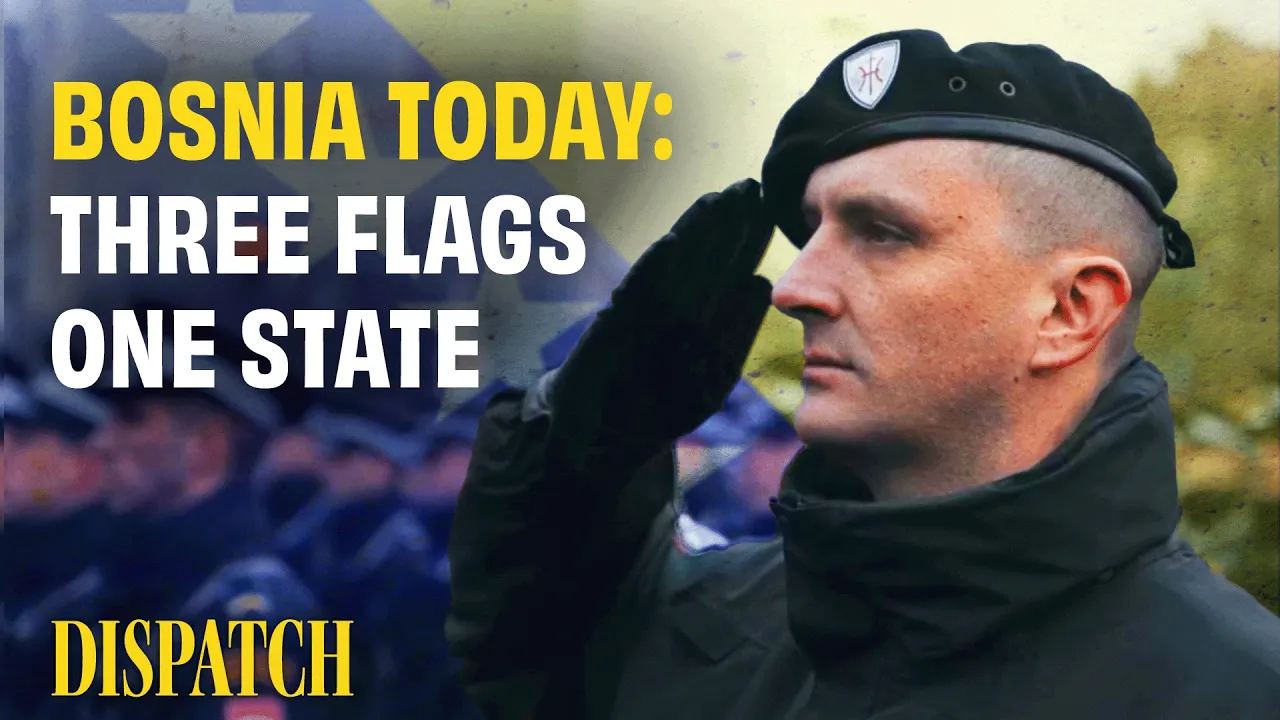

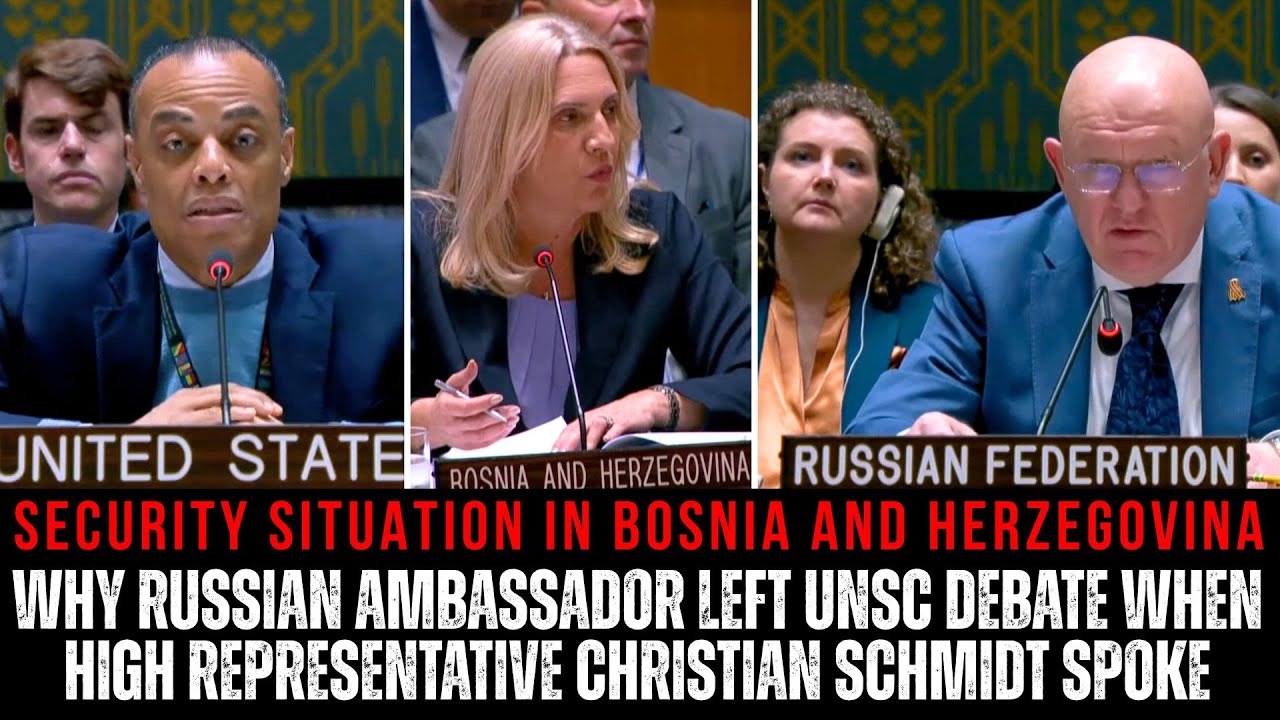
![30 years after the war. Bosnia and Herzegovina today [DOCUMENTARY]](https://i.ytimg.com/vi/JvAuSrO8Yvs/maxresdefault.jpg)











The Dayton Peace Accords, which ended the Bosnian War in 1995, created a highly decentralized state structure that preserved ethnic divisions rather than resolving them, leading to ongoing political crises and separatist tensions that continue to threaten Bosnia's stability decades later.
Bosnia-Breaking Point: Dayton's Crisis and Secession Risks
Added:The history and causes of the Bosnian War (1992–1995) and the broader disintegration of Yugoslavia.
The structure and core terms of the 1995 Dayton Peace Agreement, which ended the Bosnian War but created a highly decentralized state.
The unique administrative division of Bosnia and Herzegovina into two main entities: the Federation of Bosnia and Herzegovina and Republika Srpska.
The role and authority of the Office of the High Representative (OHR) in overseeing the civilian implementation of the peace agreement.
The geopolitical influence of external actors, particularly Russia's support for Serbian separatism and the European Union's integration efforts in the Western Balkans.
Constitutional reform dilemmas in Bosnia, including efforts to address institutionalized ethnic discrimination as highlighted by the Sejdić-Finci ruling.
Theoretical frameworks of secession, state sovereignty, and the conditions under which ethnic federalism prevents or promotes state collapse.
The role of international peacekeeping missions, such as EUFOR's Operation Althea, in deterring conflict escalation in volatile regions.
179K views5Klikes13:53Original Release: 2025-03-11
Is Bosnia finally on the brink of collapse?
For the past decade, fears have been growing that the country's Bosnian Serb entity may try to break away.
However, despite dire predictions, the country has held together.
But now, things seem to be at breaking point.
Amidst what many see as Bosnia’s most serious political crisis since the end of the war 30 years ago, international peacekeeping forces in the country have just been increased.
So, what exactly lies behind the current situation?
And could this really be the moment that the Bosnian Serb entity finally makes its bid to break away?
Hello and welcome. If you're new to the channel, my name is James Ker-Lindsay, and here I take an informed look at international relations, conflict, security, and statehood.
In international relations, it's widely accepted that peace agreements can vary in their effectiveness.
In some cases, they can lay the groundwork for a long-term and sustainable arrangement.
They address the root causes of the conflict, establish inclusive and durable political institutions, and ensure mechanisms for justice and power-sharing.
However, others are less successful.
While they may stop the immediate bloodshed, they fail to resolve the deeper divisions and entrench differences, often setting the stage for renewed instability.
An often-cited example of the latter is the Dayton Agreement, which ended the Bosnian War in the 1990s.
While it halted the country's bitter and brutal conflict, it’s ultimately laid the foundations for political paralysis and ongoing tensions.
In turn, this has fed a steadily growing sense that the country may be at risk of a return to conflict.
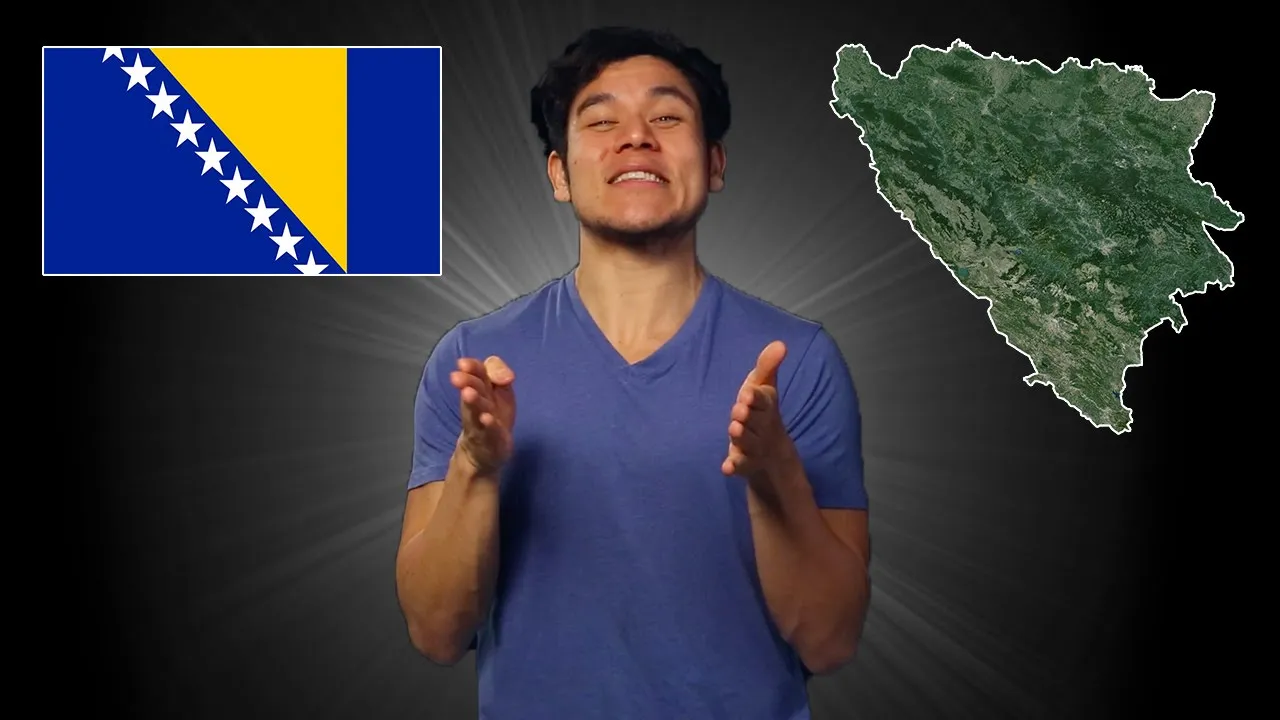
Bosnia and Herzegovina lies in Southeast Europe.
At 51,000 square km, or 20,000 square miles, it shares a border with Croatia to its north and west, Montenegro to its south, and Serbia to its east.
It also has a tiny stretch of coastline.
Its population is believed to be around 3.2 million, divided into three main groups.
According to the last census carried out in 2013, the largest group are the Bosniaks, once known as Bosnian Muslims.
They represent around 50% of the population.
Next are the Bosnian Serbs at 31%.
The third are the Bosnian Croats at 15%.
The remaining 4% is made up of other groups, including Albanians, Roma, and the Jewish community.
Bosnia has a long history.
Having been part of the Ottoman and Habsburg Empires, following the First World War, it became part of the new Kingdom of Yugoslavia.
This lasted until the end of the Second World War when it became one of the six constituent republics of what would eventually become the Socialist Federal Republic of Yugoslavia.
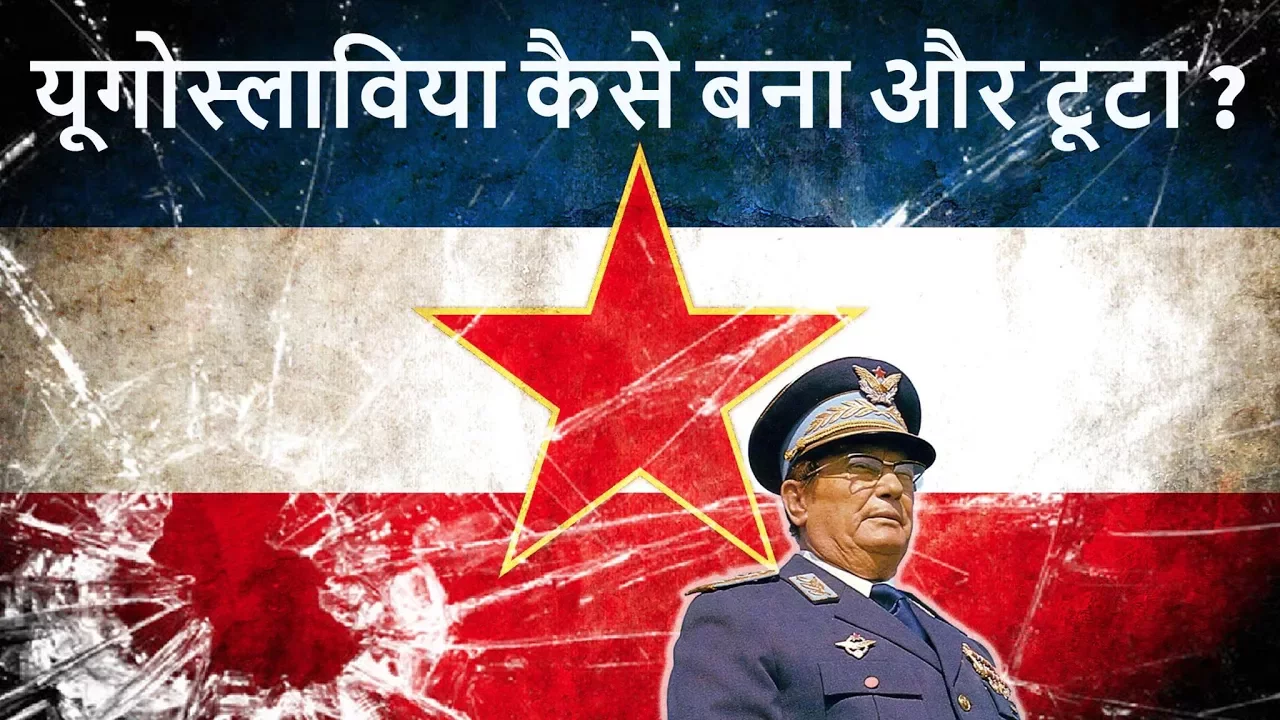
For the next 35 years, Yugoslavia was ruled by its long-term strongman, Josip Broz Tito.
However, in 1980, Tito died, and Yugoslavia began to disintegrate.
In 1991, Slovenia, Croatia, and Macedonia broke away from the federation.
Following their lead, Bosnia and Herzegovina declared its independence in March 1992 and was admitted to the United Nations shortly afterward.
However, Bosnia’s Serbian population rejected this.
Arguing that the Yugoslav constitution granted them the right to determine their own future, with the support of neighboring Serbia, they unilaterally established a separate state, Republika Srpska—often known by its initials, RS.
Meanwhile, as the Bosnian Croats also moved to create their own separate state, the country quickly descended into war.
After several years of bitter fighting, the first steps towards peace came in early 1994, when the Bosnian Croats and the Bosnian Muslims agreed to form a joint entity—the Federation of Bosnia and Herzegovina—which was composed of ten self-governing cantons.
But while the fighting continued with the Bosnian Serbs, things changed in the summer of 1995.
Following a massacre of 8,000 men and boys in Srebrenica in eastern Bosnia by Bosnian Serb forces, the United States and European Union forced the sides to the negotiating table.
On the 14th of December 1995, the presidents of Serbia, Croatia, and Bosnia signed the General Framework Agreement for Peace in Bosnia and Herzegovina—better known as the Dayton Accords.
Under the deal, Republika Srpska, which held 49% of the country's territory, agreed to give up its claim to independence.
Instead, it would be reintegrated into Bosnia as a separate entity alongside the Croat-Muslim Federation.
At the same time, Bosnia was restructured as a highly decentralized state.
While a joint national government existed under a three-way presidency, it dealt with relatively few areas, such as immigration, customs, and foreign policy.
Instead, most issues now came under the two entities.
Meanwhile, the constitution also cemented the strict separation between the Bosniaks, Croats, and Serbs, imposing rules on who could hold what positions.
To make all this work, the agreement also created the post of High Representative.
This granted the appointed international official sweeping powers, including the right to sack Bosnian officials contravening the agreement and ban them from holding political positions.
At first, Bosnia appeared to be recovering well.
As reconciliation efforts took off, welcome signs of reintegration emerged.
These included the creation of a joint army and various steps to centralize justice and law enforcement.
But despite this, by the middle of the 2000s, tensions were reemerging.
A landmark ruling of the European Court of Human Rights declared that the country's ethnically based constitutional system was discriminatory and needed to be changed.
Meanwhile, as further reform efforts began to fail and the country's central government became increasingly dysfunctional, ethnic divisions steadily hardened.
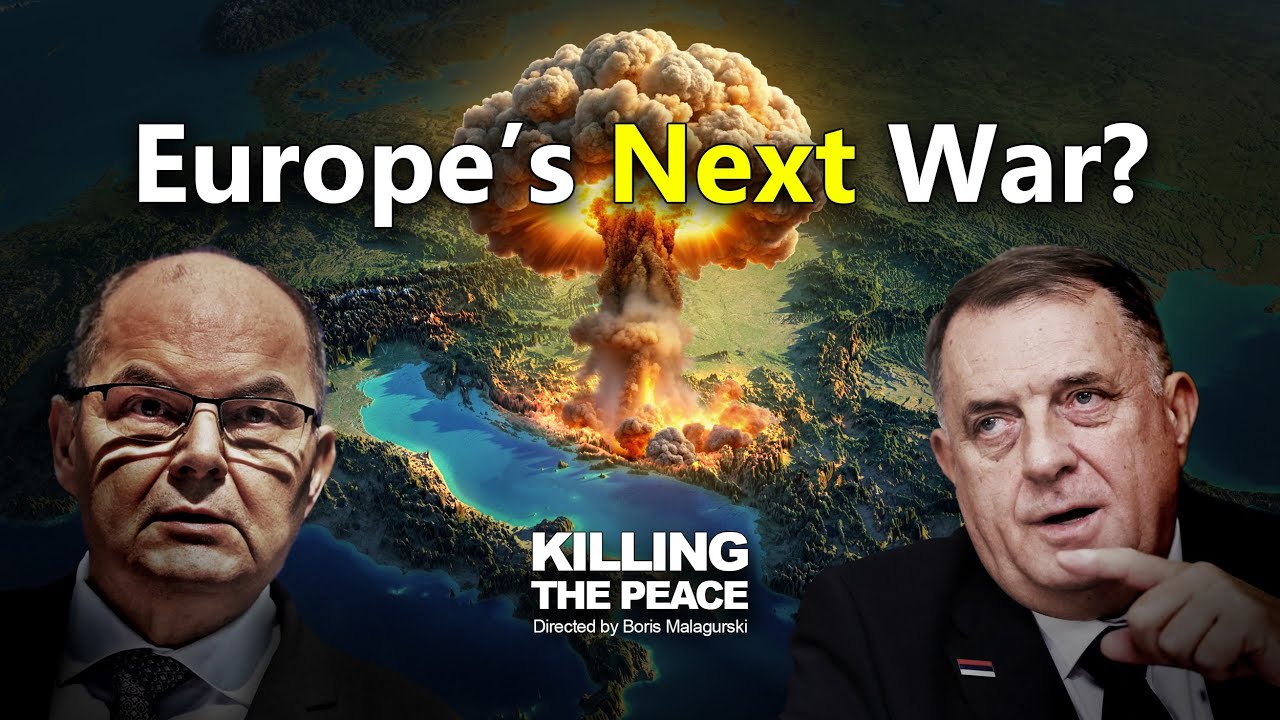
It was against this backdrop that in 2010, the Bosnian Serbs elected Milorad Dodik as the new president of Republika Srpska.
Having already raised the issue of an independence referendum before assuming office, his separatist talk became increasingly strident once he got into power.
Pushing back against what he saw as unacceptable efforts by the Bosniaks to challenge Republika Srpska's autonomy, he began to speak more openly about breaking away.
This in turn led to a succession of political crises.
For example, having openly questioned Bosnia's viability as a state, and suggesting that RS had the right to secede, in 2011, he organized a referendum on whether Republika Srpska should reject the authority of the Bosnian state judiciary.
Although he eventually backed down following international pressure, in 2015, he then called for another vote, this time on outright independence.
But while this never happened, another crisis emerged the following year when the Bosnian Constitutional Court outlawed the annual 9th of January "Statehood Day" marking Republika Srpska’s declaration of independence.
This time, a referendum went ahead, showing that 99.8% of Bosnian Serbs supported keeping the holiday.
I hope you’re finding this useful!
If so, please do consider giving it a like and perhaps subscribing to the channel if you haven’t already.
Thanks so much, and now, back to the video.
Following on from all of this, over the past decade, tensions have steadily continued to rise.
In addition to frequently raising the possibility of breaking away, relations between RS and the central government have gone from bad to worse.
At the same time, relations have also broken down between the Bosnian Serbs and the High Representative.
For example, in response to increasing Bosnian Serb efforts to downplay the events in Srebrenica, the High Representative made genocide denial a crime punishable by up to five years in jail.
Incensed by the move, Dodik accused the High Representative of overstepping his powers.
In addition, he retaliated by announcing that not only would Bosnian Serbs in future boycott joint state institutions, but that over 130 laws imposed by the High Representative would be annulled.
On top of this, Republika Srpska would plan to withdraw from central state institutions, including the army, judiciary, and tax authority.
But while this plunged Bosnia into yet another crisis, efforts to put all this into action soon stalled.
Aside from facing intense international pressure—including EU and US-imposed sanctions and travel restrictions on key Bosnian Serb officials, including Milorad Dodik—the Bosnian state courts and the High Representative blocked many of the measures.
In retaliation, the Bosnian Serb leader now approved legislation that rejected their decisions.
And it’s this that lies at the heart of the latest crisis.
In 2023, Bosnian prosecutors indicted Dodik for undermining the constitutional order, challenging the powers of the High Representative, and promoting separatism.
All this would come to a head in February 2025.
Following a high-profile court case, a Bosnian state court found Dodik guilty and sentenced him to a year in prison.
At the same time, he was banned from holding any political office for a term of six years.
Unsurprisingly, Dodik rejected the verdict.
Calling the decision illegitimate and politically motivated, he refused to accept the court’s authority.
At the same time, the RS National Assembly retaliated by passing legislation barring state-level judiciary and law enforcement agencies from operating within RS and declaring that any Serb who continued to work for them would face criminal charges.
But while the Bosnian Constitutional Court has suspended the laws, Bosnian Serb authorities have ordered the national police to leave their offices in Banja Luka, the capital of Republika Srpska.
Meanwhile, all this has led to considerable international concern.
In addition to strong criticism from the European Union, which has called the latest developments a challenge to Bosnia’s legal order and has bolstered its peacekeeping mission in the country, the United States has also weighed in.
In a sign of foreign policy agreement between the US and the European Union, US Secretary of State Marco Rubio has criticized Dodik for his “dangerous behavior.” Meanwhile, on top of this, the new NATO Secretary-General Mark Rutte has also visited Bosnia to assess the situation.
But while Dodik is certainly facing considerable Western pressure, he’s far from isolated.
Aside from neighboring Serbia, which has also criticized the court ruling, Russia has weighed in.
Indeed, having worked to build up close relations with Moscow over recent years, Dodik has even received direct support from Russian President Vladimir Putin.
Meanwhile, EU solidarity on the issue has been undermined by Hungary.
As well as voicing his support for the Bosnian Serb leader, Hungarian Prime Minister Viktor Orbán has reportedly sent 300 police officers to Republika Srpska to bolster the Bosnian Serb security forces.
All this has raised fears that Dodik may now try to push for a final split.
Although the chances of this succeeding are incredibly slim even now, any change in the US position could create the conditions for secession.
What once seemed utterly impossible now seems rather less absurd, leading to heightened fears on the ground that this could lead to war.
Of course, many long-term observers argue that we’ve been here many times before.
Bosnia is in a perpetual state of crisis.
Indeed, the last decade has seen non-stop claims that Bosnia is on the brink of breaking apart or that a new war is imminent.
But others would insist that this shouldn’t lead to complacency.
The steady escalation of tensions over many years has reached such a peak, and the changing international circumstances are such, that there’s now a sense that Bosnia is at a critical juncture.
Many believe that Dodik’s actions have tested the post-war constitutional order to its limits.
In this sense, the country’s future will be at risk if decisive action isn’t taken against the Bosnian Serb leader.
But balanced against this, others argue that if action is taken and the Bosnian police force their way into Republika Srpska to arrest Dodik, this may also lead to disaster, as clashes could quickly erupt.
If this happened, many fear that it would lead to more widespread fighting.
In the worst-case scenario, and after many years of heightened tensions, there are fears of a return to full-scale war, especially if international attention is focused elsewhere.
And it’s for all these reasons that Bosnia now seems balanced on a knife edge.
After years of growing confrontations between the Bosnian Serb leader, the central authorities, and the High Representative, there’s a sense that the decisions taken in the next few weeks and months could well decide the country’s future.
I hope you found that useful. If so, here are some more videos that you might find interesting.
Thanks so much for watching, and see you in the next video.
Up Next

26:00
Lebanon's Political System and Resistance to Reform
@aljazeeraenglish
240.1K views•2018-08-06

24:30
BRICS Pay and de-dollarization: A New Financial Order Emerges? | 55 chars
@DannyHaiphongYT
164.6K views•2024-10-22

12:22
Can Lebanon Disarm Hezbollah? Sovereignty vs. State Within a State
@JamesKerLindsay
88.5K views•2025-08-22
10:19
Explaining the Saudi-Iranian Proxy Conflict in the Middle East
@Vox
18.2M views•2017-07-17
Related Study Plans & Knowledge Roadmaps
Structured learning paths in Political Science
political-science
Economic Statecraft: Sanctions & Chokepoints
01Foundations of Geoeconomics and Economic Statecraft
02The Mechanics of Weaponized Interdependence
03International Sanctions: Types, Implementation, and Efficacy
+ 2 more learning modules
12h5 modules
Explore Roadmap
political-science
Central Bank Independence: Politics & Policy
01Foundations of Central Banking and Monetary Policy
02The Time Inconsistency Problem & Inflation Bias
03The Delegation Model and Designing Independence
+ 2 more learning modules
12h5 modules
Explore Roadmap
political-science
Consociationalism: Power-Sharing & Stability
01Democratic Dilemmas in Divided Societies
02Introduction to Consociational Democracy
03The Four Pillars of Consociational Design
+ 2 more learning modules
12h5 modules
Explore Roadmap
political-science
Rebel Governance: Legitimacy, Economy & State
01Foundations of Rebel Governance and Statehood
02Establishing Political Legitimacy and the Rebel Social Contract
03Wartime Economies and Rebel Resource Management
+ 2 more learning modules
14h5 modules
Explore Roadmap