













![충격! 미국 분위기 장난 아냐..이재명 끝나나? [배승희 뉴스배송 장예찬 출연]](https://i.ytimg.com/vi/sySPF663wuI/maxresdefault.jpg)



![V-Dem's 'DEMOCRACY INDEX' Exposed! PART-1 [Can Indians Question you? E-38] Karolina Goswami](https://i.ytimg.com/vi/je6q9ekbXGs/maxresdefault.jpg)

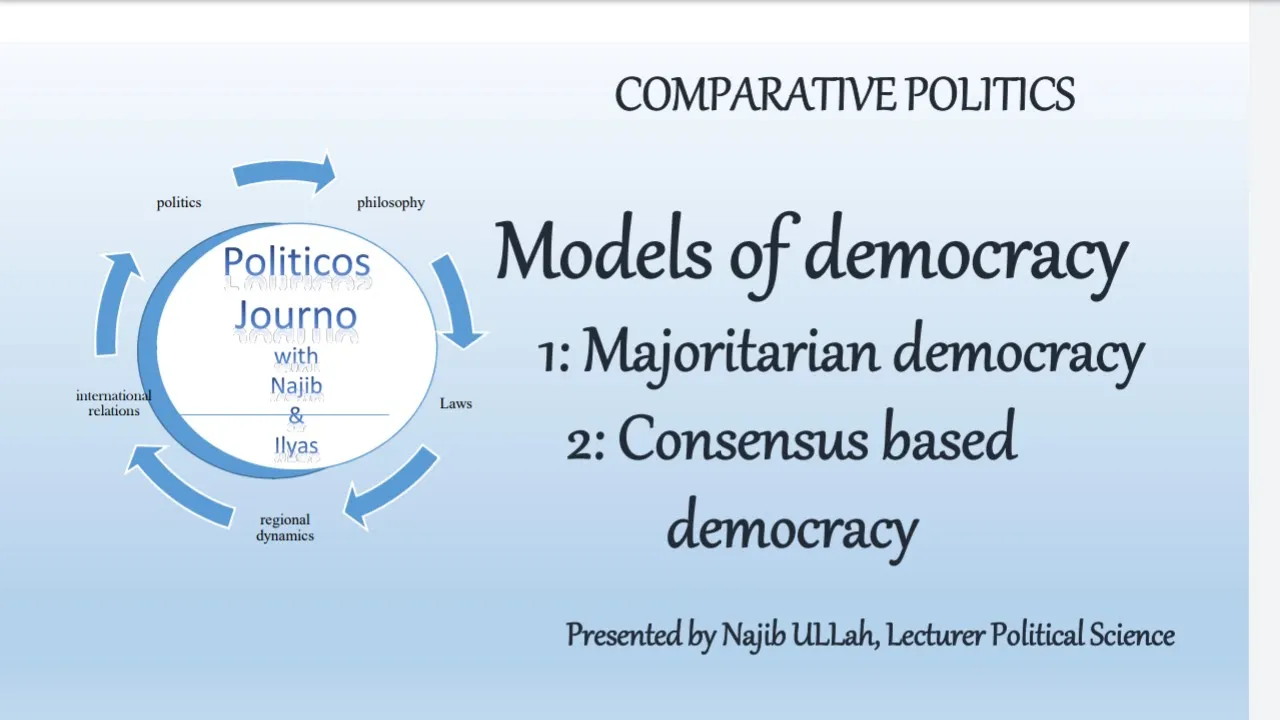
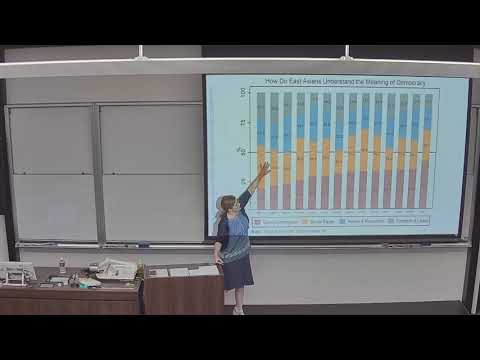
Modern political democracy requires multiple procedural conditions to coexist simultaneously, including free and fair elections, universal suffrage, freedom of expression and association, independent media, and autonomous state structures. Robert Dahl's polyarchy framework identifies seven minimal procedural conditions for democracy, while Schmitter and Karl add requirements for elected officials to exercise power without interference from unelected bureaucrats and for states to be free from hegemonic influence. When these procedures are deficient, systems may be classified as illiberal democracies (with formal elections but limited civil liberties) or competitive authoritarian regimes (with controlled elections and state resource distribution for partisan purposes). Arend Lijphart's model distinguishes between majoritarian and consociational democracy as two ideal-typical approaches, with the majoritarian model being more commonly assumed but potentially misleading as a universal standard.
Models of Democracy in Comparative Politics | POLS 303 Lecture 04
Added:some of our fellows are a little bit late so so but but before I begin any questions on the procedures this is very important ladies and gentlemen uh let me emphasize once again what's important here all of these procedures should exist at the same time okay if one is impaired we do not call that system modern political democracy all right so so all of these are SC quasons of a modern political system or modern political democracy yes I have a question over there actually based on the first two the first two are based on it is the base of this struct structure proed democracy okay but the others actually Bas on the so so so you find competition to be so Central to all of those all of the others so this these are more like infrastructural in that respect and and the rest um are dominated by the procedure of competition so of course competition is so Central to this kind of a system H uh but but you're right in emphasizing the importance of competition competition is so crucial is so key in the system without which none of it is um is Meaningful um and but don't forget cooperation is also very important you should be able to cooperate to be able to compete right um democracy is not a one-man show um democracy is about groups collectivities voicing interests articulating needs of one group or in one group against other groups in society and and conflict is a structural component of human life as long as conflict exists and it will always exist because we're all human beings compettition is very important but so is cooperation just imagine the world in which everyone would love one single color and that would be red all of us would love and want red everywhere but that doesn't exist Does it yes please talk about the majority so um you said also operation to compete mhm uh but uh you really see the reality in these terms because uh when the majority is aware of its power of itself it's not like to um just cooperate or even compete with you mhm so doesn't like you to be there absolutely so when a majority is self-perpetuating it will not want to compete that's so true right uh we all want to shut off competition who wants to compete against one another no one would in order to seize power in order to um to maintain wealth of course you wouldn't want to compete be it an individual be it an household be it a firm be it a voter be it a ruler of course no one would like to compete you want to shut off competition if there's one intention or inclination in human nature you want to shut off competition so so if and when a stable majority comes to power perpetually repeatedly and this this this ball game gets repeatedly played of course there wouldn't be I mean they wouldn't want to compete they would want to shut off competition but that's exactly why all of these should exist according to shimra and Carl and others who emphasize the rules of the game Who emphasize that there should be procedures component procedures of a modern political democracy but but you're right in emphasizing that in in human nature we don't like competition especially if and when we seize power we seize adequate wealth we won't want to compete we want to monopolize we want to celiz we we like oligopolies huh we like duopolies like we we we want to concentrate wealth concentrate power in the hands of the few if and when we're powerful if and when we want to react oppose undermine then we want to compete yes please that's a good point you said should be all cooperations compete mhm uh really conflicting needs reality in these ter uh when the majority is aware of its power of itself not like to SC so if um if people are satisfied with what they have is that what you're asking did I get it right yes State like uh if there's if there's no competition or everything is there for people there won't be any kind of state or just individual so it's like democracy actually is a chaotic way of comp competition mhhh absolutely so if if every one of us would be com would be would be satisfied with what we have why why compete why would be why would we be competing if everyone is happy if everyone is content if everyone is satisfied then we wouldn't need to compete right so so um but but we know that for fact the empirical world is much more conflictual um reality is much more different therefore we compete against one another because of our because of um the structural conflict or structural conflicts we have different identities we have different interests we have different tastes for that matter we we have different needs we have different voices so all of these mean that there is conflict built into the structure of a political system and excuse me and that means we will compete against one another so um competition is key but competition is regulated There are rules and regulations regulating competition and there should always be cooperation you should always be able to cooperate to be able to compete and the rules of the game have to be fair and honest honestly count U honestly coded and it would be um it would be clear to everyone everyone should know the rules of the game in this political system okay schmitter and Carl base their approach on a very influential political scientist who who who wrote a very influential book titled polyarchy does anyone remember who the author is of polyarchy uh Robert D uh 1971 doll says about 20 years ago 20 years before schm and Carl wrote this seminal article D says there are um procedurally minimal conditions preconditions for a democracy to exist and also to endure there should be control over policy by elected officials um so control should be constitutionally vested in the elected officials they should be naturally Fe I'm sorry free and fair elections condition number three all adults have or should have the right to vote condition number four all adults should have the right to be able to run for office condition number five there should be freedom of election insured in the system citizens should have rights to express themselves freely and collectively which has something to do with condition number seven citizens should have the right to form associations and going back to condition number five and and voice their interests Express their needs condition number six there should be alternative sources of information available in the system the role of media here the role of media independent of the state okay citizens should have the right to seek alternative sources of information these alternative sources of information should exist and should be protected by law okay so all of these procedures all of these minimal conditions should exist and schmitter and Carl add two more to these they argue that elected officials should be able to exercise power without being subject to subjected to appointed or unelected officials such as military bureaucracies or such as bureaucracies or civil servants retarding blocking vetoing what the elected officials wish to carry out and finally the PO the state structure should should be autonomous it should be in that respect self-governing it should not be a satellite state that is it should not be under a predominant system a political system of influence a democracy can exist unless it is free of a hegemonic block unless it doesn't come under the influence of hegemonic alliances or unless it is independent of spheres of influence so so in that respect polies must be um autonomous independent and for example the poity must be autonomous independent so that there should also be um no mechanisms of neocolonialism okay let alone um you know classic forms of colonialism but also neocolonial pressures should not be prevalent in a country for that country to be characterized by a modern political system of democracy so so all of these in fact are subsumed under the seven um procedures that schmitzer and Carl describe um from here let me continue with different um other forms of democracy which we sometimes call democracy or authoritarianism we'll talk about um varieties and versions of authoritarianism in political science 304 but let me briefly talk to you about or signal to you what we mean by qualified forms of democracy not modern political democracy but qualified forms of democracy okay but but before that I have a question here please creats rules societ okay in the system yes there is a problem within the Civil Society itself Public public there are some norms and rules in which you need to obey so how can there be freedom of spe you mean is there an absolute freedom a perfect freedom of expression um of course human beings are constrained by habit tradition custom Norms culture right identities um Can there ever be fully free expression um in that respect my answer is just like yours uh there isn't um but as long as you can express your needs your voice as long as there are channels of representing those that we call a democracy and and those those channels are constitutionally protected okay and and not only constitutionally protected but also socially sanctioned as long as they exist they're predictable they're knowable we all know that those channels exist those instruments exist as long as this is the case and and all others are existing then we call this modern political democracy but you're absolutely right there cannot be a full Freedom 100% freedom of expression of course we're we're tied up by Norms by Culture by identity by by our own identities by group think huh by all other kinds of norms and habits and traditions and Customs uh very good point and also ideologies for that matter please please um by unelected officials that's a okay that's a good good question by unelected officials um they mean and well we all mean appointed officials um of course elected officials exercise Powers being subjected to interest associations social movements Civil Society organizations and their expressions of Interest voice need but um schmitter and Carl are talking about unelected officials in that respect they they talk about appointees political appointees for example military bureaucrats or um State bureaucrats who want to for example veto or uh or slow down a reform process let's say a legislation has been passed in a parliament it is now time for the street level bureaucrats to implement it but those bureaucrats may come together and decide not to implement it or they say we're not implementing it to today we'll see whether we implement it tomorrow when tomorrow comes they they may say we're not implementing it today let's see excuse me so so so what what they warn against is the existence of unelected officials I.E appointed officials I.E bureaucrats in that respect and they should not be able to exercise Powers Beyond above and and Beyond those who are elected in the first place all right is that clear very good any other questions ladies and gentlemen very nice okay um then comes different types of well whether it's it's It's tricky to call these systems democracy um odonnell um G odonnell um called or coined the term ill liberal democracy we know that the liberal democracy is all about political participation and civil rights um IL liberal democracy is or exist when a formal establishment of democratic electoral process exists okay so so elections exist but there are shortcomings in terms of constitutional Liberties and freedoms and there are limits on arbitary exercise of executive power yes there are you know um there are some elements of democracy of those procedures most of them exist but some are deficient odonnell um presents this as illiberal democracy is more democratic than authoritarian regimes but less liberal than representative democracy or is more democratic than representative democracy I'm sorry but less liberal than representative democracy it has a strongly majoritarian bent it is inclining towards majority arianism therefore it is strongly majoritarian and consists in constituting through clean elections in majority produces a clean majority that empowers someone to become for a given number of years the embodiment of I'm sorry the embodiment and interpreter of high interests of the nation so I am elected I represent the High interests of the nation I embody the high interests of the nation and in this system of illiberal democracy odonnell argues after I mean if and when the elections take place the elections are done voters are expected to become passive but cheering audience of what the executive does okay so so these are um these are hybrid systems which odonald calls illiberal democracy there are in between authoritarianism and democracy we generally call them democracies but we call them illiberal or impaired democracies another term um that was invented much more that was conceptualized uh much more recently um is what's called competitive authoritarianism um if we do this like this competitive authoritarianism um it slides more toward authoritarianism but there is the competitive element uh the term was invented by Steven levitzki Harvard political scientist and lukan way um they wrote this very influential um text a few years ago uh with the same title competitive authoritarianism and um in this system the government appropriates state resources for partisan distribution okay the government um appropriates State resources for partisan distribution for Distributing the goodies to is partisans to those who are affiliated who vote for the same political party the state staffs or packs State institutions with loyal citizens or loyalist citizens and it it carries out this task in a systematic way the government in general in these systems control the media controls the media and provides only limited opportunities um to um to opposition parties and and all of these I'm sorry and um the government controls the media and provides only limited opportunities um to opposition parties for example in White in whiteall culture in Britain you mean that maybe government we'll see let's the government controls all British media can you say that the government control all British media there are no alternative sources of access all the government May control sure the governments government's worldwide control well want to control the media right who who wouldn't want to control the media uh um but it's it's a matter of degree um the extent to which um control increases then we slide towards competitive authoritarianism um the reason why I didn't want want to emphasize competitive authoritarianism is that it is more authoritarian than illiberal democracy so illiberal democracies are still democracies but impair democracies competitive authoritarian systems are somewhere in between democracies and full like complete authoritarian systems but but I wish to you know share with you um some of the ideas that also come to discussions um when we talk about democracy democratization forms of democracy types of democracy and and sometimes models of democracy yes please I did not get what why is it even called compe government does note space competion that that's a that's a very good um that's a very good question elections exist yes they're freely carried out and honestly conducted honestly um counted but my point here is I mean the point I want to make here is that remember all of these only when all of these exist at the same time we call this modern political democracy if otherwise we call these systems illiberal democracies or competitive authoritarian systems having just elections is not enough right all of all of these other uh instruments other procedures have to coexist for us as political scientists or compared to political scientists to be able to call that system or categorize this system um to classify the system as um as modern political democracy okay any questions please so for the ilal democracy say that the main aim is to eliminate or civil verion of checks and balances in a way yes but what we want to do is that we want to get rid of competition right so so once again competition is a key or has to be a key structural characteristic of modern political democracy just just as it is in the system of capitalism which we can talk about in another class in another course um on International political economy next turn um any other questions I think I am I'm quite done with um democracy procedures and all others I want to do a quick start to um to models of democracy if there are no questions we're all done okay but but you can always ask questions next class once you know sometimes it takes some time uh for our categories to think okay so so it takes time to digest some information some knowledge so so please have a look at your notes and um and please do the readings the readings are the articles are very straightforwardly written um these are seminal articles which we sometimes ask about in um in graduate um graduate committees um for example when we do a master's committee when we want to recruit Master's students or PhD students we ask ask about you know what are the you know give us a definition of democracy or modern political democracy or do you know or can you count some you know what are the approaches to democracy how does I mean how do Scholars approach democracy how do they conceptualize democracy uh what are the constituent component procedures in a democracy or if I I sometimes ask if I if if I give you a set of procedures such as competition cooperation public realm rulers accountability this that and the other which of the two approaches am I talking about the procedure approach or the outcome approach wouldn't these be good questions in a graduate exam okay so so so my point here is that this is some basic um fundamental basic but in in that respect isn't fundamental information that I I'd like you to remember um and of course these these will come across in other classes that complement or that build upon or on this course okay um we shall also be um talking about the same thing touch upon democracy um when we do political science 304 um because for us to be able to Define authoritarianism with varieties of authoritarianism we should have an idea about what de we should also remind ourselves what democracy is and and mind you the title of the article is what democracy is and is not okay so so I I'd like you to to remember this um I saw a hand but I don't remember who was please yes so when when you ask me what the democracy is I will tell you the origin of the Democracy okay okay Power mhm by demos counter against democracy which I don't believe in existing mhm both capitalism and democracy can notot coexist capitalism and democracy cannot coexist yes uh there's a huge debate on this simply in capitalism we see the we see Rich getting richer and po getting and when Rich getting richer the poor uh all the advantageous points of De principles of democracy mhm so don't you think we need a new ideology with new precautions against the possibilities this was this was this was the name of the G this was the name of the debate about 900 years ago when Churchill said very infamously does anyone anyone remember what Churchill said about democracy democracy is no he says it's the worst system it's the worst system as long as we don't count the others so it it democracy is treacherous democracy is um it has its faults um but it has some of its virtues too given the Alternatives so so um and the procedural approach really touches down upon I mean really takes all these elements as constituent constitutive elements of what a modern political system should look like um but there are others who argue that democracy exists only the outcome approach only when it guarantees those outcomes so you may you may want to You may wish to side with with those guys always this is well we have to keep up with sure consolidate the distorion of the MH no and of course I understand and I sympathize to a certain extent um no of course of course tell tell myself I learned this all ideologies in mhm and and in vain that they they don't they don't mean anything um please IDE kind of IDE likeor ofal dictatorship of capital uh that may be one one alternative thinking about uh democracy right uh Lenin's ideas you know it's the it's the bisi um which basically is the ruler in the system and it's a structure of exploitation it's a structure uh of subordination so so so there are many many many approaches to democracy most of us like democracy some of us do not like democracy um but but most of us still want to I mean as rulers I mean rulers would wish to characterize their regime as we are a democracy we are a democratic country so um now let's see what type of democracy exist um I'll continue discussing this next class but I wanted to show you a preview of of liip part's model uh Arend liart um a Dutch political scientist very influential political scientist um and and he says that there are two ideal typical models of democracy by ideal typical he means they do not exist in the real empirical World these are polar oppos opposites I use them as heris devices to to to make a point there are some real world approximations but the majoritarian model neither the majority model nor the consensual model really exists in reality 100% um liart says that these two models exist but he says that when we talk about democracy and he was talking about democracy back in the late 1980s early 1990s he was saying when we all refer to democracy we generally refer to one type or one model of democracy which is the majoritarian model which he says is misleading so um we shouldn't when we talk about democracy we shouldn't really Center our discussion on the majoritarian model and the majoritarian model only uh there are other models which really exist in reality which can be termed as consociational or consensus models and that perhaps this model is more democratic in essence more than in a name okay so so um next class on Friday we'll be talking about um the distinction between the majoritarian system and the consensual consensus or consociational system um so so so please complete your your reading of shur and Carl and also have a have a look at uh Li part's um very small article um that you can access through Moodle um and we'll we'll discuss details on Friday thank you so much and I'll see you on Friday
Up Next
Power-Sharing in Deeply Divided Societies: Iraq & Northern Ireland
@nuigpolscisociology5223
2.7K views•2016-05-03

BRICS Pay and de-dollarization: A New Financial Order Emerges? | 55 chars
@DannyHaiphongYT
164.6K views•2024-10-22
Government Surveillance Methods: 10 Ways You May Be Watched
@BeAmazed
1.6M views•2017-04-09
Explaining the Saudi-Iranian Proxy Conflict in the Middle East
@Vox
18.2M views•2017-07-17
Related Study Plans & Knowledge Roadmaps
Structured learning paths in Political Science