



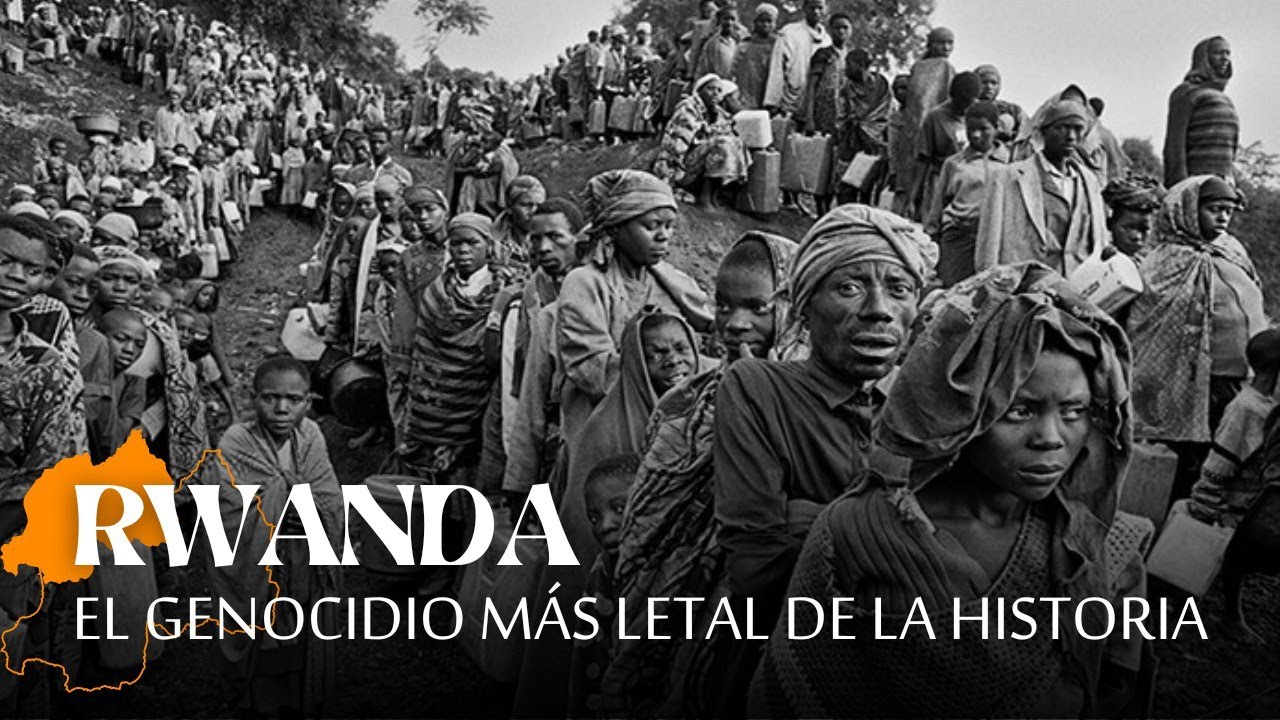
















This video presents research from PON Graduate Research Fellows Samantha Lakin and Fady Khoury on applying negotiation theory to post-conflict justice and constitutional design in divided societies. Lakin's research on Rwanda demonstrates how stakeholder negotiations can help create more inclusive justice outcomes in the immediate aftermath of genocide, though challenges include finding impartial conveners, balancing urgent peace priorities with justice claims, and adapting traditional consensus-building frameworks to chaotic post-conflict environments. Khoury's comparative study of Belgium, Lebanon, and Northern Ireland reveals that constitutional design in divided societies requires careful attention to judicial branch composition, power-sharing arrangements, and the interplay between majoritarian democracy and consociationalism to transform inter-communal conflict into institutionalized peaceful channels.
Negotiating Justice & Constitutional Design in Divided Societies
Added:good afternoon and welcome to our session with the Graduate fellows my name is GU Hans Zimmer Mannion I'm the faculty chair for the Harvard Law School program of negotiation I'm thrilled to invite you all today welcome you all today along with Susan Hackley who's the managing director of pew n I want to thank Diane long and Ana Chang for all the logistics and hard work they put in to make sure this works seamlessly and I wanted to say a few words of introduction before turning it over to Susan first for those of you who don't know Pio n it is a consortium of faculty and students and other scholars from Harvard MIT and Tufts who share a joint interest in the field of negotiation our objective for 40 years now as a community has been to improve the theory and practice of negotiation in the world and I want to emphasize both pieces of that the practice part is important because we all very firmly believe that the theories and the research has to be relevant for the real world house to help practitioners improve the way that they negotiate with each other across the table internally is all very critical but the theory part is also important program and negotiation has always been grounded in the theory of negotiation the research is what brings us together and in some ways what differentiates us from many other people who teach negotiation around the world and that research is what brings us together today the title is new findings in the field of negotiation research from the PIO n Graduate research fellows program the fellows are scholars typically doctoral students from around our consortium schools who come together for a year and usually every year we celebrate their research at the end of the year they present on what they've found and we have a discussion obviously we ordinarily do that in person but we'll do it online this time we had a terrific first session last Wednesday many of you were able to join for that and I'm thrilled today to introduce our two other research fellows our first speaker will be Samantha lakyn she will present a research on negotiating justice in the immediate post genocide our second speaker is Fadi Clarie he will present on constitutional design and divided societies apex courts and power sharing democracies so with that I will say thanks again for joining and I'll turn it over to Susan Hackley to set out some ground rules and introduce our speakers hello everyone and welcome we are so delighted you're joining us today and you really come from all over the world it's it's really meaningful for us that you are joining us for this important session the session is being recorded and a recording if you want to share it with others will be posted to the p1 website in a few days the slides that you'll see today will share by a PDF via email to you after the session we have two presenters each session will be about 30 minutes and it will consist of their presentation and question and answer please remain muted throughout the session that reduces background noise if your internet speed is slow it's helpful to turn off your camera to improve quality now if you have a question for the presenters please use the chat function at the bottom of the screen and there will be time near the end of each session where you can use the raise your hand function and the speaker may call on you and now it's my pleasure to introduce our first speaker Samantha lakyn she is an advanced doctoral candidate at the stress low center for Holocaust and genocide studies at Clark University her research aims to contribute to the study of symbolic and holistic transitional justice she helped found the department of research policy and higher education ages trust and the Kigali genocide Memorial in Rwanda she served in the US Embassy in wandah as a community consultant for the ambassador's fund for cultural preservation and she was a team lead on action based research by gender and corruption in the DRC she's also done research in Uganda Ethiopia and Nigeria and she served as a Fulbright Scholar in rwanda and switzerland samantha has a master's degree from the Fletcher School at Tufts University and a bachelor's degree from Brandeis University welcome Sam Samantha thank you so much thank you very much Susan I really appreciate the introduction and gohan as well so I'm gonna get started I'm gonna share my slides with you and today I will be talking about negotiating justice and the immediate post genocide period in Rwanda my doctoral research has spanned seven years of work in Rwanda both when I was a master's candidate at the Fletcher School and now as a doctoral candidate finishing at the Strausser center for Holocaust and genocide studies and today I'm basically going to take you through a little bit a very small part of my research the research generally has dealt with 97 interviews with local Rwandan z-- key informants in Rwanda and others looking at issues of memory and justice and how they're connected beyond punishment and beyond court based systems and so what I wanted to do today though is bring in a piece of the negotiation part in order to kind of understand some of the things I've been thinking about around reframing conversations and the immediate aftermath of a post genocide or post atrocity society and situation to think about how negotiation theory specifically stakeholder negotiations can help create more inclusive outcomes in terms of negotiating justice and peace on the ground in the aftermath and also sustainable justice structures so the first thing I wanted to show is that there are very different perspectives on on justice in the aftermath of genocide in Rwanda um Brandon hambar who is a very famous transitional justice scholar says as restoring each victim individual victim to their pre conflict status is clearly impossible reparations can only be a good-enough response to mass atrocities the current Minister of Justice in Rwanda Johnston Busan yay said in 2014 and the commemorat commemorative is perfect to deal with crimes of mass atrocities in genocide and finally an interview I conducted in Rwanda in 2015 one of the interviewees said there's an impact in the life of every Rwandan Hutu is frustrated by what happened by his parents brothers and sisters for a Tutsi he is a victim of lost parents brothers and sisters each one in this country has symptoms of the genocide so memorials are there to show us the reality of genocide on both sides some things to think about in terms of differing perspectives so today I'm going to take you very briefly through a very quick history of the genocide so we can situate ourselves and then going to talk very very briefly about goals of transitional justice and specifically genocide remembrance or memorialization give a very quick background to transitional justice efforts in post-genocide Rwanda and then numbers four and five go into the case of looking at theory and application of stakeholder negotiations and consensus building in the immediate aftermath of the genocide that took place in 1994 offer some conclusions and then we will go through any questions that you might have some a brief history of genocide and most of the photos I'm going to show are photos that I've actually taken this is from a very famous South African photographer Patrick Hugo who created this portraits of conciliation series in 2014 for New York Times Magazine so just to situate ourselves in Rwanda from April 7th till about July 4th in 1994 was approximately 100 days of genocide targeting to see people on April 6 1994 the extremist president Juvenal Habyarimana his plane was shot down while coming into Kigali Rwanda and on the 7th the genocide began which included forces of Ventura Highway militia included very extremist forces from the prior government and I think many of us know what happened that Tutsi were targeted men women and children were killed went into hiding about 1 million deaths of Tutsi and moderate Hutu or Hutu who opposed the extremist regime in those in those months from April to July of 1994 and the genocide ended with the advance of the Rwandan Patriotic Front who was a liberation movement that was formed in exile mostly of Tutsi members and mostly formed in Uganda who pushed out the genocide or government mostly in twos a year or current-day DRC so the goals of transitional justice that I want to briefly speak about transitional justice for those who don't know is a process by which in the aftermath of extraordinary crimes so war crimes crimes against humanity and genocide how do we deal how do legal systems deal with such extraordinary crimes mass participation intent to destroy in the case of genocide members of a group how do we deal with things that ordinary legal systems are not necessarily equipped to deal with so we're looking at some of the goals of individualization of guilt rather than collective guilt combating impunity so holding people accountable accountable non recurrence or non repetition recognition and validation of the crimes that happened to victims restoration as best as possible to the status before the crime which we know is nearly impossible when entire families futures livelihoods property was lost etc and also establishing truth both personal and narrative truth meaning truth of what happened to individuals allowing them to share their stories and narratives of what they experienced and felt and also the factual and forensic truth looking at historic truth of who was killed when where were people where were their bodies thrown etc things like that so just to show very briefly there have been a lot of kind of attempts at transitional justice in Rwanda and I think what's been most interesting is Rwanda is one of the most studied cases of transitional justice partially because it is legally categorized as a genocide I think that's one of the reasons why it's gained so much attention but we can see a combination of both symbolic and court based mechanisms we see in November 1994 the ICTR the International Court Criminal Tribunal for Rwanda is established the National immunity and Reconciliation Commission and policies we see laws criminalizing genocide both in the national courts in third party countries we see catracha community courts looking at ways to try a huge number of arrests of perpetrators and all of these are kind of taking place at the same time in addition to symbolic efforts like creating memorial sites holding public communal commemorations in April every year so these are all taking place kind of concurrently over time for the past 26 years but it's just to show the the scope of what's been happening in the aftermath unfortunately I don't have more time to go into each of these specifically could be a course or a dissertation on their own and they are but I just wanted to show a glimpse of that and just to provide a note my research deals specifically with memorialization so looking at commemoration and creation of memorial sites and spaces so looking at these community centered processes in their ideal form and also in their sometimes highly politicized form where things these goals that we said of transitional justice for non recurrence of violence to restore broken ties to signal to survivors what happened can often be can often be caught up in some of these very practical processes politicization competition between groups for resources and other things so while I've been a fellow at the program on negotiation I found a lot about transitional justice and negotiation theory as Gahan said when he introduced us today you know this intersection of theory and practice I think is is quite important regarding the work that we do in the research that that we do around the world especially in very challenging contexts so the transitional justice literature often looks at the immediate post-conflict period which I'll describe in Rwanda in a second and looks at these things that are happening as informal conversations in a highly chaotic moment and for me I thought about what would happen if we applied principles of stakeholder negotiations to the immediate post-conflict period in other words we conceptualize in these difficult conversations as stakeholder negotiations and looking at how they might be able to provide insights as to strategy best practices and how to achieve consensus and inclusive outcomes among differing and often competing desires and visions of the new society when I thought about this conceptually and theoretically and try to apply it practically I realize it's incredibly challenging so what I wanted to do today is just kind of give you an idea of an exercise of how we might think about mapping the theory onto what actually took place in Rwanda but it's by no means a complete analysis of what can have when we combine the theories of transitional justice and negotiation so just to give a snapshot of the aftermath the immediate aftermath in 1994 most people who were in Rwanda especially of the 97 almost 100 that I interviewed described the immediate aftermath as a moment of chaos of hopelessness and you have I identified all these different groups that had very different needs I can give some examples so there are survivors who were targeted as victims if they were dead they would be victims but they're survivors who lost their entire families who witnessed people being killed who were often wondering how they survived when others didn't survive and we're really concerned about their physical safety in the immediate but they were also very concerned about justice they were very concerned about faith in a potentially new government after the genocide which had been planned and prepared since Ronda's independence in the 1960s so they were incredibly concerned about holding people accountable about rebuilding their own lives in the future and also about making sure that this would not happen to them again genocide suspects were those who were in prison for genocide had concerns as well many of them were worried about being falsely accused many of them had participated in low-level crimes so stealing of ten slates from a roof or eating from a Tutsis cow it didn't feel that they had actually participated in genocide they were not ideologues and when you ask them in interviews they say well I didn't kill anybody so I'm not a perpetrator like these other perpetrators they were very concerned about judgment about having to spend time in prison what would happen to their families and also about revenge killings in their communities there were groups of hoots who also entity who fled with the with the genocide or government what as the Rwandan Patriotic Front was advancing and fled into inches a year where we have these huge refugee camps set up in 94 95 96 some people were ideologues genocide ideologues who did not want to give up they felt that they did not lose that they still harbored ideology against Tutsi people they were really worried about if they were made to return to Rwanda that they would be killed they were worried about justice as well and those who escaped with them at the same time who hadn't participated were really worried about this chaotic and confusing moment that the Rwandan Patriotic Front who was really in charge of the broad-based transitional government was going to force them to return and kill them in revenge or that they would never be able to return to the society and be viewed in the same way that they would be imprisoned etc same with return door one in refugees a number of people spoke about the challenge of these Rwandan Patriotic Army soldiers who had grown up in exile and returned to Rwanda to find that many of their own family members had died that their communities had been destroyed and that the country was not what they thought it was when they were going to liberate or or or return to Rwanda so controlling these young soldiers their expectations and their anger was really a lot to do in the moments immediately following the genocide and so that's kind of the context in which we are looking at potentially applying some kind of stakeholder negotiation theory so very confusing very chaotic so the one thing that I had that I had looked at was was looking at consensus-building as described by szyskii and McKiernan and Thompson Larmour of five steps toward consensus building and looking again at the theory versus the reality consensus building of convening the group with an impartial and neutral convener who's trusted in the society clarifying responsibilities deliberating and brainstorming in order to make sure that there's the best available information and a range of possibilities to responding to everyone's concerns basically maximizing joint gains reaching a decision with some kind of overwhelming agreement or majority and then also actually implementing the decision in a in a situation where institutions are destroyed and rule of law is broken down things like that so basically again looking at the disparity between the theory and the reality on the ground and wondering if there's any way to bridge so when I'm in applying the case there were three points that I noticed that either worked quite well or didn't work very well in the immediate post conflict in Rwanda or they mediate post genocide so the lack Cote would be the first would be the lack of an impartial convener which is which is to say that the broad-based transitional government in Rwanda that was there between the end of the genocide in 1984 and the passing of the new constitution in 2003 was formed mostly by leaders of the Rwandan Patriotic Front mainly high-ranking soldiers and also some members of the pre genocide or government who did not agree with the genocide or plan or ideology but it was not a complete power sharing or coalition government and so at the time it was very challenging for the convener or the broad-based transitional government to be seen as neutral and partial so even though that had been the ones to drive out the genocide of government and stop the genocide they had there had also been the civil war taking place not to be confused with the genocide at all but there was still mistrust of government at the time the second thing that I found very interesting was that there were actually consultations taken by the newly formed national unity and reconciliation commission that started in 1998 and went through 1999 convened by Pastor busy man GU who was the then president of the Republic of Rwanda the participants included many people from the Supreme Court Bureau members of the government chairman chair people of national assembly commissions representatives from the army judicial services lawyers prosecutors civil society organizations and their goal was to discuss key issues facing Rwanda and reconciliation especially democracy justice economy and security so that took place in 1998 and 1999 which is interesting because there was some sort of ability to convene people but I'm not sure how much it panned out into what we would consider a true consensus building process in the traditional sense and the last thing is looking at the priorities in terms of timing and process and this is where the interviews that I conducted really showed a challenge with with these competing needs you know how do you secure how do you secure peace on the ground in the immediate aftermath establish calmness and trust in the new government which are all urgent priorities and how do you balance those with future priorities of of claims of justice of desires for justice and also a successful and peaceful society in the future so basically what I conclude again by looking at again this is really a preliminary understanding of how to put these pieces together clear differences between the usual circumstances of which we read about theories of consensus building so business government and the post-conflict situation is that you know the infrastructure the formalization all of those things are there and these traditional cases so when applying in the post-conflict we have to really understand what is the context on the ground that enables or prevents these kinds of things from happening so post-conflict we approach genocide Rwanda characterized by chaos confusion high emotions trauma broken social ties etc etc you know lack of institution and so I think one of the most important points is timing of one consensus building processes may be useful and ripe to succeed after establishing peace on the ground and I do believe that ultimately focusing on consensus building I'm looking at these different groups as stakeholders rather than just people you know in conversation with each other and using some of that theory can reduce further marginalization and flawed policy so I would like to extend and kind of look beyond the immediate post-conflict at what point was Rwanda ready to engage in some of these processes so I will stop there thank you very much to the program on negotiation staff and faculty especially it's been a wonderful year being affiliated and especially to susan haack me to James Kerwin to professors Gohan Alejo member and Dan Shapiro and today I am long and the entire con staff so I think we have a couple minutes for questions maybe about about five or six minutes so I would ask you I'm gonna stop to look at this um I would ask you either in the chat or to use the raise hand function in order to ask questions I can unmute you at that point and yeah I'm happy to answer anything by the way about this small piece of the presentation or the research at large so thank you so I'm looking a sort of participants okay um kaze I'm gonna unmute - I'm sorry I don't know how to pronounce your name hi would you like to would you like to ask your question can you hear me yes thank you oh great thank you thank you very much that was a great talk thanks for sharing all we were experienced I was I was wondering about the interviews you told us that she had like a hundred interviews I'd like to know what was your approach what kind of questions you take how long were these interviews and how afterwards did you deal all this material to digest thank you yeah that's a great question um so the interviews were planned along you know in a qualitative manner so I really did I looked at something called domain research where I was interested again in the connections of engaging in memory processes and whether or not different individuals felt senses of justice rendered and so what I did was I chose three different communities in Rwanda where I was able to talk to lots of different people people who were categorized as survivors people who had spent time in prison because of genocide perpetrating people who were ordinary citizens so they were not targeted for genocide but they also did not participate sometimes they were rescuers and also key informants so people who had some stake in the memory landscape in the aftermath of the genocide so I went through different churches and non-governmental organizations and snowball sampling to recruit them I did a pilot study in 2015 and then carried out most of the interviews in 2017-18 when I was in Rwanda on my Fulbright Kenya Rwanda french-english mix of languages they were probably about one to two hours long it is a tough subject so sometimes I would stop and start again or interview people multiple times but you know was a challenge to kind of get the interview structure together they were all so open-ended so I asked different questions each time even though I wanted to get at similar subjects digesting information I'm thankful my research assistant is on this call because he knows how challenging it was to digest in the moment and then coming back to the US and having to go through the data and code thematically so two very different processes but I found a lot of joy in working in Rwanda I found a lot of family and friends around Rwandan people so I feel really lucky even though the subject was hard I felt very well supported I hope that answers your question so Samantha I think we need to wrap it up thank you so much first of all for the extremely difficult work you do and the very important research that has resulted from that work so we wish you continued great success and now we'll turn our attention to our second presenter Fatih Corey who is a doctoral student at Harvard Law School Patti's research interests include comparative constitutional law human rights and the intersection between laws society and politics he examines a potential utilisation of constitutional law power sharing strategies and federal arrangements as conflict resolution and peace building tools and deeply divided societies with a focus on Belgium Lebanon Northern Ireland Palestine Israel and he looks at the design and functions of the judicial branch in particular within power sharing political systems he is a Bachelor of Laws degree from Haifa University and before Harvard Law School he worked as a civil rights attorney at Adella the legal center for Arab minority rights in Israel Fadi we look forward to hearing from you Thank You Susan I hope you can all hear me I'm gonna share my okay so I would like to first open with a word of gratitude to the wonderful staff of the program of negotiations first and foremost for this amazing opportunity I was granted to be a fellow in the program this year but also for organizing these talks despite the challenges we faced through this pandemic so like Susan said my dissertation grew out of my interest in constitutional law in conflict resolution growing up myself and a conflict ridden space Palestine in Israel and working for over a decade and the field of human rights and their circumstances of conflict this existing the legal instrument that existed within the system were very important but also limiting and and what goals can be achieved so quickly it became very clear that the system design is an important aspect worthy of examination my dissertation seeks to address some theoretical and normative missions in the power-sharing literature in particular the design of the judiciary and as well as the federal solutions that are adopted in some power-sharing constitutions in my talk today I will just focus on courts and in particular on ethics courts so the presentation law layout I will open with my case studies and then I will briefly talk about what defines a divided society and explained the problem my research seeks to explore and then I will proceed to briefly describe what consociationalism or power-sharing and lastly I will discuss the issue of apex court so my project is a comparative exploration of three case studies Lebanon Belgium and Northern Ireland I selected these for their similarities and their differences they all have adopted certain but different power sharing and consociational arrangement to resolve internal conflicts informed by religious linguistic territorial and national identities Northern Ireland and Lebanon have experienced extreme inter-communal violence while in Belgium violence was not a permanent feature Lebanon and Belgium they are independent states yet Northern Ireland is a devolved territory within the United Kingdom and it's subject to its laws and politics these three cases encompass a wide range of dynamics found elsewhere and therefore they provide a rich and diverse basis for learning about constitutional their constitutional dimensions and buy-in divided societies now what is the divided society I will briefly talk about some definitions but I guess there are as many definitions as there are scholars interested in divided societies so according to some scholars to understand what makes a divided society we need we need to look into the cleavage structure operating in it every society has cleavages that inform its political practices and around which political mobilization happens where cleavages can be described as cross-cutting we should expect more moderate political behavior but when cleavages are reinforcing the tendency for politics to be conducted on the basis of group segmental identities is higher and society then may be considered divided according to Suzy Chaudhary a divided society is not merely a society in which F which is ethnically linguistically religiously or culturally diverse rather what marks at the virus society is that these differences are politically salient they are persistent markers of polluter identity and basis for political mobilization a similar definition was introduced by Aaron life art in which he emphasizes an additional characteristic which is that political parties interest groups media of communication schools and down voluntary associations tend to be organized along the lines of segmental cleavages through my work I have noticed that there is an additional feature that appears to be very crucial the social groups perception of the political systems constitutional legitimacy in divided societies public politics or even extra political challenges to the system as in group violence are often in front informed by diverging attitudes towards the constitutional design of the system itself and we we see group antagonism towards the constitutional order itself these groups view the order as reflecting hegemony domination and control to oversimplify for example in Belgium the francophone community historically favored a stronger central government while the Flemish sought more autonomy and stronger regional governments and Lebanon grievances among the Shiites and Sunnis regarding the distribution of political resources primarily size of representation in Parliament were often brought up while the Christians favored the status quo based on the census of 1932 in which they were a majority and in Northern Ireland the rejection by the Republican and nationalists of the inclusion of the territory within the UK informed the conflict between them and the unionists and shaped their constitutional demands for this reason I believe that constitutional law can play an important role in addressing the core issues in many divided societies I do not mean to argue that in every divided society basic conflicts can be resolved through constitutional reform but I do believe that constitutional design is if anything else is important in this regard when I speak of conflict and divided societies I do not suggest that it can be fully resolved through the act of constitution-making instead my view is that successful constitutional choices help put in place mechanisms through which conflict can can be contained and dealt with therefore instead of talking about conflict resolution I prefer seeing the use of constitutional design as a means through which the conflict can be transformed from one that take place outside of institutionalized politics into one which is processed through the appropriate peaceful channels that are constitutionally configured and now I should say a few words on traditional majoritarian democracy as it relates to the circumstances in divided societies in trying to explain stability and democratic policies many scholars back in the nineteen fifty and sixty scholarship posited the theory of cross-cutting cleavages to understand political moderation and why the political system retains its legitimacy among political actors who end up losing in the elections cross-cutting cleavages as it is argued and have moderating effects on political behavior as a consequence of membership in multiple social groups individuals will possess a complex set of interests which will eventually moderate their political attitudes now consequently consequently the existence of cross-cutting cleavages within an institutional framework of competitive politics or majoritarian democracy will result in shifting coalition's and electoral rounds where parties cycle in and out of power largely preventing any exclusion of significant groups in society and the abuse of power by current majorities since there is a chance that these majorities might end up being a minority in the future for that reason political competition under these circumstances does not threaten the system stability these assumptions that minorities eventually circle into power and majorities will not abuse their power do not hold in divided societies do and this is due to the absence of cross-cutting cleavages in many cases elections and divided societies as Donald Horowitz have has contended and intend to look like essence essences therefore depending on the composition of society competitive politics and strictly majoritarian conceptions of democracy tend to produce permanent losers and perpetual exclusion of minorities from power in turn this might lead to the excluded to pursue extra political and extra legal strategies to achieve their goals based on this understanding of the dynamics and divided societies the idea of power sharing was introduced one form of which is consociationalism now consociational theory initially was an explanatory and descriptive account of some european political systems thought to be highly heterogeneous yet at the same time stable the best political scientists are in life art considered to be the father of modern consociationalism posited that this stability can be explained by the conscious choice made by political elites to compromise and cooperate with each other in order to counteract the possible effects of social and political divisions later on consociationalism assumed institutional and normative dimension dimensions now conciliation democracy aims to share diffuse separate divided decentralized and limit power the main two features of consortium second sociation is the grand coalition in which all major social groups are invited into Vermin and the principle of group autonomy and self-rule on some issues the secondary features are proportionality in political representation throughout the public offices and veto powers over deemed important for the different communities in society now some examples from my case studies for example in Lebanon system the system itself is a rigid or what is called a corporate consociational along religious lines the Parliament 128 seats are divided equally between Muslims and Christians and each six seats are also allocated on denominational basis the Lebanese National pact National pact of 1943 established a grand coalition government between a Maronite president a Sunni prime minister and a Shiite Speaker of the Chamber proportionality was observed in the appointment of civil servants autonomous organization for each communal group was granted personal status issues were adjudicated by communal courts and each group has its own educational institutions and although mutual or minority veto was informal and unwritten it nonetheless existed now in Northern Ireland members elected to the assembly designate themselves as either nationalists unionists or other there is a cross community power sharing at the executive level including the joint office of the First Minister and Deputy First Minister one unionist and one nationalist and a multi multi-party executive the multi-party executive is made up of unionist and nationalist parties ministers are appointed based on principles of proportionality based on the number of seats each party wins in the election lastly key legislation requires special majority requirements to guarantee consensus and in Belgium for many years an informal norm had existed by which cabinets were formed with approximately equal number of members from ministers representing the Flemish community and Minister representing the french-speaking minority the constitutional amendments adopted in 1970 made this into a formal rule also autonomy autonomy is granted to groups on both territorial basis through federal arrangements and non territorial basis through the cultural councils who have the power to make laws on cultural narrow matters for the community special voting majorities are required to certain on certain issues which empower groups with veto powers over important matters at the level of Parliament a special device was introduced to protect the francophone minority the alarm bell procedure whenever 25 percent of parliament members of a language group considered a proposal to be harmful to their interests they would ring the bell and then proceedings in the parliament would stop would be suspended and the matter would be brought before the government for a resolution this secures a process through which a negotiated solution can be achieved instead of having one group dominate or impose its well on the other now in the past in the past five decades consociationalism has been a major player both in theory and in practice in conflict resolution and management efforts in divided societies however consociational theory elaborated primarily by political scientists tended to overlook a judicial branch and neglected to provide the same degree of normative rigor to courts as it has in regards to other branches for example consociational scholars reviewed described and theorized about political parties elites the executive and the legislature branches and their composition but they never or rarely I gave the judiciary the same attention on the other hand the legal scholarship on divided society has tended to overlap power sharing arrangements and their dynamics at the risk of over generalizing it might be said that political science scholarship on power sharing in divided societies either over the judiciary altogether or treats it with unwarranted suspicion meanwhile in legal scholarship that and especially in comparative constitutional law scholarship the main focus has been on issues related relating to civil and human rights and more generally Bills of Rights and liberal accounts of judicial review powers dominated primarily by constitutional paradigm inspired by the u.s. model and predicated on traditional liberal constitutional and democratic theories now a separate issue and still largely under explored regarding courts in divided societies is their capacity to deal with and regulate inter-communal conflict and also their potential to provide an arena for conflict management while maintaining their institutional legitimacy therefore questions related to the design of judicial branch the judicial branch concern the composition of apex courts and the appointment procedure of their judges whether or not apex courts and divided societies adjudicate inter-communal conflicts and if they do what considerations or constitutionalist conceptions they employ this entails delving into other permanent issues that might pose challenging to the very power sharing logic according to which the system is organized issues likes core jurisdiction standing differential or interventionist attitudes constitutionalist conceptions and so on a very important issue in the design of courts is the way in which national courts are constrained by or themselves challenged politically or constitutionally decided aspects of power sharing there for my project seeks to bridge this gap by conducting original research into the judiciary's especially in my case studies my interest in this regard are to understand the logic behind the unique composition of courts and the role they play within consociational system now my research in this rain is still ongoing but it is possible to share some insight from the case studies in Belgium for example the building blocks of the Constitutional Court were put in place in the 1980 constitutional reform the court established in 1983 as the Court of Arbitration was granted a rather very limited jurisdiction to ensure that each of the federated entities acted within their constitutionally assigned powers in later constitutional amendment waves the court's jurisdiction was expanded to include judicial review powers and light of constitutional protected rights and access to the court was also extended from certain executive executives and courts to individuals as well now giving the constitutional court jurisdiction over rights adjudication has created tension with the Court of Cassation who had claimed the power to review Acts of Parliament and light self-executing international law treaties eventually the tension was resolved by an act of Parliament where courts were required to submit a preliminary reference to the Constitutional Court whenever a party claims it's right has been breached in light of both international law and constitutional law the settlement of this jurisdictional conflict between the courts by Parliament it demonstrates the legislature reference to the Constitutional Court this friend friends can be explained by the Constitutional Court the Constitutional Court's composition since it is composed of equal number of justices from each linguistic group who are further divided between judges with legal training and judges with political background like former parliament members it provides a space for more legitimacy in the eyes of the political actors certain practices adopted by the Belgian Constitutional Court like the absence of any dissenting opinions aim to reduce the risk that the court appeared divided along the ethno-linguistic lines which define much of the politics in Belgium this institutional choice aims at maintaining the courts legitimacy on a countrywide basis however the composition of the court raises questions regarding its independence and the degree to which justices decide based on their ethnic wasting loyalties or not but the degree to which these features have an impact on the independence of the court requires further thought and examination which I intend to do in the upcoming future in terms of content some analyses out there of the Belgium Constitutional Court jurisprudence suggest that it has been a federal izing agent acting as a safeguard to the autonomy of the communities and regions generally speaking the court had supported a broad interpretation of community and regional powers now in Lebanon while the sectarian principle has been officially repealed as the basis for judicial appointments it was substituted with the principle of meritocracy but in practice proportionality continues to be observed for example in 2017 1550 point 5 percent of the judges in Lebanon were Muslims and forty nine point five percent were Christians the council is branded the Constitutional Council is granted the powers to review matters related to constitutionality of laws and to arbitrate elect our electoral conflict and the the parties who are who have standing before the court and are allowed access to the court or a select category of institutional political actors who are named directly in the Constitution this restricted act access to the council might have something to do with the patterns of the judicial politics pursued by the council which display high degrees of deference to the other branches limiting the access to institutional actors also tells us something about what type of constitutional adjudication happens in Lebanon these institutional actors are highly committed to the system's confessional logic and limits the kind of questions that the council is brought to weigh in on the result of this design I argue in my dissertation prevents the council from providing constitutional remedies to external actors who seek to escape the traps of religious affiliation and promote more Universal conceptions of right or simply hold the political elites too accountable to the Constitution and in Northern Ireland the Belfast agreement attention to the judiciary was limited and focused on criminal justice and in that regard while principles of meritocracy are officially observed in the Judicial Appointments processes of judges the relevant legislation also requires that appointments be reflective of the community in Northern Ireland these very initial observations suggest that group affiliations play a significant role in the appointments processes and that courts composition may entail judicial legitimacy implications there is much to be studied in in this context and more particularly the substantive subject matter which is brought before the courts and I intend to do that within my dissertation and just summarize much of the course about constitutional design in divided societies is concerned with how to introduce a constitutional order that is capable of containing and dealing with conflicts as they arise now this is true in all societies as political politics as as as politics in general revolve around conflicts and are the heart of soul of democracy and successful constitutions provide for appropriate channels through which these conflicts can be addressed and resolved but it is even more so in divided societies where issues are seen as having higher stakes for the players in the system and providing arenas for conflict resolution within the system can mean the difference between violence and day-to-day politics in this regard I contend that the design and role of the courts can now be overstated for they provide an additional arena for conflict resolution and regulation therefore my dissertation aims to fill this void in the existing literature on power sharing by shedding the light among other things on the judicial branch now I should probably say a few words on some challenges if time permits that I have faced throughout our working on this dissertation originally let me just stop sharing my screen oh I might not have any time but originally I really hope to focus on israel-palestine and to think about alternative solutions to the two-state solution who has been stagnant and reached an impasse and look into constitutional solutions for potential your one state solution but reading through the materials on power sharing I I've realized that addressing the the one missing branch which is the judiciary was an important was an important asked to undertake for that purpose and in order to be able to study belgian constitutional jurisprudence I had to take French which I'm still doing so my research on the content of the the judiciary in Belgium is still very embryonic and hopefully within the upcoming year I'll have more insights about the constitutionalists paradigms employed by these courts thank you very much so Fatih we thank you so much for this really interesting presentation about these different countries and cultures and thank you and Samantha so much for your hard work and thank you to all of you who listened in today please visit our website for upcoming events and we wish you well during very challenging times thank you so much from the program on negotiation at Harvard Law School
Up Next

Black Summer 2025: Self-Determination & Reparations Webinar
@Tapvideo
783 views•2025-04-14

Triumph of Orthodoxy Icon: Byzantine Art & History Explained
@BenCallan
2.1K views•2024-08-06

FastAPI vs Flask vs Django: Choosing the Right Python Web Framework
@TechWithTim
302.5K views•2024-05-26

Game of Thrones Opening Credits: A Cinematic Analysis
@gameofthrones
46.3M views•2011-04-18
Related Study Plans & Knowledge Roadmaps
Structured learning paths in General & Interdisciplinary Studies