




















Undersea fiber optic cables, which carry 99% of the world's international telecommunications traffic, have become strategic assets in geopolitical competition between superpowers like the US and China, as demonstrated by the 2020-2022 dispute over the SEA-ME-WE-6 cable contract, where the US government intervened through subsidies, diplomatic pressure, and financial incentives to ensure a US company (SubCom) won the contract over China's HMN Tech, highlighting how critical infrastructure projects can become proxies for broader technological and economic competition.
The Geopolitical Battle Over Undersea Fiber Optic Cables
Added:The physical infrastructure of the global internet, specifically understanding that the vast majority of international data is carried by subsea cables rather than satellites.
Basic principles of fiber-optic technology, including how data is encoded into light signals and why it offers superior bandwidth and lower latency.
The foundational concepts of the US-China geopolitical rivalry, particularly regarding technological decoupling and strategic competition.
An overview of international maritime law, specifically the United Nations Convention on the Law of the Sea (UNCLOS) and jurisdictional boundaries in international waters.
The tactical methods of maritime espionage, including how state actors intercept data flows through undersea 'cable tapping' and signal intelligence.
The doctrine of hybrid warfare and the physical vulnerability of critical infrastructure to sabotage, naval blockades, or targeted severing.
The geopolitical implications of the 'Splinternet,' where global routing protocols and hardware standards bifurcate into Western and Chinese spheres of influence.
A comparative analysis of Low Earth Orbit (LEO) satellite constellations versus subsea cables in terms of redundancy, security, and strategic resilience.
674.9K views22.6Klikes7:05Original Release: 2023-06-30
Far below the ocean’s surface, down where the light dares not go, there is something remarkable.
Something the world’s superpowers are desperate to control.
Is it this?
No.
Is it this?
No.
It’s this.
Biiiiiiig long rope.
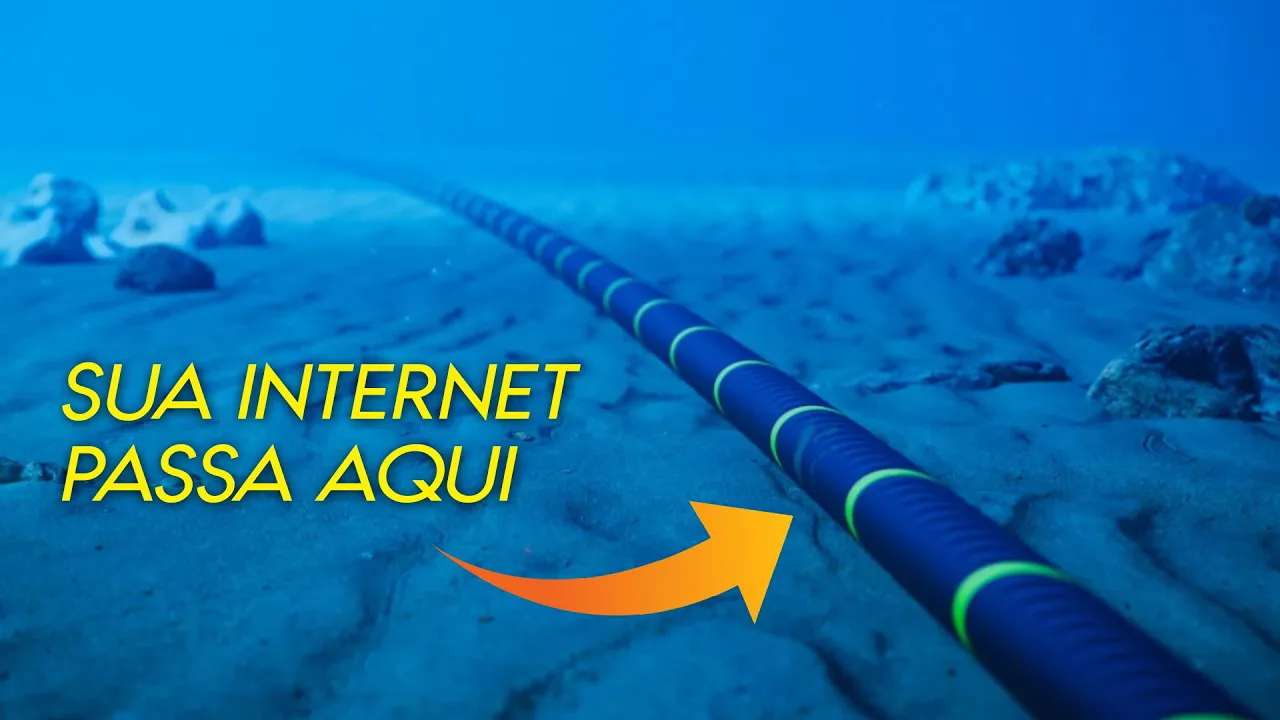
But it’s not just any big long rope: this is the internet.
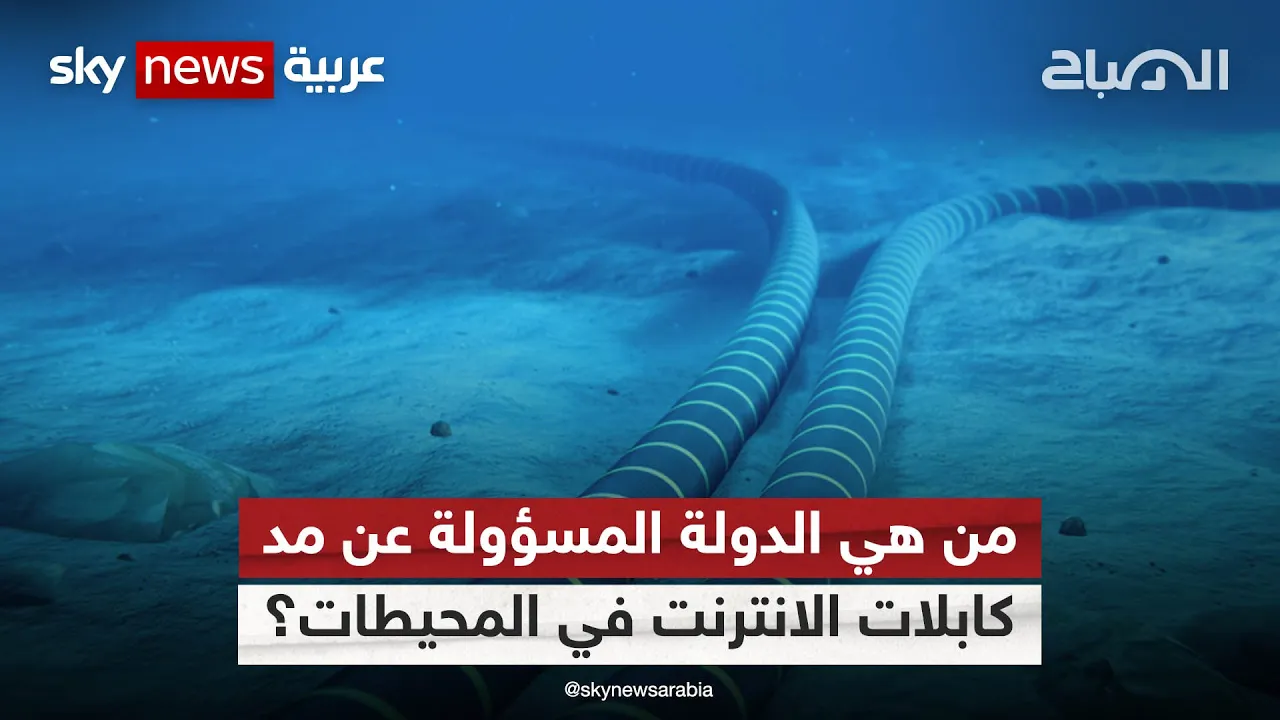
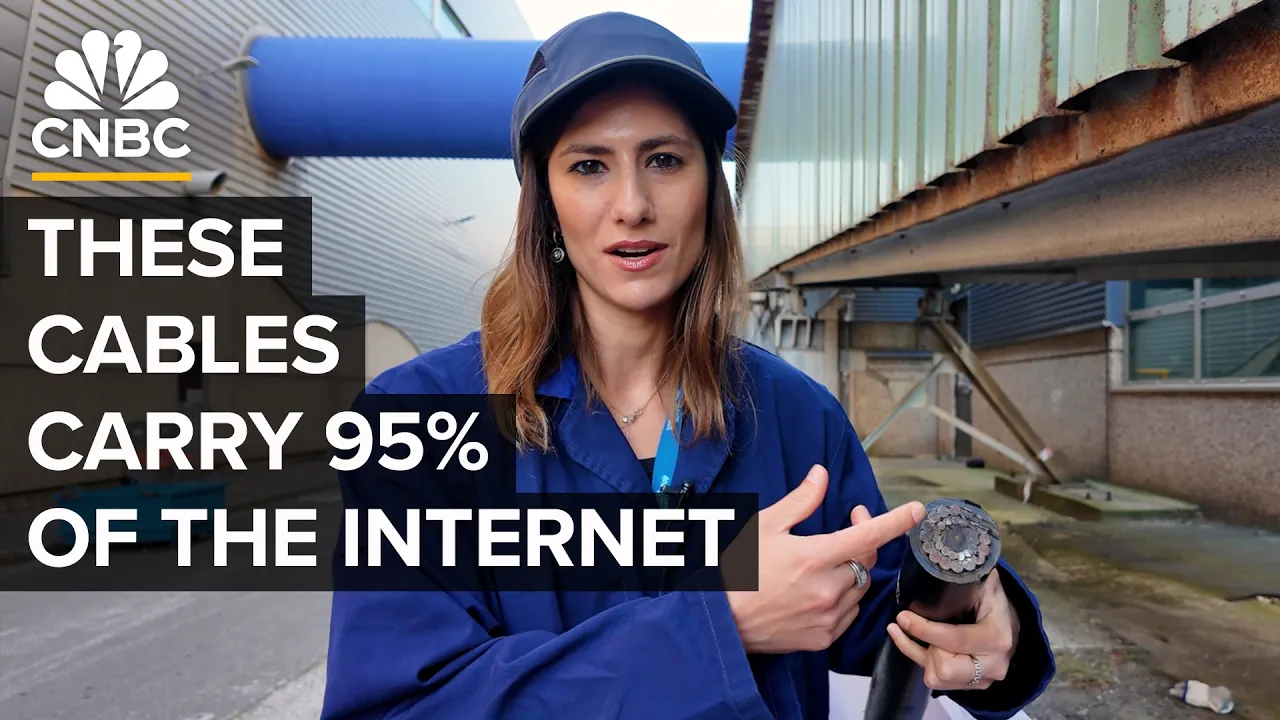
Undersea fiber optic cables like this carry 99% of the world’s international telecommunications traffic: global commerce, military secrets, passive-aggressive emails, Zooms that could have been passive-aggressive emails, and the YouTube videos you watch during those Zooms—yes, I see you, hello—all ripping through the murky depths at the speed of light.
Right now, there are over nine hundred thousand miles—or over 1.4 million kilometers—of cables sitting on our ocean floor: enough to go from Fiji to Sydney… then to the moon, then around the moon 51 times, then back to Sydney, then around the Earth three times, then to Melbourne.
Now, because they’re sitting at the bottom of the ocean, there’s not a ton of footage of these cables, so we’re gonna use footage of eels instead, because what is an eel if not an underwater electric rope?
Think about it.
Despite being some of the most important infrastructure in the world, undersea cables are vulnerable: to sabotage, to espionage, to shark bite-age.
And wherever you find important technological infrastructure, the potential for spying, or especially both, you will find the United States and China—bickering.
The latest and greatest spat concerned this particular cable, the much-awaited follow up to South East Asia-Middle East-West Europe 5: South East Asia-Middle East-West Europe 6… or SEA-ME-WE-6 for short, or SMWX for shorter.
But before we get to the deets of this geopolitical cable-measuring contest, let’s talk about what these things are and how you could possibly build one.
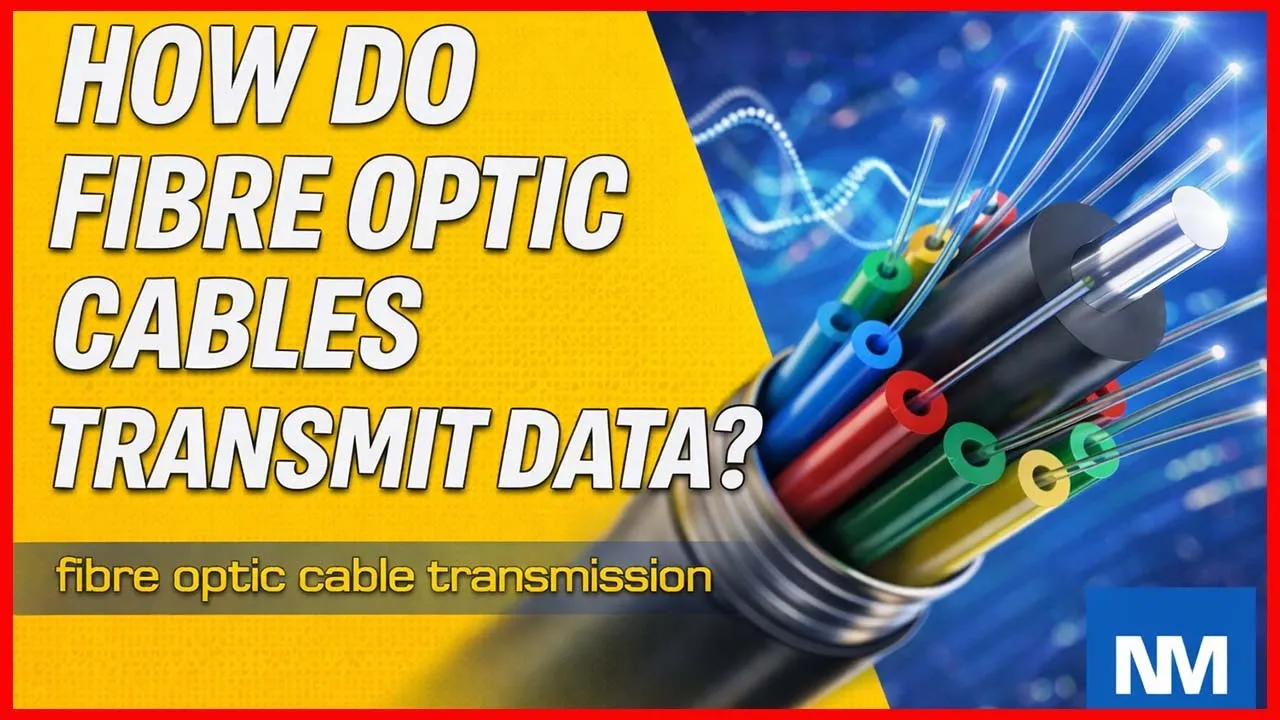
A fiber optic cable carries information as light: flashes of a laser at one end of the cable create sequences of “light on” and “light off” that get interpreted at the other end as ones and zeroes.
An optic fiber is a thin strand of ultrapure glass, engineered to promise total internal reflection—basically, that light fired at a certain angle will bounce all the way down the cable and never Pink Floyd its way out.
Even so, the signal weakens as it travels, so cables have amplifiers at regular intervals down the line to boost it.
On the ocean floor, those get their power from a layer of copper around the fiber that carries electricity all the way from the shore.
Other layers include a steel wire to shield the cable from oceanic pressure, polyethylene to prevent static electricity and corrosion, crush-resistant armor to resist crushing, and tar-soaked nylon yarn on the outside to protect from ship anchors, shark bites, and other horrors of the deep.
There are only sixty-ish ships in the world that can put these bad boys down.
They carry about 5,466 metric tons of cable onboard in huge spools, plus a remote-operated plow that crawls along the ocean floor and lays the cable—following a path designed to avoid large rocks, trenches, and coral reefs.
Often, the plow just drops the cable on the ocean floor, but sometimes it digs a small trench and buries it as it goes.
It’s a huge operation: one of the ships, the Durable, has a crew of eighty people who split two twelve-hour shifts so they can lay cable around the clock.
As you can imagine, this is all expensive.
Transatlantic cables tend to cost about forty thousand dollars per mile, or about twenty-five thousand per kilometer.
Sometimes one huge company, like Google, will pay for their own, but more often, multiple companies will go in as partners, splitting the responsibility of paying for and managing the cable in exchange for owning some percent of its bandwidth.
Sort of like the Avengers… for wires.
This was the case for SEA-ME-WE-6: it was going to be funded by a consortium of twelve-plus companies from a bunch of different countries: China, the US, France, Egypt, Sri Lanka, and more.
A few contractors put in bids to lay the cable.
The two that matter are China’s HMN Tech: a relatively new player in the undersea cable game, and the US’ SubCom: one of the three companies that had laid most of the world’s cable up to this point.
In early 2020, the consortium gave the contract to HMN because—thanks to some government subsidies—they could build SEA-ME-WE-6 for five hundred million dollars—250 million less than SubCom.
And the United States of America took that personally.
The stated concern was that the US thought HMN was too cozy with the Chinese government, and that if they built the cable, said government could all-too-easily install surveillance equipment.
But this is the US we’re talking about, and sure, the US loves to worry about China spying on us.
But even more so, we love to worry about China getting too good at a tech thing.
Because if they get better than us at a tech thing, what’s next?
Women’s gymnastics?
Wars??
It’s unthinkable.
So when HMN scored the SEA-ME-WE-6 contract, the US government went all-out to flip it to SubCom.
The US Trade and Development Agency rolled up to five telecom companies along the cable’s route and offered a total of 3.8 million dollars in “training grants” as long as they picked SubCom to get the contract.
Then came the gossip: US diplomats spread this nasty little rumor that the US government was going to sanction HMN, basically promising that the companies that owned the cable would lose their US clients and go bankrupt if they didn’t just let SubCom build it.
The US also got people talking about the security risks: how easy it might be for China to put remote spying equipment on an HMN cable even though it wasn’t gonna make landfall in China.
Did they have evidence of this?
Well, no, not really, but that’s what makes gossip fun.
Though they did follow through on those sanctions.
Meanwhile, the Department of Commerce called their buddy, the Federal Import Export Bank, to loan some money that would drive SubCom’s price down, and in February 2022, enough consortium members flipped their votes that SubCom got the contract.
SubCom is expected to have SEA-ME-WE-6 up—or, I guess, down—and running by 2025.
So to the United States: congrats on winning another charm for your technological proxy war bracelet.
And sharks: congrats on your new delicious snack.
Oh, they figured that out?
Well, sorry sharks.
That’s business.
And you know what else is business?
Replying to boatloads of emails… that’s actually most of business.
But it just got easier, thanks to this video’s sponsor: GrammarlyGO.
GrammarlyGO provides AI technology on, well, whatever you’re writing.
As a content creator, one of the biggest pain points is opening my inbox and having to spend hours on a few emails, but now, with Grammarly’s new AI tool, I can just click the green light bulb and BAM, it summarizes my email and provides a few responses for me to choose from.
Just like that, I can save hours on my emails.
That’s not all, though - you can use it to help you generate outlines for video scripts, an itinerary for your vacation, and so much more.
Or, if you’re chronically over the word count, like me, it can help you cut down and tighten up—instantly.
It’s basically a collaborator you install right into your browser and works on all your favorite apps so no more switching back and forth.
It’s ready to help you whenever and wherever you need to brainstorm, edit, re-edit, re-re-edit, re-re-re-edit… you get it.
It just makes writing faster, easier, and better… so if you like “faster, easier, and better,” you’re gonna love GrammarlyGO.
Also forgot to mention, it’s COMPLETELY free to use!
You can sign up right now at http://grammarly.com/hai, and you’ll even get 20% off of Grammarly Premium.
Up Next
13:05
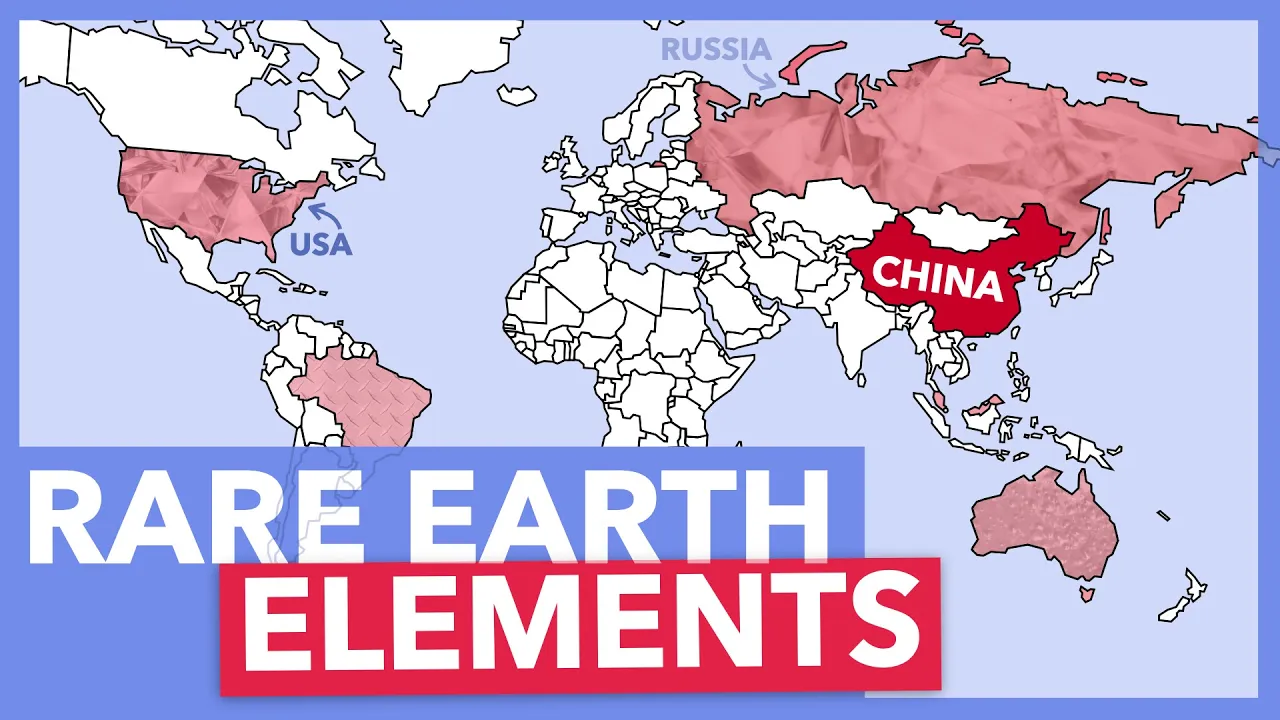
Rare Earth Elements and the Geopolitics of Green Energy Supplies
@TLDRnewsGLOBAL
104K views•2022-05-25

12:54
Triumph of Orthodoxy Icon: Byzantine Art & History Explained
@BenCallan
2.1K views•2024-08-06

9:49
FastAPI vs Flask vs Django: Choosing the Right Python Web Framework
@TechWithTim
302.5K views•2024-05-26

1:42
Game of Thrones Opening Credits: A Cinematic Analysis
@gameofthrones
46.3M views•2011-04-18
Related Study Plans & Knowledge Roadmaps
Structured learning paths in General & Interdisciplinary Studies
general-studies
Elevator Engineering: History, Physics & Cities
01From Hoists to Safety Brakes: The Dawn of Vertical Lift
02Hydraulic vs. Traction: The Engineering Physics of Elevators
03Modern Speed, Safety, and Algorithms
+ 2 more learning modules
12h5 modules
Explore Roadmap
general-studies
Rubber: Material Science, History & Geopolitics
01Origins of Natural Rubber & Mesoamerican History
02The Chemistry of Natural Rubber & Vulcanization
03The Geopolitics of the Rubber Boom & Colonization
+ 2 more learning modules
12h5 modules
Explore Roadmap
general-studies
Containerization: Evolution, Logistics & Trade
01Ancient Trade & Bulk Cargo: Amphorae to Barrels
02The Industrial Revolution & Cardboard Packaging
03The Containerization Revolution: Malcom McLean
+ 2 more learning modules
12h5 modules
Explore Roadmap
general-studies
Textile Tech: Evolution, Labor & Global Impact
01Pre-Industrial Textiles: Handloom & Cottage Industry
02Mechanization: The Spinning Jenny to the Power Loom
03The Factory System & Global Labor Transformation
+ 2 more learning modules
10h5 modules
Explore Roadmap