









![L'enfumage de la transition écologique ? Guillaume Pitron [EN DIRECT]](https://i.ytimg.com/vi/2lHTHINmNVk/maxresdefault.jpg)









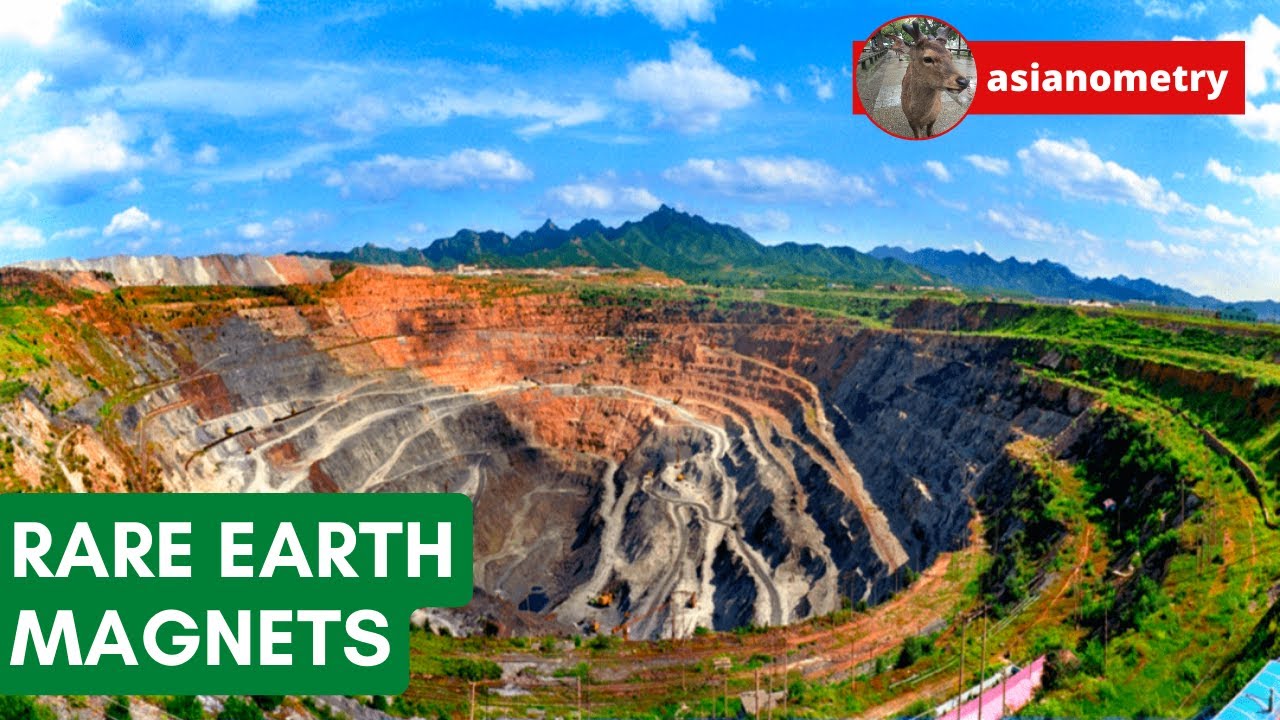





Rare earth elements (REEs), comprising 17 metallic elements including lanthanides, yttrium, and scandium, are essential for modern technology including smartphones, batteries, and wind turbines. Despite their name suggesting scarcity, REEs are relatively abundant in Earth's crust (150-220 parts per million combined), but they are rarely concentrated into mineable ore deposits, making extraction difficult and chemically intensive. China controls approximately 90% of global REE production and processing, holding 38% of world reserves (44 million tons), while Western countries collectively hold only about 10% of reserves. As demand for REEs surges due to the green energy transition—with battery demand projected to increase five-fold by 2030 and wind power capacity expected to grow tenfold by 2050—the geopolitical significance of REE supply chains intensifies, creating strategic dependencies that could impact international relations and energy security.
Rare Earth Elements and the Geopolitics of Green Energy Supplies
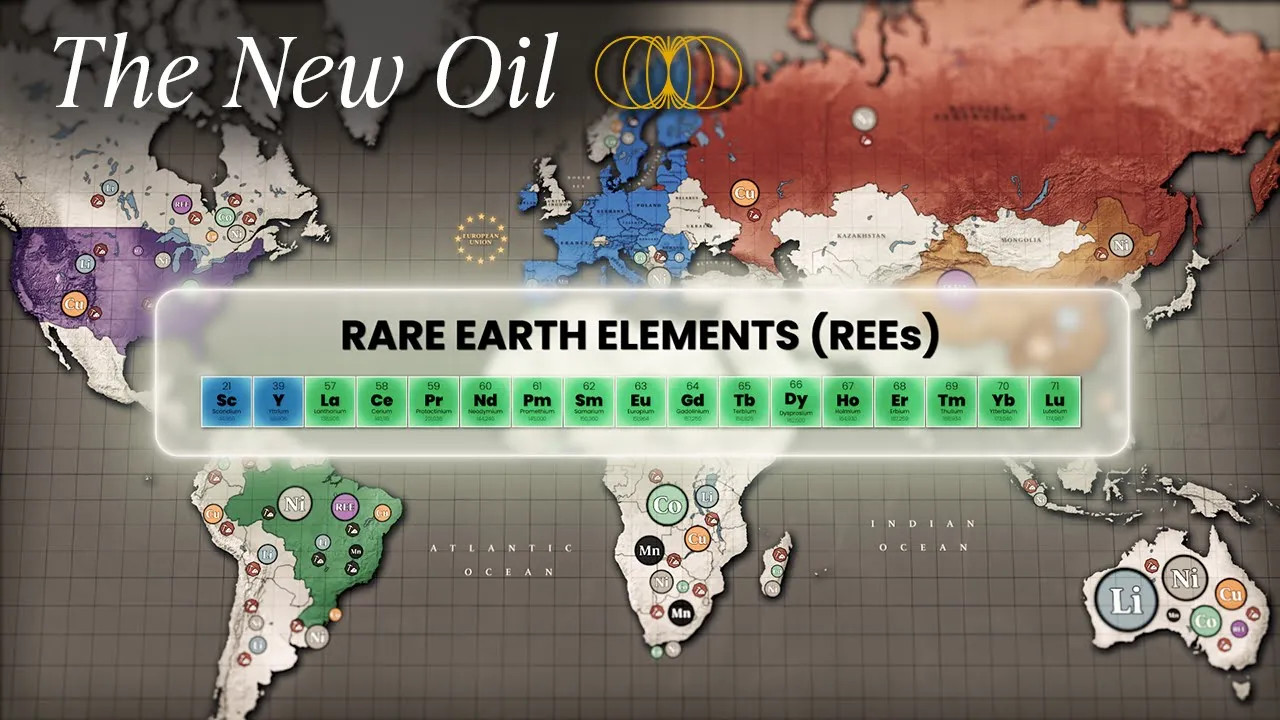
Added:this video was brought to you by curiosity stream which is just for this week at its cheapest price ever of 11.59 a year get access to bonus tldr content as well as all of our videos ad free by signing up to the curiosity stream nebula bundle deal linked down below if you're watching this video on your phone or computer chances are that you're currently holding some rare earth elements today rare earth elements or rees are an integral part of modern life they're used as components in smartphones digital cameras leds and even semiconductors however they're about to become even more important because a lot of the technology which is involved in the green transition like electric batteries and wind turbines require huge amounts of rees so in today's video we're going to be explaining what rare earth elements actually are where they're located and why they become a hot topic of political debate [Music] so before we get into politics of all of this what actually are rare earth elements while chemists use the term to refer to a set of 17 metallic elements the 15 lanthanides plus itrium and scandium which both have similar chemical properties to the lanthanides although scandium occurs far less frequently than the others and is sometimes excluded regardless politicians tend to use the term a bit more loosely than chemists and don't get so hung up on the technicalities as such they use it to refer to essentially any exotic metal used in advanced industry including metals like lithium nickel and cobalt which don't technically fall within the category at all regardless for the purposes of this video we're going to be using the scientific definition just because it's better demarcated and well we can always do another video on lithium another day anyway rare earth metals are often separated into light and heavy the light elements are those with an atomic number less than 65. while the heavy ones are those with atomic numbers of 65 or over in other words everything to the right of terbium with that established let's talk about their rarity because contrary to their name rare earth elements aren't actually all that rare estimates vary but most scientists put the combined abundance of rare earth elements in the earth's crust somewhere between 150 to 220 parts per million individually the most abundant re is cerium which comes in at about 60 parts per million while the rarest is probably thulium which comes in at about 0.5 parts per million for context this is significantly more than many other metals which are mined on an industrial scale things like copper which come in at 55 parts per million and zinc which comes in at 70 parts per million so if they're not actually all that rare why are they called rees well the issue is that unlike other commercial metals rare earth elements are rarely concentrated into mineable ore deposits instead they're found mixed into certain clay and rock deposits so extracting them is difficult and chemically intensive fortunately at the moment none of these minerals are required in massive quantities global rare earth production amounted to about 240 tonnes in 2020 about 1 of the 21 million tons worth of copper mined in the same year the most common use for rees are magnets and catalysts which accounts for 29 and 20 percent of all re use respectively but it's worth saying that a significant fraction about eight percent are being used in batteries so important as they are res are about to become significantly more important in the coming era of renewable energy and that's because obviously the green transition will involve a massive movement towards electric vehicles and in turn this will increase demand for batteries and therefore rare earth metals in fact it's estimated that battery demand is going to rise five-fold by 2030 which would amount to a 25 increase in re demand in the same time frame res are also really important for wind turbines because wind turbines use magnets to generate electricity and that's a big deal because global wind power capacity is expected to increase tenfold to six terawatts by 2050 which would increase total demand for res by as much as 300 all in all the international energy agency estimates that global demand for res will increase by somewhere between 200 and 600 percent by 2040. now obviously all of this is fairly speculative no one knows how many cars or wind turbines will actually end up being built in the future and future technological advantages might significantly reduce demand for res however as things stand it looks like any country which wants to take the green transition seriously will have to invest massively into rare earth elements which leads us into the second part of this video who actually has these minerals well let's start by looking at reserves i.e which countries have re deposits within their territory according to the u.s geological survey there are an estimated 160 million tons of mineable re deposits worldwide and china has the world's biggest re reserves with 44 million tons or about 38 of the global total vietnam comes in second with about 19 brazil in third with 18 russia in fourth with 10 and india in fifth with six percent which leaves only four so-called western countries with sizable ree reserves australia has just over four million tons greenland and america have 1.5 million each and canada has just under a million now it is possible that these estimates will change as new mines and extraction methods are discovered but the basic idea is that china will have the upper hand when it comes to rea reserves however when it comes to actual re production china basically has a monopoly already china is already responsible for producing and processing nearly 90 percent of the world's reu's with the remaining production being carried out in myanmar and estonia it wasn't always like this though china only actually started processing res in the mid 80s and before then the us was the industry leader china ended up replacing the us partly because it has the largest domestic reserves but also because china could just do the job a lot cheaper mineable rare earth deposits also coincide with all sorts of hazardous elements like uranium arsenic and other heavy metals and processing itself is very chemically intensive china's low wages and near non-existent worker standards meant that it could undercut the u.s industry even if that came at a cost to chinese workers health anyway as you can probably imagine all of this has turned re production into a political affair with the u.s china rivalry heating up hawkish american politicos have started worrying about a chinese blockade of ree exports and europeans have begun to realize that while the green transition might reduce their dependence on russian oil renewables will increase their dependence on chinese rare earth elements and this all really hit the headlines in september of 2010 when the pla blocks a routine shipment of res to japan after the japanese navy arrested a chinese fishing boat near the disputed east china sea islands the world then quickly realized how dependent it was on chinese rare earths and prices spiked to all-time highs since then japan has successfully diversified its re supply away from china mainly by switching to australian res and recycling when possible and this effort has been pretty successful in 2010 china accounted for over 90 percent of japan's re imports but today that's down to 58 and japan reckons it will be below 50 percent by 2025. america has actually tried to do something similar albeit with less success with the help of the government various american companies have started looking for new deposits with the most promising being a project in arizona and to push the private sector even harder in january a bipartisan group of senators introduced a bill that would prohibit defense contractors from procuring rare earth metals from china by late 2026 and forced the pentagon to create a strategic reserve of those elements by 2025. however despite all of these efforts america still has only one operating rare earth mine in california and china still supplies about 80 percent of the us's ies the eu has similarly tried to reduce their dependence on chinese imports to try and bring this number down in 2013 an eu-funded project began looking for minable deposits on the european mainland but has so far had limited success and things were made worse when the most promising mine one in greenland was closed in november of last year after a law was passed which banned exploration of deposits with uranium concentration above 100 parts per minute which for context is considered very low grade by the world nuclear association ultimately then the west will probably rely on china for res for the foreseeable future and while precautions might make sense the best way the west can protect its re supply is to well avoid a war with china if you want more on this topic from us then you should check out nebula you've likely heard us talk about our streaming service nebula before but it's at its lowest price ever right now so give me one minute to explain to you why you should care and as always with tldr there's three reasons firstly signing up to nebula gets you a ton of additional tldr content we released some of our videos exclusively on nebula and those are full-length proper videos as well as a super fun studio tour we also release longer versions of some of our videos in fact we release a longer version of our show the daily briefing on nebula every single day that's a lot more tldr for you every day secondly everything on nebula is ad-free and that's not just tldr either that's all of your favorite creators like wendover productions real life law polymatter legal eagle half is interesting and tons of others and it's all ad free so there's no mid roles and i wouldn't even be talking to you right now thirdly signing up and watching on nebula really helps the channel and here's the maths tldr viewers signing up to nebula has significantly improved our ability to monetize our content which has allowed us to begin employing more staff and investing in new technology to improve our content you might not notice it quite yet but you soon will and signing up is super helpful to make that possible so you're convinced right did i do it in a minute who knows it's pre-recorded but anyway if you did want to sign up for nebula the cheapest way to do so is with the curiosity stream nebula bundle deal that way if you sign up to curiosity stream at the crazy low price of 11.59 a year then you'll also get free access to nebula as long as you're a paying member that's right two streaming services for less than a dollar a month and by the way that crazy low price only lasts for this week and it's worth saying that curiosity stream is awesome it contains absolutely boatloads of high quality documentaries on all kinds of topics that i know that tldr viewers are going to love so if you want both services for 11.59 a year this week only then the link is down below and if not well i can't say i haven't tried to convince you thanks for your support you
Up Next

Chip War: Semiconductors and Global Geopolitics Explained
@Moconomy
269.6K views•2024-12-22

Triumph of Orthodoxy Icon: Byzantine Art & History Explained
@BenCallan
2.1K views•2024-08-06

FastAPI vs Flask vs Django: Choosing the Right Python Web Framework
@TechWithTim
302.5K views•2024-05-26

Game of Thrones Opening Credits: A Cinematic Analysis
@gameofthrones
46.3M views•2011-04-18
Related Study Plans & Knowledge Roadmaps
Structured learning paths in General & Interdisciplinary Studies