






![[세뇌탈출 2706탄] 바이든 “독재자 시진핑은 개쪽팔고 있다”. 블링켄 방중에 숨겨진 비밀! -1부 (20230622)](https://i.ytimg.com/vi/n6pYhMBKnTM/maxresdefault.jpg)
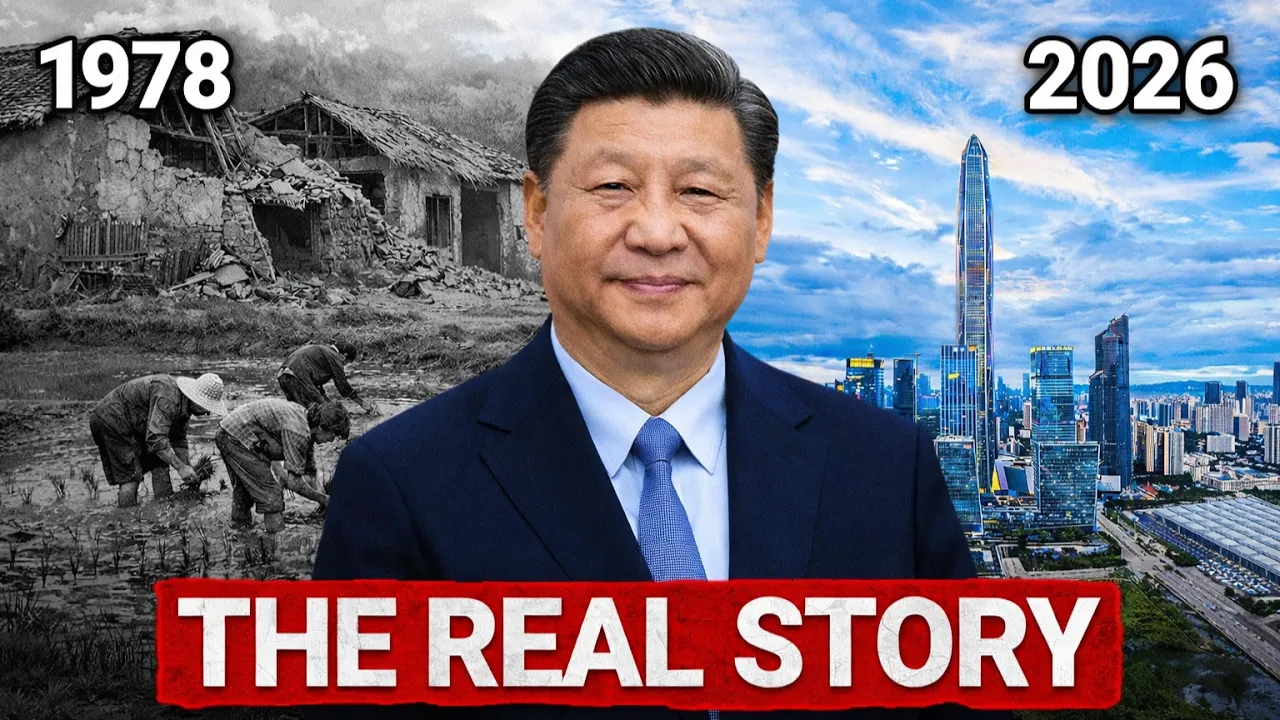
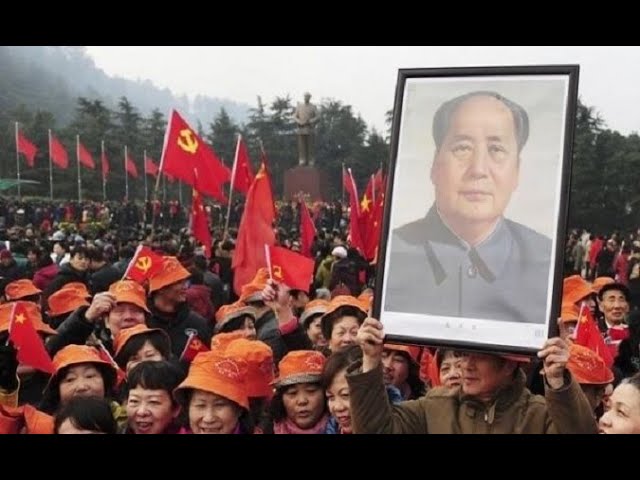
















China is pursuing comprehensive self-sufficiency across technology, energy, food, and finance sectors under President Xi Jinping's 'dangerous storms' preparation strategy, investing trillions in domestic semiconductor production, nuclear energy development, agricultural innovations like sea rice, and financial system alternatives to reduce reliance on Western technologies and currencies.
China's Self-Sufficiency Strategy Amid Global Tensions | CNA Documentary Part 2
Added:The economic concept of 'autarky' (self-sufficiency) versus standard international trade theories based on comparative advantage.
The geopolitical context of US-China relations, including the origins of the trade war, tech sanctions, and concepts of 'decoupling' and 'de-risking'.
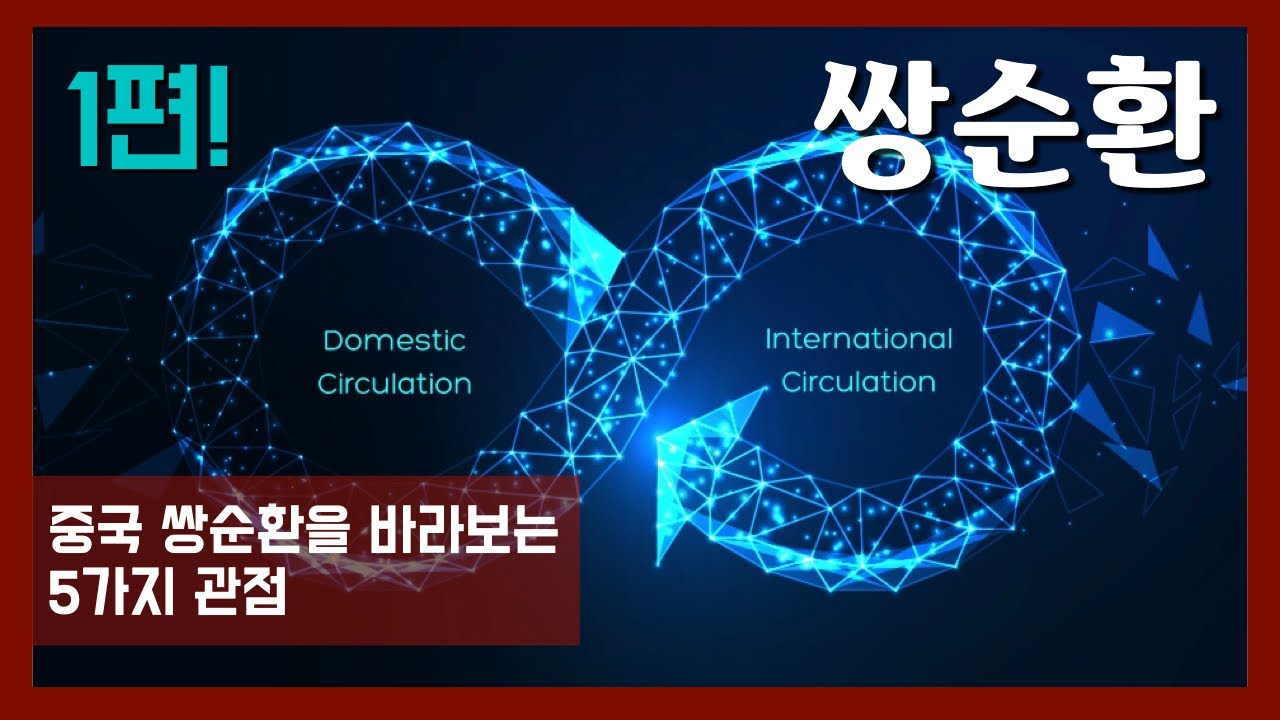
China's domestic political economy framework, specifically the role of state-directed capitalism, five-year economic plans, and the 'Dual Circulation' strategy.
An overview of global supply chain vulnerabilities, particularly concerning critical semiconductors, energy resources, and agricultural dependencies.
A comparative study of strategic autonomy policies in other regions, such as the US CHIPS and Science Act and the European Union's industrial strategies.
Evaluating the economic and inflationary costs of supply chain duplication and deglobalization on multinational corporations.
In-depth analysis of specific technological frontiers where China seeks self-reliance, such as lithography in semiconductor manufacturing and advanced AI hardware.
The geopolitical implications of economic bifurcation, focusing on how reduced economic interdependence affects the likelihood of international conflict.
824.3K views6.7Klikes46:46Original Release: 2023-05-06
foreign [Music] [Music] Congress presidency has been preparing China for what he calls dangerous storms those preparations are now gaining momentum in a number of areas foreign domestic energy is about 80 percent eating China's always been acutely aware of dollar dependency and the potential for sanctions to affect its access to International Capital Market what does it mean to prepare for dangerous storms Wuhan is known internationally as the first city that was locked down in China's fight against covet 19.
but within China it has a different reputation the industrial park here known as Optics Valley is among the leading high-tech clusters in the country there are more than 4 000 tech companies located here Optics Valley is also home to several domestic memory chip manufacturers if there was ever a place that represents China's efforts to wean its dependence on overseas technology this would be it and the most prominent of all the tech companies is this one foreign visited HG Tech in June 2022 he toured the production lines for laser cutting equipment used in the semiconductor consumer electronics and automobile Industries he also encouraged the company to make technological breakthroughs fast um foreign Beijing wants more success stories like HG text to emerge it's playing an active role in supporting tech companies and in a number of ways here in hupei Province alone 100 billion yuan or 14.9 billion US Dollars was spent on supporting research and development in the year 2021 that's up 43.5 percent from 2017 according to Chinese media at Optics Valley companies can also tap on a 1 billion yuan Science and Technology Angel investment guidance fund there are also incubators and maker spaces to support creativity tax breaks marketing support and universities here are well funded producing more than 1.3 million college graduates for hire [Music] China's investment towards Tech Independence extend well beyond Optics Valley for decades Chinese government has been paying a lot of attention and investing a lot into the tech sectors by these days in the new situation especially in the context of china-u.s rivalry actually the Chinese government has increased its investment into the tech sectors tremendously for example we see that actually China is in is encouraging a lot of tech firms to be listed in Chinese stock markets which also help these firms to get Investments get help from the public as well and also the Chinese government is also promoting a lot of tech related officials sometimes we call them technocrats into the key positions and this will also help them to be better involved in all kinds of initiatives that help Chinese take technology and the science departments things presidency has visited dozens of high-tech companies to emphasize the importance of technology Independence all right foreign anybody [Music] calls it is [Music] Fusion [Music] foreign the Chinese government has set aside more than 10 trillion U.N establishing about 1 800 government guidance funds to invest in strategic Tech sectors another 200 billion U.N had been pledged specifically for semiconductors the Chinese government is even considering expanding that to one trillion U.N Thompson has been tracking developments in China for decades he's a former U.S defense department official responsible for managing bilateral relations with China they've invested trillions of remnb provided subsidies that we probably can't even count and really pushed the sector forward to develop new technologies that make them independent of Western Technologies but they're still not meeting their objectives and they're still struggling uh to achieve that Independence that they want and I think this tells us that there's something wrong in the system there's something wrong in the governance model for that sector there's perhaps political interference in individual organizations Laboratories companies disincentives perhaps that are baked into the system that are hurting China's ability to achieve that Independence despite the tremendous resources going to it so I think more money isn't going to solve the problem but presidency's message of technological Independence is one that resonates well within China the U.S decision to deny China access to Advanced semiconductors in October 2022 proves to the Chinese that their leader was spot on semiconductors are generally considered the weak spot in China's industry and in 2020 China imported 378 billion US dollars worth of the product foreign [Music] the United States chips and science act targets a variety of things here's one of them this is the Tian her supercomputer when it was unveiled in 2010 it earned the title of world's fastest computer questions after winning the title of the world's fastest computer in 2010 China's super computers held on to that top spot for seven years gaining computational speed every year foreign [Music] supercomputers are viewed as an indicator of national technology leadership and they are vital for many functions in areas ranging from the development of new aircraft to satellite launches to construction calculations to developing high-speed trains of course supercomputers are also required to develop Advanced military technology it is no secret that tin hu is developed by China's national university of Defense technology leadership in super Computing is vital to a range of national interests Mr mung the creator of Tian hoo and a proud member of the Communist Party explains the supercomputer's many uses foreign foreign take medical diagnosis for example the usual process to diagnose for breast cancer involves a mammogram MRI and a biopsy but a partnership between the hospital and the Tian her super Computing team promises to shorten and simplify the process ities foreign nutrition the U.S ban on Advanced ships to China affects the development of the supercomputer which in turn impacts many areas of the economy like healthcare engineering and other fields in the 2021 list of global top 500 supercomputers 186 Chinese supercomputers made it to the list in November 2022 there are 162 Chinese computers on the list though China is the global leader in terms of the total number of supercomputers its top machines are not keeping Pace with its competitors of the top 10 supercomputers listed in November 2022 only two were from China [Music] it was widely reported in Chinese media that these rankings are a direct result of the U.S government's technology squeeze the U.S sanctions on ships definitely will also have an impact among China's super computer development since this kind of development also needs numerous kinds of chips and semiconductors these kind of technological ban is unprecedented and across the board and will have very comprehensive and long-term impact upon China's industry and technology so now we see that a lot of China's key Tech firms like Huawei and other firms actually now face the shortage of chips for example and also some other related equipments and technology so that actually hinders their development and manufacturing of their products and services so in the short term definitely that would have huge impact upon China's high-tech industry and that may even shrink some of its global market share in the short term every time we hear about technology export bends to China we also hear some Chinese commentators saying that this is good for China it is giving the Chinese more impetus to innovate what are your thoughts on this yeah to some extent I think the statement is true as once you have to rely on yourself definitely that would boost your Innovation capacity and speed but on the other hand we also see that every country has its own competitiveness the strengths and the weaknesses in terms of technological innovation so I would say that China would never reach a point when the country can provide all the technology all the equipment it needs to develop the high-tech sectors so that's why I would say that actually even with its own Innovation domestic Innovation the country still needs key Technologies and core equipments from other countries foreign [Music] it's something that has become an area of focus for all governments especially after the war in Ukraine jacked up Global energy costs China has said it will prioritize energy security and it is putting its money where its mouth is hydrogen has been hailed as a fuel of the future according to Goldman Sachs green hydrogen could Supply up to 25 percent of the world's energy needs by 2050 and become a 10 trillion US dollar market in that year but some big obstacles need to be overcome for that to happen globally hydrogen or H2 is the most abundant element in the universe but pure hydrogen is very scarce to make it molecules need to be split and that requires energy to qualify as green it has to be made from renewable energy and that is what they have done here in ningxia where a solar system Powers the entire hydrogen plant inside hydrogen is made by electrolyzing water underneath people if green hydrogen is produced at scale it could help decarbonize industries and enhance energy security at the same time it could also be used to heat homes and offices and fuel hydrogen-powered vehicles so like 2025 China aims to give more importance to Industrial byproduct hydrogen and to develop Technologies for production transportation of green hydrogen so that means um the there will be about 50 000 fuel cell vehicles and 300 hydrogen refueling stations so that's pretty um impressive already now by 2030 um China aims to what it's called establish an Innovative hydrogen sector with reliable Supply system for green hydrogen to achieve those goals China will have to build many more of these plants this may be the largest one in the world now but an even bigger one is coming on stream in xinjiang in late 2023 um [Music] to achieve its energy security goals China will of course need to have a mix of energy sources [Music] new coal-fired electricity plant approvals have tripled in 2022 compared to 2021 nuclear is also being rapidly ramped up [Music] welcome to China's oldest nuclear power plant this facility in Ching Chan was built in 1991 and has operated safely for more than 30 years when they first started China had little knowledge of nuclear power and had to send its Engineers overseas for training Mr Chu was amongst the first batch of operators at Ching Shan who trained abroad s but over time intensive r d led to the country becoming a major player in the field in 2020 China built its first domestically designed nuclear reactor named hualong one reactor has the capacity to produce 10 billion kilowatt hours of electricity per year according to China State media that's enough to meet the energy demands of a million people see that is the hualong technology has more than 700 patents and 120 software copyrights and all of its 411 core parts were designed and manufactured domestically in China [Music] [Music] foreign [Music] [Music] not only is China ramping up its production of nuclear energy locally it is also exporting its technology to Pakistan and Argentina So currently the share of nuclear power enzyme is about five percent so that sounds small um but it's already the third largest installed capacity of nuclear energy in the world after the United States and after France and to also um explain a little bit and understand the scale and the acceleration of pre-nuclear Power by 2020 China had about 49 nuclear power generation units by 2021 they were 55.
um in 2022 um the China started construction of another 10 nuclear reactors so there was a yearly record so far and the goal over the next five years is to continue this extension of nuclear power with the rhythm of about six to eight nuclear power unit Generations approved um every year during the 20th party Congress the deputy director of the national energy Administration said China's self-sufficiency rate of energy Supply was maintained above 80 percent helping the country overcome severe challenges brought about by the pandemic natural disasters as well as the impact from the global energy price turbulence presidency called for even greater energy self-sufficiency during the 20th party Congress when he told the nation to prepare for dangerous storms so in China's 1400 lands out that's the one from 2021 to 2025 the energy self-sufficiency rate is set at 84 compared to the current 80 percent in order to understand China's energy self-sufficiency we need to look at China's energy structure and of course also its energy endowment the coal Remains by far the biggest component of China's energy sources contributing about 55 of the energy followed by oil 19 in natural gas eight to nine percent in other words China is absolutely dependent upon fossil fuels China lacks mostly in oil and natural gas neither relies on imported oil and natural gas for its consumption in this case China as long as it's dependent on fossil fuels it is becoming less self-sufficient and what are the two strategies number one increase domestic production of fossil fuels but at the same time of course China is accelerating the use of low carbon and clean energy over 60 percent of China's oil consumption comes from other countries so that's why China always faces this kind of Malacca dilemma The Dilemma of Malacca Street was first emphasized by the previous communist leader who Jing Tao he realized that actually China relied too much on the oil Transportation through the Maraca Street and if one day for example due to the geopolitical tension and all the South China Sea disputes when this kind of sea line has been cut off China May face huge energy security problem this is a Manaka dilemma China has taken many steps to address this including building a strategic multi-billion dollar oil and gas pipeline in xiaopio in Myanmar than 80 percent of China's oil imports used to have to pass through the Malacca Strait now some of that goes through Chow Pew in Myanmar before passing through the hills of Yunnan and the City of Kunming which is the capital of Yunnan a good example is the the pipelines in Myanmar which is probably very expensive I've been to the border crossing at Ray Lee a few times where the pipeline comes across it's it's a major undertaking um but I mean just think of the physics you have to pump oil all the way to the what's the altitude of Kunming it's five six thousand feet I mean it's almost a mile high you're pumping oil vertically over a very long distance it's going to be very expensive oil but if that gives them security then they're willing to pay that premium [Music] food security that's been a policy priority for the Chinese government since presidency instructed people not to waste food in 2020.
with global food prices increasing sharply after the Ukraine Invasion discussions about food Security in China have taken on an even more urgent tone [Music] is [Music] but it's a difficult task feeding 1.4 billion people it's a well-known fact that China is home to one-fifth of the global population but has only seven percent of the world's arable land China's farmlands are also not as productive when compared to the world's top producers for example corn output per hectare in China according to a new Goldman Sachs report is 40 percent lower than in the U.S and it takes Chinese Farmers between 6 and 26 percent more grain to produce a kilo of pork or chicken than their American counterparts foreign but just as Chinese scientists have overcome difficulties in nuclear energy technology or laser Manufacturing though too is transformation taking place in the agricultural sector [Music] focus is of course placed on Rice which is an essential part of the diet of nearly every person in the country [Music] in the city of qintao scientists have developed a hybrid strain that produces higher yields while being more climate resilient it's called sea rice and it can even grow in Tidal flats and saline alkaline land traditionally rice is grown in fresh clean water it's a crop that is especially sensitive to salt content but Chinese scientists have managed to crack the code research on seawater rice was pioneered by Yuan long ping China's father of hybrid rice who's regarded as a national hero for boosting China's grain Harvest time foreign the research done by Mr Yuan and his team is critical to China's food security China has a large amount of saline alkaline land that previously could not be used for agriculture the amount of such land is estimated to be about the size of Egypt recent farming techniques such as the Intensive use of fertilizer has only added to the problem [Music] s with [Music] um [Music] foreign so important is Mr un's contribution that when he died in year 2021 at the age of 91 tens of thousands of mourners turned up for his funeral despite the covid-19 pandemic people came not just from his home city of Changsha but from all over China foreign [Music] foreign [Music] [Music] come on the public outpouring of emotion underscores the importance of food security discussions in China today a new generation of agronomists carry on the work of Mr Yuan [Music] IA [Music] thank you [Music] [Music] [Music] thank you [Music] there's been a big push towards the use of technology in Chinese agriculture for example Beijing has called on local authorities to set up a network of greenhouses high-tech ones that have automated irrigation temperature and lighting Management Systems there's also research emphasis on seeds which are considered the microchips of agriculture 2017 the Chinese spent 43 billion to acquire syngenta a Swiss agritech group whose large business portfolio includes seeds the same year the Chinese also paid 1.1 billion for some of the Dow Chemical companies corn seed business in Brazil foreign foreign [Music] [Music] thank you China has been working especially hard to diversify its food imports away from one major supplier in particular the United States used to be China's largest agricultural supplier in 2021 Brazil overtook the U.S for the top spot and now provides 20 of China's agricultural Imports [Music] thank you when Russia invaded Ukraine the U.S imposed a series of sanctions Russian Banks were kicked out of Swift paralyzing its financial sector the world uses the Swift International payment Network to pay for practically everything every day 5 trillion US Dollars get transferred across the world using the system being excluded from Swift means not being able to conduct cross-border transactions when Russia invaded Ukraine the U.S weaponized the dollar how did China View this this kind of Financial Security is another area Chinese has been closely or watching throughout the Ukraine war because it realizes that one day China may also faces a similar situation Russia is now facing if there's a war breaks out in the Taiwan Street for example so we know that China is already the world's leading Trader and also the world's second largest economy yet it still relies heavily upon the international payments in terms of U.S dollars so that's why once the United States is cutting China's access to the U.S dollar payment system globally China May face huge Financial Security challenges so China now is thinking about all kinds of solutions to bypass such kind of dilemma of Remy Beijing has been working hard to internationalize the U.N for example it launched cips or cross-border interbank payment system which is an alternative to Swift as of 2021 it was reported that 1280 financial institutions in 103 countries are connected to the system the Bank of China had also stepped up bilateral local currency swap agreements with 22 central banks an authorized U.N clearing banks in Singapore Malaysia the Philippines and Thailand the Chinese currency has definitely been making inroads internationally in 2021 un settlement jumped 20.7 percent to 5.77 trillion U.N for cross-border trade settlement in the first half of 2022 spurred by the events in Ukraine the figure jumped another 31 year on year in October 2022 it was announced that the UN had become the fifth most actively traded currency in the world for the first time but it still lags far behind the US dollar in trading volume there's a lot of limitations to the remnb that that make it unfavorable for a lot of a lot of countries to use for transactions so they've struggled to achieve that Independence like what for example what's stopping more countries from adopting it well I mean there's a number of problems with the REM and B first of all it's it's not freely floating it's not you know its value is not determined by markets uh it's determined by the state so it's a fixed it trades in a very narrow band determined by the by the Central Bank of China so so other countries don't really have control over it and it's not driven by market forces so it's not self-regulating I think you also have a problem of course with you know China's balance of payments um and and countries don't want to necessarily be holding large amounts of REM and B if they don't have certainty about how China is going to change the valuation there's a massive issue around transparency and isn't the evaluation kind of stayed the same over the last 10 years except for when it doesn't I mean the problem is the lack of transparency the potential for very arbitrary political decision making uh which doesn't happen necessarily with markets or at least if it happens within a market it's explainable and understandable and driven by the behavior of those International partners technology Independence energy Independence food Independence and financial Independence how does all this tie in with President C's message to prepare for dangerous storms truly self-reliance has been the Communist Party of China's long-term strategy since the establishment of the People's Republic of China in 1949 so there's not much new about it but the issue is that I think after Xi Jinping came to power he emphasized the more and more on the self-reliance in every aspect including the Financial Security energy security food security and also technological security uh so one of the contests in which he's emphasizing this kind of self-reliance easy geopolitical tension with the United States so this is as the Chinese are seeing more and more sanctions from the United States they realize that actually they have to rely more and more on themselves in terms of the access to these very important resources so that's why I think these days China has become more and more self-reliant on its domestic capacities than before are we going to see a China that is more sealed off from the rest of the World As It prepares for dangerous storms to code presidency I think the country is still emphasizing the opening up the globalization so we are seeing that actually there still needs the resources from other countries so the aim is to be more self-reliant but also to open up to the world at the same time so it's a kind of do strategy yeah the Communist party has been very concerned about foreign entanglement about foreign dependencies but when you get to the Xi Jinping era he's really taken it to another level his risk perception is very acute do you think that everything that we discussed points towards a China that is preparing for war I mean Xi Jinping certainly talks about war a lot he regularly exhorts the pla to prepare for war he gives them very clear operational objectives uh strategic objectives for war fighting and he started using martial terms more often words like struggle uh words like you know prepare for war prepare for difficult times ahead a lot of of language that really creates a sense of urgency within the party Cadre bureaucracy as well as the government bureaucracy so by using these warlike analogies that creates the condition for uh for for conflict that means foreign foreign bladed Lane very slowly I mean the U.S has been at war with you know the Middle East for two decades it's been very focused on that conflict is not mobilizing its society and its economy so I think China is much more acutely aware of the potential for conflict in the US if you talk to people in China they're acutely aware of the United States and and and the perceived threat to it but if you go to the United States the average person doesn't think about China what about the political Elites in the U.S certainly since the Trump Administration began the Washington has had a pretty bipartisan consensus that China represents a threat but representing a threat to American democracy American jobs American Security is very different than preparing for war um and I think you'll also find there's a big gap between the capital Washington and also between Wall Street and between Maine Street I think there's there's a big divide in terms of how they view Asia Pacific their level of understanding and their risk calculations and and their perception of cost-benefit analysis perfect [Music] [Music]
Up Next
5:07
Impact of Yuan in Indo-Russian Trade Amid Sanctions
@WION
261.9K views•2022-07-01
45:48
China vs West: The Trade War and the Future of Made in China
@CNAInsider
2.6M views•2024-01-18

10:33
Behavioral Economics Explained: Rationality, Nudges, and Risk
@crashcourse
1.1M views•2016-03-12

113:18
The Age of Easy Money: Fed & Inflation | Full Documentary
@frontline
21.2M views•2023-03-15
Related Study Plans & Knowledge Roadmaps
Structured learning paths in Economics
economics
Sovereign Debt: Defaults, IMF & Restructuring
01Introduction to Sovereign Debt & Government Bonds
02Debt Sustainability & Credit Ratings
03Anatomy and History of Debt Crises
+ 2 more learning modules
12h5 modules
Explore Roadmap
economics
Market Design: Matching Theory & Gale-Shapley
01Introduction to Market Design and Price-Free Markets
02Two-Sided Matching & The Gale-Shapley Algorithm
03School Choice Systems and Mechanism Design
+ 2 more learning modules
10h5 modules
Explore Roadmap
economics
Impossible Trinity: Forex, Capital & Policy
01Introduction to Monetary Policy and Central Banking
02Exchange Rates and International Capital Flows
03The Mundell-Fleming Model
+ 2 more learning modules
8h5 modules
Explore Roadmap
economics
Healthcare Economics: Market Failures & Systems
01Introduction to Healthcare Markets and Market Failure
02Asymmetric Information and Adverse Selection
03Moral Hazard and Insurance Design
+ 2 more learning modules
12h5 modules
Explore Roadmap