De-risking is a strategic approach in international relations where countries reduce their economic dependence on another nation (particularly China) by diversifying supply chains, developing domestic industries, and using trade instruments, without completely severing economic ties; this differs from decoupling, which implies a total separation of economic relationships. The G7 nations, including the US and EU, have adopted 'de-risking' as a moderate alternative to 'decoupling' to manage trade tensions while maintaining beneficial economic connections, though China views this terminology as essentially decoupling in disguise.
De-risking vs Decoupling: China's Economic Strategy Explained
Added:Deep Dive
The fundamentals of globalization and how global supply chains operate across borders.

Supply Chain & Logistics Management | Global Supply Chain | AKTU Digital Education
767
This section establishes the theoretical foundation for understanding global supply chains. It begins by defining globalization as the increased interconnectedness and interdependence of people and countries, encompassing border openings for goods, services, finance, people, and ideas, along with institutional policy changes facilitating these flows. The driving forces behind globalization are examined in detail: technological advances in communication and transportation enabling faster cross-border movement, lower tariffs and tax structures attracting businesses, improved transportation infrastructure across multiple modes, and enhanced capital and labor mobility. The lecture then transitions to supply chain fundamentals, explaining it as a network of facilities and activities covering product development, material procurement, manufacturing, distribution, and after-market support. The critical insight emerges that supply chains involve bidirectional flows of money, information, and products between suppliers and customers. Finally, the concept of global supply chain management is introduced as the systematic design, planning, implementation, control, and monitoring of supply chain activities across national boundaries, with objectives including creating net value, building competitive infrastructure, influencing worldwide logistics, coordinating supply with demand, and measuring global performance.
Click to watch →

Session 8 Lean and Agile Supply Chains Clip 1
164
A supply chain encompasses strategic direction, internal processes, and delivery aspects including supply network management, capacity management, planning and control, synchronization, and imagery management. The fundamental purpose is bridging the gap between unlimited demand and limited supply. Supply chain problems stem from perception gaps: the requirements perception gap (between customer and supply chain organization wants) and the fulfillment perception gap (between how an organization thinks its supply performs versus how the supply thinks it performs). Supply chain management involves the flow of materials, information, and funds across the entire supply chain, with upstream (supplies) and downstream (customers) ends. Supply chains extend across multiple tiers (first-tier, second-tier suppliers and customers). Modern supply chains include reverse logistics and product recycling. Global supply chains extend processes across borders, involving integrated processes where multiple business entities work together as separate legal entities. Partnerships are crucial for managing outsourced non-core activities. Supply chains are categorized as convergent (multiple components converging into a final product) or divergent (one product diverging into multiple components).
Click to watch →

Ética - Módulo I - Agenda 04
4.3K
Globalization involves the worldwide organization of production through global supply chains. Products are manufactured across multiple countries (e.g., car parts made in Brazil, India, and Mexico). This process reduces economic barriers, enables global trade, and increases worldwide consumption, fundamentally changing how goods are produced and distributed.
Click to watch →

MGMT630_Lecture03
2.8K
Globalization has transformed markets into global networks with decreasing barriers, though developing countries are not receiving fair shares of globalization benefits. Globalization is an inevitable phenomenon that cannot be hidden or avoided—organizations must learn to ride the tide rather than resist it. Global supply chains represent a fundamental transformation in how products are created and distributed. A cotton dress example illustrates this: cotton grown in Pakistan, threaded in Patoki, fabric made in Faisalabad, finished in Italy, designed in Italy, manufactured in China, and sold in European and North American markets. Resources and labor flow to where they are cheapest, while information flows where it is most valuable. Organizations must understand how to position themselves within global supply chains.
Click to watch →
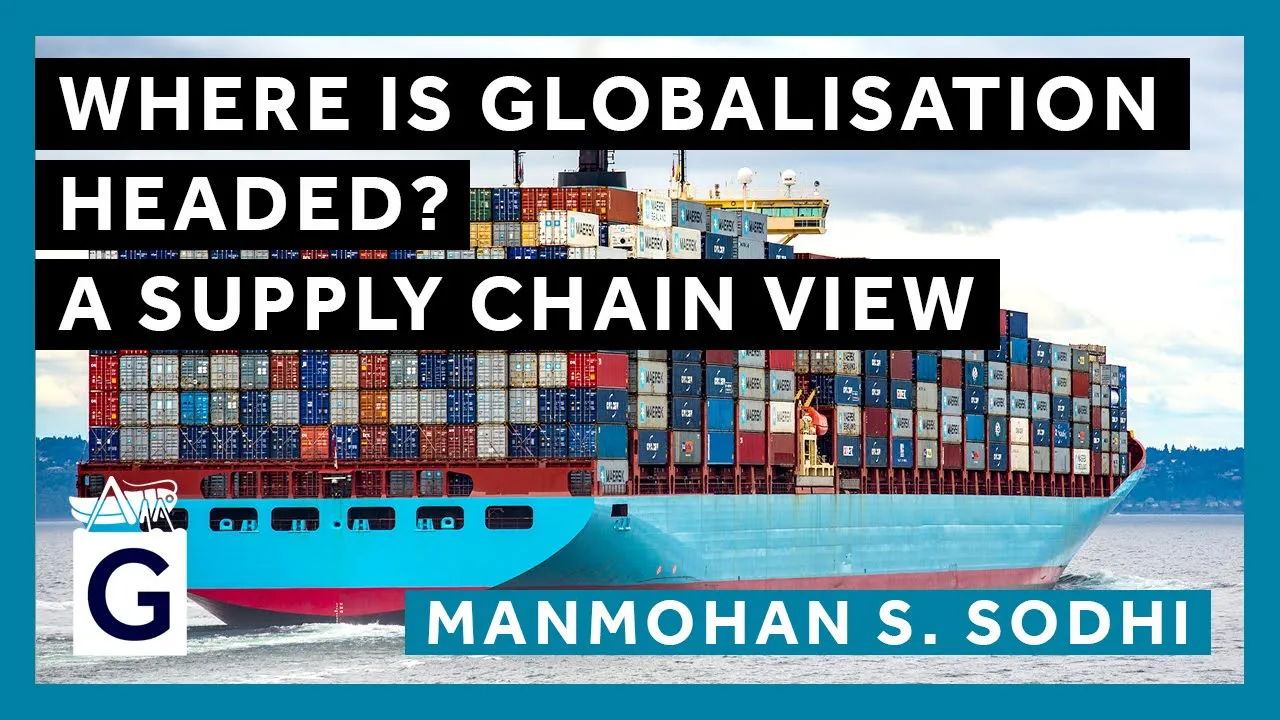
Where Is Globalisation Headed? A Supply Chain View
5.8K
Globalization, in the context of supply chains, refers specifically to the increasing trade between countries or companies located in different countries, typically involving countries that are geographically distant (such as the UK trading with China or Vietnam). Supply chains are defined as the networks through which raw materials, components, and finished goods move around from country to country and company to company throughout the world. This lecture focuses exclusively on globalization related to supply chain movements of goods across borders, rather than cultural or other forms of globalization.
Click to watch →
Deep Dive
The history of US-China trade relations, including the 2018 trade war and tariff implementations.
STRATEGI CHINA NGELAWAN AMERIKA
257.1K
The US-China trade relationship has evolved significantly since 2018. During the first Trump administration, America imposed 10-20% tariffs on Chinese goods, prompting Chinese retaliation. China was more compliant and eventually reached a Phase One trade deal, committing to increase imports from America. However, by 2025, China has reduced its dependence on America by diversifying exports to ASEAN and Europe, and has accelerated domestic innovation in semiconductors, AI, and renewable energy. This reduced dependence has strengthened China's negotiating position in subsequent trade disputes.
Click to watch →

GEOPOLÍTICA ENTRE EUA E CHINA - RODRIGO
167
The US-China trade war began when Donald Trump analyzed the trade balance in 2018, identifying a growing trade deficit. This led to the implementation of tariffs (tarifaço) starting February 1, 2025, representing economic protectionism aimed at protecting US industries from Chinese competition. China retaliated on February 4, 2025. Major trade products include US imports of Chinese computers, smartphones, and electric vehicles, while China purchases American crude oil, vaccines, semiconductors, and natural gas.
Click to watch →
China–U.S. Trade Talks EXPLAINED: Who Really Came Out on Top? | The English Globe Podcast
6.1K
This comprehensive segment introduces the recent trade talks between President Donald Trump and President Xi Jinping in Beijing, where they reached agreements including a 10% tariff reduction on certain Chinese goods. The hosts explain that trade between China and the US is a huge part of the world economy, with these two countries being the largest trading nations on Earth. The segment traces the historical development of US-China trade from the 1970s when China began opening its economy, through the establishment of diplomatic relations in 1979, China's rapid economic transformation in the 1980s and 1990s, and its WTO membership in 2001. The hosts explain how the US began importing much more from China than it sold, creating a trade deficit that became one of the largest in the world. By the early 2010s, China had become the world's second-largest economy, and every major American company depended on China in some way. Economists described their relationship as a 'marriage of necessity' - they needed each other but didn't always agree. The segment also covers the 2018 trade war when tensions reached a high point, with the US imposing tariffs on hundreds of billions of dollars worth of Chinese goods and China responding with its own tariffs. The hosts explain that a tariff is a tax that a government places on imported goods, and trade wars are dangerous because both sides can lose as prices go up and business confidence goes down.
Click to watch →
US-China trade war: The twists and turns of tariff negotiations | Asian Insider podcast
499
The US-China trade war began in 2018 under Trump's first administration with 25% tariffs on Chinese goods. Under Biden, tariffs remained largely unchanged. After Trump returned to the White House, the conflict escalated dramatically on April 2nd (Liberation Day), with new tariffs added to many countries including China. Following tit-for-tat retaliation, US tariffs on Chinese goods reached 145%, while Chinese tariffs on US goods reached 125%, effectively creating a trade embargo. In May, negotiators met in Geneva and agreed to a 90-day truce suspending most tariffs while continuing negotiations, with subsequent meetings held in London in June. China maintains a wait-and-see approach given Trump's unpredictable nature, while the US continues seeking resolution.
Click to watch →

In Depth: US-China Trade Deal
14.2K
The trade war began in March 2018 with US tariffs on steel and aluminum. On March 22nd, the President denounced Asian economic aggression. July 6th saw US punitive duties on $34 billion of Chinese products, with Beijing retaliating on farm products. August 23rd brought another $16 billion in US tariffs, met with 25% Chinese tariffs. December 2018 brought a truce with delayed tariff increases. Hostilities resumed in May 2019 with duties on $200 billion of Chinese goods. June 1st saw China increase tariffs on $60 billion of US products. August 1st brought new 10% tariffs on $300 billion of Chinese goods, later increased to 15%.
Click to watch →
Deep Dive
The concept of economic interdependence and how trade can be used as geopolitical leverage.

Macgregor: Israel Bombs Iranian Oil Fields, China Cuts US Trade in Revenge
990
Nations that are economically interdependent can use trade relationships as leverage in geopolitical conflicts. Major buyers who do not comply with sanctions can undermine the effectiveness of economic pressure campaigns. Trade restrictions differ fundamentally from tariffs in their effects, as they reduce market access entirely rather than adding cost. When nations implement restrictions on agricultural products, technology companies, and components, they create political pressure on domestic constituencies. This creates a transmission belt between military operations in distant regions and domestic political constituencies, making foreign policy decisions more complex than simple military calculations.
Click to watch →

REACTION - Mehdi Hasan EXPOSES Professor Jiang in DEBATE
9.9K
Economic interdependence creates both vulnerabilities and opportunities in international relations. States with significant economic ties to other regions face strategic vulnerabilities when those relationships are disrupted. China's heavy reliance on Gulf energy supplies (importing 40% from GCC countries) creates leverage for other powers seeking to influence Chinese behavior. Conversely, this dependence also creates incentives for peaceful resolution to avoid economic disruption. The relationship between economic interdependence and geopolitical leverage demonstrates that material dependencies constrain state behavior and create incentives for cooperation even among historically adversarial powers.
Click to watch →

¡ORBÁN HIZO LLORAR A VON DER LEYEN EN PLENO PARLAMENTO EUROPEO! ¡LE BASTARON 3 MINUTOS!
33.4K
Economic interdependence creates mutual vulnerability between nations. When nations rely on each other for critical resources and supplies, they can use this interdependence as leverage in geopolitical negotiations. However, this leverage is only effective if the dependent nation has alternatives. When a nation demonstrates that it can maintain its interests through alternative partnerships, its negotiating position strengthens. This illustrates the strategic importance of diversifying economic relationships. The ability to maintain economic relationships through alternative channels represents a fundamental capability for effective international engagement.
Click to watch →

Epstein Files Spark USA | Sai Krishna | Mamidi Giridhar | Global Roundup EP-222 | Nationalist Hub
35.8K
Countries with strong economic interdependence can use trade relationships as leverage in geopolitical conflicts. The Afghanistan-Pakistan trade dispute demonstrates how trade dependencies can be weaponized, causing severe economic hardship for vulnerable populations.
Click to watch →

1283: Путину Выставлен Ультиматум. Заканчивай войну или мы будем действовать жестко.
47.9K
Economic interdependence creates leverage in international relations, allowing nations to influence each other's behavior through trade relationships. A nation can threaten to disrupt trade flows to pressure another country into changing its behavior, as demonstrated by the example of Mexico's trade relationship with the United States. The threat of economic disruption can address issues like drug trafficking and immigration. This principle applies broadly: nations that control access to markets or critical resources can use this power to shape international outcomes in their favor.
Click to watch →
Deep Dive
Basic macroeconomic indicators and trade terms, such as trade deficits, foreign direct investment (FDI), and intellectual property.

External Resources – FDI, aid vs Trade, technology inflow
288
Foreign Direct Investment (FDI) refers to investment made by residents of the rest of the world in a home nation's equity capital, real estate, or physical capital, distinguished from Foreign Institutional Investment (FII) which is debt-based and volatile. FDI brings financial capital, technology, and managerial skills but may cause competition with domestic producers and profit repatriation. International trade is governed by comparative advantage theory, where countries export goods requiring intensive use of abundant factors and import goods requiring scarce factors. Terms of trade, defined as the ratio of export prices to import prices, can deteriorate for developing nations due to low agricultural commodity prices. Trade agreements like the WTO's Agreement on Agriculture regulate agricultural subsidies and market access, while TRIPS and TRIMS agreements govern intellectual property and investment measures.
Click to watch →
İNGİLİZCE EKONOMİ TERİMLERİ | İNGİLİZCE EKONOMİ İLE İLGİLİ İFADELER(Asgari ücret, Enflasyon, Zam vb)
7K
This section covers international trade and economic measurement terms. Current deficit describes the negative balance between imports and exports. Export and import refer to selling and buying goods across borders, with exportation and importation as noun forms. Foreign currency and foreign exchange denote money from other countries. Parity refers to currency value relationships between nations. Inflation, hyperinflation, and devaluation describe currency value changes. Interest rate and bank rate represent loan costs. National income and domestic income measure total economic output. Per capita income calculates average income per person. Recession, stagnation, and slump describe economic downturns.
Click to watch →

MOCK INTERVIEW - RPSC ASSISTANT PROFESSOR ECONOMICS | HOW TO CRACK INERVIEW BY DIGVIJAY SIR
590
The natural rate of unemployment exists even at full employment, comprising frictional (job transitions) and structural (skill mismatches) components. GDP measures output within borders, while GNP measures output by residents; India has negative Net Factor Income from Abroad. Balance of trade records only goods, while Balance of Payments covers all international transactions. Tariffs impose price-based restrictions, while quotas limit quantities. Dumping involves selling abroad below domestic prices. FDI requires >10% ownership, while FPI involves <10% equity investments.
Click to watch →

External Resources – FDI, aid vs Trade, technology inflow
1K
Foreign Direct Investment refers to investment made by residents of the rest of the world in equity capital, real estate, or physical capital. International trade theory includes absolute advantage and comparative advantage concepts, with the gravity model explaining trade patterns based on economic size, culture, and distance. Terms of trade is the ratio of export prices to import prices, with developing nations experiencing deteriorating terms of trade. Trade creates winners and losers within economies, with the income distribution effect causing inequality between factor owners. WTO agreements like AoA, TRIPS, and TRIMs regulate international trade and investment flows.
Click to watch →

Vision IAS PT 365 Economy Part - 3 Hindi Medium by Deeksha mam | UPSC 2025
687
Trade deficit occurs when import value exceeds export value. Causes include increased import demand (gold, crude oil, pharmaceuticals), changes in consumption patterns, domestic economic factors, and policy factors. Effects include reduced foreign exchange reserves, currency depreciation concerns, and adverse current account impacts. FDI (Foreign Direct Investment) involves investment in business interests in another country, typically in physical assets. According to DPIIT data, FDI in India was $44.4 billion in FY 2023-24. Top FDI-receiving states are Maharashtra, Gujarat, and Karnataka. Top sectors are Computer Software and Manufacturing. Top source countries are Singapore, Mauritius, and USA.
Click to watch →
Prerequisite Knowledge
- Concept 01The fundamentals of globalization and how global supply chains operate across borders.
- Concept 02The history of US-China trade relations, including the 2018 trade war and tariff implementations.
- Concept 03The concept of economic interdependence and how trade can be used as geopolitical leverage.
- Concept 04Basic macroeconomic indicators and trade terms, such as trade deficits, foreign direct investment (FDI), and intellectual property.
Subsequent Learning
- Step 01The strategic implementation of 'friendshoring', 'nearshoring', and 'reshoring' in supply chain management.
- Step 02Export controls, sanctions, and restrictions on dual-use technologies, such as the US CHIPS and Science Act.
- Step 03China's economic retaliation strategies, including export restrictions on critical raw materials like gallium and germanium.
- Step 04How middle-power nations (e.g., EU member states, ASEAN countries) navigate the economic pressures of choosing between Western and Chinese markets.
De-risking shift
Chip tensions
De-risking shift
0:00Playing Section
- 1
US and EU shift rhetoric to de-risking, not decoupling.
- 2
Strategy reduces dependence while managing China risks.
- 3
Economic de-risking broadens trade tools and sectors.
The Rhetorical Illusion: De-risking as De Facto Decoupling
Critics and economists argue that the distinction between 'de-risking' and 'decoupling' is a political euphemism rather than a functional reality. From this perspective, the policies implemented under 'de-risking'—such as sweeping export controls on technology, investment restrictions, and subsidies for domestic manufacturing—differ little in their economic impact from 'decoupling.' Both strategies lead to global market fragmentation, higher costs, and protectionism. Furthermore, critics point out that true de-risking is an economic illusion; rather than reducing reliance on China, supply chains are simply rerouted through intermediary nations like Vietnam and Mexico. This means the global economy remains deeply, albeit indirectly, dependent on Chinese manufacturing, while the added complexity only increases costs and reduces transparency.
Deep Dive
The strategic implementation of 'friendshoring', 'nearshoring', and 'reshoring' in supply chain management.

CATL, BYD, and Tesla expose Europe's EV battery 'reshoring': only China and Korea can build them
66.8K
Three distinct strategies emerged in global business to bring manufacturing back to Western countries. Reshoring involves bringing manufacturing back to the company's home country (e.g., American companies setting up factories in North America). Nearshoring means setting up supply chains closer to final customers, such as building factories in Poland to serve Eastern European markets or in Brazil for South American customers. Friendshoring involves bringing supply chains to friendly countries. These strategies were driven by the motivation to bring factory labor back to the United States and Europe, which had been previously outsourced to Asia.
Click to watch →

Energy, Education, Deregulation: David Friedberg, Shaun Maguire & Todd Young - Hill & Valley Forum
2.5K
Reshoring decisions require case-by-case analysis rather than binary nearshoring/onshoring choices. The framework identifies whether reshoring serves economic or national security imperatives, requiring judgment rather than formulas. Government establishes frameworks, identifies vulnerable production nodes, and coordinates with allies to diversify manufacturing across multiple friendly countries. This reduces vulnerability to adversarial supply chain manipulation. Nearshoring remains necessary in the near term for trained labor access and partner collaboration. Competitive comparative advantage across allied nations still applies, requiring coordinated strategies among trusted partners rather than comprehensive self-reliance.
Click to watch →

Patrick McGee on How China Captured Apple | Prof G Conversations
137.8K
Nearshoring (producing in allied nations like Mexico) is preferable to reshoring (producing domestically) because it maintains intermediary trade relationships. When manufacturing moves to Mexico, 20-25% of product content still comes from American suppliers through cross-border trade. When moving to China, this drops to 5%. Nearshoring leverages low-wage competitiveness of allied nations while maintaining valuable trade relationships with higher-value industries like aerospace.
Click to watch →

Nearshoring & Friendshoring
170
Nearshoring involves relocating production to geographically nearby countries to reduce logistics costs and diversify supply chains, while friendshoring emphasizes political trust and shared values in selecting allies for strategic industries; these strategies emerged after the pandemic and geopolitical conflicts to reduce dependency on distant suppliers like China, with the US prioritizing sectors such as semiconductors, critical minerals, renewable energy, and digital services, creating opportunities for countries like Argentina to leverage its lithium reserves, knowledge-based services, sustainable agroindustry, and meat exports to integrate into US supply chains.
Click to watch →

Початок деглобалізації?
46K
China is becoming less dependent on the global economy for imports while simultaneously trying to become more independent, investing heavily in semiconductor manufacturing and strategic industries. The US-China trade war significantly changed global trade geography, with China's share of American imports declining but being replaced by India and Vietnam. Instead of full globalization, we may be witnessing regionalization of trade systems, with nearshoring (trade with neighboring countries) and friendshoring (trade with friendly countries) becoming dominant trends. For the US, nearshoring partners include Canada and Mexico, while friendshoring partners include Thailand, India, and Vietnam. Transnational corporations have demonstrated adaptability to new policies, but geopolitical risks from hostile nations like China, Russia, and Iran remain significant threats to global supply chains. As countries become less economically interdependent, they may take more risky actions toward each other, potentially leading to conflicts.
Click to watch →
Deep Dive
Export controls, sanctions, and restrictions on dual-use technologies, such as the US CHIPS and Science Act.
![【Front Japan 桜】世界に広がる中国半導体規制 / 中国共産党改正党規約「二つの確立」入らず[R4/11/1]](https://i.ytimg.com/vi/V7hc-v-nyo0/maxresdefault.jpg)
【Front Japan 桜】世界に広がる中国半導体規制 / 中国共産党改正党規約「二つの確立」入らず[R4/11/1]
50.6K
The United States has implemented increasingly strict semiconductor export controls to China, expanding restrictions beyond cutting-edge technology to include current mainstream generations. The regulations prohibit exports of logic chips with 16nm or finer processes, DRAM chips with 18nm or finer processes, and NAND flash memory with 128 layers or more. These restrictions extend to manufacturing equipment, inspection tools, design software, and personnel knowledge transfer. The CHIPS Act provides subsidies for US semiconductor manufacturing relocation with conditions prohibiting technology transfer to China.
Click to watch →

Chuck Pfarrer - Ukraine's Strategy in Kursk is "Correct": to Fight Russia Where it's most Vulnerable
24.4K
Dual-use technologies and components that can serve both civilian and military purposes require strict export controls. The video criticizes the EU for failing to prevent vast amounts of goods from reaching Russia, even when routed through Central Asia rather than directly. Individual countries like Finland have ceased such trade while Germany and Italy continue on a massive scale. Historical parallels are drawn to pre-WWII America, where some entities continued trading with Nazi Germany despite clear threats. Effective sanctions must make economically viable trade with adversaries no longer possible.
Click to watch →

#762 Kulisy klęski Epickiej Furii.Co z Iranem?Ropa w dół rynki w górę.Nowa siła Japonii.Modi wygrywa
12.3K
The video explains that despite US sanctions, Chinese companies continue to export dual-use technology to Iran and Russia. The video notes that these companies often use shell companies and false documentation to evade sanctions. The video explains that the Shahed-136 drone, used extensively in the conflict with Ukraine, contains components designed in Germany by Chinese companies. The video notes that the US has repeatedly sanctioned networks of Hong Kong shell companies that serve as intermediaries for Iranian drone components, but these companies have been replaced by new networks, demonstrating the adaptability of those seeking to evade sanctions. The video also explains that Russian and Iranian drones have been found to contain a significant number of Chinese components, including cables, batteries, and other parts, which has increased the vulnerability of these drones to failure.
Click to watch →

EE. UU. nuevas REGLAS obstaculizan los CHIPS de CHINA
8.7K
The US administration has implemented new export controls aimed at isolating China from advanced chips and semiconductors manufactured anywhere using US equipment. These rules, some effective immediately, represent the most significant change in US policy toward technology exports to China since the 1990s. The measures target China's technological and military advancement by restricting access to advanced semiconductor manufacturing capabilities. The policy requires US and foreign companies using US technology to interrupt support for major Chinese chip factories and designers. While China will not abandon chip manufacturing, the restrictions will significantly delay their progress. The expansion of US authority to control exports of chips manufactured with US tools to China is based on the Foreign Direct Product Rule (FDPR), which was previously expanded to control exports to Huawei and later to Russia after the Ukraine war.
Click to watch →

The Sanction Paradox: How America's Tech War Backfired
745
The US export controls implemented on October 7, 2022, were highly specific and surgically targeted at technology choke points. Three critical thresholds were established: (1) Logic chips targeting non-planar transistor architectures (FinFET/GAA) at 16nm or 14nm and below for AI applications; (2) DRAM memory chips restricted to 18nm half-pitch or less; (3) NAND flash memory targeting 128 layers or more. The Foreign Produced Direct Product Rule (FPDPR) extends controls globally by targeting items that are direct products of US technology or software, even if not made in the US. Combined with restrictions on US persons, this creates a comprehensive blockade targeting technology, tools, and talent simultaneously.
Click to watch →
Deep Dive
China's economic retaliation strategies, including export restrictions on critical raw materials like gallium and germanium.
Китай ЖЕСТКО ОТВЕТИЛ на санкции США: Си вызывает Трампа на диалог! - ПЕЧИЙ
39.9K
China responded to US semiconductor restrictions by banning exports of gallium, germanium, and antimony to the United States. These materials are critical for semiconductor production, used in computer chips, mobile phones, automobiles, solar batteries, and military technologies. China dominates global production, supplying approximately 98% of purified gallium, 59% of germanium, and 48% of antimony. The US receives about half of its gallium and germanium directly from China. China had previously announced in July 2023 that exporters would need licenses for strategic materials, and in August 2023, restricted antimony exports and tightened graphite controls. The restrictions were implemented in response to President Biden's administration's review of China's access to advanced AI chips and semiconductor manufacturing equipment.
Click to watch →

Syria Rebel Offensive LIVE: Rebels Eye Damascus After Capturing Hama | Vantage with Palki Sharma
167.9K
China responded to US restrictions by banning the export of rare metals to the US, including gallium, germanium, and antimony. China controls 94% of the world's gallium production, 83% of germanium production, and is the largest producer of antimony. This represents a drastic escalation in the chip war, as these metals are essential for making chips. The Biden Administration has long tried to curb China's chip abilities, and this is the third crackdown in 3 years.
Click to watch →

المخبر الاقتصادي+ | كيف تخطط الصين لضرب اقتصاد أمريكا بسلاح العناصر النادرة؟
799.3K
In July 2023, China implemented export restrictions on gallium and germanium, critical metals for semiconductor, telecommunications, and electric vehicle industries. China controls over 60% of global germanium production and more than 90% of gallium production. These restrictions require companies to obtain government licenses for exports, with detailed requirements about shipping, buyer identity, and business nature. This action demonstrates how China extends its strategic resource leverage beyond rare earths to other critical materials essential for advanced technology manufacturing.
Click to watch →

Chinese Economy: China Imposes Export Restrictions on West | EV Industry | Japan & Korea
27K
China has imposed export restrictions on gallium and germanium, critical metals for semiconductor, telecommunications, and electric vehicle industries, leveraging its dominant position (94% of global gallium production) as a strategic response to Western technology restrictions, while simultaneously promoting regional cooperation through diplomatic initiatives like the trilateral forum with Japan and South Korea despite significant public opinion challenges.
Click to watch →
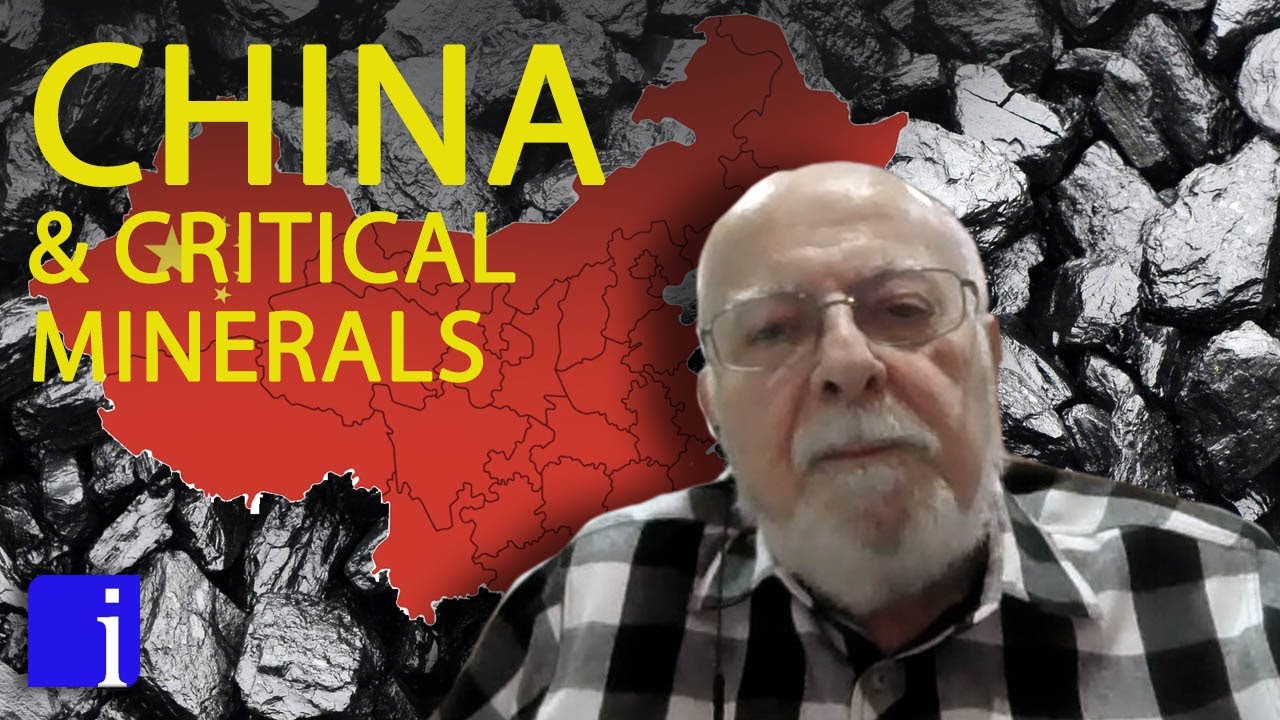
Critical Minerals Export Ban is China Tit-for-Tat with the United States
22.6K
The Chinese Ministry of Commerce announced restrictions on gallium and germanium exports, a strategic response to U.S. trade policies restricting chip-making machinery and chip purchases. Journalists incorrectly classify these materials as 'rare earths,' but they belong to different chemical families: germanium is a silicon-family element (Group 14), while gallium relates to aluminum (Group 13). Neither qualifies as rare earths. The U.S. Department of Defense maintains germanium stockpiles, recognizing its critical status. Both materials were once abundant in the U.S. as byproducts of zinc/silver mining (germanium) and aluminum production (gallium), but domestic production ceased when Chinese processing became more economical.
Click to watch →
Deep Dive
How middle-power nations (e.g., EU member states, ASEAN countries) navigate the economic pressures of choosing between Western and Chinese markets.

India vs Trump’s Tariffs, USA-Europe Trade War & China’s Leverage | Indrani Bagchi | EP-382
121.7K
Many Asian countries currently face reduced pressure to align with Western positions. Countries cannot choose Europe because it offers little they need, cannot choose China because it would be overwhelming, and cannot choose America because America doesn't care. This creates a situation where Asian countries can operate in their own spheres with less external interference, though this also leads to potential conflicts among themselves.
Click to watch →
Europe in turbulence: navigating a new world order without the United States?
286
Asian economies, particularly China and India, need export markets. If US markets become closed or difficult to penetrate, they will seek alternatives including the European market. The EU must address overcapacity issues through trade agreements and partnerships. Key priorities include advancing free trade agreements with India, strengthening existing agreements with Vietnam and Canada, and managing cooperation between South Korea and Japan. The EU should cultivate relationships in the Indo-Pacific region despite US focus there, recognizing its own economic, technological, and political interests.
Click to watch →

Is China emerging as a reliable partner for middle powers?
110.6K
The US remains the largest export market for Europe, Canada, Japan, South Korea, and ASEAN, while China is the largest import market. This creates economic interdependence where countries depend on China for imports and can face bottlenecks from export controls on critical materials like rare earth elements. Giving up the growing US export market is not easy for these countries.
Click to watch →
TS Bùi Ngọc Sơn: Các nước ASEAN đối mặt sức ép 'CHỌN PHE' giữa Mỹ và Trung Quốc ngày càng khốc liệt?
6.1K
ASEAN's strategic position as a critical maritime trade route and economic hub has made it a focal point of US-China geopolitical competition, forcing member states to balance security alliances with the US against economic ties with China, while navigating complex trade agreements like RCEP and CPTPP that reflect this ongoing strategic tension.
Click to watch →

Russia, Turkey, and the EU | The New Geopolitics of Europe’s Grey Zones
295
China has a massive economic footprint in the Balkans, with smaller countries in debt bondage through infrastructure projects. In Syria, Chinese products dominated markets after Assad's fall. Serbia demonstrates middle power balancing—maintaining EU candidacy while building links with Putin for Orthodox patronage and with China for economic benefits. This strategy works because middle powers don't need to link to bigger powers for survival. Turkey similarly pursues non-alignment, using foreign policy for domestic political ends, presenting itself as a power in its own right rather than just a NATO member or EU candidate.
Click to watch →
De-risking shift
Chip tensions
De-risking shift
0:00- 1
US and EU shift rhetoric to de-risking, not decoupling.
- 2
Strategy reduces dependence while managing China risks.
- 3
Economic de-risking broadens trade tools and sectors.
The Rhetorical Illusion: De-risking as De Facto Decoupling
Critics and economists argue that the distinction between 'de-risking' and 'decoupling' is a political euphemism rather than a functional reality. From this perspective, the policies implemented under 'de-risking'—such as sweeping export controls on technology, investment restrictions, and subsidies for domestic manufacturing—differ little in their economic impact from 'decoupling.' Both strategies lead to global market fragmentation, higher costs, and protectionism. Furthermore, critics point out that true de-risking is an economic illusion; rather than reducing reliance on China, supply chains are simply rerouted through intermediary nations like Vietnam and Mexico. This means the global economy remains deeply, albeit indirectly, dependent on Chinese manufacturing, while the added complexity only increases costs and reduces transparency.
The fundamentals of globalization and how global supply chains operate across borders.
The history of US-China trade relations, including the 2018 trade war and tariff implementations.
The concept of economic interdependence and how trade can be used as geopolitical leverage.
Basic macroeconomic indicators and trade terms, such as trade deficits, foreign direct investment (FDI), and intellectual property.
The strategic implementation of 'friendshoring', 'nearshoring', and 'reshoring' in supply chain management.
Export controls, sanctions, and restrictions on dual-use technologies, such as the US CHIPS and Science Act.
China's economic retaliation strategies, including export restrictions on critical raw materials like gallium and germanium.
How middle-power nations (e.g., EU member states, ASEAN countries) navigate the economic pressures of choosing between Western and Chinese markets.
4.6K views39likes3:29@businessstandardOriginal Release: 2023-06-08
foreign [Music] Chinese Premier Xi Jinping in April this year to discuss potential peacemaking in Ukraine European Union president Ursula of Wonderland had said I believe it is neither viable non-europe's interest to decouple from China our relations are not black or white and our response cannot be either and this is why we need to focus on de-risk not decouple a month later U.S President Joe Biden reiterated the same words at the G7 Summit in Japan's Hiroshima to explain the new trade restriction on Beijing we're not looking to decouple from China we're looking to de-risk and diversify our relationship with China de-risking is a new term in U.S European Union China relations the U.S state Department describes the risking as the phenomena of financial institutions terminating or restricting business relationships with clients or categories of clients to avoid rather than manage risk in regards to China de-risking means reducing the U.S and Europe's dependence on the Asian giant as a market of finished goods or for imports of materials but not entirely decoupling from it de-risking is a part of a broader China strategy of European union and the US to recognize shifts in China's economic and security Ambitions and rebalance relationships accordingly it includes de-risking through diplomacy followed by economic de-risking economic de-risking according to the European Union president Ursula Wonderland involves making own economy and Industry resilient better use of existing toolbox of trade instruments developing new defensive tools or critical sectors like Quantum Computing robotics AI biotech Etc and aligning with other partners meanwhile the U.S China war of chips has cast a shadow on the ties between the two countries leading to a potential technology Cold War China has also declined a recent U.S request for a meeting of the two countries defense Chiefs in Singapore it is seen as beijing's last snub to the Biden Administration amid heightened tensions in this situation the U.S is now pushing for the term de-risking instead of decouple to strike a moderate tone for its Western allies that are concerned about completely cutting off from China the West is apparently at unease about decoupling from the world's second largest economy as it can make access to essential Goods difficult from the Chinese perspective the change in wording has little significance de-risking is just decoupling in Disguise says China's sinhua news agency if the European Union seeks to decouple from China in the name of dearest King it will decouple from opportunities cooperation stability and development warned Chinese foreign minister Ken gank and a press meet in Germany if you like this video share it and subscribe to business standard for more news views and insights log on to www.business hyphenstandard.com do also follow us on YouTube Twitter Facebook Instagram Telegram and Linkedin soon we coated on the front page business standard [Music]
Up Next

24:30
BRICS Pay and de-dollarization: A New Financial Order Emerges? | 55 chars
@DannyHaiphongYT
164.6K views•2024-10-22
10:04
Evaluating the Effectiveness of UK Sanctions Against Russia
@TLDRnews
130.2K views•2023-02-24

7:33
Government Surveillance Methods: 10 Ways You May Be Watched
@BeAmazed
1.6M views•2017-04-09
10:19
Explaining the Saudi-Iranian Proxy Conflict in the Middle East
@Vox
18.2M views•2017-07-17
Related Study Plans & Knowledge Roadmaps
Structured learning paths in Political Science
political-science
Economic Statecraft: Sanctions & Chokepoints
01Foundations of Geoeconomics and Economic Statecraft
02The Mechanics of Weaponized Interdependence
03International Sanctions: Types, Implementation, and Efficacy
+ 2 more learning modules
12h5 modules
Explore Roadmap
political-science
Central Bank Independence: Politics & Policy
01Foundations of Central Banking and Monetary Policy
02The Time Inconsistency Problem & Inflation Bias
03The Delegation Model and Designing Independence
+ 2 more learning modules
12h5 modules
Explore Roadmap
political-science
Consociationalism: Power-Sharing & Stability
01Democratic Dilemmas in Divided Societies
02Introduction to Consociational Democracy
03The Four Pillars of Consociational Design
+ 2 more learning modules
12h5 modules
Explore Roadmap
political-science
Rebel Governance: Legitimacy, Economy & State
01Foundations of Rebel Governance and Statehood
02Establishing Political Legitimacy and the Rebel Social Contract
03Wartime Economies and Rebel Resource Management
+ 2 more learning modules
14h5 modules
Explore Roadmap