EU blocking legislation creates a compliance dilemma for businesses that must choose between complying with US secondary sanctions (which breach EU law) or complying with EU blocking legislation (which exposes them to US sanctions), with the latter potentially resulting in asset blocking and designation on US sanctions lists, while enforcement varies across EU member states and compliance requirements remain unclear.
US Secondary Sanctions Impact on EU Businesses and Blocking Legislation
Added:Deep Dive
The concept of extraterritorial jurisdiction in international law, particularly how US laws can apply to non-US entities and transactions.
«АЗОВ» В ПЛЕНУ // 85 ДЕНЬ ВОЙНЫ
36.9K
The US has proposed legislation to try foreign military criminals under American law regardless of whether victims are American citizens. This represents extraterritoriality that extends US legal jurisdiction beyond its borders. The speaker argues this undermines the concept of the social contract and international law, as it allows one nation to apply its laws to people who have not consented to its jurisdiction. This creates asymmetry where any nation dependent on the US becomes subject to American jurisdiction, undermining the sovereignty of other nations and principles of international law.
Click to watch →
Les États-Unis ont ravagé l’Occident - Le Zoom - Général Henri Roure - TVL
98.1K
The US exercises extraterritorial jurisdiction over global transactions, particularly those conducted in dollars. Through mechanisms like ITAR (International Traffic in Arms Regulations), the US can sanction any entity involved in transactions with American components. This has been used to sanction French and German banks for trading with countries opposing US policy. This system allows the US to seize companies and intellectual property, as demonstrated in the Alstom case where General Electric acquired the French company.
Click to watch →

O FUTURO DO PARANOICO EDUARDO BOLSONARO
47K
The Magnitsky Act and similar laws represent extraterritorial applications of American legal jurisdiction, allowing US authorities to investigate transactions involving US dollars regardless of where they occur. This legal framework enables US investigations into activities in other countries, including Brazil, Pakistan, and China, representing a form of extraterritorial legal enforcement.
Click to watch →

China - EEUU ¿a dónde nos conducen? Geopolitica con Ariel Umpierrez
16.8K
Extraterritoriality is a legal principle where a nation's laws apply beyond its borders when certain conditions are met. Under this principle, any activity involving American goods, services, or currency (such as using American email platforms or conducting transactions in US dollars) is subject to US federal law, regardless of where the activity occurs. This principle has been applied to prosecute crimes committed by individuals outside the United States, including cases involving international organizations like FIFA.
Click to watch →

CORTE DO BRASIL ENTRA NA MIRA DOS EUA POR CAUSA DO XANDE
17.9K
The speaker explains that US law applies to entities with US operations, including Brazilian banks. The speaker argues that this is not an invasion of Brazilian sovereignty but rather the application of US law to entities operating within US jurisdiction. The speaker mentions that the Magnitsky Act was approved by the House of Representatives' Justice Committee on February 26th and that it prevents citizens who commit crimes against Americans from entering the US or having assets. The speaker expresses hope that the law will take effect immediately and that it will be applied to Brazilian officials who have committed human rights violations or corruption.
Click to watch →
Deep Dive
The fundamental distinction between primary sanctions (prohibiting domestic actors) and secondary sanctions (targeting foreign entities).
A China acaba de desafiar uma das principais armas dos EUA
3.5K
Primary sanctions are restrictions imposed by a government on its own citizens and companies, prohibiting them from conducting business with sanctioned countries or entities. For example, US oil companies being prohibited from operating in Iran represents a primary sanction. Secondary sanctions, in contrast, target foreign companies and entities that wish to participate in the international financial system mediated by the dollar or do business with US companies. This distinction is crucial because secondary sanctions extend US influence beyond its borders, affecting global economic relationships.
Click to watch →

Trita Parsi: Iran War Marks the End of American Primacy
28.2K
Primary sanctions are those imposed by the executive branch that prevent American companies from doing business with a target country. Secondary sanctions are those imposed by Congress that target foreign companies (European, Russian, Chinese, Indian) for doing business with the target country. Primary sanctions can be lifted by the president through executive orders, while secondary sanctions require congressional action. This distinction is crucial because it means the US has more flexibility in lifting primary sanctions than secondary sanctions.
Click to watch →
IRAN Siap Meluluhlantakkan 4 Kapal Induk Perang AMERIKA di Kawasan Teluk | #SPEAKUP
91.2K
Primary sanctions are restrictions imposed by a nation on its own citizens and entities, while secondary sanctions extend these restrictions to third-party nations. The speaker explains that primary sanctions affect domestic economic activities, while secondary sanctions create global economic pressure by threatening any nation that does business with the sanctioned country.
Click to watch →
Maryam Jamshidi: The Legal Case For Iran's Control of Hormuz | Ep. 25
424
Primary sanctions are about preventing US persons from engaging with sanctioned entities and preventing US territory from being involved with sanctioned entities. These are generally considered lawful. Secondary sanctions, however, target foreign entities dealing outside the United States with very tenuous connections between those transactions and the United States. The Iran sanctions regime includes both primary and secondary sanctions, with secondary sanctions being more subject to legal scrutiny because of these tenuous links. The further a sanction gets from a link to the territory of the sanctioning state, the more legally dubious it becomes.
Click to watch →

PUTIN THREATENS COWARD KING
26.1K
Sanctions can be classified as either primary or secondary. Primary sanctions target assets directly held within a specific country (such as Russia), while secondary sanctions extend to assets held by countries allied with the sanctioned nation. This distinction is important because secondary sanctions can affect a much broader range of international assets, including those held in allied nations like China.
Click to watch →
Deep Dive
The role of the US Office of Foreign Assets Control (OFAC) in administering and enforcing economic and trade sanctions.

BOMBA DINO PIOROU A SITUAÇÃO DE M0RAES LA ISSO É MUITO PIOR QUE MAGNITSK
41.2K
The Office of Foreign Assets Control (OFAC) is the agency within the U.S. Treasury Department responsible for administering and enforcing economic and commercial sanctions against foreign countries, individuals, and entities that represent threats to American national security, foreign policy, or economic interests. The video explains that American infrastructure providers used by Brazilian banks will be required to terminate contracts as a result of these sanctions.
Click to watch →
URGENTE! ALLAN DOS SANTOS REVELA COMO TRUMP FALIU MORAES COM A SANSÃO MAGNITSKY CONTRA A MULHER
190.2K
The Office of Foreign Assets Control (OFAC) is the U.S. Treasury Department office responsible for administering and enforcing economic sanctions. When OFAC sanctions an individual, it prohibits that person from having any relationship with American companies, including banks, technology companies, and other businesses. The sanctions can extend to entities owned or controlled by the sanctioned individual, such as family businesses or professional firms.
Click to watch →
อเมริกาคว่ำบาตรใครอยู่บ้าง? คว่ำทำไม? | Point of View
542.7K
The Office of Foreign Assets Control (OFAC) is the primary US government agency responsible for administering and enforcing economic sanctions. OFAC maintains lists of sanctioned individuals, entities, and countries, and issues licenses for permitted transactions. When a country is sanctioned, OFAC controls what transactions can occur and requires permits for any interactions with the US. This agency ensures that sanctions are effectively implemented across all sectors of the economy.
Click to watch →

How This Tiny Island Became a Flashpoint in the Trump-Maduro Showdown | WSJ News
287.7K
The Office of Foreign Assets Control (OFAC) is a U.S. government agency that administers and enforces economic and trade sanctions against targeted foreign countries, individuals, and entities. In this case, the U.S. granted Trinidad an OFAC license allowing it to engage with Venezuela on the Dragon Gas deal without being affected by broader U.S. sanctions against the Maduro regime. This illustrates how specific licensing exceptions can enable business transactions while maintaining overall sanctions pressure.
Click to watch →
TRUMP ACABOU COM MORAES! BANCO DO BRASIL COM DÍVIDAS BILIONÁRIAS POR PROTEGER MORAES DA MAGNITSKY!
94.7K
The video identifies OFAC (Office of Foreign Assets Control) as the US department responsible for enforcing sanctions. It states that when OFAC decides to act, there is no negotiation possible, and the consequences are severe and immediate.
Click to watch →
Deep Dive
A basic overview of the EU Blocking Statute (Council Regulation No 2271/96) and its legislative history.
中國正式啓用《阻斷域外制裁》辦法,國際金融機構面臨生死抉擇!
17.2K
Europe was the first region to introduce specific anti-US foreign control legislation in the 1990s. The European Union's 'Electricity Impedance Law' (also called 'Blocking Law') stipulates that EU member states and their natural or legal persons cannot comply with the enforcement of US sanctions using external force. This legislation was developed after the collapse of Western gravitational force in the 1990s, particularly in response to the Helms-Burton Act which required third-country firms to ban trade with Cuba and Libya.
Click to watch →

BOMBA!! PGR É ASSASS1NADO COM TIR0 NA CABEÇA! PRISÃO NA REDE GLOBO AGORA!! ANISTIA APROVADA!
1.7K
The video explains that the European Union created Regulation 2271 in 1996 to counter the extraterritorial effects of US sanctions. The regulation stated that European companies should not obey US sanctions, that US decisions against European companies would have no validity in the US, and that European companies could sue in European courts to recover losses. The speaker notes this was 'uma teoria maravilhosa' (a wonderful theory) but then explains that in practice, major European banks and companies continued to comply with US sanctions. The BNP Paribas of France paid nearly $9 billion in fines for violating sanctions against Iran and Sudan. When Trump left the nuclear agreement with Iran in 2018, European companies like Total, Siemens, and various airlines canceled their Iranian business despite EU protections, because they valued access to the American market and dollar access more than the Iranian market.
Click to watch →

TRUMP AGE NA CALADA!! MAGNITSKY PEGA MAIS 2 MINISTROS! FILHO DE BARROSO DESESPERADO! PEDIDO DE AJUDA
24.3K
In 1996, the European Union created Regulation 2271 to counter the extraterritorial effects of US sanctions. The regulation stated that European companies should not comply with US sanctions, that US decisions against European companies based on these sanctions would have no validity in the US, and that companies punished by the US could sue in European courts to recover losses. The video notes this was a theoretical framework that European leaders believed would protect their companies.
Click to watch →

GEORGE SOROS resolveu o PROBLEMA: A LEI da UNIÃO EUROPÉIA contra MAGNITSKY... só tem um PROBLEMA
363.8K
The Magnitsky Act is a US sanctions law targeting individuals responsible for human rights abuses. Brazil is evaluating whether to follow the EU's approach to avoid potential sanctions. The EU Blocking Statute (Regulation 2271/96) was created in 1996 during the George H.W. Bush administration when the US imposed sanctions on Cuba. The statute declares null and void any extraterritorial orders or sanctions imposed by third countries, protecting EU companies and citizens from such sanctions. It was reactivated in 2018 when Trump reimposed sanctions on Iran. Despite the EU Blocking Statute's legal provisions, 100% of EU companies trading with Iran stopped doing business with Iran when US sanctions were reimposed. The video argues that economic incentives override legal protections, making the statute ineffective regardless of its legal provisions. The speaker emphasizes that the EU has 18 times the GDP of Brazil, yet the statute failed in Europe, suggesting that economic reality and market size override legal protections.
Click to watch →
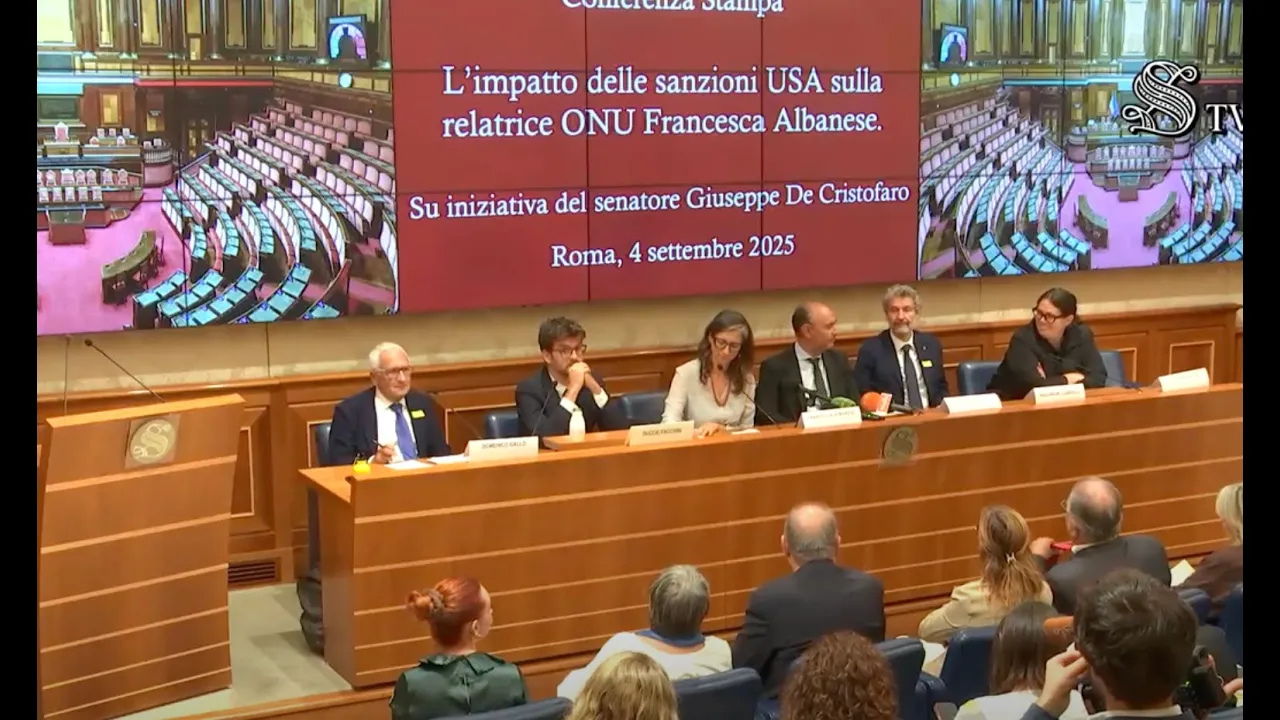
L’impatto delle sanzioni Usa sulla Relatrice Onu Francesca Albanese
27.6K
The EU Blocking Regulation (1996) was designed to prevent EU compliance with extraterritorial US sanctions, ordering EU entities to ignore certain US sanctions. However, the regulation has not been updated since 2018 to include newer sanctions against the ICC. While 79 states supported the ICC and condemned US actions, three EU member states (Italy, Czech Republic, Hungary) did not publicly oppose the measures. The Dutch government requested adding Trump's order to the blocking regulation, but no action has been taken, revealing a gap between stated international commitments and actual political will.
Click to watch →
Prerequisite Knowledge
- Concept 01The concept of extraterritorial jurisdiction in international law, particularly how US laws can apply to non-US entities and transactions.
- Concept 02The fundamental distinction between primary sanctions (prohibiting domestic actors) and secondary sanctions (targeting foreign entities).
- Concept 03The role of the US Office of Foreign Assets Control (OFAC) in administering and enforcing economic and trade sanctions.
- Concept 04A basic overview of the EU Blocking Statute (Council Regulation No 2271/96) and its legislative history.
Subsequent Learning
- Step 01Corporate risk mitigation strategies for navigating contradictory legal compliance frameworks when US and EU laws directly clash.
- Step 02An in-depth case study of landmark legal disputes, such as the Bank Melli Iran v. Telekom Deutschland GmbH ruling on the EU Blocking Statute.
- Step 03The operational mechanics and limitations of alternative financial channels, such as INSTEX, designed to bypass USD-denominated transaction systems.
- Step 04The broader geopolitical implications of sanctions on transatlantic relations, economic sovereignty, and global financial de-dollarization.
EU vs US Sanctions
Secondary Sanctions
Compliance Burden
EU vs US Sanctions
0:06Playing Section
- 1
US Iran withdrawal forces EU firms into legal conflict.
- 2
Blocking statute prohibits compliance with US sanctions.
- 3
Businesses risk penalties from either jurisdiction.
The Strategic Necessity of Secondary Sanctions and the Ineffectiveness of the EU Blocking Statute
An alternative perspective argues that US secondary sanctions are a highly effective and necessary tool for global security, particularly when multilateral institutions fail to act against threats like nuclear proliferation or terrorism. From this viewpoint, the EU's Blocking Statute is a symbolic and counterproductive policy that fails to offer real protection to European businesses. Critics of the blocking legislation suggest that compliance with US sanctions is actually a rational, market-driven choice. EU firms voluntarily choose to maintain access to the vastly more lucrative US financial system and the US dollar over trade with sanctioned regimes. Rather than a genuine 'compliance dilemma' forced by the US, the conflict is viewed as a consequence of the EU's refusal to align with critical Western security goals, creating artificial legal hurdles that ignore the realities of global economic interdependence and the security benefits that sanctions achieve.
Deep Dive
Corporate risk mitigation strategies for navigating contradictory legal compliance frameworks when US and EU laws directly clash.

Chinese Companies in the US Legal System by Prof. Ji LI
303
Increasingly, US and Chinese laws conflict directly and intentionally, creating compliance dilemmas for multinational corporations. Three main responses exist: (1) Business strategy—exiting markets to avoid dual exposure; (2) Compliance strategy—hiring lawyers to navigate apparent conflicts through loopholes; (3) Reform strategy—involving litigation against governments to change laws or lobbying to modify legislation. Examples include the US Forced Labor Prevention Act conflicting with Chinese supply chain laws. This dilemma affects all multinationals navigating between competing regulatory regimes.
Click to watch →
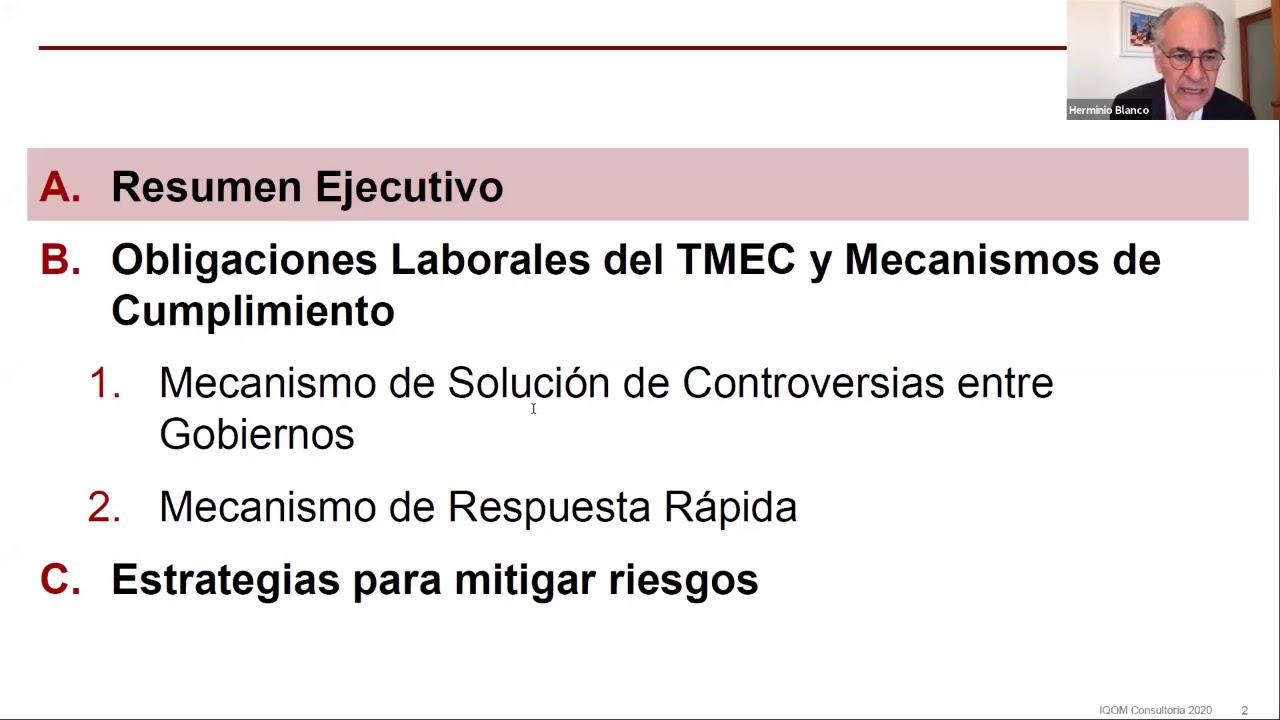
Webinar - Principales retos del TMEC
484
Companies must understand three key fronts for risk mitigation: direct sanctions on exporting companies, supply chain vulnerabilities where U.S. law allows sanctions on products containing inputs from violating plants, and union-related risks. Five key actions for risk reduction include: ensuring HR leadership and union representatives understand new USMCA obligations, conducting systematic self-assessment or third-party audits to identify compliance status, reviewing and documenting all required processes, engaging in strategic dialogue with workers and union leaders to understand workplace climate, and mapping external labor environment including hostile unions and competitors. Companies should establish internal mechanisms to receive complaints, analyze supply chain risks, engage with key suppliers, and maintain close contact with Mexican government authorities and the business community.
Click to watch →

Moraes vira símbolo global da censura e volta a entrar na mira dos EUA / 15 MINUTOS
188.2K
The $140 million EU fine against X (Twitter) for Digital Services Act violations exemplifies growing US-EU regulatory tensions. The EU Digital Services Act, inspired by Germany's NetzDG law, requires platforms to mitigate harmful content during events like political debates. US officials, including Secretary Marco Rubio and Subsecretary Christopher Orlando, criticized the fine as an attack on American technology companies and citizens. Orlando highlighted a contradiction: the US seeks military alliance with European nations while those same nations (through the EU) regulate and potentially censor American companies. This regulatory competition represents a broader ideological divide over digital governance and free speech.
Click to watch →
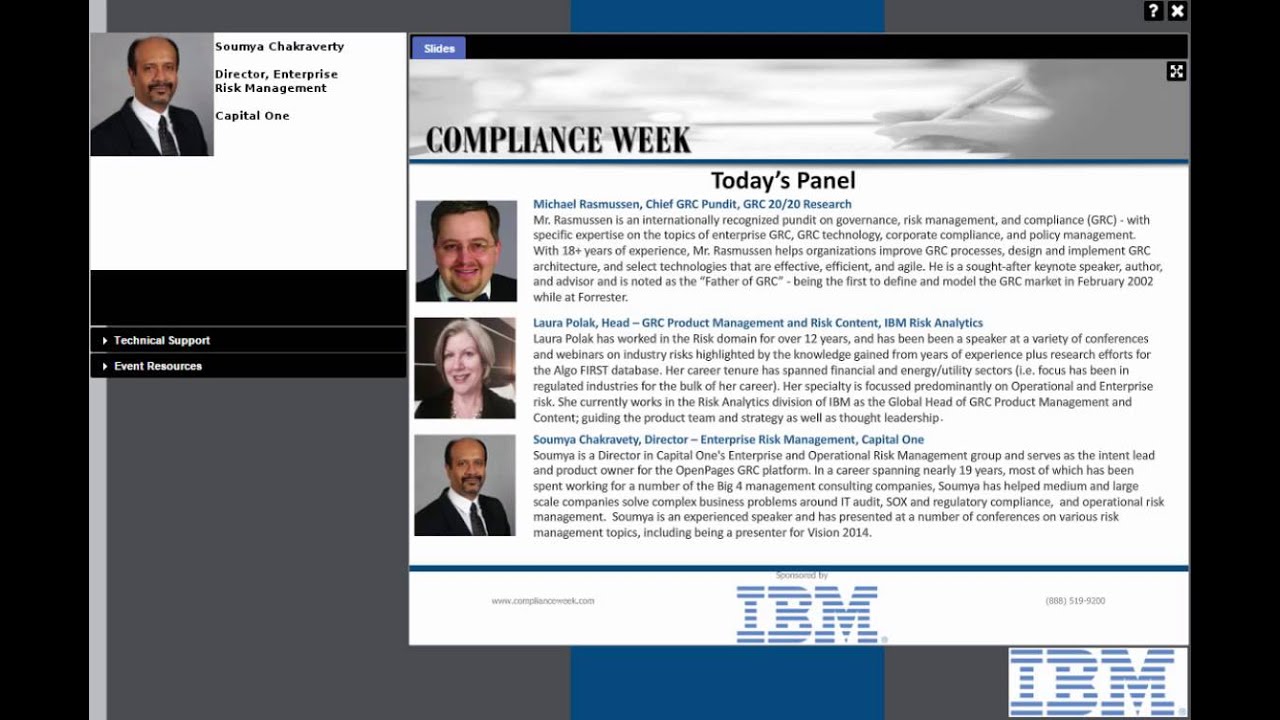
Webcast | Managing Change More Effectively Across Regulations, Risk, and Business
208
There are inconsistencies across regulations from jurisdiction to jurisdiction: (1) US has predominantly prescriptive checkbox approach to compliance. (2) UK and EU have principles/outcome-based compliance approach (Better Regulatory Policy) - not prescriptive, telling organizations what to achieve but not exactly how. (3) Different countries have different approaches to anti-money laundering laws, bribery and corruption laws (FCPA has been in place 37 years, UK Bribery Act is newer). (4) Cross-border issues like Canada's PIPEDA conflicting with US Patriot Act create challenges for companies operating across borders.
Click to watch →

Bernard Cazeneuve - L’extraterritorialité du Droit US en action
1.6K
The extraterritorial application of US law creates significant compliance challenges for European companies, as demonstrated by France's Sapin 2 law which mandates preventive compliance measures (risk mapping, training, ethical codes, third-party evaluation) for companies exceeding 100 million euros in revenue and 500 employees, with the French administrative authority (AFA) imposing sanctions even without proven corruption, contrasting with the Anglo-Saxon approach that focuses on post-factum verification of corporate efforts to prevent corruption.
Click to watch →
Deep Dive
An in-depth case study of landmark legal disputes, such as the Bank Melli Iran v. Telekom Deutschland GmbH ruling on the EU Blocking Statute.
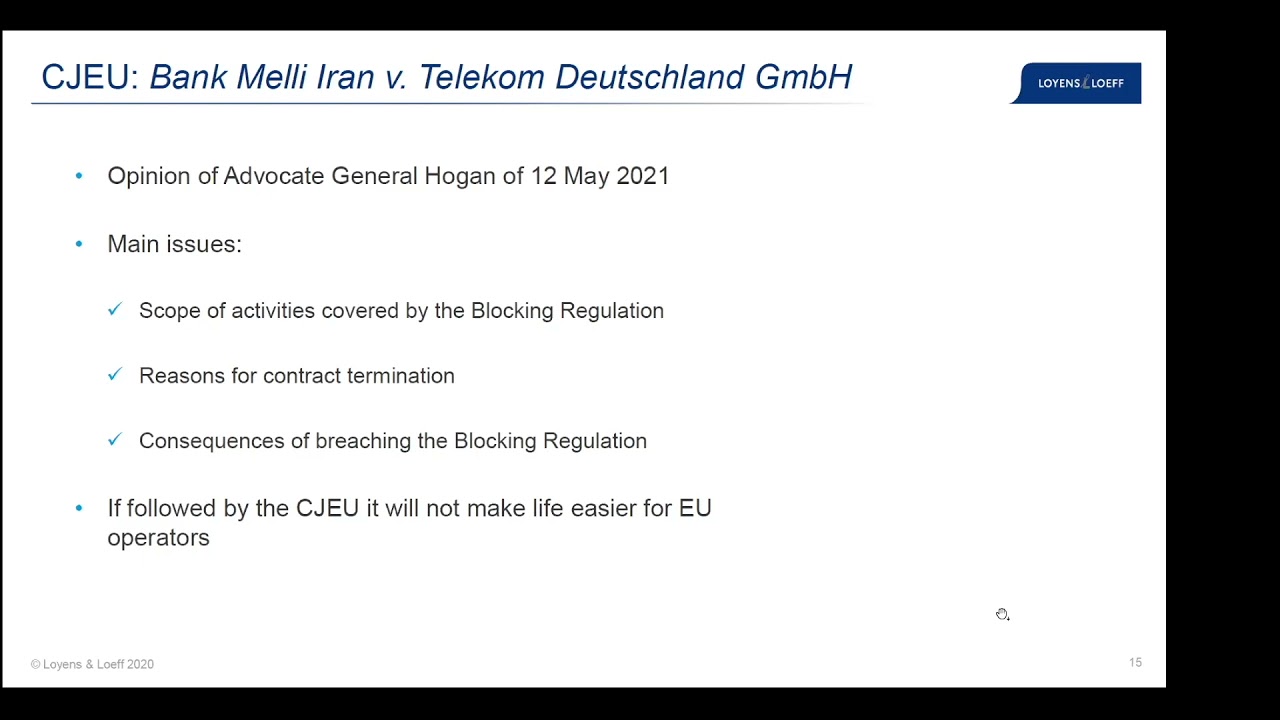
EU Blocking Regulation: Bank Melli Iran vs Telekom Deutschland
107
The Advocate General Hogan's opinion in Bank Melli Iran v Telekom Deutschland establishes that the EU Blocking Regulation prohibits EU companies from complying with U.S. sanctions requirements, even without official instructions; courts must compel performance of contracts terminated in breach of this regulation, and EU companies must provide and justify termination reasons when disputes arise with counterparties subject to U.S. sanctions.
Click to watch →

Judicial Review of Restrictive Measures before the EU Courts
416
Three landmark cases have shaped EU sanctions law. The Kadi case (Joined Cases C-402/05 P and C-415/05 P) established that while the EU is bound by UN Security Council resolutions, these cannot prejudice EU fundamental rights. The Court ruled it cannot indirectly question the lawfulness of Security Council resolutions, but in implementing them, the EU must follow its own human rights regime. The Rosneft case (C-72/15) extended the Court's jurisdiction to include preliminary references from national courts regarding the validity of Council decisions in CFSP matters, ruling that strict interpretation of jurisdiction exclusions would be inconsistent with effective judicial protection. The Bank Melli Iran case (C-279/15) addressed whether the EU can be held non-contractually liable for damages from restrictive measures, ruling that the consistency of judicial protection requires the Court to have competence to rule on damages to avoid a gap for affected persons.
Click to watch →

MORAES ESTÁ SALVO? Lei Anti-Magnitsky da UE Bloqueia Sanções!
265.2K
The EU Blocking Statute was created in 1996 to protect EU companies from extraterritorial US sanctions, specifically targeting US-Cuba sanctions. The statute declares null and void any extraterritorial sanction orders from third countries and prohibits EU operators from complying with such sanctions. It was reactivated in 2018 when Trump imposed sanctions on Iran. Despite its legal provisions, the statute has proven largely ineffective in both cases—zero European companies chose to ignore US sanctions. The video argues this demonstrates the statute's fundamental weakness: while it provides legal protection, it cannot overcome the economic reality that the US market is too valuable for companies to risk losing. The EU is using Brazil as a testing ground for this approach, with Brazilian officials making assurances that those who vote against Bolsonaro will not face consequences.
Click to watch →
GEORGE SOROS resolveu o PROBLEMA: A LEI da UNIÃO EUROPÉIA contra MAGNITSKY... só tem um PROBLEMA
363.8K
Despite the EU Blocking Statute's legal provisions, 100% of EU companies trading with Iran stopped doing business with Iran when US sanctions were reimposed. The video explains this occurred because major EU companies also sell to the US market, and the US market is significantly larger than Iran's economy. The speaker argues that economic incentives override legal protections, making the statute ineffective regardless of its legal provisions. The video emphasizes that the EU has 18 times the GDP of Brazil, yet the statute failed in Europe, suggesting that economic reality and market size override legal protections.
Click to watch →

A JOGADA OCULTA: O que a China realmente quer na região?
46.2K
European Union law contains the 'Blocking Statute' which prohibits EU companies from complying with US sanctions against Iran without authorization from Brussels. The European Court of Justice has ruled that companies breaking contracts with Iran must justify this through reasons other than US sanctions. This creates a legal dilemma: EU companies cannot follow US sanctions without violating EU law, and cannot follow EU law without losing access to the US dollar system. This explains why no European government has announced plans to close Iranian banking agencies.
Click to watch →
Deep Dive
The operational mechanics and limitations of alternative financial channels, such as INSTEX, designed to bypass USD-denominated transaction systems.

CIC Toronto: The COVID-19 Battle During the Toughest Sanctions Against Iran
179
European governments have established humanitarian trade channels with Iran, including INSTEX (Instrument in Support of Trade Exchanges) created to bypass US sanctions. This channel took almost two years to operationalize and had its first transaction by mid-March 2020. Another channel was facilitated through Switzerland with US assistance. However, these channels face significant limitations because European companies prioritize their larger US market over smaller Iranian markets, making them hesitant to engage in Iranian trade despite humanitarian intentions. These channels have proven insufficient to meet Iran's urgent needs during the pandemic.
Click to watch →

Book Event: Daniel McDowell's "Bucking the Buck"
3.5K
Europe created INSTEX (Instrument in Support of Trade Exchanges) as a barter system to circumvent U.S. secondary sanctions against European banks doing business with Iran after the Trump administration withdrew from the Iran nuclear deal. INSTEX requires perfectly balanced trade where no money actually crosses borders. Used only once or twice, it was largely symbolic rather than functional, demonstrating the inherent difficulties of creating viable alternatives to the dollar network. Primary sanctions prohibit U.S. banks from conducting business with sanctioned entities, while secondary sanctions threaten foreign institutions with penalties for engaging with sanctioned parties, compelling global banks to self-police. This extra-territorial approach creates tension between allies who may disagree with U.S. policies.
Click to watch →
Как Америка сделала глобальную экономику своим оружием
58.1K
After the US withdrew from the Iran nuclear deal in 2018, the European Union attempted to preserve contracts with Iran by creating INSTEX, a mechanism designed to facilitate trade with Tehran outside SWIFT and in euros. However, bankers in Paris, Frankfurt, and London soon concluded that profits from Iranian trade were too small to justify confrontation with the US Treasury and potential loss of dollar access. The result was telling: in 4 years of operation, INSTEX processed exactly one transaction, a drug purchase that was already exempt from US sanctions. In 2023, INSTEX was closed, and European companies ultimately lost Iranian contracts worth over €40 billion under direct Washington pressure.
Click to watch →
آیا ظریف با حمله به لاوروف زیرپای لاریجانی را در سفر به روسیه خالی کرد؟ در گفتگو با ظهره وند
35.3K
INSTEX was designed as a financial transaction mechanism to allow Iran to conduct trade without US involvement and without secondary sanctions affecting European partners. However, it failed because it required cooperation from the international community that was not forthcoming. The European countries themselves violated the JCPOA and reimposed sanctions, making INSTEX ineffective. This demonstrates how financial sanctions can be designed to work around alternative payment systems, effectively neutralizing their impact.
Click to watch →
End of Hypocritical 'Rules-Based Order'?: In China Visit & Davos Speech, Canada Breaks with USA
21.4K
After the United States withdrew from the Iran nuclear deal (JCPOA), European countries attempted to create an alternative payment system called INSTEX to continue trading with Iran outside US sanctions. Despite years of effort and significant resources invested, INSTEX conducted virtually no transactions and was ultimately shut down. This failure demonstrates how difficult it is for middle powers to create viable alternatives to US-dominated financial systems without genuine commitment and coordination among participating nations.
Click to watch →
Deep Dive
The broader geopolitical implications of sanctions on transatlantic relations, economic sovereignty, and global financial de-dollarization.

Beijing SLAMS U.S. Threats, Vows RETALIATION if Chinese Banks Sanctioned | Esteban Carrillo
49.4K
US economic sanctions, when applied to major trading partners like China and Iran, often fail to achieve their intended goals and instead accelerate global de-dollarization by causing countries to seek alternative trading systems and currencies, as demonstrated by China's refusal to comply with US demands to cut off trade with Iran and its warning of retaliation against US companies that continue such trade.
Click to watch →
Dejaron desquiciado a Marco Rubio por...
41.1K
The recent decision by China and Brazil to trade in their own currencies (yuan and real) represents a significant step toward global de-dollarization, which threatens to undermine the US dollar's role as the world's primary reserve currency and its function as a tool for economic sanctions. Senator Marco Rubio warned that this trend could render Washington unable to impose sanctions within five years, as more countries seek alternatives to the dollar-based financial system. This shift is part of a broader movement led by BRICS nations to create a new international currency backed by the bloc's combined GDP, potentially ending US monetary hegemony and establishing a multipolar global financial system.
Click to watch →

A Stripper Just LEAKED Trump's War Plans | Hasanabi Reacts
78.1K
This segment examines the mechanics of dollarization and how financial sanctions reshape global economic relationships. Following Russia's invasion of Ukraine, the US weaponized the SWIFT system, forcing Russia to abandon the petro-dollar and accelerating global dollarization. The US share of global foreign currency reserves has fallen from approximately 60% in 2000 to 40%, demonstrating how sanctions can accelerate currency shifts. More significantly, American technology companies like Visa and Mastercard exert disproportionate control over global financial transactions, capable of freezing accounts and blocking services based on political considerations. This creates a form of technofeudalism where American corporate entities effectively enforce foreign policy objectives across sovereign nations, raising questions about financial sovereignty and the concentration of economic power in American hands.
Click to watch →

Israel PANICS as Iran hits gathering of scientists at top-secret Dimona nuclear site - OPTM
131.7K
This segment analyzes how economic sanctions and maximum pressure policies can inadvertently strengthen adversary positions through alternative economic arrangements. Following US withdrawal from the nuclear deal and imposition of sanctions, Iran announced charging transit fees for shipping through the Strait of Hormuz and accepting payments in Chinese yuan instead of dollars. This represents a direct challenge to the petro-dollar system that the US has maintained for decades. The video argues this move supports de-dollarization efforts and could undermine American economic hegemony, illustrating how economic coercion can drive nations toward alternative financial arrangements that reduce Western influence.
Click to watch →
Dermesztő bejelentés Moszkvában: Putyin és Hszi Csin-ping kemény üzenetet küldtek - Somkuti Bálint
89.5K
US hegemony has definitively ended, not just weakened. The US actively seeks to dismantle its own dominance. The Russia-China alliance represents a new power center challenging American leadership. Both nations are increasing national currency use in bilateral trade, with most combined trade already conducted in their currencies rather than dollars. This represents a significant blow to the dollar's global status. As China becomes the world's largest economy and major resource producer, their trade in national currencies will likely expand to include other partners, further reducing dollar dominance.
Click to watch →
EU vs US Sanctions
Secondary Sanctions
Compliance Burden
EU vs US Sanctions
0:06- 1
US Iran withdrawal forces EU firms into legal conflict.
- 2
Blocking statute prohibits compliance with US sanctions.
- 3
Businesses risk penalties from either jurisdiction.
The Strategic Necessity of Secondary Sanctions and the Ineffectiveness of the EU Blocking Statute
An alternative perspective argues that US secondary sanctions are a highly effective and necessary tool for global security, particularly when multilateral institutions fail to act against threats like nuclear proliferation or terrorism. From this viewpoint, the EU's Blocking Statute is a symbolic and counterproductive policy that fails to offer real protection to European businesses. Critics of the blocking legislation suggest that compliance with US sanctions is actually a rational, market-driven choice. EU firms voluntarily choose to maintain access to the vastly more lucrative US financial system and the US dollar over trade with sanctioned regimes. Rather than a genuine 'compliance dilemma' forced by the US, the conflict is viewed as a consequence of the EU's refusal to align with critical Western security goals, creating artificial legal hurdles that ignore the realities of global economic interdependence and the security benefits that sanctions achieve.
The concept of extraterritorial jurisdiction in international law, particularly how US laws can apply to non-US entities and transactions.
The fundamental distinction between primary sanctions (prohibiting domestic actors) and secondary sanctions (targeting foreign entities).
The role of the US Office of Foreign Assets Control (OFAC) in administering and enforcing economic and trade sanctions.
A basic overview of the EU Blocking Statute (Council Regulation No 2271/96) and its legislative history.
Corporate risk mitigation strategies for navigating contradictory legal compliance frameworks when US and EU laws directly clash.
An in-depth case study of landmark legal disputes, such as the Bank Melli Iran v. Telekom Deutschland GmbH ruling on the EU Blocking Statute.
The operational mechanics and limitations of alternative financial channels, such as INSTEX, designed to bypass USD-denominated transaction systems.
The broader geopolitical implications of sanctions on transatlantic relations, economic sovereignty, and global financial de-dollarization.
1.6K views9likes4:27@BureauvandijkOriginal Release: 2019-03-20
one immediate Fallout of the change the recent change in US policy and Law relates to the US withdrawal from The Joint comprehensive plan of action on Iran The Fallout in the EU has been the so-called blocking legislation which was um already uh in force but related principally to ancient legislation um in response to the US withdrawal the U EU extended the legislation that the block applies to to include the resurrected us sanctions against Iran the block means that EU operators and anyone else falling within the scope of application of the block is prohibited from complying with the listed measures and many businesses in the EU will find themselves stuck between a rock and a hard place effectively they have to choose whether to comply with us secondary sanctions and thereby breach the EU blocking legislation or conversely comply with the EU blocking legislation and Expos themselves to us secondary sanctions there's an awful lot of misunderstanding around what US secondary sanctions are not least in the blocking legislation itself which refers to required compliance um us secondary sanctions are directed at non-us persons behaving entirely lawfully under applicable law outside of the US but nevertheless acting contrary to what the US sanctions position is in those circumstances the US wouldn't have any jurisdiction to impose civil or criminal penalties but instead they can adopt secondary sanctions and the worst type of these secondary sanctions would be a listing so as a result of acting perfectly lawfully in the EU you could find yourself designated on a list in the US which effectively makes you the subject of what the US terms a block um in the sense that all your assets in the US are blocked and any us person is prohibited from dealing with you so it's quite a harsh penalty and the choice then becomes all the more difficult as a result do you want uh what many refer to as finan death or do you want a criminal or a civil or an administrative penalty uh imposed on you depending on where you are in the EU because each member State enforces the blocking legislation in their own particular way um that's a problem a second problem is a compliance uh problem it remains to be seen what exactly compliance um will prohibit compliance will be um deemed to be if it will include representations and warranties and contracts Etc uh you also have obligations to report when your financial or economic interests are affected by the blocked us legislation um and in the UK the way that the EU blocking legislation is implemented if you get that reporting obligation wrong you're committing a criminal offense um so the stakes are high um and it remains to be seen exactly how EU businesses are going to uh cope with the additional pressure on them from a sanctions perspective [Music]
Up Next
11:40
Corporate Restructuring in Company Law | Mergers & Acquisitions
@manifestedpublishers
13.7K views•2019-01-18

19:49
Legal Analysis: Sgt. Daniel Perry Convicted in Self-Defense Case
@ArmedAttorneys
113.9K views•2023-04-11

5:27
Forensic Phonetics: Speaker Identification in Legal Cases
@nptel-nociitm9240
539 views•2025-03-19

24:42
Police Interrogation Tactics: False Confessions & Legal Reform
@LastWeekTonight
7M views•2022-04-18
Related Study Plans & Knowledge Roadmaps
Structured learning paths in Law
law
Self-Defense Law: Imminence & Castle Doctrine
01Foundations of Self-Defense Law
02Imminent Threat & Reasonable Belief
03The Principle of Proportionality
+ 3 more learning modules
12h6 modules
Explore Roadmap
law
Defamation Law: First Amendment & Actual Malice
01Introduction to civil torts and the First Amendment
02Elements of Defamation: Libel and Slander
03Public Figures vs. Private Individuals
+ 2 more learning modules
8h5 modules
Explore Roadmap
law
Hearsay Rule: Trial Evidence & Exceptions
01Introduction to Trial Evidence & Courtroom Basics
02Demystifying Hearsay: The Core Definition
03Non-Hearsay: Exclusions Under FRE 801(d)
+ 3 more learning modules
14h6 modules
Explore Roadmap
law
Medical Malpractice: Law, Liability & Care
01Foundations of Tort Law and Civil Liability
02The Four Elements of Medical Malpractice
03Defining and Proving the Standard of Care
+ 2 more learning modules
12h5 modules
Explore Roadmap