Defamation Law: First Amendment & Actual Malice
Learning Goal: Analyzing the legal standards governing defamation, public figures, and the "actual malice" doctrine under the First Amendment to evaluate liability in media and digital communication.
- Prerequisites: None. A basic understanding of the US civil legal system and constitutional framework is helpful.
- Estimated Total Study Time: 8 Hours
Module 1: Introduction to Civil Torts and the First Amendment
This module establishes the foundational legal landscape of civil law, focusing on the distinction between criminal prosecution and civil wrongs (torts). You will learn how defamation is situated as an intentional tort designed to protect reputation, and how these state-level civil actions must be carefully balanced against the federal constitutional protections of the First Amendment.
Recommended Videos
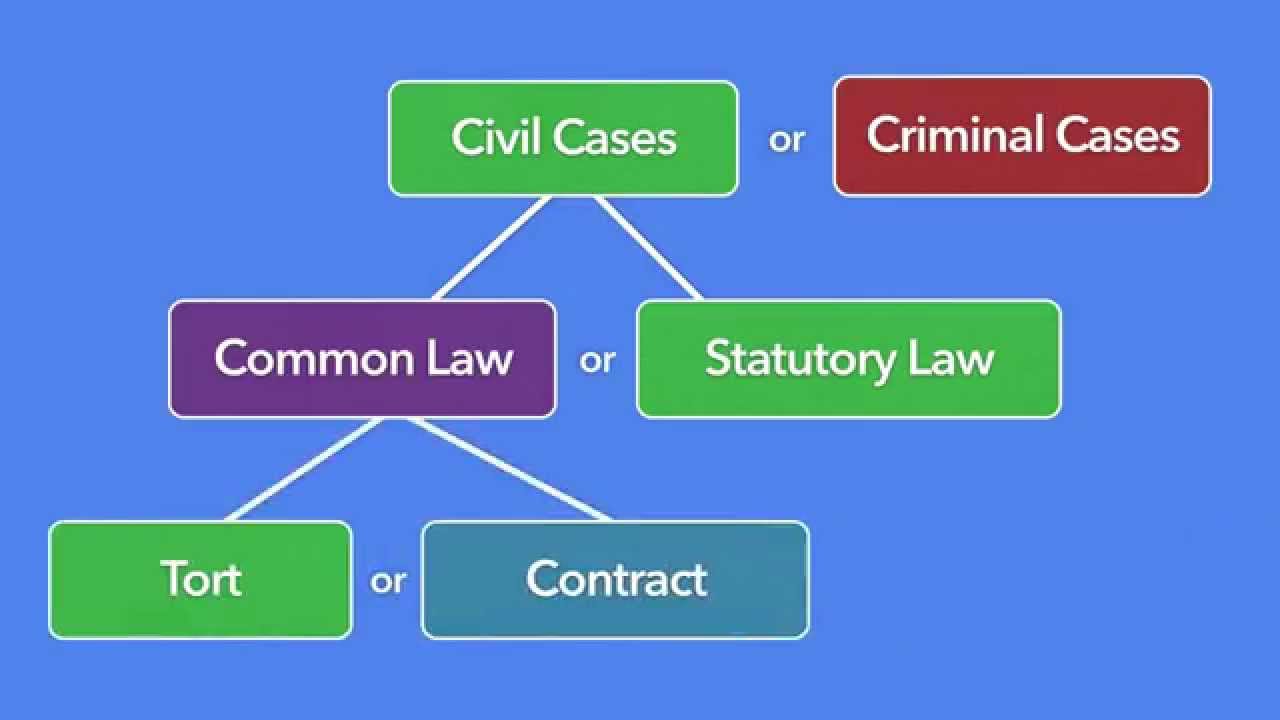
- Why this video: This video introduces the concept of tort law. It clarifies that a tort is a civil wrong (distinct from a breach of contract) recognized by common law or statute that causes injury to a person's body, property, dignity, or reputation. This is the exact legal container in which defamation exists.
- Define what a "tort" is and distinguish it from criminal law and contract law.
- Understand the primary remedy in tort law (damages) and its purpose (restoring the injured party).
- Identify the main categories of interest protected by tort law (bodily integrity, property, dignity, reputation).

- Why this video: This lecture categorizes the entire field of torts into intentional torts, negligence, and strict liability. Defamation is historically treated as an intentional tort, though constitutional developments have introduced negligence and higher standards of intent depending on the parties involved.
- Explain the three major branches of tort law: intentional torts, negligence, and strict liability.
- Determine where defamation fits within these categories under common law.
- Describe the concept of duty of care and how it shifts in different legal contexts.

- Why this video: This video provides a direct, practitioner-led bridge between common law defamation and First Amendment boundaries. It contrasts the American speech-first constitutional regime with foreign jurisdictions, explaining how the US system treats speech as inherently protected, placing a heavy initial burden on those who seek to restrict it.
- Contrast how American defamation law operates compared to foreign legal systems.
- Explain why the First Amendment serves as an overarching constraint on state tort actions.
- Understand the historical shift from basic common law defamation to constitutionally bounded defamation.
Module 2: Elements of Defamation: Libel and Slander
To successfully litigate defamation, a plaintiff must meet a strict burden of proof. This module covers the core elements of a defamation claim, dissects the technical distinctions between written defamation (libel) and spoken defamation (slander), and addresses the historical distinction of defamation per se (where damages are presumed) versus defamation per quod (requiring proof of special damages).
Academic Legal Breakdown: The 5 Elements of Defamation
- Defamatory Statement: The statement must tend to harm the reputation of another, lowering them in the estimation of the community or deterring third persons from associating with them.
- Falsity: Under US law, the First Amendment requires the plaintiff to prove the statement is false (for matters of public concern). Truth is an absolute defense.
- Of and Concerning the Plaintiff: The statement must reasonably be understood to refer specifically to the plaintiff.
- Publication: The statement must be communicated (either intentionally or negligently) to at least one third party who understands its defamatory meaning.
- Fault / Damages: The defendant must act with the required degree of fault (negligence for private figures, actual malice for public figures), resulting in harm/damages to the plaintiff.
Recommended Videos

- Why this video: Utilizing one of the most high-profile modern trials, this report outlines the specific elements a jury must find to award damages in a libel action, illustrating how statements must be about the plaintiff, false, and carry defamatory implication.
- List the essential elements a plaintiff must prove to establish a claim of defamation.
- Define "libel" and distinguish it from "slander".
- Understand how a jury evaluates whether a specific statement is "of and concerning" the plaintiff.

- Why this video: This video reinforces the structural requirements of a defamation action. It lists elements such as a statement made via words, signs, or representations that refers directly to the plaintiff, is published to a third party, and causes harm.
- Explain why communication to a third party (publication) is required for defamation to exist.
- Differentiate between statements that are pure statements of opinion and those that contain provable facts.
- Define the basic elements required for an action to be considered legally defamatory.

- Why this video: This courtroom clip highlights the evidentiary struggle over the "publication" and "implication" elements of libel. It shows how attorneys argue over whether a published text (such as an op-ed) refers to a person even if they are not explicitly named.
- Describe the legal concept of "defamation by implication".
- Understand how courts determine if a publication specifically targets a person when their name is omitted.
- Explain the relationship between the timing of a publication and the alleged reputational damages.
Module 3: Public Figures vs. Private Individuals
The standard of liability in a defamation lawsuit hinges on the public status of the plaintiff. This module details the critical jurisprudential shift engineered by the landmark Supreme Court case New York Times Co. v. Sullivan (1964). You will study how and why the law differentiates between public officials, public figures (all-purpose and limited-purpose), and private individuals.
Recommended Videos

- Why this video: This documentary is the definitive educational resource for understanding the origins of New York Times Co. v. Sullivan. It places the civil-rights era advertising controversy in its historical context, showing how Southern politicians used state libel laws to bankrupt national news media, prompting the Supreme Court to elevate free expression standards.
- Explain the facts of New York Times Co. v. Sullivan and why the Supreme Court intervened.
- State the core constitutional holding of Sullivan regarding public officials.
- Define the policy rationale behind requiring public figures to clear a higher burden of proof to win defamation cases.

- Why this video: This expert panel explores the fundamental shift in free speech doctrine post-1964. It explains how, prior to Sullivan, state courts could withdraw constitutional protections from speech based purely on its content, and how Sullivan established that the First Amendment protects even false statements to secure "breathing space" for free debate.
- Describe what is meant by "breathing space" for the press.
- Explain how constitutional protections evolved to cover false statements of fact when made without malice.
- Understand why public debate must remain robust, uninhibited, and wide-open.

- Why this video: Featuring a modern legal analysis of digital content creators, this video explains how the public figure status applies to internet personalities, influencers, and online channels, highlighting the modern application of the public vs. private individual distinction.
- Identify who qualifies as an "all-purpose" public figure vs. a "limited-purpose" public figure in the digital age.
- Explain the lower fault standard (negligence) applied to private individuals suing for defamation.
- Describe how a private individual can inadvertently become a limited-purpose public figure due to their involvement in a public controversy.
Module 4: The Actual Malice Standard and Defamation Defenses
This module dissects the state of mind required for public figures to establish liability: Actual Malice. You will analyze the technical mechanics of "reckless disregard for the truth," distinguishing it from common layperson definitions of malice (spite or ill-will). Additionally, this module addresses the standard legal defenses to defamation, including truth, absolute and qualified privileges, opinion, and Anti-SLAPP laws.
Deep Dive: Reckless Disregard & Defamation Defenses
- Reckless Disregard: This is a subjective standard. The plaintiff must show that the publisher entertained serious doubts as to the truth of the publication or acted with a high degree of awareness of its probable falsity. Purposeful avoidance of the truth ("turning a blind eye") can meet this standard, but simple failure to investigate does not.
- Truth: Absolute defense. If the statement is substantially true, the claim fails.
- Opinion / Fair Comment: Pure opinion cannot be proven true or false and is fully protected. Statements that imply undisclosed defamatory facts, however, are actionable.
- Privileges: Absolute privilege applies to judicial proceedings, legislative debates, and official executive actions. Qualified privilege protects fair and accurate reporting of public records or proceedings.
- Anti-SLAPP (Strategic Lawsuit Against Public Participation): Statutory mechanisms allowing defendants to quickly dismiss meritless lawsuits designed to silence public debate, often transferring attorney fees to the plaintiff.
Recommended Videos

- Why this video: This video provides a precise legal definition of "actual malice" and "reckless disregard," while contextualizing how Anti-SLAPP motions function to defeat retaliatory defamation actions early in the litigation process.
- Define "actual malice" and contrast it with common-law malice (ill-will/spite).
- Explain the legal standard for proving "reckless disregard for the truth."
- Describe how an Anti-SLAPP motion protects defendants who exercise their free speech rights.

- Why this video: A practitioner's breakdown of reckless disregard as a component of actual malice, using contemporary digital media conflicts to illustrate what actions meet the threshold of disregarding truth with a high degree of awareness of falsity.
- Understand how a court evaluates whether a defendant had "serious doubts" about a statement's truth.
- Differentiate between a negligent failure to investigate and a reckless disregard for the truth.
- Analyze how editing, context manipulation, or ignoring contradictory evidence can support a finding of actual malice.

- Why this video: This video reviews the legal defenses available in defamation cases. It explains how truth acts as an absolute defense, the nature of absolute privileges (such as in judicial proceedings), and how statutory protections immunize specific statements.
- Explain why truth is considered an absolute defense in American defamation law.
- Describe the difference between "absolute privilege" and "qualified privilege."
- Identify settings where individuals are legally immune from defamation suits (e.g., testimony in court).

- Why this video: This deep-dive stream reviews a litigation file where an Anti-SLAPP motion was filed. It offers a detailed look at the litigation mechanics, how public participation defenses are framed under state statutes, and how courts parse fee-shifting provisions.
- Explain the structural mechanics of an Anti-SLAPP motion in state litigation.
- Describe how courts evaluate whether a lawsuit is meant to silence public debate or address a legitimate tort.
- Explain what "fee-shifting" means in the context of a successful Anti-SLAPP motion.
Module 5: Digital Defamation, Social Media, and Section 230
The digital revolution has transformed publication from a corporate privilege to an individual capacity. This module evaluates how classic defamation principles apply to social media posts, public forums, and online reviews. You will analyze Section 230 of the Communications Decency Act (CDA)—often cited as "the twenty-six words that created the internet"—and evaluate its protection of online intermediaries from liability for user-generated content.
Recommended Videos
- Why this video: This investigative report delivers a highly structured introduction to Section 230 of the Communications Decency Act. It explains the historical context of its passage in 1996 and dissects why it immunizes web platforms from being sued as "publishers" of third-party user comments.
- Define the statutory text of Section 230 of the Communications Decency Act of 1996.
- Distinguish between the liability of a "publisher" (like a newspaper) and a "distributor" (like a bookstore) under common law, and how Section 230 alters this online.
- Identify the core policy debates surrounding the reform or repeal of Section 230 immunity.
- Why this video: This practitioner tutorial focuses on the real-world liabilities of individual social media users. It analyzes how simple actions like posting, sharing, or commenting on digital platforms can satisfy the elements of defamation and expose everyday individuals to substantial damages.
- Explain how a personal social media post satisfies the "publication" element of defamation.
- Understand the civil liability risk of sharing or republishing someone else's defamatory statement online.
- Identify best practices for drafting online reviews and comments to avoid defamation liability.

- Why this video: This case study highlights the limits of Section 230 and how platform moderation interacts with breach of contract and content restriction claims. It discusses how platforms enforce terms of service and the boundaries of federal immunity.
- Explain how Section 230 permits online platforms to moderate, tag, or delete content in "good faith" without losing their statutory immunity.
- Understand how platform-user contracts (Terms of Service) differ from state tort liability.
- Evaluate how allegations of government pressure on private platforms can complicate the Section 230 analysis.
Course Map
Key People Index
- Justice William J. Brennan Jr. (1906–1997): Associate Justice of the U.S. Supreme Court who authored the landmark opinion in New York Times Co. v. Sullivan (1964). He famously established that the First Amendment requires "breathing space" for free expression, protecting errors made in good faith during debates of public concern.
- L.B. Sullivan (1937–1977): Public Safety Commissioner of Montgomery, Alabama, who sued the New York Times for minor inaccuracies in a 1960 civil rights fundraising advertisement. He served as the plaintiff in the supreme court decision that fundamentally reshaped free expression law.
- Emily D. Baker, Esq.: A legal commentator and former Los Angeles Deputy District Attorney. Baker translates complex high-profile civil complaints, Anti-SLAPP motions, and defamation trials (such as Depp v. Heard) into plain-English educational content.
- Ron Wyden & Chris Cox: The principal congressional authors of Section 230 of the Communications Decency Act of 1996. Their bipartisan legislative drafting sought to protect internet companies from crushing civil liability while encouraging voluntary filtering of offensive materials.
Final Self-Assessment
Complete this checklist to verify your mastery of the curriculum concepts.
- I can explain the exact legal difference between libel and slander, including which form of defamation generally permits the presumption of damages (defamation per se).
- I can list and define the 5 essential legal elements that a plaintiff must prove to win a standard defamation lawsuit.
- I can explain the historical, political, and civil rights-era context that led to the Supreme Court's landmark ruling in New York Times Co. v. Sullivan (1964).
- I can identify the legal distinction between an all-purpose public figure, a limited-purpose public figure, and a private individual.
- I can define the actual malice standard and explain why it is a subjective test focused on the defendant's state of mind rather than an objective test of professional journalistic standards.
- I can define reckless disregard for the truth using its strict constitutional threshold (i.e., subjective high degree of awareness of probable falsity or purposeful avoidance).
- I can list and contrast the primary absolute and qualified privileges that protect speakers from defamation claims (e.g., judicial proceeding privilege vs. fair report privilege).
- I can explain how an Anti-SLAPP law functions to protect individuals from retaliatory lawsuits designed to suppress free speech.
- I can define the precise legal protections afforded to online platforms by Section 230 of the Communications Decency Act.
- I can evaluate whether a personal social media post, a shared link, or a Yelp review exposes an individual user to actionable defamation claims.