
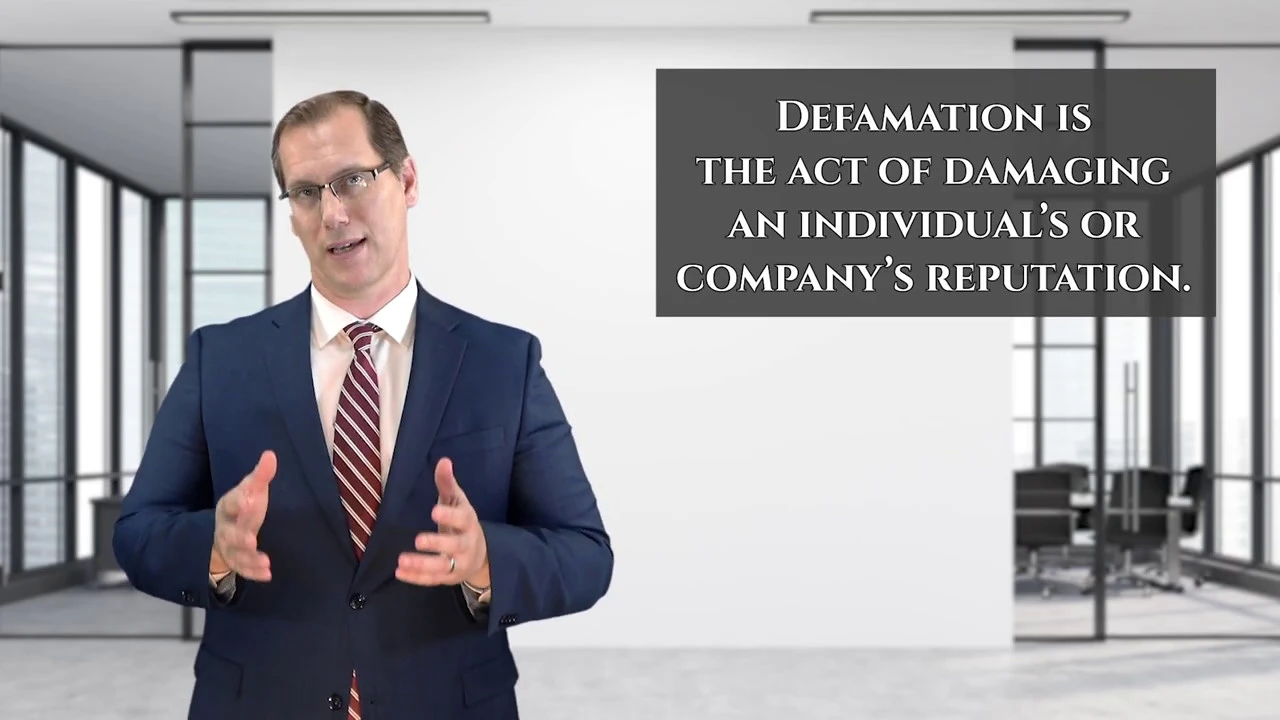


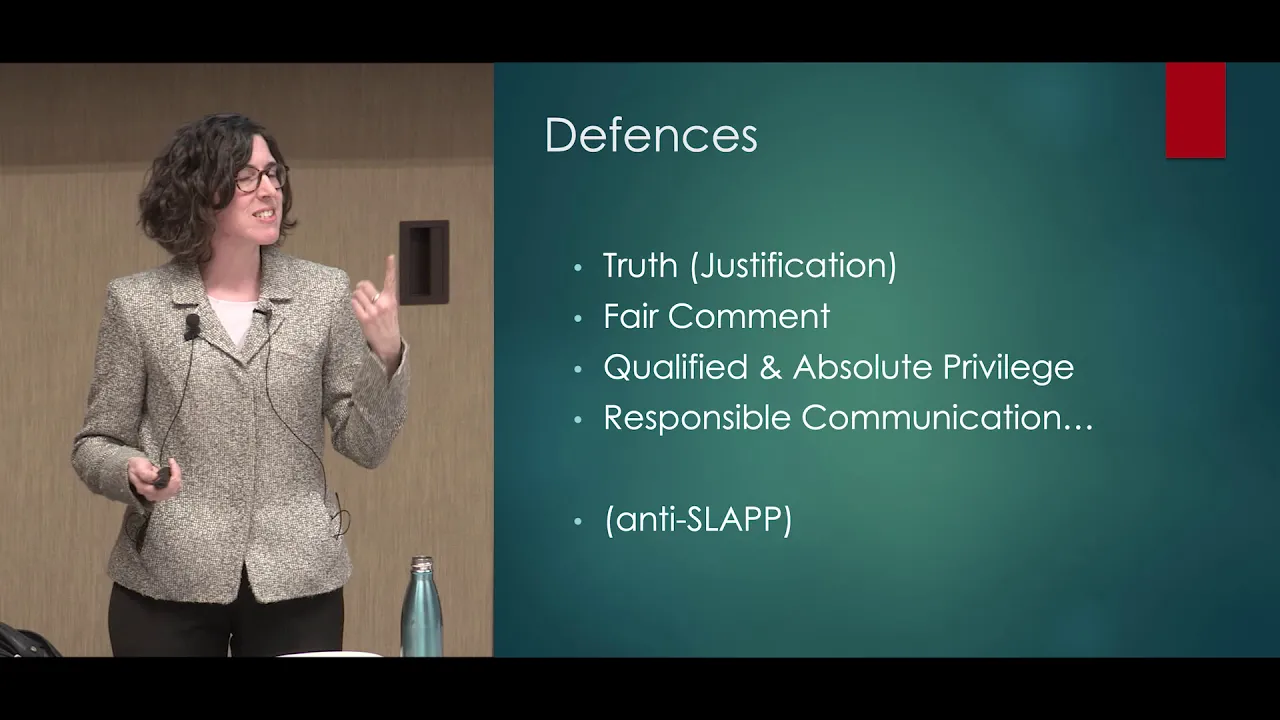























Defamation refers to any oral or written statement that damages another person's reputation, and six key defenses are available: (1) Justification by truth, which is an absolute defense where the burden of proof lies on the defendant; (2) Fair and bona fide comment on matters of public interest, which is protected even if not true; (3) Absolute privilege, which provides immunity for statements made during judicial proceedings, parliamentary debates, or between spouses; (4) Statement of opinion, which cannot be defamatory as it is not a statement of fact; (5) Consent, where the plaintiff's approval provides absolute privilege to the publisher; and (6) Good faith acquisition to authorized persons, where the defendant must prove reasonable grounds for believing the allegations.
Defences Against Defamation | Legal Defenses Explained
Added:[Music] hello i'm rashid goyal and i'm pursuing bllb from university of petroleum and energy studies and currently i'm a legal intern at lexington company so in today's video i'll be talking about defenses available against defamation a men's reputation is considered valuable property and every man has right to protect his reputation this right is acknowledged as an inherent personal right and is a just in rem that is a right good against all person in the world defamation refers to any oral or written statement made by a person which damages the reputation of another person if reputation is made in written and published then it is called label and if defamatory statement is spoken then it is known as slander let's discuss some elements of deformation first is the statement should be made a statement can be made by words either spoken or intended to be read or by sign or by visual representations second is the statement must be defamatory defamation starts with someone making a statement and any person who makes a defamatory statement can be held liable for defamation a defamatory statement tends to diminish the good opinion that other holds about the person and it has a tendency to make others look at him with the feeling of hatred ridicule fear and dislike now let's talk about the third element that is the intention of the wrongdoer the person making the defamatory statement knows that there are high chances of other person believing the statement to be true and it will result in causing injury to the reputation of the person being defamed now fourth element that is the statement should be false a defamatory statement should be false because the truth is the defense of deformation if statement made is true then there is no deformation as the falsity of the statement is the essential ingredient of the deformation the law does not punish anyone for speaking the truth even if it is ugly fifth element is the statement must be published for a deformation to occur statement should be published the statement should be communicated to the third party any statement written in a personal diary or a sent to as a personal message does not amounts to defamation but if the sender knows that it is likely that the third person may read it then it amounts to reformation and the sixth element is the statement must cause the injury the statement must or should harm or injure the plaintiff in some way for example the plaintiff lost his job because of statement made against him now let's move to the defenses available against defamation so the first defense is justification by truth truth is an absolute defense if the statement made is authentic then it does not constitute defamation the burden of proof is on the defendant who is claiming the defense for instance x makes a statement in an interview about why indulging in gambling and why files a suit against him if x is able to justify or prove it then why claims will be dismissed second defense is fair and bona fide comment nothing is defamatory which is fair comment in the matter of public interest the defendant can avail this defense when he has merely made a fair comment in the matter of public interest this defense is based on public policy which gives every person the right to comment and criticize without any malicious intention the work or the activities of public offices actors authors and the athletes as well as to those whose career is based on the public attention any fair and honest opinion on the matter of public interest is also protected even though it is not true there is no definition of matter of public interest let's take one example for example a puts allegation on b of being corrupt in a newspaper if a is not able to prove that the allegations were true then his comment will not be considered as fair comment now third is absolute privilege it gives the person an absolute right to make the statement even if it's defamatory the person is immune from the liability arising out of defamation lawsuit generally absolute privilege exams defamatory statements which are made during judicial proceeding by government official by legislator during the debates in in the parliament during political speeches in the parliamentary proceedings and communication between spouses fourth defense is statement of opinion if statement made is an opinion and not a statement of fact then it cannot be defamatory for example if a person says that he finds an actor ugly the statement is just an opinion however if he says that the actor is a drug addict or had has multiple affairs then it will be amounts to defamatory statement if this statement results into the actors losing work or his job and the statement made are false then there will be case for defamation now fifth defense is consent if plaintiff consents to the statement made then there is no defamation the consent of the plaintiff gives absolute privilege to the publisher it is immaterial whether the plaintiff knew that the information approved for publication was deformatory or not constant uh consent may be given by words or actions including inaction if consent is obtained fraudulently or from a person of unsound mind then it will be invalid and the sixth is the acquisition made in good faith to the authorized person an acquisition made in good faith against a person who has lawful authority over the person is not defamation it is not necessary for the person making allegation to prove that his allegations were true but he has to prove that there were reasonable ground for him to believe in the allegations suppose if a person signs a petition to the chairperson of a department authority against defective construction of houses along with several other residents of the locality he can say to have acted in good faith thank you everyone for watching my video i hope you like it and if you did please give it a thumbs up and share it with your friends and family and don't forget to let me know your feedback in the comment section stay home stay safe stay healthy
Up Next

Virginia Defamation Law Explained | Depp v. Heard Case Analysis
@LawLumber
215.5K views•2022-05-28

US Secondary Sanctions Impact on EU Businesses and Blocking Legislation
@Bureauvandijk
1.6K views•2019-03-20

Forensic Phonetics: Speaker Identification in Legal Cases
@nptel-nociitm9240
539 views•2025-03-19

Police Interrogation Tactics: False Confessions & Legal Reform
@LastWeekTonight
7M views•2022-04-18
Related Study Plans & Knowledge Roadmaps
Structured learning paths in Law