












![Post-judgment matters - Civil trials in the State Courts [English Subtitles]](https://i.ytimg.com/vi/o7qAhYmsmtk/maxresdefault.jpg)
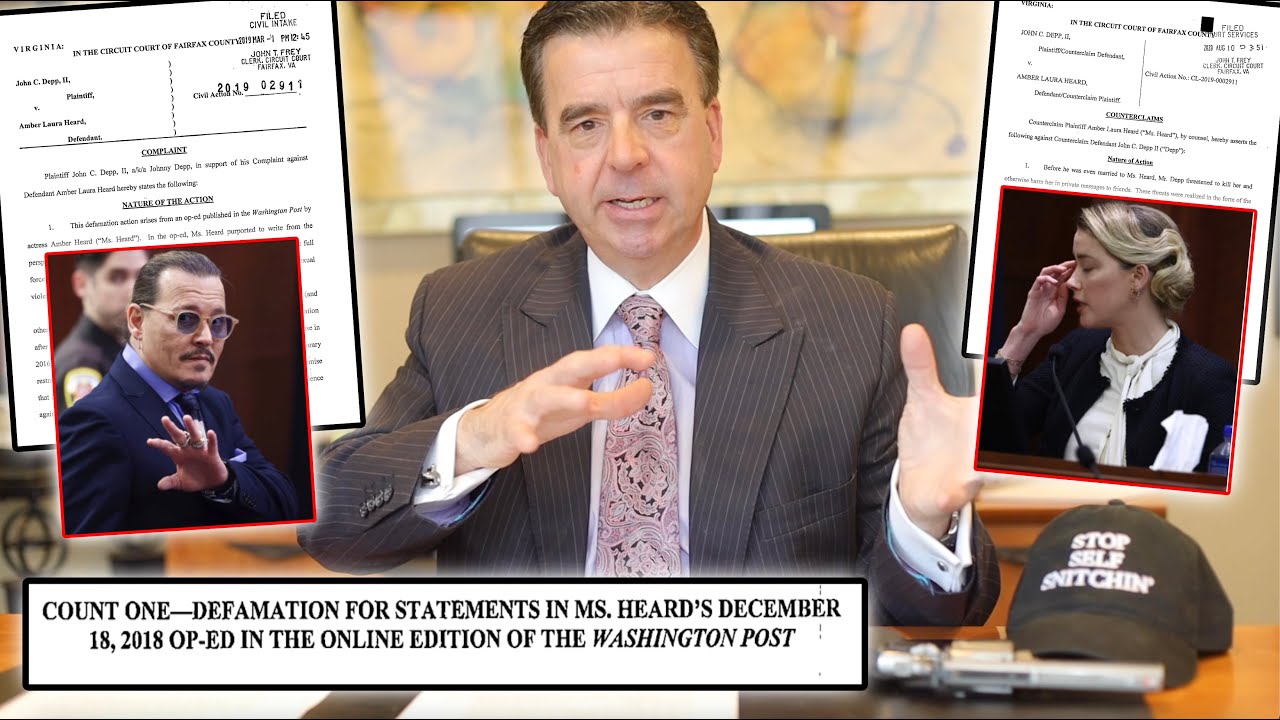
In defamation law, a plaintiff must prove that the defendant made a false statement about them that caused harm, and that the defendant acted with actual malice (knowing the statement was false or with reckless disregard for the truth). The burden of proof rests on the plaintiff to demonstrate each element by the greater weight of evidence, and for public figures, actual malice must be proven by clear and convincing evidence.
Johnny Depp vs Amber Heard Trial: Closing Arguments & Verdict Analysis
Added:Understanding the fundamental differences between civil law and criminal law, particularly the differing burdens of proof, such as 'preponderance of the evidence' versus 'beyond a reasonable doubt'.
The legal definition and core elements of defamation, specifically the distinction between libel and slander, and the standard of 'actual malice' required for public figures.
The basic structure of a court trial, including how evidence is presented, the role of direct and cross-examination, and the purpose of closing arguments.
The concept of damages in civil litigation, specifically the difference between compensatory damages and punitive damages.
Analyzing the broader constitutional implications of defamation lawsuits on the First Amendment and freedom of speech.
Examining the role of media, public relations, and social media influence on high-profile legal trials and jury perception.
Studying 'Anti-SLAPP' (Strategic Lawsuits Against Public Participation) legislation designed to protect individuals from retaliatory lawsuits.
Understanding post-verdict civil procedures, including the process of appeals, motions to set aside a verdict, and the enforcement of judgments.
436.3K views2.8Klikes6:38:54Original Release: 2022-05-27
foreign assistant foreign [Music] [Music] allegedly this is the last day YouTube foreign yeah once I'm not in the game anymore then I'm just gonna be like I would stop doing this still a game if you're lifelong bachelor peaceful on this side oh [Music] the fans are standing in the back in the back you should follow follow the walkway clockwise around the building thank you so much you're welcome back yes yeah it's not a crew uh that's where they enter and I see them in about the next five minutes okay his name is lucky thank you you're welcome thank you dude I think after the rain you and I should come out here that way you and I will be the first head-on shot unobstructed how you guys doing good morning good morning are there a lot of people here uh you they're all in the back waiting for they're in the arrival okay uh sounds good well the walkway around go around yeah thank you so much Walk Away by the building [Music] if anybody asks us we'll say we've been told it's going to be spread the word spread the word it's going to be here so if everybody starts showing off and setting up and then you get something bad it comes in at the 11th Avenue oh no we're gonna move it like we're all here now yeah you come to here maybe but I'm not even dating anymore how many lawyers didn't you say they might talk more no I never said that maybe that was to tell him yeah um how many times have you set up with a group of sticks yep five eight sticks and then some something something quick comes out and says oh we're gonna go sit up over here it's like no we're all set up here and you come here or here's the other scenario do all that the whole day walk down over there over there and everybody gets the sound like good morning excuse me guys I'm trying to figure out where the fans alignments in the back so what do I get just clockwise around the building okay great thank you so much Caleb we got it thank you uh yeah but it's going to be closed because they usually arrive around this time right about now right about now about 8 45 you got like three minutes to get through so can I go that way or that way it's easier if you go this way just follow the building clockwise okay thank you you might miss it of course thank you yes hello hi hi I'm here today here back in the back you got about two minutes they're coming now yeah oh my God okay thank you like this around the back around the back pork and you're you're gonna notice it foreign Groupon [Music] as soon as they go inside as soon as the thing starts to screw off pretty much yeah they they were just up for a break it was a break at 10 30. oh yeah that ain't happening it was out by I-81 last time I looked foreign let me ask you about 81. in the time you've lived out here you know I've been on 95 81 79 999999999999999999 there is something about I-81 that is horrendous truck it actually is it's just endless trucks why and and why it's the major Trucking from New York City to uh anyway um yeah is that they have the worst truck accidents because everybody's trying to do the you know so cars get crazy they're trying to LeapFrog constantly the truckers are like [ __ ] and then and so they'll they'll pair they'll Pace each other yeah at like 60 miles an hour going up the hill pissing everybody off and then everybody's LeapFrog and trying to get around that and the urethane happens that they they um the truckers do a dangerous thing when they come up they appear I understand what you're trying to do but drivers get pissed off because they'll come right up to someone bumping they're trying to fit the slot you know what I mean like you're just trying to move over to the right and so we come up on someone's bumper it's going slow someone's going slow and the high speed that oh it takes is one knucklehead you go 55.
so you've got all these different variables terrible accidents and when they happen it's the best you know so all the local fire departments are like yeah I've never seen the amount of truck traffic on 79 or 95. it's 81. yeah especially around James Madison University Harrisburg there's two Harrisonburg there's two famous things out there one's called the Virginia England Port Virginia transfer containers into the sea land containers they can be on the back of trucks but yeah trains that could be on whatever so the train tracks and the ports of Baltimore and I guess Philadelphia are pretty much close close enough drive to the Inland Port it's a transfer station it's adjacent to it's an example Middletown Winchester it's two weeks after and um Royal on route 522.
on that road is the Virginia Inland port drive by there and this is like this big Warehouse complex where all these slices in Warren County this is wow right in fact you know I'm thinking it's enough inspiration hey here's a is this anybody who's just nobody I'm not stopping Escalade could even be foreign testifying today who knows I thought they were pretty much done at some point today this will wrap part of that that's it the jury then gets his requested right and then we're back here on Tuesday it was a nice judge actually um that one entertainment lawyer reporter for Channel Five said this these things are hard civil defamation suits defamation trials rarely go to try yeah it's tons of Shades of Gray and then today pasta could wrap next week I don't know one thing's for losing my degrees whenever you take them away you gotta understand something winning and that's who Johnny Depp was here okay the sewer the sewer truck is here now so I profess my love to him good for you this is a metaphor for the whole thing that's a metaphor [Music] for him all right thank you okay um thank you so much all right good morning good morning good morning [Music] [Applause] [Applause] foreign [Music] [Music] [Music] do we have any matters before the jury comes out that's what I like to hear okay fantastic let me just take a minute to get my computer up Lisa all right just also um I did for the ones that are going to go back to the jury I did take off the deaf and Herd on the title so it just has the numbers on the jury instructions okay all right okay we're ready for the Cherry foreign good morning all right thank you you can be seated thank you good morning ladies and gentlemen all right ladies and gentlemen of the jury you now have heard all the evidence in the case before the lawyers make their closing arguments the court will instruct you on the instructions of law that you are to apply in deciding this case Okay since it's been quite a while since I gave you the preliminary instructions I want to remind you that in closing arguments the lawyers will refer to the testimony and the other evidence that you will have heard but what the lawyers say in their closing arguments is not its self-evidence their statements are only their recollection of what the evidence in the case was it is your Collective recollection as seven jurors what the evidence in the case was which shall govern your deliberations in addition your notes should be used only as an aid to your memory you should not give your notes precedence over your independent recollection of the evidence you should rely on your independent recollection of what the evidence in the case was and you should not be unduly influenced by the notes of other jurors I also wanted to make you aware that due to the high profile nature of this case the court has entered an order to seal the names of the jurors for a year which is different than what I instructed you in the beginning of the case I wanted to bring that to your attention okay all right as to the following jury instructions that I'm going to give you um you'll be able to take these written jury instructions into the into the deliberation room with you so you don't need to write down exactly what I say right now because you'll have all have copies of them but I would ask for your attention while I read them to you okay with respect to the instructions that I'm about to give you you may know that some of them are numbered and some of them are lettered at the top and that the numbers and letters do not necessarily follow in any sequence or any order do not concern yourself with that some might even be missing but just consider only the body or text of the instruction not the headings okay all right now some of the instructions may appear to be in Conflict this is because the court cannot predict your findings of fact therefore the court must instruct you the jury on the applicable law under both the plaintiffs and the defendant's theory of the case okay all right you have been chosen and sworn as jurors in this case to try the issues of facts presented you must consider and decide this case fairly and impartially you are to perform this Duty without bias or Prejudice as to any party all persons stand equal before the law and are entitled to the same treatment under the law our system of law does not permit jurors to be governed by sympathy Prejudice or public opinion both of the parties and the public expect that you will carefully and impartially consider all the evidence in the case follow the law as stated by the court and reach a just verdict regardless of the consequences you are the judge judges of The Facts The credibility of the witnesses and the weight of the evidence you may consider the appearance and manner of the Witnesses on the stand their intelligence their opportunity for knowing the truth and for having observed the things about which they testified their interest in the outcome of the case their bias and if any have been shown their prior inconsistent statements or whether they have knowingly testified untruthfully as to any material fact in the case you may not arbitrarily disregard believable testimony of a witness however after you have considered all the evidence in case then you may accept or discard all or part of the testimony of a witness as you think proper you are entitled to use your common sense in judging any testimony from these things and all the other circumstances of the case you may determine which Witnesses are more believable and weigh their testimony accordingly you must not base your verdict in any way upon sympathy bias guesswork or speculation your verdict must be based solely upon the evidence and instructions of the Court your verdict must be based on the facts as you find them and on the law contained in all of these instructions with respect to plain of John C depth seconds claims against defendant Amber Laura Hurd the issues in this case are summarized below number one whether misheard made or published any of the following statements a Amber Heard I spoke up against sexual violence and faced our culture's wrath that has to change B then two years ago I became a public figure representing domestic abuse and I felt the full force of our culture's wrath for women who speak out see I had the rare vantage point of seeing in real time how institutions protect men accused of abuse number two do any of misheard statements imply or insinuate anything about Mr Depp number three were misheard statements seen by anyone other than Mr Depp number four did misheard statements convey a defamatory implication to someone who saw them other than Mr Depp number five are the implications or insinuations about Mr Depp in misheard statements faults number six did misheard make the statements with actual malice number seven if Mr Depp is entitled to recover what is the amount of Mr Depp's damages on these issues Mr Depp has the burden of proof your decisions on these issues must be governed by the instructions that follow with respect to misheard's claims against Mr Depp the issues in this case are summarized below number one did Adam Waldman while acting as an agent for Mr Depp make the following statements a Amber Heard and her friends in the media use fake sexual violence allegations as both a sword and shield depending on their needs they have selected some of her sexual violence hoax facts as a sword inflicting them on the public and Mr death B quite simply this was an ambush a hoax they set Mr Depp up by calling the cops but the first attempt didn't do the trick the officers came to the penthouses thoroughly searched and interviewed and left after seeing no damage to face or property so Amber and her friends spilled a little wine and roughed the place up got their story straight under the direction of a lawyer and publicist and then placed a second call to 9-1-1 and C we have reached the beginning of the end of Miss heard's abuse hoax against Johnny Depp number two are any of the statements about misheard number three were any of the statements seen by someone other than misheard number four are any of the statements faults number five were any of the statements made with actual malice number six if misheard is entitled to recover what is the amount of misheard's damages on these issues misheard has the burden of proof your decisions on these issues must be governed by the instructions that follow you shall only return your verdict for Mr Depp on his claim of defamation about the following statement if he has proved by the greater weight of the evidence that number one misheard made or published the following statement Amber Heard I spoke up against sexual violence and faced our culture's wrath that has to change and number two the statement was about Mr Depp and number three the statement is false and number four the statement has a defamatory implication about Mr Depp and number five the defamatory implication was designed and intended by Miss heard and number six due to the circumstances surrounding the publication of this statement it conveyed it conveyed a defamatory implication to someone who saw it other than Mr Depp and if Mr Depp further proved by clear and convincing evidence number seven that misheard made the statement with actual malice if Mr Depp failed to prove any one or more of The Seven Elements above then you shall find your verdict form is heard with respect to the above statement you shall only return your verdict for Mr Depp on his claim for defamation about the following statement if he has proved by the greater weight of evidence that number one misheard made or published the following statement then two years ago I became a public figure representing domestic abuse and I felt the full force of our culture's wrath for women who speak out and number two the statement was about Mr Depp and number three the statement is false number four the statement has a defamatory implication about Mr Depp at number five the defamatory implication was designed and intended by misheard and number six due to the circumstances surrounding the publication of this statement it conveyed a defamatory implication to someone who sought other than Mr Depp and if Mr Depp further proved by clear and convincing evidence number seven that misheard made the statement with actual malice if Mr Depp failed to prove any one or more of The Seven Elements above then he shall find your verdict for misheard with respect to the above statement you shall only return your verdict for Mr Depp on his claim for defamation about the following statement if he has proved by the greater weight of the evidence that number one misheard made or published the following statement I had the rare vantage point of seeing in real time how institutions protect men accused of abuse and number two the statement was about Mr Depp and number three the statement is false and number four the statement has a defamatory implication about Mr Depp and number five the defamatory implication was designed and intended by Miss heard and number six through the circumstances surrounding the publication of the statement it conveyed a defamatory implication to someone who saw it other than Mr Depp and if Mr Depp further approved by clear and convincing evidence number seven that misheard made the statement with actual malice if Mr Depp failed to prove any one or more of The Seven Elements above then you shall find your verdict for misheard with respect to the above statement you shall only return your verdict for misheard on her claim for defamation about the following statement if she has proved by the greater weight of the evidence that number one Adam Waldman while acting as an agent for Mr Depp made or published the following statement Amber Heard and her friends in the media use fake sexual violence allegations as both a sword and a shield depending on their needs they have selected some of her sexual violence hoax facts as the sword inflicting them on the public and Mr Depp at number two the statement is about misheard and number three the statement was seen by someone other than misheard and number four the statement is false and if misheard further proved by clear and convincing evidence number five that the statement by Mr Waldman was made with actual malice if misheard failed to prove any one or more of the five elements above then you shall find your verdict for Mr Depp with respect to the above statement you shall only return your verdict for misheard on her claim for defamation about the following statement if she has proved by the greater weight of the evidence that number one Adam Waldman while acting as an agent for Mr Depp made or published the following statement quite simply this was an ambush a hoax they set up Mr Depp up by calling the cops but the first attempt didn't do the trick the officers came to the penthouses thoroughly searched and interviewed and left after seeing no damage to face or property so Amber and her friend spilled a little wine and roughed the place up got their stories straight under the direction of a lawyer and publicist and then placed a second call to 9-1-1 and number two the statement is about misheard and number three the statement was seen by someone other than misheard and four the statement is false and if misheard further proved by clear and convincing evidence number five that the statement by Mr Walden was made with actual malice if misheard failed to prove any one or more of the the five elements above then you shall find your verdict for Mr depth with respect to the above statement you should only return your verdict for misheard on her claim for defamation about the following statement if she has proved by the greater weight of the evidence that number one Adam Waldman while acting as an agent for Mr Depp made or published the following statement we have reached the beginning of the end of Miss heard's abuse hoax against Johnny Depp and number two the statement is about misheard and number three the statement was seen by someone other than misheard and number four the statement is false and if misheard further proved by clear and convincing evidence number five that the statement by Mr Waldman was made with actual malice if misheard failed to prove any one or more of the five elements above then you shall find your verdict for Mr Depp with respect to the above statement when using these instructions the phrase the greater weight of the evidence also sometimes called the preponderance of the evidence means the evidence which you find more persuasive when evaluated against all the evidence that has been emitted in the case the testimony of one witness whom you believe can be the greater weight of the evidence when a party has the burden of proving any issue by clear and convincing evidence he or she must produce evidence that creates in your mind's a firm belief or conviction that he or she has proved the issue a statement that is not directly defamatory May nonetheless suggest a defamatory meaning in an indirect way that is by implication in determining whether any of the statements have a defamatory implication you must consider the op-ed as a whole and the circumstances surrounding its publication you should consider if these circumstances show that the words used are defamatory and relate to Mr Depp however such circumstances cannot extend the meaning of the words used in the op-ed beyond their ordinary and common meaning the proposed implication must be reasonably drawn from the words actually used in determining whether any of the statements in the op-ed are false and defamatory as to Mr Depp you must read the statements in the context of the op-ed as a whole this means you may not seize on any one word phrase or image or consider only one particular statement phrase or passage in isolation in determining whether any of Mr waldman's statements are false and defamatory you must read those statements in context as a whole this means you may not seize on any one word phrase or image or consider only one particular statement phrase or passage in isolation both parties had the burden of proving actual malice by clear and convincing evidence to meet this burden each party must prove by clear and convincing evidence that each statement was made or published number one with knowledge that the statement was false or number two so recklessly as to amount to a willful disregard for the truth that is with a high degree of awareness that the statement was probably false actual malice is a subjective analysis that looks to the state of the mind of the person who made the statement if the person who made the statement is believed it was substantially accurate at the time of its publication then it does not give rise to liability for defamation the term actual malice should not be confused with the more common meanings of the word malice such as ill will or hatred actual malice is not established merely because an author was motivated by ill will Prejudice hostility hatred contempt or even a desire to injure another in order to find that Miss heard republished the original op-ed including the headline through a tweet on December 19 2018. you must find that she re-transmitted the defamatory material or redistributed the material with the goal of reaching a new audience stated differently republication occurs when the speaker has a permanently reiterated the statement a hyperlink directing readers to a previous article on the same website does not direct the previous article to a new audience merely linking to an article does not amount to republication but adding content to a linked article May constitute republication you must determine whether any added content was intended into intended to reach a new audience if you find any content added to the hyperlink was intended to reach a new audience it constitutes a republication further if you find a republication occurred on December 19 2018 then in order to find for Mr Depp against Miss heard you must also find by clear and convincing evidence that misheard made this republication with actual malice a principal is a person or legal entity with power or right to control the means and methods of performance by which another person performs the principal's work an agent is the person who is subject to the power or right of a principle to control the means and methods of Performing the work an attorney has the express authority to do everything which the client expressly authorized him to do and the implied authority to do everything necessary or incidental to the purpose for which he was retained Miss heard has the burden of proving by the greater weight of the evidence that Mr Waldman was an agent of Mr Depp that Mr Waldman was acting within the scope of his agency when he made the statements you must remember that there is no burden on either party to prove the truth of any of the statements both parties were free to offer proof of truth but by doing so they do not assume the burden of convincing you of the truth of the statements the burden remains on each party to prove that the statements he or she complains of are false The Rules of Evidence ordinarily do not permit witnesses to testify as the opinions or conclusions an exception to this rule exists as to Those whom we call Expert witnesses witnesses who by education and experience have become expert in some art science profession or Calling May State their opinions as to relevant immaterial matters in which they profess to be expert and may also State their reasons for the opinion you should consider each expert opinion receiving evidence in this case and give it such weight as you may think it deserves if you should decide that the opinions on Expert Witnesses not based upon sufficient education and experience or if you should conclude that the reasons given in support of the opinion are not sound or if you feel that it is outweighed by other evidence you may disregard the opinion entirely and considering the way to be given to the testimony of expert Witnesses whose opinions differ you may consider the ability and character of the witnesses their actions upon the witness stand the weight and process of the reasoning by which they support their opinion their possible bias in favor of the side for which they Testify the relative opportunities for study or observation of the matters about which they testify and any other matters which serve to illuminate their statements and considering the weight to be given to the testimony of expert Witnesses you should consider the basis for his or her opinion and the manner by which he or she arrived at it and the underlying fact and data upon which he or she relied an expert witness was asked whether statements contained in published treatises periodicals or pamphlets are reliable authority of a type normally relied upon by others in his or her field of expertise this evidence is permitted to test the knowledge accuracy and opinions of the expert witness and if such evidence is established as a reliable Authority by expert testimony it may be considered by you along with the other evidence in the case in considering the evidence you are not limited to the bald statements of the Witnesses in other words you are not limited solely to what you see and hear as the witnesses testify on the contrary you are permitted to draw from the facts which you find to have been proven such reasonable inferences as may seem justified in the light of your own experience during the trial of this case certain testimony has been presented to you by way of video depositions you should give this testimony the same consideration as to its weight and credibility as you give to the testimony of witnesses who testified here in court you must not discount any testimony merely because it was shown to you by video recording when one of the parties testifies unequivocally to the facts within his or her own knowledge those statements of fact and the necessary inferences from them are binding upon him or her he or she cannot rely on other evidence and conflict with his or her own testimony to strengthen his or her case however you must consider his or her testimony as a whole and you must consider a statement made in one part of his or her testimony in the light of any exclamation explanation or clarification made elsewhere in his or her testimony any fact that may be approved by direct evidence may be proved by circumstantial evidence that is you may draw all reasonable and legitimate inferences and deductions from the evidence if you believe from the case that a witness other than Mr Depp or misheard previously made a statement inconsistent with his or her testimony at this trial the only purpose for which that statement may be considered by you is its bearing on the witness's credibility it is not evidence that what the witness previous previously said was true if you believe from the evidence that misheard or Mr Depp previously made a statement inconsistent with her or his testimony at this trial that previous statement may be considered by you as evidence that what misheard or Mr Depp previously said was true and reaching your verdict in this case you are to consider the testimony and evidence sometimes attorneys stated objections during the course's trial and instructed a witness not to answer a question objections and instructions to Witnesses are not evidence and you may not consider them in reaching your verdict nor are you to draw any inference from the fact that an objection was made you must not consider any matter that was rejected or stricken by the court it is not evidence and should be discarded any amount of Damages requested by a party is not evidence in this case you should not consider it as evidence in arriving at your verdict if you find your verdict for Mr Depp or misheard then he or she is entitled to recover compensatory damages without any proof of actual or pecuniary injury as a result injury to Mr Depp or misheard's personal and business reputation humiliation embarrassment is presumed if you find either party liable for defamation then in determining the actual amount determining the amount of damages to which the opposing parties entitled you may take into consideration all the circumstances surrounding the defamatory statements the occasions on which they were made and the extent of their publication the nature and character of the insult the probable effect on those who heard the statements and their probable and natural effect upon the defame party's personal feelings and upon his or her standing in the community and in business your verdict should be for the amount that will fully and fairly compensate him or her for number one any loss or injury to his or her business number two any insult to him or her including any pain embarrassment humiliation or mental suffering number three any injury to his or her reputation and number four any actual out-of-pocket losses that were caused by the statements Mr Depp cannot recover damages from for any harm that occurred after November 2nd 2020 Ms heard can recover damages for any harm that occurred after Mr waldman's statements were published the burden is on the party seeking damages to prove by the greater weight of the evidence each item of damage is he or she claims and to prove that each item was caused by the defamatory statements at issue neither party is required to prove the exact amount of Damages but the party must show sufficient facts and circumstances to permit you to make a reasonable estimate of each item if either party fails to do so then he or she cannot recover for that item if you have found by clear and convincing evidence that the statements in the op-ed were made with knowledge that they were false or so recklessly as to amount to a willful disregard for the truth that is with a high degree of awareness that the statements were probably false then you may award punitive damages to punish misheard for such actions and to serve as an example to prevent others from making such statements in the future you must State separately in your verdict any amount you allow as compensatory damages if any in the amount you allow as punitive damages if you have found by clear and convincing evidence that Mr Waldman while acting as an agent for Mr Depp made the statements with knowledge that they were false or so recklessly as to amount to a willful disregard for the truth that is with a high degree of awareness that the statements were probably false then you may award punitive damages to punish Mr Depp for his such actions and to serve as an example to prevent others from making such statements in the future you must State separately in your verdict any amount you allow is compensatory damages if any in the amount you allow is punitive damages closing arguments there you go you're good I think so good nope you had it for a second thank you good morning thank you let's try that again good morning on May 27th 2016 Miss Hurd walked into a courthouse in Los Angeles California to get a no notice ex-party restraining order against Mr Depp and in doing so ruined his life by falsely telling the world that she was the Survivor of domestic abuse at the hands of Mr Depp today on May 27th 2022 exactly six years later we ask you to give Mr Depp his life back by telling the world that Mr death is not the abuser Miss heard said he is and hold misheard accountable for her life ladies and gentlemen the jury as you probably know by now my name is Camille Vasquez on behalf of Mr Depp and all my colleagues at Brown redneck I want to thank you deeply for your time and your service over these last seven weeks we understand that it probably has not been convenient for you to be here every day and we are so grateful for your time and careful consideration of the evidence as you deliberate after weeks of sitting in this courtroom listening to testimony and looking at evidence now it's time for you the jury to come to a decision you have been entrusted with a serious task what is at stake in this trial is a man's good name even more than that what does at stake at this trial is a man's life the life that he lost when he was accused of a heinous crime and the life he could live when he is finally Vindicated exactly six years ago today on May 27 2016 misheard walked into court and filed a false report of domestic abuse against her husband of 15 months Johnny Depp the scene was a setup she tipped off the paparazzi so they would be waiting they knew exactly where she would pause which side of her face to photograph and the photos captured what she wanted them to see the image of a battered woman what the paparazzi did not know is that the dark mark on her face mysteriously appeared six days after last seen Mr Depp it was a lie she knew it Mr Depp knew it and the multiple Witnesses you heard from who saw her that week of May 21st 2016 also knew it but the world only saw what she wanted them to see two years later when promoting the biggest role of her career until this trial Miss heard presented herself to the world as a public figure representing domestic abuse the headline of the op-ed featured the term sexual violence even though she had never before accused her ex-husband of such a heinous crime misheard and her lawyers love to remind you of how the op-ed did not mention Mr debt by name but miss heard made sure that there would be no mistake about who she was referring to she inserted two years ago so the world would remember the photo of a battered woman the mark on her face standing outside the courthouse and they would once again see Mr Depp as the villain this time in full swing of the metoo movement but what was happening behind closed doors was quite different from what misheard presented to the world the exact opposite in fact there is a there is an abuser in this courtroom but it is not Mr Depp and there is a victim of domestic abuse in this courtroom but it is not misheard the evidence presented at this trial has shown that misheard is in fact the abuser and Mr debb the abused as you heard from Mr Depp and multiple other witnesses that testified under oath at this trial Mr Depp experienced persistent verbal physical and emotional abuse by misheard during their relationship and when their relationship was over misheard inflicted the greatest and cruelest injury of all she publicly and falsely named Mr death as the abuser misheard never thought she would be held accountable never thought that she would have to face her abuser she never thought she would never she would have her supposed mountain of evidence vetted she never thought that Mr Depp would tell you the jury and the world that he was the real victim of domestic abuse she said it in her own words yeah I'm I'm victim too and I you know it's a fair fight or excited you started this case Mr Chu and I stood before you to give you our opening statements on behalf of Mr Depp during that statement we made promises to you about what the evidence would ultimately show at the end of this trial we've kept those promises one of those promises we made was that you would come to understand who misheard is that she is a deeply troubled person violently afraid of abandonment desperate for attention and approval and in her relationship with Mr death she was violent she was abusive and she was cruel you heard from Dr Shannon Curry who explained that misheard suffers from borderline personality disorder and histrionic personality disorder these are disorders that are characterized by anger sometimes uncontrollable and explosive anger and a powerful sometimes desperate need for attention acceptance and approval fear of Abandonment is the deepest fear a person with these disorders will suffer from dramatically fluctuating moods and can sometimes be violent and aggressive they can also be charming and likable but they can be incredibly manipulative and Wild an emotional rollercoaster with wild swings from idolizing their partner to devaluing him in fact you saw that when she completed testing with her own forensic psychology expert Dr Don Hughes misheard self-reported that she felt like she had three or four different personalities and that's sometimes her temper would explode and she completely lose control you heard from multiple witnesses that misheard can be very pleasant even Charming but you also heard from multiple Witnesses and in audio recordings of misheard that she can be incredibly aggressive violent and cruel you heard that even from her former assistant Kate James Miss James testified that Miss heard would scream yell and send her barrages of text messages in fact Ms heard testified that Miss James testified that Ms heard literally spat in her face you heard from Miss heard's former best friend Rocky Pennington that misheard once hit her when Miss Pennington did not do her best to meet Miss heard's needs you also heard from Beverly Leonard that she once witnessed misheard assault her then partner in Seattle airport in 2009.
and you heard from Mr death that Miss heard used her sister Whitney as a punching bag literally and figuratively you also heard overwhelming evidence from Mr Depp and the people that were around him and misheard during their relationship that Mr Depp suffered persistent verbal and physical abuse at the hands of misheard you've heard evidence from Dr Curry in the fact Witnesses at this trial that misheard's deepest fear is one of abandonment being left by Mr death Mr death's greatest crime in her mind the fault she confronts him with time and time again is that he splits he leaves the fight especially when Miss heard gets physical and she couldn't stand it when he did you heard from miss her yourselves in audio recordings how upsetting it was to her when Mr Depp was split anytime anything goes wrong it's like it's your first thing and it's unnecessary it's not always uh you're splitting because there's blows or because there's yelling or anything you split with many most times when I'm still speaking in this volume nothing has been thrown or hit or anything you saw the barrage of text messages she would send when he would leave calling him a monster for doing so you heard from Witnesses like Travis mcgivern Tara Roberts and Debbie Lloyd that Miss herb would Claude Mr Depp block the elevator throw a punch when Mr duck tried to separate himself from the fight and you heard from Mr Depp and Mrs couple therapist Dr Anderson that misheard reported that when Mr Depp would leave to de-escalate a fight she would strike him to keep him there she would rather be in a fight than have him leave you heard from Mr death about how often misheard would berate him insult him and physically attack him including one of the most serious occasions when misheard threw a vodka bottle at Mr death severely injuring his finger and then put a cigarette out on his face you heard from Mr death that this whole incident in Australia started because Miss heard was enraged that Mr Depp wanted a post-nuptial agreement and she wasn't in his will just a month after getting married when her husband was seriously injured and bleeding from a partially amputated finger what did miss her do she pursued him she kept coming after him because that's what she does she wouldn't stop in Australia when we had the big fight where I lost the tip of my finger at least five bathrooms and two and two two two avoid talking to information to escape the fight you don't escape the fight you escape the solution you escape the solutions Escape figuring it out we cannot work it out if you run away to the bathroom every time you heard Mr Depp testify he went through something like a nervous breakdown that day and he wrote a lot of things on mirrors in other places again what did Miss heard do as her husband was bleeding from Serious injury she wrote snarky messages right back to him she denied it under oath to you but the evidence you saw speaks for itself you heard from Mr depth security Sean batt who was aware of constant arguing and bickering he witnessed misheard calling Mr Depp names fat ass [ __ ] you Johnny Mr bet testified that he saw undocumented injuries on Mr death a swollen eyelid in March of 2015 cuts on his nose scratch marks on his chin in December of 2015.
and you heard from Travis mcgivern who testified the misheard called Mr Depp names like washed up [ __ ] [ __ ] and worst of all a [ __ ] deadbeat dad misheard would take the low blows and hit him where it hurts his children Mr mcgivern told you that on March 23 2015 misheard through things that Mr death spatted him and ultimately punched him in the face leaving him with a shiner you heard testimony from Malcolm Connolly another security member who testified he saw miss her throw things in Mr death a cigarette lighter on a plane a soda can from upstairs at the Eastern Columbia building he never saw marks on misheard but he saw marks on Mr Depp scratches bruises on his left eye scratches on his left ear and he took pictures documenting injuries like this one you also heard from Tara Roberts a manager at Mr dapp's Island who witnessed misheard telling Mr debb that he was washed up and would die fat and lonely you also heard from Miss Roberts that she witnessed misheard clawing and grabbing at Mr Depp grabbing his hair trying to pull him back to her and Mr Depp had a visible injury to his nose on that occasion most importantly you heard from misheard yourselves on multiple audio recordings admitting to being physically violent with Mr dapper you heard Miss heard admit to hitting Mr dapp I remember hating you as a response to the door thing and I'm really sorry about hitting you with the door that we are hitting your head I did not mean to nor you didn't mean to hit me in the head with the door but you meant to I didn't punch me in the jaw I've been to hit you and I I did not do this thing with the door I do remember I did mean to hit you so that you didn't mean the door no God no I didn't I didn't quit punching me in the edge I didn't okay I'm sorry I hate you I didn't mean to hit you but it was interesting response I just reacted in response to my foot I just reacted you heard her admit it again and claimed Mr Depp was a baby for complaining about the abuse punch you by the way you I'm sorry that I didn't uh uh hit you across the face in a proper slap but I was hitting you it was not punching you babe you're not punched don't tell me what it feels like to be punched you know even a lot of fights have been around a long time I don't know when you [ __ ] have a closer you didn't get punched you got hit I'm sorry I hit you like this but I did not punch you I did not [ __ ] deck you I [ __ ] was hitting you I don't know what the motion of my actual hand was but you're fine I did not hurt you I did not punch you I was hitting you how what am I supposed to do do this I'm not sitting here bitching about it am I you are that's the difference between me and you you're a [ __ ] baby oh sides I did start a physical fight yes you did she did the right thing the big thing the you know what you are admirable take a minute to really think about what you just heard there quote I'm sorry that I didn't hit you across the face in a proper slap but I was hitting you I was not punching you babe you're not punched imagine that was Mr Depp saying that to misheard on that recording let's play one more [Laughter] time I'm sure she's drinking games [Laughter] what else thank you Chrome oh my God what else what else other things do you want to ask oh no I Wanna Know waiting wait is there no other places to go run come on it could be a real married man who deals your [ __ ] the way that a man does go run to the next house every man does gold run away this is the real misheard the one in the audio recordings not the one you saw in this courtroom what you didn't hear on a single recording you heard in this case and there were many played by both parties is Mr Depp ever admitting to hitting punching or kicking misheard you didn't hear it it doesn't exist it didn't happen and despite the fact that Mr death and misheard are heard discussing many of the alleged incidents you've heard about at this trial like Australia and the Bahamas you never heard Miss heard accuse Mr Depp of sexual assault unlike Mr debb who you heard admit to and own up to his past mistakes and his struggles particularly with drugs and alcohol Miss heard will not admit that she has never done that she has ever done anything wrong but she cannot deny what you heard on those recordings as much as Miss heard and her lawyers have tried to make this case about Mr def's language it is misheard that repeatedly admits to violence by April and May of 2016 Mr Depp had reached his limit his mother was dying his finances were a mess and when he showed up late to miss her's 30th birthday party because a meeting with his new business manager Edward White had gone late misheard of course was not understanding she was Furious you heard from Mr death both in this courtroom and on audio recordings that misheard punched him that evening he left with Travis mcgivern and the next morning he learned that someone had left feces on his bed Miss heard denies responsibility but she admitted to the prank to Starling Jenkins you heard him testify to that effect for almost a month after that they didn't see each other and you heard from Mr Depp that when his mother died on May 20th 2016 he resolved to leave misheard he was done and when Miss heard learned that Mr Depp was done that she was really losing him she went on the attack she filed for a divorce before Mr duck could then as you heard from Mr Duff's divorce lawyer Laura wasser misheard sent a letter demanding financial support and when her demands weren't met Miss heard struck a blow against Mr Depp that was more damaging than any physical blow she had ever landed when she walked into court six years ago today on May 27 2016 to get a domestic violence restraining order against Mr Depp she did so in front of Paparazzi with a mark on her face the evidence presented at this trial demonstrates that miss her didn't just want a divorce she wanted to ruin him Miss heard denied alerting TMZ to the tro filing in this courtroom but you heard testimony from Morgan Tremaine that TMZ knew to go to the courthouse knew what side of her face the alleged bruise was on and that Miss herb would pause she would pause for paparazzi who got the photos that ended up splashed across newspapers and magazines Mr testified that she did not personally give photographs of her apparent injuries to People magazine but somehow these pictures that she took and maintained on her devices ended up on the cover of People magazine one month later foreign she walked away with seven million dollars without any tax liabilities which she said she was donating to two charities the ACLU and the Children's Hospital of Los Angeles the ACLU they got less than a million dollars from her and the Children's Hospital they got 250 thousand dollars but that didn't stop misheard from telling the world that she donated everything because remember she wanted nothing and she had donated everything the word donated and that didn't stop her from testifying under the penalty of perjury that she had donated it miss her tried to tell you that pledge and donate mean the same thing she claims she hasn't given the money because she was sued but you've heard on contested evidence that she has the money for 13 months prior to this lawsuit being commenced by Mr dupp she had all the money and had month after month after month to fulfill her pledge and actually donate the money but she didn't she also told you that she never fulfilled The Pledge because Mr Depp sued her for defamation that's a blatant lie it was misheard who fired the first shot after the divorce was finalized when she sought to initiate an arbitration against Mr debb for defamation three months before the op-ed was even published and six months before Mr Depp filed this lawsuit not only does this contradict Ms herd's excuse for not making donations it contradicts her narrative that she just wants to move on with her life that she just wants Mr death to leave her alone lies that is this hurts narrative lies upon lies there and actually were all kinds of accusations uh flying your way when you said all this and then there was a divorce settlement you got seven million dollars people were saying this is all about the money but then you did something that uh Twisted that whole argument what did you do with that money seven million dollars in total was donated to I split it between the ACLU and Children's Hospital of Los Angeles ACLU is a human rights organization sorry ACLU is a prominent um uh organization non-profit organization in the United States it's called the American civil liberties Union and they work on behalf of marginalized communities uh on the ground and the legislative reform and well more power to you because that's that's something that I've never wanted nothing when you catch and it's heard in a lie she tries to cover it up with more lies so let's talk about the giant lie at the heart of this case Miss Hertz claim that Mr Depp is an abusive monster and that she is a public figure representing domestic abuse at the start of this case Mr Chu and I told you that you were going to hear some disturbing and graphic Tales of abuse from misheard and they were designed to shock you and overwhelm you which you have we told you that this would be a performance the role of her lifetime as a heroic Survivor Survivor of brutal abuse when Mr Depp brought this case for defamation Miss heard went all in she spun a story of shocking overwhelming brutal abuse she came into this courtroom prepared to give the performance of her life and she gave it it's heard misheard's acting coach Christina Sexton testified that misheard has difficulty crying when she is acting you saw it misheard sobby without tears while spinning elaborate exaggerated Fantastical accounts of abuse and everything going on in her mind almost a decade prior while enduring that abuse it was a performance she told you that what she thinks about excuse me she told you what she thinks you need to hear to convict this man as a domestic abuser and a rapist she wants you to believe that she was abused countless times countless times over the entire course of their relationship but as Mr Chu and I promised you the evidence just does not bear that out Ms Hurd has told you that she has mountains of evidence of abuse but there are no medical records reflecting she sustained any injuries from the abuse she claims Miss heard had medical professionals at her disposal Dr Kipper Debbie Lloyd her own nurse Aaron fellati and yet there's nothing Miss heard took pictures all the time pictures of Mr Depp sleeping pictures of cocaine pictures of property damage pictures of herself and as an actress she was photographed all the time where are the pictures of the horrific injuries Miss heard describes Miss heard also took audio recordings and videos frequently where are the videos of Mr death attacking her where are the audio recordings of Mr Depp admitting to or apologizing for physical abuse there are none what Miss heard has and what you've seen multiple times is a video of Mr Depp banging some cabinets around in a kitchen a video that based on the testimony you heard from Morgan Tremaine the former TMZ employee Miss heard seems to have sold to TMZ right before she was deposed in connection with her divorce from Mr Depp sure miss heard can point to text messages where Mr Depp is apologizing to her but never for violence Missouri's Council showed you defendants exhibit 325.
where Mr Depp says sorry for quote my behavior I'm a [ __ ] Savage but this is not an apology for physical violence it's an apology for the quote these heinous flinging insults Mr Depp is apologizing for the words he used unlike Miss heard who you heard apologizing for physical violence in multiple audio recordings you have never heard that from Mr Depp because he never used physical violence against misheard Miss heard told you that Mr Depp started abusing her right from the very beginning of her relationship starting at the beginning of 2012.
but she has repeatedly testified under oath differently to having spent a year of bliss with Mr Depp before he ever laid a hand on her and now now in this courtroom she is suddenly erased an entire year of magic she wants you to believe that instead of hitting her after a year of magic Mr Depp was hitting her immediately the good times she has testified to about repeatedly in the past apparently never happened and with the good times erased misheard wants you to believe that she gave Mr Depp a big knife that said Hasta la Muerte until death to the man who supposedly would get drunk and high and beat her Miss heard admitted to you during this trial that Mr Depp always wears big chunky rings on every finger according to her he was wearing these rings when he'd slap her hit her punch her in the face but you have not seen a scene a single photograph that reflects the serious injuries misheard would have sustained if this was true not one miss her testified to an incident in March 2013 when Mr Debs supposedly hit her multiple times in the face while wearing rings and this is what her face looked like afterwards miss her testified to an incident in Russia where she claims Mr Depp whacked her in the face and gave her a bloody nose she didn't take pictures of her bloody nose but her photograph was taken on that trip and this is what she looked like Miss heard told you that there was an incident the night of the Met Gala in May 2014 when Mr Depp supposedly walked miss her in the face leaving her with a red discolored and swole swollen nose that she felt was broken miss her didn't show you any photographs of these alleged injuries but photographs were taken of her the following night and there were no visible injuries to his herd space it's her testified that in January 2015 while she and Mr dep were in Tokyo Mr Depp knelt on her back so aggressively that she was concerned that bruises would be visible in her backless dress here's misheard in that backless dress Miss heard testified that after an incident in December 2015 she had two black eyes a broken nose and chunks of hair missing the assault was allegedly so violent that there was blood left all over the pillows and Mr Depp had broken the bed frame pictures were taken of that bed frame and in that picture there appears to be a pocket knife on the bed and that picture fails to capture the bloody pillows and here is what misheard looked like on the James Corden show the next day indeed you heard from Miss heard's own nurse Aaron filotti that she saw her a day or two afterwards and could not visualize the injuries misheard described Miss heard did take pictures of herself after this alleged incident but are the injuries reflected in these photographs consistent that's the question are they consistent with the brutal assault and serious injuries misheard has testified to or are these injuries more consistent with Mr Depp's testimony that he and misheard bumped heads while he was trying to restrain misheard to keep her from attacking him out of Australia where Mr depths is saying the most serious injury from his relationship with misheard misheard fun story of Horror a three-day ordeal with drugs with a drug field Mr Depp violently assaulting her cutting his own finger off dragging her through glass and then bending her back over a counter and raping her with a whiskey bottle she claimed that she had bruises on her face Cuts all over her arms and feet and was bleeding from her vagina from the sexual assault and what did Miss heard say she did she went upstairs took some sleeping pills and went to sleep the next morning she took pictures of the mirrors her husband had written on in paint using his amputated finger she took no pictures of herself her alleged injuries or the proper day property damage she testified to in this courtroom when Malcolm Connolly Jerry judge Dr Kipper and nurse Debbie Lloyd arrived to extract Mr Depp and get him medical treatment for his finger injury you heard from Mr Connolly Dr Kipper and Miss Lloyd all of them testified they did not observe any injuries to misheard and no one including Miss Hurd testified that she sought medical treatment you also heard from Ben King he also saw Miss heard right after this alleged incident he flew home with her to Los Angeles he testified that Mr didn't want to leave that she said I can't leave I can't leave it will be the end if I leave he also testified that once they did leave for Los Angeles misheard asked him if he ever got so mad he just lost it When Miss hurt arrived in Los Angeles she saw Travis mcgivern who also testified he observed no injuries and her Personal Nurse Aaron fellati who documented no requests for medical treatment and no injuries in her nursing notes from his heard you heard from Mr death's sister Christy that she also saw misheard when she arrived back to Los Angeles and observed no injuries on misheard Christy testified that when she told Miss heard her fighting with Mr Depp was unsustainable Miss heard responded that Christie should get off her cross that Mr depth liked her feisty mrt's testimony about what occurred in Australia just doesn't add up that's because there was a monster in that house in Australia but it wasn't Mr Depp it was misheard other than Miss herd's testimony all the evidence you've seen in this trial shows that it was misheard who attacked and grievously wounded Mr Depp when she threw a vodka bottle at him severing his finger Mr Depp told Dr Kipper that when Dr Kipper arrived to treat Mr Jeff's finger you've seen the pictures of the bar area in Australia with the broken vodka bottles on the ground and trails of blood drops on the floor and a bloody tissue on the floor you've heard from Ben King that the tip of Mr death's finger was found in the same bar area and you heard from Dr Gilbert that the injury to Mr death's finger could have been caused exactly as he described and interestingly you heard from Christina Sexton that Miss heard told her that Mr Depp injured his finger while swinging a bottle around not smashing a phone as Miss heard surmise in this courtroom but swinging a bottle around you also heard from The Sexton that misheard first told her about the bottle rape in Australia while miss Sexton was at misheard's home meeting with her lawyers the day before Miss Sexton was scheduled to be deposed in this case the evidence presented at this trial shows that this is not the only time that is her disclosed of sexual assault at a convenient time for purposes of litigation she's involved in the first time it's heard claimed that Mr death sexually assaulted her in the Bahamas in December 2015 was after Tara Roberts the manager of Mr Debb's Island submitted a sworn statement in the UK action describing the incident she testified to in this courtroom where Ms heard chased Mr Depp out of the house was yelling and then pleading with Mr debb to stay while clawing at his hair and clothes and left Mr dipp with an injury to his face that's the first time she disclosed it after there was contrary evidence Miss heard testified about another incident just two weeks after the events in Australia where Mr Depp supposedly attacked Miss heard and almost pushed her sister Whitney down the stairs Whitney is the only witness that you heard from that backs up Miss heard's version of events she's it and the only witness other than misheard who claims to have seen Mr Depp physically attacked misheard but just like Miss heard's version of the events in Australia her testimony about the staircase incident and that of her sister Whitney's just doesn't square up with the other evidence in this trial their testimonies contradicted by the testimony of Travis mcgivern and Debbie Lloyd who were there that night Miss heard and Whitney testified that Mr Depp threw a Red Bull can that hit or almost hit Miss Lloyd Miss Lloyd testified that never happened Mr mcgivern testified that it was misheard who threw a can at Mr Depp Miss heard testified that Whitney was between her and Mr death when she punched him Mr mcgivern testified that he was the one between Miss heard and Mr Depp when misheard punched Mr Depp mature testified that Mr Depp was able to get his hands in her hair yank her and then hit her in the face with the cast he had on but you heard from Miss Lloyd and Dr colber Mr death's Medical Doctor Who treated Mr death's finger injury that Mr death's finger was in a delicate State he had a pin in his finger a skin graft and a soft cast that immobilized Mr death's two middle fingers and tellingly the only picture of an injury from this incident is of Mr death with a shiner and then we have May 21st 2016.
misheard testified that Mr Depp threw a phone at her face causing a visible injury Miss heard has shown you pictures she claims to show this injury but these photographs are not to be trusted you heard from Mr newmeister that like many of the photographs misheard has presented in this case these photos were stored in a photo editing application and these photos show signs of manipulation these two photographs were taken at the exact same time and have the exact same file name but they are visually different one shows significantly more redness on Miss heard's face than the other which doesn't show any injury at all miss her testified the difference is explained by turning on a light but there is no way Miss heard could have taken a picture turned on a light and then taken another picture with every hair in the exact same place within the same second it's impossible moreover you heard from multiple Witnesses including officer Melissa signs officer Tyler Hadden and Officer William Gatlin Isaac berouche Alejandro Romero whose Psalm is heard on or after May 21st and saw no injuries to her face before she showed up to that Courthouse with a mark on May 27th and the very next day after Miss heard walked into court with what appeared to be a bruise on her face to obtain a domestic violence restraining order against Mr Depp misheard was photographed laughing with her best friend fresh-faced with no bruise on her face the mountain of evidence that Mr death abused misheard is simply not there what we have is a mountain of unproven allegations that are wild over the top and implausible and you can't pick and choose which of these wild allegations to believe and which ones to disregard you either believe all of it or none of it either Mr death sexually assaulted misheard with a bottle in Australia or misheard got up on that stand in front of all of you and made up that horrific tale of abuse either she's a victim of truly horrific abuse or she is a woman who is willing to say absolutely anything it is disturbing to think that misheard would make up the horrific Tales of abuse that she testified to in this courtroom but this case doesn't come down to whether you believe misheard or you believe Mr Depp this case comes down to whether you believe misheard or you believe Mr Depp Christy Dombrowski Sean Bett Malcolm Connolly Travis mcgivern Starling Jenkins Keenan Wyatt Dr Kipper nurses Debbie Lloyd and Aaron filotti Tara Roberts Ben King Kate James Kate Moss Dr colber Morgan Knight Morgan Tremaine officers Melissa signs officers Tyler Hadden Officer William Gatlin and Beverly Leonard what misheard testified to in this courtroom is the story of far too many women but the overwhelming evidence and weight of that evidence shows that it's not her story it's not miss heard's story it was an act of profound cruelty not just to Mr Depp but to True survivors of domestic abuse for Miss heard to hold herself out as a public figure representing domestic abuse it was false it was defamatory and it caused irreparable harm and to talk more about that I'm going to turn it over to my colleague and my friend Mr Chu foreign thank you Camille Logistics are not our storm suit and thanks to all of you truly for taking so much time over these last several weeks to listen to Mr Depp to his friends to his family and to so many others who have come forward physically in this courtroom some from a very long distance to tell you the truth and to finally after so many years to correct the record as Ms Vasquez said you have now come to know the real Amber Heard scary we also told you at the start of this trial that you were going to come to know the real Johnny Depp no the many characters you've seen him play so wonderfully in the movies but the man himself we kept that promise you've met the real Johnny Depp you have heard that Mr dapp came from Humble very difficult beginnings you have heard from Mr Depp's big sister who's here in the courtroom today Christy Dombrowski who told you how Mr Depp grew up in a deeply troubled household with the mother Betty Sue who was physically abusive and mentally cruel as Ms kamrowski testified one of the names that Betty Sue called Mr Depp when he was a little boy was one eye because he had to wear an eye patch for some time his mother used to hit his father and the kids including young Mr Depp and when his mother got violent Mr Depp would Retreat and find a place to hide sometimes he and his sister Christy would find a place to hide together Mr Depp never hit back and like his father he either stood up and took the violence or he retreated from it those are habits he returned to later when he found himself in a relationship with another person who returned his love with abuse with physical abuse and despite this long unhappy history with his mother Johnny never turned his back on her in her Elder years Mr Depp moved his mother to California and he moved her to Los Angeles right across the street from his house so his two children could get to know her he hired nurses for his mother he made sure to take care of her and to make her comfortable she never went to hospice she had the nurses make her comfortable to the day she died and from those humble and difficult Beginnings Mr Depp grew into one of the greatest actors and movie stars of his generation now he came to Los Angeles with his first love as a Young Man planning to be a musician music had been a part of his life ever since he found peace himself in his room as a young boy when he was escaping and he would learn he learned to play the guitar and would use it as sauce but it was an actor as his star began its rise as he appeared in films too many to mention including of course his iconic role as Captain Jack Sparrow and the Pirates of the Caribbean franchise Fame came with challenges to Mr Depp and his family it was a strange experience for a shy young man from Kentucky to be thrust into the Limelight pursued by Paparazzi and to have even his very name become a brand but he did his best to live a private quiet life and despite it all and over the years built a reputation as a respected artist and is a decent very well-liked man which you've heard from many people Mr Depp dated major figures like Winona Ryder Kate Moss and Vanessa Paradis with whom he spent 14 years together and with whom they had their children before Amber Heard ladies and gentlemen no woman ever no woman ever before Amber Heard ever claimed that Mr Depp raised a hand to her in his 58 years and no other woman since her made that false claim back on May 17 May 27 2016.
has and repeated it in her December two thousand 18 op-ed Has any woman come forward since this is me too without any me too to the contrary ladies and gentlemen you heard Kate Moss two days ago testify this is a woman who has never testified in any proceeding ever a very private person testified that Mr Depp never abused her and that misheard lied to you and she lied to you twice that Miss shorthand ladies and gentlemen as I was saying Miss heard lied to you twice when she suggested to you that Mr Depp pushed Kate Moss down the stairs you told her you heard her say just two days ago that Mr Depp never did that and he never hit her and he never kicked her that was one objection your honor that's not what she testified exactly thank you they're still on it misheard and her lawyers have spent much of this trial talking about drugs and alcohol Mr Depp is no saint and he has never claimed to be one he has made mistakes in his life as we all have yes he has struggled with drugs and alcohol but you never heard him deny that we told you that in the opening statement he owns his flaws he admits to them he told you all about them but he is not a violent abuser he's not abuser as misheard claims and he did not and does not deserve to have his life his legacy destroyed by a vicious lie and this is as Ms Vasquez said this is the sixth anniversary of that there is a world of difference between having substance abuse problems and being a physical abuser misheard falsely accused Mr Depp of beating her that was her first allegation and you know why and you know that wasn't true then years years after the fact for the first time she accused him of raping her the lies have grown and metastasized over time and they need to be stopped and those false accusations have caused more harm to Mr Depp than her fists ever did and make no mistake Miss heard has admitted unlike Mr death misheard has admitted on the audio tapes you've heard at this trial and this is just played you a few of them she has admitted repeatedly to physically abusing Mr Depp and I would just like to take a minute to talk about the harm to Mr doubt and his family you have heard from several of the people in Mr Depp's life about the damage Miss heard's lies have done to him you heard from his sister Christian who told you how hard it has been on his family and on her little brother personally you heard from Mr Depp's friend of four decades and that speaks volumes about Mr death he has lifetime friends who appear for him Mr Baruch told you how Mr Depp and his family had been quote completely wrecked unquote by Miss Herb's lies you heard Mr Depp testify that he has lost nothing less than everything because of Miss Herb's lies nothing less than everything you heard about Mr Depp's children Jack and Lily Rose his children have had to hear these allegations since 2016.
and then that when that started to die down they had to hear them again this time in December 2018 this time in the Washington Post which is a national and International publication and Mr Depp has had to live with the knowledge that his children will keep hearing those false rumors and statements against him Mr Depp has millions of fans people who have who grew up watching him on 21 Jump Street which is something you heard Miss heard mock on one of the tapes that was applied to you or they grew up watching him play the swashbuckling pirate Captain Jack Sparrow and the Pirates of the Caribbean movies or Willy Wonka Mr Depp means something to those people and those people mean a lot to Mr Dunn he's a fond memory from childhood or adolescence or adulthood and to tarnish him as an abuser is to destroy him in the eyes of many of these people who will never look at him the same way again and because of what misheard did and because of what she said Mr Depp will go to his grave knowing matter knowing no matter what he does no matter the outcome of this trial there are people who used to look up to him who now believe that he beat a woman which is the worst thing you can say about a man beyond the personal and emotional effects of misheard's Lies their impact on Mr Depp and his family the damage she inflicted on his reputation and career is undeniable there's an old saying that a good reputation takes a lifetime to build but only a second to destroy Mr Depp spent in fact a lifetime building his reputation as one of the greatest actors and movie stars of his generation an iconic figure respected through and like throughout Hollywood and recognized and admired throughout the world you heard evidence from Jack Wiggum who was here today Mr Depp's agent who explained that Mr Depp quote was very well regarded and respected by peers in the artistic Community unquote and you heard further testimony from Mr Wiggum that Mr Depp had a deal with Disney to play Captain Jack Sparrow in the sixth movie sequel of the Pirates of the Caribbean uh franchise for 22.5 million but as Mr Wiggum explained all of that change when misheard published her op-ed in December of 2018 in the Washington Post quoting from the testimony you heard by Mr wiggin quote after the op-ed it was impossible to get him a studio film which is what we normally would have focused on in that time period unquote another quote it was on the damage the impact of this op-ed as opposed to the other stories that you you saw the other Publications Mr Wiggum explained why this one was so damaging quote it was a first person account I mean from the victim it's extremely impactful you know with respect to Johnny it was catastrophic because it was coming from a first person account it was not from a journalist it was coming from someone observing it was from someone saying this happened to me unquote you also heard from Richard Marx an expert in the inner workings of Hollywood and the entertainment industry who explained that the impact of mishurged allocations on Mr Depp was devastating quote it's devastating it's the type of claim the metoo claim of sexual violence domestic abuse that has canceled a list of actors unquote and for many and Mr Depp would agree with this rightfully so me too is an important movement a movement that Mr Depp supports and believes in it's for True survivors of abuse not misheard true victims need protection and true true perpetrators need to face the repercussions but as you heard in this case Amber Heard is not a true victim and Mr Depp certainly is not an abuser again nobody has come out of the woodwork to say Me too this is the unique and singular metoo case where there's not a single me too in fact to the contrary Kate moth who was in a romantic relationship with Mr Depp for three years which he broke up came forward to say no he never pushed her down any stairs and you heard Doug Banya an expert in Internet and social media analytics testified to the impact that misheard's allegations had on Mr Depp's popularity Ms heard's lawyers tried to tell you that all of the Damage Done to Mr Depp's career was because of his own behavior because he was sometimes unprofessional or Sometimes Late to set but that doesn't hold up Mr Depp has been a major figure in Hollywood for decades yes Mr Depp was late to set sometimes but as Mr as Richard Marx testified quote when you hire Johnny Depp you get all of Johnny Depp which includes being late unquote Keenan Wyatt who has worked for decades as a sound engineer on some of Mr Depp's films said much the same thing and by the way Mr White is not and never has been an employee of Mr death he's just worked with him on on movies Mr Depp wasn't canceled by Hollywood because he was sometimes like to set he was canceled because misheard falsely accused him of domestic violence and sexual violence on the pages of the Washington Post on December 18 2018 repeating the prior lies of May 17 2016.
and as you saw at trial Ms heard published the op-ed on December 18 2018 two years after her public allegations of domestic abuse Ms heard's publication of the op-ed coincided with the release of her major movie Aquaman that December and it coincided as well with her announcement on Twitter that she was becoming an ACLU Ambassador for women's rights and in that op-ed misheard repeated her false allegations against Mr dad now she didn't mention his name she didn't have to everyone knew exactly who and what misheard was talking about Miss heard got on the stand and tried to tell you that the op-ed was not about Mr Depp she then said well it wasn't just about Mr death but she couldn't deny and this was yesterday that this was at least partly about Mr death the op-ed obviously is about Mr Depp and the testimony at trial proves that you will recall testimony from the aclu's representative an attorney stating that Mr Depp's name was included in drafts of the op-ed and that they and others understood that the op-ed was about Mr doubt specifically the ACLU representative testified among other things quote based on my review of Prior drafts of the op-ed I knew that they were that she was referring to Johnny Depp and the marriage unquote Ms Hertz claim that the op-ed is not about Mr Depp is just another one of her many many lies in fact what you have seen time and time again through the course of this trial is that misheard lies she lies all the time about things that are important and that things that aren't important she just can't seem to stop and as Ms Vasquez said what she routinely does is she doesn't take ownership or responsibility for anything and she has an excuse for everything but in this courtroom confronted with the evidence she can't run away from her own words as my colleague said words matter and misheard is condemned by her own words so Tom let's please take a look at the words she used in her op-ed which is plaintiff's exhibit one and which misheard published in December 2018 two years after she first publicly accused Mr Depp of being an abuser on May 27 2016.
the title of the op-ed reads as you can see quote Amber Heard I spoke up against sexual violence and faced our culture's Wrath that has to change unquote below that Miss heard States quote then two years ago I became a public figure representing domestic abuse and I felt the full force of our culture's wrath for women who speak out unquote and below that misheard States quote I had the rare vantage point of seeing in real time how institutions protect men accused of abuse unquote each of those statements clearly refers to Ms herd's allegations against Mr Depp and taken collectively their message and their implication about Mr Depp is clear I.E that misheard is a survivor of domestic abuse and that Mr Depp is a perpetrator the context in the rest of the op-ed makes that clear as well consider for instance this line quote imagine a powerful man is a ship like the Titanic that ship is a huge Enterprise when it strikes an iceberg there are a lot of people on board desperate to patch up holes not because they believe in or even care about the ship but because their own Fates depend upon the Enterprise unquote everyone in Hollywood knew and everyone in this courtroom now knows exactly what misheard intended those words to me the ship the Titanic is Mr death and misheard was the iceberg that sank him that's precisely what is heard was saying in the op-ed and in just the same way everyone in Hollywood knew and else Hollywood and elsewhere knew exactly what misheard meant by the words quote two years ago I became a public figure representing domestic abuse unquote that was a clear reference to the Dead two years earlier on May 27 2016. and as Ms Vasquez said that was six years to the day that's when his life ended that was six years ago to this day when misheard on May 27 2016 walked into court with her public with her publicist Jody Gottlieb having tipped off TMZ with an alleged mark on her face to accuse Mr Depp of abuse as always as always this herd was quite mindful of her image she was careful to portray herself as the innocent representative of abuse survivors and by implication Mr Depp as the perpetrator of domestic abuse she was the woman who in the words of her title supposedly quote spoke up against sexual violence unquote now miss heard has done a lot to try to walk away from the title in particular that's true to form she has testified that she didn't write it and she will argue later that she shouldn't be held liable because she didn't write it but as the Court's instructions which you heard this morning make clear misheard didn't have to personally write any part of the op-ed for her to defame Mr death through implication in the Washington Post and let's please Tom turn to plaintiff's exhibit three Miss heard as you all can see on the screen retweeted the article including the title on her Twitter page Miss herb put her name on it and she proudly declared quote today I published this op-ed in the Washington Post ellipsis unquote her tweet includes the title with the words quote I spoke up against sexual violence unquote prominently featured nowhere in this tweet or anywhere else does misheard disavow the title to the contrary she's proclaiming it and at the same time misheard posted this tweet she posted another which you can see right beneath it quote I'm honored to announce my role as an ACLU Ambassador on women's rights unquote aggrandizing herself at the expense of Mr death so make no mistake this was about Mr death in the wake of the metoo movement with her ACLU ambassadorship and a major movie coming out misheard was trading on her accusations of abuse against Mr death she was reminding everyone of those allegations she was once again taking on the role of her lifetime the heroic Survivor of vicious abuse or to use her phrase quote a public figure representing abuse and she was once again casting Mr Depp as the villain in her drama the supposed perpetrator of that abuse when you meet to deliberate this case you're going to be tasked with several questions those questions appear on a form that you will use to reach your verdict in this case so I would just like to ask you please to spend a few minutes with me going through that Tom would you please put up the special verdict form so the jury can see it some of it's hard to read so maybe Tom might please blow it up oh thank you very much you will see here the first page of the verdict form relating to Mr Depp's claim for defamation against Ms hurt there are three pages relating to Mr Depp's claim one for each of the three defamatory statements in the op-ed that form the basis of Mr Depp's claim against Miss hurt you've heard those three statements many times but they bear repeating I promise just once more here one quote I spoke up against sexual violence and faced our culture's wrath that has to change unquote two then two years ago I became a public figure representing domestic abuse and I felt the full force of our culture's wrath for women who speak out unquote three I had the rare vantage point of seeing in real time how institutions protect men accused of abuse unquote now there are seven questions that you will need to please answer with respect to each of those statements so that's 21 questions I think that seven as to each statement one was the statement made or published by misheard two was the statement about Mr Depp three was the statement false four did the statement have a defamatory implication about Mr Depp five was the defamatory implication designed and intended by misheard 6 was the defamatory implication conveyed to someone other than Mr death seven did Miss heard make the statement with actual malice which is your honor her honor explained meaning did misheard make the statement knowing it was false or with Reckless disregard as as to the truth ladies and gentlemen the evidence clearly shows that the answers to those seven questions are all yes and if you answer yes to all of those questions which you should we respectfully submit you will be asked to State the amount of damages to which Mr Depp is entitled in the wake of the metoo movement movie Producers know better than to cast a movie star who has been accused of Domestic and Sexual Violence and it is entirely within your discretion as jurors to quantify the amount of money that constitutes Fair compensation for Mr Depp's pain and humiliation inflicted by misheard's defamation but while Mr Depp certainly is entitled to monetary compensation this case at least for Mr death has never been about money this case for Mr Depp has never been about money nor is about is it about punishing his heart it is about Mr Depp's reputation and freeing him from the prison in which he has lived for the last six years and it's six years to the day the most important questions for Mr doubt the ones truly at the heart of this case are questions two three and four on the verdict form and while Tom's pulling that up let's take question two thank you thank you were the statements about Mr Depp yes two points here one when the ACLU pitched the op-ed to The Washington Post I think you'll remember this they pitched it as quote a piece by Amber Heard who as you know was beaten up during her brief marriage to Johnny Depp unquote that's how they pitched it two after the op-ed was published news outlets including USA Today and you've seen that that was an exhibit characterized the op-ed as we're referring to miss heard's allegations of abuse against Mr death so the USA Today interpreted that way and so did many other Publications they got exactly the implication that misheard and the ACLU intended them to have Tom if you would please pull up plaintiff's exhibit 409 and 411 if you could put them side by side and this was expected is what they wanted there had been a lot of press two years prior to the publication of the op-ed about Miss heard's claims of abuse against Mr Depp when she walked into court with her publicist to to obtain the domestic violence the no notice ex parte meaning Mr adapt's lawyer was not informed and he was already in New York which he testified misheard was well aware of you don't need a domestic violence restraining order when your husband is halfway across the continent and is heading for a European tour on May 27 2016 with a purported mark on her face everyone knew exactly who who and what misheard was referring to in the op-edge he was referring to Mr debb let's take questions two and three next if we can were each of the statements false and did the statements have a defamatory implication on Mr death again the clear answer is yes the statements understood in the context of the op-ed itself and in the broader context of the press conf coverage of Miss hurt walking into the court with a mark on her face to obtain a domestic violence restraining order against Mr dapp in May 2016.
imply clearly imply that Mr Depp physically and sexually abused misheard the overwhelming evidence that you all have heard and has come forward in this case shows that those allegations are false and despicably false Mr Depp did not physically abuse misheard he did not sexually abuse misheard you've heard audio after audio where misheard admits that she was physically abusing him while Mr Depp's name will be forever tarnished by these horrendous and false allegations this case is about telling you his story and the truth about what really happened which you've now heard it is about restoring his lost reputation it's about showing Mr Depp's children Willie Rose and Jack that the truth is worth fighting for it is and it's about restoring Mr Depp's name and standing in the community to the fullest extent that you can and you can do something and only you ladies and gentlemen can do that for him you heard from Mr Depp yesterday that he has been carrying these outlandish outrageous stories on his back pretty stoically and living them with them for six years and waiting to be able to bring his truth out and he has told you the truth the unvarnished truth even truth that pretty embarrassing he knew that was going to happen when he brought this case you've seen the evidence in this case over six long weeks which we again thank you for that evidence shows overwhelmingly that Miss heard's attempt to paint herself as a heroic Survivor an innocent Survivor and Mr Depp as a terrifying abuser are utterly false we ask you to please return your verdict for Mr death we ask you we implore you to give him his name his reputation and his career back thank you very much ladies and gentlemen all right ladies and Gentlemen let's go ahead and take a break at this time um again this case has not been submitted to you yet we will continue with closing arguments we come back so do not discuss the case with yourselves don't do any outside research okay thank you all right let's go back at 1105.
okay sure let's do okay foreign thank you all right thank you maybe seated all right closing arguments Mr Rottenberg thank you okay thank you good morning everyone is your mic on I just believe it is oh there we go okay does that work okay in trying to convince you that Mr death has carried his burden of proof improving that he was never abusive to Amber on even one occasion think about the message that Mr death his attorneys are sending to Amber and by extension to every victim of domestic abuse everywhere if you didn't take pictures it didn't happen if you did take pictures they're fake if you didn't tell your friends you're lying and if you did tell your friends they're part of the hoax if you didn't seek medical treatment you weren't injured if you did seek medical treatment you're crazy if you do everything that you can to help your spouse the person that you love rid himself of the crushing drug and alcohol abuse that spins him into an abusive rage-filled monster you're a knack and if you finally decide that enough is enough you've had enough of the fear enough of the pain and you have to leave to save yourself you're a gold digger that is the message that Mr death is asking you to say but he doesn't stop there because in Mr Depp's world you don't leave Mr death and if you do he will start a campaign of global humiliation against you a smear campaign that lasts to this very day he will do everything he can to destroy your life to destroy your career that is what they are saying ladies and gentlemen and that's what they're trying to get you the jury to be an accomplice to but it's not surprising because Mr death cannot and will not take responsibility for his own actions it's always someone else's fault just as Miss Vasquez did Mr Chu did I would like to extend my thanks to you on behalf of Amber and our whole legal team care and the diligence with which you have served as jurors in this matter you paid attention to every Witness every piece of evidence and I can't even imagine the sacrifice that you've made in terms of time away from your friends your family your job to be here on this journey it's a very important role that you're serving and we thank you very much let's pick up where we started six weeks ago in opening statement you may remember that I asked you to keep a simple question in mind which is why are you here and much of what you've heard during the course of this trial you don't need to make a decision on in order to return a verdict or misheard on Mr Depp's claim of defamation now we'll talk about Miss heard's claim of defamation against Mr death and Elaine will address most of that in a few minutes but your key question to answer is does the First Amendment give misheard the right to write the words that she wrote in this article on December 18 2018. that's the question and you cannot simultaneously protect and uphold the First Amendment and find in favor of Johnny Depp on his claim you simply cannot you have to decide should someone be able to write an article like that in the United States of America without being sued successfully without having to go through the hell that Miss hurt has gone through so let's talk about that and to do that we get to explain a bit more about the law that you have to follow this is the op-ed piece I'm not going to read it to you again you heard me read it to you in opening statements and I would urge you when you're in the deliberation room read it read it again and I know we focus on it you know here and there over the course of the trial but the vast majority of this trial has not focused on these words on this piece this is obviously the paper Edition there's the online edition as well now we get a chance to discuss with you exactly what you have to find about this article let's try this again this is one of the jury instructions that you'll you'll get and I've been so looking forward to being able to actually explain to you as as the judge read all the instructions to you this morning and I know it was a lot but we've been looking forward to being able to explain to you what you're here to decide because I imagine for some of the case it's been kind of unclear what are you being asked to decide these are the things that you have to find and you have to answer yes Mr Chu said you have to answer yes to all of them in order to find in favor of Mr Depp so you have to find that the statement was about Mr Depp and you can decide that in the context of the article and I'll get to the arguments that Mr Depp raises on that in a minute you also have to find that this statement is false and we're going to look at the statements here we're going to look at each of the three statements and in order to win his claim Mr Depp has to prove every single element and and there's a concept in the jury instructions that you really didn't hear from Mr depth side this morning but you've all heard it I'm sure outside the courtroom which is burden of proof it is Mr Depp's burden to prove each and every one of these elements if he cannot misheard wins if he cannot prove each and every one of these elements under the burden of proof that's applicable misheard wins there's two different burdens of proof that we'll get to for all of them except number seven the burden of proof is greater weight of the evidence so you weigh the evidence and you decide has Mr Depp proven to you the first six elements the seventh one for actual malice the clear and convincing evidence standard we'll get to in a few minutes but these are this is what he has to prove and he cannot do that these are the three statements and I know you may be thinking to yourself wait a second don't we have to decide if Mr Depp committed abuse and the answer is no you don't have to because these three statements you can decide as a matter of law or as a matter of fact as you weigh the evidence in the fact that they're true so the first two statements I'm going to address together then two years ago I became a public figure representing domestic abuse and I felt the full force of our culture's wrath for women who speak out number two I had the rare vantage point of seeing in real time how institutions protect men accused of abuse when you go back to the Jury Room to deliberate you should feel free like I said to read the article and think of the article's purpose the jury instructions also tell you to take these statements in the context of the article think about the purpose the purpose of the article was to promote legislative measures designed to protect victims of domestic abuse designed to protect people who did exactly what misheard did to speak out that's a parent on the face of the article and to do that Miss heard talked about her own life experiences as someone who had obtained a tro against Mr Depp someone who would accuse Mr Depp of domestic violence make no mistake and they they Mr Depp's side keeps trying to say that we're somehow suggesting that two years before she wrote this that misheard hadn't had anything to do with Mr death we're not saying that you heard it misheard herself say of course two years before I wrote this article I felt the full force force of our culture's wrath for women who speak out after she obtained a temporary restraining order against Mr death after she became a public figure representing domestic abuse but the words that she wrote here and then chronicling her own experience after that those words are true those words are true similarly the rare vantage point of seeing based on her own experiences post May 27 2016 how institutions protect men accused of abuse those words are true and the first amendment protects misheard's right to say them now the third statement is absolutely true as well but we're going to take that separately because she didn't write it under the First Amendment the statements have to be false in order for Mr death to win now plaintiff addresses like I said an argument that we're not making and as I said we're not running from the fact that when she discussed becoming a public figure representing domestic abuse Amber was speaking of her experiences reporting domestic abuse against Johnny Depp she admitted to that but that doesn't make the article or the statements about Johnny Depp think about it think about every piece of evidence that you've heard over the last six weeks about his Abu abuse about their relationship none of that is in the article none of it we all know that it would be a very different article if she had written about what she suffered that she's told you about over the last six weeks because he knows the words are true Mr Depp says that the words now have a defamatory implication he says the statements are the same as saying Johnny Depp abused me but just because he wants to make the article about himself doesn't mean it is he has to show you that any defamatory implication was designed and intended look at number four designed and intended by Miss heard to convey the defamatory meaning that He suggests just because people might read the article and remember oh yeah Amber Heard used to be married to Johnny Depp and she accused him of abuse that doesn't mean that she designed and intended defamatory implications in writing about herself and think about it if Mr Depp is right then virtually any statement that anyone could ever make about their own life that implies anything implies any involvement with any other person could be defamatory and that's clearly not what the First Amendment intense she didn't design and attend the words to be the equivalent of writing Johnny Depp abused me and you don't have to take her words or if you can take the words of Terence Dougherty of the ACLU he said that the op-ed wasn't even miss hard's idea the ACLU wrote the first draft and great care was taking taken in drafting the article so as not to make it about Mr death or misheard's relationship with him that's the only evidence presented about Miss herd's motive except her statements that that was exactly what she wanted to do she wanted to talk about her experiences after Johnny Depp she wanted to own her story after Johnny Depp and fit those into what other women experience what other people experience having a few someone of domestic abuse and the backlash that they suffer and then talk about legislative measures that could help protect people in those positions that's what she meant and that's what the article is about there's no hidden meaning here ladies and gentlemen this isn't a hit piece on Johnny Depp this isn't a hit piece on Johnny Depp and you can end here you can end there by saying the statements that she wrote were not false and the first amendment protects them let's talk about the headline for a minute the headline that was published in the online version only of the article on December 18 2018 said I spoke up against sexual violence and faced our culture's Wrath few points here number one and this evidence is Undisputed there's no dispute about this so as you weigh the evidence you you don't have to check your common sense at the door and you can weigh circumstantial evidence you can weigh facts but you can't see evidence where no evidence exists and the Undisputed evidence here is that misheard didn't write the headline she didn't approve the headline she had nothing to do with it she was not given notice of the headline she testified you saw her testify about the sexual assault that she experienced at the hands of Mr death you saw her testify about that that they're calling her a liar you saw her on the stand testify with your own mouth with her own mouth exactly exactly what she went through for the first time in court because people who have suffered that they don't want to broadcast that to the world they want to penalize misheard for not speaking about that earlier that's ridiculous and it's insulting and it's just victim blaming at its most disgusting the only reference to sexual assault in the article and you can read the op-ed is sexual assault that she said she had experienced by the time she was of college age before Mr Depp so there is a reference to sexual violence in that article but it's not by Mr dad Mr death can't hold reliable for a headline she didn't write that contains something that had nothing that was not about him and they want you to think that she republished the headline republished the headline by tweeting out the link to the online version so let's look at this this is the tweet that she sent on December 19th the hyperlink says opinion Amber Heard I spoke up against sexual violence that's the online version of the article as Miss heard said you can't attach you can't tweet a piece of paper so when she wanted to share that she had written this article what choice does she have she has to attach that link and the jury instructions that you have make clear that a hyperlink is not republication forwarding a link on does not mean that you've broadcast the statement again but that's what they want to make you think the only way and the jury instructions that you have and we won't we don't need to read through them in detail now but the republication instruction says that merely linking to an article does not amount to republication but adding content to a linked article May constitute republication you must determine whether any added content was intended to reach a new audience and if you find any content added to the hyperlink was intended to reach a new audience it constitutes a republication there was no content added to the article she tweeted above the article simply saying today I published this that's what she said she didn't add any content to it she could have added some of the content that you've heard in this courtroom to it she could have said Not only did two years ago I become a public figure representing domestic abuse but let me tell you about the domestic abuse that I suffered that would be adding new content this is not adding new content but I guess it's no surprise because this whole case is about blaming Amber Heard for things she didn't do but that's what Mr Depp does it's what he's always done blame other people refuse to take accountability but the problem for him here is that he's running headlong into the United States Constitution which says that you cannot hold Amber Heard liable for words she didn't write or publish but here we are here we are and you can decide this case without ever wading into any of the allegations the facts the evidence that you've heard about the heinous abuse that misheard suffered at the hands of Mr Depp you can decide that by determining that those statements are true and they're protected by the First Amendment but Mr Depp brought this case and he's suggesting that he was never abusive to miss heard so that's where you want to make your decision that's where the road ends for Mr Depp ladies and gentlemen let me be very clear if Amber was abused by Mr Depp even one time then she wins one time and we're not just talking about physical abuse we're talking about emotional abuse psychological abuse Financial abuse sexual abuse that's what we're talking about let's look at the evidence you heard Mr deck Define abuse from his own mouth he admitted all of that when he talked about his childhood as they reference his mother called him one eye because he had a lazy eye and he said that that was worse than the beatings that he took worse than the beatings that he took being called one eye by his mother was worse than the beatings that he took and after the evidence that you've seen some of which you're going to see I want you to think to yourself it's being called one eye worse than what he did to misheard absolutely not you'll remember his expert Shannon Curry agreed with all that that abuse can take many forms and you'll remember that Don Hughes Miss Hertz expert talked about the reports of intimate partner violence by Ms heard characterized by physical violence psychological aggression sexual violence coercive control and surveillance behaviors tested misheard she said that the tests show that there's a high degree of serious violence perpetrated by Mr Depp toward misheard she got that opinion and that impression by reviewing the medical records of misheard she talked about the role of coercive control that Mr Depp exercised over misheard the effective coercive control she said was drastic and it was composed of things such as possessive jealousy the imbalance of power not only in physical stature and physical size but in where they were in their life in their career by intimidation she said writing of seen messages to your partner can absolutely be intimidating Behavior she said that Mr Depp after reviewing the evidence banging and throwing and hitting things in the household that's psychological aggression punching a wall throwing something screaming that is abuse that's abuse ladies and gentlemen she said alcohol can just throw lighter fluid off a flame in a situation of domestic violence all of these things constitute the domestic violence that misheard suffered at the hands of Mr death and he's trying to get you to fool you to believing that he's carried his burden of proof that never a single time in their relationship was he in any way physically or non-physically abusive to misheard and that's ridiculous that's ridiculous so let's look at some of that evidence and like I said you can apply your own common sense you don't need to check that at the door when you go into the deliberation room I'm going to walk you through the evidence some of the evidence that's been presented including evidence from Mr Depp's own mouth his own words are the words of his Witnesses keep in mind the burden of proof and as we go through this evidence I'd ask you to keep this in mind as well it's not about who's the better spouse it's not about whether you think misheard may have been abusive to Mr death it's not because remember if you think that they were both abusive to each other and that's what their witness Laura Anderson testified to then it Amber wins they're trying to trick you into thinking that Amber has to be perfect in order to win even while they're ignoring Jay Mr Depp's many flaws but don't fall for that trick Amber's not perfect none of us are she's never pretended to be and that's not what you're being asked to decide one time ladies and gentlemen one time if he abused her one time Amber wins actually if he fails to prove that he never abused her one time Amber wins so let's take a look at some of the evidence this was one of the first messages shown to Mr Depp in his cross-examination this is a message to Paul Bettany his drug buddy early on in their relationship when he says let's burn Amber let's drown her before we burn her I will [ __ ] her burnt corpse afterwards to make sure she is dead some of the most vile disgusting language that you could ever imagine that is what he said to her at the beginning of the relationship so let's look at how the relationship was bookended you remembered Mr Depp the other day and responses and texts that we'll see later saying I don't write like that this is a book end of the relationship this is after it was over I asked Mr Depp to read that top text you'll remember that was the only thing I asked him to read and he immediately said I didn't write that text even though of course he did even though he wrote the text underword under it that said hopefully that [ __ ] rotting corpse is decomposing in the [ __ ] trunk of a Honda Civic that's how he bookended their relationship ladies and gentlemen these words are a window into the heart and mind of America's favorite pirate this is the real Johnny Depp this is the real Johnny Depp after Miss heard decided that she couldn't take it anymore decided that she needed to leave him and I'm not going to reread this whole text to you but this is where she's he says she's begging for Global humiliation and she's going to get it he says I'll stop at nothing and I can only hope that Karma kicks in and takes the gift of breath from her it's one of the only promises to Mr misheard that Mr death has ever kept that's how he ended the relationship but you saw how he started it now miss heard did testify in the stand that Mr Dev abused her countless times first it started they were very happy they started dating in 2011.
and things were good and she testified that even during periods of abuse even during their relationship when there was abuse occurring that there were periods where they were very happy it's the cycle of violence the cycle of sobriety there were periods when everything was good when the monster was gone and then the monster would return you heard about how the first incident of incidents of violence took place in 2012 when misheard asked Johnny about his tattoo that used to say we've known him forever and had been changed to say why no forever and she laughed and she said and he slapped me across the face she thought it was a joke and then he did it two more times and then he said I thought I put the monster away and I've done it before that's what she he said to her during that first incidence of violence but you don't just have to take what Mr Depp said in his text we can hear through his own voice what he called Miss heard [Music] we talked about the monster you heard Mr Depp get on the stand and say that that was Miss heard's term that she made it up that was what she used to refer to him when she was nagging him because she didn't want him to have a good time she didn't want him to have a beer once in a while that's what he's implying but no this was a term created by Mr death that she heard for the first time in 2012 after he slapped her three times across the face and said I thought I'd put the monster away and after he sat up here on the stand under oath and told you that she made that term up we look back as texts the writing at the time the first text is after Australia in 2015. during a period of sobriety a short-lived period of recovery for Mr Depp when he told Jerry judge his bodyguard all I had to do was send the monster away and lock him up remember he texted Elton John or sent an email to Elton John in 2012 referring to himself as the monster he tells Dr Kipper the doctor to whom he's paid millions and millions and millions of dollars thank you my darling Kipper he says I've locked my monster child away in a cage deep within he tells Stephen deuters you know Mr deuter's he liked to text Mr duders he tells him she thinks my Peruvian Peruvian period which is a reference to cocaine he admitted to that that means him using cocaine has made me a monster and that I am ruining the relationship imagine that someone actually thinking that maybe the impact of alcohol and cocaine is ruining a relationship how dare she he says need to discuss the news helicopters the monster I want to shoot a [ __ ] but don't worry the monster is not not involved Mr Depp knows that he can turn into a monster he knows that he knows that he got up here on the stand and tried to deny that to you talk about lack of accountability let's see the Monster let's see the monster in the flesh [Music] what happened [Music] what happened [Music] [Music] foreign [Music] yeah you're right I just woke up and you were so sweet [Music] we're not even fighting this morning all I did was say sorry did something happen you this morning I don't think so um no that's the thing you want to see crazy oh you're crazy are you crazy have you drunk this whole thing this morning you got this going oh really [Music] you were smashing [ __ ] [Music] foreign laughing in that it's her death in this courtroom right now is laughing and making snide remarks as that video is being played but it's not a laughing matter who does that who does that imagine being in Amber shoes on February 10 2016 videotaping him when he's because when he's sober and sweet you've never loved anything more but when he mixes the drugs and he mixes drinks he turns into this man you've seen it before you're praying it won't happen again but deep down you know it will you know that that man will come out you know that monster will come out and you want him to change imagine watching your husband the person you love behaving violently that way like a wild animal that is abuse that's abuse and you don't have to look at that incident in isolation to find that it's abuse you can look at it in the context of their whole relationship this isn't about breaking down a series of individual days that you've heard evidence about this is about the the cumulative effect of Mr Depp and misheard's relationship and whether that constitutes abuse that is abuse ladies and gentlemen that's domestic abuse and their responses she sold it to TMZ which she didn't there's no evidence of and she was on a plane the only evidence suggest she was on an international flight when Mr Tremaine testified that they received it and it was validated within something like 15 minutes which could only have happened by the person who sent it misheard was in the air she didn't send it to TMZ she never leaked anything to TMZ you heard from her own mouth who would want that to become public again in order to find for Mr death you would have to find that for his defamation claim every single thing that ever happened between them that could constitute abuse Amber was the abuser every single time you'd have to believe the unbelievable you all are smarter than that but Mr death thought he could hide it he thought he could hide the monster that's why he lied in insurance forms that you have to fill out in order to be able to act that's why he said he hadn't taken illegal substances whether prescribed by a physician or not that obviously wasn't true within the past 12 months they keep talking about Mr Depp's role as a father this is what he what he sent attacks that he sent dx207 now Lily Rose his daughter hates me because she thinks I'm drinking and she's right but I can't admit or I [ __ ] die in her eyes thanks for that one Vanessa this is Mr Depp passed out in the Tokyo hotel room during the Press tour for The Lone Ranger in 2013. when miss her testified that Mr Depp screamed at me and all I could think were the kids are in an adjoining room and Mr Depp passed out with his head like this I don't think he was sleeping on the floor because he had a bad back they keep referring to these pictures as she took pictures of Mr death while he was asleep he's not asleep in that picture he's passed out drunk and high and she's taking pictures because she wants him to realize what he's done and get help and seek help I don't think that looks like the spice cabinet of anyone in this courtroom that's Mr debt this is Mr death this is Mr dad this is Mr debt and all you hear from Mr debb when these pictures are shown is snickering and defiance victim blaming blaming misheard for taking this picture of him for trying to help so let's talk about some of these instances of abuse oh forgot one in March 2013 talked about the wino Forever Tattoo in March 2013 there were a couple instances there was one where on March 8th and we'll get to that in a second where he was drinking brown liquor and doing a lot of cocaine or that might have been Mark sorry that was March 22nd on March 8th this is when Mr debb backhanded her she felt like her lip went into her teeth and got a little Blood on the wall he grabbed her by the arm and held her on the floor screaming at her we'll come back to this in a minute this is March 22nd this is what Mr Depp said is an every hour happy hour again totally abandoning any responsibility for Behavior like this but what happened on March 22nd is he wanted miss her to remove a painting by her ex-partner and he wanted to admit to an affair that she wasn't having she didn't admit to it because it wasn't true so he decided to have some lines of cocaine and some whiskey for breakfast and then on the way to filming the Keith Richards documentary after a multi-hour argument he grabbed their dog their teacup Yorkie and holds the dog Boo out of the window of a moving car and he's howling like an animal Miss heard said while holding the dog out of the car that is abuse ladies and gentlemen that's abuse let's go back to this because Miss Vasquez read a parade of witnesses that she believes support Johnny's defense in this case but as you've seen over the course of this proceeding these Witnesses as I previewed in the opening almost all of them are witnesses on his payroll they're all scared to say anything bad about him and they've seen what happens to people who do and none were there for the instances of domestic violence what they're saying is oh if he didn't abuse Miss hurt in front of his four bodyguards then it must have never happened that's essentially what they're asking you to believe that's ridiculous that's not the way domestic violence Works take his sister Christy I know it seems like a year ago but she was the first witness in this case you remember her on the sand when I presented her with these texts that say stop drinking stop Coke and stop pills you'll remember her squirming and saying I don't think I was asking him to stop drinking stop Coke stop pills she couldn't even answer that basic question because she wanted to lie for Mr Depp and say that misheard was delusional she couldn't even admit this to you she's nothing but an enabler the same with Sean batt his head of security who's been sitting in this courtroom for the past six weeks he's right there Mr bet was the one who testified to you that when Mr Depp has a few drinks of alcohol he said I wrote this down he said it's like the rest of us drinking sparkling water I don't think that kitchen video that we just saw was like you or I when we drink Sparkling Water this is the same Sean that who said that on the evening of May 21st 2016 which Elaine will talk about a little bit he said Mr Depp may have bumped something off a table you've seen the pictures you'll see him again just like Travis mcgivern said that Mr debb rearranged Miss hurt's closet you've seen the pictures you'll see him again just like Tara Roberts in the Bahamas who tried to blame everything on misheard and only under cross-examination admitted that Mr Depp passed out face down in the sand underneath a hammock and his son jack found him there she took a video of their cabin in the Bahamas to try to suggest to you that this assault that misheard alleges couldn't have taken place but conveniently she didn't take the camera into the closet where Mr Depp held misheard hit her we'll get to that incident she didn't take the video camera into the bathroom where he sexually assaulted Mr she didn't do that because she wanted to generate evidence only favorable to Mr death think about Sean batt and Starling Jenkins conflicting stories about the birthday party on April 21st remember Mr Depp experienced horrific financial news the evening of that night April 21st 2016.
he learned that he was essentially out of money and he needed to start selling things but we all know what Mr Depp does when he receives bad news like that he left the meeting at 9 30 and didn't arrive at Miss her's birthday party until 11 15. okay fine he was late but we all know what he does when he has that hour and 45 minutes of free time and he stressed out about something Mr bet testified remember he said I took him to his home on Sweetser Avenue his other home to pick up a birthday present for misheard that's what he said that's what he said Mr Jenkins you may remember him he testified by the video link on the stand and I said you don't know what he did in that intervening time period and he said oh yes I do I do he said Mr Depp was visiting his sick mother and I said who told you that and he said Mr Beck the witnesses that Mr death has paraded up here who are here in person they're here in person because they're on his payroll almost all of them and they're telling you whatever they think they need to tell you to get you to take Mr Depp's side just as we previewed they would do in the opening but Mr Depp would go through periods where he would apologize where he would be grateful I have no doubt that there were times when Mr Depp wanted to get better these are texts px120a and 120b I won't read them all to you these are texts that Mr Depp sent to page heard Amber's mom after detox on the island in 2014.
he says there were more than a few times when I thought it would be more simple to take that route meaning go for a swim and swallow a big drink of ocean he said it was Amber and Amber alone that got me through this there is no luckier man on this Earth to have the strength that Amber gives me and the full support of each of you so as you're weighing the evidence and you're weighing Mr Depp's credibility think to yourself what do I believe what he has a motive to say on the stand or what he wrote contemporaneously with the events take his own words to Amber after the detox just to let you know that I'm fine my angel I miss you of course but this was the right thing to do to speed up the process I love you more than life but then there were these days then there were times like this this is sent on March 9th we had a slightly Grim morning is the way Mr Depp describes it you'll remember the text from a few days later referred to as the Disco bloodbath text where Miss heard says is that about Last Friday Night by any chance a Mr Depp responds how can you make me smile about such a hideous moment he testified on the stand I don't remember what happened that Friday but miss heard sure did and this this is what one of the things that she had to show for now miss Vasquez showed this to you in opening statements and made it seem like again remember what I said at the beginning if you take pictures they're fake if you didn't take pictures it didn't happen here's one where she did take a picture but miss Vasquez says but she doesn't have injuries on her face look at the date that this picture was taken ladies and gentlemen March 23rd 2013. 15 days after this incident so even when there are pictures they're trying to deceive you into thinking oh there should have been more this is a two-week old bruise and she texts it look who she texts that to she texted to her mom they say she never told anyone text to mom March 23 2013.
let's go to Hicksville you remember Hicksville obviously there's been a little bit of discussion about that in this case this is where Mr Depp got jealous that a woman named Kelly Sue was sitting close to miss heard maybe had her arm around her at a campfire and everyone was having a good time there were some mushrooms involved there was some drinking and Mr Depp got jealous of that now he claims that misheard is the abuser that she's so much stronger than he is but then he testified that the evidence shows that in Hicksville he was the one who said he was just trying to protect Amber well who says why would she need protection if she's the abuser and he went and he took Kelly Sue's hand forcibly removed it from misheard embarrassing Miss heard ruining the mood the whole night so they went they got into an argument in the trailer in which not only did he trash the trailer but he took her into the bathroom he slammed her up against the sidewall of the bedroom by her neck holds her there um and no sorry that he that was that was the next one in Hicksville he took her into the bathroom of the trailer and did what he called a cavity search where he inserted his fingers inside of her and sexually assaulted her then trashed the trailer and you heard this Morgan Knight person who testified a few days ago who said it was 62 of damage you also heard evidence that the way he got involved in this trial was by uh reaching out to a one of the main Johnny Depp fan fan influencers on social media and you saw that text that's how he injected himself into this trial there was way more than 62 dollars of damage you heard testimony from Rocky Pennington Whitney heard Whitney Enriquez and Amber about him trashing the trailer and is that really a surprise the man's admitted that he smashes things when he gets angry the man's admitted that he smashed hotel rooms you saw the quote that he admitted to the other day that when he wants to hit something he's going to hit it and he doesn't care about the repercussions so in Hicksville this is the Hicksville was late may 2013. this is a text another text to drug buddy Bettany where he says I of course pounded and displayed ugly colors to Amber on recent journey I am an insane person and not so fair-headed after too much of the drink weed pills fine booze my capacity is too large and I won't stop ugly and sad oh how I love it there appears to be an amber alert but I think we're okay people are getting it I guess on their phones that haven't silenced that okay right okay thank you yes sir so that's that's after Hicksville this this is what I was getting to next this remember uh the testimony about Mr Depp being drunk on his yacht on the island in the Bahamas in 2013.
when Mr Depp looked a little scary by the way his body fell into the water and Lily Rose's daughter started to cry misheard comforted Lily Rose and then death accused Amber of making them aware of this that he was drinking again making his kids aware of this and he slammed her up against the sidewall of the bedroom held her up by her neck held her there for a second and said I can [ __ ] kill you and you're an embarrassment that's what he said and then you remember what happened Lily Rose and Amber helicoptered away from the island and while Amber was in the helicopter with Lily Rose Mr Depp censored this piece of poetry calling her a lesbian camp counselor because she cared about his drinking and just ridiculing her for trying to protect his daughter sickening this text well let's fast forward a little bit to actually before we talk about this this is the Boston fight let's talk about the Moscow flight the Moscow flight when Mr death and Amber she said that was the one time she took ecstasy or MDMA with Mr Depp and she learned her lesson when he hit her on the plane when he threatened to break the flight attendant's wrist and Miss Vasquez again just tried to tell you oh he always wore Rings now misheard said almost all the time he did and maybe sometimes when he didn't and in the picture that she just showed you px1248 you can take a look at that when you review the evidence that's a picture taken in Moscow with no rings other than a wedding ring on his finger or some kind of ring he's wearing one ring on his finger and so in Mr Depp's world they're going to try to come at you either way they say well he was wearing rings but it didn't leave a mark on your face and then they show you a picture where he wasn't wearing Rings during that trip so that's what happened in Moscow on September 2013 in London Mr Depp was filming with Paul Bettany he missed a few days of work going on a multi-day drug binge and that's when he told Mr Miss heard that if she accepted an invitation and went to a concert with a friend that she was starring in a movie with that the engagement would be off talk about coercive control that Don Hughes testified is abuse that is abuse and there's been a lot mentioned in this case by Mr Depp about misheard not wanting him to leave miss her not wanting him to leave well this is why she didn't want him to leave because he goes off with his friends and he twists off as he calls it and goes on a multi-day bender that's why she didn't want him to leave when he got spun up like that and she could see the Monster coming so let's fast forward to the Boston plane incident Mr Depp was jealous that she was filming a movie with James Franco and misheard testified that when she met him in Boston she was on the plane his car pulled up she could guess by the way he was moving she knew what was going to board that plane and it wasn't Mr death the man it was Mr death the monster she said I already know he's drunk I already know he's using and then when he got on the plane he straight up started taunting her he called her a go-getter and a [ __ ] he started throwing things at her ice cubes and utensils and he slapped her face against the window when she was seated and when she got up to move how dare she he kicked her in the back she said I feel this boot in my back and he continued to drink and eventually started howling like an animal passed out in the bathroom let's play 221 please [Applause] [Music] all right [Applause] [Music] that's Mr Depp on the plane but he expects you to believe him that he didn't have anything to drink on that plane except for maybe one thing of champagne that's what he expects you to believe he's talked about blackouts these blackouts where he doesn't remember what happened he blamed them only on opiates but we know they happen throughout where he doesn't remember what's happening is you're weighing the evidence as you're assessing whether Mr death has borne his burden of proof think to yourself do you believe Amber's account of what happened on the plane or do you believe that person's account that you just heard but actually you can look at his account from a few days later May 30th in which he told again Paul Bettany he said drank all night before I picked Amber up to fly to La no food for days powders half a bottle of whiskey a thousand Red Bulls and vodkas pills two bottles of champagne and what do you get an angry aggro engine and a [ __ ] blackout screaming obscenities and insulting any [ __ ] who got near I'm done I'm admittedly too [ __ ] in the head to spray my rage at the one I love for little reason as well I'm too old to be that guy but pills are fine and he expects you to believe that he's carried his burden of proof in showing that no abuse happened on that plane you don't have to look at just that you can look at this text to Patty Smith when he says when I was in NYC there were brief visits and I [ __ ] and charged by horrific fights with Amber I [ __ ] up and drank and got shitty was so disappointed in myself you can look at his text to misheard the next day where he says once again I find myself in a place of Shame and regret of course I am sorry I really don't know why or what happened well no wonder you heard the voice in the plane of course he doesn't know what happened but I will never do it again my illness somehow crept up and grabbed me I must get better I love you and feel so bad for letting you down and what his response has been throughout this trial of things like that is blaming Amber saying he's just placating her is that carrying his burden of proof and showing that abuse hasn't happened even a single time this is in the lead up to Australia but before we get there we can talk about January 25th in Tokyo at the premiere of Mordecai where he did slam her up against the hallway wall wailed on her and he did get on her back in the closet and what do they say look at her backless dress she doesn't have any bruises she testified herself that she was checking out pictures because she was concerned that there were so now their theory is if there's no marks it didn't happen we all know that's not the case February 2015 this is when they got married the day they got married you heard the testimony from i o till it Wright that where Mr Depp told him I can now punch her anytime I want and no one can do anything about it he'll say it's a joke a joke he made on his wedding day then we fast forward to Australia where misheard is flying from London where she's filming the Danish girl to see her new husband for the first time since their wedding and these are excerpts from DX 353 all but the bottom right one are in the days leading up to this where he's on a drug fueled Bender he's hanging out with Marilyn Manson he's getting drugs from his assistants who are enablers again there's a reason he didn't hear them testify in this trial they're getting in drugs for days and days and then the one on the bottom right you'll remember you've seen a couple times this is after he chopped his finger off when he says need more cocaine and ecstasy so and no one miss herbs was in touch with his assistants but no one told her the Hornet's Nest that she was walking into and we all know what happened in Australia we all know that Mr Depp she gets there he pulls out a bag of MDMA and he took a handful she didn't say he took 10 at a time she did say he took eight to ten over the course of that period the second day Mr Depp who claims that misheard refused to do a post-not calls Amber's Domestic Relations attorney Michelle mulrooney you heard from her when he was drunk and he fired her and he told Amber for about the 25th time she said the only way out of this is death I don't want to post enough and then she said she remembered him slamming up against the wall and I won't go through you remember her testimony from Australia you remember her saying that he had her by the neck squeezing her neck you remember her saying that he threw her on the games table like a ping pong table you remember seeing the pictures of that broken table you remember her saying that at some point he had a broken bottle up against her face and he told her that he'd carve up her face that he was throwing bottles at her he's throwing bottles one after another and I could feel glass breaking behind me and you've seen the evidence of that and he was just over and over again smashing the phone into the wall screaming at me as she watched it break into pieces now if she doesn't know how he lost his finger she said that she saw him smash the phone to pieces and you heard him get impeached the other day with his testimony from the UK which was different from what he testified here where he said he did Smash the phone and then they tried to put that picture in front of you with a desk phone and suggest that that was it it's deception they're trying to deceive you and then you heard Mr testify that the next morning she found meat that he had left all over the house but not before what happened before she went to bed that night where Mr testified and I remember trying to get up and I was slipping on the glass I was wanting to move I I felt this pressure pressure in my pubic bone I remember just not wanting to move because I didn't know if it was broken I didn't know if the bottle that he had inside me was broken this is the next morning this is what he wrote with the bloody stump of his finger and there's been testimony about what happened to cut the finger off but frankly it's irrelevant to your deliberations here Amber could have chopped it off with an ax and it has nothing to do with whether or not Mr death abused her but we all know she didn't we all know that his fingers weren't curled and someone was standing with a half gallon vodka bottle from about where that canopy is and threw it and it somehow managed to damage just the bottom of the finger and leave the nail fully intact we all know that didn't happen Mr Depp knows it didn't happen we'll see some evidence of that but here he writes about her ambition starring Billy Bob and easy Amber who talked about controlling jealousy talked about him not wanting her to act Don Hughes testify how that is a form of intimate partner abuse he or she right he's writing on the the mirror again and they try to blame her and say that she wrote call Carly Simon she didn't write that who was the lunatic in the house who was writing everywhere see there's no evidence she wrote that she testified she doesn't even know who Carly Simon was until she was told this is some of the evidence Mr Depp told you a couple different stories the other day about the evidence on the right he claimed that that was the handle of vodka between those two beer cans there but then under cross-examination he admitted it's not that there's not enough glass in the floor that there's no handle of vodka on the floor but what there is in the picture on the right is evidence of when he was throwing bottles past Amber's head and breaking that plate glass window more writing more abuse on the right imagining having a painting area where you're drawing two canvases and you and your husband get in a fight and while you are asleep that night he takes the bloody stump of his finger and dips it in paint and destroys your paintings ladies and gentlemen that's abuse good luck and be careful at the top and this is a good chance to talk about Mr jeps Mr Depp's controlling and jealous rage and his desire to control Amber's career he didn't want her to act as early as 2013 he tells his sister I don't need actress [ __ ] and her [ __ ] ambition he tells her in this recording I become jealous and [ __ ] I become jealous when you're doing movies I become irrational and [ __ ] crazy and weird out of his own mouth this is some of the notes of Dr blausting his therapist called himself destructive something about wait up to fight the devil jealous and I know this is hard hard to read but you can see jealous you see paranoia fear Envy he wanted to control her he wanted to own her he didn't want her to have any career and then he says things like I have other uses for your throat which do not include injury no one who's hasn't previously grabbed someone by the throat would write which do not include injury but we all know how Mr death thinks along these lines because you saw these two texts the other day that he sat on the stand and denied writing and I'm not going to read them to you again because they're the most vulgar vile writing you can imagine he said that's not my style I wouldn't write like that of course he would and he did these are texts that he produced that he gave to Amber and our team in this litigation from him to his personal assistant Stephen deuter's this is the way he thinks about women this not what you heard on the stand that it's disgusting he admitted that he cut his finger off these this is evidence of him admitting to it to people other than Amber I cut the top of my middle finger off says that's a Dr Kipper says it again to Dr Kipper the bottom one he said says to nurse milotti I just chopped my finger off but he does say it to Amber too remember we played this one four times and Mr Depp denied that he was actually saying the day that I chopped my finger off let's hear it one more time okay the day that I chopped my finger off so let's fast forward to March 23rd 2015.
after just a few weeks in Australia Mr Depp has a finger injury no doubt about that he comes home he gets what they call a soft cast on it which you heard his treating physician and our experts say it doesn't have sides on it but it's a hard plaster cast over the top of his finger that can be wielded like a club and they got an argument when miss her discovered that he was having an affair with a woman named Rochelle that had been going on before the wedding after the wedding and she confronted him about that no surprise there they got him the huge argument at some point in the argument he bolted up the stairs now Travis mcgivern claims that she threw a Red Bull can at him she and Whitney Enriquez say that absolutely didn't happen but even if you believe Mr mcgiver at some point Mr Depp went up the stairs he went to the fight this is the man that claims he always wants to run and this time he had his bodyguard with him so he could have just walked out the door but he runs up the stairs and Miss Enriquez is standing on the precipice of the stairs and Amber admitted that when she thought he was about to push her down the stairs as he's grabbing at her and Amber with his free hand and trying to Club them with the casted hand that she said I punched him Square in the face I punched some Square in the face and they showed you a picture of the Shiner that she had that that Mr Depp had Miss hurt doesn't deny that they're trying to say she's the abuser for defending herself and her sister from this animal who's running at them this person that they claim couldn't possibly have done this because he had a hurt finger yet he could have done this this is what Mr mcgivern said was rearranging her closet I don't know what you all do when you rearrange your closets but I hope it doesn't look like this this is throwing a clothing rack down the stairs this is knocking this over this is what he did to rearrange her closet with his hurt finger that he couldn't possibly have hit Miss heard with they claim that in and of itself that destruction of property even if he hadn't hit her that night that's abuse imagine being married to someone and walking on eggshells so thick that you don't know if you set them off if that's what's going to happen that's abuse it's disgusting but sometimes he would apologize he'd say I can't express how sorry I am for having stooped so low as to have spewed such vicious untruths for the sole purpose of hurting you Grievous error shameful so he went in these Cycles he went in these Cycles she thought he could change for good and when it was good it was really good but then sometimes things like December 15th came around where she remembers him chasing her in the kitchen she remembers him shoving her two or three times and sending her toppling over a Chase lounge and saying you really want to go again tough guy and she looked at him and he balled up his fist leaned back and head-butted her Square in the nose and pounded her head with the back of his fist so she couldn't breathe on that bed that we're going to see in a second where she was suffocating in this pillow top and she said this is when I thought I was gonna die he's going to kill me and he doesn't even know what he's doing because he's out of his mind and these are the pictures that they claim I don't know what they're claiming I don't know if they're claiming she painted on the bruise oh you weren't hurt badly enough so therefore you're making it up look under her eye and again their theory is that all of this is alive all of this was some Grand hoax If This Were a hoax ladies and gentlemen she'd have worse injuries than that she'd really do it up she took pictures as they existed when she could at the time of abuse and yet miss Vasquez has the nerve to say well why didn't she videotape an incident of abuse what if she's being hit she's supposed to somehow grab a video camera with one hand while she's defending herself with another hand you heard her in one of the audio tapes talking about when she hit him as he was trying to barge at her and she got her feet caught under a door as he's coming after her and of course as Don Hughes testified to victims of course of control like this they do try to appease their abusive partner and apologize for things that aren't their fault so as you're coming at me Johnny and you push a door into me and I have to hit you to get away to protect myself yeah she did apologize for that because that's the cycle of violence that's what victims do yet they continue to blame the victim there's no evidence he painted on that bloody lip and again we're talking about a host the next day she went on James Corden they said well you can't see any injury there so it must not have happened she would have to be the dumbest person in the world to say I'm going to commit an abuse hoax but let's let's do it the day before I go on National Television let's do it the day before but you heard Melanie Iglesias her makeup artist testify in great detail and I didn't even understand half the terms about makeup that she was using but she testified in great detail about exactly what she did to cover up those bruises the red lipstick that she put to cover up the busted lip you heard the testimony of that for a neutral party who said exactly what she did she talked about how she looked at the color wheel to neutralize the bruising they claim it was just an accidental headbutt well no accidental headbutt rips out hair they claim oh miss heard somehow used a pocket knife to cut this portion of the bed out to Stage this well I don't know if that's a pocket knife or not but the only testimony in this trial about a pocket knife is Whitney henriquez saying that Mr Depp carried a pocket knife in his pocket every day we all know where that if it is a pocket knife where that came from I think the most telling one of the most telling things about this incident is the text he sent to David heard Amber's dad two weeks later where he says I meant to send this to you a week or so ago I'm sending it to you now and he says I forget if it's a text or an email but you can look at the x580 he says yes I [ __ ] up and went too far in our fight because as a result of that fight and the bruises that all of her family saw the family refused to go to the Bahamas with them for Christmas the family refused to go to the Bahamas for Christmas and on that trip to the island Mr Depp kept passing out and every time he passed out he would dump a glass of wine on Amber's lap and she didn't like that and she yelled at it and because it was in front of his kids he got up this is the one where Tara Roberts took the video and she didn't show you the closet she didn't show you the bathroom and Amber says while holding my neck this is in the closet he said I'll [ __ ] kill you if you ever speak to me like that in front of my kids again because you embarrassed me and then he took her into the bathroom and she said but this time he grabbed my vagina shoved his fingers inside me but through my bathing suit and held me there and asked me if I was so [ __ ] tough and then she ran out of the house and to keep him away from her that's when he claims and she admits she threw something at him she didn't know what it was there's it's been testimony he was a can of mineral spirits that she claimed that that hit Mr death and Mr Depp is somehow the victim in that encounter come on we talk about the plane the train ride to Asia you saw the pictures taken before they got on the train ride where Mr Depp has the same shadowing under his eye that he does in the allegedly abusive picture but in that picture he held Mr in that train ride talk about a honeymoon he held her up against the wall while she was trying to get his arms off her neck and he was squeezing her neck against the railway car and at some point I pulled a lapel of his shirt he rips the shirt off and she woke up with the shirt around her neck and a giant knot in the back of her head let's fast forward to her birthday party just very quickly he experienced terrible financial news that night he came over they got into a fight there's been conflicting evidence about that but Amber said I hit the side of the desk he chest bumped me he fell to the floor I fell to the floor and when I got back up he held me down by the shoulders and that's when he grabbed her by the pubic bone and pushed her down and you'll remember Miss Vasquez showing her her interrogatory answers where she details a lot of this and saying nowhere in there does it say that and miss her it says it actually does on page 64. and pointed out to miss Vasquez exactly where it says that that's abuse it's sexual abuse but we all know what Mr Depp does when he experiences terrible financial news or terrible news he experienced terrible news that night on the way to the birthday party where his both of his bodyguards have testified that he was either visiting his sick mom or getting a birthday present for Amber and then we know what happens the day after his mother passed away on May 21st 2016.
and we're going to skip through a little bit of this now and Elaine will talk about this in the context of the counterclaim but these are the pictures afterwards these are pictures that now they're claiming that they must have been faint there's been no testimony in this case these pictures were faked there's been no testimony that the marks you see on Amber's space including this Mark with a straight line from below her eye to the top of her Temple that lines up directly with a phone there's been no testimony that those are faked Mr Depp went through the house he destroyed pictures of her friends that's abuse property destruction like that it in and of itself is abuse he destroyed her office he destroyed her friend Rocky Pennington's preparation for the bead show that she was having he spilled wine in the hallway that you'll notice the police denied although there was no spilled wine in the hallway well even Isaac Baruch testified that he saw this in the hallway and they said she never said anything to her medical providers these are the texts that she sent to her nurse Aaron fellati the night that it happened these are pictures of her in the courtroom we're not going to play this right now but you can listen to this this is that terribly disturbing text of him in July of 2016 threatening to cut himself and telling you cut me or I will you all remember playing that it was awful it was awful I'm not going to Play It Again but it was it was it was horrible that in and of itself is abusive this is the document that Mr Depp signed the divorce agreement where he says sign in agreement with his signature neither party has made false accusations for financial gain he said that then he could have fought this then but he didn't because he knew that her allegations were true but then he continued his campaign of humiliation he says I want her replaced on that WB film ladies and gentlemen the facts are absolutely overwhelming of abuse one time that's all you have to remember Mr def simply cannot prove to you that he never once abused Amber and if you don't no you have to return a verdict for misheard a ruling against Amber here sends a message that no matter what you do as an abuse victim you always have to do more no matter what you document you always have to document more no matter whom you tell you always have to tell more people no matter how honest you are about your own imperfections and your own shortcomings in a relationship you need to be perfect in order for people to believe you don't send that message that's what he wants you to send so I'm going to quickly get to another point that you have to find in order to prove or in order to rule for Mr death you would have to find that Miss heard made the statements with actual malice now what Mr Chu didn't tell you is that you have to find this by clear and convincing evidence so this is much higher than the greater weight of the evidence standard that applies to the other claims the other elements of the claim clear and convincing evidence is evidence that creates in your minds a firm belief or conviction that Mr death has proved this issue so if you believe that miss her did not act maliciously in writing her op-ed then you must return a verdict or misheard even if you think that he never abused her but we can I'll quickly go over the evidence of this that the op-ed you look at the words it clearly wasn't a hit piece she visited her attorney Eric George Who testified by video that his objective was to make sure that there could be no meritorious claim that could be brought about this article relating to defamation he gave misheard advice she affirmatively followed all of it so you cannot find that misheard met the clear and convincing evidence standard given the testimony of Eric George given the testimony of Terence Dougherty from the ACLU when Amber went out of her way to ask her lawyer if it was okay they will say it doesn't matter if she's lying but even if that isn't um they will say that that doesn't matter if she's lying but even that isn't true because again keep in mind that if Miss heard wanted to be malicious toward Mr Depp the article would be very different and I think it's interesting here we'll talk about Mr Waldman in a second but that Amber utilized her attorney Eric George to make sure that she was following the law Mr debb used his attorney Adam Waldman as an attack dog to defame Amber and to fulfill Depp's promise to her of global humiliation the last thing I'll touch on before Elaine talks is Mr Depp's damages the man's at least consistent in one respect he blames other people for his problems everyone but himself you heard us reading the staff of Articles dating years before he broke up with Amber before their marriage broke apart talking about his problems talking about the fact that his movies were flops talking about the fact that he was late to the set these unreliable as an actor a word of reminder here ladies and gentlemen is that the only thing Amber ever did that Mr Depp is allowed to sue her for is the op-ed he's trying to say I want to sue her for what she said in 2016. I want to sue her for harm that was caused then you cannot do that the only thing you're being asked to decide is are the words of the op-ed defamatory nothing else any damage to Mr Depp's career is self-caused then think about the testimony that you've heard from his former business manager Joel Mandel said that Deb had issues with drugs and alcohol that damaged his career Depp sued him his former agent Tracy Jacobs said he was late to the set and that he used an earpiece that fired her she said Disney never committed to Pirate six Disney's corporate representative Tina Newman said that there was no record in Disney's records of this op-ed this op-ed had nothing to do with it in fact Catherine Arnold our damages expert testified that the paper version of the article that allegedly they say came out four days after the op-ed was published the same day as the op-ed that said that Johnny might not be in Pirate six the same day the paper article came out the same day so the op-ed didn't cause that there's no evidence of any contract by Disney for pirate six his agent Jack Wiggum couldn't identify a contract his former agent Christian Carino said that there's no contract he didn't lose anything as a result of this op-ed anything he's lost is the result of his own choices you also heard him lie to you you heard him tell you that this was his first chance to tell his story but let's break it down because that's not true he could have fought the tro that Amber filed he could have said I didn't abuse her but he chose not to do that he could have fought her in the divorce case but he chose not to do that instead he signed the statement saying that no one had falsified any statements he only filed this suit after he met Adam Waldman the same Adam Waldman Who convinced him to file suit against his former business manager to file suit against his law firm and fire them and blame them for things but by the time that Amber wrote the op-ed Mr Depp already had had another opportunity to tell his story he filed a case in the UK against the Sun for calling him a wife beater and in that case he had many of the same Witnesses he was on the stand for parts of five days and he got to tell the fact finder in the UK whatever he wanted now it's not the same testimony he told here because you heard me impeach him about 13 times with his testimony from the UK but he's had his chances ladies and gentlemen it is time to tell Mr Depp that this was his last chance tell him to move on with his life tell him to let Amber move on with hers stand up for the freedom of speech stand up for the First Amendment this trial is about so much more than Johnny Depp versus Amber Heard it's about the freedom of speech stand up for it protect it and reject Mr Depp's claims against Amber and now you'll hear from Miss peretta Hawk about the counterclaim thank you yep I'm good okay I get I get to say good afternoon and I know you've been listening to everybody for a long time here and I Echo Ben's uh very uh very uh strong thank you to all of you for this extreme service and extraordinary service we really appreciate it I'm going to go really fast um and try to go as quick as I can so that you can get a break from us and go make your decision I know you're probably itching to do it at this point but this is very important to us and we appreciate your listening and we appreciate your being here I'm going to stay on this slide for a moment and there's something that's very important on this slide that hasn't been brought to your attention by Mr Depp's team when you see the actual damages go down to the last paragraph if you will it says Mr Depp cannot recover damages for any harm that occurred after November 2 2020. do you all see that so what Mr Debb's team got up here and told you through Mr Chu this morning has nothing to do with this case he had his chance in the UK he the lot the lawsuit was filed June 2018. six months before the op-ed the trial was July 2020. the process ended according to Mr Mark's their expert on November 2 2020 and his damages stopped then he can't get reputational damages he can't get his legacy back for his children he can't get anything after that day from you you can't restore his reputation you can't give him anything they didn't tell you that but the court told you that and that's a very very important thing here he told his story he had his opportunities he had his full opportunities to do all of that and he came in here and lied to you and said he's here to get his reputation back it's just one of many lies in this case but it's a really big because here we are six weeks of your time precious time six weeks of this Court's time for what for nothing only to go after Amber that's psychological abuse he's going after Amber for nothing because he wants to put her through this again the third time so we're fighting back and that's the common plan she finally has said enough enough and we're asking you to finally hold this man responsible he has never accepted responsibility for anything in his life you've heard it this whole time he hasn't admitted to anything he's blamed everybody in the world his agent his manager his lawyer Amber his friends everybody but he's never accepted responsibility for a thing he's done in his life but we're asking you to accept to to make him accept responsibility to hold him legally responsible for his actions and to fully and fairly compensate Amber for what he has done by creating this concept of a hoax for the defamation that he has committed that you have heard so much about that just took a wildfire and went off into negative media and has made Amber's life pure hell up to this day we're asking you to do that to compensate her to to be fair and hold him responsible so he stops we don't want another lawsuit we don't want anything else we want to leave Amber alone and let her get on with her life and raise her child so let's talk about the common claim for a moment these are Adam waldman's statements you've heard Mr Depp say well why are you why aren't you suing Mr waldwin that isn't that typical of Mr Depp he doesn't take responsibility for anything so now he's going to blame his lawyer but the evidence is very clear on all three statements and we'll show them to you in a minute that he says Adam Waldman Mr Depp's attorney says these fixed now Mr deck says oh I didn't even know about those until the counterclaim well we know that's not true because Mr waldman's testimony was two months before those statements were made in February of 2020 Mr Depp accompanied Mr Waldman to the Daily Mail the same place that all three of these statements were published and he gave them two spliced audio tapes to try to make it look like Amber was the person who was committing the abuse he went with him he knew that Mr Waldman was doing this he knew that Mr Waldman was launching a campaign against Amber to try to discredit her and the timing of this we're talking the statements now are April and June of 2020 the trial is July of 2020. so they're launching an attack to try to discredit Amber before the trial in the UK that's what happened here and that is Mr Waldman but it's Mr death the judge gave you three different instructions and you all have them he's acting as his attorney he has the authority so Mr Depp is standing in the shoes of Mr Waldman Mr Waldman standing in the shoes of Mr death Michelle can you please bring up the first statement to Amber and her friends in the media use fake sexual violence allegations as both a sword and shield depending on their needs they have selected some of her sexual violence hoax facts as the sword inflicting them on the public and Mr death now what this statement is meant to imply is that Amber is lying about the sexual assaults and using them with the media to try to discredit Mr death that's the clear implications of this now the first part of this is this contradicts Mr Depp's claims today that the first time you ever heard about the sexual assaults that happened was in this case it was in the UK case this is the case that Mr Depp brought in the UK and instead of Amber Heard trying to put this out in the media she did exactly the opposite now this article is not in your evidence but at least some of you will remember it being shown at one point with the title that said that Amber was successful in being able to treat her allegations of the sexual violence confidential in that proceeding and it was treated confidential she did exactly the opposite she didn't want to tell people this and you know that you watched her on the stand it was heart rendering for her to have to do this with the cameras no less but what else is false about this statement it's that there was no false statements of sexual violence Ben went through all four of them and I will not repeat them all you heard the testimony and interestingly enough you didn't hear any stories that differed from that with Mr Depp he didn't get on the stand and say you know no this didn't happen to at least a couple of them and he can't in Australia he can't remember anything likely but if you just look at the pictures of the destruction in that house I mean imagine painting those canvases and how long that took it how much hatred and rage you have to have have for somebody to do something like that writing on the walls tearing up her nightgown and and wrapping pieces of raw steak and putting it all over the house remember that she also testified that he took her clothes and swiped them through all the paint before she left um you know these things happened um with respect to the malice on this one you know he knows that he did these things you know that he knows he was out of it for three days and that's all that we need to prove for males but there's a couple of more facts here but you can find whatever Mr waldman's done and you can find whatever Mr Depp has done and both of those are the same for purposes of evaluating the verdict form they stand in each other's shoes when you have an agent and that's what the jury instructions say you can go with both what did Mr Waldman do there was an article about the sexual violence that he had put from the April one that went into the trial Amber's testimony she was sitting near him in the trial Adam Waldman through that newspaper down in front of her defiantly that's actual malice and she was quite quite upset and you heard her testimony on the stand about that he was just inflicting it on her remember Bruce whitkins testimony this was Johnny Depp's best friend for 40 years until he testified truthfully four years ago about the drugs and alcohol and he stopped talking to him there was a couple of really important things that Bruce whitkins said one of the things is he said he met Adam Waldman once Adam Waldman said do you have any dirt on the mandels and he said no and that was it then he didn't care he is an attack dog all he wants to do is attack and put dirt on people the second thing the Witkin said that I think was pretty instructive was that that Johnny Depp has deep-seated anger issues that have nothing to do with Amber he remembered even back when Johnny was married to his sister-in-law he had extreme jealousy even back then and I think that's pretty significant remember Mr Wiccan also was called in a few times to intercede in some of these fights between Johnny and Amber when he when Johnny would become so angry last thing I thought he said that was actually pretty important was that Kipper and his whole group are a scam he said you know how is it that they can be Sober Sober doctors you know for these years and he's never sober you know he's even taking pot all the time how can you be sober I thought that was quite instructive but in any event going back to that's the first statement the second statement Michelle if you can bring that one up oh before I go there I want to talk about a few more things for Mr Waldman that you have in your in your pocket to be able to find additional malice with him remember he's the one that after the UK trial went to the LAPD with a notebook full of things and tried to get perjury charges against Amber the LAPD said we don't investigate those things but he then went to a German newspaper and said Amber is being investigated by the NYPD or the LAPD for perjury do you remember that that's malice that's showing his intent to do harm to Amber he also admitted that he speaks to that umbrella guy and you'll see that one text in there from the person from TMZ that umbrella guy is the big lead of Johnny Depp's you know positive uh uh social media that is putting all the negative out on Amber Amber Heard uh and he also ended up getting knocked out of Twitter because he was abusing Amber um so now we'll go to the second counter claim statement and that is quite simply this was an ambush a hoax they sent Mr Depp up by calling the cops but the first attempts didn't do the trick the officers came to the penthouses thoroughly searched and interviewed and left after seeing no damage to face or property so Amber and her friends spilled a little wine roughed the place up got their story straight under the direction of a lawyer and publicist then placed a second call to 9-1-1 now this is May 21. now the clear implication here is that they're saying that Amber got together with her friends they decided they were going to set Johnny up to be charged for domestic violence and so they called the police and they tried to make up this whole story get him arrested but the police said there's no evidence here uh and went away and they said darn and so they spilled wine and they you know busted up the place and they called 9-1-1 they got they got advice from a lawyer and a publicist called 9-1-1 and tried again to get Johnny charged that's what this this says now we all know that's false and it's heinously false because you know after these events happened and Ben talked about a little bit of it but I'll talk about the rest of it and I'm going to try to do it really quickly um but but we all know Amber did everything in her power not to tell them who Johnny was not to press charges not to have him arrested the exact opposite of this but what were the facts of May 21st he comes over he's already been drinking he's already high and he is on a tear about feces in the bed from a month ago and remember how Amber talked about when he gets into these drugs induced things he gets into these paranoias and he gets some idea in his head and he just won't let it go and that was his this time there's somebody put that feces in the bed a month ago that was his spin so she gets i o till it on on the phone he's in New York at the time he's going they thought this is ridiculous of course nobody did and by the way boo has this huge problem of course it was Bo you know he's always doing this but Johnny just won't get there so then they laugh that makes him mad then he throws the phone at Amber Amber screams out and says ow you just threw the cell phone at me it hurts IO says Amber get out of there Johnny gets mattered pulls her hair grabs her and starts hitting her so IO gets hold of Rocky Pennington she comes over as quickly as she can she goes and gets in between the two of them she puts her hands up on his chest he pushes them down and then she continues to stand in between them and he's screaming loudly 10 times Amber get the [ __ ] up Amber get the [ __ ] up Amber get the [ __ ] up loudly loudly uh then his his bodyguards hear this they come in they break it up that's how that happens but the next part of this remember Josh Drew and I think Elizabeth Mars was amazing in this one remember their testimony you know he for after that he goes and he has to you know he always leaves a you know path of Destruction as he's leaving so he you know bashes up things and you saw Ben's pictures here on the picture frames knocks things over as he's going goes down the hallway he's splashing the wine he gets his bodyguards to let him into Penthouse five that's where Josh and Elizabeth are trying to help with Rocky's bead thing for the next day and he comes in storming in and he says get your [ __ ] out of here and he's got the big Magnum and he's mad and Elizabeth is just terrified she barely knows Johnny she's met him four times and she goes ripping out of there as fast as she can and Josh gets out of there too then what does he do he rearranges the furniture or he might have knocked something off you know one of one of the countertops or something I think is the testimony of his bodyguards but you saw the pictures he went through and trashed that place again as he left now the next part of this is the police coming IO calls the place he's in New York he calls the New York police 9-1-1 he's afraid they're not going to get there fast enough he still remembers December 15 because he came in afterwards and saw all of the injuries on Amber and all the evidence um and he's terrified that Amber's still in there the police haven't come and that Johnny's going to kill her so he calls a friend in LA and says please call 9-1-1 we got to get somebody there fast so she calls 9-1-1 so we have two calls and you'll see the call summary and the call summary shows those two calls really close in proximity here so it's not them uh oh we didn't get the first police officer so we'll rough up the place and make a second one you'll see that they're like eight minutes apart up there but it took two hours to dispatch the two different ones and Amber never even had any idea that the second one was coming the first one's come and you know we've talked about it we've shown you the pictures the police officers admitted that those pictures you could very much have been what was there that night remember officer hadn't it was his first week on the job officer science was three three years on the job at that point they say you know they tell Josh that if she will press charges if she'll give a name we can file a report and make an arrest she wouldn't do it you did hear from detective son danaga that's the domestic violence you recall Josh Drew saying that the police officer told him you know she'll give a name we'll make an arrest he definitely said that but in any event she would not she would not cooperate she didn't want to but but detective son to Naga their Domestic Relations or domestic violence person said they should have done an incident report no matter what even if they decided there wasn't a crime because domestic violence it has the Cycles they come back and it's good to have the record for the next time that it might happen so she said they should have under the circumstances even if they didn't and she also said that when they put verbal dispute only in those calls it is a code that they use and you'll see that it's twice on that call report so they to to say that's why we didn't write a report um but in any way whether the police officers you know forgot about it two months later when they were first asked about it whether they just decided she's never going to press charges and you'll see on the call report they're insisting that to the second set it doesn't make any difference the point is this is still false this statement is still false because Amber did everything but try to press charges against Johnny Depp so they go away they're uh and the testimony is that Josh and Amber and Rocky cleaned up because they have dogs so they cleaned up a lot of the glass and the wine and those types they had no idea the second police officers were coming by and they certainly didn't call them and they certainly didn't they never talked to a publicist she did talk to a lawyer who gave her advice and that's why she wouldn't tell them you know anything she said I'm not going to cooperate at all um so the second one's coming you saw that you've got the video cameras in there and you see there's no effort by them to try to get now these officers to press charges against Johnny Depp just the opposite Josh Drew doesn't want to even let him in the place uh they come through quickly everything's fine they wave everything's fine are they trying to press charges against Johnny no they're not trying to do anything they're trying to get them out of there which makes this statement a hundred percent false was it made with malice absolutely there's nobody that thinks that Amber tried to press charges that night Johnny knew that but the other thing that's very helpful and what you should look at is defendants exhibit 772 and 773 because once again the next day Johnny apologizes to Amber he says in two different text messages that 772 and 773 um he says my profound apologies in one of them and my apologies are Eternal in the other one what is he apologizing for the next day on May 22nd if he didn't know that he did all of those things and by the way remember Isaac Baruch even remembers the wine in the hallway the place none of the police officers remember the wine and that's because they're busy and they got a zillion other things going and they didn't remember this call two months later when they were asked about it um so that's that's the next one so clearly that's 100 false clearly they knew it clearly there's malice in making that statement they're trying to suggest that she's manufacturing evidence with her friends to try to frame Mr death nothing could be further from the truth on that one and there's not she did not want those police officers to press charges now let's go to the third one oh and let's talk about the makeup just for a moment while we're going to the third one this makeup thing fresh face natural these were Adam Waldman planting these when he when he talked to the ECB people you know remember the testimony here we kept asking so did you talk to Mr Walton did you talk to Mr Waltman Mr Waldman was trying to plant in all of these people's objection your honor somehow she wasn't but he approached foreign so I didn't say that any of the witnesses admitted that Adam Walton planted that I'm saying he planted it that's me arguing to plant him and that's because it's all the same thing she wasn't wearing any makeup she was natural she wasn't wearing a stitch of makeup every one of them said that it's the exact same thing but why would you say that she's an actor she's not going to go outside her house you know without putting makeup on and if she has bruises why on Earth when she's been covering them up for four years why on Earth would she not put makeup on so that she would cover those up why on Earth would she not want to cover up those bruises it makes no sense but you know what you guys saw her here you guys thought um you saw Amber on the stand there were days where she didn't wear eye makeup a lot of people think that she's not wearing makeup when she doesn't have mascara and eyeliner on she has different looks and some of them are with eye makeup and some of them are without and people misunderstand especially people that aren't that good at makeup and a lot of men frankly um go oh that's then she probably doesn't have makeup and that's where that mistake happens but you heard her testimony and you heard her makeup artist testimony saying she doesn't go out of her room without concealer and Foundation she knows how to put these things in and you decide defendants exhibit 155 and you'll have the actual thing in there that's the type of palette she used and she was very Adept at telling you what colors she puts on for the different days of bruises this is a woman who for four years did everything she could to cover up anybody knowing anything about this abuse do you honestly think she's just going to walk around for the week with her bruises Exposed Of course she's not now let's go to the third one and this is the abuse hoax he says we've reached the beginning of the end of Ms herd's abuse hoax against Johnny Depp now the the obviously the defamatory meaning of that is that Amber's creating an abuse hoax but there is no abuse hoax I don't mean to tell you all of the evidence because Ben did a beautiful job of just taking you through all of those different things but I will point out a couple things for you and that is remember Bonnie Jacobs the therapist Dr Hughes and Dr Spiegel testified about Bonnie Jacob's notes and remember that I was holding that you don't get to see them but they testified that they went through them Dr Hughes testified that she also spoke with Bonnie Jacobs she kept contemporaneous notes from 2011 when she first started seeing Amber and the abuse is documented in those notes is what Dr Hughes testified to they started in 2012 both physical and objection your honor that doctor energy foreign foreign foreign foreign specifically characterized Dr Jacob Dr Jim Bonnie Jacob's notes is reflecting both contemporaneous physical abuse and sexual abuse throughout that time period Dr Spiegel confirmed that later and said the same when I asked Dr Curry if she had reviewed those notes she said yes but she had no comments your honor objection foreign that he had reviewed Bonnie Jacob's notes as well and when I asked Dr Curry she said she had reviewed them but she had no comment but she also didn't deny that those were in there Amber Heard testified that she went back and because of Bonnie Jacob's notes she realized for the first time that the abuse started much earlier than she even realized before she always had thought that it it started in 2013 when she went back and saw Bonnie Jacobs note she realized that it had started much earlier and she was very embarrassed by that now significantly you remember that she testified about how she went she was first called upon to actually detail all of her events of abuse in February of this year and she went through and took the notes took photos to you she took everything she had calendars everything put it all together and you heard about at least 60 four pages of detail accountability of that and Mr Depp's team has been able to not refute any of that remember they tried to impeach her and say well you didn't say that she said yes I did on page 64. remember that it was a very very difficult process for her because there was an awful lot of it and she put it in great detail now let's talk for a moment about the motive they have said that she has created this whole hoax and I think Ben's done a nice job of showing how that can't possibly have been but what would Amber heard's motive be for creating a hoax or creating any of this or making any of this up that's a big question here they call her a gold digger right but she she obviously couldn't have done it for the money because first of all remember the testimony of Laura wasser the divorce attorney she said that California is a no-fault state and community property so Amber doesn't have to have an abuse she she could have she could have divorced him for irreconcilable differences for Abandonment for adultery for anything she doesn't need an excuse and she gets 50 percent of whatever he earns during the time of the marriage unless they had a prenup or a post no the testimony from Michelle mulrooney was that Amber completely cooperated with the prenup and the postdoc but it was Johnny Depp who when you've already heard from Ben called her up and fired her he didn't want a PostNet or a prenup so she's entitled to 50 of everything he he owns he earns during that time now we have plaintiff's exhibit 936 in evidence and look at page 69 it says how much he made in 2015. it was 43 million remember that Mr Spindler Depp's expert who said that he made 22 million in 2016. so you got 65 million dollars Amber was entitled to 31.5 at least that doesn't include all the back ends from for example Pirates 5. she was entitled to that money so she didn't need to say anything she could have just said I don't like you anymore I don't like the color of your hair I'm going to divorce these your honor we're gonna object again foreign so if you do the math Amber is entitled at least 31.5 what does she take 7 million what does she do with the 7 million she gives it to charity or she intends to give it to charity now they make Much Ado About the pledge versus donation but both the corporate designees for ACLU and for Children's Hospital said donation and pledge are interchangeable you know these are pledges the ACLU corporate designee said you typically do pledges because of the tax benefits and that's what she said she pledged it over a period of time because of the tax implications to it and because she was getting paid over the time now she started to make these donations and you'll see that the first one was on behalf of Mr Depp's business manager Mr White actually sent the letters with the hundred thousand for each of those that was the initial ones he was trying to take credit for those and in fact both the ACLU and Children's Hospital got confused and gave the credit to Mr dap not to Amber for those then she made payments to both and Elon Musk also made payments to both for five hundred thousand each which she didn't come to her pledge but they helped those organizations at the end of the day she's made a million dollars in pledge in payments to them but then she got sued here and hasn't been able to because she spent six million dollars in attorney's fees that is unrefuted she still intends to pay those pledges honor those pledges and she said that throughout and I elicited from both the ACLU and from children's hospital they haven't expired she can pay them whenever she wants to and she fully intends to but she has to get out from under this first now who would accuse who would blame a woman for giving a million dollars into in charitable donations who would do that that sounds like psychological abuse to me now Mr Mandel testified that Johnny Depp is not a charitable person and he hasn't written any big checks for him Mr Depp got on the stand and says he does it unanimously uh uh anonymously but Mr Mandel would have been the one writing the checks and he says that didn't happen um now let's go to damages because I promised you I was going to go pretty fast here um there's a few different types of Damages but one of the things that the court has talked to you about she she told you that because we have defamation it's invidious and therefore it's very difficult to prove these and so these damages to business reputation inconvenience embarrassment are presumed you don't have to prove those damages and one great example of that is the testimony from Mr Hamada at Warner Brothers he didn't want to have to get in the middle of all of this with Aquaman too they haven't even released it so he didn't read anything in preparation for his deposition he didn't talk to anybody before his deposition he said that he tried to do technicals and say no we never terminated her contract but oh yeah we did tell her we were probably not going to renew her option and then we didn't change the script but and we got the script and yes they did change it then he said um you know no we never negotiate salaries but oh yeah we did negotiate read and negotiate Jason Momoa was in gal gadot's so he just doesn't want admit to any of these things but what came out in Hamada's deposition and I hope you were listening carefully to this was the email from James Juan the director and Jane and uh Jason Momoa her co-star who said they guarantee if they are in the film she is going to be mirror in the film why would they do that unless they thought Warner Brothers was being unfair and why did she get almost knocked out of it because of the defamatory statements when they came out they took on life of their own Ron Snell that the young Sheldon I call him for the Doogie Hauser uh our expert on I.T took you through and tracked how they tracked the defamatory statements the language from the defamatory statements how that went through the social media and the negative social media and it kept going and kept going and he tracked all the way until a few months ago over 2.36 million negative tweets negative Instagrams negative social medias comments about Amber that relates specifically to the in the information that was in those three defamatory statements it took on a life of its own they started to get Amber fired from Aquaman too they have continued to this day they have followed her everywhere everybody has stopped wanting L'Oreal won't use her even though they've kept her on from that time she lost three different opportunities that were being discussed with her the most significant part of that though is that Aquaman was the biggest Blockbuster ever for DC films it was the biggest it was over a billion dollars this was her opportunity for her star even the experts from Mr Depp admitted this was her Blockbuster this was her Mega but what happened instead as she's going through as it's coming out and in that 16 months they were going well nothing happened yeah A lot's happened she was at three different films she was discussing she had she got the L'Oreal contract she she got the stand all of those things were happening because of Aquaman and then everything shut down she wasn't allowed to do publicity for the stand she wasn't allowed to uh she you know hasn't been allowed to do anything for L'Oreal she got shut down from her charitable organizations she she ended up not getting the Amazon movie and then they gave her a hard time about Aquaman too and instead of the career trajectory of the other comparators who all went way up and by the way all the experts admit that that career trajectory went well for all the rest of them and she's the only one that didn't have it and the reason is because of the defamatory statements so you have some very good information to help you on on ascertaining those damages now Jessica kovachovich and I don't know if you remember her but she was her agent she said everybody just stopped talking The Producers don't want her the directors don't want her nobody wants her we just can't get the traction and we should have been able to get the traction and they say it's because of those statements so Catherine Arnold gave you some good estimates on this and she gave you a very good basis for it and she didn't use Jason momoa's or gal gadot's or the others she used Amber's but used those comparators to show that they got big movies that they got commercial opportunities that they got these TV opportunities but she used the base that Amber had so she used the 4 million from the Aquaman that would be three she used the the stands you know how much they got paid per movie and what she estimated on those and she went through those details is that if you took that for the last two years and projected into the next three to four that it's between 47 and 50 million dollars that she could have had instead of her star being completely extinguished and that's what's happened to her the emotional distress damages are even more extreme here and that is Don Hughes testified extensively about the PTSD and what she goes through and every time she's called a liar every time these hoax things come up everything it causes her to relive all of it she talks about the panic attacks the nervousness the intrusive thoughts the nightmares all of the the sweats the you know the anxiety that goes through all of this it's significant but probably the most compelling testimony that you could ever hear was from Amber yesterday and when she took the stand before it has destroyed her life this has consumed her she's getting death threats her daughter they're threatening to put her daughter in a microwave for God's sakes she can't get away from this it's everywhere this media the social media that has just taken off has just consumed her life as she said I'm a human being no human being should be put through this now Johnny Depp sued for 100 million or for 50 million dollars and we sent the message back saying fine and we're going to sue for 100 million because look at what you've done to her we're not we're not asking you to give a hundred million dollars we're asking you to just look at the damages in this case and just be fair and reasonable in whatever you determine by following the evidence and the instructions but we do ask that you fully and fairly compensate Amber for everything that she's been through both in terms of reputation and emotional distress the very last point is punitive damages and you surely have those in this case we've asked for 350 000 for the punitive damages and we would ask that you award that thank you very much all right thank you all right ladies and gentlemen what I'm going to do um we still have rebuttal closing arguments but I can guarantee you that the rebuttal closing arguments will be done combined within 45 minutes but what I want to do is go ahead and let you have your lunch and then after lunch we'll come back in the courtroom have the rebuttal closing arguments and then we'll submit the case to you okay all right so go ahead and have your lunch uh do not discuss the case with each other and do not do any outside research okay foreign so let's let's come back at 210 and just for the record uh plaintiff said 39 minutes left for a bottle defendants have six minutes okay I didn't take any time off from the sidebars zero off from the sidebars it's all from testimony okay all right thank you all right foreign all right ready for the jury okay okay foreign thank you ladies and gentlemen maybe seated all right rebuttal arguments hello um good afternoon ladies and gentlemen Miss hurt's Council has mischaracterized the record multiple times I miss her lie to you they've mischaracterized the testimony of police officer signs and Haddon who explicitly testified that they saw no signs of injury and no property damage they mischaracterize the testimony of Walter Hamada who testified clearly that there was no impact on the church's career at Aquaman 2 from anything said by Adam Waldman or Johnny Depp and misheard's casting was delayed because of creative issues they've mischaracterized the testimony of detective sadaga they mischaracterized the testimony of Ronald shell you've been here you've listened to the testimony you know the record misheard lied and she lied again and she kept lying she lied six years ago on May 27 2016 when she walked into court in Los Angeles to publicly accuse Mr death of abuse for the first time she lied again when she told the world over and over again that she donated all of the seven million dollars divorce settlement to charity you heard the evidence that about what she donated and you watched her you watched her try to save her life about that broken promise with more lies on the stand in this courtroom she lied again when she told the world in her op-ed on December 18 2018 that she was a public figure representing domestic abuse painting herself as a representative of abuse survivors everywhere and painting Mr Depp as a representative of perpetrators she's come too far she can't back down she's lied too many times to too many people so when Mr Depp finally decided to fight to clear His Name by filing this lawsuit misheard responded by making up more and more stories of more and more extreme abuse she came up with a new accusation that Mr Depp had raped her with a bottle in Australia and she keeps making new claims up even now at this trial for the very first time she claimed that she had been sexually assaulted the night of her 30th birthday even though she had testified repeatedly about her birthday prior and never mentioned it and at this trial she also claimed for the very first time that Mr Depp was hitting her all the time during the first year of their relationship even though this first year she had testified previously was magic and Bliss with absolutely no violence her story is a constantly moving Target it never stays the same Mr Depp owns his mistake he owns all of them you saw him do it on the stand in a raw and Powerful way but in this trial misheard has been confronted with her lies and the Damage she has caused and she cannot take any responsibility for what she has done and you've seen the story her story it doesn't hold up you've watched her performance on the stand you saw her get caught and lie after lie the time has come for those lies to come to an end the time has come for you the jury to decide the truth I started this trial giving you an opening statement and I said to you that words matter and this case is about Miss heard's words the words she published in an op-ed about Mr Depp Miss heard and her attorneys have talked a lot about this in this trial about the First Amendment they've talked about the importance of free speech and we agree and a lawyer of course I agree with that but the First Amendment doesn't protect lies that hurt and defame people and there's a difference has no right to tell the world that Mr death physically or sexually assaulted her when that isn't true that's not protected speech our U.S Constitution doesn't protect that speech and it is a core value of American society that you are innocent until proven guilty there is there is a presumption of innocence in this country a person's life cannot and should not be destroyed by a baseless charge and no opportunity to defend yourself that's why Mr Depp had to bring this claim misheard was never going to stop calling him an abuser the only way to clear his name was to stand up in this court where both sides are bound by the same rules of American law a jury would be tasked you ladies and gentlemen would be tasked with deciding once and for all misford's lies could be exposed in a fair and impartial process when Mr Depp sued her misheard apparently decided she needed to sue him back and because there were no statements made by Mr Depp on which she could base the claim she sued him based on statements made by one of his lawyers Adam Waldman calling miss her ex accusations of abuse a hoax make no mistake though they are a hoax misheard made up claims of abuse and then she gave a performance where she passionately repeated those made-up claims of abuse on the stand in front of each of you but ask yourselves who is really the one alleging a hoax here who wants you to believe that everyone else is lying committing perjury Miss heard needs you to believe that all the people who showed up in this courtroom to testify on behalf of Mr debb they're all lying she needs you to believe that the witnesses you heard from including Security Professionals former cops medical professionals and police officers they're all lying covering up for Mr duck she's asking you to believe that she's the one telling the truth and that the rest of the people in Mr death's life are all part of a conspiracy of Silence this case is not just about whether you believe Mr Depp or you believe misheard his case is about whether you believe misheard or whether you believe Mr Depp Chrissy Dombrowski who yes is here supporting her brother Isaac Baruch who weeped in front of the world Keenan Wyatt who doesn't work for Mr Depp Sean bets a former LA Sheriff's Department Malcolm Connolly he worked in the prisons in the UK starlene Jenkins a former U.S marine Travis mcgivern also another former police officer Ben King he worked for the Queen of England David Kipper Dr David Kipper Miss heard's doctor and yes Mr death's doctor Debbie Lloyd a nurse Aaron filotti misheard's Personal Nurse officer signs an LA police officer with training in domestic violence officer Haddon her understudy yes in his first week studying to to pick up on these signs of domestic abuse officer Gatling Brandon Patterson who worked at Eastern Columbia building Kate James misheard's former personal assistant Tara Roberts Alejandro Romero he took his deposition from his car because he had to go to work but it didn't stop him from telling the truth Edward White Mr Depp's business manager Laura wasser one of the most famous divorce lawyers in California Morgan Knight Beverly Leonard Morgan Tremaine and Kate Moss and all the other Witnesses whose stories support Mr death's description of what took place nothing to gain by coming forward have everything to lose you have seen Mr wolman's statements and evidence in this case when you look at them you can tell that the key Point Mr Waldman was making in each of these statements was simply the misheard's accusations against Mr Depp were lies that's why he talks about an abuse hoax now Missouri has the burden of proof of proving that Mr Walden's statements are false and that means that Miss herder has to do more than prove that Mr Waldman got some details wrong she has to prove that Mr Goldman's statements are false in their essential meaning in other words she has to prove that her abuse claims are not a hoax but as we've seen the evidence is overwhelming that mishirt's claims of abuse are false we should also spend a bit of time talking about actual malice it is misheard's burden to prove that Mr waldman's statements were made with actual malice an actual malice means knowledge that the statements were false or Reckless and that's an important word reckless disregard for the truth but here there's clear evidence that Mr Waldman genuinely believed that Miss heard had committed a hoax you watched him give the testimony by deposition in this case he testified about the evidence he found persuasive the numerous Witnesses and the sworn depositions of the police officers who went to the penthouses that night and again saw no injuries there is no evidence in this record none that Mr Waldman acted with actual malice he believed Mr Depp he believed the record it's also important to understand that because Mr waldman's statements were not made by Mr Depp Miss heard needs to prove that Mr Waldman was acting as Mr death's agent and within the scope of that agency within the scope of the agency of the employment when he made the statements Mr Waldman is a lawyer Miss heard has not presented evidence that making those statements was part of Mr waldman's responsibilities as Mr Depp's lawyer there's nothing in the record Miss hurt is also claiming to be suffering from PTSD and claims that she has something to do with Mr waldman's statements Miss heard wants you to believe that she suffers from PTSD because Mr Depp purportedly abused her but as usual Ms heard is not telling the truth as you heard from Dr Shannon Curry miss her does not have PTSD and she does not act like a person with PTSD this heard as an actress in a major film involved in Somalia training she just had a baby Dr Curry also found that misheard attempted to grossly exaggerate her symptoms during testing which is a sign of malingering or said differently of misheard line Miss heard hired Dr Don Hughes to help her with this narrative Dr Hughes did not catch Miss heard's exaggeration during testing because Dr Hughes used an improper malingering screen test she wasn't going to find it one that is meant to identify an examine his attempt to fake a severe mental illness or psychosis not PTSD Dr Hughes diagnosed Miss heard with PTSD without administering the gold standard diagnostic test used for PTSD she diagnosed her think about that she diagnosed her with PTSD before administering the test she admitted was the gold standard two years after diagnosing with her with PTSD and shortly curiously shortly after Dr Curry administered the gold standard diagnostic test in her evaluation of misheard but before it was disclosed Dr Hughes decided to administer the gold standard finally nevertheless even after Dr Hughes used the proper test there were a number of deficiencies in her administration of that test you saw them including her failure to even follow the instructions that render her diagnoses unreliable Miss hurt's claim for monetary damages related to Mr waldman's statements frankly it's a fantasy misheard speculates wildly that she has somehow been damaged by Mr waldman's statements but in reality misheard has not shown any damage at all that was because of or by Mr waldwin's statements there is an Evidence there's evidence of a mountain of negative press coverage about misheard including press reports about her defecating Mr Duff's bed cutting off his finger and putting out a cigarette on his face but none of that has anything to do with Mr waldman's statements and Ms heard has presented no evidence none of any film or other project that she has lost because of the statements in fact you heard from Warner Brothers president Walter Hamada who explained that misheard suffered no loss none no loss of compensation or other adverse effect on her major film Aquaman 2.
you heard it straight from him Mrs expert Catherine Arnold testified but for the statements from Mr Waldman misheard would be a much more successful in her career to form this opinion Miss Arnold Compares Miss heard to actors such as Jason Momoa the actual Aquaman Chris Pine Gal Gadot and Zendaya but as Richard Marx who does deals every day that's his job not testifying here for a paycheck does deals in Hollywood and Doug Banya both testified that these actors are simply not comparable to misheard after all Jason Momoa he was Aquaman Chris Pine he was Captain Kirk Gal Gadot Wonder Woman Zendaya she's been acting since she was 13 years old on the Disney Channel and she's in every single Spider-Man movie further the Q scores of these actors are not at all comparable with Miss herd's Q scores as Mr Banya testified Miss heard's rating was less compared to these actors and all of misheard's Q scores ratings were less favorable than the average of all performers as you heard from Michael Spindler because Miss Arnold relies on the salaries of these comparable actors to calculate Mrs herd's damages Miss Hertz claim for damages makes no sense there's no connection further and more fatally for misheard's damages claim is that there's no connection to the Waldman statements to Mr waldman's statements even if you find damage to her career you have to connect it to the defamatory statements there is no connection Mr Banya testified that all the negative tweets that misheard has entered into evidence have no causal connection to the statements underlying misheard's counterclaims specifically Miss heard's expert Mr Ron shell presented a flawed methodology that included picking out hashtags at random including Justice for Johnny Depp what does that have to do with the Waldman statements and Counting accompanying tweets even though it had nothing to do with Mr Waldman Miss hurt's counterclaim is based on statements by Mr walvin not Mr Depp misheard knows perfectly well that she hasn't suffered any damages from those statements buried at the bottom of articles in a mere tabloid The Daily Mail and the statements are substantially true since they all since all they do really is point out that misheard's abuse allegations are false Insurance Council argued that Mr did not write the title of the online version of the op-ed which stated I spoke up against sexual violence and faced her culture's wrath that has to change does not matter whether or not misheard wrote the title you will recall from the Court's instructions this morning that what matters is whether misheard republished the defamatory language that instruction States in part that you should find misheard republished this article if she quote re-transmitted the defamatory material with the goal of achieving a new audience stated differently republication occurs when the speaker has affirmatively that's important affirmatively reiterated the statement misheard affirmatively reiterated the statement she posted it on her Twitter if we could please pull up plaintiff's exhibit 3 foreign this is the Tweet Miss heard sent she retweeted the Washington post Tweet to a new audience her own Twitter followers and she affirmatively reiterated the statement by proudly declaring today I published this op-ed in the Washington Post she didn't quibble with the title she said proudly today I published this op-ed in the Washington Post the title of the op-ed was prominently displayed in the tweet that is enough for you members of the jury to find that misheard republished the title of the op-ed and adopted the statement as her own she can and should be held liable and responsible for that statement Miss herb tries to make something out of the fact that Mr Waldman reported her to law enforcement in Los Angeles for perjury after her allegations of abuse were made against Mr Depp I'll submit to you that all this proves is that Mr Waldman believes misheard has committed perjury Mr ronborn argued that the lack of supporting evidence for misheard's allegations of horrendous constant abuse is somehow not something to be considered that it is shameful for you to consider the fact that she didn't document all the terrible injuries that she claims to have suffered that is a twisted argument first you know because you have seen and listened to misheard in action that misheard is a woman who's documenting things throughout the relationship and it is instructive that the things she chose to document had nothing to do with violence she documented Mr Depp's sleeping she documented lines of cocaine featuring prominently Mr def's loan out company or um production company infinitum stage photographs that's what she documented Mr rottenborn's entire argument assumes that Mr Depp a man should be disbelieved because despite the fact that misheard can't support her accusations with actual evidence what we have put to you the jury is not that because Miss heard didn't take enough pictures or tell people about abuse that it didn't happen what we have put to you is that given how brutal and constantly abuse misheard claims she would have had serious injuries that's a fact she would have had serious injuries that would have been observable in the pictures we looked at and by the witnesses we heard from and would have required medical attention that's it Mr testifies to injuries that multiple people didn't see what you have in the end is Miss heard's word do you trust it we are not here because Miss heard told the world Mr Depp was verbally abusive this is not about the words used by Mr debb we are here because Miss heard told the world that Mr Depp was physically and sexually abusive that's what misheard was saying in the op-ed on May 27th exactly six years ago today 2016. misheard walked into court with a mark on her face to tell the world that her husband was abusive she renewed that falsehood in her op-ed describing herself as a public figure representing domestic abuse and she published the op-ed including the title claiming that she spoke up against sexual violence everyone everyone knew who she was talking about when she used those words she was alleging physical and sexual abuse she was not alleging emotional or psychological abuse she was alleging physical and sexual abuse heard cannot run away from her own allegations now you have all heard the evidence of what she alleged against Mr death in 2016 and you have all heard her incredibly dramatic over-the-top story of physical and sexual abuse that story was a defamatory lie matured tried to argue that you only need to find that Mr Depp might have touched Miss heard once in order to find her favor because that makes her a victim of abuse but Common Sense should tell you that you can't pick and choose misheard's allegations you saw her on the stand we all did she gave the performance of her life telling the story after Story of abuse and not just any abuse but extravagant over-the-top allegations of abuse that would be truly brutal horrific if true you either believe all of it or you believe none of it either she's telling the truth including in her most extreme allegations or she's lying either she was raped by a bottle or she's the sort of person who would get on the stand in this courtroom and lie to you and the world about being raped and if she would lie about that what wouldn't she lie about you can't find that Mr Depp hit her once either he hit her countless times or you can't believe a single word that comes out of her mouth and what is the actual meaning of Miss heard's op-ed that's an important question it's not that Mr Depp said a nasty word to her once it's not that Mr Depp might have hit her once it's that she is a representative of domestic abuse and by extension Mr Depp is a representative of abuse perpetrators words matter Miss hurt has shown you a lot of text messages from Mr debb with some very vivid language as I told you at the start of this trial Mr Depp has a unique style of writing he uses words I don't use and you probably don't use either but as you also heard during this trial Mr Depp writes in that way in part because he modeled his writings on literary giants like Hunter S Thompson and he's got a dark sense of humor it's not everyone's cup of tea but it's who he is and Mr Depp owns text messages he acknowledges that he said those things and he said things that he shouldn't have but using bad language and colorful humor does not mean that you are a violent abuser and ironically as much as misheard is trying to use Mr Depp's words against him it is misheard who repeatedly admitted to violence in her own words you've heard the tapes you've heard her admit to violence Miss heard can try to distract you with text messages showing that Mr Depp uses bad language and has a dark sense of humor but none of that I submit to you ladies and gentlemen none of that is evidence of abuse hitting your husband is evidence of abuse Mr ronborn talked about the burden of proof let's talk about that for a minute Mr Depp only has to show that it is more likely than not more likely than not that the statement from the op-ed are false that it is more likely than not that they have a defamatory implication that it is more likely than not that misheard designed and intended the statements to refer to Mr Depp and the evidence on this on these points is clear Miss heard made these allegations six years ago today May 27 2016.
she went out of her way to make them public tipping off TMZ when she published the op-ed she was reminding everyone in Hollywood and the world of her abuse claims and those claims are a lie consider what the true purpose of the article Mr ronborn said it was to promote legislative reforms but what was it actually the evidence shows it was to promote misheard it was time to be released at the same time as Aquaman on December 21st 2018.
and it was time to coincide with her announcement of her ambassadorship at the ACLU for women's rights that's not a coincidence it was designed that way that was not a statement about legislative reforms this was about burnishing Miss heard's reputation at the expense of Mr depths it was about misheard continuing to portray herself as a heroic Survivor of abuse and on the question of actual malice that just means whether or not miss her knew the allegations were false misheard knows perfectly well that she wasn't abused she has direct knowledge of that she was in that relationship so actual malice is easily established you may have noticed that no one showed up for misheard in this courtroom other than her sister every other witness who traveled to Virginia for her was a paid expert this is a woman who burns Bridges her close friends don't show up for her Mr rottenborn tried to discredit Mr Depp's Witnesses by suggesting they're all on Mr Depp's payroll so he doubled down on the hoax theory that everyone's just lying first of all it's not even true Keaton Wyatt isn't is on his payroll Ben King isn't on his payroll Melissa officer Melissa signs isn't on his payroll Morgan Tremaine isn't on his payroll officer Tyler Hadden he's not on his payroll Beverly Leonard Alejandro Romero Brandon Patterson Morgan Knight none of those people earned his payroll and Kate Moss Kate Moss is most definitely not on Mr Depp's payroll Miss heard wants you to believe that all these people are lying let's talk about the Boston plane this herd wants you to believe that the recording you heard is from the Boston plane flight but that's quite telling what did misheard capture of the supposed Rampage Mr debt moaning in distress that's what she chose to record what sort of person records something like that sort of person takes pictures of their husband or boyfriend or fiance who's struggling with sobriety nodding off with ice cream dripping down his leg his hand in his pocket or asleep on the ground what sort of person does that definitely not someone that's afraid of him a misheard's attorney told the story of May 21 that was completely utterly inconsistent with the testimonies of also for sir signs and Haddon who testified clearly that they saw no signs of injury no sign of property damage she told a story about how officers that right sadanaga's testimony was also wrong she testified that the report was only required in case of a crime Miss Herb's attorneys tried to tell you that Mr Depp apologized on May 22nd because he had hit misheard Mr Depp didn't apologize to misheard on May 22nd for hitting her he apologized because he was leaving Miss heard and this was a woman that in spite of all her violence and all her rage Mr Depp he loved her he had been with her for years of course he apologized when he finally broke it off spreaderhoff also tried to tell you that miss her did everything in her power to keep the authorities away and to not get Mr Depp in trouble on May 21 2016.
take a minute and think back to what miss her did six days later six years ago today she walked into court with a visible mark on her face not wearing makeup that day she tipped off TMZ she made it public and she showed up on the cover of People magazine with a mark on her face is that protecting Mr Depp or was she trying to destroy him Mr ronborn asked you to consider why you're here so why are you here you're here because of a lie and that was a lie that misheard repeated in the op-ed at the start of this trial we told you that this trial is about the evidence the evidence overwhelmingly shows that misheard is an abuser and that she is a liar she lied about Mr Depp and took on the role of a lifetime as a public figure representing domestic abuse what is her best evidence of that abuse a video of Mr Depp banging cabinets around and text messages of Mr Depp using bad words and dark ugly humor but never once admitting to abuse pictures of Mr Depp sleeping that's her best evidence Miss heard herself Miss heard held herself out to the world as a representative of abuse survivors everywhere the faith of the metoo movement this is not a metoo situation there are no me too's just not knees Miss heard does not deserve to be known as a representative of survivors of abuse and Mr Depp does not deserve to be known as the representative of perpetrators of abuse that is what this case is about it's not about money it's about giving Mr Depp his life back six years ago when she took it away while you deliberate ask yourselves why Mr Depp would put himself through this expose every embarrassing detail of his life on National Television if he was guilty of anything anything that misheard accuses him of we ask you we implore you to render a verdict for Mr death we ask you to set the record straight that he is not the abuser she described and that she is not the heroic Survivor she portrayed and we ask you to tell Miss heard that what she did was wrong thank you very much ladies and gentlemen great thank you ma'am rebuttal closing how about that yes thank you foreign ladies and gentlemen it's interesting that in both their opening and their rebuttal closing that you heard Mr Depp's attorney's address none of misheard's witnesses none of misheards witnesses they listed their own who didn't see who were on his payroll weren't there behind closed doors with them but they didn't address any of the witnesses for example Josh Drew Rocky Pennington Liz Mars who were all there on May 21st Melanie Iglesias who covered Miss heard's bruises they say that no one showed up for her no one showed up for her but then they say that these people aren't friends anymore if they're not friends anymore then why would they be doing what they would suggest are lying for her why would they be corroborating everything that she says if it's this simple if you believe that death was abusive to Amber one time ever in any of the various forms of abuse not only physical verbal emotional psychological sexual any of the ways of abuse then your job is very easy and you can not only deny Mr Depp's claim but you can find for Amber on her counterclaim and it's interesting that Miss Vasquez just changed their Theory after six weeks she said oh well domestic abuse just means physical abuse it's not what Mr Depp said it's not what Dr Curry said it's not what Dr Hughes said it's not what you know to be true you know that the evidence that you've seen constitutes all sorts of abuse and there's a reason that they're running as fast as they can from those sorts of abuse because they know that he did it now the suggestion that Amber's abuse allegations are hoax is vicious and vile Mr Depp can say whatever he wants now but he can't say change the evidence that you've seen at the trial the evidence shows that misheard did not commit abuse hoaxes not about sexual violence not about May 21st 2016 and certainly not about Mr Depp and Mr wallman's catch-all all-purpose statement that misheards abuse hoax which suggests that every one of her allegations are false that's coming to an end the evidence shows she did not commit any of those hoaxes the evidence shows that she was abused exactly how not only she but her Witnesses supporting her claims say that she was and their Witnesses even who claim that Mr Depp abused her Miss Vasquez talk about actual malice she says because Mr Waldman was acting as Mr def's agent you have to look at Mr Waldman they're standing in the shoes of one another and as Mr Depp's agent Mr Depp's malice is Mr waldman's malice Mr Depp's Walden M Alice is Mr waldman's malice he acted with actual malice when he made these statements now after years and years of Mr Depp controlling the roles that Miss heard took misheard had the biggest hit of her career three months before she was sued she had withstood Mr Depp's attempt to have her fire from Aquaman and his own jealousy as his career went down the drain before her op-ed for reasons having nothing to do with misheard but once the lawsuit against misheard was filed his campaign that he promised to destroy her entered a new phase and then it reached a crescendo when Mr Depp and Mr Waldman decided to meet with the Daily Mail together and decide to plant statements that were defamatory of misheard in the spring of 2020 leading up to the UK trial you've heard Amber and her agent Jessica cavazovich talk about the impact to Amber's career she can't get hired because of the negative treatment she gets Studios like her co-stars like her she tests well but she can't get opportunities because of the negativity associated with Mr Depp and Mr Waldman you heard Amber Heard on the stand yesterday telling you exactly what she has experienced as a result of Mr Depp's promise to bring her Global humiliation that promise to to paraphrase Catherine Arnold this herbs damages expert that promise was a spark and that promise he kept because he had told her again and again the only way out of this is death and when she chose a different path out of it he decided to make that promise he decided to throw that spark and when Mr Waldman became involved that spark became a forest fire that forest fire has continued to this day we asked ladies and gentlemen that you hold Mr death accountable for his actions stand up for victims of domestic abuse everywhere who suffer in silence stand up for the freedom of speech the freedom to speak about your life that the first amendment protects give Amber Heard her voice back give Amber Heard her life back thank you so much for your service on this jury thank you Mr rottenborn members of the jury this is an important case to both the plaintiff and the defendant in order to reach a verdict each of you must agree on that verdict in other words your verdict must be unanimous the first thing you should do when you go back to the Jury Room is to select a presiding juror the role of the presiding juror is to see to it that the deliberations are conducted in an orderly and business-like manner that they are conducted only in the Jury Room when all the members of the jury are present and that each juror has the opportunity to fully and fairly Express his or her views it is rarely helpful for jurors upon first entering the Jury Room to take a straw vote or for any juror to make an emphatic expression of his or her opinion in the case or to announce a determination to stand for a certain verdict to do so before all jurors have had an opportunity to consult with one another and exchange views and opinions might allow your sense of Pride to prevent you from retreating from an announced position even when shown that such position is unsound do you have a duty to consult with one another and to deliberate with the objective of reaching an agreement if it can be done without offending your individual judgment each of you must decide this case for yourself but only after an impartial consideration of the evidence with your fellow jurors in the course of deliberation a jurors should not hesitate to re-examine his or her abuse and change his or her opinion if convinced it is an error however none of you should Surrender Your honest conviction as to the weight or affected the evidence solely because of the opinion of your fellow jurors or for the mere purpose of returning a verdict in the Jury Room you will have the exhibits that were entered into evidence you also have the instructions of law that I just read to you and you will have the the verdict forms you'll also have a laptop and that laptop will have just two files on it and Deputy lusso will set it up for you in the Jury Room one is the plaintiff's files for audio and video files and once the defendant's files for audio and video files and you'll be able to hear and watch those as well the ones that were submitted to evidence during your deliberations until you are discharged from jury service you must not communicate with or provide any information to anyone who is not a member of this jury by any means about this case you may not use any electronic device or media to conduct any independent research about this case the legal or factual issues in the case and the individuals or attorneys involved in the case you're not permitted to consult dictionaries or reference materials search the internet visit websites or blogs or use any other tools to obtain information about this case or to help you decide the case do not try to find out information from any Source outside of the testimony and the exhibits received as evidenced during the trial you will also have I know the attorneys discussed briefly about the verdict forms you'll have two sets of verdict forms one for the one for Mr Depp's case and one for Miss heard's case okay now when you have these verdict forms the first three pages of both verdict forms have each of the statements separately okay so when you're going through it you're going to to look at each statement separately and answer the questions that are are on the page okay now if you come to if you decide yes for every question for a statement then that's when you go to the last page of the verdict form which is for damages so for example if you find yes for all of statement one uh then you would you could go to four and five for damages if you fi find yes for all of statement one and statement two you can you still go to four and five for damages if you say yes for statement one statement two and statement three you obviously go to four and five for damages if you answer no on any of the pages for any of the statements you don't go to four and five okay so that would be for all of them and then when you're when you do come to a verdict make sure the four person signs it and dates it and then just let the deputy know about that okay all right now for the tough part um you may remember at the beginning of this case I told you we would randomly select four people to be the alternates okay we still have two alternates left and the numbers were placed an envelope from the very beginning of the case so let me just say before I release the alternates that I know that this trial has been a huge sacrifice for all of you and I have taken uh and you've taken taken away from your life for weeks on end here and I know I speak for all of us associated with the case and I want to thank you for your service in this matter I know how hard it is to come this far then not get a chance to deliberate but that does not lessen the respect and admiration that we have for you as an alternate you will not deliberate but you are still under order of this court not to do any outside research in this case or to talk to anyone about this case at this time and you're still under your oath as a juror that is because if something happens to a juror during deliberations I will call you back for service and you will join the deliberations and they'll start again and you'll be part of the jury so you are under these restrictions and your oath until a verdict is reached we will contact you once this has occurred and then you'll be free from your obligations okay but again thank you for your service all right so in this matter the alternate jurors are juror number three and fourteen all right so at this time uh those jurors are excused and also the remaining jurors can retire now to the Jury Room to begin their deliberations okay so thank you all so it'll always be at the top of the hour so for example if I get the verdict at 10 20 in the morning it wouldn't be read until noon so it's always going to be the top of the hour at least 60 minutes later if that makes sense that gives you time I would ask that at least one attorney is close enough within a 10 minute range for any questions I'd appreciate that okay um and I know some of the attorneys are going to be leaving so I just wanted to thank all of you for your professionalism and your hard work during this case it's much easier being a judge when you have excellent trial attorneys in front of you it does make it easier and I also want to take the thank the attorneys and litigants for the kindness and the great demeanor you've shown to my staff and to the courthouse staff and to the deputies and the sheriff's department I really appreciate it means it means a great deal uh to me okay and I also appreciate Judy because she's a rock star Okay so yes well that's the first okay all right all right that is one thing on which Ms peterhofton we respectfully just agreed completely completely agree well good I'm glad on the last day we finally have an agreement thank you we're very grateful thank you you want approach or
Up Next

38:57
Amber Heard Verdict Explained: Why Johnny Depp Won the Defamation Trial
@MizWig
1.5M views•2022-06-01

12:54
Triumph of Orthodoxy Icon: Byzantine Art & History Explained
@BenCallan
2.1K views•2024-08-06

9:49
FastAPI vs Flask vs Django: Choosing the Right Python Web Framework
@TechWithTim
302.5K views•2024-05-26

1:42
Game of Thrones Opening Credits: A Cinematic Analysis
@gameofthrones
46.3M views•2011-04-18
Related Study Plans & Knowledge Roadmaps
Structured learning paths in General & Interdisciplinary Studies
general-studies
Elevator Engineering: History, Physics & Cities
01From Hoists to Safety Brakes: The Dawn of Vertical Lift
02Hydraulic vs. Traction: The Engineering Physics of Elevators
03Modern Speed, Safety, and Algorithms
+ 2 more learning modules
12h5 modules
Explore Roadmap
general-studies
Rubber: Material Science, History & Geopolitics
01Origins of Natural Rubber & Mesoamerican History
02The Chemistry of Natural Rubber & Vulcanization
03The Geopolitics of the Rubber Boom & Colonization
+ 2 more learning modules
12h5 modules
Explore Roadmap
general-studies
Containerization: Evolution, Logistics & Trade
01Ancient Trade & Bulk Cargo: Amphorae to Barrels
02The Industrial Revolution & Cardboard Packaging
03The Containerization Revolution: Malcom McLean
+ 2 more learning modules
12h5 modules
Explore Roadmap
general-studies
Textile Tech: Evolution, Labor & Global Impact
01Pre-Industrial Textiles: Handloom & Cottage Industry
02Mechanization: The Spinning Jenny to the Power Loom
03The Factory System & Global Labor Transformation
+ 2 more learning modules
10h5 modules
Explore Roadmap