






![FULL The View July 10, 2019 - ABC The View 7/10/19 [HD]](https://i.ytimg.com/vi/FyKVPgH-ZAE/hqdefault.jpg)


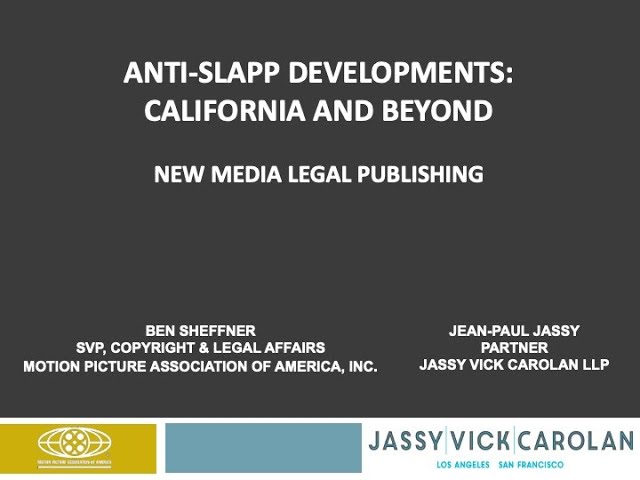



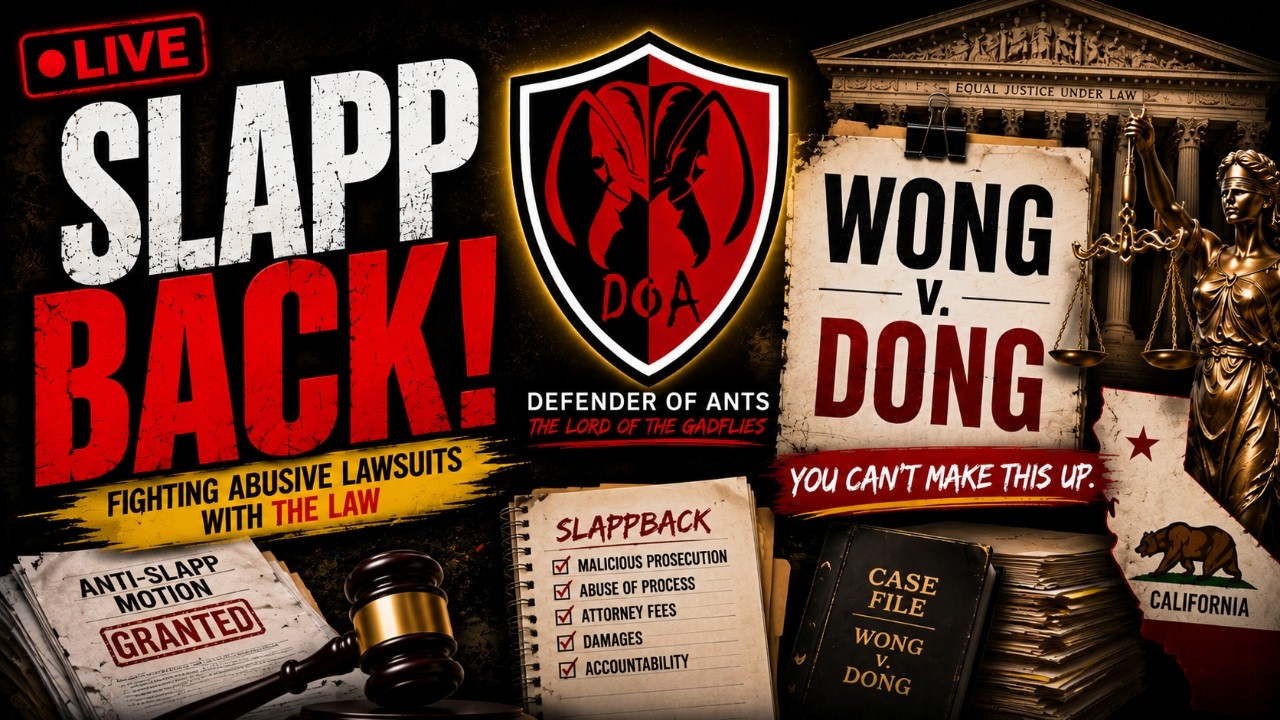



Anti-SLAPP (Strategic Lawsuit Against Public Participation) laws protect individuals from lawsuits intended to silence their speech on matters of public interest, and courts typically dismiss defamation claims when statements are opinions, hyperbolic name-calling, or vague assertions rather than specific factual claims that can be proven false.
Anti-SLAPP Motion Analysis: Legal Strategies
Added:Fundamental elements of a defamation claim, including the distinction between libel and slander, public vs. private figures, and the standard of actual malice.
The concept of SLAPP (Strategic Lawsuits Against Public Participation) suits and how they are used to suppress public speech or petitioning activities.
Basic civil litigation procedures, specifically the purpose of pre-trial motions, pleadings, and how the burden of proof shifts between parties.
First Amendment principles protecting free expression, opinions, and fair comment on matters of public concern.
Comparative analysis of state-specific Anti-SLAPP statutes and the ongoing jurisdictional conflict regarding their application in federal courts.
The financial and strategic implications of Anti-SLAPP motions, including statutory fee-shifting provisions and their impact on defense leverage.
Appellate procedures for Anti-SLAPP rulings, specifically the availability of interlocutory appeals under the collateral order doctrine.
The evolving landscape of online defamation, anonymous reviews, and how Section 230 of the Communications Decency Act interacts with Anti-SLAPP defenses.
53.8K views3.8Klikes2:02:50Original Release: 2024-04-17
hello and welcome to rle of the Bailey my name is Ian rankle I'm a Canadian criminal defense and Firearms lawyer so there's been another update in the lawsuit where Janette Janet Brun and Lauren the mortician are suing Becca day caffeinated Kitty and the host of the do we know them podcast so initially this one might look uninteresting because it is just an application to file more pages but there's more to it this is actually the second time they've done this and so let's have a look so they say we seek leave to exceed the 15 page limit for the memorandum and support and the main reason is there's basically two people to respond to so we could file two 15 page memos or we could just file one memo and they asked for the oddly specific number of 28 Pages they say we need 15 pages plus an additional 133 pages so you might say hm how do they know that well it's because they already wrote it and very helpfully they included it as an exhibit so we have access to that proposed filing and I will just note the court has already issued a minute order granting permission to file an oversized thing so this one's going to be filed now this one is on behalf of caffeinated Kitty now this is the second time that they've done this where they attach the exhibit and I lowkey love it because I mean a it makes makes sense if you want to say hey here's why we need 28 Pages you attach the thing where you use 28 pages and you show that you didn't waste them but also it means that we get access to this just a wee bit earlier than we would have otherwise and that's always a nice little present so defendant caffeinated Kitty the owner and operator of caffeinated Kitty memorandum of points and authorities in support of her special motion to strike amended complaint pursuant to um so basically this is the various rules of Court one of those is anti-s slap and then after that they're asking for permission or for a motion to strike on the basis that there's no Justified claim and then also for improper venue so we're going to go through this it's going to take a minute but we're hopefully going to have some fun with it as we do because this these are always fun to read all right so there's a whole bunch of case law um yeah we're just going to skip right past that because that's not going to be all that interesting and they're going to talk about it as we go so introduction this action is an attempt by an alleged well-known social media influencer with millions of followers and her lawyer I I love the little alleged well-known to silence an individual who has voiced opinions about them on social media with which they disagree and you know what I had not heard of Lauren the mortician before this I became aware of Lauren the mortician because of this lawsuit so Janet told me that Lauren the mortician exists when wasn't a good look so while plaintiff Lauren propson propson that's Lauren the mortician and her lawyer Janette Braun Bron ipaw who they're going to just call Braun may not like what defendant caffeinated Kitty the owner and operator of caffeinated Kitty Social account uh has to say about them on Tik Tok the allegation of the amended complaint reveal that her alleged statements are nothing more than her opinion her subjective beliefs and at worst hyperbolic name calling they're not actionable as defamation as a matter of law so what does this mean well um you can't sue people just for saying things you don't like they have to be it has to fall into specific categories it has to be you know defamatory which requires that it be sort of a statement that is to be taken as truth about somebody like a factual statement about somebody so if I say that somebody went and you know broke into a bank at a particular time in a particular place that would be a factual statement whereas if I think they're a crook that's probably just opinion right what does a crook mean is Richard Nixon a crook he says no I say yes you know we we have a difference of opinion on that people can have a difference of opinion there all right and hyperbolic name calling you can't sue somebody for calling you names if somebody says you're a poopy head you can't sue them you can't be like well that's factual I to and I totally don't actually have poop on my head so I'm suing you you can see how ridiculous that would get if the law allowed that sort of thing um but yeah not one of the alleged defamatory statements is a verifiable statement of fact and importantly they each fall within the scope of protected activity under the Georgia anti-s slap statute which governs Georgia speakers such as caffeinated Kitty who plaintiffs alleg is a resident of Georgia put simply this case is nothing more than a coordinated inappropriate attempt by a lawyer and her client to intimidate an individual for speaking her mind and exercising Her First Amendment rights indeed the amended complaint reveals the lengths to which plaintiffs will go to harass caffeinated Kitty for voicing her opinions namely sending police in Georgia to conduct a wholly fabricated wellness check on caffeinated Kitty got to love the spice now you might be saying why is their lawyer not worried that he's going to get sued for saying that it's a wholly fabricated wellness check well um he's actually protected by privilege here he's allowed to make statements and claims and so forth in a lawsuit that's cover CED by privilege and I'm simply quoting him here so that's also you know just protected speech um it's not privileged here but I'm allowed to quote him so in response to plaintiff's original complaint caffeinated Kitty filed a motion to strike under the Georgia anti-s slap statute and alternatively a motion to dismiss demonstrating the protected nature of caffeinated Kitty's conduct and baseless nature of plaintiff's claims so we actually went through a document very similar to this one before um so you might be getting a little bit of deja vu but we're going to we're going to go through this one anyway because it is a bit different um yeah this is because they originally filed a complaint and then there was a response to that complaint and then they immediately said whoa whoa whoa we're going to amend our complaint to fix that but they didn't really fix much and we're going to see why and how in response to that motion plaintiffs amended their complaint and had a second chance to allege facts uh demonstrating the inapplicability of the First Amendment and slash or the viability of their claims once again however plaintiffs have failed as explained below the amended complaint changes very little contextual tweaks here and there and is based on the identical protected statements as the original complaint the amendment is nothing more than plaintiff's attempt to protract this baseless litigation as a means of intimidating caffeinated Kitty from expressing exing her opinions on social media accordingly the Georgia anti-s slap statute mandates that all 10 claims asserted by plaintiffs against caffeinated Kitty all of which arise out of the alleged defamatory statements be stricken and attorney's fees awarded to caffeinated Kitty so this is why they're big on using the anti-s slap because anti-s slap legislation was put in in a whole lot of different places not everywhere but a lot of different places to stop litigation intent to shut people up which is what this lawsuit looks like to me so uh why is anti-s slap different from aemotion to dismiss well aemotion to dismiss typically each side is going to be paying their own costs which means that if you're a big company or a wealthy individual say perhaps a social media influencer with millions of followers and a lawyer you might have more ability to use the court system to sort of smack people around than somebody who's just sort of a much smaller Creator or somebody working you know an average day job um you know if you're working at McDonald's getting sued is incredibly uh you know it's an incredibly big deal and you probably don't have the ability to defend yourself so these anti-s slap Provisions were put in place in a number of places and one of the things that tends to be a feature of them is getting your lawyer paid for that made it possible for a lot of people where they're getting sued and the suit is bogus you know or looks bogus to the lawyer the lawyer might be willing to take on the case just on the basis of well if I get this kicked out they're going to pay my bills and so that made things a lot easier for people to defend themselves that's why they're big on this and the argument that we're going to see is essentially that because these anti- slap Provisions are intended to protect the people in the area where they're passed and their statements that essentially that portion of the law should apply to caffeinated Kitty statements that portion of Georgia law even if you know Wisconsin law or Illinois Law is otherwise going to apply okay so in the alternative caffeinated Kitty respectfully requests this court dismiss all claims under the rules of civil procedure or at a minimum propson claims under uh different rules of civil procedure but that's the venue issues alternative arguments are very common in law you basically say I want this but if I can't have this I'll take that instead um you often you often do this sort of thing or you'll say I'm right because of this but if I'm not right because of that first thing then I'm right because of this second thing and if I'm wrong on that I'm right on this third thing and you can do that basically for as many arguments as you've got so background uh at this point a lot of us are going to be familiar with the background but we want to see how the lawyers frame it because this is actually a really difficult portion of a legal filing to write because you can't BS in here but you do want to frame things in ways that are favorable to you certainly we saw that in Lauren and Janet's um filings so now we're going to see it in the response um I should just note eventually we're going to see a similar response for Becca day and the girlies of the do we know them podcast and it'll probably be very similar in a lot of ways just adjusted for the bits that are distinctive for them so we'll go over that we'll focus on those areas when that comes out so plaintiff Lauren propson is a social media personality and plaintiff Janet Brun it says Janet but we we know where is Janet uh through plain of Braun law collectively Braun is her lawyer and they cite that to the amended complaint uh propson is a licensed mortician residing in Wisconsin who operates a social media account on Tik Tok under the name Lauren the mortician now you might be saying why am I doxing this person I'm not Lauren doxed herself when she filed the lawsuit um that's sort of a cost of filing a lawsuit and I would feel bad about it if the lawsuit wasn't what it is and I would maybe feel bad about it if not for the uh the wellness check wellness check sympathy those two things do not go in the same place they just don't get to live together they don't share a taxi they don't share an elevator they yeah so once you bring wellness check sympathy has left the building propson alleges that she has amassed millions of followers on Tik Tok as well as sponsorships and monetization of the video she posts on on Tik Tok including a brand partnership with a famous documentary channel propson alleges that her light-hearted and educational videos posted on Tik talk discuss death the loss of loved ones and demystify occupations and professions that worked with deceased persons it's weird how she's sort of hiding which documentary Channel she's talking about like that would be a thing you normally maybe mention um do do they not expect that this litigation going to go forward because if the litigation goes forward that's going to come out so propson hired Braun a lawyer to assist with her copyright infringement claims by filing a dmca complaint so that's the Digital Millennium Copyright Act uh to the social media platforms hosting a video created by caffeinated Kitty so let's talk a little bit briefly um about what the dmca is the dmca creates a sort of scheme for copyright complaints on the internet and it provides essentially a safe harbor is what they call it for places that use the dmca framework and so the way this works is they send a complaint or a dmca notice and to the per you know the people hosting the content at which point they have to follow certain procedures including like taking down the content there's appeals procedures and this whole thing but if the social media platform doesn't do that then they lose that protection and they can be sued for uh for copyright violations based on stuff that they have refused to take down so previously we heard that YouTube said hey some of this content that they sent dmca notices we think it's fine which means that YouTube thought not only did they think it was fine but they thought it was sufficiently fine that they were willing to put some money on the line and say yeah and we're willing to eat the con consquences if we're wrong all right carrying on the amended complaint alleges that caffeinated Kitty is a social media personality and influencer and is a citizen and resident of Georgia Braun who resides and is licensed to practice law in Illinois allegedly filed a DMC complaint with the social media company meta also known as Facebook on behalf of propson to remove from Facebook a post created by caffeinated Kitty on the ground that caffeinated Kitty's post used propson copyrighted material meta allegedly removed caffeinated kitties post from Facebook on November 4th 2023 now I'll just note a little bit on the lopsided nature of the dmca which is you don't get to sue them for taking down the content um the liability that attaches um attaches if they leave the content up but not if they take it down that creates a substantial pressure for content to be taken down rather than left up propson has not asserted any allegations of copyright infringement against caffeinated Kitty in connection with her alleged use of copyrighted material in her Facebook post you know that's the kind of thing that you'd have to sue over in h federal court oh wait they're in federal court why wouldn't you put that lawsuit like hey you're already suing why wouldn't you why wouldn't you throw it in there it's like if I'm going to the convenience store to get a thing of milk and I also want you know some coke um that's Cola not the other kind um I buy them at the same time right I don't like hey I'm going to make a second second trip why wouldn't you put that allegation in here but not only that it doesn't appear that there's any claims of that so that's that's odd um you'd think if that was a valid claim that you would put that in so that makes me wonder and hopefully it'll make the court Wonder Too rather this action is based on allegations that caffeinated Kitty posted videos on another social media platform Tik Tok in which she allegedly defamed propson and Braun so defendant caffeinated Kitty's alleged defamatory statements regarding propson propson alleges that honor round October 24th 2023 caffeinated Kitty published a video on Tik Tok and identified her by her public Persona Lauren the mortician of course now she's leaked her private Name by making it very very public so the amended complaint contends that in the Tik Tok post caffeinated Kitty goes on to accuse propson of being transphobic and a Turf because she liked posts by a social media personality who is in a gay relationship um that personality is the person running the uh Gaye against groomers um thing so you can make your your calls on that one uh the amended complaint alleges that Turf is a derogatory slur highly offensive term and acronym standing for Trans exclusionary radical feminist which is a term used to refer to or describe an advocate of radical feminism who does not believe that transgenders uh people's identities are legitimate and who is hostile to the inclusion of trans women in the feminist movement so um the thing is is if it's a derogatory slur and a highly offensive term that would actually kind of lend a g against their argument because if it's a slur um that sounds more like just an insult right um I'm not going to drop any slurs here but if you call somebody a slur it's not generally defamatory it's probably like jerk Behavior it you shouldn't do that that's not cool but it's probably not defamatory if that makes sense now they are saying that Turf has a a sort of more specific meaning the problem is that if they're saying that it's used as a slurve then it's not being used in this specific meaning right so H so yeah the Tik Tok post allegedly starts off with caffeinated Kitty stating Lauren the mortician is a Turf I have receipts I have Deets and you should just go ahead and take a seat um I hadn't watched any of her videos prior to this litigation but um she she's got a a a good rhyming style so I can sort of now that I've watched some of them I can hear it in her voice um and caffeinated Kitty's reference to Deets and receipts allegedly was intended to tell audiences that caffeinated Kitty had verifiable proof that propson was transphobic now here's a problem that they're going to have which is that if you provide the basis for an opinion it actually tends to lend towards something being an opin opinion as opposed to being factual so if you're laying out Deets and receipts that might actually lend it more towards opinion not less caffeinated Kitty then explains that propson was following and actively liking incredibly transphobic and hateful rhetoric and content on social media and caffinated kitty stated that she comp compiled a list of links to post that props and liked that contain transphobic and hateful rhetoric caffeinated Kitty allegedly stated in the video that propson is trying to divert attention by saying she is pro lgbtq and bisexual as if that is some kind of hall pass that prevents her from being prejudiced to other sub genres of the rainbow just like any other person can be bobic by people can be transphobic okay text caption unfriendly reminder we see transphobic so we're saying transphobic that ain't bullying it's an observation nowhere in the amended complaint does propson identify any statements from the Tik Tok post that propson is transphobic or that caffeinated Kitty has proof that propson is transphobic that might be a bit of a problem although you can defame by implication so that'll probably be the response to that is you know that this is supposed to be the implication the problem here is that transphobic is going to be very difficult to launch a claim on because the courts have already said that similar things are not actionable as defamation particularly things like bigot or racist are statements of opinion courts have held that already so saying that somebody's transphobic really sounds like it fits in the same category and the reason why is that there isn't really a hard and fast definition or like walled chamber where you can say that somebody is a racist or is a transphobe or whatever else different people will have different standards for what that means all right so I mean you know JK Rowling is gets lots of commentary saying she's transphobic she specifically denies being transphobic who's right on that one well it's a matter of opinion it's not an objective truth it's an opinion which is why you can't over that so in the Tik Tok post caffeinated Kitty can be seen over the background of the social media account profile for an individual named Anthony Randi under the profile name conservative ant which indicates that Lauren the mortician follows the conservative ant account as well as a list of links of all of the videos caffeinated Kitty caught props and liking so see the link in the Tik Tok post and the reason why they provide the link is that they say essentially that the um that the court is allowed to look at the full video and the video is not long because it's on Tik Tok right so Tik Tok doesn't really allow an hourong video I can't post this to Tik Tok um so that's why they're providing the link is hey Court have a look at the actual post and see do you think this is defamatory or do you think this is opinion um you'll note that that wasn't so much in the other filings so in the Tik Tok post caffeinated Kitty explains why she is identifying posts containing What caffeinated Kitty believes to be transphobic and hateful rhetoric that propson has liked and followed the only reason I'm saying anything is because I'm getting confused for her in multiple threads over the weekend that people are talking about creators that are coming out with controversy or bad vibes All I Ask from this is that when you see people trying to cancel propson or talk about the Beetlejuice lady you just make sure they know it's not me so I'm not her she sucks I don't suck she sucks that's essentially what what they're saying here okay nowhere in the amended complaint do plaintiffs allege that propson has not liked these posts or followed these individuals on social media what you think you would do if that was not true um instead they say whoa we don't think these are transphobic we don't think this is hateful but that's a matter of opinion right nowh in the amended complaint do plaintiffs alleg that caffeinated Kitty has misstated what these posts say rather the amended complaint alleges only that upon information and belief none of the videos defendant caffeinated Kitty linked contain transphobic or hateful rhetoric you think that you could do better than upon information and belief you could check that right moreover nowhere in the amended complaint do plaintiffs allege any facts demonstrating that any statements made by caffeinated Kitty in the tech Tok post are false rather the amended complaint alleges only that caffeinated Kitty was aware that propson followed and liked LG uh Pro lgbtq uh and protrans right content on social media and that caffeinated Kitty chose to highlight only propson interactions with the conservative social media personality the thing is is that if you post content that sort of leans both ways that doesn't necessarily mean you know that people can't be of the assum you know of the opinion that you lean in One Direction or the other on that and similarly if the fact that you're linking to somebody who might be themselves in a gay relationship that doesn't mean that that person couldn't be viewed as you know bigoted towards this we all know the well-known Trope of I can't be racist this is my black friend like that is so well known that it's it's kind of a joke right it's kind of something that at this point if you Trot that out in an argument people will straight up laugh at you and similarly if somebody is occasionally liking you know Pro civil rights content but they're also liking content from people wearing like pointy hoods you might reasonably come to the conclusion like it is an open to the opinion that you could say hm I think that's suspicious so yeah um an admission by plaintiffs that propson did interact with I follow and/or like an individual caffeinated Kitty believed was posting transphobic and hateful rhetoric caffeinated Kitty's statements allegedly caused propson to lose numerous followers her contact with a famous and popular Travel Channel and a podcast that was in negotiations okay so I don't know if you noticed I poured myself a drink while I was reading that cuz I need one all right defendant caffeinated kitties alleged defamatory statements regarding Braun so again Braun is the lawyer this is Janet as stated above propson hired Brun filed a dmca copyright complaint with meta regarding caffeinated kitties alleged use of propson copyrighted material in a post on Facebook not Tik Tok which meta approved caffinated Kitty then allegedly used her social media accounts to express her anger and resentment of Braun that's allowed like you can say somebody sucks on on social media that that's that's allowed right you can say I am so pissed off at this person totally legit specifically plaintiffs alleged that on November 21st of 2023 caffeinated Kitty posted a video accusing propson of using Braun to file false copyright claims with social media platforms and in the same video caffeinated Kitty accused Braun of filing bad faith copyright infringement strikes against defendant caffeinated Kitty the amended complaint alleges that this video was viewed over 928 th000 times those are great numbers that's almost a million I mean lawyers are not famous at math or famously good at math but almost a million is is solid um I don't have a pre-recorded video that has hit a million I've got a couple of live streams that have hit that but never hit it with a pre-recorded video so great numbers plaintiffs alleged that caffinated kitty posted the same video again on Tik Tok a few days later which was viewed over 263,000 times so now it's over a million both Tik Tok posts are collectively referred to as the Tik Tok posts contrary to the allegations in the amended complaint nowhere in those Tik Tok posts does caffeinated Kitty state that Braun filed bad faith or false copyright claims and they're going to attach the transcript you know hey you said that this was in there it's not in there and if it's not actually in the transcript then that's a bit of a problem for Benji uh Benji being uh Benjamin Locker the lawyer for Janet and Lauren because you shouldn't skew things that much to the court um the court may not be super impressed by that so in fact caffeinated Kitty does not even discuss the copyright strike for most of the video rather caffeinated Kitty describes how Braun called the police and sent them to caffeinated Kitty's home in Georgia to conduct a wellness check as well as how Braun sent a caffeinated Kitty a cease and assist letter on which Braun copied caffinated Kitty's mother and a theater company with which caffeinated Kitty is not even Affiliated now I just want to stop here and say this is beautiful beautiful beautiful beautiful um there's a little thing that I think is happening and we don't actually have the exhibits to this yet so I can't say for certain if it's happening but I think it's happening um it's this bit right here um transcript of the Tik Tock posts now if you've seen those Tik Tock posts I believe those are the Tik Tok posts that actually have uh Lauren and Janet's wellness check calls in them and so if they're transcribing that then they will also be providing I hope a transcript of those Wellness checks like the calls that were made to the police about the wellness check I I think that's what's going on I'm not certain but I hope that's what's going on um if this is the videos I'm thinking of that have the wellness checks described and if they're putting the transcript in then the judge will get a a copy of that transcript and be going I mean I hope the judge's reaction will be similar to my reaction which was a little bit of um what the actual f um and also a little touch of how dare you those two things kind of came to mind so hopefully the judge thinks those things because that would be spe spacular we might see some opinions from the judge if the judge has those same thoughts and those opinions might be tied to pay the monies plaintiffs further allege that on November 21st caffeinated Kitty created a page on the donation platform called GoFundMe and on December 8th uh published the GoFundMe p on the GoFundMe page her email response to a cease and assist letter Braun sent to caffeinated Kitty and the subject line of caffeinated Kitty's response was false copyright claim okay so now we've got false copyright claim being stated cool so that means Janet's going to win right we're going to keep reading the amended complaint sets forth text uh from and a screenshot of the GoFundMe page update from December 8th that reflects caffeinated Kitty's email response to Braun regarding allegations of copyright infringement stating in relevant part that caffeinated Kitty would love further details on Braun's client and how the video had grounds for a copyright strike as it clearly falls under fair use goes on to say I do understand how you've reached out with cease and assist to smaller content creators speaking negatively about Lauren the mortician's scandals and while I understand your desire to protect a Creator you enjoy if you were not legally obtained as counsel for her if if is a critical word here if you were not legally obtained as counsel for her and I speak on this via my my platform your actions are going to cause her significantly more Strife let's talk a little bit about if and how it changes a statement so it as a hypothetical here if I say um you know if Justin Trudeau were to break into my house and steal my stuff I would be very upset that's not an accusation that he physically broke into my house it's a hypothetical in the same way that I say if I say these things I'm you know conjecturing I'm offering a hypothetical you know if Janet were to fly to the moon she could come back and sell moonrock said a prophet but I don't think she can do that if we can put all sorts of crazy stuff behind if and if is asking a question if is is this thing actually happening you know it's clear from this statement the plain meaning of this statement is I don't know I'm trying to ask the question and I'm entertaining the possibility that you might not be legal counsel for her now I'm going to say when I read the cease and assist letter that was sent out my first reaction to that letter was actually to go and check if Janet is really a lawyer like I looked her up to see if she actually entitled to practice because sometimes people will send out cease and assist letters that they wrote themselves as non lawyers and this it didn't look like something that was authored by a lawyer to me because it looked really bad like really really bad so so I can see why caffeinated Kitty might have had some questions in her head plaintiff filing of the original complaint and amended complaint so plaintiffs filed the original complaint um asserting 10 causes of action against cated Kitty and three other individuals uh based on statements and plaintiffs do not allege that there's any relationship between the four defendants like they don't say these people were acting in cahoots they don't say that was a conspiracy to create content online I don't I guess people collaborate but they don't really conspire to create content that I know of um and on February 29th the defendants each filed motions to strike under applicable anti-s slap statutes and in response they filed an amended complaint so now here we are okay now we're going to move on to argument this was sort of a recitation of the background facts as known to the defense and basically as pled by the plaintiffs so what do they say the law says they say plaintiff's claim should be stricken under the Georgia anti-s slap statute so the first thing they have to argue is the Georgia anti-s slap statute applies in this case previously I talked about this um we are in this horrible mess that the legal Community calls conflict of laws and so as an example of conflict of laws let's say I living in Alberta for some reason fly to Ontario rent a car in Ontario and then I drive to Quebec and I run somebody over it's not a good idea but you know we're again we're we're using IF to do all this heavy lifting right so at this point there's a problem because I'm alleging that the reason why ran somebody over is that the brakes on the rental car were faulty so now we're going to get a complicated lawsuit where the person who's run over is suing me and probably also suing the rental car company because they know I've said these statements I in turn am suing the rental car company because I suffered injuries in this accident as well um I might be suing the the person I ran over if I think it was their fault and that I was injured in some capacity and the rental car company might be suing everybody and so we have questions of which law applies is it Quebec law is it Ontario law is it Alberta law whose law applies and also where does the lawsuit get get heard I'd certainly like it to be heard maybe in Alberta because I live here and it's nice not to have to fly whereas the person in Quebec might want it to be heard in Quebec but they might also want it to be heard in Alberta because that might make it easier for them to get my money so if all of this sounds complicated it's because it is and they're going to make it even more complicated in this case because basically they're saying okay you're saying I defame somebody in Illinois and Wisconsin so Illinois and Wisconsin law will apply to determine what defamation is but they're saying that the Georgia anti-s slap Provisions should protect caffeinated Kitty because she's in Georgia and they're they're going to have to expl clim this for us so let's go ahead in the case of an anti-s slap statute raised as a defense to a defamation claim the choice of law question regarding the anti-s slap law is treated separately from whether a statement is defamatory because the anti-s slap question involves a whether a statement is privileged not whether its content is defamatory and that entire opening statement is a quote from case law so they're like the courts have already found this so just follow it uh pursuant to depage or depage I'm not sure how that's pronounced so um even though it's a French word and I speak some French uh the court can apply different States's laws to different elements of the lawsuit although the place of alleged injury might be critical in determining the law applicable to the defamation claim the choice of law for anti-s slap protection involves different interests namely protecting the speaker's exercise of First Amendment rights and could lead to the application of different state law law so basically Georgia law should protect caffeinated Kitty cuz she's in Georgia so in determining which law to apply to defenses raised pursuant to anti-s slap statutes courts have found the place where the allegedly tortous speech took place and the domicile of the speaker Central to the choice of law analysis and again they're quoting now this is something that when you can do it in legal writing is the best thing ever um and what I mean is when you can make your entire arguments based on quotations from ideally binding case law and so your argument you can just lay it out without have you having to elaborate on it you're just like here's what the law found and here's what the law found and here's what the law found it's it's just lovely um it means that the court is much more likely to go along with it because yeah so here the amended complaint alleges the caffeinated Kitty is a citizen and resident of the state of Georgia and there's no allegation that the alleged defamatory speech while eventually published on social media and the internet originated anywhere other than Georgia probably I mean caffeinated Kitty lives in Georgia probably does her recording in Georgia unless there's some reason why she'd record on the road so yeah thus GE has a strong interest in protecting caffeinated Kitty speech and the Georgia anti- slap law applies to plaintiff's claims against her all right and they also cite a case that notes that um the anti-s slap statute specifically the Georgia anti-s slap statute doesn't directly conflict with a federal rule of civil procedure and thus is substantive and can apply in federal court because this is being heard in federal court so next thing is do caffeinated Kitty uh statement constitute a protected activity under the Georgia anti-s slap statute why do we care well because the anti-sap statute only applies in certain conditions it's kind of an if then statement we're we're doing the if thing again so you have to first be within a protected activity it doesn't cover everything so um under Georgia law the analysis of anti- slap motion invol or to strike involves two steps first the court must decide whether the party filing the anti-s slap motion has made a threshold showing that the challenge claim is one arising from protected activity uh threshold showing is sort of a a be showing a you don't have to like prove it Beyond a reasonable doubt you have to establish it as kind of a thing to be considered if so the court must then decide whether the plaintiff has established there's a probability that the plaintiff will prevail on the claim I.E does the does the plaintiff have a good argument does the plaintiff have a a claim particularly one that's going to stand up to a motion to dismiss this is kind of a motion to dismiss with oomph a motion to dismiss on steroids or a motion to dismiss that comes with a clue bat and the clue bat is in the form of you pay my lawyer so yeah so uh protected activity is one which could reasonably be construed as an act in furtherance of the person or entity's right of petition or Free Speech under the Constitution of the United States or the constitution of the state of Georgia in connection with an issue of public interest or concern now um I wonder if they're going to run with like because they're going to file a response to this I wonder if they're going to run with Janet's argument Janet has advanced this very interesting and I say interesting in the most p maor of way I possibly can um interesting argument that um defamatory speech is not covered by is not free speech and there is some provision for that but I wonder if she's going to say listen this can't be under the right of petition or Free Speech because we're alleging defamation I don't think the court is going to go with that because that's clearly in contrast to the intent of this statute but maybe um I find it hard to predict the moves they're going to make um I've mentioned this before often in litigation you can see one side files a claim and you can make some guesses as to how they're going to attack the claim and you can make some guesses as to what they're not going to do and this is because typically um in the same way if you play chess there's sort of a limited range of moves you expect from the other side um and if they're doing something bizarre it might throw you off I'm getting thrown off because this is this is just silliness sometimes or sometimes their arguments are just like what okay um that's weird so the code section defines an act in furtherance of the person or entity's right of petition or Free Speech under the con Constitution of the United States or the constitution of the state of Georgia in connection with an issue of public interest or concern to include any written or oral statement or writing or petition made in connection with an issue under consideration or review by a legislative executive or judicial body or any other official proceeding authorized by law or any written or oral statement or writing or petition made in a place open to the public or a public forum in connection with an issue of public interest or concern or any other conduct in furtherance of the exercise of the constitutional right of petition or free speech in connection with a public issue or an issue of public concern and they note that it is intended to protect people using their rights of freedom of speech and is to be construed broadly which means this should protect more things not less things and so court if you're trying to determine how to interpret whether or not something falls into this you should on the side of yes it does if you're not sure then it goes into the basket it's only if you're sure it's not in the basket is kind of the uh the way and I'm I'm being rough here I'm kind of you know I'm not being exact but that's I'm trying to sort of Express the sentiment if that makes sense with respect to both plaintiff's claims against caffeinated Kitty there can be no question that they're based on statements made by caffeinated Kitty in a public public forum in connection with a public issue or an issue of public concern um public forum is exactly why they're mad because it's on Tik Tok and it got a million views more than a million that's that's why they're mad right so statements allegedly were made in videos posted on the social media platform Tik Tok as well as the online donation platform GoFundMe um viewed over a million times in total and social media platforms and online platforms fors are public forums as found by previous cases so to determine whether an issue is an issue of public concern under the statute courts consider whether the subject of the speech or activity was a person or entity in the public eye or could affect large numbers of people beyond the direct participants and whether the activity occurred in the context of an ongoing controversy dispute or discussion or affected a community in a manner similar to that of a government m al entity okay that's a lot of words so an issue of public interest is any issue in which the public is interested in other words the issue need not be significant to be protected by the anti-s slap statute it is enough that it is one in which the public takes an interest um I'm the public you're the public we're interested um we'll see how many videos this video gets um but you know if if it gets a number of views news which hopefully is like more than 12 then it seems like at least some of the public is taking an interest I'm a member of the public I'm taking an interest hopefully there's yeah so and we're going to see the numbers right as to propson claims propson allegedly maintains a famous social media Persona with millions of followers on Tik Tok as well as sponsorships and brand partnership with a famous documentary Channel thus she is certainly in the public eye this is kind of the problem with being uh you know an influencer of any size um you know or a social media commentator or whatever you want to call it because I've got a quarter million subscribers so um if somebody defames me then it's kind of a a double-edged sword because being in the public eye and being a sort of um partial public figure might make it um might make it harder for me to establish defamation it might have the test be a little more challenging but um it's also relevant for damages because it could hurt the money I might bring in right so further caffeinated Kitty allegedly is a social media personality and influencer who uses her platform to create content that she monetized es from views and user engagement caffeinated Kitty statements allegedly were made as a result of confusion between these two social media personas by social media followers which sounds like lots of people having an issue to resolve here right thus the public issue implicated by caffeinated Kitty's alleged statements is the confusion by potentially hundreds of thousands to millions of individuals between two social media personas who are undoubtedly in the public eye one of which has liked and followed posts containing transphobic and hateful rhetoric further weather propson who allegedly has millions of social media followers uh for her educational videos about death and the loss of loved ones and who has held herself out as Pro lgbtq and bisexual likes and follows other social media personalities who post transphobic and hateful rhetoric is certainly a matter of public interest particularly when the public is confusing the two of them and they some case law here that notes that in a prior case 13,000 members of the corporation was of legitimate public concern um my last videos um I don't I haven't looked at the numbers on the one I posted earlier today um I was going to say yesterday earlier today um but it it might well be over 13,000 previous videos on this topic were over 13,000 so yeah any action involving such a large number of people is by definition a matter of public interest and concern and we'll just note here uh there's a little um footnote here that basically because he's citing to some California case law he's saying Georgia courts use California case law so this is fine don't worry about meiting to the California law it's it's considered relevant here as for bronze claims against caffeinated Kitty there also based on protected activity by caffeinated Kitty namely Braun's allegations are based on purported statements that caffeinated Kitty accused Brun of filing a false copyright claim or bad faith copyright strike under the dmca against caffeinated Kitty the amended complaint demonstrates the caffeinated Kitty claimed that Bron's dmca copyright Stak SL complaint was false because caffeinated Kitty believed her use of propson alleged copyrighted uh material constituted Fair use that seems like a reasonable opinion to have right and you'll note again we used the opinion word it's going to keep coming back because it's pretty critical here as explained Above the Law provides that any written aural statement or writing in petition blah blah blah or any other official proceeding authorized by law is deemed a protected activity under the Georgia anti-s slap statute and they note that this includes any statement made in connection with an issue under consideration by any official proceeding which they're saying includes a copyright strike under the dmca now I can think of some problems with this argument um I don't know if the case law has ever sort of upheld this one um and I can think of some problems with it I can think of some responses and I'm just going to say I don't think this is their strongest argument and I am going to at this point exercise my discretion not to say what I think the weakness is because I don't know if Benji knows and Benji if you're watching this and I have some reason to believe that he has watched some of my prior videos um do your own homework I will explain this one after Benji's response but um Benji if you want my help you can you can pay for it um yeah at this stage I'm not going to lay out what I think the issue is because I don't want to write the counterargument for Benji and I'm worried he might crib off me um I mean I don't know for certain but I am concerned about that so all right and I know he knows who I am because I emailed him about some things like where he was posting client information online and he took the the stuff down he didn't respond to me but he took the stuff down which suggests that he got my message so um they hold tell that investigations by the university into employees allegations of workplace misconduct were official proceedings authorized by law because the university had statutory authority to make rules governing employees and respond to complaints of workplace misconduct so yeah we'll just move on sort of explained what this argument is um they also note protected as public statements of a public issue or public concern because propson has millions of social media followers thus whether she's hired an attorney to file meritless copyright strikes against content creators simply is a matter of public interest or and concern so here they're saying it's not so much about Janet here um it's whether Lauren is hiring a lawyer to do Shady stuff that would reflect on Lauren that's an issue of public interest because she's got millions of social media followers and she can't like unpubl interest it just by running it through a lawyer if that makes sense likewise if Braun were talking or taking it upon herself to file a baseless dmca strikes against content creators without even being hired to do so it would also constitute a matter of public concern so if your allegations are true then it's a matter of public concern your own claims would make it a matter of public interest and concern um and they cite to case law holding that a blog post asserting that a public defender had charged an Indigent criminal defendant a fee for Public Defense Services was a protected activity under anti-s slap statute note that it would I think in most places it would be unethical for the public defender to then charge a side fee right they're they're the public defender they don't get to make side deals so there is no probability that plaintiffs can Prevail on their claims because they are legally deficient I your claim is garbage and it's going to get thrown out so you should not only throw it out but attorney's fees once a defendant has established that the claims asserted against it arise out of protected activity as caffeinated Kitty has done here the burden then shifts to the plaintiff to demonstrate that there is a probability that the plaintiff will prevail on his or her claims probability is a different word than possibility probability means more likely than not like are you is it is it likely that you're going to Prevail not just could you theoretically Prevail if and for the purposes of this they're going to take all of the statements that are made in like all of the factual statements as opposed to Legal conclusions or opinion statements that were in uh Lauren and Janet's pleadings as true and the reason why those are taken as true at this stage is because they haven't had the chance to prove it right so if I say that you know if I'm filing a lawsuit against Joe Schmo and I say on March 5th of 2024 Joe Schmo punched me in the face and joeo says I never did that it's I deny this categorically for the purpose of a motion to dismiss they're going to take it as true that Joe you know Joe Mo did punch me in the face because theoretically maybe I can prove this if I'm given the full opportunity to prove it but maybe I can't in which case the court will be annoyed at me later so in Federal District Court an anti-s slap motion may be premised on legal deficiencies inherent in the plaintiff's claim analogous to a motion to dismiss under Federal rules of civil procedure 12 B6 and if a defendant makes a special motion to strike based on the alleged deficiencies in the plaintiff's complaint the motion must be treated in the same manner as the 12 B6 motion except for the attorney's fees so same thing as a motion to strike but it's a motion to strike that visits your house with a bag of cash and we always like a bag of cash um I don't think there's many people who complain about a bag of cash so um Janet and Lauren might complain about a bag of cash if that happens and um frankly it couldn't happen to nicer individuals um I'm I'm wishing the uh I'm wishing a very merry handing over a bag of cash to Lauren and Janet in determining whether a complaint satisfies rule 12 B6 the court accepts the fact stated in the complaint as true and draws reasonable inferences in the plaintiff's favor I just explained that um I know they were getting to it but um hopefully I explained it a little more thoroughly because you're not going to tell the court all the things I told you because the court knows this and those of you watching might not have dealt with a whole bunch of law suits and gone to law school and all of that stuff though a complaint need not contain detailed factual allegations a formulaic recitation of the elements of a cause of action will not do the complaint must contain enough facts to State a claim that is plausible on its face so um you can't just say this person defamed me you can't just say this person knew the statements were false you have to have actually provided a basis for your belief that the person knew the statement was false you can't so when I said before there's a limit to how much you can information and belief this is what council is saying is you can't just information and belief your way through to a full claim so a complaint fails to State a claim where the well pleaded facts do not permit the court to infer more than the mere possibility of misconduct now well pleaded might be um overly generous but they're pleaded anyway um here plaintiffs have failed to state facts sufficient to constitute any cause of action against caffeinated Kitty thus each of the claims should be stricken and attorney's fee should be awarded why do they say that first Braun can't Prevail on her defamation claim to State a claim for defamation under Illinois Law a plaintiff must bleed fact showing and why are they using Illinois Law because Braun is in Illinois that's that's why that's there so first that the defendant made a false statement concerning the plaintiff second that there was an unprivileged publication of the defamatory statement to a third party by the defendant um unprivileged we talk about we talked about one example of a privileged publication which is like these court filings um and if you're testifying in court uh politicians in their official capacity may have privilege that applies with regards to their statement all of these kinds of things may be privileges that apply so and three publication of the defamatory statement damaged the plaintiff so here caffeinated Kitty allegedly defamed Braun by publishing her claim stating that Braun files false copyright lawsuits to imply Braun files baseless and frivolous dmca actions there's some typos in this and I I I hate seeing typos in pleadings and so forth proofread your stuff um we all make them at some point but there's there's more than I would like and by publishing her letter I I know I'm I'm a terrible person for for that but um especially when I'm trying to read things it always like stops my brain and makes me uh I have to re-engage my brain to continue and by publishing her letter accusing braa of not in fact being propson attorney which wasn't even an accusation it was an if these statements allegedly were made publicly across multiple social media platforms and were def defamation per se because the harm to Bron's reputation is obvious it says us obvious and apparent on its face these allegation so defamation per se is categories of defamation that are presumed to have uh damages where damag you don't have to prove damages for the claim to stand um or you don't have to plead damages because it's like these are damaging and so there are specific categories of this the one she's trying to assert is essentially um damaged to by imping her in her professional capacity these allegations of defamation are patently defective as a preliminary matter both the Tik Tok post and the GoFundMe website referenced in the amended complaint make clear that caffeinated Kitty is of the opinion that Braun had no grounds to file a copyright strike against her a transcript of the Tik Tok post reveals that nowhere in the Tik Tok post does caffeinated Kitty actually state that Braun filed bad faith or false copyright claims or F or copyright strikes against her um if you want to claim that somebody made a statement you should be able to point to the actual statement when I reviewed their thing I was like why are they not quoting things why are they taking these selective things and these par phrases um you should be quoting specific sentences that you are alleging are defamatory not like trying to build a sentence it's not build-a bear you can't like pick pieces and weld them together into something you're saying is defamatory you need like an actual defamatory thing and I don't mean to impune the good name of builda bear by the comparison now I'm just going to note like you can have opinions about whether or not a lawsuit is good in fact this is specifically what we would call it if you went to a lawyer like if I were if somebody filed a statement of claim against me they're suing me and I go to a lawyer to say how worried should I be am I screwed or am I am I fine like what we would call that is that the lawyer is going to give me a legal opinion about whether they think the lawsuit is good and the weird thing is like the absolute weird thing that Janet should maybe know cuz she's a lawyer is that different lawyers can have different opinions about the quality of a case um you know when looking at for instance um the Gwyneth palro case where she skied into a guy and he says he suffered serious brain damage different lawyers throughout the trial had different opinions about the merits of the case and many of those lawyers changed their opinions Midway through the trial because they're like oh right now this new piece of evidence has changed my opinion same with the Johnny Depp trial there are lawyers who say that it was absolutely the right Verdict by the jury and there's lawyers who say it was absolutely the wrong verdict lawyers are full of opinions and they're not always good ones right um sometimes we're wrong in my opinion Janet's lawsuit is hot trash like diapers in the sun kind of hot trash um diapers in the sun with like a baby with a drinking problem who also likes Taco Bell trash don't have a baby with a drinking problem and don't feed your kid Taco Bell but um you get the idea that's my opinion and I I mean I could be wrong maybe the court says hey you know what this lawsuit goes ahead and maybe a jury gives Janet her money I don't think it's going to happen but you can see how this is opinion right that's this was a very long and scatological analogy to show how legal like thoughts on lawsuits are all opinion pretty much rather the only reference to the copyright strikes filed against caffeinated Kitty by Braun in the uh Tik Tok post is caffeinated Kitty statement that she found the copyright strike to be bizarre now bizarre is clearly opinion because what is bizar mean bizarre could mean anything likewise the screenshot of the GoFundMe page posted by caffeinated Kitty reveals a letter from caffeinated Kitty to Braun with the subject line false copyright claim and states only that caffeinated Kitty and her team would love further details on your client and how the video had grounds for a copyright strike as it clearly falls under fair use a party who's been sued or otherwise had a legal proceeding instituted against him or her is certainly permitted to express their disagreement with the merits of the proceeding without being Li for defaming the opposing Council as such statement is a non-actionable opinion and I just want you to think when you watch the news and the News covers a lawsuit if they get a statement on the lawsuit they like the statement is almost always from the person being sued we think this lawsuit has no merit we think it's a crap lawsuit and none of those people get sued because they probably you know because other lawyers know that stuff um so yeah nowhere in the Tik Tok post or the GoFundMe page does caffeinated Kitty state that the copyright strike filed against her was in bad faith thus Braun has failed to allege with adequate particularity the statements that form the basis for the defamation and fals light claims against caffeinated Kitty based on these specific allegations so a statement is constitutionally protected opinion if it cannot reasonably be interpreted as stating actual facts about the plaintiff when viewed from the perspective of an ordinary reader again this is like the opinion thing that we mentioned so to determine whether a statement is factual in nature Illinois courts consider whether the statement has a precise and readily understood meaning whether the statement is verifiable and whether the statement's literary or social context signals that it has factual content if it is clear that the speaker is expressing a subjetive view or interpretation such as when the speaker discloses the facts forming the basis for the statement the statement is not actionable as defamation you see the thing about when the speaker discloses the facts forming the basis for the statement like say if they start their video with I got Deets I got receipts and then they proceed to show what they think their Deets and receipts are huh H yeah um here it is clear that caffeinated Kitty is expressing her subjective opinion that the copyright claim was baseless because the defense of fair use is applicable furthermore the terms false or even bad faith assuming caffeinated Kitty even used that phrase which they have said she didn't are so Broad in scope that they lack the necessary detail and have no precise and readily understood meaning and now they're going to go into case law and give some examples like the phrase deeply greedy people has no precise meaning and is not verifiable what does it mean to be deeply greedy further the context in which that phrase appears this is quoting from the case law referring to the deeply greedy people indicates that it may have been judgmental but it was not factual the statement is not actionable uh they also cite uh case law holding that the term incompetent is a non-actionable opinion because there are numerous reasons why one might conclude that another is incompetent one person's idea of when one is the threshold of incompetence will vary from the next person's you know these kinds of vague statements like the statement of Rogue lawyer is vague as as heck what makes a lawyer Rogue I mean that isn't caffinated Kitty statement but we're going to see the same argument is going to be in a future filing talking about Rogue State you know Rogue lawyer but they cite further things holding that statements that plaintiff's actions were unethical and deceitful are plainly subjective not objectively verifiable and not actionable what does it mean for a claim to be false or in bad faith and how would one verify that courts can and do routinely disagree over whether particular claims have Merit and they disagree over whether particular claims have been filed in bad faith I have seen lawsuits where one or you know various other actions where one Court like the lower court will say we're dismissing this because we think it was in bad faith and then the higher court goes nuh-uh no and if courts can disagree about these kinds of things then it's opinion not fact so to hold caffeinated Kitty liable for expressing her opinion regarding the merits of the copyright strike filed against her by Braun would open any litigant up to liability for defamation if they spoke publicly regarding the merits of the proceedings filed against them that is not and cannot be the law so um it's they've Absolut like this is a floodgates argument you have to be careful with floodgates arguments because floodgates arguments are basically if you rule for the other side then bad things will happen there will be a reain of toads um cats and dogs living together all of that stuff right um Armageddon I am really mangling a quote there I'm it's we'll say it's not a quote it's an homage um so if you're going to say that you need to actually say that but here they're sort of combining it with a bit of mockery of the um of Janet and Lauren's position and how Benji argues it so I think it works fairly well here you you got to be careful with floodgates arguments but I think this is a good one um it's basically going this is stupid and if you take it as not stupid then everything breaks finally Braun's allegation that caffeinated Kitty defamed her by accusing Braun of not in fact being propson attorney is also a non-actionable opinion both the transcript of the Tik Tok post and the GoFundMe page make clear that caffeinated Kitty thought that propson may not have hired Braun as her attorney so when I first started to the attorney I didn't think it was actually someone Lauren hired so like I said I thought Janette had just gone Rogue and not actually been hired um I guess Rogue was from caffeinated Kitty I got that wrong okay um here's the thing my thought upon reading the you know the uh the cease and desist wasn't this is an attorney who's gone Rogue it was this is somebody pretending to be an attorney and that was not true like Janet is a lawyer but it was the thought that came through my head I went what the actual f is this um because it was really not good um and then I confirmed and I was like oh hey this actually is a lawyer that's that's embarrassing so while I understand your desire to protect a Creator you enjoy if you were not legally obtained his counsel for her and I speak on this via my platform your actions are going to cause her significantly more Strife if it is clear that a writer so now they've moved from quoting uh caffeinated Kitty to quote in case law if it is clear that the writer is exploring a subjective view an interpretation a theory conjecture or surmise rather than claiming to be in possession of objectively verifiable facts the statement is not actionable if you're if you're exploring a what if or a possibility or you're asking the question question of if something is true then it's not a statement of fact so finding non-actionable opinion and again if you're don't like I'm reviewing this if don't take this as legal advice if you are going out to talk about things because different jurisdictions have different rules and different case law and also I'm paraphrasing rather than being exact so if you're thinking you want to publish something and you need legal advice don't watch a Youtube video um because the if you then come back to try to sue me based on I watched a YouTube video and this guy got it wrong the courts will find that legally hilarious but I just put that in as a disclaimer um all right so also finding non-actionable opinion when a statement was not couched in terms of a factual assertion but rather as conjecture they also note that social contexts are a major determinant of whether an ordinary reader would view an alleg edly defamatory statement as constituting facts or opinions and that these statements were made on the internetsocial media underscores that they constitute opinion people talk a lot of crap on social media and people reading social media statements generally take these as the opinion of somebody you know if I post on social media that like um you know I'm just trying to think of something suitably ridiculous um the McDonald's corporation did 911 people are going to take that as an opinion and a particularly stupid opinion but you know it's um yeah not only are caffeinated kitties statements about Brun non-actionable opinions but they're also subject to a qualified privilege under Illinois Law um qualified privilege is a bit weaker than absolute privilege absolute privilege means you can say whatever you want to say and nothing can come back at you qualified privileges have exceptions um they have Escape Clauses and you don't want to escape from them such a privilege may exist where the situation involves an interest of the person who publishes the defamatory statement or an interest of the person to whom the matter is published courts also recognized as privileged Communications involving a recognized public interest whether a qualified privilege exists is a question of law for the the court why does this matter that it's a question of law for the court it means that the court can decide it right now um without having to wait to determine or to let um Janet and Lauren prove facts so this is not a situation where they can just say that no privilege exists uh the court can determine this as part of the evaluation of law right now you know when they when they hear this when they when this gets argued so that is important caffeinated Kitty statements are privileged because they relate to her interest in protecting her freedom of speech in her social media posts and in not being subject to dmca copyright strikes filed by Braun in response to statements made on social media with which Braun's clients disagree moreover the statements made by caffeinated Kitty were published to those who share that interest for example other individuals who have social media accounts who have been or could be subject to dmca copyright strikes filed by Braun like me right I I have a social media account I don't think I'm Braun's favorite person so relevant here once uh once qualified immunity has been identified I breathed a bit of scotch there that was not ideal once qualified immunity has been identified a plaintiff May overcome this challenge at the pleading stage by alleging the statement was made with actual malice which means either knowledge of its falsity or in Reckless disregard of the truth if I was like a fancier content creator i' I'd edit that moment out but it's just me here and I I'm not fancy so actual malice people get wrong all the time this is this concept that lay people get wrong because they think that this means like mustache twir villain or that I said the statement because I don't like the person right and I that I want to hurt them that's not what actual malice is about actual malice is as they said either you knew it was false or you were Reckless about whether it was true and Reckless about whether it was true is not just like I didn't necessarily know one way or the other it's you have to like there's there's case law out there saying that something has to be giving you real doubts as to whether or not this is true so in the Ary Jacobs and Taylor Lauren's lawsuit most of the claims got thrown out except for one where in an email it was said I don't think that this statement is true and then it was published anyway that takes you into like actual malice that's where you get to a a a claim of actual malice but you can't get to actual malice just based on well they didn't do their homework enough that's not actual malice um courts in this District however have looked for something more than conclusory statements in order to infer the defendant knew the statements were untrue or recklessly disregarded the truth or falsity of those statements they uh they note here the amended complaint contains nothing more than the conclusory statement that Casey's caffeinated Kitty defamatory statements were made with of their falsity and a reckless disregard for their truth this is where they were trying to just information and belief their way into a claim that will hold up but here like information and belief that they knew it was false how do you get there like do you have some statement by caffeinated Kitty to get there or is it just that you're asserting that there are no facts alleged to support this boilerplate allegation and without such facts Brun cannot overcome application of the qualified privilege because Braun's claims for defamation against caffeinated Kitty are legally deficient Braun cannot satisfy her burden under the anti-s slap statute for demonstrating a probability of prevailing on the claim next propson cannot Prevail on her defamation claim so all of that was about Janet now we're moving on to Lauren the mortici so caffeinated Kitty allegedly defamed propson by publicly stating in the Tik Tok post that propson was a Turf and transphobic and used her platform to attack propson character and reputation now there are ways that it's okay to use a platform to attack somebody's character and reputation let's say I want let's say I want to talk about um Jared from Subway I could say a whole lot of mean things about Jared because they're true um you know he's in jail for some really bad stuff and so if I and I'm avoiding detailing it because YouTube gets unhappy about those things but you know I can slam him all day long in court about those things and even though I'm attacking his character and reputation there ain't a dang thing he can do about it because it's true so um however she's saying these false statements allegedly are fatory because the harm to plaintiff's reputation is obvious and apparent on its face being called a transphobic is akin to being called a bigot or racist this is this was written by the plaintiffs these quoting the their filings and that was a particularly stupid thing to put in their own filings because um the courts have found that those things are not defamatory and so why would you pick as an analogy to say like the things they said are exactly like the things that the court has previously said you can't sue over yeah um because propson allegedly is a citizen and resident of Wisconsin Wisconsin law governs the substantive issues so with respect to the allegation that caffeinated Kitty stated that propson was a Turf um that statement is pure opinion and non-actionable under both Wisconsin and Illinois Law so generally speaking defamation claims must be based on statements of fact rather than expressions of opinion and we already sort of covered some of this so I'll skip over it a little bit they say it is not possible to prove that propson is not someone who is hostile to the inclusion of trans women in the feminist movement that that's an opinion right whether propson is or is not hostile to trans women is entirely subjective and could vary from person to person and they say statements of opinion are non-actionable if they merely Express a subjective view further um the courts have are further as the seventh circuit is held words that are mere name calling or found to be rhetorical hyperbole or employed only in a loose figurative sense have been deemed non-actionable so when they say it's a slur they're putting it squarely into that box right and that was the plaintiffs who said it's a slur which sounds like mere name calling and when they say rhetorical hyperbole or employed only in a loose figurative sense um what they mean is things like if you call somebody a [ __ ] um sorry about the language just it is what it is um you know the word means female dog and nobody is suing for defamation on the basis of I'm not actually a female dog it's just everybody knows that it's only being used in a loose figurative sense as opposed to like the way you might use the word if you happen to be at like a dog show or a dog breeders event or something like that so yeah um statements that are not reasonably understood as stating actual facts should not be actionable to ensure that public debate will not suffer for lack of imaginative expression or the rhetorical hyperbole that has traditionally added much to the discourse of our nation so if I call somebody a fascist I'm not literally suggesting that they're a member of like you know whatever fascist organizations or whatever I'm just throwing shade I'm I'm I'm insulting them right I'm I'm mocking them that's okay right cuz it's rhetorical hyperbole you've seen discussions on the internet and those internet discussions it inevitably devolves to somebody calling the other side a Nazi and they're not saying that they're literally a member of the Nazi party they're just like that's how people argue when they're out of better arguments to make so as for the allegation the caffeinated Kitty def Fame propson by stating she was transphobic a transcript of the Tik Tok post reveals that caffeinated Kitty never called propson transphobic although they're going to be arguing that it's by implication as opposed to that rather the transcript from the Tik Tok post demonstrates the caffeinated Kitty stated only that propson was following and actively liking social media posts by individuals who posted incredibly transphobic and hateful rhetoric so this they're saying it's not an allegation that she's transphobic it's an allegation that she hangs out with transphobic people and that's a different statement right nowhere and I I mean hangs out as in like the online sense here not like I don't think that there that anyone said that she's physically hanging out with anybody just you know nowhere in the amended complaint does propson allege that this statement is false I.E that she did not follow and actively like social media posts by these particular individuals and the Tik Tok post reveals that propson did actually like and follow these individuals which they've never actually denied indeed the amended complaint added an allegation confirmed affirming that propson interacted with the social media personality that cfne kitty felt posted hateful and transphobic rhetoric um there's a very real possibility that the that this motion is granted and that we get a court judgment that confirms that Lauren did in fact like these posts um own goal given the caffeinated Kitty's alleged statement that propson follows and likes these social media posts is not false it cannot form the basis for a defamation claim so the amended complaint also alleges that caffeinated Kitty stated in the Tik Tok post that propson is trying to divert attention by saying she's just uh Pro lgbtq and bisexual as if that is some kind of hall pass and that prevents her from being prejudiced to other subg genres of the rainbow just like any other person can be bobic B people can be transphobic um again captain Kitty does not state that propson is transphobic only that b people can be transphobic and that propson has liked and followed individuals on social media who post incredibly transphobic and hateful content even though she claims to be Pro lgbtq and bisexual the reader might do some connecting the dots there but she's they're saying she didn't say it if anything caffeinated Kitty is expressing her opinion and theory that propson might be transphobic given the fact that she follows and likes certain individuals on social media but as stated above the expression of a subjective view an interpretation a theory conjecture or surmise is not actionable as explained above because propson does not identify any particular statement that forms the basis for her transphobic allegation the defamation claim based on this allegation must be dismissed for lack of specificity you got to specify what statement is is the defamatory one you can't sue on vibes you can't sue as to a feeling yeah Vibes based lawsuits are yeah um they note the amended complaint includes an allegation the caffeinated Kitty was aware that propson followed and liked Pro lgbtq and protrans rights content on social media and that caffeinated Kitty chose to highlight only propson interactions with the social media personality while ignoring and recklessly disregarding evidence contradicting her transphobia claims how would they know what caffeinated Kitty is aware of do they did they like drill a hole in her skull and have a peak again the amended complaint identifies No statement by caffeinated Kitty that propson is transphobic and allegations that propson followed unlike Pro LGBT W supposed to be q and protrans content does not demonstrate the falsity of caffeinated Kitty's alleged statement that propson simultaneously followed and liked social media content that contained transphobic and hateful rhetoric indeed the amended complaint alleges that caffeinated Kitty explained in the Tik Tok post that propson was saying she was Pro lgbtq and bisexual while at the same time following and liking transphobic and hateful rhetoric on social media so kind of an allegation of being a bit of a hypocrite even if propson had pled any fact supporting the allegation the caffeinated Kitty is accused propson of being transphobic which she did not such a statement is not capable being proven false and therefore is not actionable and they cite to case law saying generally calling someone a chauvinist or a racist is a non-actionable statement of opinion now chauvinist sounds a lot like bigot and they specifically likened this to bigot or racist and the thing is is that they did that in the amended complaint having already seen the defense's previous motion to the strike where they made this same argument I mean it's one thing to put your hand into like to touch a hot stove it's a second thing to touch a hot stove have somebody come by and explain to you that this is a stove that it's hot that it will hurt you and tell you that it's going to hurt you if you touch the hot stove again and then you reach up and you slap your hand right back down on it because you're just like I like the smell um Benji Benji Benji what you doing accusations of concrete wrongful conduct are actionable while General statements charging a person with being racist unfair or unjust are not they similarly cite the use of terms Rob and cheat and mere name calling is not actionable as defamation moreover propson defamation claim against caffeinated Kitty should be dismissed because of accusing someone of being a turf or transphobic is not one of the specific categories of statements that fall within the defam definition of defamation per se under either Wisconsin or Illinois Law so this is what I mentioned before defam or defamation per se versus defamation per quad if it's defamation per quad in order for your lawsuit to survive the motion to strike you have to show damages that you received I I was hurt I give me the monies and you got to be specific about it so um four specific categories to be considered slander per se under Wisconsin law so imputation of certain crimes um allegations in affecting one's business trade profession or office imputation of a loathsome disease or imputation of unchastity to a woman now business trade profession or office is typically like elected office or professions like engineers and so forth but it could also be like a mechanic or whatever else um this doesn't seem to qualify loathsome disease typically meant um venial diseases like you got an STD um or imputation of unchastity to a woman uh these things are real old um I think that there might be a good argument to be made I haven't done any case law to see if it holds up but there might be an argument to be made made that um um unchastity of a woman is no longer defamatory per se um cuz yeah the amended complaint alleges that caffeinated Kitty so I'm just moving back up to look at this footnote here uh caffein Kitty referenced having receipts and Deets was intended to tell audiences that she had verifiable proof that propson was transphobic however nothing in the links and transcripts can be construed to support a statement by cine that she has ver verifiable proof that propson was transphobic and the statement cannot form the basis of a defamation claim against caffeinated Kitty um if you have to rewrite somebody else's statement and like tell the court what this means it probably isn't going to hold up um so yeah and so they cite other cases holding that the defendant did not make any statements during the podcast that could reason be interpreted as being implicated by the allegation in plaintiff's complaint all right um so moving back along thus propson must be uh plead specific allegations of special damages resulting from the defamation which the amended complaint fails to do now when you're pleading damages you have to show like actual actual real loss and act ual real loss can be very difficult to establish but um as an example of actual real loss let's say somebody came out and they said something horrible about me and I got fired from a specific job and my boss in the firing said hey you're a great worker you're fantastic but um all of this stuff is going around online about you I am firing you from this and then I could say because I was fired from this I lost a job where I was getting paid you know and in this fictional hypothetical maybe I'm making um the princely sum of half a million dollars a year I'm not making that I'm just giving a hypothetical um and then I could say it took me six months to find another job and that new job was at uh 50,000 a year and then I can point to all of that money that I expect I would have had you know those 6 months and then afterwards the difference between those two things and I can say that's the money um you know let's say I had you know a specific contract and I was told that I was fired and that had a dollar amount I'd plead that right I was fired because of these statements I know that I was fired because of these statements because I was told that by these people on this date that contract had a value of x many dollars boom what I can't say is I would have maybe had more money if if this didn't happen right um we saw this during the Johnny Depp trial where the you know it was like what would Johnny Depp's career have been like but for the allegations made by Amber herd and that's a tough question right but you got to be able to plead some you know some issues there all right um enal allegations of harm to propson Career profession and reputation or allegations of emotional distress are insufficient to adequately plead special damages um the other way you might get to um special damages is like I suffered some sort of condition or something likewise a conclusory allegation that propson lost a contract with a famous documentary Channel without any supporting facts explaining that she lost the contract because of caffeinated Kitty alleged defamatory statements is insuff efficient to plead special damages this is a particular problem because they say that Lauren the mortian lost the contract because of online controversy well um is that caffeinated Kitty is that Becca day is that the do we know them podcast because all of these are different people and which one are you saying did it or could it be other controversies it could it be like the issues with Jamie Grayson there's some controversy about that because people don't like that Lauren the mortician was very unkind to um to Jamie Grayson over him correcting her on some child safety seat issues which are issues at which Jamie Grayson is an expert and Lauren the mortician's expertise is highly dubious so there's other issues like there's other controversies and so forth um you know I don't want to go through all of the things that people have said about her but this is you know there's all sorts of things that might have might have done it and if they don't if they're not able to say specifically this one and specifically how much it's a problem I mean they might have been able to do that now you might say well what stops them from just amending and amending their complaint again the court doesn't give you infinite amendments the court eventually gets tired of giving you amendments and eventually they just throw your claim out and they're like you had tries you took multiple tries at it and you still aren't right it's just not getting any better so um plaintiffs cannot Prevail on their false light and trade liel claims now I'm going to sum this one up really fast because this video is already getting super long it's going to be like a 2-hour video but uh such as life because Braun has failed to State a claim for defamation against caffeinated Kitty her false light claims arising out of the same allegations fail as well moving on plaintiffs cannot Prevail on their torous interference claims so torous interference uh basically is somebody is meddling with your business and I mean business in like the financial sense um with like a contract in order to to screw with you um so let's say um let's say I have a contract with you know a sponsor to you know do sponsor things on the channel and somebody emails them and you know messes with that that might be might be a torous interference that's basically what they're claiming here so she says that caffeinated Kitty intentionally interfered with a contract props and had with a famous and well-known documentary Channel Braun has likewise asserted a claim for torous interference with existing and potential business relationships against caffeinated Kitty now Braun's claims are especially hilarious because Braun is a lawyer and she says I lost clients because of this and prospective clients people who weren't clients but might have hired me didn't hire me because of caffeinated Kitty and I'm going to say well maybe they didn't hire you because they read your cease and assist and they went what the is that because I will never hire Janet Brun partially because I think she'd have a conflict because I doubt she likes me but even if that weren't the case just having read that cease and assist my own personal feelings and I mean you make your calls I would not personally hire her given that um but you you make your calls I'm not telling anybody what to do or not do yeah so the problem that she runs into is that clients in enjoy solicitor client confidentiality as well as privilege and so unless clients who fired her because of these statements give her a specific waiver of privilege in order to be able to talk about them she can't talk about them she can't say how much money she was expecting to make from these people she can't say because that would be an incredible breach of privilege hey um you know this big name that everyone knows was intending to file trademarks for x y and z um but you know and I was going to get paid this amount for it and then they haven't done it can you imagine how damaging that could be because if they haven't filed the trademarks then somebody else um like some sort of trademark squatter all right Janet's represented those before um and I mean nothing wrong with that it but yeah um like they might move in and try to claim those trademarks first that could be incredibly damaging and with the potential business relationships how's she going to find somebody out there who's like I was totally going to hire you and pay this specific amount of money but then I saw this caffeinated Kitty video and I'm not doing it um yeah I just don't see it and even if somebody reached out with a letter that says hey they sent an email saying how much is it to do the thing and then they sent another email saying never mind I saw what caffeinated Kitty specifically said about you online that's still covered by confidentiality and privilege and she could couldn't talk about it without that waiver so this is really tough for a lawyer um as a preliminary matter both claims for torous interference are based on plaintiff's non-actionable allegations of defamation so failed claim for defamation cannot subject one to liability for torous interference with a contract that's the same argument that we saw before um but under Wisconsin law to which propson claim applies uh a claim for torous interference requires the plaintiff to allege that the defendant acted with a purpose to interfere with the contract not that your actions happen to interfere with the contract but that they acted for the purpose of it so if an actor lacks the purpose to interfere then his or her conduct does not subject him or her to liability even if it has the unintended effect of deterring a third party from dealing with the plaintiff um like let's say I hire a mechanic and the mechanic screws up and my car blows up on the road all in pieces I walk into the mechanic and I'm like you so you screwed up my car blew up it's in pieces I demand a refund I'm there to demand a refund I want my money back and I probably want him to pay for my car that is now like tiny dim sized pieces but let's say there's another guy in the waiting room who's just about to hire that mechanic to do work um that guy might be like you know what peace out I I'm out I I'm I'm done um so that's not torous interference with the contractual relationship because I wasn't meaning to affect that guy I just was yelling at the the mechanic whereas let's say I walk in and let's say my car didn't actually explode I just made that up um but I walk in and I see the guy in the waiting room and I'm like don't hire this guy he made my car explode and the guy doesn't hire the mechanic now he's got a claim that's kind of the difference right necessarily to be subject to liability for torous interference with the contract the actor must have knowledge of the contract with which he's interfering and the fact that he's interfering with the performance of a contract the amended complaint alleges no facts establishing that caffeinated Kitty knew of and acted with the purpose of interfering with propson uh contract with a famous documentary Channel this was another thing they tried to just information and belief right on information and belief she knew about this uh you you can't information you can't just make stuff up on information and belief so um vagan conclusory allegations are insufficient to a plausible claim indeed the amended complaint makes clear that caffeinated Kitty's motivation in making the statements about propson was to clear up confusion between propson and caffeinated Kitty not to interfere with a contract between propson and the documentary channel so again to void of any factual allegations establishing that caffeinated Kitty statements were the cause of the documentary Channel's termination for the contract rather it alleges only that other individuals not caffeinated Kitty commented on the Channel's posts accusing propson of being transphobic and there's no factual allegation that these individuals were acting at the direction of caffinated kitty you are not responsible for the internet and as an example of this the court posted a minute order saying people who are not involved in this case need to stop emailing the court and if they keep meddl like if they keep trying to meddle with the court then we're going to take steps um so yeah um that they're not saying we're going to punish the parties unless there's some connection to the parties moreover there is no indication that the channel terminated its alleged contract with propson because of caffeinated Kitty's actions the amended complaint alleges only that the channel told propson that due to the online controversy surrounding her they needed to protect themselves from the negativity that doesn't say which controversy it doesn't say who it doesn't say what bronze torous interference claim is equally deficient under Illinois Law a claim for torous interference with prospective economic Advantage requires that plaintive show one their reasonable expectation of entering into a valid business relationship two defendants knowledge of that expectancy three purposeful interference by the defendants preventing that expectancy from being fulfilled and for damages resulting from that such interference so in our mechanic example one reasonable expectation of entering into the person was in the lobby had already started talking to the mechanic so forth um two defendant's knowledge of that expectancy I see the person in the lobby I know what they're there for three purposeful interference with the by the defendants preventing that expectancy from being fulfilled I tell the person that the the mechanic blows up cars and that's to meddle with it and four damages resulting from such interference the damage would be the money the mechanic expected to be making by fixing that dude car so Braun fails to allege any specific facts regarding the existing or perspective relationships with which caffeinated Kitty allegedly interfered rather the amended complaint alleges only conclusory allegations that defendants alleged defamation constitutes unlawful interference with Braun's existing and potential contracts with its current and prospective clients again I don't see how she can overcome this one this one's a real big problem for Braun um H thus the interference claim could be based on any member of the public there are no specific relationships identified and no facts alleging that Caff Kitty knew of these potential or existing relationships and if she did know who Braun is representing that's concerning like who yeah such conclusory allegations are too vague to state to claim prous interference under Illinois Law so moreover Braun has alleged no facts to support any allegation that members of the public have failed to employ Brun for legal representation as a result of caffeinated Kitty statements again I think this is basically impossible um rather the claim relies only on an allegation statements made by defendants Jessica Vasquez and Lily Marston not caffeinated Kitty caused Braun to receive onestar Google reviews and head clients in their use of Braun law for Legal Services out of fear of harassment now you might be saying why is the lawyer pointing to this the other people well if they can get the claim thrown out for caffeinated Kitty that's better for everybody um and which clients like which clients ended their use of Braun law the fact that unidentified individuals left onear Google reviews following statements made by other defendants certainly does not state in a claim for intentional interference against caffeinated Kitty the conclus allegation that defendants collectively interfered with existing in perspective client relationships is also insufficient can't Prevail on their emotional distress claim this is again because it's based on the defamation and when the defamation fails that that fails too um alternatively plaintiff's claim should be dismissed under the federal rules of civil procedure now I'm not going to go over this basically at all because everything that we just talked about is the same principles for 12 B6 the Federal rules of civil procedure for motion to strike it's just that if the anti-s slap is granted then they get money if the court dismisses Under 12 B6 then they don't get money and they're out all of their you know all of their expenses there um so um the next one is alternatively propson claim should be dismissed uh Under 12 B3 which is venue as her claims have zero Nexus to Illinois you'll note it's just props in here just Laur in the because Lauren the mortician is in Wisconsin um but they can't throw out janets claims on this basis because they're suing in Illinois so they say a civil action is properly venued in a Judicial District in which any def defendant resides if all defendants U res reside in the state housing the district uh the judicial district in which a substantial part of the events or omissions giving rise to the claim occurred or if there's no such District in which the action May otherwise be brought any Judicial District in which any defendant is subject to the Court's personal jurisdiction with respect to the action um what does it mean to be within the Court's personal jurisdiction if I'm alleged to like walk out of my house and punch a random guy on the street he cannot sue me in like Nevada because I'm in Alberta he's in Alberta and the action happened in Alberta there's literally no connection to Nevada that would allow a Nevada Court to deal with it and so if he did file suit in Nevada for some crazy ball reason the court would throw it out um so as explained above two different plaintiffs have brought 10 cause of action against caffeinated Kitty four by propson and six by Brun and venue must be proper as to each cause of action Federal rule of civil procedure permits a pre-answer motion to dismiss on the grounds of improper venue and um other law allows a court to dismiss a case when venue is improper and they note here uh they say providing that the District Court of a district in which the uh is filed a case laying venue in the wrong division uh or District shall dismiss now they note here district courts often dismiss a case rather than transferring it under certain other Provisions if the plaintiff's attorney reasonably could have foreseen that the Forum in which the suit uh was filed was improper and that similar conduct should be discouraged what this means is if they think that you filed in the wrong place because you made a mistake or because the court prefers one place over the other um this happens sometimes in lawsuits where there might be a you know um a reason to hear it in one of two different places and the court says the balance of convenience says it should be heard in this other place and we'll send it there that's fine but they say where the plaintiff's attorney could reasonably have foreing that the Forum was improper and where similar conduct should be disc uh discouraged so why will they say that that um Benji could have reasonably foreseen it well literally nothing about Lauren the mortician's claims against caffeinated Kitty have anything to do with Illinois she's not in Illinois caffeinated Kitty's not in Illinois the statements aren't made in Illinois nothing Illinois um and none of those are like joint claims where like they defame them you know so so basically what the defense here is saying is like this is clearly bunk Lauren the mortician should have separately sued in Wisconsin or Georgia but not not in Illinois now we'll get to why similar conduct should be discouraged so venue is improper with respect to propson claims against caffeinated Kitty because propson is a resident of Wisconsin caffeinated Kitty is a resident of Georgia and none of the claims have any connection to Illinois so propson should have filed this action in Wisconsin or Georgia but she chose to tie her claims to those asserted by Braun for her own convenience and why is it more convenient well now they get to hire Benji once and I you know I I don't know this is a conjecture which um Benji if you're thinking about suing me read this thing about conjecture it has some things you should notice about conjecture so I'm conjecturing that Benji might be doing this on a discount because yeah um so if Benji's doing this on a discount and that makes it affordable for them to Sue and creates a disparity in um Financial power because if if one side's got a free lawyer and the other side's got to have gofundmes to pay their lawyer that's a bit of a disparity right um a free or a discount lawyer um but that doesn't happen if it's got to be heard in Wisconsin because then you got to get Benji to get on a plane and getting on a plane all that time is going to cost the dollars um and they'll have to hire they'll have to praw VJ in it's going to be expensive it so say sure it's convenient but you don't get to do this for convenience especially where the convenience might be actively inconvenient for the people being sued okay based on the foregoing caffeinated Kitty uh respectfully suggests or respect or requests sorry that the court throw at everything and give us the money that's basically what they're saying and so um they've got multiple attorneys on this now um Amy M do and Brandon J witow um I don't know who wrote this one they they're both like signatories to it um they did a hell of a job I think this is um in contrast to some of the other things we have seen in this case this is good lawyering I was impressed by this lawyering um this is Well written this does not appear to be crazy and I think they have a very good chance of prevailing at this stage and getting their attorney fees which is the happiest outcome for the people being sued if like if caffeinated Kitty gets the claims thrown out against her and she gets the money for the claims then she's sitting pretty right she's just um she's doing real well um so uh um but if not I I mean selfishly I would love for this to go to a jury trial because I want to watch the jury trial and I know that's a horrible thing for me to say um sometimes I can be a selfish person um I would love to watch the jury trial I'd love to watch this all go down and um see for instance how a jury reacts to um the whole wellness check because I suspect it's not well this CH I'm sorry um anyway so that's the latest the next video will be shorter because when we get the the claims for Becca day and you know the girlies like their motions to strike um a lot of it's going to be overlap and we can skip over all that overlap but um that's where we stand so yeah let me know what you think um that's kind of a big update I'm sorry this video is so long and I'm sorry I have to keep apologizing for that but I really wanted to go through this in some detail and yeah if you like this video please like the video and I hope you liked it if you sat through two hours of video If you sat through two hours of video and you didn't like it um you're either making bad Life Choices or you're probably working at Benji's Law Firm or your you know Janet or Lauren um and if you guys are watching it I I don't care if you like this video or not but for the rest of you hopefully you like this video please hit the like button um subscribe if you haven't share to other people if you want to share in the wonderful Saga that is Janet and Lauren versus mean things said on the internet um I also want to thank my patreon supporters at the uh $50 level Canada's national fireman Association PJs forever ccfr purple dragon air and the Canadian Shooting Sports Association and at the $20 level Lindsay metf Larry kak Kyle Fox drunkle of the Bailey Cameron Johnson Andrew elich Vicki and dorky danne thank you as well to my $10 supporters who will be in the crawl immediately following thank you for watching hope this is armed you with knowledge see you next time [Music] [Music] he [Music] [Music] [Music]
Up Next

131:28
Shannon Beador Sues Divorce Attorney, Wins Defamation Suit
@TheEmilyDBaker
64.9K views•2021-05-19

4:27
US Secondary Sanctions Impact on EU Businesses and Blocking Legislation
@Bureauvandijk
1.6K views•2019-03-20

63:49
Smith & Wesson Smart Gun Class Action Dismissed: Analysis
@RunkleOfTheBailey
14.4K views•2024-10-04

24:42
Police Interrogation Tactics: False Confessions & Legal Reform
@LastWeekTonight
7M views•2022-04-18
Related Study Plans & Knowledge Roadmaps
Structured learning paths in Law
law
Self-Defense Law: Imminence & Castle Doctrine
01Foundations of Self-Defense Law
02Imminent Threat & Reasonable Belief
03The Principle of Proportionality
+ 3 more learning modules
12h6 modules
Explore Roadmap
law
Defamation Law: First Amendment & Actual Malice
01Introduction to civil torts and the First Amendment
02Elements of Defamation: Libel and Slander
03Public Figures vs. Private Individuals
+ 2 more learning modules
8h5 modules
Explore Roadmap
law
Hearsay Rule: Trial Evidence & Exceptions
01Introduction to Trial Evidence & Courtroom Basics
02Demystifying Hearsay: The Core Definition
03Non-Hearsay: Exclusions Under FRE 801(d)
+ 3 more learning modules
14h6 modules
Explore Roadmap
law
Medical Malpractice: Law, Liability & Care
01Foundations of Tort Law and Civil Liability
02The Four Elements of Medical Malpractice
03Defining and Proving the Standard of Care
+ 2 more learning modules
12h5 modules
Explore Roadmap