Medical Malpractice: Law, Liability & Care
Learning Goal: Deconstructing the legal elements of medical malpractice to evaluate healthcare provider liability and the standard of care in clinical negligence claims.
- Prerequisites: None (This curriculum is designed to take you from foundational legal concepts to complex medical malpractice litigation).
- Estimated Total Study Time: 12 Hours
Module 1: Foundations of Tort Law and Civil Liability
This module establishes the core framework of civil liability. You will learn to differentiate personal injury and negligence claims (torts) from state-prosecuted criminal cases, understand the social and economic goals of tort law, and study how civil duties of care are established under common law.
Recommended Videos
- Why this video is valuable: This video provides a clear, high-level primer on tort law. It lays the groundwork by showing how the civil legal system protects individuals from harm caused by others' negligent or intentional actions and outlines how the system attempts to make victims whole through monetary compensation.
- Knowledge Checkpoint:
- Define the term "tort" and distinguish it from a breach of contract.
- Explain how civil tort remedies differ in objective from criminal prosecutions.
- Identify the main categories of torts (intentional, negligent, and strict liability).

- Why this video is valuable: Presented by a world-renowned academic faculty, this video delivers a deeper, more rigorous theoretical exploration of tort law. It analyzes the concept of "corrective justice" and the legal standard of civil wrongs, helping you understand why the law imposes civil duties of care on individuals and professionals alike.
- Knowledge Checkpoint:
- Articulate the philosophical and societal purposes behind the law of torts.
- Contrast state-enforced criminal law with claimant-enforced civil litigation.
- Explain the concept of unliquidated damages as the primary remedy in tort.

- Why this video is valuable: This comprehensive lecture acts as a structural bridge, organizing the broad landscape of tort law into actionable legal components. It unpacks the essential elements required to establish a general negligence claim—duty, breach, causation, and damages—before we transition into professional medical settings.
- Knowledge Checkpoint:
- List the three foundational criteria of a negligence claim under common law.
- Define how a general duty of care arises between two private citizens.
- Map out the standard pathway a plaintiff must navigate to establish civil liability.
Module 2: The Four Elements of Medical Malpractice
This module transitions from general torts into the highly regulated arena of professional medical negligence. You will learn the classic "four-element framework" that governs clinical malpractice claims: Duty, Breach, Causation, and Damages.
Recommended Videos

- Why this video is valuable: Directed at practicing clinical professionals, this clinical lecture segment illustrates how hospitals teach their own medical staff about malpractice liability. It provides a concise summary of the four elements of negligence directly through a medical lens.
- Knowledge Checkpoint:
- List the four essential elements required to prove a medical malpractice claim.
- Explain how a physician's "duty" is initiated under law.
- Contrast a simple medical error with a legally actionable "breach" of duty.
- Why this video is valuable: Delivered by a physician who is also an attorney (MD, JD), this clip outlines the vital relationship between establishing a formal physician-patient relationship and the initiation of legal standard of care duties.
- Knowledge Checkpoint:
- Explain how the physician-patient relationship triggers a legal duty of care.
- Describe the legal burden of proof placed on a plaintiff in a malpractice trial.
- Define how proximate cause links a physician's breach to a patient's physical injury.
- Why this video is valuable: By pairing a trial lawyer (Legal Eagle) with an active physician (Doctor Mike), this analytical video deconstructs simulated clinical emergencies to show how real-world liability, Good Samaritan statutory protections, and the four elements of malpractice play out in dynamic, high-pressure environments.
- Knowledge Checkpoint:
- Describe how Good Samaritan laws protect clinical professionals in non-hospital emergency settings.
- Analyze how deviating from clinical guidelines or trial protocols can impact a breach-of-duty assessment.
- Explain how consent and emergency situations alter a physician's liability limits.
Module 3: Defining and Proving the Standard of Care
The standard of care is the focal point of most medical malpractice cases. This module explores how courts establish, measure, and prove what a "reasonably prudent" medical professional would have done under similar circumstances, focusing on the crucial role of expert witness testimony.
⚠️ Curriculum Note on Regional Variations & Gaps: Finding objective, non-jurisdictional video materials on standard of care can be challenging due to local statutory differences (e.g., the UK's Bolam/Bolitho standard vs. the US state-by-state Locality Rule or National Standard).
To study this further, look for resources on:
- The Bolam Test: How peer professional opinion determines the standard of care.
- The Locality Rule: Whether a rural doctor is held to the same standard as a specialist at a major metropolitan teaching hospital.
- Daubert Standard vs. Frye Standard: The admissibility standards for expert witness testimony in court.
Recommended Videos

- Why this video is valuable: This video provides an excellent regional case study of how the standard of care is defined. It explains that the law does not demand medical perfection or guaranteed outcomes; rather, it requires adherence to basic, accepted clinical protocols within a given specialty.
- Knowledge Checkpoint:
- Define the baseline legal definition of the "standard of care."
- Explain why a bad clinical outcome is not, on its own, proof of medical negligence.
- Distinguish between a doctor's personal clinical judgment and the consensus standard of the medical community.
- Why this video is valuable: Since juries are made up of laypeople, expert medical witnesses must explain complex clinical procedures in court. This practical lecture details how medical experts evaluate records, draft objective reports, and define the standard of care using a "preponderance of the evidence" (more than 50% likely) standard.
- Knowledge Checkpoint:
- Explain why expert witness testimony is legally required in almost all medical malpractice trials.
- Identify the standard of proof used in civil malpractice cases and contrast it with the criminal standard.
- Describe the ethical and scientific obligations of a medical expert witness when reviewing a case.

- Why this video is valuable: This video offers a practical look at standard of care from the defense perspective. It explains how defense counsel uses medical experts to show that a physician's choices were reasonable, even if those choices resulted in an adverse outcome.
- Knowledge Checkpoint:
- Explain how defense attorneys demonstrate that a client's care met the minimum accepted standard.
- Describe how clinical documentation is used to defend against negligence claims.

- Why this video is valuable: This video features raw, real-world footage of a medical expert deposition. It shows how plaintiff attorneys cross-examine medical specialists to reveal deviations from standard protocols, highlighting the practical challenges of defending clinical decisions under oath.
- Knowledge Checkpoint:
- Describe how a deposition works and explain its role in a malpractice lawsuit.
- Identify strategies used by trial lawyers to establish that a doctor deviated from standard medical procedures.
- Discuss the importance of objective clinical standards during legal cross-examinations.
Module 4: Causation: 'But-For' and Proximate Cause in Medicine
Proving a breach of the standard of care is not enough to win a lawsuit; the plaintiff must also show that the breach directly caused their injury. This module covers the two-part test for causation: factual causation (the "but-for" test) and legal causation (proximate cause/foreseeability).
Recommended Videos
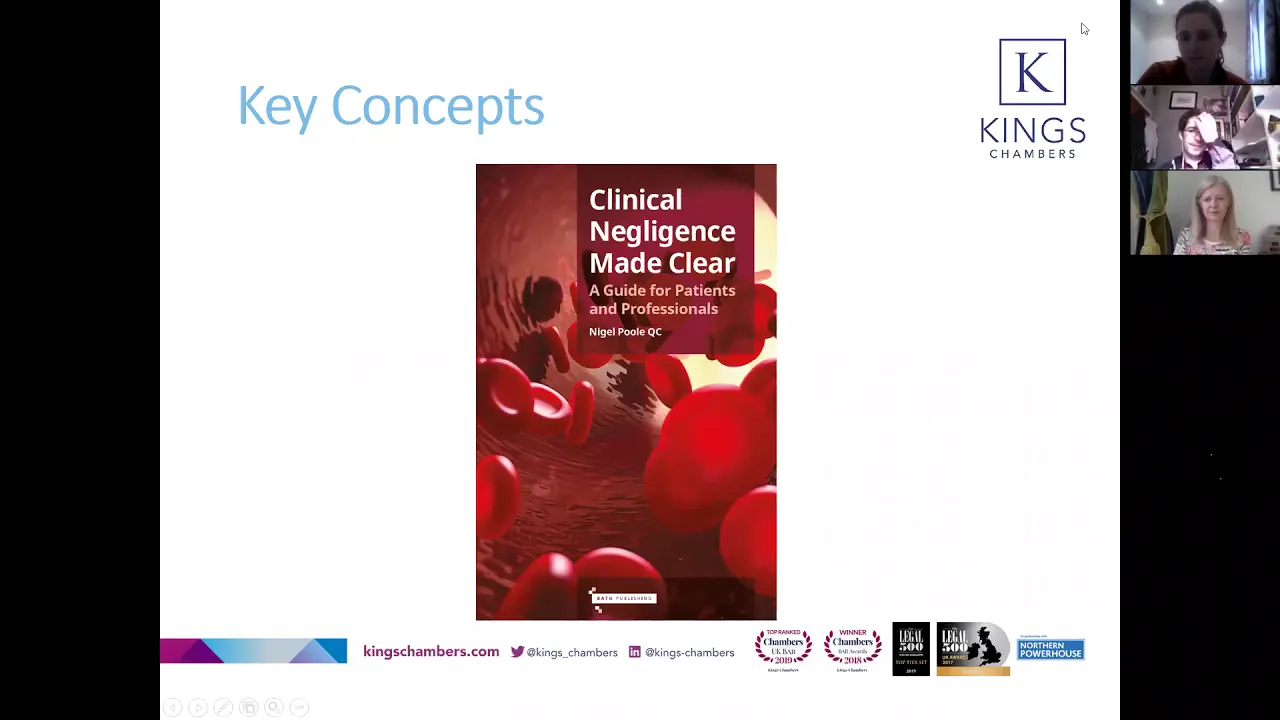
- Why this video is valuable: Led by Nigel Poole, a leading UK clinical negligence specialist, this video explains why medical causation is often the most difficult element to prove. Because patients are often already sick or injured, courts must determine whether the harm was caused by the doctor's error or the patient's underlying condition.
- Knowledge Checkpoint:
- Define the "but-for" test in the context of clinical negligence.
- Explain why proving causation is uniquely difficult when a patient has a pre-existing medical condition.
- Distinguish between standard legal causation and the natural progression of a disease.

- Why this video is valuable: This detailed analytical lecture breaks down the conceptual differences between actual (factual) cause and proximate (legal) cause. It covers the legal mechanics of "foreseeability," intervening events, and how courts draw a line of liability between actions and their outcomes.
- Knowledge Checkpoint:
- Explain the difference between "actual cause" (cause-in-fact) and "proximate cause" (legal cause).
- Define "foreseeability" as it relates to proximate cause.
- Describe how an "intervening, superseding cause" can break the chain of legal causation.
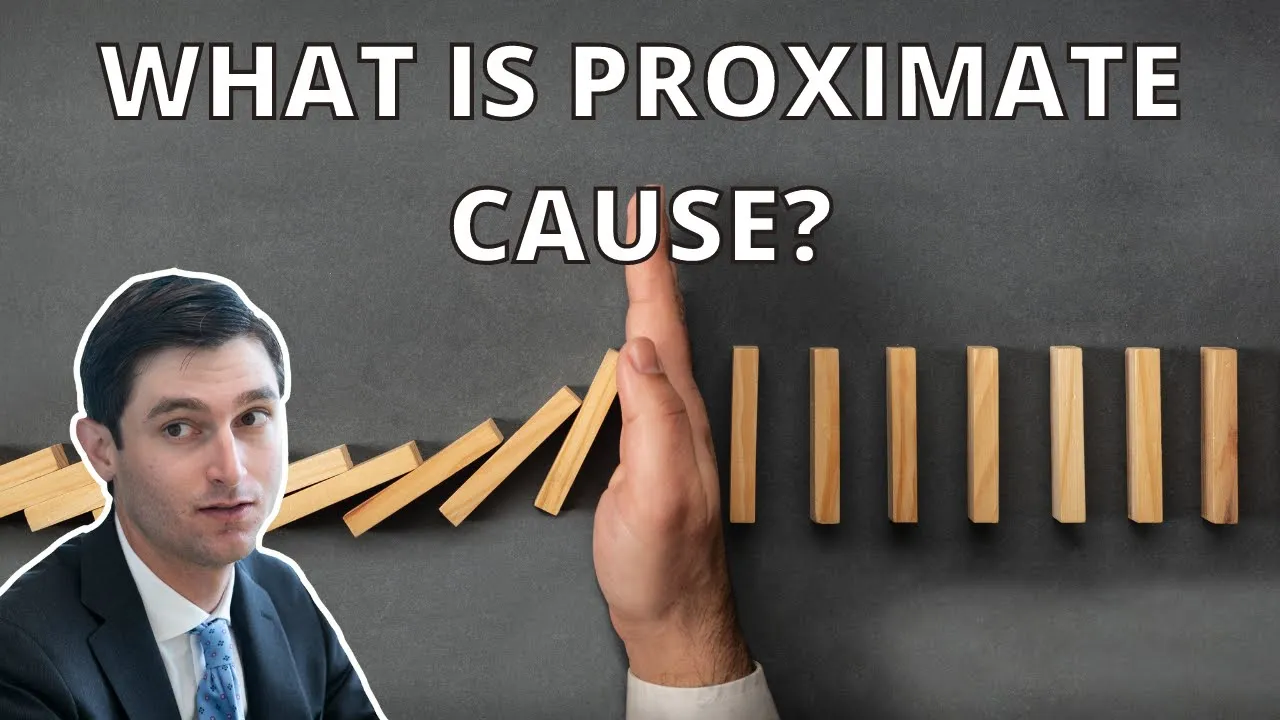
- Why this video is valuable: This video uses clear, memorable examples to make proximate cause easy to understand. It shows how courts decide if an injury was a reasonably foreseeable result of a negligent act, or if the connection was too remote to hold the defendant liable.
- Knowledge Checkpoint:
- Explain how a court decides if an injury is too remote to be legally connected to a negligent act.
- Analyze a scenario to determine where the chain of proximate cause begins and ends.
- Discuss how foreseeability helps limit a defendant's legal liability.
- Why this video is valuable: This video looks at the practical side of causation in clinical settings, focusing on how a delay in diagnosis (such as a missed cancer diagnosis) affects causation. It shows that you must prove the delay directly made the patient's prognosis worse, not just that an error was made.
- Knowledge Checkpoint:
- Explain how causation is established in a failure-to-diagnose or delayed-diagnosis lawsuit.
- Describe the "loss of chance" doctrine in medical malpractice.
- Show how expert witnesses connect diagnostic delays directly to a worse physical outcome for the patient.
Module 5: Healthcare Institution Liability and Malpractice Damages
This module covers hospital liability and the financial side of malpractice cases. You will study how hospitals can be held liable for their employees' actions (respondeat superior), direct hospital negligence, and how courts calculate and categorize financial damages.
⚠️ Curriculum Note on Damages Gaps: Because video resources on financial damages and state damage caps are limited, consider researching the following topics independently to supplement this module:
- State Damages Caps: How legislative limits (such as California's MICRA) affect non-economic recovery.
- Collateral Source Rule: How insurance payouts affect the calculation of a defendant's financial liability.
Recommended Videos

- Why this video is valuable: This video introduces the doctrine of respondeat superior (vicarious liability) in a medical context. It explains how and when hospital systems and management are held legally responsible for negligent acts committed by their employees.
- Knowledge Checkpoint:
- Define the doctrine of respondeat superior (vicarious liability).
- Explain the requirements for holding an employer liable for an employee's negligent actions.
- Describe how respondeat superior applies to hospitals and their clinical staff.

- Why this video is valuable: This short video by Attorney Ugo Lord provides a clear, memorable definition of vicarious liability. It highlights the "scope of employment" requirement, showing that an employer is only liable if the employee's actions were related to their job duties.
- Knowledge Checkpoint:
- Explain the significance of the "scope of employment" test for vicarious liability.
- Distinguish between an employee and an independent contractor regarding vicarious liability.
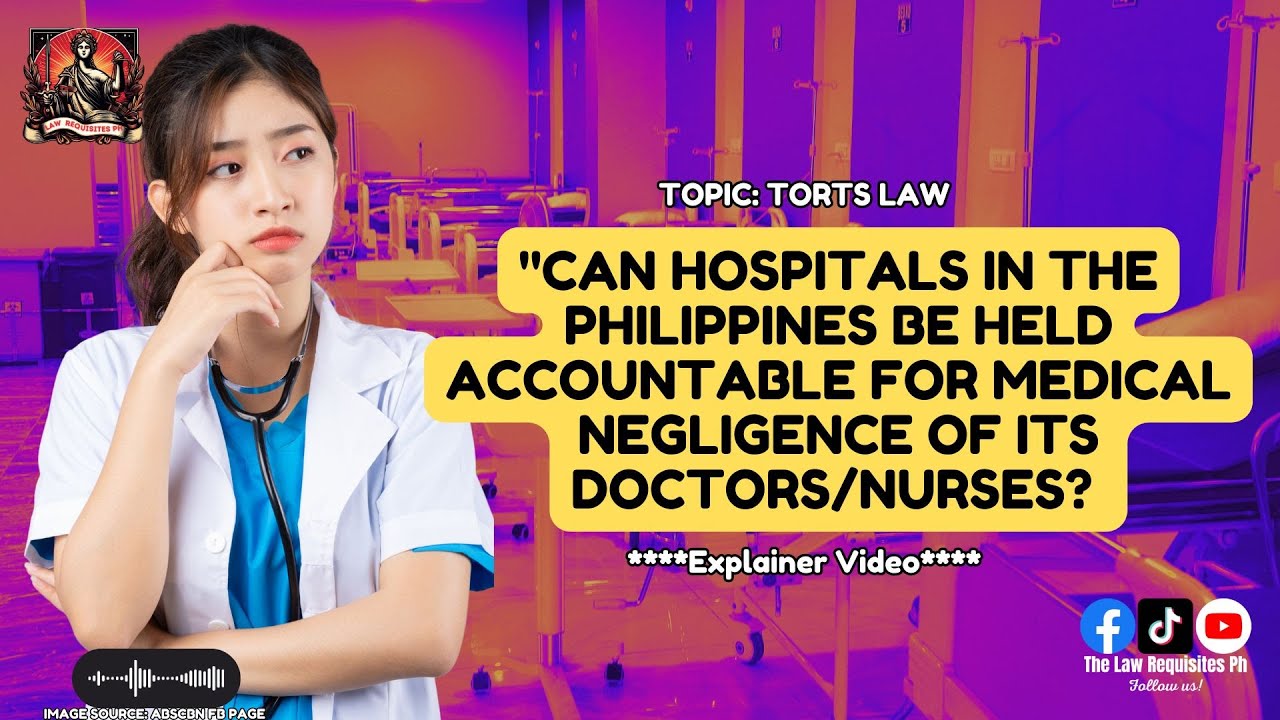
- Why this video is valuable: This video explores the "corporate negligence doctrine." It shows how hospitals can be held directly liable (independent of employee actions) if they fail to maintain safe facilities, select competent staff, or oversee quality of care.
- Knowledge Checkpoint:
- Explain the difference between vicarious liability and corporate negligence for a hospital.
- Identify a hospital's non-delegable duties regarding patient safety and staff credentialing.
- Discuss how a hospital's failure to audit or monitor a physician's performance can lead to corporate liability.

- Why this video is valuable: This video focuses on medical malpractice damages, detailing the difference between economic damages (like medical bills and lost wages) and non-economic damages (such as pain and suffering).
- Knowledge Checkpoint:
- Define economic damages and list three examples in a medical malpractice case.
- Define non-economic damages and explain how they are measured.
- Discuss the debate around statutory limits (caps) on non-economic damages and how they affect plaintiffs.
Course Map
This map shows the step-by-step progression of the course, from basic tort concepts to complex institutional liability.
Key People Index
- Nigel Poole KC (featured in Module 4): A leading UK barrister specializing in clinical negligence. He is well-known for his educational work explaining causation and the "but-for" test in complex medical cases.
- Dr. Amy G. Fogelman (featured in Module 3): A internal medicine specialist and professional medical expert witness. She teaches clinicians how to review medical records objectively and testify about the standard of care in court.
- Attorney Ugo Lord (featured in Module 5): A trial attorney and legal educator known for making complex tort doctrines like respondeat superior accessible through clear, engaging breakdowns.
Final Self-Assessment
Test your understanding of the course material by completing this comprehensive self-assessment checklist:
- I can explain the fundamental differences between civil tort liability and criminal liability.
- I can list and define all four elements of a medical malpractice claim: Duty, Breach, Causation, and Damages.
- I can explain how the physician-patient relationship triggers a legal duty of care.
- I can define the "standard of care" and explain why it is not a standard of clinical perfection.
- I can describe the legal role and requirements of a medical expert witness in a malpractice trial.
- I can apply the "but-for" test to a clinical negligence scenario to determine factual causation.
- I can explain the concept of proximate cause and how foreseeability limits a physician's liability.
- I can distinguish between respondeat superior (vicarious liability) and corporate negligence in a hospital setting.
- I can differentiate between economic and non-economic damages in personal injury and malpractice claims.