







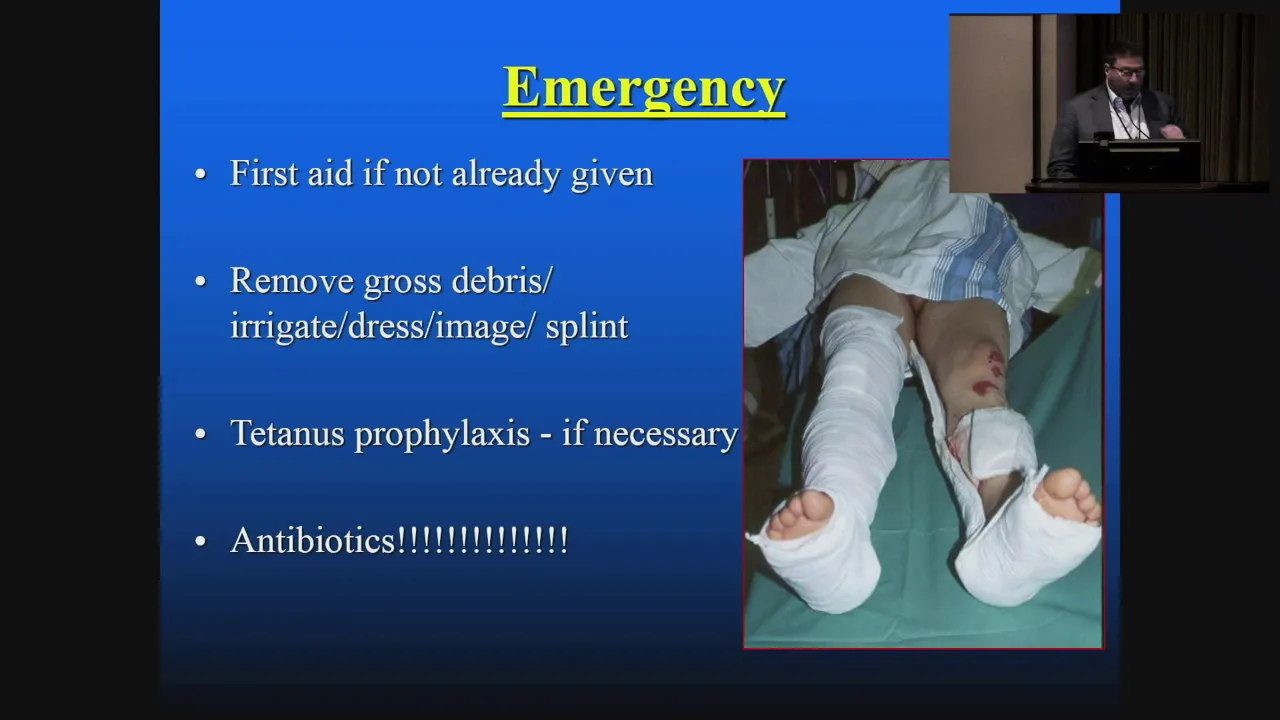











Good Samaritan laws protect individuals who voluntarily provide emergency medical care outside their professional capacity, shielding them from ordinary negligence liability; however, if a doctor acts in a professional capacity (even as a good Samaritan) and commits gross negligence or willful misconduct, they can still face medical malpractice liability, as demonstrated by the fictional case where a doctor amputated a patient's hand unnecessarily despite having a tourniquet on, which would constitute gross negligence regardless of the actual medical condition.
The Good Doctor's Malpractice: Legal & Medical Analysis with Doctor Mike
Added:The legal definition and core elements of medical malpractice, specifically the four 'Ds': duty, deviation (breach of duty), direct cause, and damages.
The concept of 'Standard of Care' in medicine and how it is established legally using expert testimony.
The principles of informed consent, including the patient's right to self-determination and the specific parameters of the emergency doctrine exception.
Basic clinical indications for emergency amputation versus limb-salvage protocols in trauma surgery.
Analysis of real-world landmark medical malpractice cases and how judicial rulings have shaped contemporary clinical guidelines.
The study of 'defensive medicine' practices, analyzing how the fear of litigation influences clinical decision-making and healthcare economics.
Advanced medical bioethics, exploring scenarios where a physician's ethical duties (beneficence vs. autonomy) conflict with legal boundaries.
The legal mechanics of medical malpractice litigation, including the discovery phase, expert witness deposition strategies, and jury selection.
1.1M views43.3Klikes26:48Original Release: 2025-07-23
Actually, everything they're talking about, vasospasm or not, >> or not, it's useless, >> legally irrelevant >> and medically.
[Music] >> All right, guys. You saw the medical disaster that was the first part of this video over on Dr. Mike's channel, but now we're going to go to trial and it's going to get worse.
>> They're going to need a medical expert to fix up the disaster that has been >> Well, you want to give us a summary of what what we saw on your channel?
>> Yeah. So medically speaking, there was a car accident that they came across as good Samaritans because they weren't working and one of the passengers was ejected from the vehicle. They were able to find him in the forest.
>> He's bleeding from his radial artery >> losing a lot of blood. They put a tourniquet on, stopped the bleed, but then noticed, I don't know if it was the same arm or a different arm or hand was not getting enough circulation. They panicked and they amputated the hand thinking that because there wasn't enough profusion, it was causing eskeeia and that it would further damage his life and limit his survival. But medically, none of that really makes sense because if you put a tourniquet on someone's arm, it's already not getting blood flow. No blood flow is coming back to the body from that arm. And that's the point of a tourniquet. So the tourniquet was working and they decided to amputate someone's arm. Go figure. In the field might happen.
>> Yeah. In in the field. And while the ambulance was coming, >> this good doctor has definitely committed malpractice.
>> Bad doctor.
>> In a in a good Samaritan situation to encourage doctors and lay people to provide medical care, you are not bound by the normal negligence rules. The usually the doctors are only liable if they committed gross negligence or willful misconduct. And it remains to be seen whether they can overcome the standard for uh the good Samaritan.
>> Dr. Dr. Murphy cannot be held liable for professional misconduct because Dr. Murphy was not acting in a professional capacity. He was a good Samaritan.
>> You can be both a doctor and a good Samaritan.
>> Right.
>> The law in California is written to protect both. Both the lay people who render care and also doctors.
>> So he could be a good doctor and a good Samaritan.
>> Yes, he wasn't a good doctor.
>> Yeah, he wasn't.
>> He might be a good Samaritan. We'll see.
>> The position that the good Samaritan exception stayed in effect even after the ambulance arrived.
>> Yes. because he didn't do the amputation in the ambulance. He was outside the ambulance.
>> He chose not to do the amputation in the ambulance.
>> It doesn't it doesn't matter. This the standard that we're looking at is, you know, rendering aid in the place where it's normally not provided. The place that they would render aid would normally be >> in a hospital in an emergency room.
>> If he had no time, >> the ambulance was right there.
>> Right there. What does that mean? Would it have been right there if he was 10 feet away, 100 feet or a half a mile?
All interesting questions for another case. He was 5 ft away.
>> Outside is outside.
>> My thought is they're going after his medical malpractice insurance, saying that he was functioning as a doctor, so he needs to be held liable for medical malpractice based on his insurance. And she's saying you can't go after his medical malpractice. He's not a doctor in the forest.
>> Right? They are arguing liability. So, it's not about the insurance per se. And in fact, if it were to go to trial in a few years, um the jury wouldn't even know whether insurance was at play. If they were to establish that he was not acting as a doctor, then the medical malpractice wouldn't kick in.
>> Yeah. Exactly.
>> And and they wouldn't get paid off.
>> This is a medical malpractice. Then >> he's rendering aid as a doctor.
Malpractice would still kick in.
>> Oh, it would still apply even though he's not acting as a doctor.
>> For the most part, I would imagine yes.
Unless it was intentional, in which case then medical malpractice usually doesn't apply for intentional tors.
>> Got it.
>> If the care happens at the scene of an emergency, >> council is using a technical distinction that >> council is using the law. Statutory interpretation rules require your honor to give effect if possible to every clause and word of a statute.
>> You assume when you're analyzing a statute that every word in the statute has to have some meaning. So if your interpretation basically writes out half of the statute, that's not a good interpretation. And the judge and the courts will assume that when the legislature passed a law, they intended all parts of it to mean something.
>> But that's not what they're arguing over. They're just arguing over the the definition of one of the terms, you know, being at the scene or near the ambulance.
>> Yeah. Near in the ambulance. So that argument makes no sense. And and why is this guy sitting down? They're still arguing.
>> If it may be any construction, which implies that the legislature Two more squeaks.
Two more squeaks. Two more squeaks. Two more squeaks.
You just stopped.
>> I've lost my train of thought.
>> Wait, what? She couldn't pick back up in like a few minutes? Let's assume that that happened and she physically wasn't able to keep talking. I don't it wouldn't actually matter that much because oral argument is not that important. They have briefed this issue.
The written briefing is in front of the judge and the judge and more likely the clerk is going to read the briefing and make a decision based on the arguments that have been presented in written form. You put all of your best arguments in the writing. You also wouldn't generally know like at the time of the hearing whether you won or lost.
It would come out several days later at the at a minimum. Even if she had frozen, if it was a good argument, she would have won regardless of what she had said.
>> You could win this motion.
>> I would have finished it.
>> I I heard a squeak.
I needed two more squeaks to complete the set.
>> They pulled the settlement offer and the partners met. You're off the case.
>> Well, we don't even know the answer to the motion.
>> The assumption is that they lost the motion. That could be really bad, though. Let let's assume it was a motion for summary judgement because everyone agrees that where the care was rendered whether it was in the ambulance or not in the ambulance. Theoretically, if it the motion for summary judgement was denied on the basis that there is an issue of fact, it could eventually go to trial many years later. If it is an issue on the law where the judge says, "Sorry, I just don't think that the good Samaritan law applies in general," then they'd be precluded from making that argument at trial.
>> Super super bad. Because that's really the only argument that they had. Yep.
>> It would be weird that the partners made had a meeting like this. It would be extremely weird that an associate is going to run this litigation in general who has zero experience. So, we're just sort of in uncharted territory in general.
>> You are a good researcher. You are a database that thinks, but you need to accept that you are not.
And you are never going to be a good lawyer.
That's a really harsh thing to say. I mean, she really is screwing up this case, so that might be accurate. That being said, there are lawyers of all stripes. Not all lawyers go to court.
Not all lawyers need to interact with clients. Having a really good writer and researcher is a totally normal thing to want in your life. Very valuable.
>> Now, sorry to interrupt, but Dr. Mike and I had a ton of fun shooting this video, but we couldn't air all of our reactions. But luckily, there is an extended version of this video that is way, way longer on today's sponsor, Nebula. You can watch all of our videos on Nebula ad free without sponsorship messages like this one and early because our videos always go up on Nebula first.
Plus, every video we upload to Nebula this year is an extended cut featuring additional analysis and commentary that you can't get on YouTube. In fact, we just completed a full video on one of the craziest lawyers gone wild true crime stories we've ever seen. It follows DC's golden boy attorney Tom Goldstein, who technically used to be my boss, and his insane self-destruction from highstakes poker with billionaire secret girlfriends robin clients, tax evasion, and the Supreme Court. But the only way to see it is by signing up for today's sponsor, Nebula. And signing up for Nebula is also an excellent way to support this channel and its mission to demystify the legal miasma that we live in in both the news cycle and your favorite shows like The Good Doctor. And people often ask if it helps the channel more to watch it on YouTube or Nebula.
And the answer is emphatically Nebula.
The watchtime payouts are bigger. And since my creator friends and I created Nebula ourselves, we don't worry about capriccious demonetization standards, which have been really frustrating this year. For example, a recent video on the Diddy trial was agegated because it showed security footage that was less than savory. And one of our videos was demonetized because it showed a single image of the World Trade Center on 911.
So watching on Nebula is better for the creator, but it's also better for viewers and legal eaglets like you. So if you'd like to sign up, you can get 40% off your annual subscription, a year of the best content for just $36, or you can even gift that to a friend with a Nebula gift card. Or you can check out the lifetime subscription where for $300 you can get access to Nebula forever. So either way, you can click on the link below and sign up for Nebula or I'll see you in court.
>> No, no, no. Joanie is my lawyer. It is my case, my choice, >> and your career that's riding on this.
>> Can a client choose to keep the lawyer despite the fact the firm wanting to remove the lawyer?
>> That's tough, especially in the context of insurance. M >> I think we probably have a conflict of interest with the insurance appointed council in which case you'd probably trigger the cumis council statute and you'd probably be allowed to choose a different lawyer to then interact with the law firm.
>> She would have to probably leave that law firm and be an independent lawyer.
>> She could probably do that. The insurance company gets to choose who they work with. He could get independent counsel as Cumis counsel, but I don't think he would necessarily be able to demand a particular lawyer as lead counsel.
>> Fair.
>> Why didn't you fire her?
>> Because she threatened to sue us, arguing that firing her would be a violation of the Americans with Disabilities Act.
>> Was it?
>> I'm not sure. I don't think so.
>> I mean, you should know that as as a lawyer who is being threatened to be sued. The Americans with Disabilities Act allows for accommodations to be made, but if you are not able to do the job, >> then you might not be able to to function in that particular job. And you have to be able to actually do the job.
So, if they wanted to fire her, they they probably could have done that.
>> Dr. Murphy wants you as first chair.
>> What does that mean?
>> It means that she's running the trial.
Usually, the first chair would be the one who's giving the opening statement, the closing argument, and probably taking most of the examinations. But you might have a really large trial team where you're dividing up the labor and at any given time one other lawyer who's not first chair might be conducting an examination or or giving a statement.
>> In your expert opinion, when Dr. Murphy concluded that my client's hand was irreversibly damaged and needed to be amputated.
>> He was wrong. The lack of blood flow was caused by a temporary condition known as vasospasm. So, so this guy appears to be an expert witness, some doctor who they hired to give an opinion about this particular case. When they said, "Oh, if you don't accept the settlement, then we're going to go to trial."
>> Mhm.
>> The expert process is part of discovery.
So, they would have deposed this expert, they would have gotten all of his opinions in writing >> beforehand, >> months, maybe years before they got to trial. So none of what they are talking about or none of what he's talking about would be a surprise to anyone. And on top of it, you would have an army of other experts refuting what he's saying.
>> Yeah. I mean, both experts are wrong. A YouTube expert is having to fact check the two court experts.
>> Terrible. Your witness.
>> Any last minute ideas? Anything we can challenge him on medically?
>> It wasn't visas.
anything we could prove.
>> You don't come up with trial strategy in trial.
>> Yeah, they knew about this. You said >> all this was known and and even if they didn't, they would have talked to experts who would have come up with they would have red teamed this. Where is the hand surgeon?
>> Yeah. Why don't we have a hand surgeon testify?
>> Dr. Rutenberg, are you being paid by the plaintiff's attorney for your testimony today?
>> I am.
>> Then you can hardly consider yourself unbiased. Those are like pathology slides of an artery.
>> So what we heard in the background while she was looking at those slides is the classic questioning of the expert.
You're being paid by the plaintiffs here. So we can't trust your opinion, which is absolutely necessary. Like you need to point out this is not an objective observer here.
>> But isn't that always the case?
>> Yeah, it's always the case. Some of the best expert opinions and the experts that are testifying will testify both for the plaintiffs and the defense.
Okay.
>> So they can say sometimes I am called by the plaintiffs and sometimes I'm called by the defendants.
>> It's routine for experts to be paid.
You're being >> and I admit >> Oh my god. Hold on a second. I'm going to make a prediction. Is she going to say he has like ray nods or something?
Something wild. No way.
>> Well, she shouldn't be saying anything at all because the questioning is being done by the other attorney. It is insane that while her counsel is going to interrupt your questioning. The judge would have absolutely jumped on her and said, "What are you doing?" Like, your co-consel is questioning this witness.
Sit down and shut up.
>> Traumatic vasospasm doesn't occur in isolated vessels, but rather the entire affected limb. Right.
>> Yes, of course.
>> Can you visually identify a damaged or accluded vessel versus one in vasop spasm?
>> Yes.
So, >> what wouldn't this have been presubmitted? Whatever she's doing right now, she's going to show him something.
>> Uh, I'm going to graciously assume that all of what she has >> was pres was was submitted in evidence.
This one.
>> Accluded.
Vasospasm.
>> Accluded.
>> Not vasospasm.
>> No.
>> Objection. Your honor. Is this testimony or the MCAT?
>> That was a good objection.
>> Uh, or is that rude?
>> You have to state your grounds for the objection.
>> What would have been his grounds?
Objection. Relevance. Is that fair?
>> Yes, he could have said that. Okay. he would have gotten slammed. Pretty highly relevant to demonstrate whether he's able to do it or not.
>> That was a pathology image of Mr. Patton's radial artery.
>> And you can't just get up in the middle of cross- examination and say, "Guys, the thing that I did was really important for these following reasons."
That's what closing argument is for.
>> Yeah.
>> And if his radial artery didn't vasop spasm, then according to your expert testimony, his er artery didn't either.
Is that correct?
>> It's possible, but we'd only know for sure if Dr. Murphy had given the calcium channel blocker.
>> I'm so confused.
>> I think they started writing this and then they got confused themselves.
>> Now they're saying both the radial and ulnar artery were oluded for different reasons.
>> Yeah, one was ripped open.
>> Or was that a lie? Did he misdiagnose that?
>> That would not surprise me at this point.
>> We only know for sure if Dr. Murphy had given the calcium channel blocker.
>> This is a a classic mistake that shows make all the time. It's not important whether they got the answer right or not. It's not important whether the thing was vasos spasm or whatever they're claiming it to be. The thing that's important is did he do the thing that a regular doctor did or or should have done.
>> Let's say it wasn't vasospasm but he still did the wrong thing. It doesn't matter because he did the wrong thing.
>> Yeah. What they should be talking about is under the circumstances the doctor gets to the scene, they're presented with this. Yeah. What would a normal reasonable doctor do?
>> Exactly.
>> And they would not amputate.
>> No doctor would actually amputate.
>> All they should have asked this doctor was if you see someone who is bleeding out from their radial artery and you have a tourniquet on, do you ever amputate their hand in the field? Yeah.
>> And if he says I would never do that, that's the end of the case. Actually, everything they're talking about, vasos spasm or not?
>> Not is useless.
>> Legally irrelevant >> and medically.
>> I'm going to establish that he's a dick.
>> Who's a dick?
>> The victim.
>> Dr. Murphy saved your life.
>> Is that a question?
>> Not really.
>> Is that an objection?
>> Yeah, >> maybe phrase that in the form of of a legally valid objection there. This is why you only interact with a judge. You should not be having colloquay between the attorneys.
>> Sues a person who saved their life.
Do you sue people who buy you Christmas presents you don't want or only the weird ones you figure the jury won't like?
>> Objection compound and argumentative.
>> Is that a good Those objections were accurate. You can get away with that.
You can withdraw when your questions.
But if you do that enough times, the judge who faking hated this attorney for simply introducing herself with her name is like, "All right, well, let let her cook.
>> I'm a victim here."
>> You were driving, right?
>> Yes.
>> Over the speed limit.
I'm not sure.
>> According to police analysis of your skid marks, >> does that matter?
>> No, it doesn't matter. But he should be objecting to relevance. Who was at fault for the accident? Is irrelevant to whether the doctor provided good care or not?
>> Yeah, exactly.
>> Is she suing you for two more squeaks?
Two more squeaks.
>> Hey, I will hold you in contempt. That >> is totally improper, obviously.
If Dr. Murphy >> and then she just gets to continue. What are you talking? Arguably, she just she assaulted opposing council. That's enough.
>> And she warned her.
>> Yeah.
>> This is bad.
>> Great.
>> Person driven on, you'd be dead and his career wouldn't hang in the balance.
>> U objection calls for speculation.
>> Not a lot.
>> The objection is sustained. Miss Stewart, that stunt just cost you $5,000. You're lucky it's not assault.
What is that a thing?
>> Oh, yeah. I mean, >> you could you could find her a specific set of dollars.
>> Sure, absolutely.
>> What?
>> $5,000 would probably be a reasonable amount for civil contempt or civil sanctions given that she just witnessed assault. I mean, she's being pretty sanguin about things.
>> Given where you sit today right now, do you think one of the things that you and Dr. Park did wrong was stopping?
>> No. Then Mr. Patton would be dead.
>> That's not the question.
>> In the amputation. It's not a question if you should have stopped for the accident.
>> No one's arguing that.
>> Yeah. The the the problem isn't that like they ran him over in the street and >> and then stopped. The problem is once they stopped, what did they do?
>> Yeah. That they, you know, provided horrible medical treatment.
>> Dr. Murphy, you're different.
Tell me about yourself.
>> Objection, vague, and irrelevant.
>> Your challenges, the obstacles you've overcome. marginally less vague. Still completely irrelevant.
>> And yet I will allow.
>> Oh, >> classic.
>> Why did she allow?
>> Unclear. I mean, vague. Who cares? You wouldn't make that objection. Relevance.
Probably. The judge should not be really allowing it. At least in the context that they are getting at.
>> Autism spectrum disorder.
I have always had autism spectrum disorder.
I have also always >> the cross would be devastating.
>> Yeah.
>> Like you said you made those four mistakes. How do you know that you didn't make others? If you're willing to make those mistakes, is a chance that you made other mistakes? Like they're just so easy.
>> Yeah.
>> You're you're nailing exactly what you would want to go over in cross-examination. Isn't it true that you completely misremembered what happened at the scene?
My mentor told me that people don't like me, that I make them uncomfortable.
She's right.
>> And people don't like my client either.
>> Give a closing.
>> Entire sections of the rules of evidence preclude you from making it all about the character of either the plaintiff or the defendant or >> yourself >> or the legal counsel.
>> Like your character is not at issue here. It's it's a it's about the facts as as presented.
>> What would you say as opposing counsel in this situation?
>> I I would get up there and say the defense want to make this about anything other than the things that are relevant.
The only question before you is would a reasonable doctor have done this? And you heard testimony that was completely unrebuted that under no circumstances would a doctor who was coming home from dinner >> amputated >> amputate in the field with a rusty saw when the ambulance was right there >> grossly negligent.
>> We're different.
>> But we're all different.
>> You you've worn purple every day of this trial. I assume because you love it.
>> No. Come on. You can't do that.
>> No. You can't sing. You can't you can't talk to an individual juror and make it about the clothes that they're wearing.
Are you out of your frigin mind?
>> Oh my god.
>> No.
>> And cuz you want it to be your thing.
You've got >> I would find that highly offensive.
>> Yeah.
>> Like Yeah. I like >> she's smiling at >> I like the color purple, but that's not who I am as a person.
>> Yeah, that's not my way to misread the situation.
>> Those mutton shops, they're great.
They're fun. And they make you you >> do they >> Excuse me, ma'am. I'm like a makeup artist.
>> I'm more than a haircut. Why would you be so reductive?
>> But when we start to get judged based on our differences, it's not fun anymore.
>> You're judging people on their appearances.
>> And fair enough. This is a courtroom.
You are literally here to judge my client. But please don't judge him based on the way that he talks.
>> Who is doing that? Why is she jumping to that conclusion?
>> Well, she's trying to uh character assassinate the plaintiff.
>> Opposing council said nothing about his ASD diagnosis.
>> Absolutely not.
>> They didn't say he did this for no reason because he has ASD. He said they shouldn't have done this. Medically, it was inappropriate.
>> She wants to make it about him being different and get sympathy. So, she's saying affirmatively, >> which is not the right way to go about.
>> Yeah. No, I mean, >> not even morally, it's not the right way to go about.
>> I mean, legally, it's not the right way to do it either. or on how he doesn't look at you or on his awkward mannerisms. Judge him.
>> He was looking directly at that when she said that >> him >> on who he is.
>> No, no. I even know it's not about that.
>> You judge him based on what he did and didn't do. That's the only relevant question here.
>> At every moment of his life, he has tried to make a difference, tried to make things a little better.
>> Yeah, except that one night.
>> Please don't punish him for that. That's not the >> That's not what they're punishing him for.
>> Please do what the plaintiff should have done.
>> Say thank you.
>> No.
>> What?
>> Oh man. I would disbar her just off of this one trial.
>> I mean, she hasn't done anything disbarable except for not show up in court when she needed to. Maybe what has happened in this fictional world is that they lost the legal issue of Good Samaritan. So they're >> bringing up >> bringing in these stupid unrelated things. We need a a grade for medical realism here.
>> No, no. There's this cannot even warrant a grade. It's so bad. I mean, I guess the words they used were accurate. So it's a one. Like they said words.
>> Yeah. I mean, similar to legal accuracy, they threw in some legal mad libs and got some of the things right. And basically >> that one objection you said he did.
>> Yeah. There was one objection that was correct. And they did ask questions sometimes during the examination. So, >> I mean, I'm going to go an F plus. It's so bad. It's so bad.
>> I would give an F+.
>> So, F pluses all around. If you want to see something that's even worse, check out our last reaction to Grey's Anatomy.
>> Oh my god. You You # Where's the sponge?
>> # Where is the sponge here? We had an extra hand. In that episode, we had an extra sponge >> or a missing sponge or a missing hand.
Phantom sponge. Phantom hand. Check out that episode. Now, if you or a loved one has been treated by the good doctor, you're going to want a good lawyer.
Luckily, that's why I started my personal injury law firm, the Eagle Team, because when I started this channel, every week I get hundreds of comments and emails from viewers who are dealing with legal problems. And they'd ask, you know, can you help me find a lawyer? Or how do I know if this attorney is any good? Because there's a massive gap in our justice system. It's not just that legal help is expensive, though it absolutely is. It's that people don't know how to find the right lawyer for their specific situation.
They're scared. They're overwhelmed. And they end up doing either nothing or hiring the first attorney who calls them back. And that really bothered me. So, I asked myself, what if there was a different way? What if we could build a law firm that actually lived up to the values I talked about on this channel?
Transparency, accessibility, and putting clients first instead of just chasing billable hours. A firm where you didn't need to pay anything upfront and your lawyers only get paid if you do to maximize your opportunity for justice.
So, a few years ago, I decided to fix that problem. I decided to start my own personal injury law firm. And honestly, it was not an easy choice. But I realized I was in this unique position.
I had this platform, this community, and the experience. So that's why we started Eagle Team, not to get rich. Trust me, there are much easier ways to make money than starting a law firm. We did it because access to justice shouldn't be a luxury. Because finding the right legal representation shouldn't feel like playing Russian roulette with your future. So when you work with my firm, you're not just getting a lawyer. You're getting a team that understands that behind every case is a real person with real stakes. And by the way, if we can't represent you or you're in a state where we don't practice, we'll take the time to try to match you with an attorney in my personal network of lawyers, a national network of some of the best lawyers in the country who actually specialize in what you're going through located right where you are, not just whoever happens to be available. So, if you're dealing with a personal injury, a car crash, a trucking accident, a data breach, sexual harassment, a social security or workers comp issue, give us a call at the number on screen or click on the link below. Now, obviously, I can't personally represent everyone who watches this channel. I wish I could, but what I can do is make sure that when you need legal help, you have somewhere to turn to that you can trust. Whether it's me handling your case or the incredible attorneys we've partnered with, you'll get the same principles of honesty and education that we bring to every video. So, if you're dealing with a legal issue and you're not sure where to start, check out the link in the description or call the phone number that's on screen. Let's have a conversation about how we can help you find not just any lawyer, but the right lawyer for your situation. Because at the end of the day, that's what this is all about. Making sure that when life gets complicated, you don't have to face it alone. Which is why if you need a lawyer, you don't just need a legal team. You need the Eagle team. So, after you've dropped us a line to get the legal help that you need, click here to watch more Legal Eagle, or I'll see you in
Up Next
38:17
Medical Expert Witness: CV Tips & Legal Case Insights
@succeedinmedicine
3.1K views•2023-01-11

12:54
Triumph of Orthodoxy Icon: Byzantine Art & History Explained
@BenCallan
2.1K views•2024-08-06

13:30
YouTube Impersonation and Copyright Enforcement: A Legal Analysis
@LegalEagle
861K views•2025-09-23

1:42
Game of Thrones Opening Credits: A Cinematic Analysis
@gameofthrones
46.3M views•2011-04-18
Related Study Plans & Knowledge Roadmaps
Structured learning paths in General & Interdisciplinary Studies
general-studies
Elevator Engineering: History, Physics & Cities
01From Hoists to Safety Brakes: The Dawn of Vertical Lift
02Hydraulic vs. Traction: The Engineering Physics of Elevators
03Modern Speed, Safety, and Algorithms
+ 2 more learning modules
12h5 modules
Explore Roadmap
general-studies
Rubber: Material Science, History & Geopolitics
01Origins of Natural Rubber & Mesoamerican History
02The Chemistry of Natural Rubber & Vulcanization
03The Geopolitics of the Rubber Boom & Colonization
+ 2 more learning modules
12h5 modules
Explore Roadmap
general-studies
Containerization: Evolution, Logistics & Trade
01Ancient Trade & Bulk Cargo: Amphorae to Barrels
02The Industrial Revolution & Cardboard Packaging
03The Containerization Revolution: Malcom McLean
+ 2 more learning modules
12h5 modules
Explore Roadmap
general-studies
Textile Tech: Evolution, Labor & Global Impact
01Pre-Industrial Textiles: Handloom & Cottage Industry
02Mechanization: The Spinning Jenny to the Power Loom
03The Factory System & Global Labor Transformation
+ 2 more learning modules
10h5 modules
Explore Roadmap