




















This webinar by John Kapacinskas and Erin Secord from Aon covers five key strategies for medical malpractice defense: (1) preserving medical record integrity by producing complete records at once to avoid spoliation claims, (2) maintaining historical policies and procedures that were in effect at the time of care, (3) preparing witnesses by distinguishing between legal standard of care (minimum accepted practice) and medical standard of care (best current thinking), (4) working cooperatively with codefendants to prevent case value inflation, and (5) strategically deciding whether to present a damages case based on excess exposure beyond insurance coverage.
Medical Malpractice Defense: Working with Outside Counsel
Added:Fundamental principles of tort law, specifically the four elements of medical negligence: duty, breach, causation, and damages.
The basic structure of civil litigation, including the phases of discovery, pleadings, and trial preparation.
The legal significance of medical records, documentation standards, and patient privacy regulations like HIPAA.
The distinct roles and relationship dynamics between in-house healthcare risk managers and external defense counsel.
Advanced deposition and trial advocacy techniques specifically tailored for cross-examining opposing medical experts.
Strategies for institutional risk management and implementing proactive clinical protocols to mitigate future malpractice liability.
The role of Alternative Dispute Resolution (ADR), including mediation and settlement valuation strategies, in medical malpractice cases.
Complexities of professional liability insurance, including policy limits, consent-to-settle clauses, and working with insurance adjusters.
468 views7likes56:37Original Release: 2015-12-28
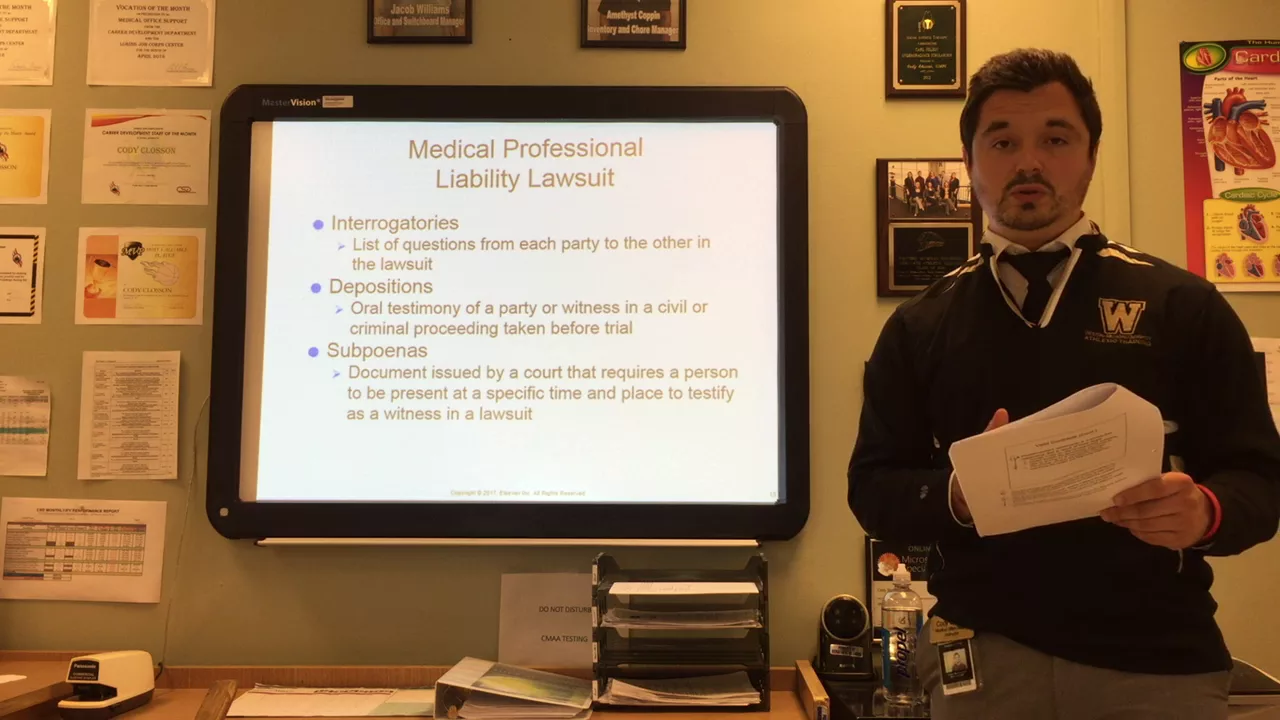
we are going to cover a lot of stuff today or they are I'm just here to to be boring for a moment uh so a whole bunch of announcements first our next webinar which is on December 10th so the December 10th webinar will cover the Medicare fee schedule which came out in review copy on trick or to trick-or treat on Halloween and the final version will come out tomorrow morning I got to say I've read a lot of it it's one of the dullest fee schedules I've ever seen but we'll we'll talk about what in there next week or next month uh we'll also talk about the hospital outpatient role and also the oig work plan if you can't go a whole month without us on December 3rd one of our colleagues Karen shanfield is going to have a webinar talk um with Christa Hatcher one of our other colleagues about how to address the incidence of communicable diseases in the workplace so if you're wondering what do we do with ebola and other stuff like that you can check out that webinar that's at noon Eastern or one Eastern 10 Pacific on December 3rd um this webinar and all of our health law webinars appear on SlideShare so you can always look those up the link will come out when we when you uh when you get the handouts there will be a link to the slides share materials in there you can ask a question at any time by clicking on the chat box if for any reason your chat box has disappeared there should be at the upper right corner a little window that says chat click there to type your questions that's also where you'll get information um from our crack producers if you get if you notice the sound breaking up because of slowness in the internet that often happens over noon we can't control that but we can solve it use the dial in number that's in the chat box okay one last announcement we have a boatload of clients right now who are finding themselves wanting temporary legal help and what's worked really well for some of them is we have a crack team of Associates and some of our clients are borrowing from the those Associates from us some have the people come on site but many don't um we're really lucky we've got a a bunch of ridiculously smart practical and fast Associates uh par par mcra just started last month and so she joins the team uh so that's an option if you need anyone feel free to let one of us know and what you basically do is you call them directly and they're yours okay now on to today so last January we were lucky enough to have John kinus join us John came from fbite and jorski and before he started their Minneapolis office he practiced in Texas so John's a health care litigator he works on a wide range of disputes but he's developed particular expertise in bid protest work um he's done that in more than a dozen states he's also done a bunch of disputes between health plans and Hospitals and Clinics I know there's been one that's been keeping him busy lately uh and finally he does a lot of work on today's topic medical malpractice so John is part of what's I guess our burgeoning M medical malpractice group that includes Greg careno Dave Bundy and his fellow presenter Aon secar so Erin in our litigation group and in addition to doing uh medmail works on a wide range of other sort of litigation type stuff in healthcare and in other areas so with that long windup I'm going to turn it over to John take it away Mr capinis thank you very much David um thank you everybody for joining uh Aon and me today to talk about medical malpractice cases and what we thought we would do would be to have a practical discussion about working with outside counsel I know many of you uh this is not your primary concern uh handling medical malpractice cases and it's one among many issues that come up in your day-to-day activities and so we wanted to keep this very practical um honk if you love litigation um I say that with extreme sarcasm because everybody here I know uh does not enjoy litigation it's expensive it's timec consuming it takes your your folks away from their their business activities the disruption uh to your work is uh phenomenal and uh many of you wear lots of hats and this is the last uh thing on your list to do so what we wanted to do would be to talk about issues that arise um that your input is very helpful helps Drive the value of a case down it helps us uh represent you most effectively and so those were the things that we thought we would discuss with you today and we'd like to give you a brief overview of the five topics that we're going to be covering over the noon hour today the first is assembling and defending the the medical record in a way that preserves the Integrity of the chart and assists with uh providing a very uh efficient defense second we are going to discuss the importance of preserving and analyzing internal policies and procedures and how that impacts um the standard of care that applies in the case third we're going to talk about the importance of witness preparation for depositions and uh the need to um identify the the key individuals who are involved in the car at issue fourth uh working with codefendant and co-defense councel and fifth uh determining whether to put on a damages case which is often a very um significant strategic uh decision to make and so John Gathering a medical record is often a m a very mundane and tedious task why does it matter what the chart looks like Erin that's a really good question uh the chart is probably your most important piece of evidence in a medical malpractice case it's the contemporaneous entries by your staff and um that is probably the best evidence of of what happened uh likewise plaintiffs realize that and plaintiffs are going to do everything they can to challenge the Integrity of the chart and if they are capable and successful in challenging the Integrity of the chart then it undermines the narrative that we have of the case it undermines our key evidence and the jury is left with uh the impression that they cannot rely on the chart and uh once that happens uh the the ability to defend the care goes goes down significantly so the key things and how how do they challenge the chart well it's from issues as mundane as poor copying of the of the medical record missing pages uh data produced differently uh if it's electronic data and we're printing it out on paper it can be prod produced in a in a multitude of ways and sometimes those differences are material and uh plaintiffs will seize upon those another way is by having late production of materials and often times we produce the chart only to realize later on there are things that are missing from the chart so the better approach is to have all of the records together and produced one time and your your assistance uh with us in pulling together the chart one time and producing it in one instance is the most important thing we can do so and lastly uh to avoid a claim of spoliation uh we want to have the record in one complete set and not produced uh peac meal and with peacemeal production you run the greater risk that the pl lawyer will go to the court and argue that uh there's spoliation in the chart the chart cannot be relied upon and will seek to have uh an instruction to the jury contrary to the uh medical chart and so um this issue while very mundane Aaron is a very important issue for us in our law suits and speaking of of uh the mundane and sort of responding to paper requests um the the next issue we'd like to talk about is the initial requests for medical records that comes from the plff so typically um this is received directly from um the the patient the potential plff and is signed by that individual um and oftentimes that request for records does not not adequately identify the time frame and the scope of the relevant records and in instances particularly in in long care long-term care settings or other instances where it's not clear um the scope of the records that they're looking for it's it's permissible to follow up with that with that individual to make sure that that you are gathering um what they are asking for and Gathering those chart materials is more than just calling down to the records department there are a number of considerations that are that are critical to uh producing one complete record one time and and and again that is critical to preserving the Integrity of the chart and one of the um sort of common pitfalls or issues is how to deal with incident reports so first incident reports um should not be kept with the chart for a number of reasons um first um they are not technically part of the chart in in the sense that that the chart will uh set forth the the care um that these incident reports may contain information that is protected by the peer review privilege um which has two primary elements first that it's created with the purpose of triggering a peer review investigation and second um is maintained in a confidential separate manner um after the fact and so these incident reports should be kept again separately from the chart and these materials in Most states are not required to be provided to the plff in response to the plaintiff's initial request for medical records prior to litigation and also metadata falls into that same category of materials that you're not required to provide to the to the planet for the patient in response to their initial request for medical records and metadata is and when we're dealing with electronic records is the information about who has accessed the information when they have accessed the information when the chart was printed all that information um Can can be important in a case um obviously and is is not something that you need to initially provide to the planet and finally uh to be aware of of often overlooked records from different departments such as such as physical therapy or occupational therapy and to to make sure that when you are gathering those records that you are looking um across um your organization to make sure that you are gathering everything the first time and along those same lines um especially when you're dealing with um a patient um who has been um in a in a long-term care setting such as in a nursing home often a provider will will thin the chart so we'll take out sections of the chart from you know four or five years ago two or three years ago and it's important to to know that when you're dealing with those thin charts that if there are uh entries or information that are archived elsewhere that those must be gathered as well depending on the scope of that individual's request and this is the point at which um it is important to um potentially engage with outside Council in in figuring out those issues so that um the the first time the chart is provided it is complete and accurate and there's some special issues that we should also consider when we're dealing with paper records um we're sort of in this hybrid world now where some of the records are are paper and some are electronic and when we're dealing with paper paper records we need to make sure that we have a full and complete copy of the record um original records should not leave your facility unless they're under a court order and we'll talk about that a little bit uh further along in our presentation but when we are copying uh the records uh Extra Care needs to be taken for instance on trifold Pages uh often used in OB cases it'll be a a very big record that folds out that the nurse is able to uh flow chart the care in in across a large three-page document those are not notoriously uh poorly copied and pages are often missing from those and that's something that extra care should be taken additionally uh we have to PR preserve the um chain of custody of our medical record and we have to know who has accessed the medical record and when they have accessed that so if you have a records department at your clinic or at your facility it's important that uh every time the chart is checked out that we have a record of who checked it out and when they checked it out um in fact in Corpus Christie one of my clients uh if an incident occurred she would then go immediately and make a copy of the chart and put that chart in her quote evidence drawer that she kept because uh she was not always sure what would happen with the chart later on and she wanted to be able to defend her nurses and to make sure the chart was complete at the time that she was on notice of a claim uh in case something came up and this may sound extreme but uh uh changes in the chart do happen and when the changes happen it uh significantly undermines our ability to defend um I had an instance where a resident uh got a notice of claim letter and she checked out the chart and uh wrote hold next to the ddavp medication she ordered well well that late entry after the uh patient's uh passing um was completely inappropriate and uh the sad thing about it was is that the care was defensible but in her panic because she was uh named as a defendant uh she made a change to the chart that resulted in in the case and the and the care being indefensible so it's important that we limit and we know who has access to our original IAL chart likewise with electronic records we have uh specific issues in terms of How We Gather the data the screen view that uh most folks see at the hospital looks vastly different than how the record is printed and so data that is actually very usable on the screen is very difficult unless some effort is taken uh by the by the folks Gathering the chart to make sure that it is complete uh and accurate and so the example I have is that while it looks very clear on the screen what the nurse was charting when the chart was actually printed to be produced in litigation every box that could have been checked and was not checked also printed along with the uh boxes and areas where data was in fact entered so Extra Care and time has to be taken because blowing that up and showing that to a jury makes it look like our nurses were not entering into the chart those uh key pieces of information that they should have because there are a lot of blank spots and so when we produce our electronic chart we have to have an eye towards how that evidence is going to be used in litigation and how it will look when it's blown up on on a chart so uh Aaron um we talked about the records and making sure the records are complete and that we limit our the access to those records and who has the ability to to make changes to those records what other types of evidence do you think uh it's important for uh somebody at a clinic or at a hospital to think about ensuring that they uh keep for a medical malpractice case well depending on the the type of case there are a number of of different types of of of physical evidence or uh Records that are maintained separately from the chart um that should be preserved and gathered um in birth injury cases for example the fetal monitoring strip so that's often the print out the paper print out the long piece of paper um that was maintained um and that is often stored offside or or in in a different place and many states require providers to maintain these monitoring strips for a number of years and so it's important um if you're dealing with a case that may involve um uh labor and delivery issues to make sure that you have an electronic or paper copy of that strip uh with respect to um case medical device device cases um if possible to preserve the device packaging materials that were actually used in the procedure and any instructions or anything else that went along with with the device including um any portions of it that that were used to deploy the device um is very helpful to to keep um in preparing a defense of the care that's a good point in addition on a case where you can identify that the uh that your lab is going to be of key importance uh lab testing equipment calibration equip uh uh reports and internal uh documents that are uh that deal with the handling of specimens for the plaintiff are very important those type of Records don't uh typically make it into the medical chart but they will be important uh especially when you're trying to build the timeline of uh between the when a sample was drawn and when a report came out and and the internal documents will often be time stamped along the way showing uh where this along the way where the the steps were in processing the sample additionally in Pharmacy cases the compounding formulas are very important and the mixing data sheets are very important uh I had a case where um heprin was given to newborns and the compounding formulas were very important for us to help establish that the pharmacist INF facted uh her job correctly so those extra sheets and if you identify that as an issue in your case initially uh protecting those documents are very important another issue that comes up and you may receive questions yourself about the records and whether um peer rreview or incident reports or things like that should make it into the uh um medical record and as Erin said earlier no they do not belong in the record uh what is important is that the record accurately and and thoroughly um State what happened with the patient but the incident report or any peer review type document does not go in there what goes into the chart those are separate because those are the documents that trigger the investigation into the quality of care and we have a right to look at the quality of care without fear of having to produce it in litigation now there are other privileges that may apply too there's uh Hospital privileges in some states uh nursing Privileges and also the attorney client privilege if you have um a lawyer involved early in the investigation and all of those types of documents that don't deal directly with the care rendered to a patient should not be part of our chart so uh for considerations for Risk Managers or Folks at clinics there's some of the things that I think are important to uh keep in in mind is incident reports should not be in the chart your staff should be trained and understand that the incident report that they prepare that they that they send that down to you the risk manager and not uh make a copy for the chart along the same lines they should also not take uh part of their note and staple it to the incident report I've had that happened a couple times where uh a nurse who is dissatisfied with something that happened actually took her notes from the chart and stapled it to the uh incident report and sent it down and so now we end up having this big gap in the care and the the record of the care because it's attached to an incident report so training our folks in that uh uh understanding that is very important and as we discussed earlier again the the goal in assembling the medical the medical record is to protect protect the Integrity of the chart and um one way to do that and to and to set uh the the key documents up in the case um in in a way that is very efficient is to make sure that that care is taken in in printing those documents in a in a usable format such that the record captures all of the information but not in a way that um makes it look as if there are um gaps or that that particular um options in the care chart weren't chosen for instance when you're dealing with a uh an electronic medical record where the the the nurse or or the physician has an option to check a number of boxes that when you provide that record um that you don't have just pages and pages of blank boxes that weren't checked because that may uh especially viewed by a jury look like there's a lot of missing information from the chart when in fact it's just that this particular individual only had a couple conditions or issues um that were provided for in the chart um and then also again to to restrict physical access to original charts to to to make sure that all those materials are there and that they are not changed and again to emphasize the fact that um the defense of the case becomes exceedingly more difficult when the Integrity of the medical records is lost and that we want to minimize the need to continue to supplement the medical record because um sometimes and and oftentimes a plaintiff's attorney will try to infer some nefarious reason why there are additional uh supplements to the record when in fact it's just an issue in terms of Records Gathering especially across geographies or across different individuals who are responsible for different aspects of it and so John is going to give us a couple examples um about the chain of custody issues uh Erin uh chain of custody is extremely important uh for us in our medical malpractice cases we need to be able to establish that uh the record uh um did not sort of did not leave our custody um from any time after the care was rendered until uh trial and so we do not give the original chart out um you should never give the original chart out to your even to your lawyer um the a copy should be made and and the lawyer should verify that it's a complete copy but uh even your own attorney should not be uh given a copy of the original so that you are able to go in and say that this is a true and correct copy that there were no any opportunities for people to alter the record or to change the record and nobody had access to it other than the actual providers who were making contemporaneous entries um surprisingly this does not always happen I had a case in New Jersey where uh Council for a nursing home produced voluntarily the original nursing home chart and the council for the physician went through the chart and pulled pieces of the chart out and attached it to a deposition um now we don't have the complete chart in one place and um I said to him I don't know how you're going to authenticate if we go to trial how you're going to authenticate this uh this chart because pieces are now everywhere and they are now not under the control of an individual who will be able to come in and testify before the court um the only exception to this rule would be if there is in fact a court order and every now and then uh plaintiff will seek a court order to have the original chart examined for handwriting purposes or other purposes we generally contest those unless there is good evidence that there is a reason to do such an examination uh we even contest the production of the original chart at time of trial unless they're able to establish a good reason why uh the original has to be there instead of a copy of the chart so unless there unless there's a court order um the chart really does not need to leave the facility under any circumstance and so sort of um as a uh summary slide here uh production we want to make a complete complete and full production initially we want to look for gaps in the medical record find them before we produce them we want to go and see if something got stapled to a uh incident report by accident uh if there was a peer viiew event sometimes records get get pulled from the chart and end up in peer review we want to look at all those things before the chart a copy of the chart leaves the uh uh institution and the and the last bullet point here is something that I've sort of run into more recently Ain and I had a case in Arizona where um the same type of repeat language even with spellings and errors and it appeared over and over again in the electronic record and what appeared to have been happening is that uh some of the folks had figured out that they could cut and paste out of the electronic record into a Word document and then copy the material from the word document into their new entry uh to save themselves having to rewrite the uh the language and so if if you are noticing this issue in records and some sort of uh review process that you're doing um the the right answer is that you have to disable that because it it does undermine The credibility of your chart to have the same language over and over again when other records may be indicating the the uh patient's condition has deteriorated yet your uh entries along those lines do not follow the same um um same sort of analysis that was there so uh that's very important and also I've noticed that there has been a a lot of autop populating of diagnosis and and diagnostic codes and that those codes repeat themselves uh pretty routinely and sometimes those codes are an error and uhu so if you have Auto repeating or Auto replicating of data in your electronic chart it can create problems in in your litigation so Erin once we have a complete copy of the chart and it's it's been uh photographed or I mean copied and uh provided to defense counsil tell us a little bit about what we do with the records once we receive them so once once uh we as outside Council receive the record um the first thing we're going to do is we're going to look through the Physicians notes to determine if there are any missing entries any categories of records that may have been omitted um gaps in in in the timeline of the case in the continuity of care and we're going to identify documents that may be protected by the peerreview privilege and to ensure that that those materials um are not inadvertently produced because to do so would be to to wave the privilege um which exists um in many states and so um again when when when you produce the medical record to outside Council for review it's important to have an exact copy of what you may have already produced to the plff and response to their initial records records request to make sure that nothing is omitted um and that that we're consistent about that and as part of that initial review one of the the the key tasks early on in a case is to have um Council or paralal prepare a detailed timeline and that timeline will identify uh the key dates of care the the key providers who were involved in that individual's care and will help um Council understand the chronology of the case um sometimes down to the minute or second depending on the the type of case involved and as part of of of that process we will uh baates label and number those documents and and provide the the client or the provider with a timeline a copy of that timeline that lays out the key fact in one place and that's for a variety of reasons um to first begin analyzing the Merit of of the the legal issues of the the the Merit of in the case but also to make sure that we have all of the necessary materials um early on so eron let's uh turn to talk about policies and procedures so what should we doing about these documents from a litigation perspective so first of all with respect to um previous or old policies and pro and procedures that may have been in effect at the time um of the carot issue to make sure that those are preserved and uh later on John's going to talk a little bit about how that that impacts the standard of care but it's very very important to maintain copies of those procedures because likely plaintiff's council is going to ask for them in their their initial discussion recy requests and in instances um where there is no specific written um policy on on an issue for instance I um have uh handled a case in Iowa where the issue um in the case was um the communication between the laboratory technician and the physician about a patient's contrast die allergy there's no specific um policy that deals with that issue but you can look to um patient allergy concerns or just General um nursing policies or things like that and then in the absence of a specific policy it's an issue of clinical judgment and so just important to understand um how important those policies and procedures are and the the law in Most states and the reason why policies and procedures are uh uh typically we have to produce them is because um the law is that policies and procedures represent quote some evidence close quote of the legal standards of care that'll be uh uh applied in the case and so if you don't have the policy procedure that was in effect at the time then you uh end up having to defend most likely a more comprehensive policy um my experience is is that policies get more complicated and uh more comprehensive as time passes through revisions and so what you want to do is actually have the the policy at the time of the care so that you are defending uh the policy that the nurses had available to them um current policies often times will impose new duties or additional duties that weren't being done at the time and if you're producing that policy the plan floyer will be contrasting what that is requiring to be done now versus what in fact happened at the time and that that usually sets it up to make it look like our nurses uh were not doing what they should have done so keeping the uh policies that applied at the time and having those available in an archive is extremely important so next we wanted to uh turn to uh the issue of witness preparation and witness preparation is uh very very important um and you helping us make sure that we have access to uh your folks and have the ability to meet with them is uh probably one of the probably the second most important thing I I think having the chart and being able to defend the Integrity of the chart is uh Paramount but secondly the most important thing is having the time to meet and prepare Witnesses for their depositions and for trial and and the reality is is that there are essentially two types of defense lawyers uh when it comes to witness preparation there are W are lawyers that are really good at telling you about how bad your folks did in deposition and then there are lawyers who actually sit down and spend uh time with your Witnesses in helping them do the best job that they possibly can and so we we like to think that we we are the type of lawyer that will maximize your employees ability to do well and so we we have a number of meetings with the witnesses to get them comfortable with us get them comfortable with the uh litigation process to talk to them about the standard of care and and that's one of the biggest problems that we face as lawyers is the notion of standard of care in the medical world is very different than the standard of care that's going to apply in a deposition and educating folks on what that difference is is extremely important so we like to meet with Witnesses initially we like to meet with them a number of times to prepare them for their deposition and then meet with them again uh to get them uh ready for their trial testimony so we begin this process by you know as as Aon said having a chronology and examining the medical records we we have initial interviews with people that we think that are likely to have played an important role and then we like to to work on defining what each witness's role was in the plaintiff's care and making sure that we fully understand where they were involved in the care and what their role was in the care because um plaintiff like plaintiff lawyers like to overstate individuals role in the care and see if they are able to get them to say something sort of on the periphery that is helpful to their case we also like to meet with Witnesses because we want to help try to identify um who it is that the pl lawyer might seize upon as their quote poster child and so the example that that comes to mind is I remember meeting with a l &d nurse and and who probably had delivered you know half the babies in Phoenix but she while very good at delivering babies and understanding moms and babies um didn't remember all the medicine that she learned as a in nursing school and she confused diastolic and and systolic uh blood pressure numbers and in that initial meeting it was clear that there was a lot of practical knowledge that she had but there was a lot of medical um uh a lot of things about medicine that were relevant in a deposition that she didn't uh remember so how do we go about Preparing People for that type of deposition so that they can do well well we we first try to limit the scope of their testimony to what it is they actually really were involved in uh in plaintiff's care secondly we re uh go through medical terminology we rediscussed medicine that they probably learned but uh may not remember on a day-to-day basis and then we also talk about medical decisionmaking uh many witnesses are very very good at knowing what they need to do for their job but the medical basis of why they do what they do they don't always understand really well and so we try to spend time with witnesses to prepare them so that they can explain the medical decisionmaking about why they they did what they did did and the best example of that is um I had a case where uh a baby had apnea as a newborn and then the nurse understood the importance of detecting whether apnea was there and knew that she needed to Rouse the baby if there was apnea but and but she did not fully understand the consequences in terms of lack of oxygen and the impact on the brain and so we need to make sure that they they understand that so when when causation type questions are raised in their depositions they are fully prepared to explain that and not be a poster child for the plaintive um so showing that we didn't know how to care for a child so in our second meeting what we will often do is we'll we'll talk about we'll anticipate deposition issues and questions and practice how we might want to answer those we also talk about the legal standard of care not being the same as the medical standard of care because a legal standard of care is what is the minimum accepted in the same or similar circumstances for caring for somebody which is not what nurses or doctors understand when you you say medical standard of care to them they think that's the best current thinking on how to take care of somebody so we have to educate folks about what what is being asked in a deposition we also talk to them a lot about the themes of the case and sort of what we think um a key issue is going to be in the case so that they they can answer questions consistent with how we want to defend the care uh even though we may not have spoken about a particular question so for instance um in a case where we had uh an in uh an individual with ALS uh who developed it e cubitus ulcer the the issue for us was dignity and this individual wanting to be up in her wheelchair and wanting to be in the common area and and that being very important and that was part of the theme of the case and so when we met with Witnesses we we talked about that as an important theme of the case and so they could answer questions that we hadn't anticipated based on understanding of kind of how we viewed uh the best way to defend the care and then we also talked to them about uh reasons why they might deviate from policies and procedures how to avoid criticizing other care providers and the role that medical literature plays in cases uh medical literature does not define the standard of care and many folks unless you prepare them for that uh will not understand that completely so John after you've had those first two meetings um what types of of additional preparation do you do right before um a provider is deposed well we we like to have those meetings so that we go through the the issues in great detail and then the day of the deposition we like to uh again reemphasize the importance uh of the standard of care that's going to be asked about in the deposition how to handle objections remind them about the themes of the care and how to avoid being uh critical of other care providers so Aaron um in a deposition what type of questions might plan of councel ask care providers uh about uh in terms of their preparation well often one of the the early questions that um a plaintiff's attorney will ask um a a deponent who is a provider is what they reviewed in preparing for their deposition because any materials that that individual reviewed in preparing um are those materials are discoverable and so we have to be strategic and a little bit careful in terms of what we provide that individual and often we will provide a limited set of medical records that are relevant to that individual's um role in the in the cff's care and not provide a set of all of the medical records to make sure that that that um those issues are focused and another key um piece of this is making sure that the internal discussions that happen between um various employees at your facility um are not um detailed in terms of the issues in the case and the ongoing litigation because those discussions those employee employee discussions can also be subject to Discovery they're not protected under the attorney client privilege necessarily because Council wouldn't be present and so um often those internal discussions can characterize the care in a way that is inconsistent with the themes of the case or um issues that we are hoping to develop in in deposition and so um for that reason um our role as outside council is to prepare people um for dealing with um difficult questions that may come up but without having the sort of internal um subc conversation that's going on so in terms of logistics and this is something that uh you can help us on uh significantly is um when an employee is being deposed it's important that um they not have to work the the shift before I remember having a case in Houston where uh the witness said you know you just let me sleep for about 15 minutes and I'll I'll be ready for this deposition and uh after working all night and we we said no you know we we just can't do this and so we we canceled the deposition and uh rescheduled for a time so it's important that our employees not be distracted by uh having just come off a shift or working the the full night beforehand also it's important that you remind witnesses that they really should not be talking to each other about the case and it's also important that uh you remind them as long in addition to us the importance of being on time in attire I had I had a case one time where this very nice lady um came to the deposition meetings always wearing a long sleeve shirt and then the day of her deposition she thought she should wear a short sleeve shirt that showed these really impressive tattoos on her arms and so we went looking for a sweater for her to her to wear so it's important to remind folks of those those issues and here again uh just some deposition pointers these are the basic things that we say in almost every case um let's turn to uh deposition pitfalls uh we spend a fair amount amount of time talking to uh Witnesses uh on what to do about friendly plaintiff lawyers and actually friendly plaintiff lawyers are more concerning to me than the ones that are mean and grouchy and so we we remind our witnesses that uh you're the pl of lawyer is not your friend and no matter what they are they're trying to get something from you that is helpful for their case and we want to talk to them also about policies and procedures Again Medical literature and regulations so let's talk next about talk uh working with codefendants Aaron uh what about codefendants what role should uh Council and our clients play in the relationship with codefendants well in a couple um key pieces of this is making sure um in in your defense of the case that you have a fairly Cooperative relationship with both codefendants and co- counsel um and the reason for that is that often a a plaintiff's attorney will like to see a lot of tension between the parties um that comes out in litigation because it helps the plan of lawyer essentially do their job for them which is to um sort of poke holes in in the facts and in the law and that's why it's really important to um work together with co-defense counsel and codefendants as much as possible and part of that as well is when you have a situation where a codefendant um is is continuing to practice at at your facility to make sure that um that that working relationship is is maintained and that there aren't things that that cause initial or additional tension um and another aspect of that codefendant relationship is evaluating um sort of where the defendants are in terms of liability exposure which is the the next topic John's going to talk about that's correct it the uh jury is going to be uh responsible for a portioning fault between more than one defendant if there's more than one defendant in the case and that is a a very important issue and when defendants point fingers at each other it drives up the value of the case and it risks uh having more fault on you if you have your codefendant angry at you and saying uh hostile things towards you so it's most important that we work together and that we understand um the pressures that may be on our codefendants for instance if a codefendant has uh probably more liability but are but is underinsured um it's very important that we work closely in ically with our codefendants to um not allow plaintiff to isolate them not allow plaintiff to scare them into thinking that they have to uh have to be critical of us in order to defend themselves additionally we try to work very hard to to strategically set up our causation defense in a way that allows everybody on the defense side to work together to resolve the case on causation um without it having a negative impact on anybody else and my experience is is if you can have a Joint Defense on causation then it makes it easier for uh folks to have a Joint Defense on standard of care it's easier then for the doctor or the the hospitals uh employees to not be critical of issues that come up with regard to standard of care the last another issue we wanted to talk to you about is evaluating whether to put on a damages case and um the the key issues here are whether or not you have exposure beyond your insurance coverage and so um this is a part of the case that you as uh a representative of the facility or the clinic have to be involved in and have to help make an important decision on and it's really uh there are three parts to the relationship there's the attorney that's involved in representing you it's it's the clinic that you work at and it's also the insurance company and so you have to take all you have to take into account what insurance is available and what information the insurer is telling you you have to listen to the evaluation by Council and you have to make a decision as to whether a damage case is necessary uh and you need to be active in this DEC in this decision-making because many uh attorneys defense attorneys typically do not put on a defense of uh on Damages they will uh only put on a defense on liability but if you're looking at excess exposure you have to have a role in that and say hey wait a minute we need to also think about how we're going to defend ourselves on Damages sometimes uh you might need outside Council to give you advice on whether the insurance company is giving you uh the right answer for instance we were hired not too long ago to look at whether an insurance company had properly stacked policies to say how much money was available to uh defend the care and we concluded that they had not and were able to write a letter uh and we're surprisingly able to get the insurance company to agree to our interpretation of how the policies should be stacked so the traditional rule amongst many defense Council across the country is that they do not put on a damages case because they think that it undermines their liability case um excess verdict it would be the main reason why you would consider putting on a damages case but my experience has also been that jurors are more sophisticated than that traditional rule takes into account um I have done probably 30 or 40 mock jury trials uh for various cases over the years and we always ask uh the question you know because we put on a damages case did that make you believe that we weren't confident in in what we were saying about the standard of care and in almost every single uh mock jury experience I have had the jurors were sophisticated enough to understand that the demand by the plaintiff was so significant that we had to put on a damages case additionally um in the past I've used uh some outstanding Life Care planners one of them that comes to mind was Jack sink and Jack was able to answer questions for jurors that they don't typically get uh to have answered if you avoid uh putting on a damages case and follow traditional rule the jury often wants to know um for instance in a cerebal paly case they will often want to know whether the child will have a normal IQ can they can they fall in love can they get married can they have a family and if you put on a damage case you answer those questions for the jury and can they have a job another question that is often would be answered by putting on a damages case and by giving them some reassurance that despite having cerebal paly that this individual can lead a near normal life it gives them I think confidence in many instances to say it's okay to not find liability and so um contrary to to the traditional rule putting on a damaged case does often make sense so this is something that you uh as a uh representative of the clinic or of the hospital probably want to have some sort of input on now what plaintiff will normally do is they'll have a life care planner an economist and they'll sort of State what the present value is of um their damage case and alternative to that we would put on an sort of a Life Care planner of our own somebody like Jack sink and then an annuity broker who uh then uh provides uh an alternative to what the economists does and the economists that plaintiffs hire manipulate the present value calculation by overstating inflation for medical care and understating the rate of return by investing in extremely uh low yielding uh short-term treasuries and while annuities are not as valuable as now as they were many five 10 years ago when interest rates were higher you still get a better deal uh through an annuity and the additional advantage of putting on damage testimony with an annuity broker is that the annuity contract through the insurance company provides a lifetime stream of income and uh if the economist is wrong and they overestimate there's a big pile of money at the end if they underestimate then the uh plaintiff doesn't have enough money to cover their future care needs that's solved by an annuity because it is a contract for the lifetime of the claimant and so putting on that evidence is uh very helpful in allowing uh us to uh properly uh uh address the damage claim being made so in conclusion we've covered uh five five topics uh this afternoon um the importance of maintaining the Integrity of the medical record and some some tips for assembling those materials um second understanding the themes of the case and the importance of policies and procedures in maintaining copies of past policies and procedures that may have been in effect at the time of the Carro issue um third differenti differentiating between the legal standard of care and the medical standard of care and how that impacts uh preparation for deposition um and interviewing uh care providers uh fourth working with with codefendants and co-counsel to drive down the value of the case um to be very Cooperative um in terms of preparing uh for trial and certainly in in Discovery and finally uh damages issues whether to to put on a a damages case which is a a major strategic Choice um that that needs to be made early on in the case because those individuals that um you would potentially put on would be an expert that would need to be disclosed and so that's that that's a key Choice early on um and so in conclusion if you have any questions we would encourage you to please feel free to reach out to us we'd be happy um to to answer any questions you may have and the next uh webinar is going to be December 10th and the topic is the medic the revised Medicare fee schedule and the oig work plan all right well Ain thank you very much for all your help we do have a question question they just want you to briefly we're still printing it difference between legal and medical standard of care um as we were commenting this is uh one of the most most important uh topics on which we uh prepare Witnesses and so the legal standard of care is defined as what what is the minimum accepted under the same or similar circumstances and caring for an individual so it it's sort of a a a threshold a low threshold it's the the bar between saying the care was acceptable versus saying the care was not acceptable and there should be legal liability medical standard to care when you talk to nurses or doctors they think of that usually in terms of what is the best most current thinking about how you should care for an individual so we have to remember in a deposition that um witnesses will be a answering the former definition and not the definition that they are typically used to and so standard of care in the legal sense takes into account sort of uh the facts and circumstances and and it it it is the dividing line between yeah that's good enough that's acceptable care versus no we don't do it that way anymore that's not that's not how it's done at at our hospital and the standard of care is uh a legal notion that expert testimony will be uh used to flush out for the jury um our policies and procedures are not the standard of care uh we would not write us a policy at our Hospital or our Clinic to be the minimum accepted and so we um work with our Witnesses so they understand that if something was done a little bit differently than our policy says it should be done that doesn't mean that we violated the standard of Care standard care is also not in textbooks or in um medical literature because most people don't write an article about the minimum accepted to care for somebody they are writing about the best practices or the most current thinking on how to do that so when we spend time with our Witnesses we try to get them uh to understand that the things that plaintiff lawyer wants to point to uh literature state regulations uh the policy and procedure documents that we produced that those don't Define what they uh were legally required to do in a particular situation any other questions well thank you all very much for your time and uh uh consideration of our presentation and like like Aon said uh the next one will be on December 10th thank you all right thanks very much
Up Next
23:59
Negligence Causation: Actual & Proximate Cause Explained (Torts)
@studicata
72.1K views•2018-09-18
4:27
US Secondary Sanctions Impact on EU Businesses and Blocking Legislation
@Bureauvandijk
1.6K views•2019-03-20

5:27
Forensic Phonetics: Speaker Identification in Legal Cases
@nptel-nociitm9240
539 views•2025-03-19

24:42
Police Interrogation Tactics: False Confessions & Legal Reform
@LastWeekTonight
7M views•2022-04-18
Related Study Plans & Knowledge Roadmaps
Structured learning paths in Law
law
Self-Defense Law: Imminence & Castle Doctrine
01Foundations of Self-Defense Law
02Imminent Threat & Reasonable Belief
03The Principle of Proportionality
+ 3 more learning modules
12h6 modules
Explore Roadmap
law
Defamation Law: First Amendment & Actual Malice
01Introduction to civil torts and the First Amendment
02Elements of Defamation: Libel and Slander
03Public Figures vs. Private Individuals
+ 2 more learning modules
8h5 modules
Explore Roadmap
law
Hearsay Rule: Trial Evidence & Exceptions
01Introduction to Trial Evidence & Courtroom Basics
02Demystifying Hearsay: The Core Definition
03Non-Hearsay: Exclusions Under FRE 801(d)
+ 3 more learning modules
14h6 modules
Explore Roadmap
law
Medical Malpractice: Law, Liability & Care
01Foundations of Tort Law and Civil Liability
02The Four Elements of Medical Malpractice
03Defining and Proving the Standard of Care
+ 2 more learning modules
12h5 modules
Explore Roadmap