





![La HISTORIA del GORE en INTERNET [SHOCKSITES]](https://i.ytimg.com/vi_webp/W1MCXv06P1E/maxresdefault.webp)





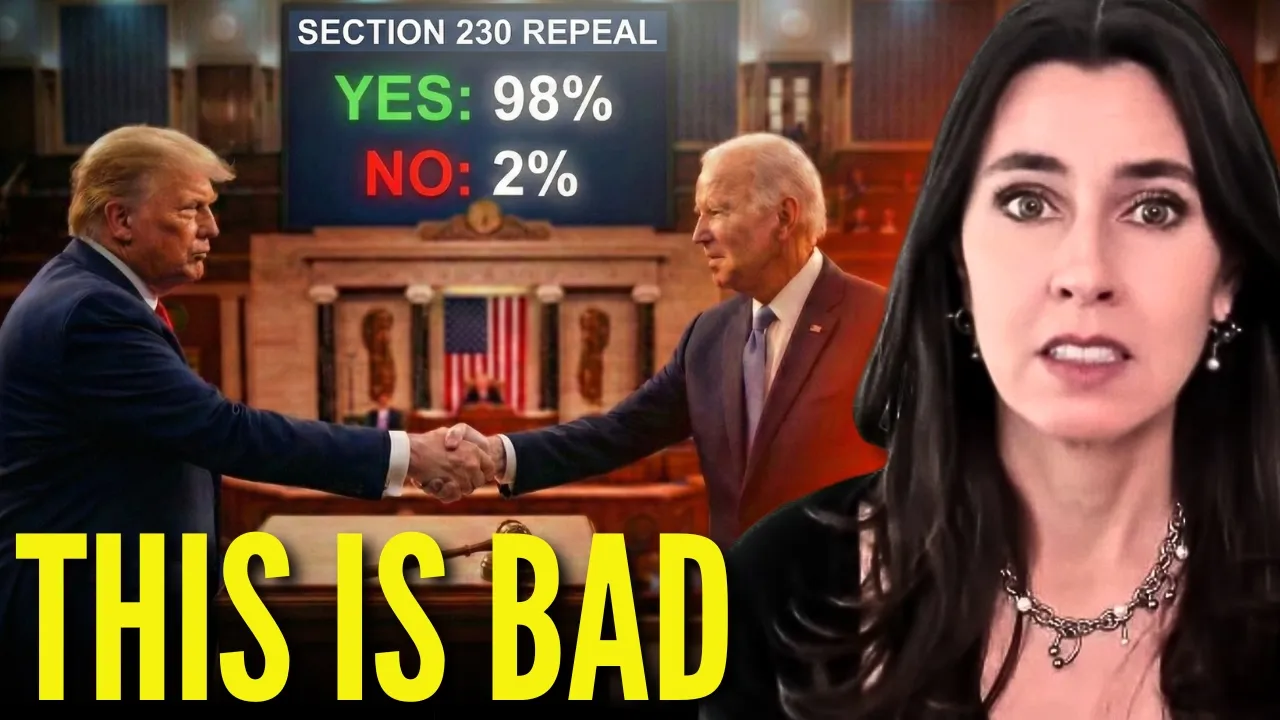






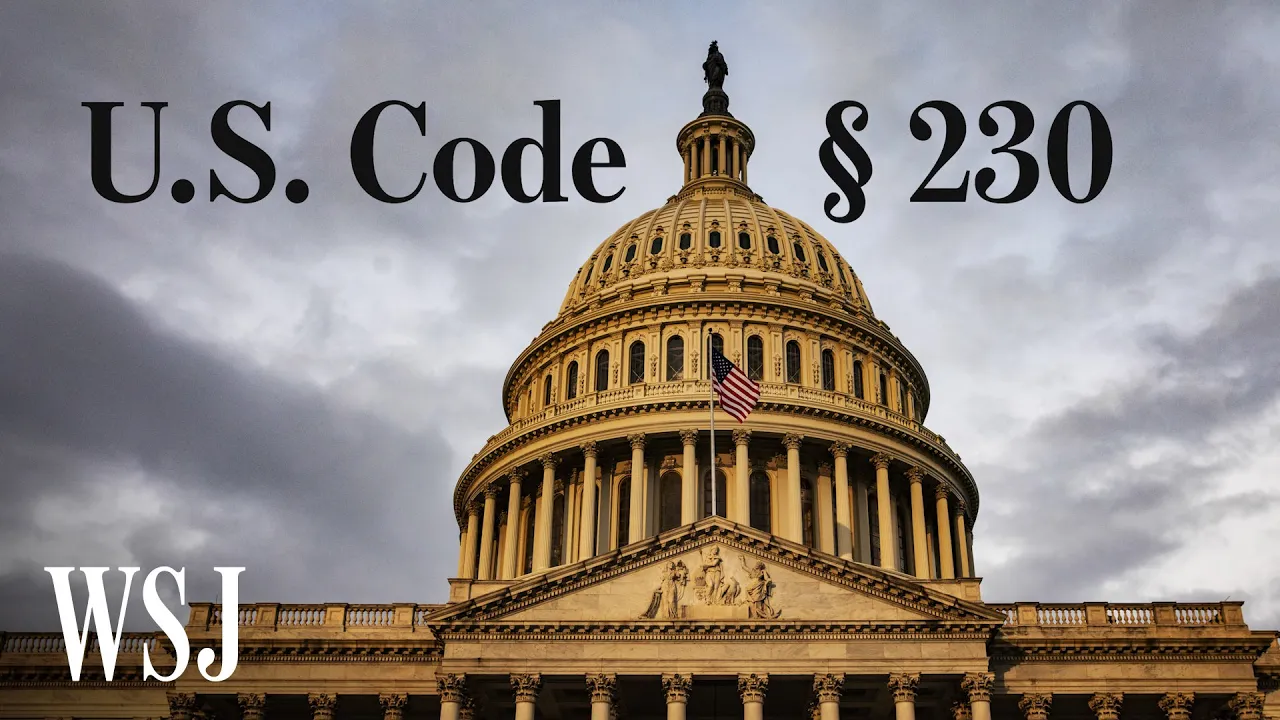
Section 230 of the Communications Decency Act of 1996 provides internet platforms with immunity from liability for content posted by their users, meaning platforms like Facebook, YouTube, and Twitter cannot be sued for defamatory, harassing, or harmful content created by third parties on their sites; critics argue this law enables the spread of lies, hoaxes, and slander that can harm innocent people, as demonstrated by cases where victims received death threats and had their addresses posted online, while supporters contend the law was essential for fostering the internet's growth and marketplace of ideas.
Section 230 Explained: Law, Liability & the Fight Over Internet Speech
Added:The constitutional framework of the First Amendment, including how free speech protections apply to private entities versus government actors.
The legal distinction between a 'publisher' (e.g., a traditional newspaper liable for its content) and a 'distributor' (e.g., a bookstore or library with limited liability).
Basic concepts of civil liability, specifically defamation and negligence, and how liability is traditionally assigned in media.
The historical context of the early internet in the mid-1990s, particularly the passage of the Communications Decency Act of 1996.
Analyzing recent U.S. Supreme Court cases addressing tech platform liability, such as Gonzalez v. Google or NetChoice cases.
Comparing Section 230 to international internet governance frameworks, such as the European Union's Digital Services Act (DSA).
The ethics and mechanics of algorithmic content curation and how recommendation engines complicate the 'passive distributor' model.
Proposed legislative reforms to Section 230, evaluating how changes might impact startup competition, online safety, and marginalized voices.
214.2K views2.6Klikes12:55Original Release: 2021-01-04
a priority of the new president and congress will be reining in the giants of social media on this democrats and republicans agree their target is a federal law known as section 230. in a single sentence it set off the big bang helping to create the universe of google facebook twitter and the rest some critics of the law say that it leaves social media free to ignore lies hoaxes and slander that can wreck the lives of innocent people one of those critics is lenny posner after a tragedy in his own life posner has become a champion for victims of online lies people including matya and matt banasi who overnight became the target of death threats like these the story will continue in a moment we're going to put a bullet in there skull um let's load up the trucks let's go get them let's hang them they posted our address our full address where we live the hate focused on matia and matt banasi was unleashed by a hoax that claims she brought covid 19 into the world it's changed and migrated over the 70-plus videos that they've had about us but um wait 70 yeah if you actually go through all the videos there is a total of 70 videos across multiple youtube channels the videos claim matia banasi carried the virus to china on a bicycle she was invited there as a member of a u.s military cycling team matya is a dutch immigrant american citizen and soldier who served in iraq in 2019 during an international military olympics she crashed in wuhan where kovid 19 was discovered two months later her collision with the internet began after an innocent article about the race and somebody came across it and they had wuhan in and they took a run with it oh we got a person your name the name wuhan and the rest only takes a lot of imagination correct what were they saying about you first they said i brought it to china and when i crashed i spread it and that i spread it in the hospital which i never was in a hospital all these lies about vials in my bicycle hidden and i have no idea it's going to be this person by the name of maya mata banasi and we're going to fall the absurdity was spelled out literally by a hoax peddler named george webb he has a following among the deep state phony conspiracy crowd what has this meant to you i was looking over my shoulder a lot i was scared for my life you were taking all that seriously yes once my address was posted that that was it for me that did it because they put me in danger my family there was like 60 or 70 death threats over the span of you know four or five weeks they called the police and the fbi which got them nowhere and the reason why the fbi and the police don't want to talk to you is because even though we're receiving death threats they didn't say or come to the banassi's to kill them tonight they need a crime to have been committed that's correct and you're trying to prevent a crime from being committed absolutely right about now you might be thinking they should sue but that's the problem they can't file hundreds of lawsuits against internet trolls hiding behind aliases and they can't sue the internet platforms because of that law known as section 230 of the communications decency act of 1996.
written before facebook or google were invented section 230 says in just 26 words that internet platforms are not liable for what their users post that means that if i were to post something about you on facebook that was awful and defamatory and you actually had a viable defamation lawsuit you could sue me but you can't sue facebook jeff kossith teaches law and wrote a book called the 26 words that created the internet but help me understand the same is not true for other forms of media if somebody says something defamatory on 60 minutes or on fox or cnn or in the new york times those organizations can be sued so why not google youtube facebook so the difference between a social media site and let's say the letters to that order page of the new york times is the vast amount of content that they deliver so i mean you might have five or ten letters to the editor on a page uh you could have i think it's 6 000 tweets per second and so section 230 really recognizes how exceptional the internet is and says we we want to encourage this marketplace of ideas 25 years later that marketplace has a lot of really great stuff but it also has a lot of really terrible products in that marketplace and that's really what's driving this debate right now matya and matt banasi quickly discovered the law was not on their side so they turned to lenny posner who had suffered in the same way i was being attacked the memory of my son my son's very short life was being attacked and i just wasn't going to stand for that the very short life of posner's son noah ended at connecticut's sandy hook elementary school in 2012 with 25 others the gunshots of a madman have ricocheted online ever since conversations denying the tragedy accusing the government of staging it what was the most hurtful thing they said about you that noah did not die that i'm not noah's father uh it all revolves around the notion that these are staged shootings that they're scripted events that i am an actor that i am paid to fake uh the death of a child before the covid pandemic we hired theatrical makeup artists to disguise posner for his safety he's pursued by death threats one woman left a voicemail saying death is coming for you real soon she landed in prison sooner how many times have you had to move your family around seven times he's targeted because he's invented ways to fight back he copyrighted photos of his son to control how they're used he published a letter to facebook's ceo that read you have deemed our lives are less important than providing a safe haven for hate this was meant by you and your ex-wife to be public shaming of facebook that has been really the only effective way to get change for online platforms after the letter a facebook manager called posner it began a relationship with facebook that helped them learn about the material that is being posted on their platform and how it is abusive defamatory have you seen a difference a practical difference in facebook yes it's almost all gone posner expanded his work into a non-profit called the honor network that applies what he has learned to help others that's when i reached out to lenny posner he had volunteers that were fighting harassment and i said lenny i want this video to come down and he said i will help you do that by himself andy parker couldn't get video of his daughter's murder off of google's youtube i really expected them to do the right thing their motto was don't be evil and for a while they did a pretty good job of it but now they're the personification of evil in 2015 reporter alison parker and cameraman adam ward were shot on camera by a fired co-worker the scene has been posted hundreds of times this one got more than 600 000 views and to the right the automatic ad means the person who posted this made money and so did youtube we shouldn't have to be the ones policing their platform their terms of service say we don't allow this we don't allow violent content we don't allow harassment my biggest beef with google and youtube and facebook for that matter is that video is still out there it's still out there today in essence they profit from my daughter's murder and i can't abide by that do you worry about threats no i really don't why do you feel so brave because allison would expect nothing less you're still her dad i'm her dad always will be and i will fight like hell um for her lenny posner flagged allison parker videos for youtube to remove youtube wrote us there is no place on youtube for content that exploits this horrendous act and we have spent the last several years investing in tools and policies to quickly remove it youtube told us it now prioritizes all requests from posner's honor network why do you think the online platforms have not been effective in enforcing their own terms of service i don't think they were prepared for uh their online platforms to be used this way i think they were more focused on growth and expansion and likely had more of an idealized uh notion of uh the internet and and the way it would be used for the greater good an idealized notion of human nature yeah well yes posner also has been successful pulling down much of that kobit 19 lie that shadows matya and matt banassi he got hoax peddler george webb the real identity kicked off youtube recently some platforms took first steps toward editing their users facebook and twitter flagged dubious content during the election now they're doing the same for myths about covid19 based on what you've had to learn about all these things what do you think the solution could be this is really really hard right because section 230 when that was written it was probably known with the intent that social media companies would police themselves in some manner and social media companies haven't done that very well they need to police themselves quicker or the government needs to step in and figure out some mechanism to to make them liable because making them liable would make them police themselves but making social media liable would also mean facebook twitter even wikipedia and yelp couldn't exist as we know them president-elect biden wants to revoke section 230. the federal government is already suing to break up facebook and google no one can say what social media 2.0 will look like or whether the innocent will ever be protected from a world wide web of lies what happens when harassment goes offline and into the real world terrorizing someone is not free speech at 60 minutesovertime.com
Up Next
5:02
Defamation Law and Social Media: A Case Study on Facebook Posting
@davidallenlaw1980
579 views•2017-04-18
4:27
US Secondary Sanctions Impact on EU Businesses and Blocking Legislation
@Bureauvandijk
1.6K views•2019-03-20
5:27
Forensic Phonetics: Speaker Identification in Legal Cases
@nptel-nociitm9240
539 views•2025-03-19

24:42
Police Interrogation Tactics: False Confessions & Legal Reform
@LastWeekTonight
7M views•2022-04-18
Related Study Plans & Knowledge Roadmaps
Structured learning paths in Law
law
Self-Defense Law: Imminence & Castle Doctrine
01Foundations of Self-Defense Law
02Imminent Threat & Reasonable Belief
03The Principle of Proportionality
+ 3 more learning modules
12h6 modules
Explore Roadmap
law
Defamation Law: First Amendment & Actual Malice
01Introduction to civil torts and the First Amendment
02Elements of Defamation: Libel and Slander
03Public Figures vs. Private Individuals
+ 2 more learning modules
8h5 modules
Explore Roadmap
law
Hearsay Rule: Trial Evidence & Exceptions
01Introduction to Trial Evidence & Courtroom Basics
02Demystifying Hearsay: The Core Definition
03Non-Hearsay: Exclusions Under FRE 801(d)
+ 3 more learning modules
14h6 modules
Explore Roadmap
law
Medical Malpractice: Law, Liability & Care
01Foundations of Tort Law and Civil Liability
02The Four Elements of Medical Malpractice
03Defining and Proving the Standard of Care
+ 2 more learning modules
12h5 modules
Explore Roadmap