







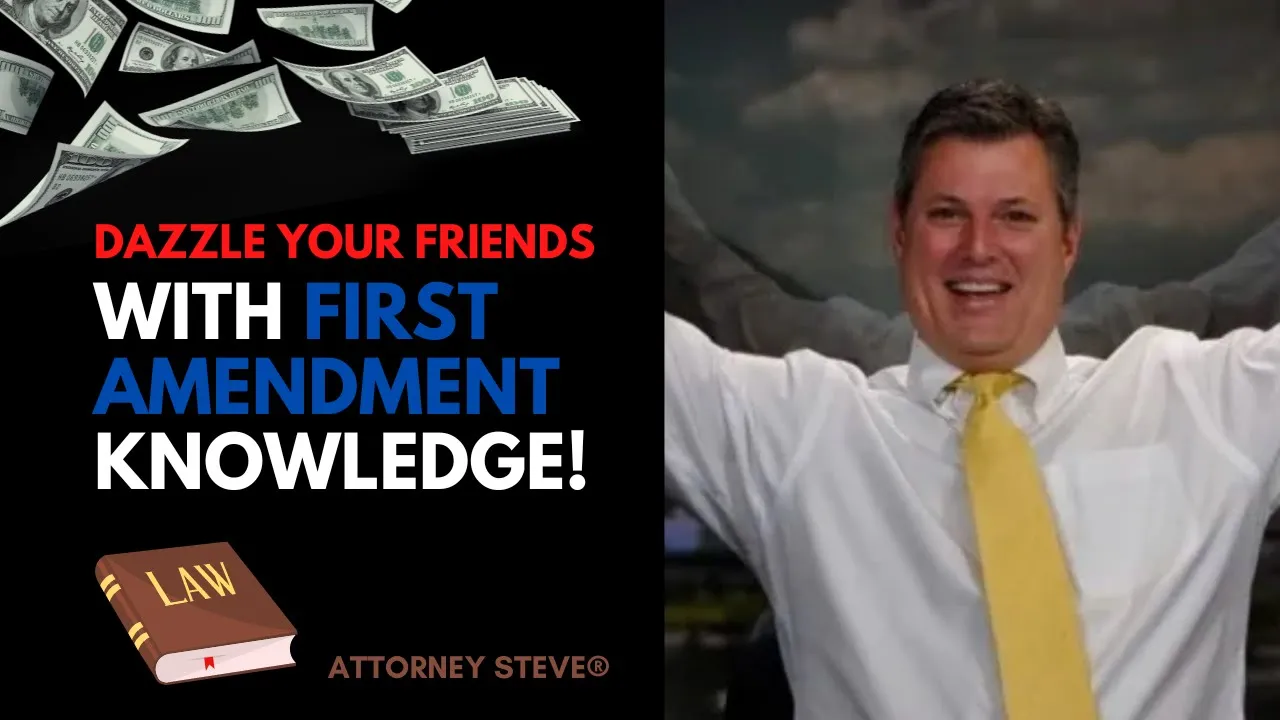













A declaratory judgment is a legal action that seeks a court declaration of rights, titles, duties, and obligations rather than money damages, and can be obtained cost-effectively through small claims court by utilizing constitutional provisions for free access to justice; defamation requires false unprivileged communications that cause injury, with key elements including publication, fault, and damages, while defenses include truth, absolute privilege, and pure opinion, and public figures must prove actual malice to succeed in defamation claims.
Declaratory Judgment and Defamation: Legal Elements Explained
Added:Understanding the basic structure of the civil court system, including how civil lawsuits are filed and resolved.
The fundamental principles of tort law, specifically the concept of civil wrongs that cause harm or loss to individuals.
The distinction between different types of legal remedies, such as monetary damages, injunctive relief, and judicial declarations.
Basic knowledge of the First Amendment, particularly the constitutional protections and limits surrounding freedom of speech.
Analyzing Affirmative Defenses to Def defamation, including truth, opinion, privilege, and the 'actual malice' standard established in New York Times v. Sullivan.
Examining Anti-SLAPP (Strategic Lawsuits Against Public Participation) statutes and their procedural role in dismissing meritless defamation claims.
Advanced tactical applications of Declaratory Judgments, such as how insurance companies or intellectual property holders use them to proactively resolve liability.
Exploring jurisdictional issues in modern defamation, including internet defamation, online platform immunity under Section 230 of the Communications Decency Act, and international 'libel tourism'.
395 views21likes17:43Original Release: 2022-05-18
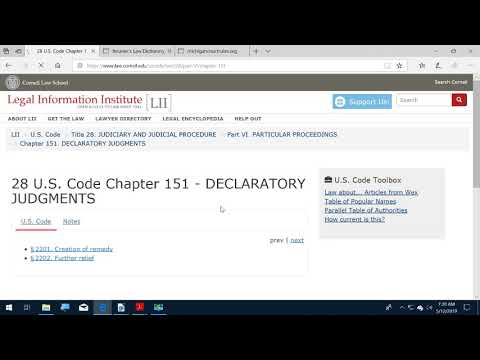
declaratory judgments because of action for declaratory judgment does not seek money damages instead it seeks to have the court declare something okay rights titles duties and obligations of the parties involved all right again i'm going to say it rights titles duties and obligations of the parties involved and like mr anonymous says he says there's no better place to get a declaratory judgment than in a small claims court because it cost you next to nothing to get it established all right most most uh small small claims court venues are like 25 30 50 60 bucks somewhere in that neck of the woods if you understand the constitution you can point out in the constitution where it says justice shall be administered freely without delay without payment you can utilize that it shouldn't cost you a fucking thing i have a lot of friends that file a shit ton of court cases and they pay zero for it because they understand how to utilize the constitution and how to enforce it okay so if you understand that as well you can do it but again the declaratory judgment is not to establish money damages at all its rights titles duties and obligations of the parties involved a cause of action for declaratory judgment does not seek money damages instead it seeks to have the court declare something erico bonafide disputes over what is is or is not covered by an insurance policy okay not only is it uh rights titles interest uh duties and obligations ladies and gentlemen we can also in our declaratory judgment get facts established okay facts that can be used in another court uh uh maybe the district court or or whatever um that we can then use those facts that have been established uh during the declaratory judgment and and cemented now they become facts and evidence that we can use for uh our other cause of action where we are looking for punitive damages or damages or whatever okay suppose jones is sued by smith for tortious interference with a with an advan and that advantageous business relationship cause of action explained later and jones is covered by a business liability policy he believes should pay for his defense in the lawsuit and if the judgment is entered against him money damages claim by smith the insurance company on the other hand may be uh believe smith's lawsuit involves an intentional tort tortious interference is an intentional tort that cannot arise from mere negligence and that its policy does not protect policy holders from damages resulting from the their intentional acts which is what happens in most uh good faith bonds fidelity bonds crime policy bonds that are held by the county or blanket bonds or whatever so pay attention because this shit's important all right what they're basically saying is when you go in and read the insurance policy they're saying let's just say i'm i'm a roofer and i hire you to work on my job site and i have in uh my rules regulations and policies when you signed up to work for me and you signed the contract that said within four foot of the roof's edge you are to be on your hands and knees and i find out that you fell off the roof within four foot of the edge of the roof while you were standing guess what i'm not liable okay it was in the contract it was part of the policy it was part of the rules uh implemented by myself to mitigate the risk of people falling off the roof and you chose to ignore it so guess what before your little ass hit the ground you were fucking fired and you carried full liability for your own ignorance okay that's how these policies are written up they're really genius when you think about it so when an officer cries woes me uh the insurance isn't covering it the blanket bond isn't covering my actions they're saying yeah you operated outside the policy in the scope of your authority that was delegated to you you made a promise an oath a commitment that you wouldn't do these actions and yet you seemingly did do these actions and most cops will say yeah but we learned in training that we could do these things of course you can you can also jump out of a 10-story fucking building is it advised no do people do it yeah the the odds of them surviving slim to fucking none all right so can you do it sure you can nobody can tell you you can't do a thing in this world all right but are there repercussions and consequences for your actions abso-fucking-lutely so did the insurance company or the lawyer or the legislator necessarily mislead and misdirect uh the officer in in what he can and can't do not necessarily because he's responsible for knowing the fucking law okay after all how do you enforce the law if you don't fucking know it alright in such case it is common for insurance companies to file an action in a court seeking a declaration that its policy does not cover the laws smith claims the gist of the action is that uh is to determine rights not uh to to award money damages declaratory actions can only be brought in narrow circumstances however for example one cannot seek the court's declaration that a particular tax is unconstitutional unless the party seeking declaration can show a specific special injury to himself that is different from that allegedly suffered by other taxpayers the purpose of the cause of the action is to provide parties with relief from ins insecurity and uncertainty with respect to rights status or other legal and equitable relationships in most jurisdictions the cause of action is created by statute so before filing an action for declaratory judgment consult state or federal statutes depending on the court you'll be filing in along with local rules and applicable case law for the jurisdiction elements a party seeking declaratory relief must first make a clear make clear to the court that one there is a bona fide actual present partic practical need for the declaration sought and two the declaration deals with present ascertained or ascertainable state of facts or present controversy as to a state of facts anticipated future controversies will not support the action three some right power privilege or immunity of the complaining party is dependent on the fact or facts or the law applicable to the facts four some person has or may have an actual present adverse and antagonistic interest in the subject matter either in fact or law five the adverse and antagonistic interest is before the court by proper process or class representation six the relief sought is not merely the giving of legal advice by the court or an answer to questions founded merely in uh curiosity the first question to be reached by the court and first issue the defendant should raise to avoid or dismiss the action is not whether the plaintiff will succeed in getting the declaration he seeks but uh whether he is entitled to a declaration in the first place each of the foregoing elements must exist and be alleged by the complaint or the defendant can succeed succeed on a motion to strike or dismiss the complaint the fact that the court may refuse to declare what the plaintiff seeks or declare otherwise then what the plaintiff wishes does not divest the plaintiff of his day in court if each of the elements is present unless the plaintiff shows he has a bonafide need for the the declaration based on present ascertainable facts the court not only lacks jurisdiction to render relief sought but also lacks jurisdiction to entertain the action which it may uh dismiss su aspante suisponte means on the court's own motion defense as stated above the first offense is by way of a motion to dismiss for failure to static uh cause of action for which relief can be granted i.e if any of the essential elements is missing for example if what the plaintiff actually seeks is what amounts to an adversary opinion based on a hypothetical state of facts which have not arisen and are only contingent uncertain and rest entirely in the future the court lacks jurisdiction to even entertain the complaint defamation a cause of action for defamation arises from false unprivileged communications that expose exposes plaintiff to distrust hatred contempt ridicule or oblique ob-l o-q-u-y oblique oblique or which causes the plaintiff to be avoid to be avoid or has a tendency to injure plaintiff in his office occupation business or employment if the natural and proximate consequences necessarily cause injury to the plaintiff in his person her personnel social official or business relationships wrong and injury are presumed or implied and such publication is actionable per se if the publication is communicated in print as in a letter or a newspaper article the defamation constitutes liable l-i-b-e-l i i think i'm saying it wrong i think it's lie bell by bell if communicated verbally as by tv newscaster or paul politicians making a speech the defamation constitutes slander so slander is something that is orally uttered versus defamation is something that is written okay both liabelle and slander fall under the heading of defamation elements one publication by speech or print or of false and defamatory statements regarding a private person as contrasted with public figures see below two unprivileged communications of the publication to at least one other person and three fault amounting at least negligence on the part of the publisher i.e at least lack of reasonable care as to the truth or falsity of the communication and for publication is actionable per se or cause plaintiff probable provable or presumable damages the most important thing to consider before filing suit on this cause of action is in determining the amount of your money damages the fact someone calls you a thief may be defamation however unless the defamation causes you actual measurable damages a lawsuit for defamation is worthless except to prove the statement false plaintiffs suing for defamation frequently spend many thousands of dollars on costs and legal fees only to recover a nominal amount because they cannot prove actual damages for example if you are if you are a bank president and lost your job because the head teller told the board of directors you are a thief your damages are provable or presumable if you and if you are a newspaper boy embarrassed by one of your delivery customers shouting down the street after you thief it's not likely you'll collect enough by filing a lawsuit to make it worthwhile you might be given a chance to prove in court that you are not a thief though of course proving a negative is the hardest thing we ever prove in life and and you can't prove a negative it's just near as i can tell it's impossible but it is improbable your damages in terms of money could be more than a few dollars at best courts sometimes award merely one dollar nominal damages in defamation cases establishing on the public record that the publication about your you was false but provided nothing in the way of financial compensation for your trouble or embarrassment if in doubt about the ability to prove the amount of money damage is approximately resulting from the false publication unless it is extremely important to prove the false falsity of the publication in the court of law let it go not all wrongs can be right uh write it in court and nowhere is there is this more true than in defamation cases caveat if you are a public figure erica a politician or a professional athlete you may be unable to sue for defamation unless you can show the publisher intended his statements to injure you i.e uh that he made a false statement about you with actual malice this is why we so often hear uh comedians making fun of public figures saying things that are certainly unlikely if not in fact uh untrue yet doing so in jest i n i-n-g-e-s-t ingest uh unless actual malice intent to cause injury can uh can be proven however the public figure cannot bring an action for defamation we disagree with this doctrine however it its law by a uh decision of the us supreme court in new york times versus sullivan 376 u.s 254 1964. i believe if i'm not mistaken the new york times versus sullivan dealt with the fact that the news media is nothing more than a source of entertainment and therefore they cannot be sued for lying or falsifying a record uh because they have no duty to actually bring forward any factual information so the news media is nothing more than a source of entertainment and thus they can lie create any story they want with impunity more or less defense truth if the alleged uh allegedly defamatory statement is true there can be no action and plaintiff has the burden of proving falsity the defendant does not have the burden of proof uh the burden to prove truth this uh raises an important fact about arguments in general in that it is far harder to prove a falsehood than to prove the prove a truth another reason why wisdom counsel against bringing bringing an action for defamation except in the most extreme cases where it is necessary to do so absolute privilege allegedly defamation statements made in judicial proceedings are privileged if this weren't uh were not so every party prevailing in a lawsuit could sue the other party for making false statements during the case statements made out in the hall however are not privileged first amendment courts may refuse to hear cases brought against uh representatives or of religious order or denominations because of the first amendment uh prescription against government being entangled with religion however the allegedly false and deflammatory statements must be so entangled that the court would be unable to sort out the truth without crossing the line class of persons if the allegedly defend defamatory statement is made about a collective race religion or other large group the courts may refuse to hear the case of course if the statement is bob and harry are thieves that's not a large group and the injured person has a cause of action on the other hand if the statement is all nazis are murderers no court will hear the an action brought by a single member of a nazi party claiming he or she has been injured by the statement because he or she individually is not a murderer public officials if the if there would be uh plaintiff is a public official he or she must prove the defendant acted with actual malice i.e intent to injure by making false statements actual malice is proven by showing the statements were known to be false or were made to be reckless disregard for whether they were true or false the reason for public officials the reason more public officials don't file suit against comedians and media pundits is that doing so exposes them to discovery of their closeted skeletons and as stated above wisdom counsel against suing except we're absolutely necessary pure opinion everyone is entitled to an opinion if you say to a neighbor i think or uh man our mailman is a communist the mailman cannot sue because you are entitled to an opinion right or wrong if you say our mailman is a communist and it gets back to the post office and your mailman loses his job prepare for a battle only pure opinion is protected when we come back we'll be talking about duress and again we're just going through elements and and different causes of action and uh uh so like i said when we come back we'll be talking about duress
Up Next
24:22
TikTok Psychic's Defamation Case Explained: Court Ruling
@atozy
1.3M views•2024-06-21

4:27
US Secondary Sanctions Impact on EU Businesses and Blocking Legislation
@Bureauvandijk
1.6K views•2019-03-20

5:27
Forensic Phonetics: Speaker Identification in Legal Cases
@nptel-nociitm9240
539 views•2025-03-19

24:42
Police Interrogation Tactics: False Confessions & Legal Reform
@LastWeekTonight
7M views•2022-04-18
Related Study Plans & Knowledge Roadmaps
Structured learning paths in Law
law
Self-Defense Law: Imminence & Castle Doctrine
01Foundations of Self-Defense Law
02Imminent Threat & Reasonable Belief
03The Principle of Proportionality
+ 3 more learning modules
12h6 modules
Explore Roadmap
law
Defamation Law: First Amendment & Actual Malice
01Introduction to civil torts and the First Amendment
02Elements of Defamation: Libel and Slander
03Public Figures vs. Private Individuals
+ 2 more learning modules
8h5 modules
Explore Roadmap
law
Hearsay Rule: Trial Evidence & Exceptions
01Introduction to Trial Evidence & Courtroom Basics
02Demystifying Hearsay: The Core Definition
03Non-Hearsay: Exclusions Under FRE 801(d)
+ 3 more learning modules
14h6 modules
Explore Roadmap
law
Medical Malpractice: Law, Liability & Care
01Foundations of Tort Law and Civil Liability
02The Four Elements of Medical Malpractice
03Defining and Proving the Standard of Care
+ 2 more learning modules
12h5 modules
Explore Roadmap