














![[PHÂN TÍCH TÂM LÝ] Sự Sụp Đổ Của Viruss: Nghiệp Chướng Đến Cùng Lúc](https://i.ytimg.com/vi/Ax546sM75L4/maxresdefault.jpg)
This video documents how a self-proclaimed 'TikTok psychic' (Ashley Guilliard) lost a defamation lawsuit against Professor Rebecca Scofield of the University of Idaho after falsely accusing her of having an affair with a student and ordering the murders of four students in November 2022. The court ruled that Guilliard's claims were defamatory per se, meaning they were actionable without proof of special damages, and found her conduct to be oppressive, fraudulent, malicious, and outrageous. The court rejected Guilliard's defense that her statements were substantially true based on 'spiritual intuition' and 'tarot card readings,' noting that such claims lack objective basis. Guilliard was granted punitive damages, and the case demonstrates that social media users can face serious legal consequences for spreading false accusations, especially when they persist in making claims despite evidence to the contrary and after receiving cease and desist letters.
TikTok Psychic's Defamation Case Explained: Court Ruling
Added:so I've had a couple idiots comment on my video and say that I've lost the case I haven't lost the case it's still on going so don't listen to these really idiotic YouTubers well that didn't age well but this is a self-proclaimed Tik Tok psychic and what you did on Tik Tok will change your life forever because on November of 2022 a massive tragedy happened involving students from the University of Idaho this became our Tik Tok psychic's moment to essentially ruin her own life how well by falsely accusing a professor claiming that she had an affair with one of these students and was behind the tragedy I did a reading when I saw Rebecca scoffield on the history Department's page on Rebecca scoffield and her connection I also did readings on some of the other people and their connection what came out on their Reading Is How They responded to the crimes and how they were feeling about it what came out in Rebecca Scofield's reading was how she implemented it how she planned it and why why would she do this we still don't know because it doesn't make sense the only conclusion I can really think of is attention because she claims she's a psychic and that she solves crimes but now in reality the court just deemed all this to be slander and she's essentially lost everything in court and she was given so many outs but refused to take any of them and continue to double down over and over again when she received a cease and assist like I have physical evidence against Rebecca scoffield that validates everything that I've said about her but I can't speak on it now because it has to wait for court so hopefully Court doesn't take too long that response is just so wild because it doesn't make sense if you really have all this evidence and you're on this mission to expose the truth why are you not sharing it with the world because you're being sued either way but then to just make things even worse for herself she follows up with these videos when the professor actually sues her I've been against people big and small corporations and Giants and systemic policies and racism and one they all regret coming against all of them now Rebecca is going to be added to that list of regretful people I haven't been served yet but I'm actually gleaming with excitement I am going to immediately start planning because I cannot wait to present my ideas in court regarding Rebecca scoffield and her role and the of the four University of Idaho students as the story plays out we realize that she's all bark and zero bite but if the situation could be even more insane she decides to represent herself in court clearly she's not a lawyer so she was just absolutely doomed from the start ended up missing deadlines which technically should have lost her the case because she didn't respond to the request of admission which means the professor technically admitted to all the allegations and to catch you guys up with all those I'll have myself from the past explain those and that is admit that you have stated publicly that Rebecca skolfield had an affair with Kaylee two admit that you have stated publicly that Rebecca skolfield was involved with what happened to the victims three admit that plaintiff did not have an affair with Kaylee my understanding is PL plaintiff is Rebecca sculfield here four admit the plaintiff was not involved with of Kaye and the other victims five admit the only basis of your statement that plain have had an affair with Kaylee is your spiritual research intuition and instincts so I I can't believe this is a real case you would think this is a parody but it's it's real because we're reading it together here six admit that the only basis of your statement the plff was involved with the of all the victims is your spiritual research intuition and instincts seven admit that you've never been to Moscow Idaho eight admit that you've never been to the state of Idaho nine admit that you're not aware of any physical evidence linking plaintiffs to the 10 admit you're not aware of any physical evidence showing the plaintiff had an affair with Kaylee 11 admit that you never said plaintiff communicated with Brian C coburger about the until Mr coburger was arrested on or about December 30th 2022 so she really was just clout chasing throughout this entire thing this is such a brain dead grift on the Tik Tok psychics part because I mean like when updates happens the case she then did like psychic readings I guess and then she was like oh she was communicating with Mr cobber okay well good thing you said that after they arrested the guy 12 admit that you've never said plaintiff had access to a white hondai Elantra until after law enforcement publicly stated they were looking for information about a white hondai Elantra in relation to the honor about December 7th 2022 13 admit that you've never communicated with Jack that is a messed up one because I think I covered this in the first video I ever ever made on this situation so here Jack if I remember correctly is one of the close friends of one of the victims this egotistical moronic Tik Tock psychic decided to make a whole story claiming that this professor somehow forsed Jack to go through with this horrific action 14 admit that you have never communicated with Brian C cober that's the guy who's currently arrested for it who they believe did this but skipping through this a little bit you have 21 admit you no written information showing the plaintiff ever met Jack this is what I was talking about earlier where she was claiming that the professor cced Jack to do be Unthinkable it's just it's so w i mean the whole thing is just so disgusting I'm happy the professor is about to get justice as well 22 admit you've never received any information orally from another human being showing that plaintiff ever met Jack 23 admit you received and read a cease and assist letter from stole Reeves LLP dated yeah she basically proved that by posting this video about to put this demand letter Rebecca ska attorney sent me by the tissue so I can wipe my with it and then the next are just like admitting to receiving a whole series of cease and assists and then 30 is admit that you became aware of the press release describing the request for admission you continued to state that the plaintiff was involved with the so essentially the police put out a statement saying hey we have no evidence that this professor did this so she saw that and just continued making video upon video still claiming the professor did this but the judge seemed to be somewhat lenient with her and let her respond late so the Tik Tok psychic decided to come back on her high horse I I think this how y want me to feel about I'm easy at $75,000 lawsuit that I'm going to win oh my God Rebecca is suing me but this lawsuit quickly humbled her as she realized that she would actually have real consequences here need to stop asking me about this lawsuit it should not even have been allowed first of all for multiple reasons but for the legal reason was because it's the improper Vue I'm not an Idaho resident so I should not be sued then they got the nerve to not allow proos clients to eile Meanwhile so her attorneys are eiling documents if I want to file a document I got to fly to Idaho or mail it in and hope they get it and things got so bad for her she considered to flee the country I would like to go to Bali get myself together and just enjoy life for like a few months but then I guess she changed her mind decided that she was actually going to speedrun becoming a lawyer and win this case if you see it's a lot of videos about the university Idaho students and who they think did it but none of them are in court because nobody was threatened by them I'm in court because I told the truth clearly that didn't work out for her for some reason this woman just couldn't stop doubling down and that came back to biter heart because who would have known that tarot cards don't really hold up too well in court I don't know how your decision making skills fumble this hard because I feel like even a seventh grader could have easily realized this is a very bad idea but she also tried to subpoena the professor's lawyer to testify against her own client so it's safe to say she's not really firing on all cylinders here oh and I can't forget she threatened to sue Mary and I for just covering her moronic actions I'm going to sue soon as I can get some of these other things cleared out I am suing everybody who defend me on this platform YouTube Marquee tozy I'm sure there's a way for them to be SU for what they've done everybody who defend me is getting sued but here we are the judge has made a decision so shout out mad caster for sending over the memorandum decision and order for this trial and I'm happy he's feeling better because he had me worried for a minute so here's the memorandum decision and Order documents so to go through what was confirmed to be defamation on November 25th 2022 the defendant who is the Tik Tok psychic Ashley posted a Tik Tok video highlighting the University of Idaho policy that Rebecca skolfield was so worried about being caught violating if anyone found out about a potential relationship with Kaylee however considering they were broken up there was really nothing to worry about that's why she was worried about just losing the respect on November 26 2022 defendant posted a Tik Tok video stating that plaintiff partnered to kill the four University of Idaho college students on November 28th 2022 defendant posted a Tik Tok video stated that I don't care what y'all say and Rebecca scoffield killed Kaylee and all the other victims Rebecca was the one to initiate the plan and hired another one of kayle's friends Jack who we covered earlier on November 28th 2022 defendant posted a Tik Tok video rhetorically asking what kg did that plaintiff felt was so bad that she had to order the murder and the murder of the three other University of Idaho college students before taking a look into Rebecca scoffield and kayle's connection and stating that they partied together that plaintiff paid for kg's automobile and travel expenses and that plaintiff makes this quick impulsive decision to have them killed which ultimately ended up being all for the University of Idaho students this is just so insane to read the fact that the Tik Tok psychic went out there and posted this with the only proof being my psychic abilities and intuition what a selfish thing to post as well like this is just insane on December 1st 2022 defendant posted a Tik Tok video stating that Rebecca skolfield isn't remorseful for ordering the murder of the poor University of Idaho students but instead worried about her name her accomplishments worried about her possessions worried about people finding out who she really is her real character worried about her loss of accomplishments worried about going to jail losing everything that she worked so hard for worried about corruption and treason not worried about the lives that were taken on December 2nd 2022 the Tik Tok psychic posted a Tik Tok video stating that Rebecca scoffield is going to prison for the murder of the for University of Idaho students whether you like it or not what the on December 5th 2022 defendant posted a Tik Tok video stating that Rebecca sculfield was being a sugar mama to kg giving her money kg saw this as an opportunity to get ahead she had limited resources and this was an opportunity and also it was like an experience all of this just sounds like an insane wat pad story like this is just spiraled so far out of control I mean it spiraled out of control just for the first Tik Tok video but the fact that she just kept going really shows she's not firing in all cylinders and this is before she even got sued so oh man Rebecca liked kg she made her feel young and vibrant and it also was an opportunity for her to balance her needs for a woman but she may have been pushing too hard because kg needed a break and some time to herself she just needed to clear her mind Rebecca skolfield just needed to take this time to slow down and appreciate what she has during this time kg looked like she was shining successful other people are noticing she may have even been shopping but during the break Rebecca scoffield was nervous and had anxiety was worried about being caught thought kg was going to backstab her and that's when she decided to plan her if only this was a completely fictional story not even based on real people that would be fine because if she's clearly writing fiction why isn't she just writing it about fictional people why is she using a tragedy to literally clout Chase like this is just it's so disgusting she then started to look for a team bro it's like the The Avengers The Avengers of defamation over here on December 5th 2022 defendant posted a Tik Tok video stating that plaintiff kg's relationship would have been something like a sugarm mom made her feel like a kid again very youthful energy she did something for her she helped her balance her needs cuz otherwise that specific need that she had for a woman wasn't being taken care of kg had limited resources she wanted to help her friends but she felt like I have to help myself first before I can help anyone else so she made a decision that she felt was right for her so Rebecca skolfield was giving her money and offering her money and kg was really close to mm so she opened up to her and told her about the money that she was getting from Rebecca but the relationship didn't get a chance to start the money came first kg looked at it like an experiment but it became too much so not I mean not only is she slandering this professor she's also just slandering all of these victims of this tragedy it's on December 13th 2022 the the Tik Tok psychic posted a Tik Tok video including plff cease and assist letter stating that Rebecca Scofield's attorney Wendy J ilon sent me a demand letter to remove Tik toks with false statements I made no false statements piss my ass and I don't have to listen to this demand letter because it's claiming that I'm making false statements and I'm not making false statements what I'm saying is true if they really think I'm making false statements they would need to file an actual legal document in federal court or in court in my County asking me to remove remove it a judge would then determine if I need to remove it that way an investigation could be had determining the truth or falsity of these statements she dug her own grave with this on February 8th 2023 defendant posted a YouTube video detailing from the beginning her Narrative of the plantiffs intimate relationship with kg and eventual evolvement and the murders murders of the four University of Idaho students including how plaintiff has pictures videos messages during the nights of the murder on June 8th 2023 a YouTube video of defendants interviews with the online program nerd report was posted their defendant described how she uses her psychic gifts to solve Mysteries and to the end how plaintiff orchestrated the murder of the four University of Idaho students including how plaintiff connected with coburger on the day of the murders on a whim see was really sad about this as well as like there was no mention of koberger until after they arrested him so the Tik Tok psychic is really just a freestyling a defamation case right here on October 14 2023 defendant posted a YouTube video criticizing pff's Council as well as the court for wanting to conceal the truth about plaintiff and the four students murders there in the context of this action plaintiff stated that she is dealing with criminals dealing with a murderer who ordered the execution of the four students so quadruple homicide murderer and that I am in court because I told the truth and that person scoffield is threatened by me and all the things I say so anyway I tell tell the truth yes I can say what I said because I was telling the truth this is so bad this is such a train wreck by repeatedly accusing the plaintiff of an affair with a student then ordering the murder of the four students to cover up the fair defendant communicated information to others that was defamatory indeed these statements are defamatory per se meaning they are actionable without proof of special damages critically in response defendant does not dispute that she communicated statements about plaintiffs to others or that these statements if false are defamatory rather she argues as she always has that her statements about plaintiff's involvement with kg in the murders themselves are true Gillard has consistently persisted that the statements she made regarding Scofield's role of the murder of the four University of Idaho students are substantially true Giller anonimous states that the statements that she made about plaintiff are substantially true in other words it is legally true that scoffield hired an unexpected Hitman to commit the murderers of the four University of Idaho students and that is legally true that scoffield had an affair with kg defendant therefore asserts that it is plaintiff's burden to prove that her statements about plaintiff on her social media postings are false and that plaintiff has not satisfied this burden on summary judgment so here Ashley's claiming scoffield has not proven the statements Gillard made about her are false scoffield has the burden of proof and has not submitted convincing evidence that the statement Gillard made are false plaintiff must prove that the alleged defamatory statements are false plaintiff disagrees that this is her burden to prove falsity countering that this is the defendant's burden to prove that her statements are true this must be such a weird case to work because like this is textbook Insanity you are dealing with Insanity here and clearly it's extremely difficult to reason with insanity and then to skip a whole bunch of pages tldr they're saying hey Tik Tok psychic you actually need proof of what you're claiming to begin plaintiff states there is no certain terms that defendant statements are false she was never in a romantic relationship with kg she was not involved in the murders of the Ford University of Idaho students she never met any of the murdered students she never taught any of the murdered students she did not personally know any of the murdered students and she was in Portland Oregon at the time of the murders moreover in response to Plaintiff subpoena the University of Idaho confirmed that there is no records of the murdered students ever being enrolled in a class taught by plaintiff any investigation into plaintiff having an inappropriate relationship with kg or any investigation into plaintiff's involvement with the murders so the Tik Tok psychic actually subpoenaed the scho what a mess and for what what where is the upside of this like the University of Idaho responding to defendant subpoena and stating they have no records of any existing deleted Communications between plantiff and murdered students including kg or Mr koberger finally there is no indication that plaintiff is or has ever been then even remotely considered a suspect of the murders December 27 2022 the statement of the Moscow police department at this time of the investigation detectives do not believe the female associate professor and chair of the history department at the University of Idaho suing a Tik Tok user for defamation is involved with this crime to be sure Mr koberger was arrested and has been charged with the murders this is powerful evidence at the summary judgment stage it not only substantiates plaintiff's argument the defendant statements about her are false it also highlights the complete lack of any corating support for defendant statements in this way plaintiff has sufficiently demonstrated the absence of any genuine issue of material fact relating to the falsity of defendant statements about her this shifts the burden to the defendant to dispute that any Claim by setting forth facts showing that there a genuine issue for trial relating to whether her statements about plaintiff are actually true in that regard defendant may not rely on denials in the pleadings but must also produce specific evidence through affidavits admissable Discovery material to show that the dispute exists except the only support for defendant statements about the plaintiff is the defendant's spiritual intuition into the verse using intuitive tarot card readings led her to Plaintiff this is a real court document this is real it's so bizarre this must be such a wild trip to be defamed in this way and to be forced to spend a year of your life fighting an insane person in court who's claiming you've done everything that you absolutely haven't done and every time you're like hey I didn't do this where is your proof they just go tarot cards I'm a psychic I know this and they just keep doubling down and they won't give any leeway like that must be so bizarre what an absolute nightmare I'm surprised things took this long because it was pretty obvious from the start that Ashley's statements were defamatory Gillard used her clar cognizant abilities to gather all the pieces to the puzzle of what happened to the four students and why she became very passionate and touched by their stories As Told by the intuitive tarot card readings and their social media footprint an intuitive tarot card reading revealed that scoffield would get away with the murder if it wasn't for Gillard at the time Gillard did not know how that would happen but she decided to continue to seek the truth regarding the murder of the four students and to Advocate on their behalf confirming that with Discovery closed defendant had no other evidence of plaintiff's involvement in the murders or any relationship with kg beside her tarot card readings this is not enough to create a genuine dispute of material fact to be admissible defendants lay witness testimony concerning plaintiff's alleged conduct surrounding the four students murders must be rationally based on defendant perception and helpful to the FactFinder an opinion that is rationally based on a witness perception whereas based upon personal observation and recollection of concrete facts tldr tarot cards ain't cutting it bro as a result defendant psychic intuition without more cannot establish a genuine dispute of material facts to oppose plaintiff summary judgment efforts plaintiff has established a reasonable likelihood of proving by clear and convincing evidence that defendant's conduct and accusing plaintiff of an affair with the student before ordering that students and the three other students murders was oppressive fraudulent malicious and or outrageous as discussed above those statements are defamatory as a matter of Law and therefore represent the foundational set of bad acts further though statements were based only on defendant spiritual intuition about the murders there was never any objective basis to believe that plaintiff did the things that defendant publicly and repeatedly claimed she did and while defendant eventually took her theory about plaintiff's involvement about the murders to law enforcement she did so only after ignoring ing plaintiff's cease and assist letters and go in public with her claims on social media that is crazy as well so she's actually claiming oh I had to do this because I have to help the police but she only went to the police after they served her with a cease and assist everything about this is just clout chasing this and it's like such a bizarre thing to clout Chase for as well who clout chases on a tragedy and it's not only just clout chasing of a tragedy this is falsely accusing someone of murder to clout Chase on a tragedy and making up a full-on watpad fan fake around the whole thing it is textbook Insanity defendant admitting that she received and read plantiff season assist letters and continued posting statements about plantiff critically defendant social media's postings continued even after she learned from the Moscow Police Department that plantiff was not a suspect in the murders and after Mr cerg had been arrested for and charged with the same defendant admitting that she received and read the Moscow Police Department's press release and continued posting statements about plaintiff these circumstances combined to demonstrate the defendants social media postings were primarily self-serving motivated by online viral attention and made with an extremely harmful State of Mind given the nature of the statements about the plaintiff plaintiff's motion for leave to amend complaint and add punitive damages is granted whether defendant actually acted with such a harmful State of Mind to support an award of punitive damages is therefore a question question for the jury and not a subject of this memorandum decision and Order based on forging it is hereby ordered that plaintiffs amend motion for partial summary judgment is granted on the issue of liability only and plaintiff's motion for leave to amend a complaint and add punitive damages is granted and we got it stamped by the judge here so it's official the Tik Tock psychic has lost her court case the only thing we're waiting for now is for a jury to decide how much she owes Rebecca scoffield odds s it's going to be a sizable amount because she turned this professor's life upside down for over a year but again shout out to Mad Catster if you want to see a real lawyer break all this down you can go to his video which I'll link right here but at least the Tik Tok psychic didn't break into a fast food place and pour ice into a hot fryer like this Tik Tok prankster did and you can check out that story here as well because this is is absolutely insane but other than that I'll see you guys in the next video peace
Up Next
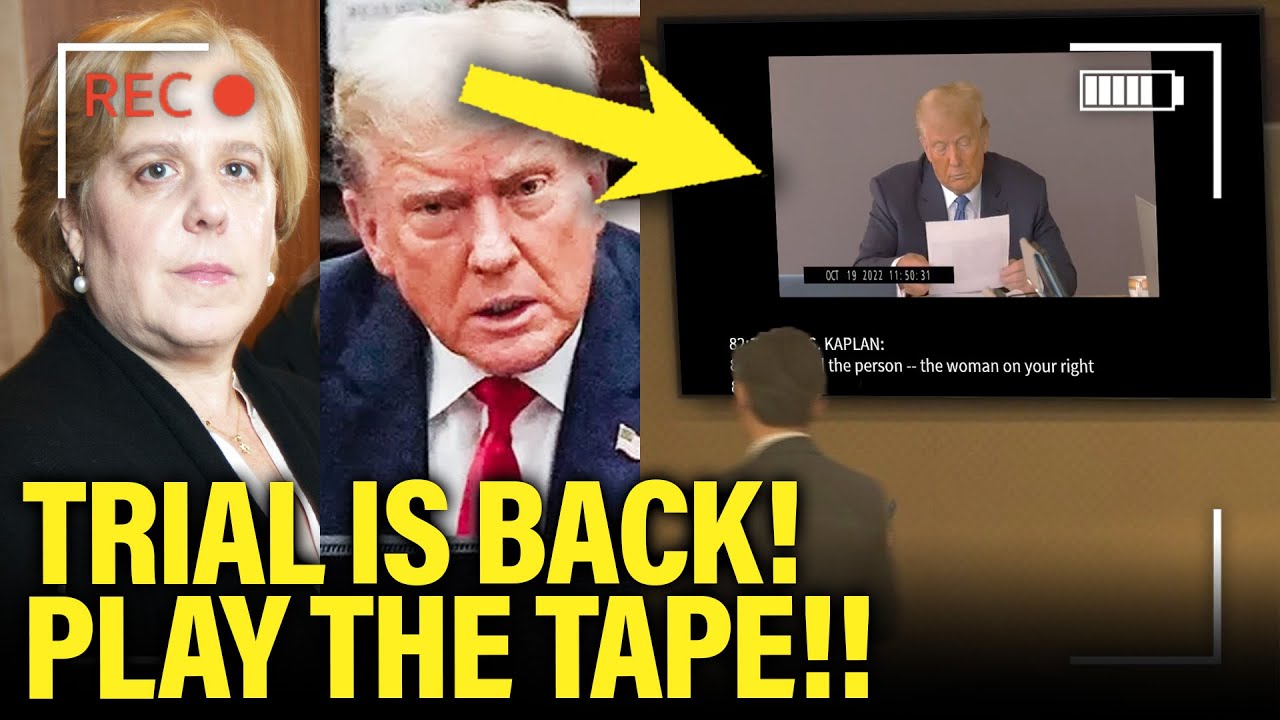
Defamation Trial Evidence: Trump Deposition and Legal Implications
@MeidasTouch
682.4K views•2024-01-25
US Secondary Sanctions Impact on EU Businesses and Blocking Legislation
@Bureauvandijk
1.6K views•2019-03-20
Forensic Phonetics: Speaker Identification in Legal Cases
@nptel-nociitm9240
539 views•2025-03-19

Police Interrogation Tactics: False Confessions & Legal Reform
@LastWeekTonight
7M views•2022-04-18
Related Study Plans & Knowledge Roadmaps
Structured learning paths in Law