H-1B Visa: Rules, Requirements & Process
Learning Goal: Navigate the legal framework of the US H-1B visa application process to evaluate employer sponsorship requirements and employee eligibility criteria.
Overview & Prerequisites
This comprehensive, video-based curriculum is designed to guide prospective foreign professionals, HR managers, and legal professionals through the complexities of the U.S. H-1B non-immigrant visa process. Over the course of approximately 6 hours of structured study and hands-on review, you will master the distinct responsibilities of both employer and employee, evaluate specialty occupation criteria, parse the nuances of the Department of Labor filings, and successfully navigate petition submissions and post-approval status maintenance.
- Prerequisites: No prior legal training is required, though a basic familiarity with the U.S. employment market is helpful.
- Estimated Study Time: 6 Hours (including video walkthroughs, system practice, and supplemental policy reviews).
Module 1: Introduction to US Immigration and the H-1B Visa
This module establishes the foundational legal concepts of U.S. immigration, detailing the differences between immigrant and non-immigrant intent, and introducing the H-1B visa as a specialized, temporary non-immigrant classification.
Recommended Videos
Video 1: Immigrant and Non-Immigrant Visa Differences

- Why this video: Establishing the core structural taxonomy of U.S. visas is essential before focusing on employment classifications. This video clearly explains the legal differences between entering the U.S. temporarily (non-immigrant) versus establishing permanent residency (immigrant intent).
- Knowledge Checkpoint:
- Understand the legal definition of "immigrant intent" and how it differs from non-immigrant categories.
- Identify the main pathways associated with temporary visas.
- Clarify how the H-1B visa's "dual-intent" nature bridges these two distinct categories.
Video 2: H-1B Visa: Everything You Need to Know

- Why this video: This overview delivers a structured baseline regarding the H-1B's classification categories. It outlines the general definition of a specialty occupation and introduces the foundational elements of employer-sponsored petitioning.
- Knowledge Checkpoint:
- Recall the three statutory subcategories of the H-1B visa (with specialty occupations being the most common).
- Differentiate the fundamental roles of the petitioning employer versus the individual foreign beneficiary.
- Describe the temporary nature and initial duration limits of the visa.
Video 3: Ex-US Visa Officer Reveals Visa Categories

- Why this video: Delivered by an experienced former consular officer, this short insight provides practical context regarding how U.S. officials categorize non-immigrant visas (such as tourist, student, and work visas) and evaluate potential intent during processing.
- Knowledge Checkpoint:
- Classify how temporary, non-immigrant categories (like F-1, B-1/B-2, and H-1B) are analyzed for compliance.
- Conceptualize the evaluation process applied by Consular Officers during standard visa interviews.
Module 2: Employee Eligibility and Specialty Occupations
This module focuses on the individual applicant's credentials. You will learn the legal parameters of a "specialty occupation" and evaluate the educational equivalency rules, including USCIS changes, to verify beneficiary compliance.
Recommended Videos
Video 1: H-1B Beneficiary’s Qualifications
- Why this video: This video focuses directly on how a foreign beneficiary's academic background is verified. It covers the crucial processes of credential evaluations, determining foreign degree equivalence to a U.S. bachelor's degree, and establishing a direct nexus between the field of study and the offered job duties.
- Knowledge Checkpoint:
- Explain the requirements for matching a foreign degree to a U.S. Bachelor's or Master's degree.
- Detail the role of formal credential evaluation agencies in proving educational equivalence to USCIS.
- Articulate how a mismatch between major fields of study and specialty occupation duties can trigger RFEs (Requests for Evidence).
Video 2: H-1B Specialty Occupation Requirements & Rules
- Why this video: Legal practitioners discuss what legally defines a specialty occupation under current U.S. regulations. It unpacks the educational threshold required for both the role and the beneficiary.
- Knowledge Checkpoint:
- Define the regulatory standard of a "Specialty Occupation" (the requirement of a specialized bachelor's degree or higher as a minimum entry standard).
- Differentiate position requirements from candidate credentials—why having a degree does not automatically make a simple job a specialty occupation.
Video 3: Departmental Specialty Occupation Standards
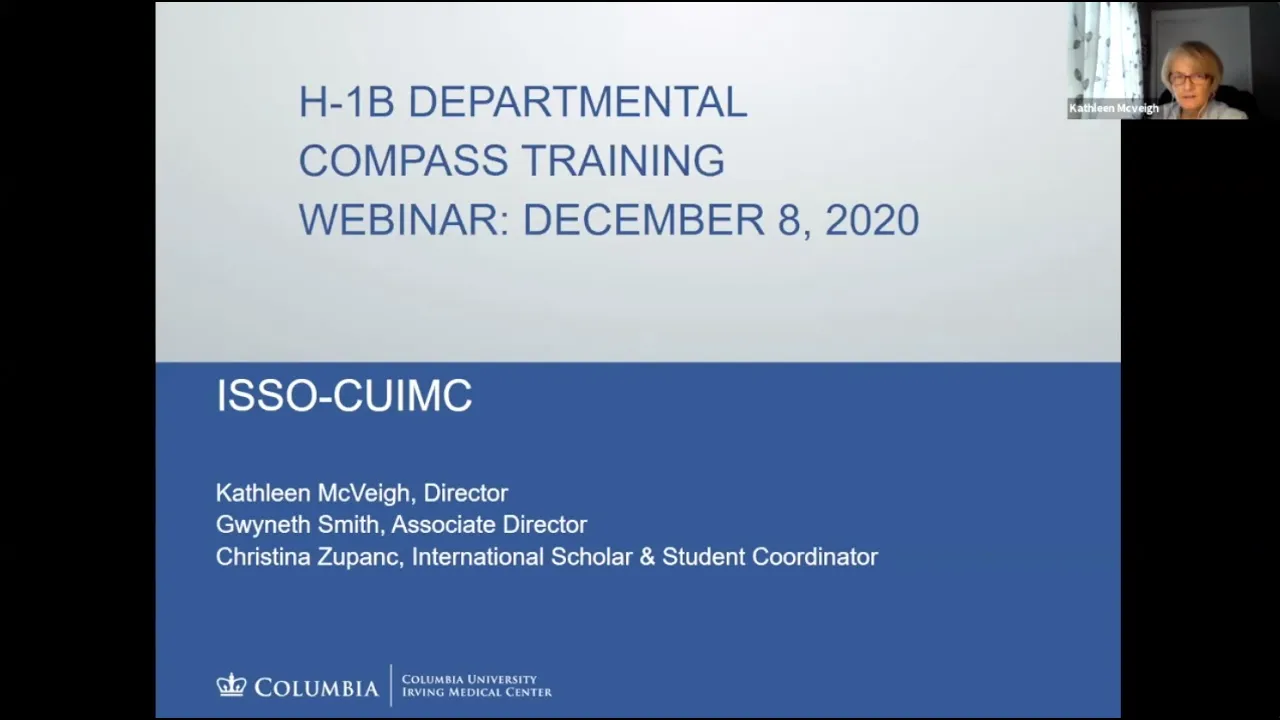
- Why this video: Using academic and organizational examples, this training outlines how institutions evaluate roles for specialty compliance. It emphasizes the need for specialized knowledge and technical proficiency.
- Knowledge Checkpoint:
- Explain why "highly specialized knowledge" is evaluated structurally rather than superficially.
- Describe the relationship between specific job duties, industry norms, and minimum degree standards.
Video 4: USCIS Modernization & Specialty Occupation Redefinition

- Why this video: Navigating contemporary rules requires understanding policy changes. This brief update details how modernization rules alter the USCIS definition of a specialty occupation, introducing flexibility to recognize a broader range of complex degrees.
- Knowledge Checkpoint:
- Analyze the updated definition of "specialty occupation" under modernization frameworks.
- Recognize how changes facilitate approvals for multi-disciplinary or evolving professional fields.
Module 3: Employer Sponsorship & Labor Condition Application (LCA)
Before any USCIS filing occurs, the employer must submit a Labor Condition Application (LCA) to the Department of Labor (DOL). This module details employer obligations, wage structure determinations, and non-displacement provisions.
Recommended Videos
Video 1: The Labor Condition Application (LCA) Explained
- Why this video: This serves as a vital foundation for LCA dynamics. It explains why U.S. employers must coordinate with the Department of Labor (DOL) to confirm that hiring foreign nationals will not depress domestic wages or negatively affect local working conditions.
- Knowledge Checkpoint:
- Identify the Department of Labor (DOL) as the approving agency for the LCA.
- Detail the attestation rules requiring employers to pay the actual or prevailing wage, whichever is higher.
- Recall the posting requirements where the LCA notice must be displayed physically or digitally at the worksite.
Video 2: Finding Prevailing Wage Levels (OFLC Search Guide)
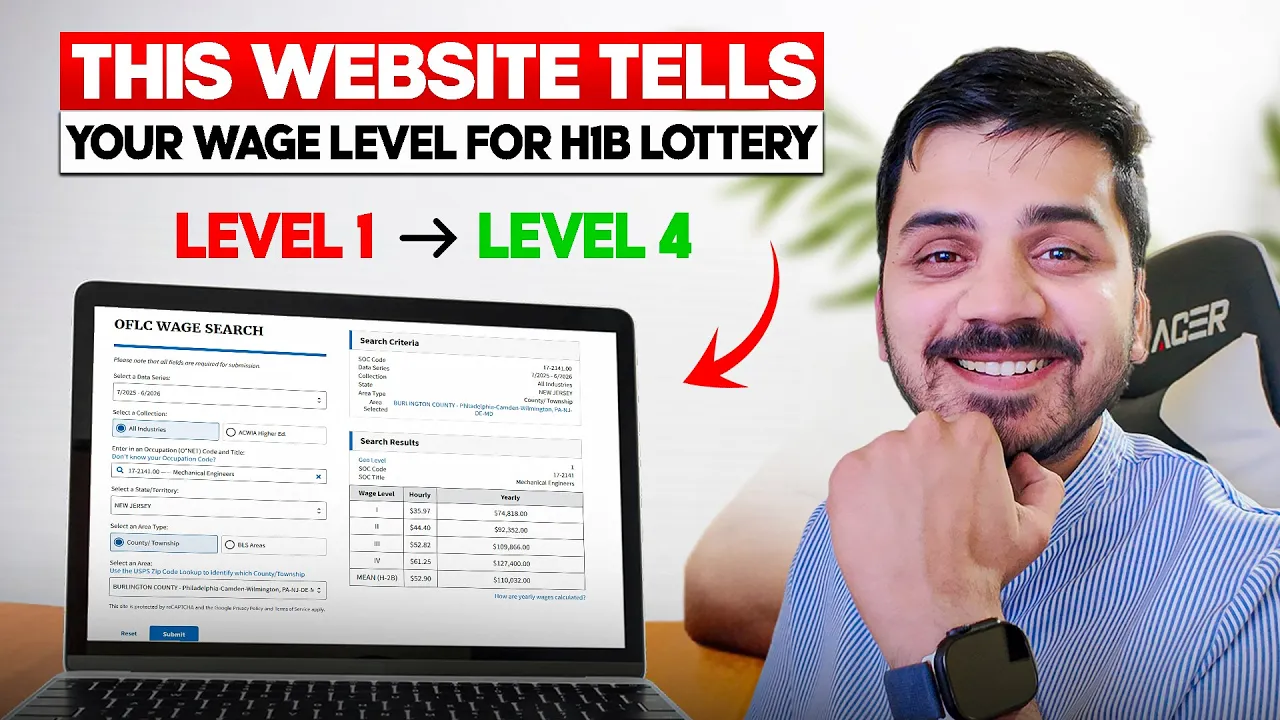
- Why this video: To successfully file an LCA, employers must find the correct wage determination. This practical, step-by-step tutorial walks learners through using the foreign labor certification data center (OFLC) to identify correct wage levels (Levels 1-4) based on geographic location and role complexity.
- Knowledge Checkpoint:
- Master navigating the OFLC database to locate wage data.
- Distinguish between Prevailing Wage Levels 1 through 4.
- Explain how geographical location and specific occupational codes (SOC) dictate minimum wage parameters.
Video 3: Employer Sponsoring Qualifications

- Why this video: This legal deep-dive clarifies what is required of an employer. It details structural parameters like active payrolls, business legitimacy, active incorporation, and financial capabilities needed to satisfy USCIS.
- Knowledge Checkpoint:
- List the documentary evidence required to prove a business is active and legitimate (e.g., tax IDs, active payroll records, articles of incorporation).
- Clarify the myth regarding business size: explain why small businesses and startups can sponsor H-1Bs as long as they prove financial viability.
Module 4: The H-1B Cap, Registration, and Lottery System
Due to high demand, the U.S. government caps standard H-1B approvals at 85,000 annually. This module covers the electronic pre-registration system, the selection lottery, cap exemptions, and timelines.
Recommended Videos
Video 1: USCIS Electronic Registration Portal Walkthrough

- Why this video: Straight from the agency's official channel, this visual walkthrough demonstrates the online registration process. It addresses the lack of visual guides highlighted in initial curriculum feedback, showing exactly how employers or attorneys input beneficiary data and complete bulk uploads.
- Knowledge Checkpoint:
- Describe how to set up and manage a USCIS registrant account.
- Understand the workflow for submitting individual beneficiary details or using an Excel template for bulk uploads.
- Identify the fee structure and submission verification step during electronic registration.
Video 2: Understanding Cap-Exempt Employers

- Why this video: Not all H-1B sponsors are subject to the annual lottery limit. This concise explanation introduces cap-exempt employers, which bypass the lottery, allowing year-round hiring.
- Knowledge Checkpoint:
- Define the three primary categories of cap-exempt entities (Higher education institutions, non-profit research organizations, and governmental research entities).
- Contrast the filing timing of cap-exempt petitions with the strict March deadlines of cap-subject registrations.
Video 3: H1B Lottery Timelines & Selection Metrics

- Why this video: This video details the timelines, lottery selection notifications, and verification steps that occur when results are released in late March.
- Knowledge Checkpoint:
- Identify the annual lottery window (typically early to mid-March) and the results announcement schedule.
- Interpret a standard USCIS Selection Notice sample.
- Outline the subsequent 90-day filing window granted to selected lottery registrants.
Module 5: Filing the Petition, USCIS Processing & Maintenance of Status
Once selected in the lottery, the employer must submit the full H-1B petition. This module covers filing Form I-129, submitting premium processing Form I-907, understanding mandatory fees, and maintaining legal status.
Recommended Videos
Video 1: Compiling and Filing Form I-129 and Form I-907 Online

- Why this video: This official USCIS tutorial addresses a major coverage gap identified in initial feedback by demonstrating the online filing process for Form I-129 (Petition for a Nonimmigrant Worker) and Form I-907 (Premium Processing Request).
- Knowledge Checkpoint:
- Step through the sequential workflows for compiling a non-immigrant worker petition online.
- Understand how legal assistants, paralegals, and organizational representatives collaborate in drafting the petition.
- Explain how Form I-907 premium processing is integrated into the online filing system.
Video 2: Step-by-Step Walkthrough of Premium Processing Form I-907

- Why this video: When employers require a rapid decision, they must submit Form I-907. This detailed walkthrough covers each field of the physical or digital I-907 form, ensuring errors that could lead to rejection are avoided.
- Knowledge Checkpoint:
- Identify the fee structure associated with Form I-907 ($2,850 premium fee).
- Locate where to enter the receipt number of the underlying Form I-129 if filing concurrently or upgrading an active case.
- Understand the legal signature requirements for both attorneys and petitioning employers.
Video 3: Navigating Post-Termination Options and the 60-Day Grace Period

- Why this video: Maintaining status is a key part of the H-1B lifecycle. This comprehensive live Q&A covers critical post-employment scenarios, explaining the limits of the 60-day grace period, transfer protocols, and options to maintain legal status after job loss.
- Knowledge Checkpoint:
- Define the 60-day grace period, including why it terminates early if the I-94 card expires.
- Discuss alternative options, such as changing status to B-1/B-2 (visitor) or F-1 (student), to extend job search timelines legally.
- Outline how job termination triggers employer liabilities, such as offering to pay reasonable costs for return transportation home.
Video 4: The H-1B Employer-to-Employer Transfer Process

- Why this video: This clip answers a common question: "Can I transfer employers during my grace period, and what happens if an intermediate petition is denied?" It explains bridge filings and the risks of filing consecutive transfers.
- Knowledge Checkpoint:
- Explain H-1B portability, which allows a beneficiary to start working for a new employer once the transfer petition is filed, without waiting for final approval.
- Evaluate the risks of "bridge petitions" (filing an employer transfer while a prior transfer is still pending).
Course Map
Key People & Legal Entities Index
- U.S. Citizenship and Immigration Services (USCIS): The agency within the Department of Homeland Security (DHS) responsible for administering naturalization and immigration services, including reviewing and adjudicating Form I-129 H-1B petitions.
- Department of Labor (DOL): The federal agency responsible for labor standards and protections. It processes and certifies Labor Condition Applications (LCAs) through the Office of Foreign Labor Certification (OFLC).
- Mahmudul Hasan (Attorney): Featured in the VisaMate series, Hasan is an immigration attorney specializing in navigating business immigration, employment-based sponsorships, and individual visa assessments.
- Reddy & Neumann, P.C.: A prominent Houston-based corporate immigration law firm that regularly publishes compliance resources, webinars, and procedural updates on specialty occupation defense, RFEs, and maintenance of status.
- Rajiv S. Khanna (Immigration Attorney): Managing Attorney at Immigration.com, known for conducting bi-weekly community calls analyzing complex employment visa situations, consecutive transfers, and the 60-day grace period.
Final Self-Assessment
Test your mastery of the curriculum material by evaluating whether you can confidently complete each of the following tasks:
- Identify Visa Categories: Can you explain the difference between a temporary non-immigrant work visa and a permanent immigrant green card petition?
- Establish Specialty Status: Can you list the four USCIS criteria used to prove a position qualifies as a "Specialty Occupation"?
- Validate Education Requirements: Can you outline the documentation required to prove a beneficiary's foreign degree is equivalent to a U.S. bachelor's degree?
- Confirm Employer Compliance: Can you explain how to find prevailing wages using geographic and occupational codes in the OFLC database?
- Manage LCA Postings: Do you know the compliance requirements for posting certified LCA details at a primary worksite?
- Navigate the Cap System: Can you differentiate between cap-subject applications and cap-exempt entities?
- Manage the Lottery Timeline: Can you map the annual electronic registration timeline, starting from late February through the late March lottery release?
- Verify Online Filings: Can you outline the step-by-step process of compiling and submitting Form I-129 and Form I-907 through the USCIS online portal?
- Define Premium Processing: Can you state the current fee for Form I-907 premium processing and identify the processing timeline guaranteed by USCIS?
- Calculate the Grace Period: Can you determine when a terminated worker’s 60-day grace period officially begins and explain how the expiration date on their I-94 card affects this window?
- Execute Transfers Legally: Can you explain "portability rules" and describe how a selected beneficiary can transition between sponsoring employers without falling out of status?