H-1B cap exempt employers are organizations that can sponsor foreign workers for H-1B visas without being subject to the annual numerical limit set by USCIS, including institutions of higher education (colleges and universities offering degree programs), nonprofit research organizations (entities conducting research for public benefit without profit motive), and governmental research organizations (government agencies engaged in research activities); these employers can file H-1B petitions at any time throughout the year, providing flexibility for both employers and foreign workers seeking employment in the United States.
H-1B Cap Exempt Employers & Immigration Benefits
Added:Deep Dive
Understanding the basic definition and eligibility criteria of the H-1B non-immigrant visa for specialty occupations.

How Do I Qualify for an H-1B or Specialty Occupation Visa?
4.5K
The H-1B visa is a non-immigrant visa for specialty occupations requiring a bachelor's degree or equivalent specialized knowledge, with eligibility determined through the 'three-for-one rule' where one year of study equals three years of work experience; applications are filed on April 1st for October 1st start dates, with only 65,000 visas issued annually through a lottery system, and the process involves a Labor Condition Application with the Department of Labor followed by USCIS petition filing.
Click to watch →

How to Apply for an H-1B Visa: The H-1B rules Explained
485
The H1B Visa is a non-immigrant work visa allowing temporary employment in the US, granted in three-year increments up to six years total. Eligibility requires meeting one of four criteria: US bachelor's degree or higher, foreign equivalent degree (requiring credentials evaluation), unrestricted state license/certification, or combination of education/training/experience (one year study equals three years work experience). A US employer must sponsor the applicant, and the position must qualify as a specialty occupation requiring specialized knowledge typically associated with a bachelor's degree.
Click to watch →

How Do I Qualify for an H-1B or Specialty Occupation Visa?
414
The H-1B visa is a non-immigrant visa for specialty occupations requiring a bachelor's degree or equivalent specialized knowledge, with eligibility determined through the three-for-one rule (one year of study equals three years of work experience), and the application process involves a Labor Condition Application with the Department of Labor followed by a USCIS petition, with applications opening April 1 for October 1 start dates and subject to a 65,000 annual cap lottery system.
Click to watch →
Understanding the H-1B Visa
170
The H-1B Visa is a non-immigrant visa that allows U.S. companies to temporarily hire foreign workers in specialty occupations requiring a U.S. bachelor's degree, with an annual cap of 65,000 visas plus an additional 20,000 for master's degree holders or higher education institutions; the application process involves an employer filing a Labor Condition Application (LCA) with the Department of Labor, followed by USCIS review, and for those selected in the annual lottery, the employee must apply for admission to the U.S. while spouses and unmarried children under 21 may enter with H-4 visas.
Click to watch →

Win For India: US Court Allows H4 Visa Holders To Work In America | Vantage with Palki Sharma
195.1K
The H-1B visa is a non-immigrant visa that allows foreign nationals to work in the United States in specialty occupations. These occupations require specialized knowledge and typically include fields such as biotechnology, computing, economics, education, research, journalism, medicine, and health. To qualify for an H-1B visa, applicants must have a bachelor's degree or higher in a specialized field and must be employed by a U.S. employer who has obtained proper certification from the Department of Homeland Security.
Click to watch →
Deep Dive
The concept of the annual H-1B numerical limitation (the 'cap') of 85,000 visas and how the random selection lottery system works.
Good Morning, HR #221 The $100K H-1B: What We Know Today
288
The H-1B program has a total annual cap of 85,000 visas, with over 400,000 applications submitted annually. The lottery process begins in early March when USCIS receives registrations and randomly selects 85,000 winners. The H-1B is the only non-immigrant temporary work visa subject to an annual cap. Eligibility requires a US employer offering a position requiring a bachelor's degree and a foreign national with a related bachelor's degree or higher. Once selected, beneficiaries are exempt from the lottery for extensions and employer changes.
Click to watch →

5 Opciones que tal vez NO conozcas para VIVIR LEGAL en Estados Unidos
102.6K
The H1B visa is subject to an annual cap of 65,000 visas, with an additional 20,000 reserved for holders of advanced degrees (master's or higher). The lottery system randomly selects beneficiaries from the pool of applicants. Those who do not win the lottery must leave the US and apply from abroad. The H1B visa requires a sponsoring employer and is subject to rigorous scrutiny under current immigration policies.
Click to watch →

SECOND H1B LOTTERY FOR FY2023?
16.3K
The H-1B cap electronic registration process for fiscal year 2023 received 48,047 registrations with 31% requesting advanced degree exemption. USCIS calculates H-1B cap needs using historical approval/denial data and historical non-filing rates. For FY2022, USCIS received 308,613 registrations and conducted three selections totaling 131,970 selections. For FY2023, 408,927 registrations were received with 127,600 initially selected, leaving 85,000 numerical allocations. USCIS expects a 66% application rate, leaving 8,000-11,000 visas remaining. Based on precedent of multiple selections in previous years (FY2021 and FY2022), a second lottery is predicted between July 22-28, 2022. With 10,000 estimated remaining visas and 356,327 unselected registrations, the odds of second lottery selection are approximately 3%.
Click to watch →
H-1B Cap Lottery Overhaul | Rapid-Fire Wednesdays 10.01 (075)
203
The USCIS proposed regulation would transform the H-1B cap lottery from a purely random beneficiary-based system to a wage-weighted lottery where employers receive multiple entries based on wage levels (Level 1-4), with higher wage levels receiving more entries (4, 3, 2, or 1 entry respectively), thereby favoring higher-paid positions while still allowing all wage levels a chance to be selected.
Click to watch →

Trump Proposes To Scrap H-1B Lottery System, Floats New Rules | Ankit Agrawal Study IQ
304.7K
The H-1B visa system allows US employers to hire foreign workers in specialty occupations like IT and healthcare. The annual cap is 85,000 visas, with 65,000 for regular applicants and 20,000 for those with US master's degrees. When demand exceeds the cap, a lottery system randomly selects winners. The Trump administration proposed increasing the application fee to $100,000 to reduce applications and prioritize American workers. This fee was initially announced as annual but later clarified as a one-time charge for new petitions only.
Click to watch →
Deep Dive
Standard H-1B application timelines, including the typical April registration period and the October fiscal year start date.

H-1B: Professional and Specialty Occupation Work Visas exempt from the Cap.
760
H-1B applications are submitted on April 1st each year. Applicants request the earliest possible start date, which is October 1st of that fiscal year. This timing is required because the Labor Condition Application (ETA Form 9035) filed with the Department of Labor requires a start date of October 1st. The U.S. government fiscal year runs from October 1st to September 30th each year.
Click to watch →

Answering Your Questions About The H-1B Visa with Managing Attorney at Immigration.com Rajiv Khanna
187
The U.S. government fiscal year begins on October 1st. Under immigration law, individuals can apply for an H-1B six months in advance, meaning applications for the October 1st start date can be submitted as early as April 1st. If an H-1B petition is approved before October 1st but is revoked or withdrawn before that date, the individual faces complications. However, if the individual never joined the employer and October 2nd begins, they can process H-1B through another employer without issues, as long as the original H-1B was not revoked before October 1st.
Click to watch →
US Visa/Immigration Options for Foreign Professionals
356
The US government fiscal year begins on October 1st and ends on September 30th. H1B applications can be submitted 6 months before the start date, meaning applications open on April 1st for October 1st work authorization. This creates a very busy period for immigration lawyers and employers. Students can continue working under F1 status until a decision is made.
Click to watch →

H1B - VISA DE TRABAJO (En Español)
48K
The H-1B application process begins on April 1st each year. Applicants should start consulting with immigration attorneys in January or February to prepare their applications. The application deadline is April 1st, and successful applicants can begin working in the United States on October 1st of the same year.
Click to watch →

Siskind Susser Weekly Livestream - March 18, 2026
226
The H-1B lottery registration period ends at 11:59 PM Eastern time on March 19th (not midnight). The drawing will occur soon after, possibly the same day or by end of March. Selected applicants can file H-1B applications between April 1st and June 30th for October 1st start dates. The $100,000 fee proclamation only affects applications for start dates before September 21st. Last year's applications dropped from 700,000 to 400,000 due to the fee, and this year is expected to see fewer than 200,000 applications.
Click to watch →
Deep Dive
The role of the United States Citizenship and Immigration Services (USCIS) in petition processing and adjudication.

BUENAS NOTICIAS USCIS: LAS PETICIONES SE APROBARAN POR FECHA DE PRIORIDAD
32.2K
USCIS has fundamentally transformed its immigration petition processing methodology. Previously, the agency published average processing times (e.g., 14 months for F2A) with 80% completion estimates, but this created significant uncertainty as some petitioners waited years without approval. The new system directly ties petition adjudication to Visa Bulletin Table B dates, meaning USCIS will prioritize approving petitions when the beneficiary's priority date approaches the Table B date. This approach provides greater efficiency by only processing cases when visas are actually available. The system also allows USCIS to prioritize joint petitions for multiple family members and cases involving humanitarian situations. When a preference category becomes current (marked with 'C'), USCIS publishes processing times for all service centers. When not current, applicants must consult the Visa Bulletin dates.
Click to watch →

BREAKING NEWS: U.S. Citizenship And Immigration Chief Faces Grilling From House Judiciary Committee
218.6K
The United States Citizenship and Immigration Services (USCIS) is responsible for maintaining the integrity of the immigration adjudication process. This includes naturalization, employment authorization, employment-based green cards, and certain non-immigrant visas. USCIS also operates E-Verify, which allows employers to determine the work eligibility of their employees, and the Systematic Alien Verification Entitlements (SAVE) program, which allows states and jurisdictions to verify the immigration status of foreign nationals for purposes of receiving public benefits.
Click to watch →

USCIS actualiza sobre la PAUSA y NUEVO método de adjudicación de casos
17.3K
USCIS has officially announced a partial lift of the adjudication pause that was implemented under the previous administration. Retentions have been lifted for foreign nationals reviewed through Operation Paris and for certain petitions filed by U.S. citizens, specifically I-130 petitions for spouses, children under 21, and K-1 fiancé(e) visas. USCIS continues to review all application types and retentions for both individual and group cases. The agency is developing a layered verification plan incorporating classified and unclassified information, expanded criminal background checks, and security reviews to close identified gaps.
Click to watch →
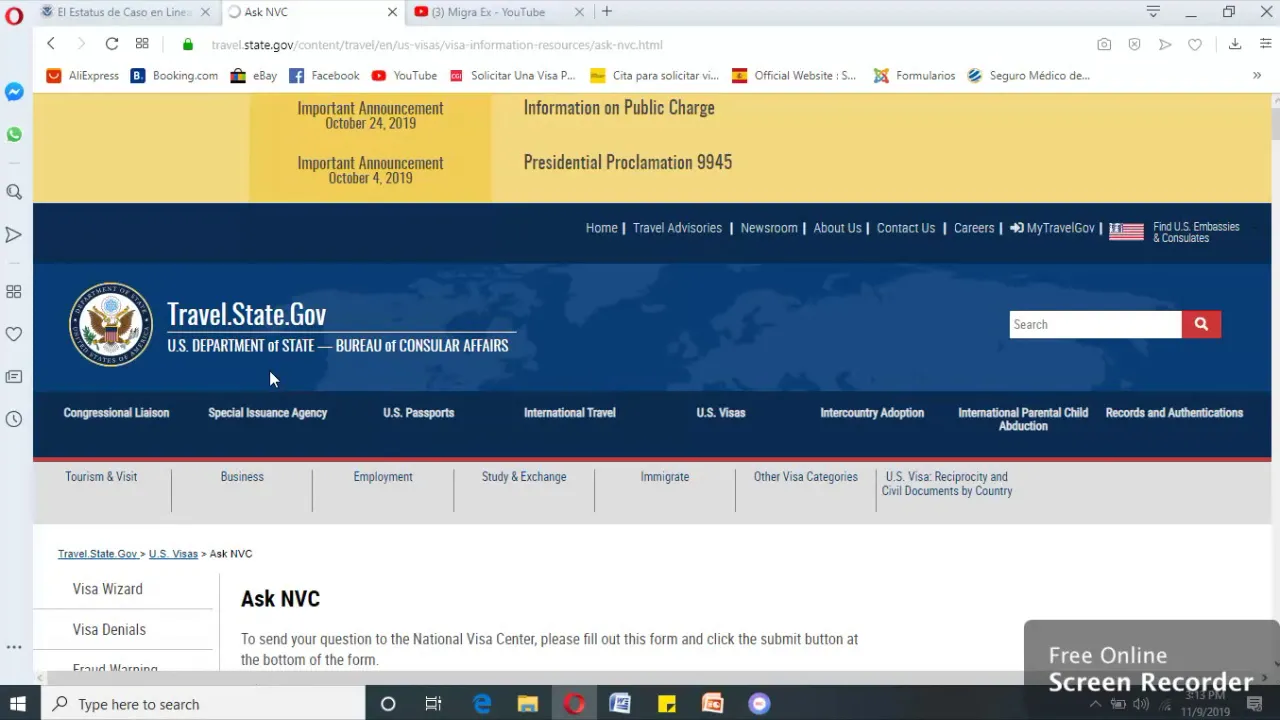
3 HERRAMIENTAS PARA REVISAR MI CASO (NVC, USCIS, Boletín de Visas)
31.1K
USCIS (United States Citizenship and Immigration Services) handles immigration petitions including family petitions, adjustment of status for green cards, Temporary Protected Status, and asylum. After submitting a petition, USCIS issues a NOA 797 receipt notice containing the case number and priority date. To track case status, applicants visit the USCIS website and enter their case number. The system shows whether the petition is approved, pending, or requires additional action. After approval, cases typically transfer to the National Visa Center within one month, triggering a new receipt notice indicating the case has moved to the next processing stage.
Click to watch →

NUEVOS TIEMPOS DE PROCESAMIENTO DE USCIS PARA LAS PETICIONES FAMILIARES I-130!! Abril, 2025.
48K
USCIS I-130 family petition processing times vary significantly by category: immediate categories (spouses, parents, unmarried children under 21 of U.S. citizens) average 1.5 years, F1 (unmarried children over 21 of citizens) takes 8.3 years, F2A (spouses and unmarried children under 21 of permanent residents) takes 2 years, F2B (unmarried children over 21 of permanent residents) takes 8.5 years, F3 (married children of citizens) takes 13.3 years, and F4 (siblings of citizens) takes 17.3 years. These times are based on the April 2025 visa bulletin and represent average processing times at USCIS, with actual approval dates depending on priority dates and visa availability.
Click to watch →
Prerequisite Knowledge
- Concept 01Understanding the basic definition and eligibility criteria of the H-1B non-immigrant visa for specialty occupations.
- Concept 02The concept of the annual H-1B numerical limitation (the 'cap') of 85,000 visas and how the random selection lottery system works.
- Concept 03Standard H-1B application timelines, including the typical April registration period and the October fiscal year start date.
- Concept 04The role of the United States Citizenship and Immigration Services (USCIS) in petition processing and adjudication.
Subsequent Learning
- Step 01The specific legal criteria and USCIS guidelines used to determine if a non-profit entity is 'affiliated with' an institution of higher education.
- Step 02The rules governing concurrent employment, which allow cap-exempt H-1B visa holders to work part-time for cap-subject employers.
- Step 03The portability and transfer regulations when an employee transitions from a cap-exempt employer to a cap-subject employer.
- Step 04Alternative visa classifications for academic and research professionals, such as the O-1 visa for extraordinary ability or the J-1 research scholar visa.
- Step 05The long-term pathways from academic H-1B status to permanent residency (Green Card), including the EB-1B outstanding researcher and EB-2 National Interest Waiver (NIW) categories.
Exempt Employers
Exempt Employers
0:03Playing Section
- 1
H1B cap-exempt organizations bypass the annual visa limit.
- 2
Includes higher education, nonprofits, and government research bodies.
- 3
They can sponsor petitions year-round without quota pressure.
The Cap-Exempt Mobility Trap and Labor Market Distortion
While cap-exempt H-1B visas offer a faster, lottery-free path to U.S. employment, critics and labor advocates argue this system creates significant drawbacks. First, it severely restricts employee mobility: cap-exempt visa holders cannot easily transition to cap-subject private-sector employers without undergoing the standard, highly competitive H-1B lottery, effectively locking them into their sponsoring organizations. Second, because these employers (typically universities and non-profit research institutions) are exempt from the cap, critics argue they can leverage this status to offer lower wages than the private sector, leading to wage suppression for high-skilled researchers and academics. This creates a segmented, two-tiered immigration system that benefits institutional employers at the expense of foreign workers' career flexibility, bargaining power, and fair compensation.
Deep Dive
The specific legal criteria and USCIS guidelines used to determine if a non-profit entity is 'affiliated with' an institution of higher education.
Cap Exempt H-1Bs: No limit on Visa Numbers!
4.2K
Non-profit organizations connected to or affiliated with universities can also qualify as cap exempt H-1B employers. There are four categories of affiliation: (1) The nonprofit has the same board of directors, shared ownership, or control as the university; (2) The university operates within the nonprofit organization; (3) The nonprofit is a member, branch, cooperative, or subsidiary of the university; (4) The nonprofit has a formal written affiliation agreement with the university for research or education, and a fundamental activity of the nonprofit is to directly contribute to the research or educational mission of the university.
Click to watch →

Kotaya Tabi Olmayan H-1B Başvurusu: Kimler ve Nasıl Yapabilir?
2.5K
Nonprofit organizations that have significant affiliations with universities may qualify for H1B cap exemption. These organizations typically engage in exchange programs where university students teach at the nonprofit, and nonprofit members or staff participate in university programs. The relationship must be substantial enough to satisfy USCIS requirements.
Click to watch →
Get the H1B without the hassle of lottery! How??
2.3K
Nonprofit organizations that are affiliated with higher education institutions qualify as H1B cap exempt employers. These include research labs, educational foundations, and medical research centers attached to universities. Examples include MD Anderson Cancer Center (affiliated with University of Texas), Mayo Clinic (affiliated with Mayo Clinic College of Medicine and Science), and Scripps Research (affiliated with Scripps Research Institute). These organizations sponsor positions such as staff scientist, research assistant, and institute investigator roles.
Click to watch →
VISA EB2-NIW: POR QUE la pueden DENEGAR. ANALISIS DE UN CASO, PARTE I
9.4K
USCIS applies specific evaluation criteria to each NIW prong. For substantial merit and national importance, officials examine the proposed endeavor's potential prospective impact on the United States. For the well-positioned prong, they assess education, skills, knowledge, prior success and recognition, event participation, business plans, and interest from potential clients or investors. For the beneficial to the United States prong, officials evaluate whether requiring job offers and labor certification would be impractical, whether the foreign national's contributions would be significant even if American candidates existed, and whether the endeavor is sufficiently urgent to justify waiving the lengthy labor certification process.
Click to watch →

Election-Year Advocacy: Maintaining Your Nonprofit's Message in Cloudy Legal Seas - April 29, 2014
434
Organizations must be careful about how they structure affiliated entities (such as 501(c)(3) organizations with affiliated 501(c)(4) or 501(c)(6) organizations). The IRS looks through corporate formalities to determine what is really going on. Money flow is critical: a 501(c)(3) cannot use its resources to directly or indirectly support the activities of a connected 501(c)(4) or 501(c)(6) or a PAC connected to those organizations. There are also rules about governance, overlapping boards, contractual relations, and flow of services and staff. Organizations must keep them truly separate and independent, with separate programs, budgets, and management. If organizations don't operate separately, the IRS may impute the political activity of a 501(c)(4) or 501(c)(6) to the 501(c)(3), which could be fatal to its exemption.
Click to watch →
Deep Dive
The rules governing concurrent employment, which allow cap-exempt H-1B visa holders to work part-time for cap-subject employers.

Ep. #23 | Build Fellowship and Cap-Exempt H-1B | Area 51 x Danielle Goldman
1.2K
The cap-exempt H-1B visa is a specialized immigration pathway that allows four types of organizations—universities, nonprofits affiliated with universities, government research institutions, and nonprofit research institutions—to sponsor H-1B visas at any time of year without the annual lottery. This system enables foreign nationals to work part-time (as little as 5 hours per week) for these organizations while simultaneously working full-time for any other US company through the concurrent employment rule. The program was developed by Jeff Goldman, a 30-year immigration attorney, who identified this pathway as a solution for clients repeatedly losing the H-1B lottery. The original Global Entrepreneur in Residence (GIR) program used universities as cap-exempt sponsors for 5 hours per week, but this model was limited by government funding requirements and university hiring constraints.
Click to watch →

Recording of Free Community Conference Call (Every Other Thursday), 1 December 2016
809
AC21 portability requires employer-employee relationships; contractor arrangements (1099) are not permitted. Workers can work through their own W-2 company contracting with end clients on 1099. For concurrent H-1B employment, cap-exempt positions allow working for cap-subject employers without lottery participation, but quitting the cap-exempt position terminates concurrent eligibility. No maximum hour limits exist for concurrent H-1B employment. The distinction between cap-exempt job and cap-exempt employer is critical: a job is cap-exempt if it supports nonprofit research organizations, state/federal research institutions, or institutions of higher learning, regardless of whether the employing entity is for-profit.
Click to watch →

Open Avenues Information Session _ July 2022
242
The concurrent employment solution allows any U.S. employer to file a cap exempt H-1B for individuals already in cap exempt day 20 status with a cap exempt organization. Open Avenues sponsors part-time cap exempt H-1B visas for their employees, which opens the door for any employer to file a full-time cap exempt H-1B. This pathway enables foreign nationals to maintain status while working for non-cap exempt employers like high-tech companies, biotech firms, and financial institutions that cannot file cap exempt petitions themselves.
Click to watch →

Trump vs. Harris: Which Administration Would Improve Legal Immigration?
12.9K
Concurrent H1B stamping for multiple employers requires separate petitions for each employer. H1B holders can work for startups through concurrent H1B if the startup can pay prevailing wage, even for limited hours. Cap-exempt employers (universities) cannot transfer to cap-subject employers (for-profit) without lottery. Concurrent H1B allows working for both simultaneously.
Click to watch →
Concurrent H1B Visa: How To Work For Multiple H1B Employers
5.5K
H1B workers can concurrently work for cap-exempt employers without H1B cap lottery, and can continue working for cap-subject employers until their H1B expires even after leaving cap-exempt positions. Material employment changes require USCIS notification to maintain valid status. If a worker leaves their primary position, the concurrent H1B remains valid. However, concurrent H1B petitions are not automatically approved merely because prior petitions succeeded; thorough preparation remains essential for approval.
Click to watch →
Deep Dive
The portability and transfer regulations when an employee transitions from a cap-exempt employer to a cap-subject employer.

March 14, 2024, Free US Immigration Community Conference Call with Rajiv (Every Other Thursday)
1K
During the initial year of OPT, individuals can work for cap-exempt employers. If an employer files H1B during the first year and the H1B is selected in the lottery, a cap extension allows continued work until September 30th. Individuals can obtain cap-exempt H1B initially and later transfer to cap-subject status at any time, but must go through the lottery when transferring to cap-subject. I-140 approval through NIW does not affect H1B cap status. When an individual is selected in the lottery while working for a cap-exempt employer, the cap-exempt employer is not immediately notified but may find out during extension or amendment processes. When transferring H1B from employer A to B, only employer B is notified. When an H1B amendment is pending for job relocation, the individual can still transfer to a new employer. Gaps in employment must have genuine reasons; employers cannot create gaps for employee convenience. If an employer fails to pay an H1B worker despite approval, the worker can file a complaint with the Wage and Hour Division.
Click to watch →

Master Your H-1B Transfer in 2025: Everything You Need to Know!
1.2K
An H-1B transfer allows employees already on H-1B status to change employers by filing a transfer petition. Unlike new H-1B filings, transfers permit work authorization as soon as USCIS receives the petition. Transfers are typically cap-exempt since beneficiaries already have status, except when switching from cap-exempt to cap-subject employers. The process requires first filing a Labor Condition Application (LCA) with the Department of Labor (5-7 business days), then submitting the I-129 petition with USCIS. Beneficiaries must demonstrate maintenance of status through pay stubs, work schedules, performance reviews, and proof of work product.
Click to watch →

Thursday Community Conference Call, Rajiv S. Khanna, Immigration.Com
1K
This segment addresses H1B cap-exempt and employer change. The host explains that H1B cap-exempt cannot be transferred from a university to a company. The host explains that the legality of stay in the United States is coming from your pending I-485, not from actually working. The host explains that it is okay to take a 10-day gap between jobs because your legality of stay is coming from your pending I-485.
Click to watch →
Recording of Free Community Conference Call (Every Other Thursday), 1 December 2016
809
AC21 portability requires employer-employee relationships; contractor arrangements (1099) are not permitted. Workers can work through their own W-2 company contracting with end clients on 1099. For concurrent H-1B employment, cap-exempt positions allow working for cap-subject employers without lottery participation, but quitting the cap-exempt position terminates concurrent eligibility. No maximum hour limits exist for concurrent H-1B employment. The distinction between cap-exempt job and cap-exempt employer is critical: a job is cap-exempt if it supports nonprofit research organizations, state/federal research institutions, or institutions of higher learning, regardless of whether the employing entity is for-profit.
Click to watch →

May 24, 2018, Recording of Free Community Conference Call (Every Other Thursday)
437
This segment addresses H-1B portability and employer change procedures. Key topics include: AC21 protections can be invoked after 150 days but recommended after 180 days; new employers can file H-1B transfers before current employer revokes petition; current employer can revoke H-1B effective October 1st while new application pending; employee must respond to RFEs and H-1B must be approved before working for new employer.
Click to watch →
Deep Dive
Alternative visa classifications for academic and research professionals, such as the O-1 visa for extraordinary ability or the J-1 research scholar visa.

H1B Alternative: O Extraordinary Ability Visa
107
The O-visa is a long-term non-immigrant visa alternative to the H-1B, granted to individuals with extraordinary abilities in science, technology, research, education, or the arts, with three categories: O-1 for primary holders (O-1A for sciences/education/business/athletics, O-1B for arts/motion pictures/television), O-2 for essential assistants and associates of O-1 holders, and O-3 for immediate family members (spouses and minor children under 21) of O-1 and O-2 visa holders.
Click to watch →

اخراج ایرانیان از آمریکا طبق دستور ترامپ شامل چه کسانی می شود؟ - گفتگو با سارا غفاری وکیل
110.1K
O-1 visas are for individuals with extraordinary ability in sciences, arts, education, business, or athletics. J-1 visas are for exchange students and scholars who conduct research or teaching in the US. J-1 visa holders typically have a two-year home-country residence requirement, meaning they must return to their home country for two years after their program ends, unless they obtain a waiver.
Click to watch →

H-1B Policy Update: How it will impact HR Leaders & Global Mobility Specialists
1.1K
Companies are experiencing a holding pattern, pausing H-1B sponsorship until more clarity emerges. The H-1B fee has exposed corporate vulnerability from over-reliance on H-1B sponsorship. Companies are actively exploring alternatives including extraordinary ability visas, J-1 research scholar visas, and green card processes. The O-1 visa is an attractive alternative requiring meeting three out of six to seven criteria, with approval rates above 90%. Large corporations can absorb the $100,000 fee more easily, while small companies must consider alternatives or reframe the fee as approximately $33,000 per year over the three-year H-1B approval period.
Click to watch →
Hangi Vizeyle Amerika'ya Gidebilirim? | Güncel Bilgiler @denizbody
153.6K
The O1 visa is for individuals with extraordinary ability in sciences, arts, education, business, or athletics. It is processed through USCIS (not consulates) and requires a petition from an employer or agent. O1A is for extraordinary ability in sciences, education, business, or athletics, while O1B is for extraordinary ability in the arts. O1B applicants must meet at least three of six criteria, including media coverage, awards, significant roles in productions, high salary, or other evidence of exceptional achievement. The visa can be renewed indefinitely as long as requirements are met.
Click to watch →

H1B Denied ? OPT Expiring ? What to Do? 10 Options For Students If H1B Visa is denied | Edflight
14.1K
This video provides a comprehensive guide to 11 alternative options for F1 students whose H-1B visas are denied. The options include: (1) O-1 visa for extraordinary ability, (2) PhD program for additional OPT and H-1B chances, (3) CPT for non-completing PhD students, (4) Academic H-1B for research/teaching positions, (5) J-1 visa for postdoctoral research, (6) Internal company transfer to international offices, (7) Second master's program for CPT eligibility, (8) Marriage to US citizen for green card, (9) NIW self-sponsored green card, (10) H-4 EAD for dependent spouses of H-1B holders with approved I-140, and (11) US defense forces for citizenship pathway. Each option has specific eligibility requirements and strategic advantages for maintaining US presence after H-1B denial.
Click to watch →
Deep Dive
The long-term pathways from academic H-1B status to permanent residency (Green Card), including the EB-1B outstanding researcher and EB-2 National Interest Waiver (NIW) categories.

How to Get a US Green Card Fast? (Hindi, English CC) | Corrections in Description
182K
The EB-1B Green Card category is for outstanding professors and researchers who have internationally recognized achievements. Applicants must demonstrate sustained acclaim and recognition for outstanding achievements in academic or scientific fields. This category requires employer sponsorship and is designed for individuals who have received significant recognition in their academic or research fields.
Click to watch →

NIW EB-2 Approved! | PhD in Academia Secures National Interest Waiver
3.2K
The EB-2 National Interest Waiver (NIW) is an immigration pathway that allows highly skilled professionals, such as PhD holders in academia, to obtain permanent residency in the United States without requiring a job offer or labor certification, provided their work benefits the U.S. in areas of national importance; this pathway is particularly valuable for researchers who have been studying in the U.S. for extended periods and face challenges in finding employment without work authorization.
Click to watch →
Nuevos anuncios de EEUU para conseguir su Green Card
35.6K
The EB-2 National Interest Waiver (NIW) is a direct pathway to U.S. permanent residence (Green Card) for individuals, their spouses, and children under 21. Unlike temporary visas, permanent residence allows legal work anywhere in the U.S., unrestricted travel, and the opportunity to apply for U.S. citizenship after five years. To qualify, applicants must demonstrate an advanced level of education or a combination of education and experience: either a master's degree or doctorate, OR a four-year university degree plus five or more years of professional experience. The second key requirement is having a proposal for work of national interest in the U.S. U.S. immigration authorities have announced specific incentives for STEM professionals (Science, Technology, Engineering, and Mathematics) and entrepreneurs/employers, marking the first time in 23 years that an administration has publicly announced a list of professionals they want to encourage to apply for permanent residence.
Click to watch →

Lost H-1B Lottery? Turn Rejection into EB-2 NIW Green Card Success!
1.1M
The EB-2 National Interest Waiver (NIW) green card provides an alternative immigration pathway for professionals with advanced degrees or exceptional ability who can self-petition without employer sponsorship, allowing them to obtain permanent residency by demonstrating their work serves the national interest of the United States, bypassing the H-1B lottery system and labor certification requirements.
Click to watch →

CONQUISTE A RESIDÊNCIA PERMANENTE NOS EUA
29.3K
The Green Card is a permanent residence visa allowing legal residence and work in the United States. Work-based pathways include EB2 (based on academic/professional background) and EB1 (premium category for exceptional individuals). EB2 requires diplomas, 5-10 years experience, licensing, above-average salary, and professional associations. EB2NW offers a faster pathway by waiving job offer requirements, requiring either Advanced Degree (U.S. master's or bachelor's plus 5 years experience) or Exceptional Ability (3 of 7 criteria). EB1 requires 3 of 10 criteria including prizes, selective associations, media evidence, judging others' work, original material, authorship, exhibition, leadership, high salary, or commercial success. Both categories require strategic application planning with Business or Professional Plans and 3-5 recommendation letters.
Click to watch →
Exempt Employers
Exempt Employers
0:03- 1
H1B cap-exempt organizations bypass the annual visa limit.
- 2
Includes higher education, nonprofits, and government research bodies.
- 3
They can sponsor petitions year-round without quota pressure.
The Cap-Exempt Mobility Trap and Labor Market Distortion
While cap-exempt H-1B visas offer a faster, lottery-free path to U.S. employment, critics and labor advocates argue this system creates significant drawbacks. First, it severely restricts employee mobility: cap-exempt visa holders cannot easily transition to cap-subject private-sector employers without undergoing the standard, highly competitive H-1B lottery, effectively locking them into their sponsoring organizations. Second, because these employers (typically universities and non-profit research institutions) are exempt from the cap, critics argue they can leverage this status to offer lower wages than the private sector, leading to wage suppression for high-skilled researchers and academics. This creates a segmented, two-tiered immigration system that benefits institutional employers at the expense of foreign workers' career flexibility, bargaining power, and fair compensation.
Understanding the basic definition and eligibility criteria of the H-1B non-immigrant visa for specialty occupations.
The concept of the annual H-1B numerical limitation (the 'cap') of 85,000 visas and how the random selection lottery system works.
Standard H-1B application timelines, including the typical April registration period and the October fiscal year start date.
The role of the United States Citizenship and Immigration Services (USCIS) in petition processing and adjudication.
The specific legal criteria and USCIS guidelines used to determine if a non-profit entity is 'affiliated with' an institution of higher education.
The rules governing concurrent employment, which allow cap-exempt H-1B visa holders to work part-time for cap-subject employers.
The portability and transfer regulations when an employee transitions from a cap-exempt employer to a cap-subject employer.
Alternative visa classifications for academic and research professionals, such as the O-1 visa for extraordinary ability or the J-1 research scholar visa.
The long-term pathways from academic H-1B status to permanent residency (Green Card), including the EB-1B outstanding researcher and EB-2 National Interest Waiver (NIW) categories.
300 views0likes2:09@USCitizenshipImmigrationGuideOriginal Release: 2025-03-14
what are H1B cap exempt employers imagine you are a skilled professional looking to work in the United States on a temporary basis you may have heard about the H1B Visa which allows employers to hire foreign workers in specialty occupations however there are specific employers that do not have to worry about the annual cap on H1B visas let's break down what that means H1B cap exempt employers are organizations that can sponsor foreign workers for H1B visas without being subject to the numerical limit set by the United States citizenship and immigration services this exemption applies to certain types of employers which include institutions of higher education nonprofit research organizations and governmental research organizations institutions of higher education are colleges and universities that offer degree programs they can hire foreign workers for roles that requiring specialized knowledge such as professors or researchers nonprofit research organizations are entities that conduct research for the public benefit and do not operate for profit governmental research organizations are agencies or Departments of the government that engage in research activities because these employers are not bound by the annual cap they can file H1B petitions at any time throughout the year this flexibility is beneficial for both the employers and the foreign workers seeking employment as it allows for a more streamlined process without the pressure of competing for a limited number of visas in summary H1B cap exempt employers play a significant role in allowing skilled professionals to work in the United States without the constraints of the annual Visa cap understanding these employers can open up new opportunities for those looking to advance their careers in the US
Up Next
15:05
Privacy Ethics: Why Companies Must Respect Your Data | Kirsten Martin
@TEDx
35.2K views•2018-02-14

4:27
US Secondary Sanctions Impact on EU Businesses and Blocking Legislation
@Bureauvandijk
1.6K views•2019-03-20

5:27
Forensic Phonetics: Speaker Identification in Legal Cases
@nptel-nociitm9240
539 views•2025-03-19

24:42
Police Interrogation Tactics: False Confessions & Legal Reform
@LastWeekTonight
7M views•2022-04-18
Related Study Plans & Knowledge Roadmaps
Structured learning paths in Law
law
Self-Defense Law: Imminence & Castle Doctrine
01Foundations of Self-Defense Law
02Imminent Threat & Reasonable Belief
03The Principle of Proportionality
+ 3 more learning modules
12h6 modules
Explore Roadmap
law
Defamation Law: First Amendment & Actual Malice
01Introduction to civil torts and the First Amendment
02Elements of Defamation: Libel and Slander
03Public Figures vs. Private Individuals
+ 2 more learning modules
8h5 modules
Explore Roadmap
law
Hearsay Rule: Trial Evidence & Exceptions
01Introduction to Trial Evidence & Courtroom Basics
02Demystifying Hearsay: The Core Definition
03Non-Hearsay: Exclusions Under FRE 801(d)
+ 3 more learning modules
14h6 modules
Explore Roadmap
law
Medical Malpractice: Law, Liability & Care
01Foundations of Tort Law and Civil Liability
02The Four Elements of Medical Malpractice
03Defining and Proving the Standard of Care
+ 2 more learning modules
12h5 modules
Explore Roadmap