





![Banquier d'affaires face aux crises ? Raphaël Rossello [ EN DIRECT ]](https://i.ytimg.com/vi/TzSGHWUDX3A/maxresdefault.jpg)

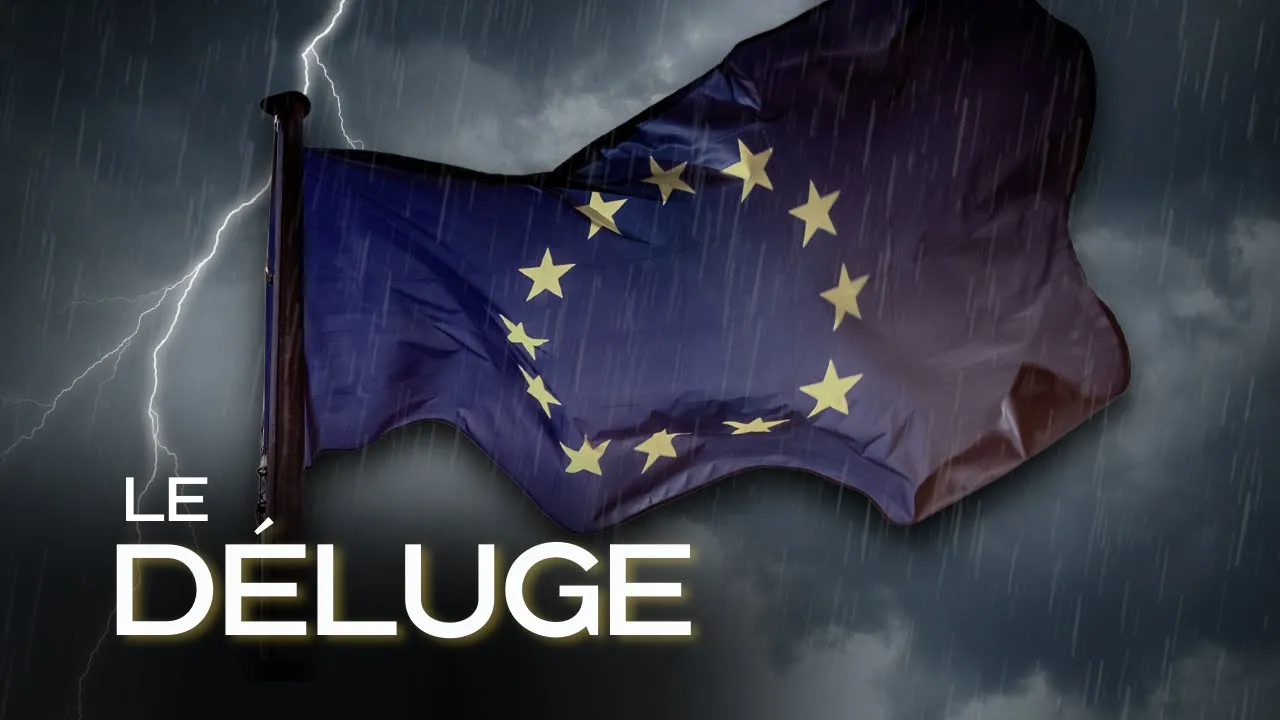









Mario Draghi, President of the European Central Bank, explained that Quantitative Easing (QE) was implemented to fulfill the ECB's primary mandate of price stability, not to benefit debt countries or investors, and emphasized that the euro is irrevocable under the treaty, with the eurozone's success based on convergence and trust among member states.
Mario Draghi on ECB Policy: A Masterclass in Macroeconomic Discipline
Added:Understanding the mechanics of Quantitative Easing (QE) and how central banks expand their balance sheets to stimulate the economy.
The institutional design and mandate of the European Central Bank (ECB), particularly its focus on price stability and independence from political influence.
The concept of 'monetary financing' and the legal restrictions preventing central banks from directly financing government debt (such as Article 123 of the Treaty on the Functioning of the European Union).
The history of the Eurozone debt crisis and the fundamental debates surrounding the viability, integrity, and irrevocability of the Euro currency.
Analyzing the macroeconomic transition from Quantitative Easing to Quantitative Tightening (QT) and interest rate normalization in the Eurozone.
Evaluating the political economy of the Eurozone, specifically the divergent economic perspectives and tensions between Northern 'frugal' member states and Southern member states.
Investigating legal challenges to ECB policies, such as the landmark rulings by the German Federal Constitutional Court regarding public sector purchase programs.
Comparing the communication strategies, democratic accountability mechanisms, and transparency of the ECB with other major central banks like the US Federal Reserve and the Bank of England.
808.9K views12.2Klikes14:46Original Release: 2021-02-07
mr draghi welcome in our midst brave also because you may be a hero in italy you may be a hero in the southern depth countries and in in the world of investors like goldman sachs and the banks but here in holland you're not a hero was qe necessary another question i have is who profited the most of qe who was profiting off qe where would only the debt countries like italy who who had a low interest rate on a sudden debt was it the investors who get a high price for their sudden bonds or where are the banks who are able to swap the bad assets for good assets well first of all just to answer by the fact that i'm not a hero or i'm a nero or where i'm a hero actually it's not my job to be a hero but just to pursue my mandate and my mandate is price stability and that was what was at stake exactly at the beginning of qe and that's the reason why we had qe to comply with our mandate as we are bound by the law and you still believe that this is fully within the framework which you have and that you still are not doing any monetary financing even though you've bought 2 500 billion euro of government debts by the end of the year yes we do we do i think we believe that our precautions have been have been put in place exactly to avoid this danger that the issue limit has been moved upward but still consistent with what the collective action closes in bonds c so it's and it's not been moved since then it's not been moved since then but still the uh i would recall what the european court of justice has said giving broad discretion to the ecb in what instruments to use in order to pursue price stability thank you but i mean on the last part you say indeed you have the collective action clause if you have more than 33 percent you can indeed block restructuring of for instance the government that if it needs to so if italy needs to restructure and you hold 34 percent you would have the very unfortunate position that the ecb could block the restructuring because it would lose or want to do the restructuring and you're a political actor but even if you have 32 percent then you just need one other relatively small actor and you still have a veto power and you're an enormous political player in a necessary restructuring if the case comes up how do you mitigate that problem if this case becomes true because the levels of debt are still rising in part of the eurozone and if such a case comes up will you then look at the interest of the eurozone or at the interest of the balance sheet of the european system of central banks thank you sorry for repeating but we look at price stability number one second we have our mandate third we have the treaty that says that we don't do monetary financing fourth we are sure that the precautions we put in place are enough to avoid this risk it doesn't seems like you want to answer my colleague objective no i've answered absolutely yes but he was concerning the risk whether he hit the president which he was talking about you want me to say what we would do in case certain unrealistic hypotheses were take place i'm not going to say that we don't want to speculate on things that have no probability of happening period yes sorry yes you say there is no probability that any at any point in the future any of the national debts of the eurozone countries has to be restructured that's a zero probability event no no we we said no no i don't know about that i don't want to speculate on that we we have decided the 33 limit it's enough for the collective action closes and that's period we are not going to speculate on the fact that if there is one that has one percent we could do this and that that's frankly speculation in which i don't think it would be right for us to spend time but is it also speculation that one of the countries of the eurozone at some point will need restructuring and that a large amount of debt stays within the european system of central banks for which the european taxpayers will foot the bill at the very end so far the taxpayer hasn't fought any bill so this also we should we may discuss this about the dangers of something that might happen so far what i see as a reality is that our monetary policy has supported the recovery in the eurozone has created four and a half million jobs which were not available before that's what i see so far that's the reality the rest is speculation now you're asking me where i publish no i'll come to this if you want you're asking me about publish my agenda i do publish my agenda where you're asking that you're asking whether we publish the account of our meetings we do publish them why are we asking them what were they what does it mean wolves oh no it was decided to do the accounts not the not the minutes like other central banks do by the way and then what else did did you ask me about um oh the ssm and yes the ssm is very is already very transparent if things can be improved we'll certainly do it but i think this should you should ask thanks the separation principle i think you should ask this to madam lui i was wondering because you were a little irritated about no about about what about the amount of money the risk you take by putting 2500 billion at the end of the year buying purchasing bonds and that's 25 of the total depth of the of the euro country problem is how many countries are all now on the limit of 33 percent i read the portuguese is almost 33 the irish always 33 percent at the end of the year the netherlands finland so you are getting to the limit of what you can purchase and when you touch them clear how many countries yeah and when you touch that limit how is the the balance then when you cannot buy anything from holland but you can buy a lot from italy still we are bound by rules and we intend to stick with them and we're also confident that our program will run smoothly i'll stop at this there's no other way i can respond to your question about risks but but i think you look at it they're reassuring you that the rules are going to be respected you've said in january um that any country leaving the eurozone must settle the bill first regarding italy's possibilities of leaving the eurozone as we in the netherlands now have a surplus in the target 2 system of around 100 billion euro does this by your own words mean that if the netherlands decides to leave the eurozone which is one of the key points of my party's program we would get back 100 million euro from the southern countries in the eurozone according to your views mr johnny thank you let me let me respond to you as i have responded to similar questions in the european parliament the euro is irrevocable and this is the treaty i will not speculate on hypotheses that have no ground in the present treaty second the euro has been a success for the eurozone and for especially for countries like the netherlands as i mentioned before you had an economic situation thanks i should say first and foremost to your strength to the way you to the to the quality of your laws to the fact that your business environment is growth friendly to your own merits but also to the support of our monetary policy you had an economic situation which was rarely so good but also there is a deeper reason and there is a deeper reason why the euro has benefited all countries but especially countries that are strong export oriented with high productivity and a business favorable legal environment the euro has protected the single market most of you are too young to remember the 80s and the early 90s when we had periodic devaluations of all countries and there was a strong instability there neither price stability was there nor the better countries which were stronger could actually see their merit rewarded because they were continuing devaluations robbing them from their from their merit now the single market was a major achievement towards our integration but it was also an achievement that has increased our prosperity our collective prosperity and the single market cannot be protected other than with one currency with irrevocably fixed exchange rates and that's why the euro came into consideration in the early 90s and was finally found its place in the maastricht treaty so i think we if we remember the experience of those years we should have no doubts about the euro being a success and and also legally i made the point before just one point you said you didn't want to speculate about the possibility of the eurozone falling apart but isn't that precisely what you did in january when you were saying if italy leaves it will have to settle the bill you were actually speculating about the breaking apart of the eurozone and wouldn't it be intellectually fair to have the same principles if the netherlands decides to leave i in the european parliament i was asked the same question about that i said one can have technical answers of all kinds but the point is the euro is irrevocable and i'm not going to speculate on hypotheses that have no ground whatsoever we'll see about that then we'll see about that for sure again a reality shows that the outcome has been different we we have an index which measures the growth in value added in each country growth which is a proxy for growth in gdp and then we calculate the dispersion of this index in other words how much this growth rates diverge across countries so now we are at the same level as we were in 1997 so it means broad convergence in the euro area countries clearly during the crisis there were huge divergences divergences in rates in credit and in growth rates and employment rates if we have to see uh if we have to look now at the situation it has improved on that account as well so that is that is a good very good news also for another reason convergence in in in our view convergence and trust are the two pillars on which the eurozone is founded and and so any improvement we have on that ground of course we have to have another type of convergence which was the one we were discussing before convergence as far as structural reforms are concerned and that's the other part which will have to be addressed more and more strongly in the future if you believe the euro is here to stay if you support still support the single currency in europe does this imply that you are a supporter and perhaps believe it's necessary for the eurozone to develop into a political union a full political union i've been invited to give a speech at the germany foundation on that occasion i had the opportunity to read some of his of his writings in his view there was no doubt that the is single market single currency political union and that's still the case but is it tomorrow no when is it we don't know why because you need to satisfy the two conditions namely trust trust in the compliance with the rules trust in the compliance with the governance of the eurozone and convergence we can't have a union with divergent countries thank you thank you very much and excuse me just let me out and we can't have a union where you have permanent debtors and permanent creditors it has to be convergence thank you
Up Next
8:28
The Vulture Fund Takeover of AC Milan: A Financial History
@Tifo
175.2K views•2018-08-10

5:07
Impact of Yuan in Indo-Russian Trade Amid Sanctions
@WION
261.9K views•2022-07-01
10:33
Behavioral Economics Explained: Rationality, Nudges, and Risk
@crashcourse
1.1M views•2016-03-12

113:18
The Age of Easy Money: Fed & Inflation | Full Documentary
@frontline
21.2M views•2023-03-15
Related Study Plans & Knowledge Roadmaps
Structured learning paths in Economics
economics
Sovereign Debt: Defaults, IMF & Restructuring
01Introduction to Sovereign Debt & Government Bonds
02Debt Sustainability & Credit Ratings
03Anatomy and History of Debt Crises
+ 2 more learning modules
12h5 modules
Explore Roadmap
economics
Market Design: Matching Theory & Gale-Shapley
01Introduction to Market Design and Price-Free Markets
02Two-Sided Matching & The Gale-Shapley Algorithm
03School Choice Systems and Mechanism Design
+ 2 more learning modules
10h5 modules
Explore Roadmap
economics
Impossible Trinity: Forex, Capital & Policy
01Introduction to Monetary Policy and Central Banking
02Exchange Rates and International Capital Flows
03The Mundell-Fleming Model
+ 2 more learning modules
8h5 modules
Explore Roadmap
economics
Healthcare Economics: Market Failures & Systems
01Introduction to Healthcare Markets and Market Failure
02Asymmetric Information and Adverse Selection
03Moral Hazard and Insurance Design
+ 2 more learning modules
12h5 modules
Explore Roadmap