


![[REPLAY] - Grand entretien avec François Villeroy de Galhau](https://i.ytimg.com/vi/nV1KZH0ndKU/hqdefault.jpg)











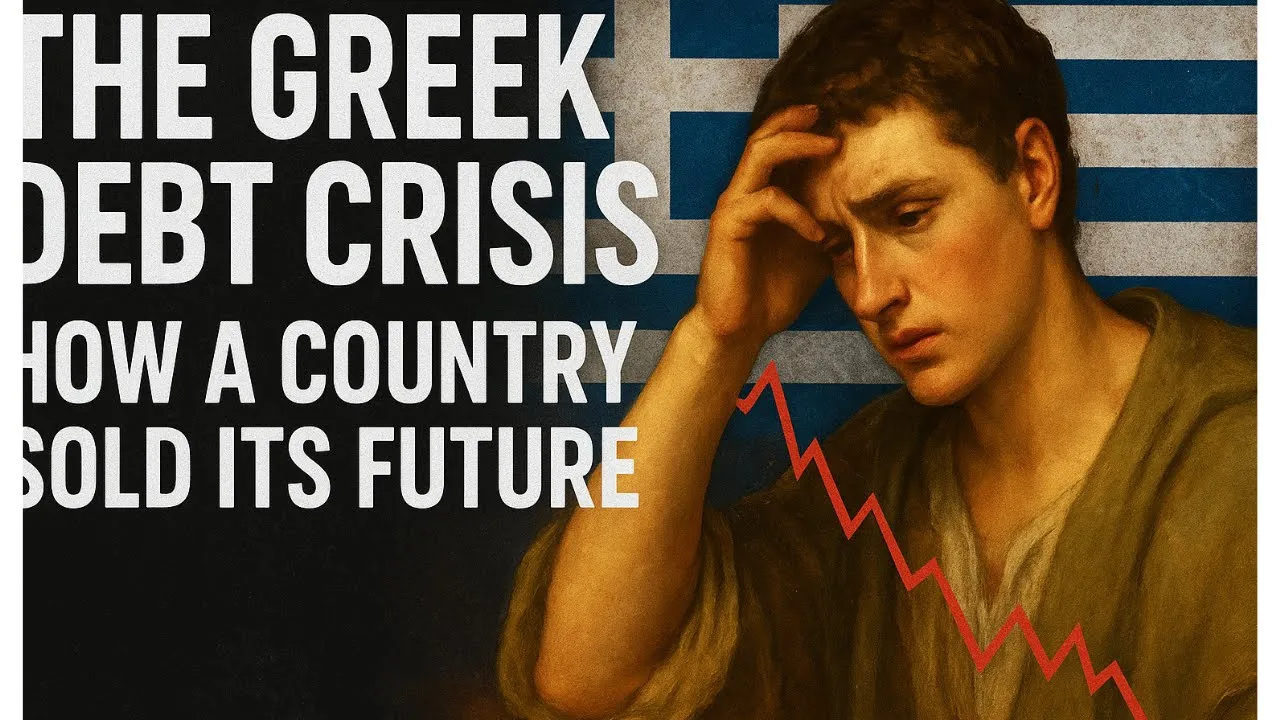



The Greek Debt Crisis (2009-2015) demonstrates how fiscal mismanagement, combined with structural weaknesses in monetary policy frameworks, can lead to severe sovereign debt crises; Greece initially concealed its true debt levels through financial engineering to join the eurozone, then faced mounting challenges during the 2008 global recession, ultimately requiring three bailouts totaling 295 billion euros from the Troika (EU, ECB, IMF) before defaulting on its debts in 2015, resulting in a 25% economic contraction and a debt-to-GDP ratio of 181%.
The Greek Debt Crisis Explained: Causes, Bailouts, and Aftermath
Added:The concept of Sovereign Debt, including budget deficits, government bonds, and how nations borrow capital on international markets.
The structure of the Eurozone, specifically the distinction between a shared monetary policy (controlled by the European Central Bank) and independent national fiscal policies.
The roles and functions of major global financial institutions, specifically the International Monetary Fund (IMF) and the European Commission.
Basic macroeconomic indicators, such as Gross Domestic Product (GDP), inflation, and the significance of sovereign credit ratings.
The intense macroeconomic debate between Austerity (fiscal tightening) and Keynesian Stimulus (spending) during a debt crisis.
The contagion effect and how the Greek crisis impacted other vulnerable Eurozone economies, such as Portugal, Ireland, Italy, and Spain (the 'PIIGS' countries).
The long-term socio-political consequences within Greece, including high youth unemployment, brain drain, and shifts in the political landscape.
The institutional and structural reforms implemented in the European Union post-crisis, such as the establishment of the European Stability Mechanism (ESM).
2.7M views87.8Klikes6:51Original Release: 2019-08-23
this video is sponsored by Skillshare goto sk LSH / the plain bagel to get a free two month premium trial in the world of finance we are often quick to forget the tragedies of the past yet valuable lessons are to be had by exploring their causes and effects after all in world of ever-changing rules products and services history is the one constant that can guide us through the ambiguity so let's take a 5-minute history lesson on today's plain bagel it's 1999 and the Greek government is in a bit of a pickle the European Union has just launched a fancy new currency the euro they'll be shared by its members but even though Greece is part of the EU and left off the invite you see despite massive tax evasion problems the Greek government has been spending to boost social benefits and wages which has caused their debt-to-gdp to rise well above the 60% required to adopt the currency so now they must decide between cutting back spending or missing out on the eurozone party unless of course there's a third option you see Goldman Sachs an American investment bank comes along with an idea a way to meet the currency adoption criteria by masking the government's debt load through currency swaps involves a bit of line but this way the country can avoid radical reforms and reap the benefits of the euro a win-win so Greece gives us a shot using the sight of hand to adopt the currency in 2001 and sure enough the Sun pays off the currency brings with it more trade and since the Euro allows Greece to pay back off the financial strength of its fellow eurozone members the government aims access to better financing enough to even bring the Olympics home for 2004 sure debt to GDP continues to rise above 110 percent and things are a little precarious but hey the economy is growing there's plenty of EU money funding the budget deficit and so long as things keep rolling everything will be ha that's not good looks like a real estate crisis in the US has triggered a global recession it's hitting Greece like a train GDP is falling as tourism and shipping so now with the Athens Stock Exchange plummeting 65% in 2008 worse yet borrowing costs are increasing oh and that shared currency we fought so hard for well it's preventing Greece from stabilizing through monetary policy and just in case things didn't look bad enough surprise in 2009 it's revealed that the government has been cooking the books and its budget deficit is not 6.7% but double that whoops I mean more than double the original estimate borrowing costs skyrocket as the entire country's credibility is smashed like a plate on the floor OPA on April 27 2010 with a debt to GDP of 127 percent the country's credit rating is dropped to junk clownin Greece towards default as begins to drown in its pile of public debt but look on the horizon visit a bird is it a plane no it's a buttload of money the troika a group consisting of two EU entities in the International Monetary Fund has come to bail Greece out in a bid to save the EU from the ramifications of a Greek default here's the plan lend agrees 110 billion euros to avoid default use the bailout money to pay off expensive creditors get the government to commit to higher taxes and lower spending to bring the country back into a surplus and wait for this recession to blow over so on May 2nd 2010 the troika tosses Greece a lifeline and damn the bailout doesn't quite fix a problem in fact the austerity measures have put further pressure on GDP and brought debt to GDP up to one hundred and seventy two percent by 2011 with creditors quickly draining the bailout funds this is bad and the troika realized that more drastic measures are required so they devised a new plan give Greece another 130 billion euros negotiated with creditors to cut the country's IOU by 53.5% get the government to commit to further austerity measures to bring the country back into a surplus and wait for this depression to blow over so on February 21st 2012 the troika prepares the largest sovereign debt restructuring in history tosses Greece's second lifeline and success the program grabs a hold and after two years of further tax reforms layoffs and wage cuts government reports a structural surplus but wait Greece is starting to fight back you see the Turkish bail of terms they're hoping the government get a handle on its debt are causing unrest at home with Greeks bearing the burden of falling wages rising taxes and unemployment above 25 percent so when a snap election occurs in 2015 the people break over 40 years of two-party rule and elect a new anti-austerity party to office in a bid for change the new Prime Minister promises to boost spending and throw down the gauntlet to Detroit to renegotiate terms raising tensions between government and the troika until the country's lifelines snaps and ladies and gentlemen all hell breaks loose creditors flee crease once again and hella quiddity crisis emerges with fear gripping the country amid concerns of greggson Greece's departure from the EU negotiations with the troika fell through as even its members clash and on June 30th 2015 with the government unable to secure any further debt relief Greece defaults missing a 1.6 billion euro debt payment to the IMF the first of elf country to ever do so the foundation of Greece's economy begins to crack as the government shuts down its stock exchange and banking system Greeks continue to fight against a new bailout proposed by the EU but at this point with the country and financial purgatory greggson inching closer in no more leverage for negotiation on July 16th a very desperate government throws in the towel grabbing a hold of the EU s third lifeline and accepting an 86 billion euro bailout in August and so with the fight to boost spending meeting a dramatic end the Greek people prepare once again for a round of cuts reforms and hard times ahead all in the economy would shrink 25 percent as a result of the crisis and while Greece has since finished its bailout programme the country to this day maintains a debt to GDP of a hundred and eighty one percent and Greek people continue to suffer with one in three Greeks at risk of living in poverty it goes to show the terrible consequences of fiscal mismanagement and as Greece continues down its road to recovery let us not forget the valuable and devastating case study it provided thanks for watching and thank you Skillshare for sponsoring the video Skillshare for those of you who don't know is an online learning community that offers thousands of classes that help users well share their skills they have lessons on everything from cooking and drawing to investing in leadership and it's a service I've actually used to improve my video editing capabilities and hey if you want to learn how to make videos like I do you can check out video editing with Adobe Premiere Pro for beginners which will cover the basics of the program I use to edit an enemy and trust me it's worth taking a course before hopping into it or if you're looking to brush up on some technical data skills excel for the real world is a great beginners course on spreadsheets something that's vital to understand in the world of investments Scosche offers unlimited access to these courses and many many more with their $10 a month Premium Membership but if you want to try it before you buy it you can visit skl sh / the plain bagel or use the link in the description to get a 2 month free trial it's a great service that can really help you develop your capabilities and using the link will let them noise sink either way so whether you're looking to further develop a professional skill or just interested in trying something new I encourage you to check out Skillshare
Up Next

4:38
What Is the IMF? Role and Work of the International Monetary Fund
@imf
412.1K views•2025-02-13

12:54
Triumph of Orthodoxy Icon: Byzantine Art & History Explained
@BenCallan
2.1K views•2024-08-06

9:49
FastAPI vs Flask vs Django: Choosing the Right Python Web Framework
@TechWithTim
302.5K views•2024-05-26

1:42
Game of Thrones Opening Credits: A Cinematic Analysis
@gameofthrones
46.3M views•2011-04-18
Related Study Plans & Knowledge Roadmaps
Structured learning paths in General & Interdisciplinary Studies
general-studies
Elevator Engineering: History, Physics & Cities
01From Hoists to Safety Brakes: The Dawn of Vertical Lift
02Hydraulic vs. Traction: The Engineering Physics of Elevators
03Modern Speed, Safety, and Algorithms
+ 2 more learning modules
12h5 modules
Explore Roadmap
general-studies
Rubber: Material Science, History & Geopolitics
01Origins of Natural Rubber & Mesoamerican History
02The Chemistry of Natural Rubber & Vulcanization
03The Geopolitics of the Rubber Boom & Colonization
+ 2 more learning modules
12h5 modules
Explore Roadmap
general-studies
Containerization: Evolution, Logistics & Trade
01Ancient Trade & Bulk Cargo: Amphorae to Barrels
02The Industrial Revolution & Cardboard Packaging
03The Containerization Revolution: Malcom McLean
+ 2 more learning modules
12h5 modules
Explore Roadmap
general-studies
Textile Tech: Evolution, Labor & Global Impact
01Pre-Industrial Textiles: Handloom & Cottage Industry
02Mechanization: The Spinning Jenny to the Power Loom
03The Factory System & Global Labor Transformation
+ 2 more learning modules
10h5 modules
Explore Roadmap