
















![嘘つきの財政破綻論者は、とりあえず永遠に黙れよ[三橋TV第245回]三橋貴明・高家望愛](https://i.ytimg.com/vi/2WPM4KlSODk/maxresdefault.jpg)




![財政破綻したギリシャ、絶対にしない日本。何が違う?[三橋TV第1029回] 三橋貴明・菅沢こゆき](https://i.ytimg.com/vi_webp/VXIxDWg49Tc/maxresdefault.webp)



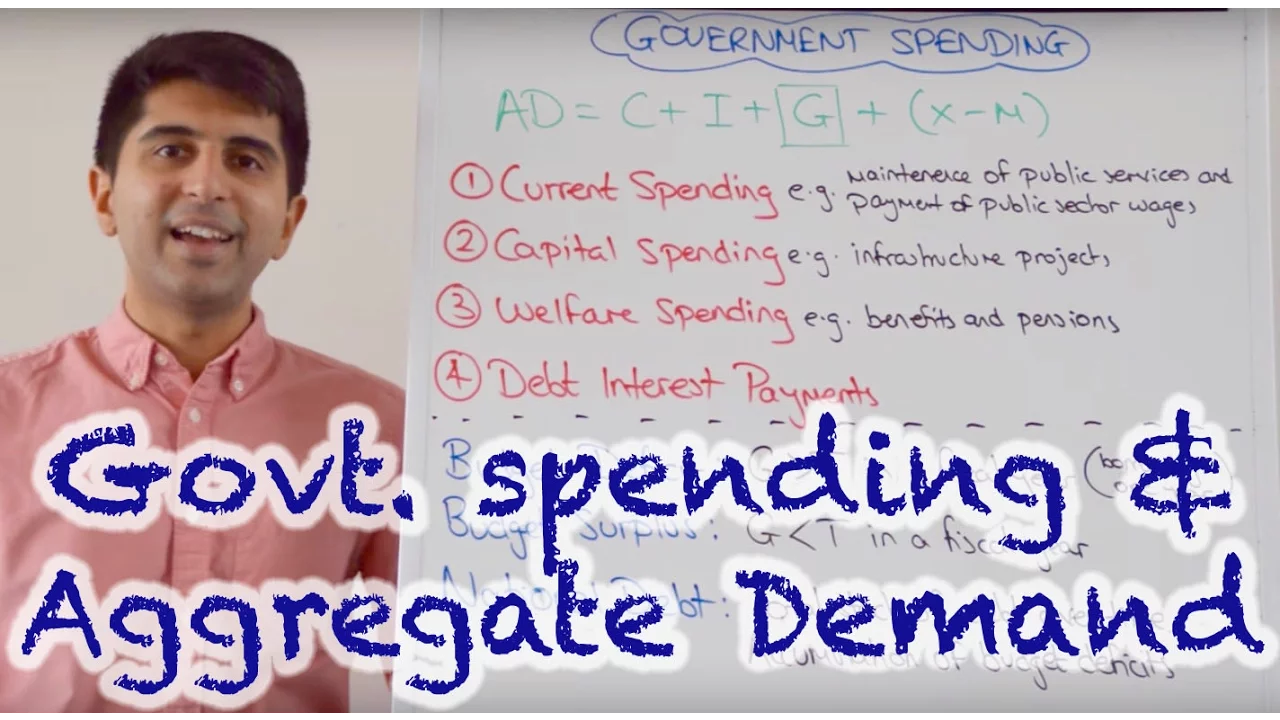
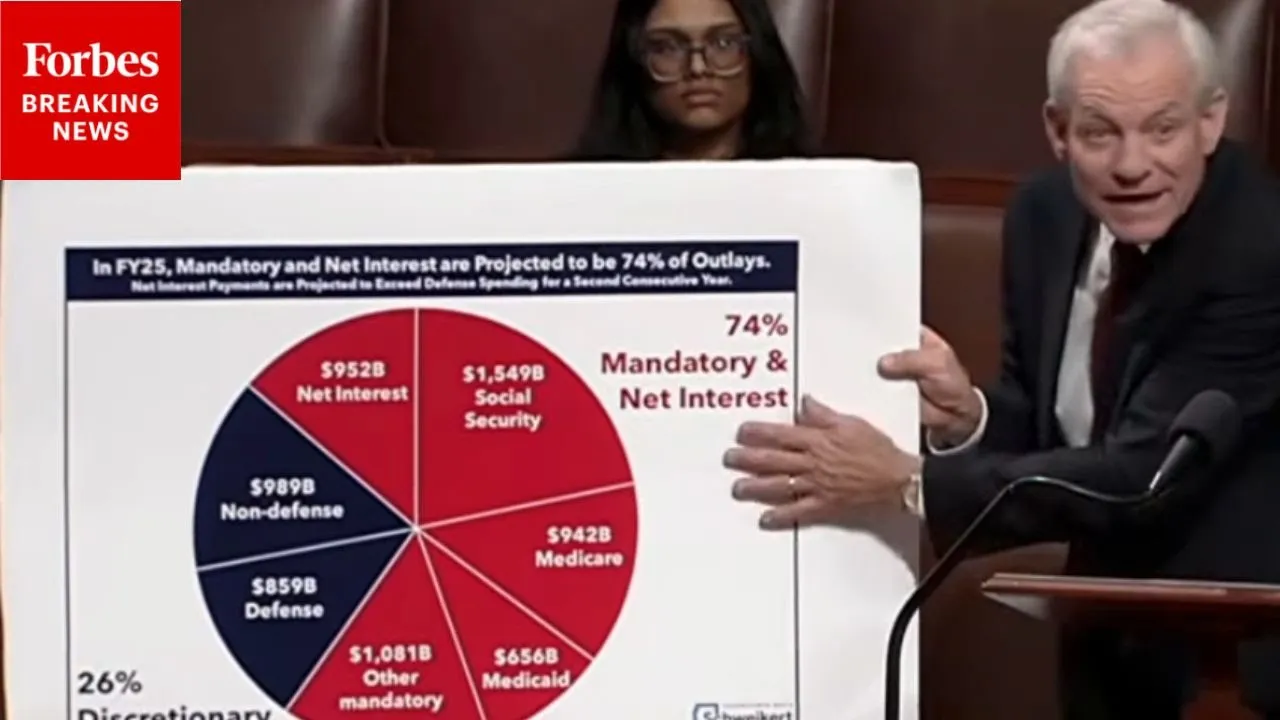
National debt is the total amount of money a government owes, while the budget deficit is the annual difference between spending and revenue; unlike household debt, much of the US national debt is owned domestically (about 89 cents of every dollar of foreign debt is held by Americans), making it less of an immediate crisis than often portrayed, though sustained high deficits pose long-term risks if interest rates rise or investor confidence wanes.
US National Debt & Budget Deficit Explained | Economics 101
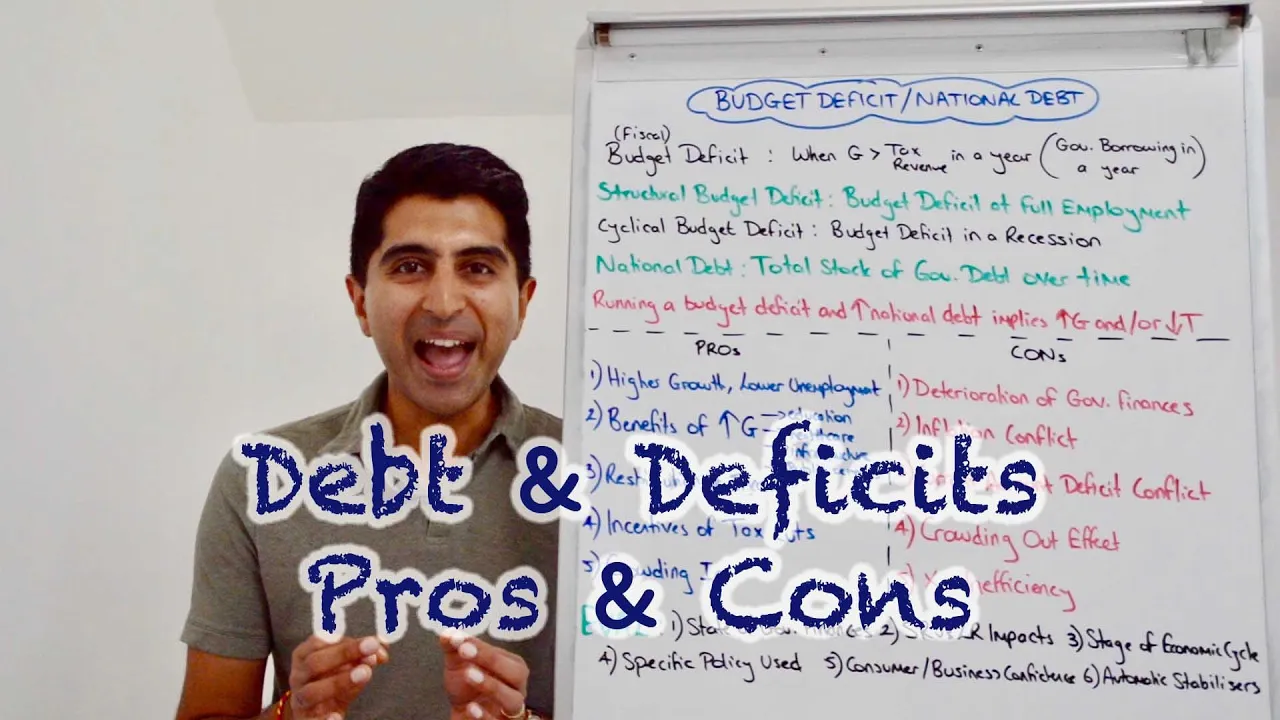
Added:The distinction between a budget deficit (an annual flow of government overspending) and the national debt (the accumulated stock of total unpaid debt).
Basic components of a federal budget, including tax revenues, discretionary spending, and mandatory spending.
The definition of Gross Domestic Product (GDP) and how it serves as a measure of a nation's overall economic size and health.
An introductory understanding of inflation and how the purchasing power of currency can change over time.
The Debt-to-GDP ratio and how it is used by economists to evaluate a country's long-term sovereign debt sustainability.
The role of the US Treasury and the Federal Reserve in issuing, buying, and managing government debt securities.
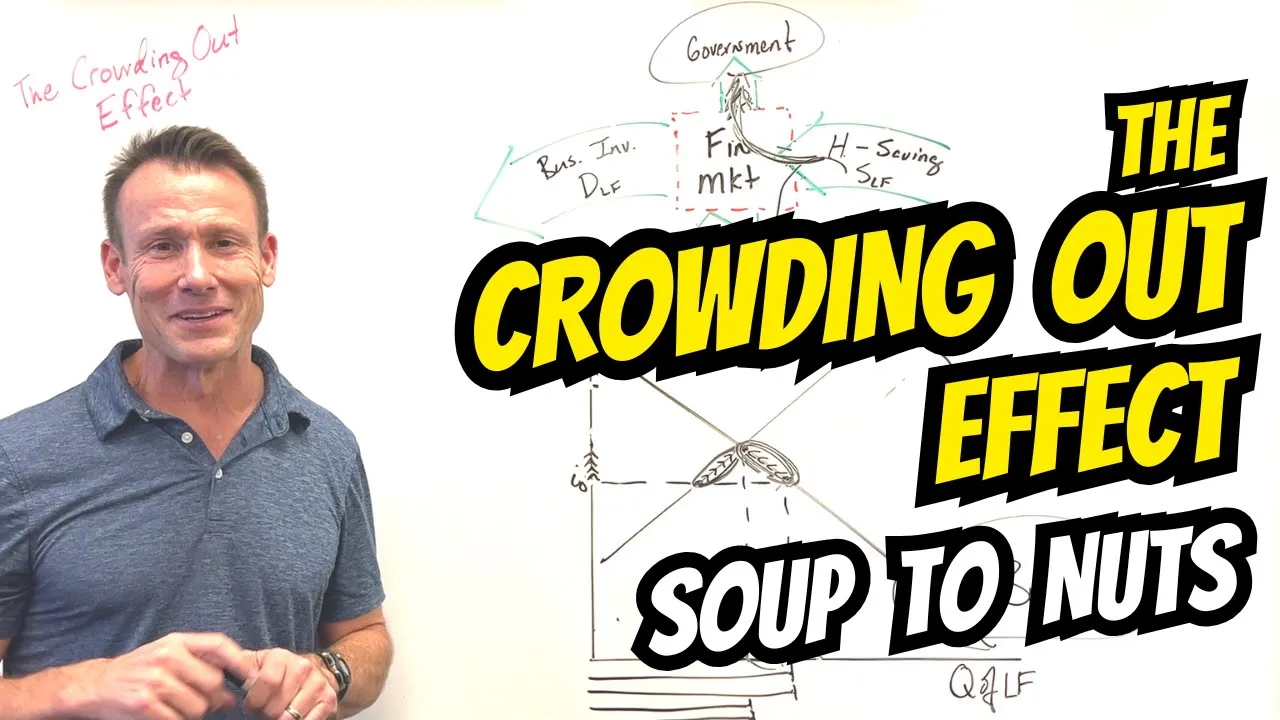
The 'Crowding Out' economic theory, which examines how massive government borrowing can affect private sector interest rates and investment.
Modern Monetary Theory (MMT) and its alternative view on sovereign currency issuers, deficits, and inflation limits.
Comparative analysis of foreign sovereign debt crises (e.g., Greece) versus nations with reserve currencies (e.g., Japan or the US).
1.2M views23.6Klikes6:33Original Release: 2012-10-23
Good morning Hank, it's Tuesday. So, one of the biggest issues in global politics these days is government debt and deficits, which is a particularly big deal in the United States because of the Presidential campaign and also because of the looming fiscal cliff.
And Hank, as you'll no doubt remember, I received a bronze medal in economics at the 1994 Alabama State Academic Decathlon, meaning that in 1994, I was the third best seventeen-year-old economist among all C students in the state of Alabama, so not to brag or anything, but I'm pretty qualified to explain this stuff.
Okay, so first we have to separate the ideas of debt and deficit.
Debt is the total amount of our outstanding liabilities.
Deficit, or occasionally surplus, is the difference between what the government spends and what it takes in.
Right, so in the United States, our current national debt is around 16 trillion dollars, which sounds like a lot of money, and it is.
But let's break this down.
The largest single holder of U.S. government debt is actually the Federal Government itself because trust funds like Social Security buy government bons and so the interest goes from the U.S. government to a different part of the U.S.government, which is not borrowing as we usually imagine it.
So if you take away that money, you're left with about 11 trillion dollars, which is still a fair bit of cash.
Who owns that debt?
China, you probably guessed, but in fact, no. The plurality of that debt is actually owned by us.
Us being American individuals and institutions.
China owns about 8% of our debt, Japan 7% and the UK, 1%.
But it's important to note that the US also owns foreign debt, including about 235 billion dollars of sovereign debt in China and Hong Kong.
Altogether, for every one dollar of US debt that's owned by a foreign country, we own about 89 cents of foreign debt.
So you can't really think of government debt the same way you'd think about, like, a family owing money to a credit card company because in that situation, the family owes money to someone else.
But in the case of US government debt, we mostly, indirectly or directly, owe money to ourselves.
So our national debt is a very large number, but at least at the moment, it is not a very large problem.
Like in 2011, we paid about 3% total interest on our debt. In 2012, it will be even less because our debt is incredibly cheap right now.
I mean, Hank, in some ways, it is literally cheaper than free. Right now, the yield on a one year treasury bon is 0.17%. Okay, two very important things to note about the debt: First, China can't, like, call in our debt on a day of its choosing.
If I buy a $100, one year treasury bon today, I'm going to get that $100 back, along with my 17 cents in interest in one year. I can't call after a month and be like, "Give me my money back!"
So despite what you hear from a lot of political commentators, that is not really a risk to the US economy. Secondly, you may have heard people say, "The government should be run like a business. It should never spend more than it takes in."
Yeah, no, that is not how businesses are run. Like, say that tomorrow, I invent a Marty McFly hovercraft skateboard. In that situation, I wouldn't wait twenty years until I've sold enough DFTBA posters to build my Marty McFly hoverboard factory. I would just borrow the money and build the factory immediately so I could start selling hoverboards and swim in a sea of hundred dollar bills.
Actually, I would not swim in a sea of hundred dollar bills. I would hoverboard over that sea.
Businesses spend more than they bring in all the time, as well they should and almost all economists agree that governments are similar. There are times when they need to run deficits. For instance, during a recession, government revenue goes down because wages stagnate and unemployment goes up. But government expenditures have to go up, like on unemployment benefits, for instance. So just to be clear, deficits are not inherently evil and our current debt, while it is very large, does not pose a threat to the American economy because we can pay it back with relative ease. I mean, it's not going to be free, but it's going to be like 2% of GDP.
We've done it before!
However, there is a huge future risk to us, because what if our debt stopped being cheap?
What if people stopped believing that the US is the safest place to put their money and they start to buy bonds in, I don't know, like Brazil or China or Germany?
Well, that would be very bad because most years, we run a budget deficit and so we would need to keep borrowing money at these higher interest rates, which would necessitate more deficits, and therefore more borrowing at progressively higher interest rates.
And then we'd have to cut spending, which would slow growth and raise taxes, which would slow growth more, and then Greece.
Except this might actually be much worse for us than it's been for Greece because the US enjoys all kinds of benefits from having the world's most trusted currency.
Like, Hank, believe it or not, most US paper currency actually circulates outside the US and that's very helpful for us in terms of exchange rates and keeping our debt cheap and if we lost that, it would be devastating because we would just be a regular country again.
Okay, so the federal deficit in 2011 was about 1.3 trillion. It'll be down a little bit this year to about a trillion.
It'll be down further in 2013, no matter who is president, to about 900 billion.
But most people think that number needs to continue to come down, or at some point, we are going to risk the spiraling higher interest rates.
So there are two ways of doing this. This first is to print more money, like, oh, we need a hundred billion dollars to close the deficit? Look, I just made a hundred billion dollars using a printing press!
That sounds like a fine idea, except that it will lead to inflation. Now a lot of people in comments will be saying that we should just return to the gold standard, which I think is a very bad idea, for the reasons I explain in the dooblydoo. However: In the broadest sense, our currency is already pegged to goods and services because if the amount of money in the world doubled tomorrow, the amount of stuff wouldn't, so you can imagine what would happen to the cost of everything: It would double.
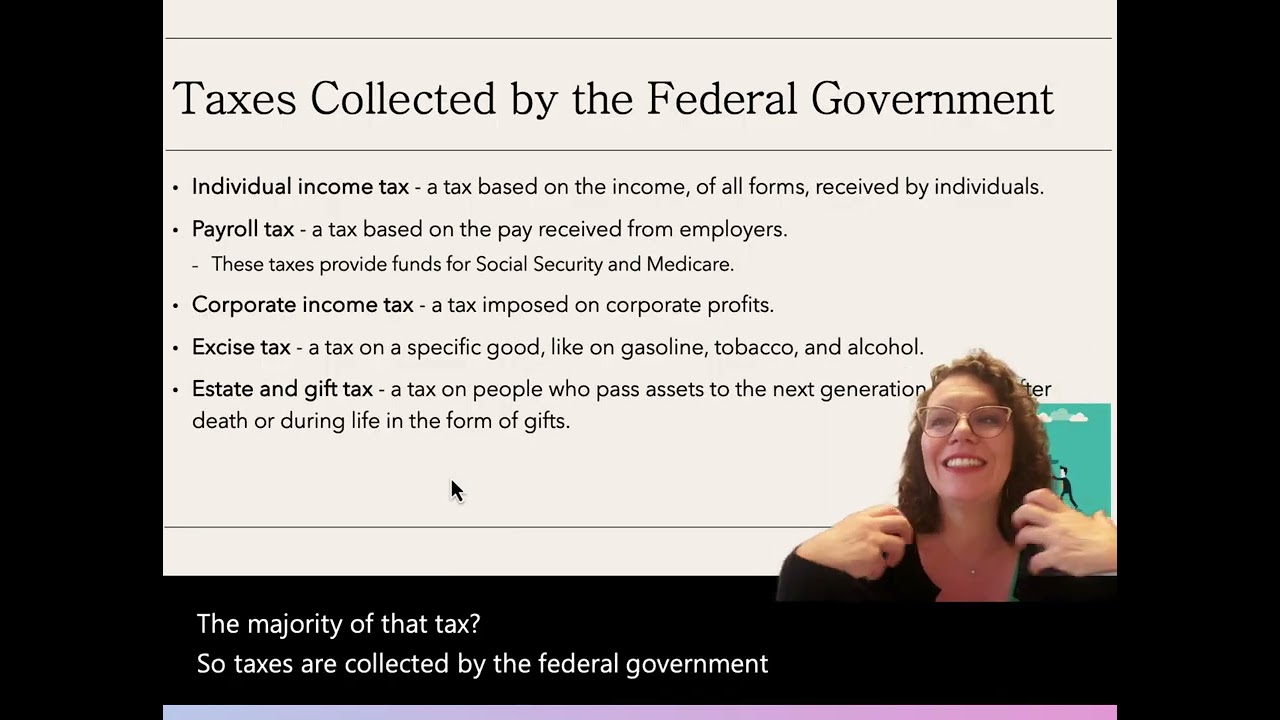
The second, and better, way to cut the deficit is to close the gap between what we take in and what we spend, and in times of economic expansion, this is actually quite easy because the tax base grows and the amount of money people make goes up, so they pay more taxes, so we can just have surpluses, as we did in the 1990s.
But during slow recoveries, like the one we have right now, it is much more complicated.
So, like, both President Obama and Governor Romney favored unspecified spending cuts, Governor Romney also favors a tax cut of 20% across the board, whereas President Obama thinks that we should increase taxes by rolling back the Bush era tax cut on income over $250,000. Neither of these plans is likely to eliminate the deficit, although, again, the deficit doesn't necessarily need to be eliminated.
And no matter what political rhetoric you hear, neither of these plans is terribly radical either.
President Obama wants to put the top marginal income tax rate at 39%.
It was over 50% every year from 1945 until 1986.
Mitt Romney wants to cut that tax rate to 28.5%, which is where it was in 1989.
We can argue thoughtfully about what our policy position should be, but amid all the rhetoric and decontextualized statistics, I just want to underscore that while deficit reduction is important, it is not a crisis. The whole idea here is to keep it from becoming a crisis and one of the best ways to do that is to understand the problem without yelling about it, discuss things honestly without assuming that the people who disagree with you hate America.
Hank, I'll see you on Friday.
PS, friendly reminder, educational videos are allowed to be over four minutes.
I'm still working on my punishment, sorry.
Up Next
7:29
What Are Government Bonds? A-Level & IB Economics Explained
@tutor2u-official
2.3K views•2025-01-09
5:07
Impact of Yuan in Indo-Russian Trade Amid Sanctions
@WION
261.9K views•2022-07-01
10:33
Behavioral Economics Explained: Rationality, Nudges, and Risk
@crashcourse
1.1M views•2016-03-12

113:18
The Age of Easy Money: Fed & Inflation | Full Documentary
@frontline
21.2M views•2023-03-15
Related Study Plans & Knowledge Roadmaps
Structured learning paths in Economics
economics
Sovereign Debt: Defaults, IMF & Restructuring
01Introduction to Sovereign Debt & Government Bonds
02Debt Sustainability & Credit Ratings
03Anatomy and History of Debt Crises
+ 2 more learning modules
12h5 modules
Explore Roadmap
economics
Market Design: Matching Theory & Gale-Shapley
01Introduction to Market Design and Price-Free Markets
02Two-Sided Matching & The Gale-Shapley Algorithm
03School Choice Systems and Mechanism Design
+ 2 more learning modules
10h5 modules
Explore Roadmap
economics
Impossible Trinity: Forex, Capital & Policy
01Introduction to Monetary Policy and Central Banking
02Exchange Rates and International Capital Flows
03The Mundell-Fleming Model
+ 2 more learning modules
8h5 modules
Explore Roadmap
economics
Healthcare Economics: Market Failures & Systems
01Introduction to Healthcare Markets and Market Failure
02Asymmetric Information and Adverse Selection
03Moral Hazard and Insurance Design
+ 2 more learning modules
12h5 modules
Explore Roadmap