


















![CONOCIENDO ESTO podrás GANARLE al MERCADO [IPC] | ANALISIS FUNDAMENTAL 🤯](https://i.ytimg.com/vi/4LUwbAJ-b3w/maxresdefault.jpg)












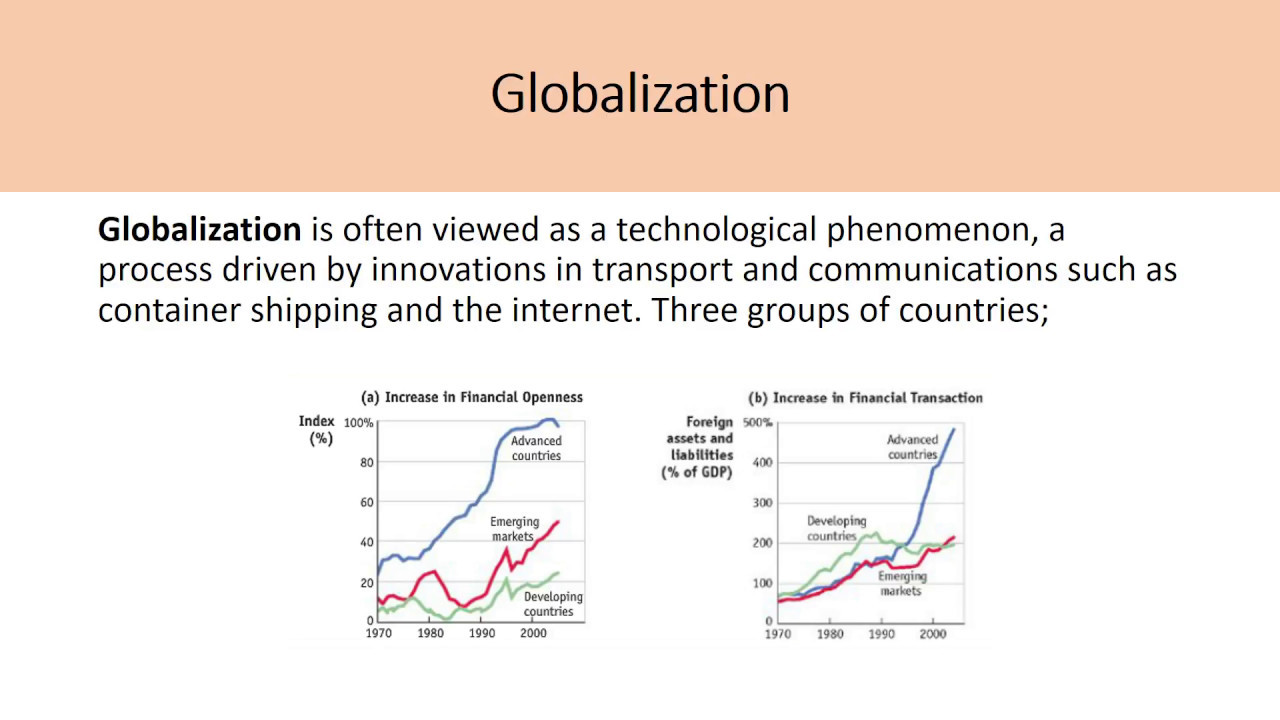

Macroeconomics studies the entire economy through three key indicators: GDP (Gross Domestic Product), which measures total economic output; the unemployment rate, which tracks joblessness among the labor force; and inflation, which measures price changes. These indicators help economists and policymakers assess economic health and guide decisions about government intervention. The economy operates in cycles of expansion and contraction, where rising GDP correlates with falling unemployment (full employment occurs at the natural rate of 4-6%), while stable prices require balancing against both inflation and deflation risks. Understanding these relationships helps explain phenomena like recessions (two consecutive quarters of declining GDP) and depressions (severe recessions).
Macroeconomics Overview: GDP, Inflation & Unemployment
Added:Adriene: Hi I'm Adriene Hill, welcome back to Crash Course Economics. As you may remember from our first video, economics can be divided into two parts: microeconomics and macroeconomics.
Since macroeconomics is the one that's most often in the news, that's where we're gonna start. We'll get to microeconomics, which is also super important in future episodes, but what is macroeconomics again?
Mr. Clifford: (monotone) It's the study of economic aggregates revealed through national income accounting, which is then- Adriene: Okay okay, when you explain it like that it sounds boring but it is not boring!
Macro is about booms and busts, will you get a job when you graduate, should the government cut taxes?
Mr. Clifford: In theory, lowering marginal tax rates would actually increase- Adriene: No no no! Remember, the goal of learning economics is to become a better decision maker, and part of that is learning how the whole economy works. So let's learn about the whole economy.
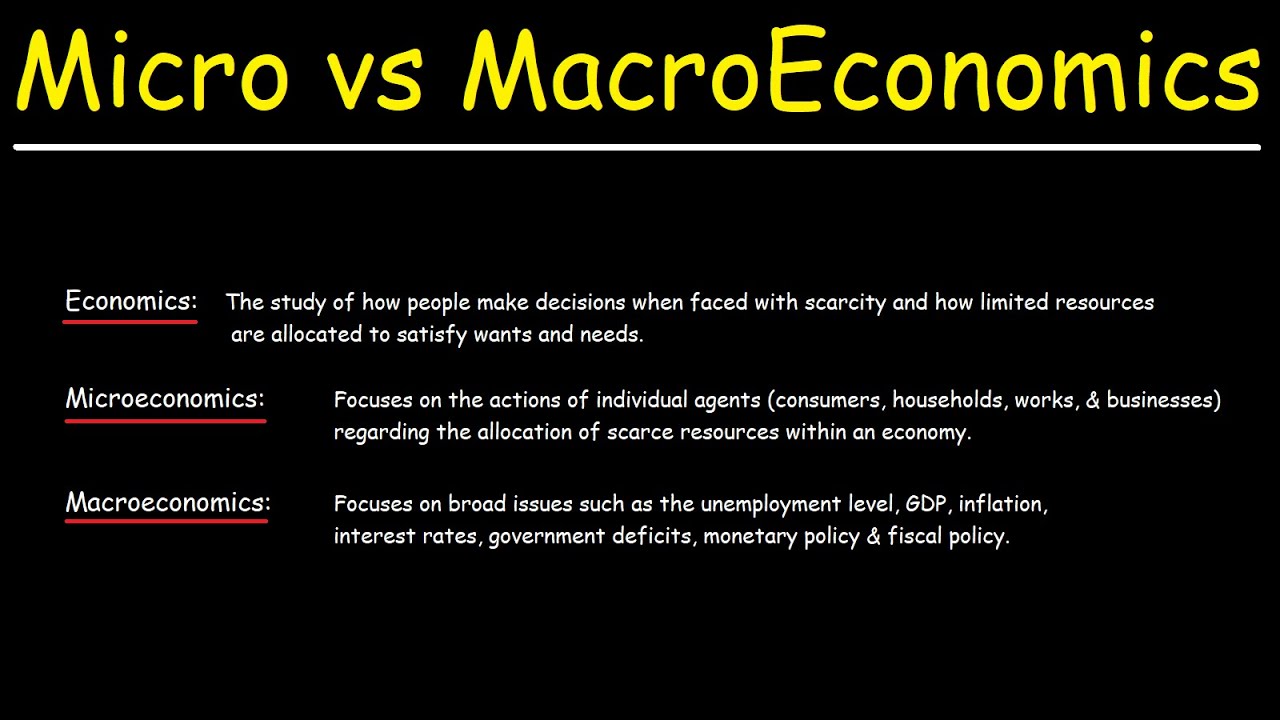
[Theme Music] So, macroeconomics is the study of the entire economy. Macroeconomists study the big stuff, like economic output, unemployment, inflation, interest rates, and government policies.
Now when it comes to fields of study, macroeconomics is a relatively new subject. It wasn't until the Great Depression in the 1930's that economists fully appreciated the need for a systematic way to measure the overall economy, and that we might need theories to guide policies and fix potential problems.
A hundred years ago there was no comprehensive data on economic activity, so there was no macroeconomics. Today, economic data is plentiful, but that doesn't mean that economists agree about where the economy is, where it's going, or what should be done to help. Macroeconomists make predictions based on data, theoretical models and historical trends, but in the end they're just predictions.
If you ask three economists the same question, you're likely to get three different answers, but how, you ask, can the dismal "science" be so subjective? Well, economics is not a traditional science because it is nearly impossible to control all the different variables. Like all the social sciences, economics is studying people, and it turns out that sometimes people are unpredictable.
Stan Muller: I challenge all of you to a tournament of champions in Flappy Bird!
Adriene: Who saw that coming?
That doesn't mean that economics is all guesswork. For example, right now in early 2015, the economy of Greece is, well it's not, it's not good. But how can we tell, and is it gonna get better? Is it gonna get worse? What should be done about it?
These are all questions that macroeconomists try to answer, but for this video, we're gonna focus on the question "How can we tell?"
Mr. Clifford: Well in general, policy makers have three economic goals: they want to keep the economy growing over time, they want to limit unemployment, and they want to keep prices stable. Now for the most part when these three things happen, the citizens are happy, politicians get reelected, and economists get raises.
There are three specific measurements that economists analyze to see if a country is achieving each goal. They're the Gross Domestic Product, unemployment rate, and the inflation rate.
The most important measure of an economy is Gross Domestic Product or GDP. GDP is the value of all final goods and services produced within a country's border in a specific period of time, usually a year.
Now there are some details worth mentioning. GDP doesn't include every transaction that's in the economy. For example, if you buy a used domestic car, it doesn't count towards GDP because nothing new was produced. Now that same logic applies to buying financial assets like stocks, or when one company buys another company, for example when Google bought YouTube. Those don't count towards GDP because no new good or service was produced.
Also, GDP often doesn't include illegal activity, since drug dealers don't usually report their sales to the government, or non-traditional economic activity like household production.
For example, if a plumber charges someone $100 to fix their hot water heater, that counts towards GDP, when he fixes his own water heater, that doesn't count towards GDP.
Here's a list of countries organized by GDP. Notice that GDP is measured in dollars, not in the raw number of things produced. If we analyzed just the raw number, then a country that produced five million thumbtacks would look like they're doing just as well as a country that produced five million cars, but there's also a problem with using the dollar value of stuff produced: it's inflation.
If two countries produce the same amount of cars, but one has higher prices, then that country's going to have a higher nominal GDP, or GDP not adjusted for inflation. To get a more accurate idea of the health of the economy, economists look at Real GDP, which is GDP adjusted for inflation. Just what "adjusted for inflation" means is really important, but too big of a topic to discuss right now. We'll get to it.
Adriene: So what does the Real GDP in Greece tell us about its economy? In 2013, the Greek Real GDP was around 242 billion dollars, but that number doesn't really mean anything until you compare it to previous years.
In 2012, it was 250 billion dollars, in 2011, it was 288 billion, and in 2010 it was 300 billion. In fact, starting in 2008, Greece has had six years of decreasing GDP, and the data reveals that this recession is just as deep and prolonged as the Great Depression in the United States in the 1930's.
Now, I just used the term recession, which a lot of people use incorrectly. A recession is not just when the economy's bad, officially it's when two successive quarters or six months show a decrease in Real GDP. Even though the economy in Greece is still struggling, it climbed out of its recession in 2014, experiencing a slight increase in GDP.
A depression, on the other hand, doesn't have a technical definition, but it's a severe recession, when the economy's really really bad. It's worth noting though that GDP can be a little problematic. I mean not all countries measure GDP in the same way, and in recent years some European Union countries have started experimenting with counting underground markets, like the sex trade and drug trade as part of the total.
In fact, GDP isn't even that old an idea. According to Robert Froyen, during the Great Depression, economic decisions were made "on the basis of such sketchy data as stock price indices, freight car loadings, and incomplete indices of industrial production. The fact was that comprehensive measures of national income and output did not exist at the time.
The depression, and with it the growing role of government in the economy, emphasized the need for such measures and led to the development of a comprehensive set of national income accounts."
So GDP was invented to account for national income, and it may not necessarily provide a complete picture of a country's economy, but for the moment it's what we've got.
So that's economic growth, or at least one way to look at economic growth. now, for the next big issue for macroeconomists: unemployment. Anyway, the major goal of unemployment policy is to limit unemployment, and that's measured by - you guessed it - the unemployment rate.
In Greece, unemployment is over 25%.
Mr Clifford: The unemployment rate is calculated by taking the number of people that are unemployed and dividing by the number of people in the labor force, times 100. Now this percentage represents the number of people that are actively looking for a job but just can't find one.
First, the labor force only includes people that are of legal working age and working or actively looking for work, so little kids don't count and neither do people who aren't able to work or who just choose not to work. So what about someone who's been looking for a job but just gives up? Well, they're no longer part of the labor force, and they're no longer considered unemployed. These are called discouraged workers.
The unemployment rate also doesn't take into account people that are underemployed. A worker with a five hour a week part time job is considered fully employed even if they're looking for a better job. In both of these cases, the official unemployment rate underestimates the problems in the labor market.
A common misconception is that the goal is to have 0% unemployment, but it turns out there's types of unemployment that'll exist even when the economy's going strong. Economists would point out that there's three types of unemployment, or three reasons why people would be unemployed.
First is frictional unemployment. This is when people are temporarily unemployed or between jobs. So if you quit your job and look for a new one, or if you're just entering the labor force, then you're frictionally unemployed.
The second is called structural unemployment. Workers are out of work because there's no demand for that specific type of labor. This would be like a VCR repair person, but it also includes technological unemployment, where workers are replaced by machines.
Now both frictional and structural unemployment will always exist; the goal is not to have 0% unemployment. I mean, 0% is not even possible. We're always going to have people between jobs or people fired because machines do it better.
So the goal is to have no cyclical unemployment. This is unemployment due to a recession. It's when people stop buying stuff, so businesses lay off their workers and since workers have lower incomes, they stop buying stuff which means more people lose their jobs.
An economy is considered to be at full employment when there's only frictional and structural unemployment. This is called the natural rate of unemployment. This natural rate differs slightly between countries, in the United States it's usually between 4 to 6 percent unemployment.
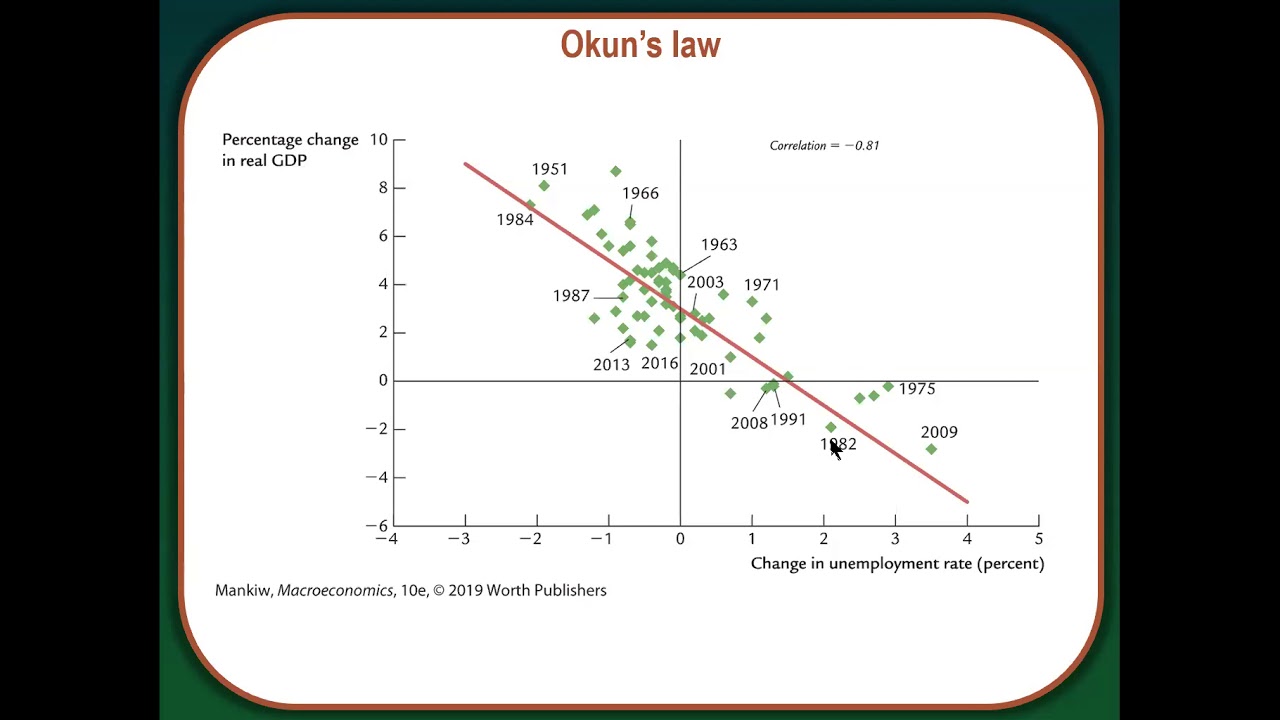
Now as you might expect the GDP growth rate and the unemployment rate are inversely related.
That means that when GDP is rising, the unemployment rate is falling, when GDP is falling, the unemployment rate is rising.
Adriene: And that's exactly what happened in the United States during the Great Depression.
in the 1930's, droughts, bank failures, and counterproductive policies caused GDP to fall, and unemployment peaked at 25 percent.
Let's move on to the third economic goal: stable prices. While I might like the idea of the stuff I buy getting cheaper across the board, falling prices are not really a good thing. Average prices in Greece have fallen about two percent recently, and during the 1930's, the inflation rate in the US was negative ten percent, but how can cheaper stuff be bad for the economy?
Mr. Clifford: Well the goal is to keep prices stable, mainly to avoid rapid inflation, or rising prices, but we also want to avoid excessive deflation which is falling prices. Inflation is measured by tracking the prices of a set amount of commonly purchased items, or what economists call a market basket. The inflation rate is the percent change in the price of that basket over time.
Too much inflation is bad because it decreases the purchasing power of money; it means you can buy less stuff with the same amount of money, which has all sorts of negative effects on the economy. Business costs increase as workers demand higher wages and interest rates increase, so it's harder to buy loans, so people buy less cars and houses.
Deflation on the other hand, seems like it would be a good thing but most economists see falling prices as a bad thing. Falling prices actually discourage people from spending since they might expect prices to fall more in the future. Less spending in the economy means GDP is gonna decrease and unemployment's gonna increase, and that just becomes a vicious cycle. So severe recessions are often accompanied by deflation because the demand for goods and services falls, but when the economy starts to improve again, we often see an increase in prices.
Adriene: Throughout history, economies have expanded and contracted. It's called the business cycle. Let's go to the Thought Bubble.
If we imagine the economy as a car, then GDP, employment and inflation are the gauges. A car can cruise along at 65 miles per hour without overheating. Safe cruising speed is like full employment; unemployment is low, prices are stable and people are happy.
But if we drive that car too fast for too long, it'll overheat, and in the economy, significant spending increases GDP causing an expansion. Unemployment falls and factories start producing at full capacity to keep up with demand. Since the amount of products that can be produced is limited, people start to outbid each other, resulting in inflation.
Eventually, production costs increase as workers demand higher wages and the economy starts to slow down. Businesses lay off a few workers, those unemployed workers spend less causing the businesses that produce the good that they would otherwise be buying to lay off more workers.
This is a contraction, the economy is going to slow. Eventually things stabilize, production costs fall since resources are sitting idle, and the economy starts to expand again. This process of booms and busts is called the business cycle.
To understand why these fluctuations might occur, let's take this car analogy just a little further and look at the engine. Much like the four cylinder engine that powers the Volkswagen of growth, an economy has four components that make up GDP. Each represents a different group that can purchase things in the economy. They're consumer spending, business spending which is called investment, government spending, and net exports which is basically spending by other countries.
If any one of these components loses power, the economy will slow down, but not all of them are created equal. Most economies rely heavily on consumer spending. For example, in the US, consumers account for about 70% of GDP, but other countries might rely more heavily on exports. The point is, changes in these four components change the speed of the economy.
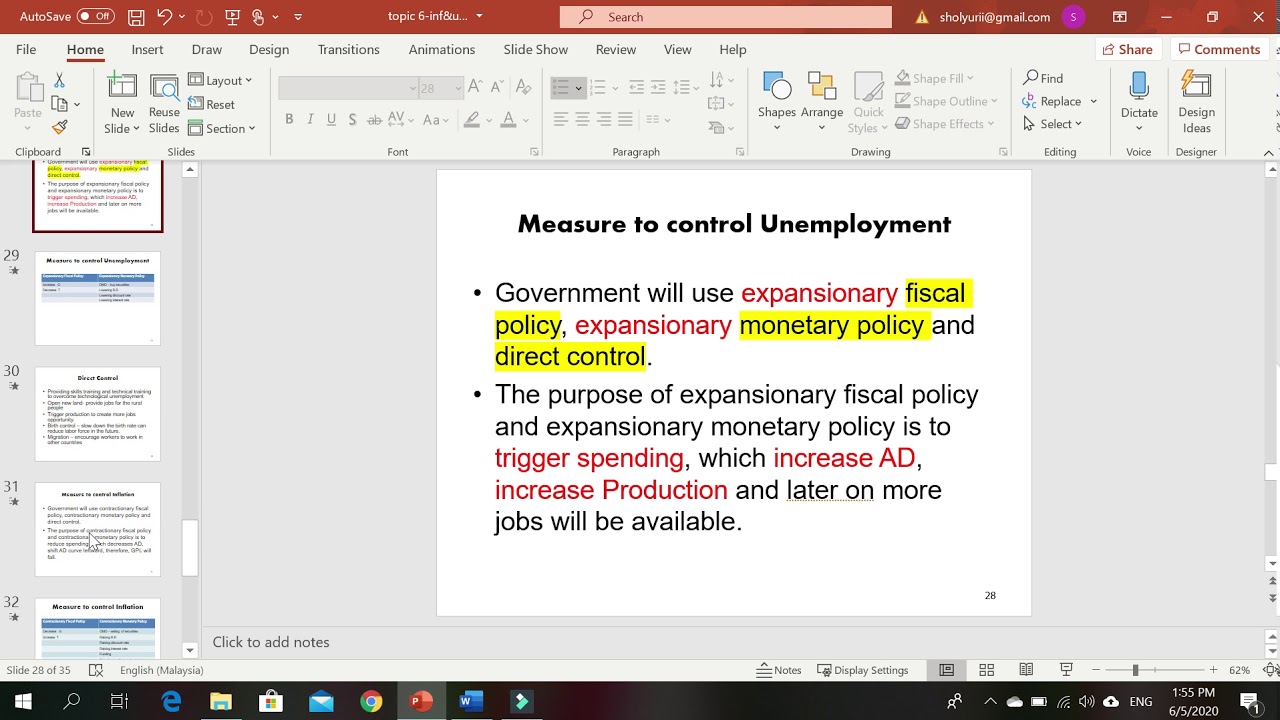
Thanks Thought Bubble. So when I'm driving my car on the highway, I use cruise control to regulate my speed. So why don't we have cruise control for the economy? Well many economists think that the government should play a role in speeding up or slowing down the economy. For example, when there's a recession, the government can increase spending or cut taxes so consumers have more money to spend.
Proponents of this policy argue that it would get the economy back to full employment, but it has its drawback: debt, which some economists hate while others argue isn't very much of a drawback at all. Stupid economic policy, always resisting simplistic explanations.
We're gonna save the debate over how to fix the economy for future videos, but for now it's important for you to have a general understanding of how the economy works and how it's measured.
After all, whether you're driving a Namco in Greece, a Kia in Korea or a Ford in the US, your livelihood and your future will be shaped by what happens in the economy. So wear your seat belt. By which I mean try to save a little once in a while, OK?
So we've really just touched on these three major indicators of economic health, and while they can be useful in providing a broad overview of a nation's economy, reality is, as usual, a little more nuanced than that.
Mr. Clifford: Next week, we're gonna go under the hood and look at the greasy, dirty details of how economists calculate growth, and tune up thee economy, and rev up their economic engines and drive around the drag racing tr-- Adriene: OK, I think that's enough with the cars, Thanks for watching, we'll see you next week.
Mr. Clifford: Thanks for watching Crash Course Economics. It was made with the help of all of these nice people. Now, if you want to help keep Crash Course free for everyone forever, please consider subscribing over at Patreon. It's a voluntary subscription platform that allows you to pay whatever you want per month to make Crash Course exist, and it also increases GDP. Thanks for watching, DFTBA.
Up Next
Finance & Economics Fundamentals for Business Management
@freecodecamp
1.9M views•2023-09-12
Impact of Yuan in Indo-Russian Trade Amid Sanctions
@WION
261.9K views•2022-07-01

Deficits & Debts Explained: Economics of Government Spending
@crashcourse
1.5M views•2015-09-23

The Age of Easy Money: Fed & Inflation | Full Documentary
@frontline
21.2M views•2023-03-15
Related Study Plans & Knowledge Roadmaps
Structured learning paths in Economics