
















![Mentoring UAS Semester Genap 2026 [Pengantar Ekonomi-2]](https://i.ytimg.com/vi/zXhJjwX7ZtU/maxresdefault.jpg)

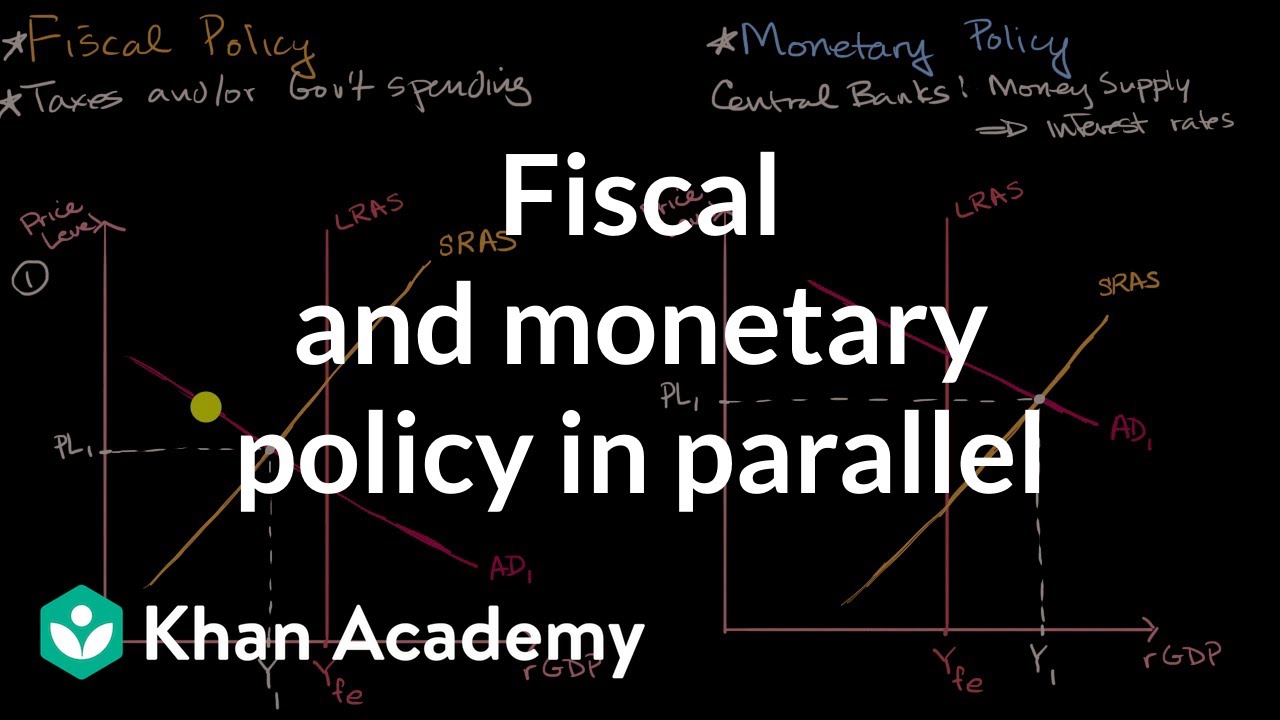


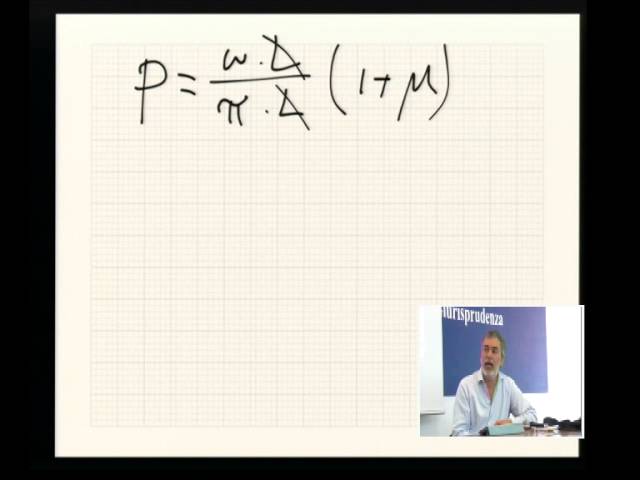
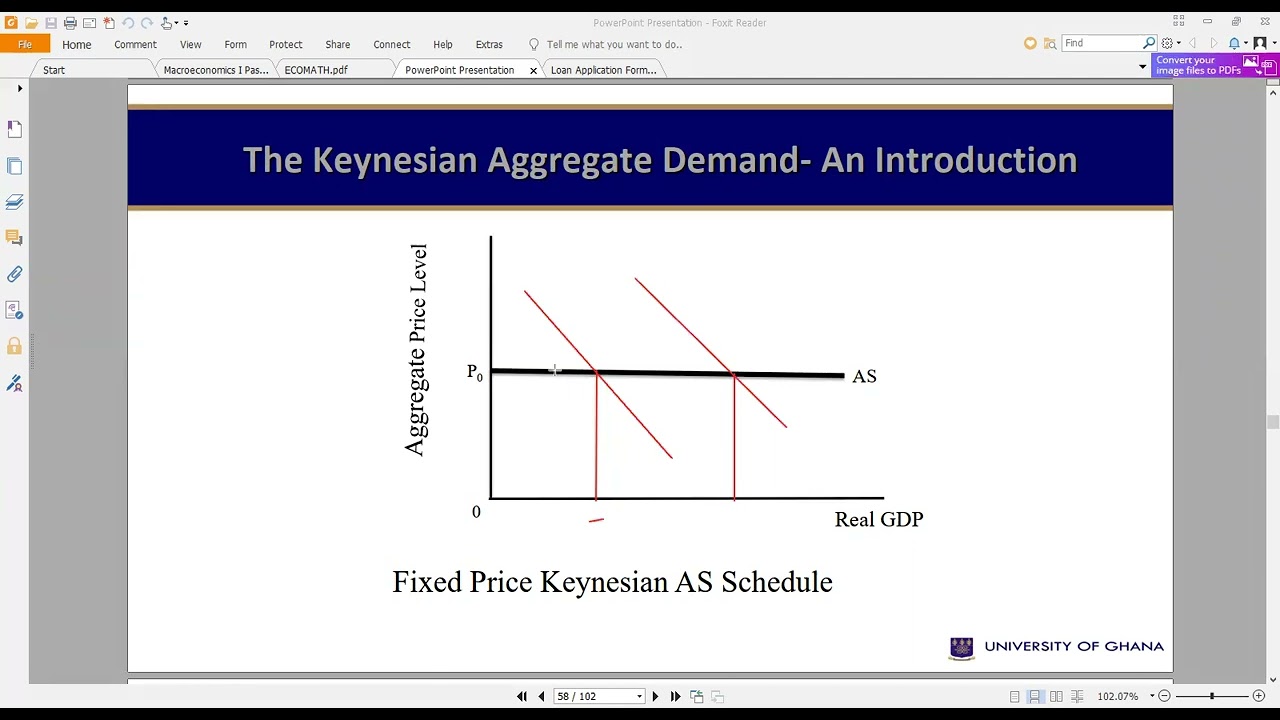


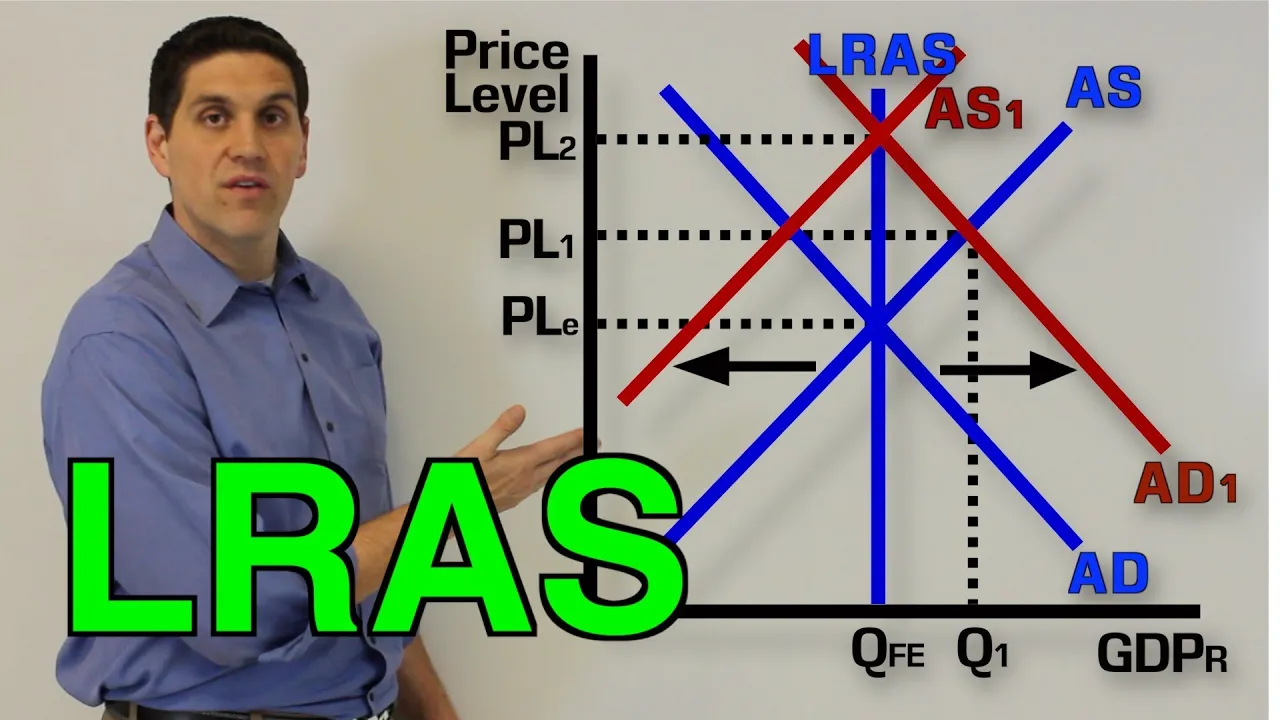



The Aggregate Demand (AD) and Aggregate Supply (AS) model is a macroeconomic framework that determines the equilibrium price level, real GDP, and unemployment by examining the aggregate demand for all goods and services (inverse relationship between price level and quantity demanded) and aggregate supply of all goods and services (direct relationship between price level and quantity supplied), where changes in AD are caused by factors affecting consumption, investment, government spending, or net exports, while changes in AS are caused by factors affecting production costs and incentives across the entire economy.
Aggregate Demand and Aggregate Supply Explained | Macroeconomic Equilibrium
Added:Basic microeconomic principles of demand, supply, and market equilibrium.
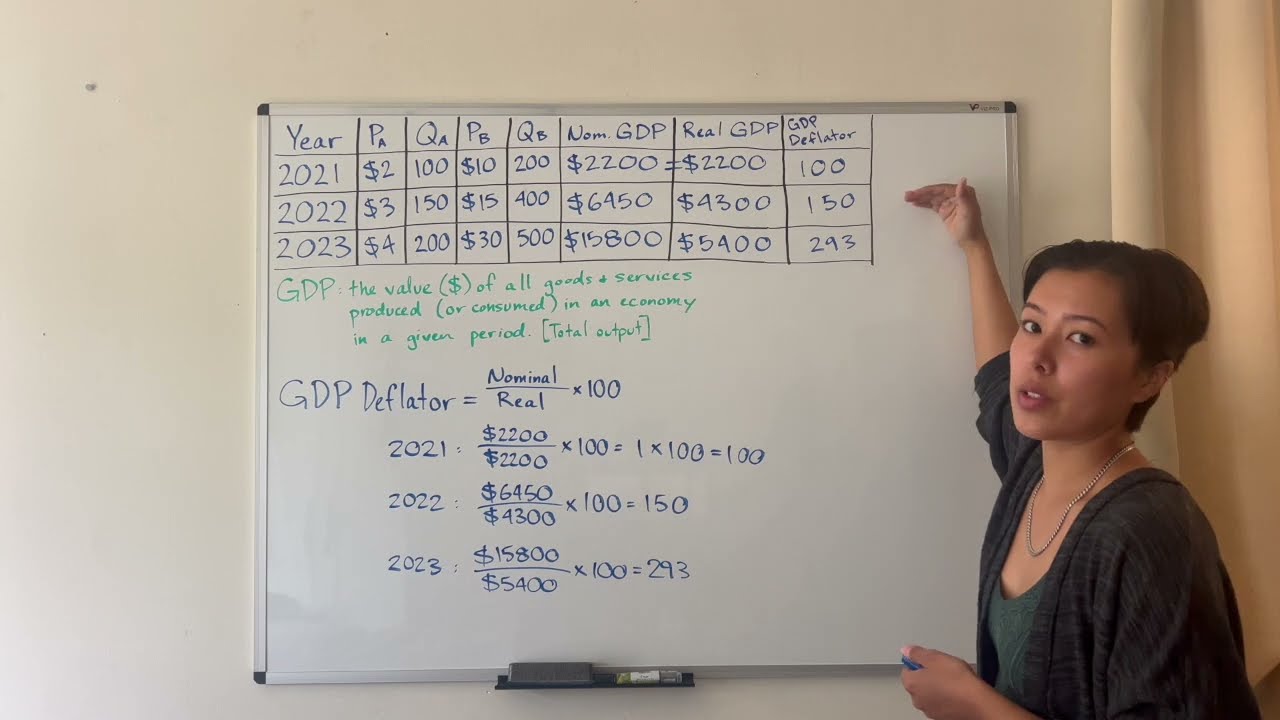
The definition and components of Gross Domestic Product (GDP), specifically the difference between Nominal and Real GDP.
An understanding of inflation, how it is measured, and what constitutes the general price level.
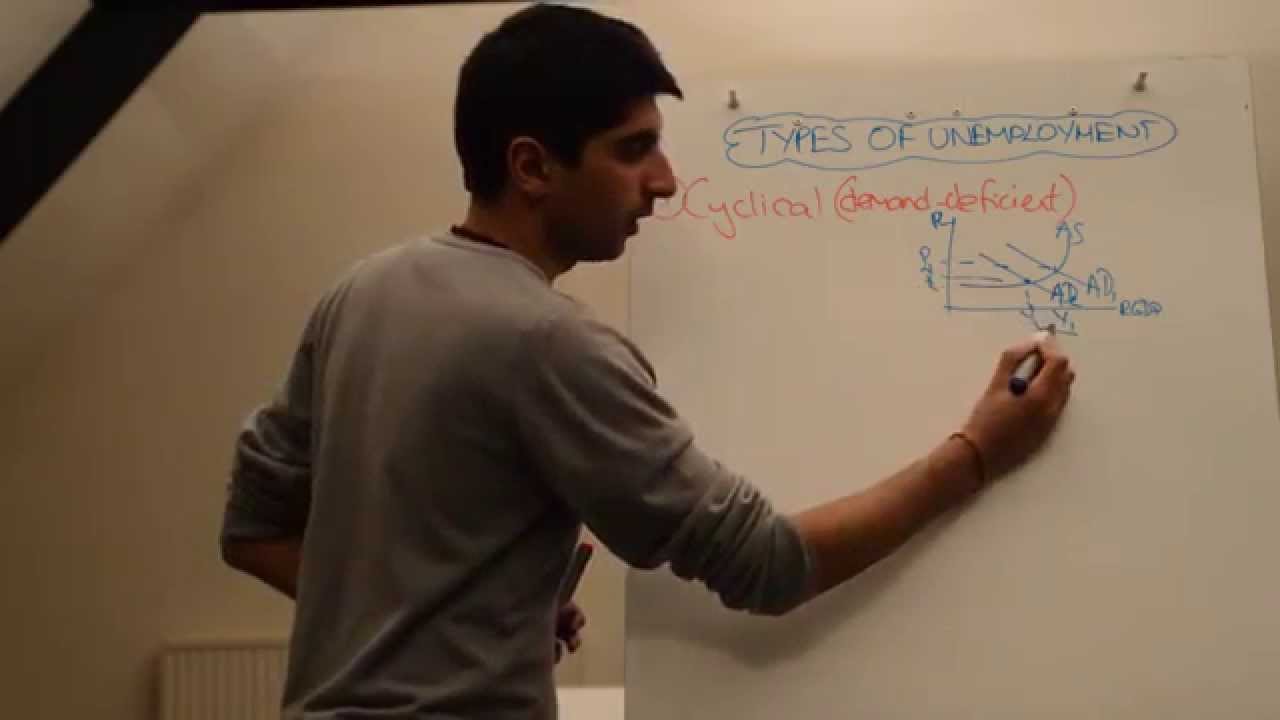
Fundamental concepts of unemployment, including its definition and main types (frictional, structural, cyclical).
The distinction between Short-Run (SRAS) and Long-Run Aggregate Supply (LRAS) and the concept of the natural rate of output.
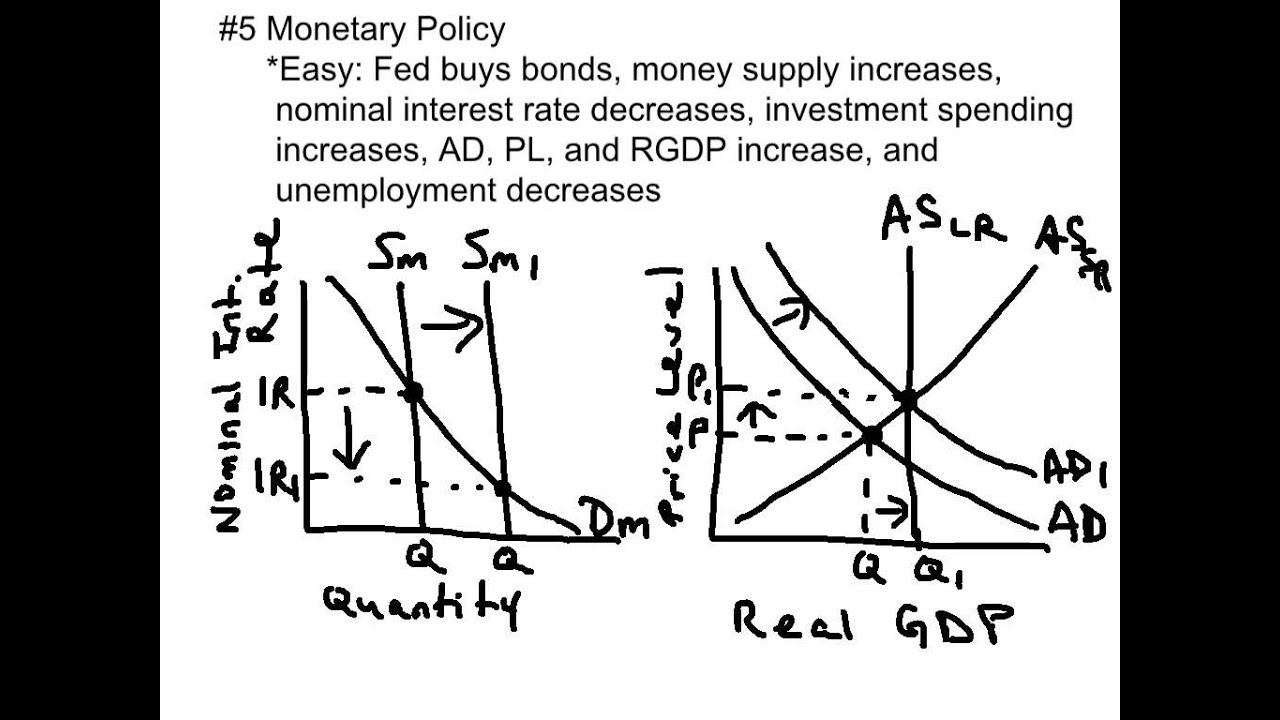
How expansionary and contractionary Fiscal and Monetary policies are used to shift Aggregate Demand and stabilize the economy.
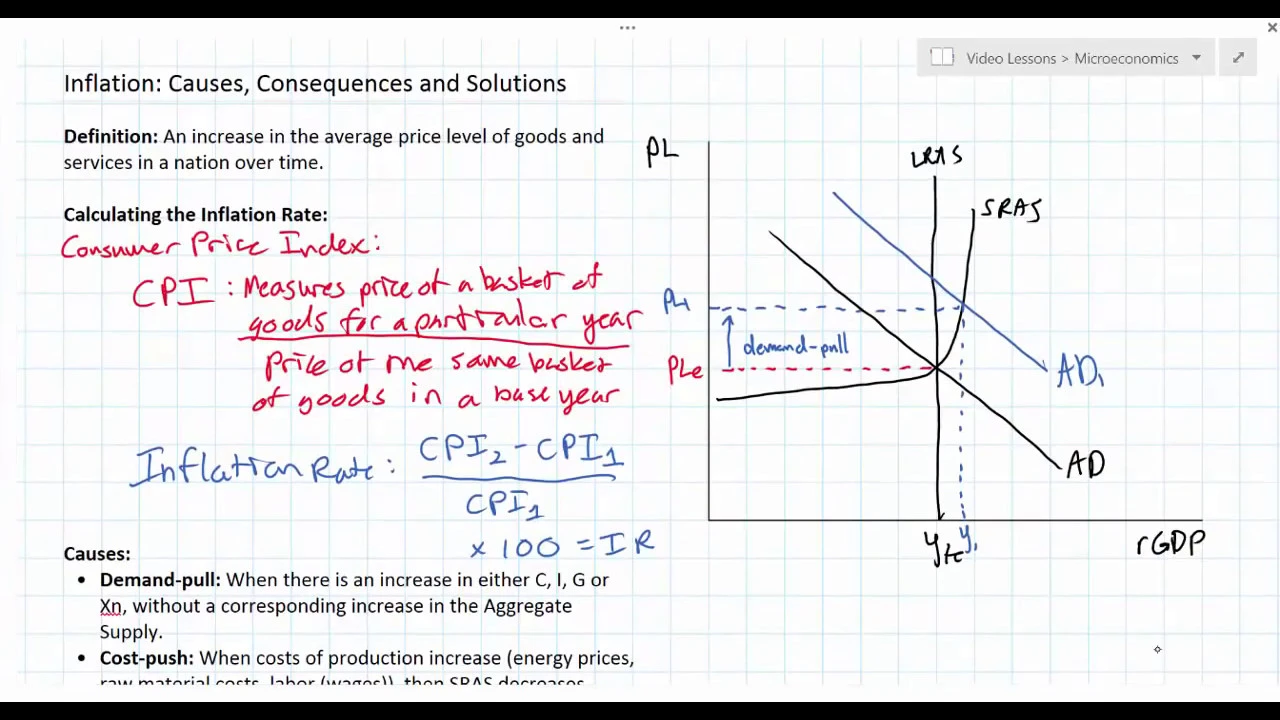
Analyzing macroeconomic shocks, such as stagflation (supply shocks) and demand-pull or cost-push inflation.
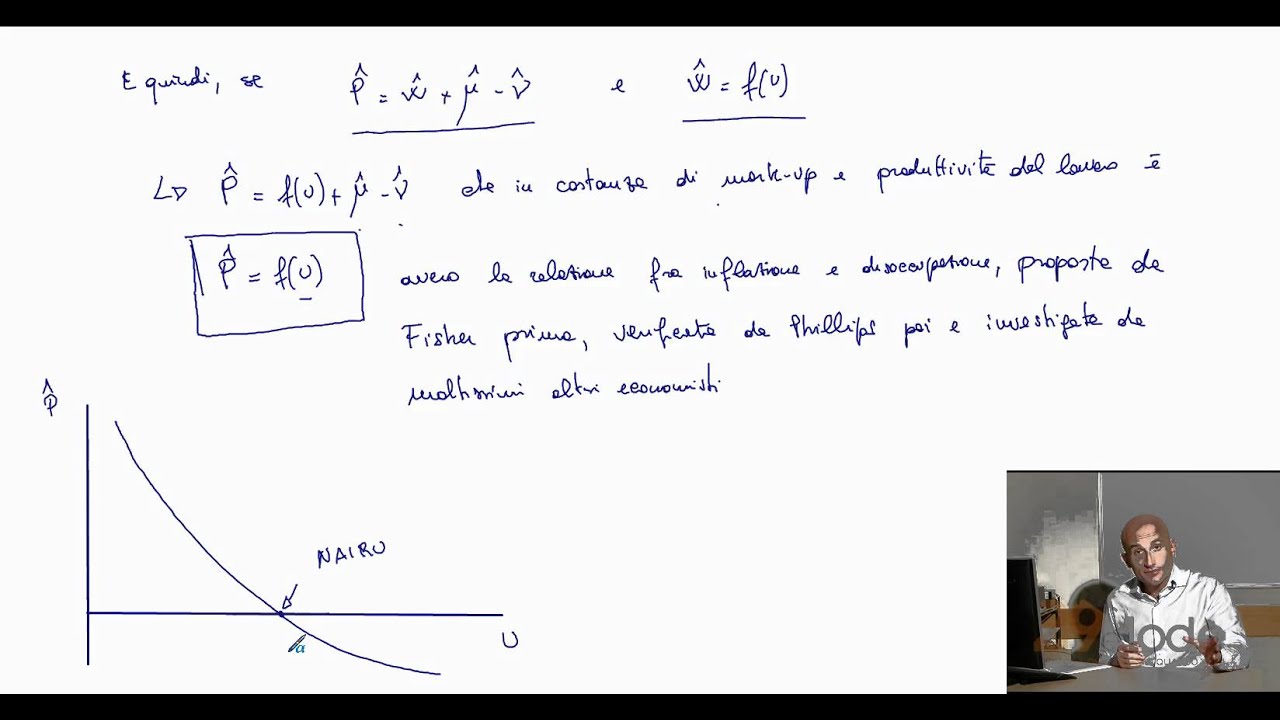
The Phillips Curve and its relationship to the AD-AS model in explaining the trade-off between inflation and unemployment.
315.5K views811likes5:33Original Release: 2009-10-10
Remember the three macroeconomic goals -- price stability, low unemployment, and high & sustained economic growth?
Is there a tool that we can use to allow us to understand how price level (P), unemployment (U), and real GDP, or quantity of goods and services (Q) are determined?
Well, we already have a tool, sort of: we’ll just need to adapt it.
It's the market tool: the supply and demand diagram.
Think about the supply and demand in a particular market determine the price and quantity in that market.
The issue is that the supply and demand in a particular market help you find the price of one product, not the price level of all products, and the quantity of one product, not the quantity of all goods and services (also known as GDP).
The single market supply and demand diagram is actually pretty simple to modify into a macroeconomic model.
Instead of looking at the demand for one product or service, we look at the aggregate demand for all products and services; and rather than the supply of a single commodity or service, let's use the aggregate supply of all commodities and services.
Then the equilibrium will represent the macroeconomic equilibrium; rather than the equilibrium price of a single product or service, it yields the equilibrium price level of the prices for all goods and services.
And instead of the equilibrium quantity of a single commodity, the equilibrium quantity of all goods and services, i.e., the real GDP, is yielded.
So let's take a closer look at our modified market model, starting with the aggregate demand.
Whereas demand for single product is a collection of all the quantities demanded for that product at various prices, and exhibiting an inverse relationship, the aggregate demand for all goods and services is an inverse relationship between price level in the economy and the quantity of all goods and services demanded, or a collection of all the aggregate quantities demanded for all goods and services at various price levels in the economy.
Why is there an inverse relationship?
That is, why are fewer goods and services demanded when price levels are higher?
Well, for a number of reasons really; if the overall price level for all goods and services is increasing, other things remaining equal, the existing income cannot buy as much as it used to.
Another reason is that as the domestic price level rises, foreign goods start to look much more attractive; households, businesses, and the foreign sector shy away from buying our more expensive goods.
Also, higher prices tend to drive interest rates up (more on that later, when we discuss credit markets), but that also depresses the amount of goods and services that the four sectors can buy, or want to buy.
Just like demand for single product, a change in the price level will not shift aggregate demand, but only cause a movement along it.
Is there anything that can shift aggregate demand?
Sure -- at a given price level, anything that changes total expenditures will change the overall aggregate demand.
Do you remember who makes expenditures on goods and services?
The household sector, the business sector, the government sector, and the foreign sector.
This means that anything other than the price level that affects household consumption (C), business investment (I), government spending (G), or net exports (X) will shift aggregate demand.
For example, in the 1990s, the US stock market really boomed, and many households found themselves, as the market climbed, with increased wealth.
This led to increased spending, or a rightward shift of aggregate demand.
TIME TO THINK: for discussion in our next class, what kinds of things, other than prices, could cause a change in 1) consumption, 2) investment, 3) government spending, or 4) net exports?
Now what about aggregate supply?
The aggregate supply is the direct relationship between price level in the economy and the aggregate quantity of goods and services supplied.
The aggregate supply curve, then, is just the collection of all price level/aggregate quantity supplied combinations.
Why is aggregate supply upward-sloping?
Well, for pretty much the same reasons that a single product supply curve is upward sloping – cost and profit.
As the price level rises in an economy, other things staying the same, more producers -- even inefficient, high-cost producers -- can produce and survive.
At a lower price levels, only the lowest-cost producers can continue.
On the profit side, at higher price levels, other things staying the same, profits are higher, giving greater incentive to produce.
TIME TO THINK: for our next class, what can shift aggregate supply?
Again, changes in price level will only cause movement along aggregate supply; what types of changes could occur that would have a broad effect on all types of production throughout the economy?
Where aggregate demand and aggregate supply meet, we find our macroeconomic equilibrium.
The price level, the quantity of goods and services, or GDP, and even an implied unemployment level (more GDP means more jobs and lower unemployment, lower GDP means fewer jobs and higher unemployment).
How will changes in aggregate demand and aggregate supply affect prices, GDP, and unemployment?
NEXT TIME: Does the economy self-adjust?
TRANSCRIPT0 (MACRO) EPISODE 24: AGGREGATE DEMAND & AGGREGATE SUPPLY
Up Next

13:43
Macroeconomics Overview: GDP, Inflation & Unemployment
@crashcourse
3.1M views•2015-08-24

5:07
Impact of Yuan in Indo-Russian Trade Amid Sanctions
@WION
261.9K views•2022-07-01

5:52
Crowding Out & Time Lags in Fiscal Policy: Macroeconomics
@mjmfoodie
153.4K views•2009-10-26

113:18
The Age of Easy Money: Fed & Inflation | Full Documentary
@frontline
21.2M views•2023-03-15
Related Study Plans & Knowledge Roadmaps
Structured learning paths in Economics
economics
Sovereign Debt: Defaults, IMF & Restructuring
01Introduction to Sovereign Debt & Government Bonds
02Debt Sustainability & Credit Ratings
03Anatomy and History of Debt Crises
+ 2 more learning modules
12h5 modules
Explore Roadmap
economics
Market Design: Matching Theory & Gale-Shapley
01Introduction to Market Design and Price-Free Markets
02Two-Sided Matching & The Gale-Shapley Algorithm
03School Choice Systems and Mechanism Design
+ 2 more learning modules
10h5 modules
Explore Roadmap
economics
Impossible Trinity: Forex, Capital & Policy
01Introduction to Monetary Policy and Central Banking
02Exchange Rates and International Capital Flows
03The Mundell-Fleming Model
+ 2 more learning modules
8h5 modules
Explore Roadmap
economics
Healthcare Economics: Market Failures & Systems
01Introduction to Healthcare Markets and Market Failure
02Asymmetric Information and Adverse Selection
03Moral Hazard and Insurance Design
+ 2 more learning modules
12h5 modules
Explore Roadmap