




















Fiscal policy faces two major challenges: crowding out, where government spending may reduce private consumption and investment by driving up interest rates, and implementation lags, which include data collection delays, legislative approval time, transmission time for implementation, and effectiveness time before the policy impacts the economy; these lags can cause expansionary fiscal policy to stimulate an economy that has already recovered, potentially triggering inflation instead of addressing the original downturn.
Crowding Out & Time Lags in Fiscal Policy: Macroeconomics
Added:Understanding the basic definition and goals of Fiscal Policy, specifically expansionary and contractionary measures.
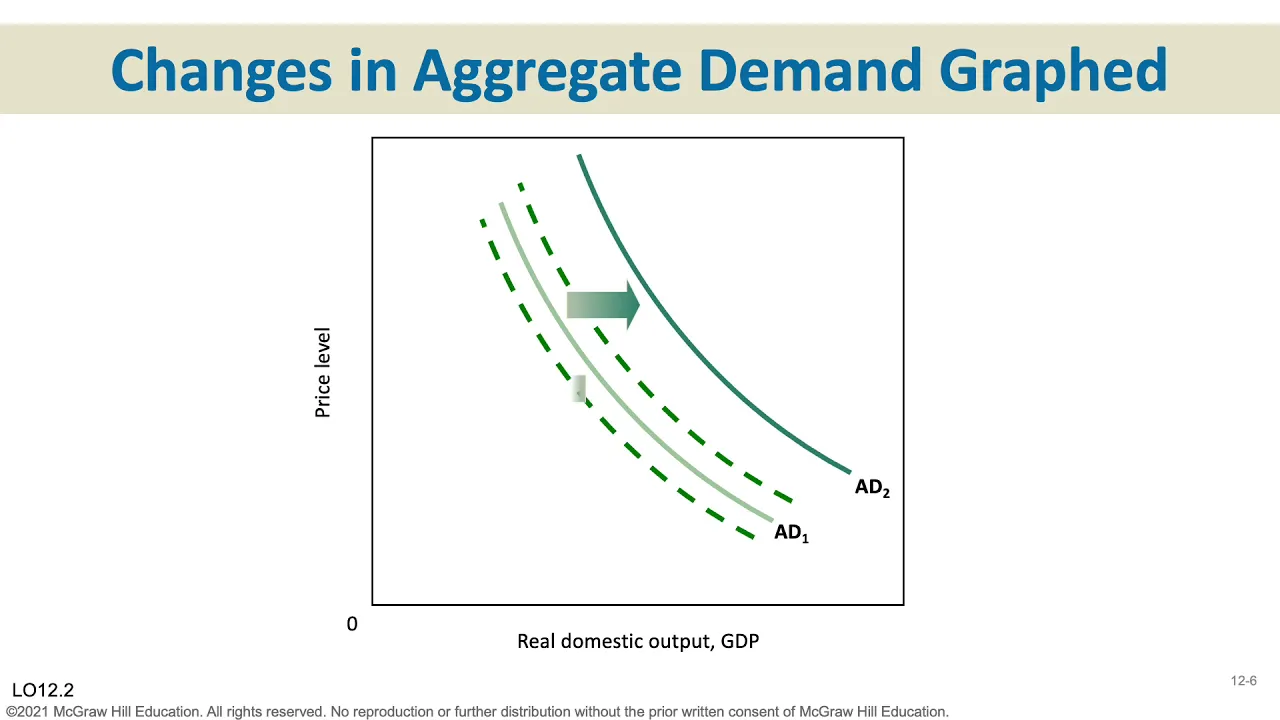
The Aggregate Demand and Aggregate Supply (AD-AS) model, including how shifts in aggregate demand affect price levels and real GDP.
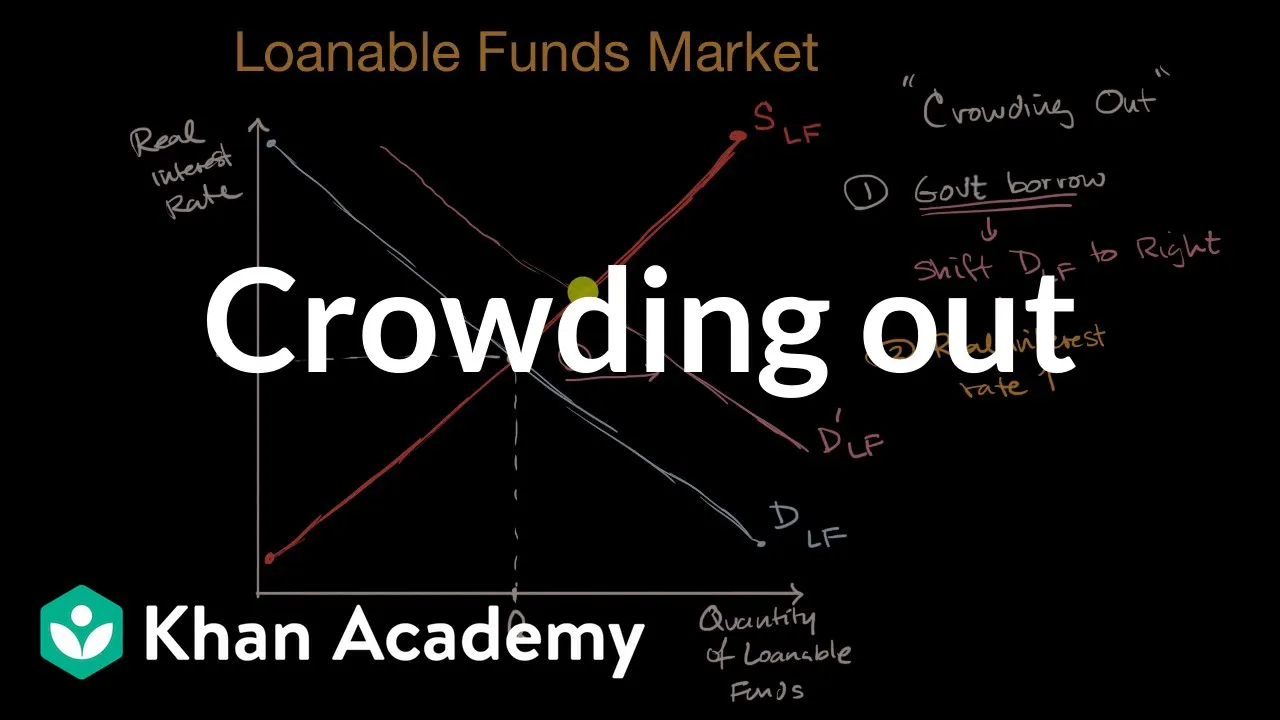
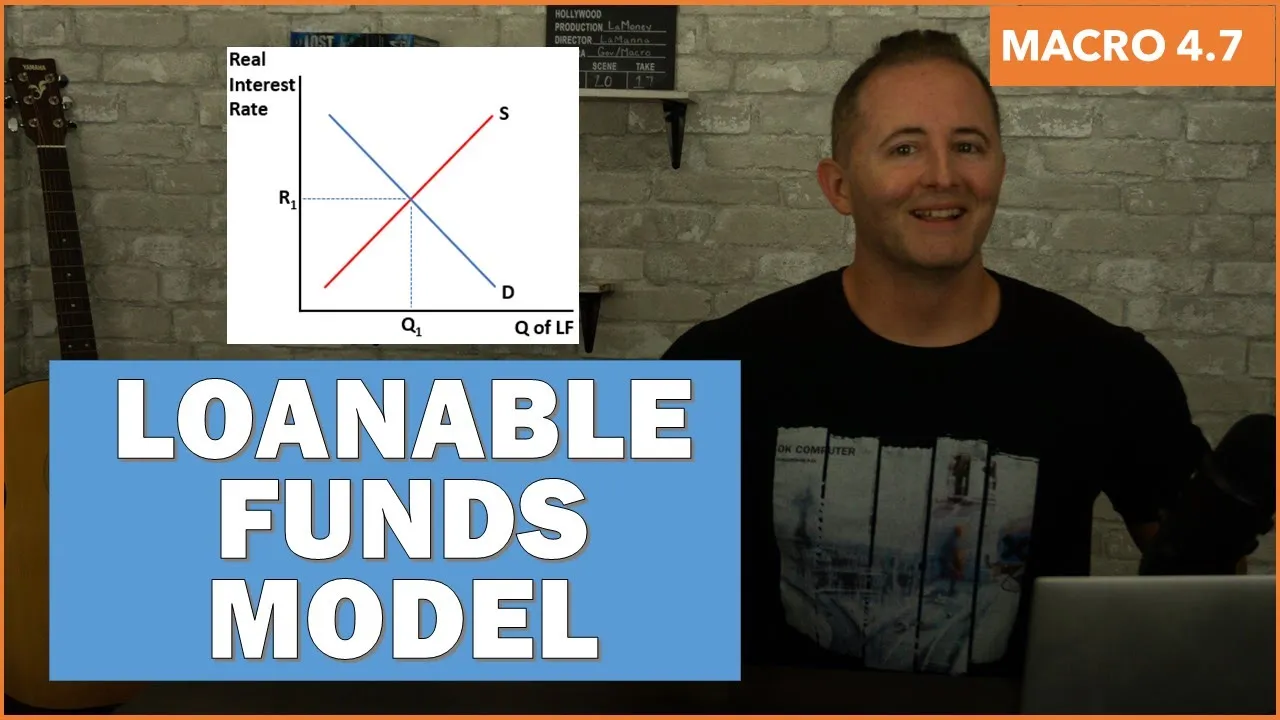
The Loanable Funds Market model, particularly how government borrowing increases the demand for loanable funds and influences real interest rates.
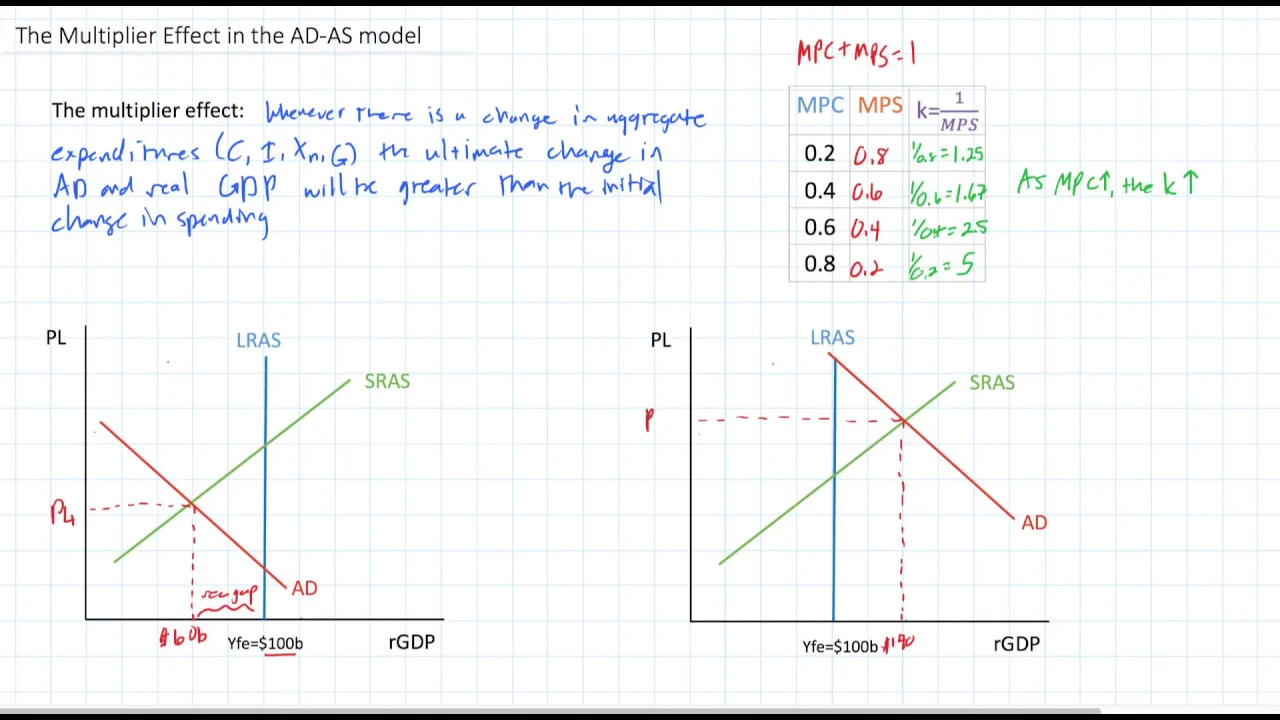
The concept of the Multiplier Effect and how initial changes in government spending can lead to larger shifts in aggregate demand.
The role of Automatic Stabilizers (such as progressive taxation and unemployment benefits) in mitigating macroeconomic fluctuations without legislative time lags.
Monetary Policy tools and how central banks can coordinate with fiscal policy to prevent or accommodate crowding out.
The Ricardian Equivalence hypothesis, which suggests consumers anticipate future taxes and save fiscal stimulus payouts, neutralizing the policy's effect.
The long-term implications of persistent budget deficits, national debt accumulation, and their impact on a nation's sovereign creditworthiness and economic growth.
153.4K views412likes5:52Original Release: 2009-10-26
Now that we know what fiscal policy is -- changes in government spending and taxation to achieve particular macroeconomic goals -- should we use it?
As usual, the answer is “it depends.” Perhaps the first question to ask is: can or will the economy correct itself?
If you believe that the economy will self-adjust, you would say “no” to active fiscal policy.
Well, what if you don't think the economy will self-adjust; then should we use fiscal policy?
Again, it depends.
First, will there be crowding out?
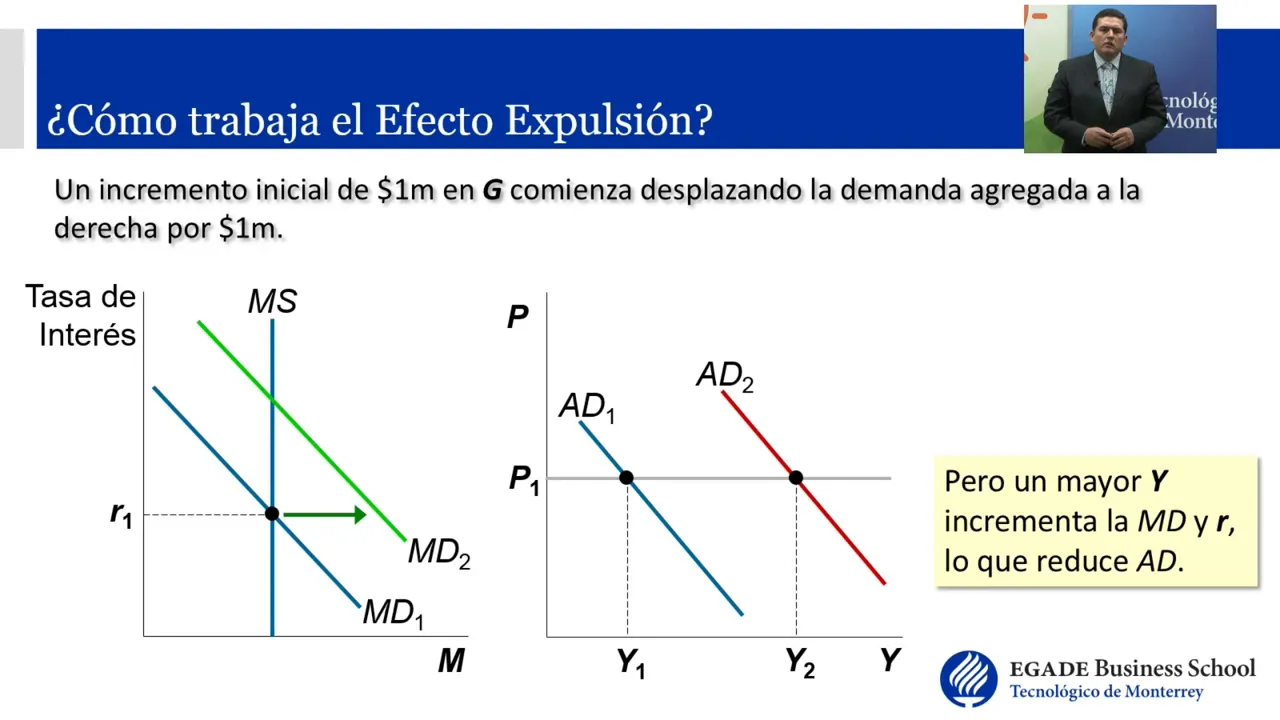
By definition, crowding out is the decrease in private expenditures that occurs as a consequence of increased government spending, or the financing needs of the deficit.
What this means is that, in some cases, the government uses fiscal policy, let's say, with the intent of giving the economy a boost -- and the policy has the unintended consequence of reducing spending by the other sectors, like household consumption and/or business investment.
This “crowding out” of the household and business spending can be direct, like building a library and having household purchases of books decline, or like providing government dollars for charter schools, and seeing households spend less on private tuition at Catholic schools; or the crowding out can be the indirect result of the expansionary policy.
If the government increases spending and/or decreases taxes it will increase its own deficit.
Then the government needs to borrow in order to pay for the overspending.
This added demand pressure for credit drives up the price of credit, or interest rates.
As interest rates rise, consumption and investment spending fall.
The amount of crowding out that occurs, if any, will depend on the type of fiscal stimulus used, since not all types of government spending could replace household and business spending.
TIME TO THINK: Can you come up with anything that the government spends money on that would not be related to -- i.e., not able to replace -- private spending?
It is possible to see complete crowding out, in which case the government spending is completely offset by reductions in household and investment spending.
If this is the case, then the end, there's no net increase in spending.
You might see incomplete crowding out, where the increase in government spending is partially offset by reductions in household investment spending.
If this occurs, there’s some net increase in spending, although not as much as the government had intended.
The third possibility is that there's no crowding out, i.e., the expansionary fiscal policy will be fully effective.
If this is the case, that is, if you do not think that the economy will correct itself, AND fiscal policy will be fully effective in changing aggregate demand, then should we use it?
It depends!
There's still one more pitfall to deal with -- the question of the timing of the policy.
Consider the following: Suppose there's a downturn in the economy.
First, how do I know there's been a downturn?
Remember, a recession is defined as two consecutive quarters of declining real GDP.
This means that somebody out there is gathering real GDP data for you.
If the actual downturn started say, in January, it may take a few months actually see the trend in the data and realize what's happening, particularly if the data is collected quarterly.
This is called the data lag, or the observation lag.
Second, so your economic analyst comes to you and tells you that real GDP has been declining for the last month or two; what do you do?
Is it going to turn into a recession?
Is it just the “January effect,” due to post-holiday declines in spending?
If you decide to hold out for the next set of data so you can tell if it's really a downward trend, then there's now a wait-and-see lag.
Third: So you wait and see, and after the next set of data, realize there is indeed a downturn in the economy.
Now the question is: what to do about it?
In a society like ours, the decision must come from our policymakers.
So there's a legislative lag as Congress tries to come up with a solution.
Fourth: After months of wrangling, the Congress agrees on a plan of action -- expansionary fiscal policy, perhaps in the form of increased government spending on new schools.
Of course, this requires getting bids for designs and construction, among other things; the transmission lag is the time it takes to actually put the plan into action.
Fifth: Once construction commences, how long before the money actually makes its way into the economy, and has an effect on aggregate demand?
The time it takes for the plan to affect the economy, once it's been implemented, is the effectiveness lag.
To see the potential problem inherent in these delays, think back to the business cycle.
If the initial downturn is in January, 1) we may not notice the decline until quarterly GDP data is released.
2) Because a downturn isn’t a recession until real GDP declines for two consecutive quarters, we may choose to wait in order to see if the problem is trend, or if it will self-correct.
3) Once we’ve determined there really is a problem, the legislature has to come up with and approve a plan of action.
4) Once the plan is approved, it has to be implemented.
And once it's implemented, it may be a while before the stimulus takes effect.
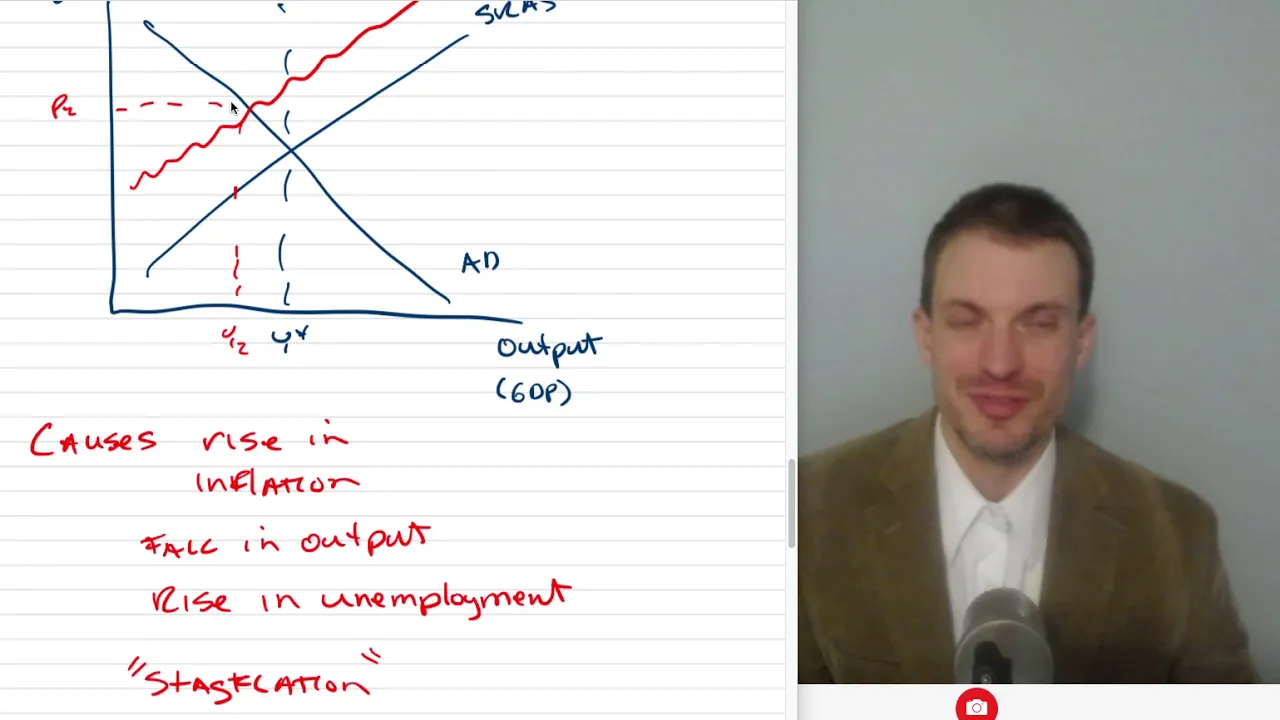
In this business cycle diagram, you can see the while expansionary policy is fully effective at increasing GDP, given the lags, we end up stimulating an economy that's already expanding, which causes a whole new set of problems – primarily, inflation.
TIME TO THINK: for our next class, I want you to bring your ideas as to how we could minimize each of these time lags, thereby compressing the total time, from the emergence of the problem to the impact of the solution on the economy.
NEXT TIME: Taxes and budget TRANSCRIPT0 (MACRO) EPISODE 27: CROWDING OUT AND LAGS
Up Next
14:29
Yanis Varoufakis on Greece's Austerity Crisis and Eurozone Reform
@DemocracyNow
14.5K views•2015-04-21
5:07
Impact of Yuan in Indo-Russian Trade Amid Sanctions
@WION
261.9K views•2022-07-01

5:33
Aggregate Demand and Aggregate Supply Explained | Macroeconomic Equilibrium
@mjmfoodie
315.5K views•2009-10-10

113:18
The Age of Easy Money: Fed & Inflation | Full Documentary
@frontline
21.2M views•2023-03-15
Related Study Plans & Knowledge Roadmaps
Structured learning paths in Economics
economics
Sovereign Debt: Defaults, IMF & Restructuring
01Introduction to Sovereign Debt & Government Bonds
02Debt Sustainability & Credit Ratings
03Anatomy and History of Debt Crises
+ 2 more learning modules
12h5 modules
Explore Roadmap
economics
Market Design: Matching Theory & Gale-Shapley
01Introduction to Market Design and Price-Free Markets
02Two-Sided Matching & The Gale-Shapley Algorithm
03School Choice Systems and Mechanism Design
+ 2 more learning modules
10h5 modules
Explore Roadmap
economics
Impossible Trinity: Forex, Capital & Policy
01Introduction to Monetary Policy and Central Banking
02Exchange Rates and International Capital Flows
03The Mundell-Fleming Model
+ 2 more learning modules
8h5 modules
Explore Roadmap
economics
Healthcare Economics: Market Failures & Systems
01Introduction to Healthcare Markets and Market Failure
02Asymmetric Information and Adverse Selection
03Moral Hazard and Insurance Design
+ 2 more learning modules
12h5 modules
Explore Roadmap