






![財政破綻するとどうなるの? 財務省さん、教えてあげるね[三橋TV256回]三橋貴明・高家望愛](https://i.ytimg.com/vi/Px4KiE0KK_g/hqdefault.jpg)

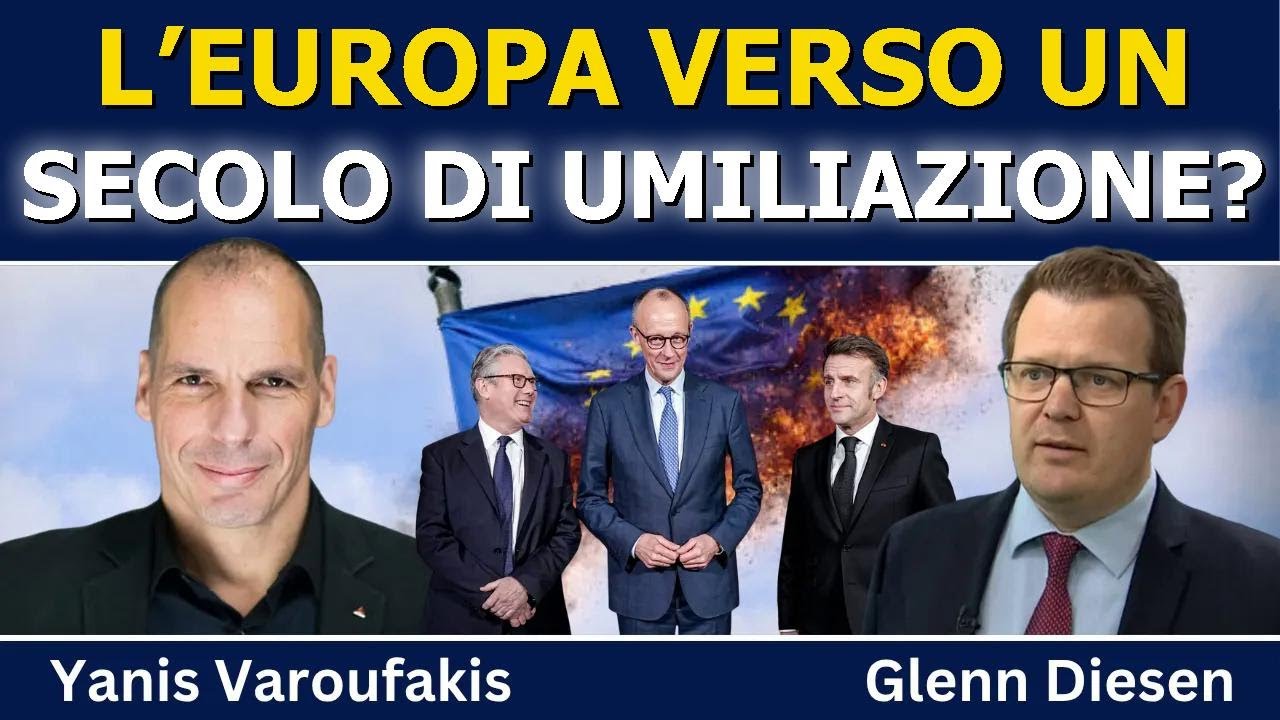

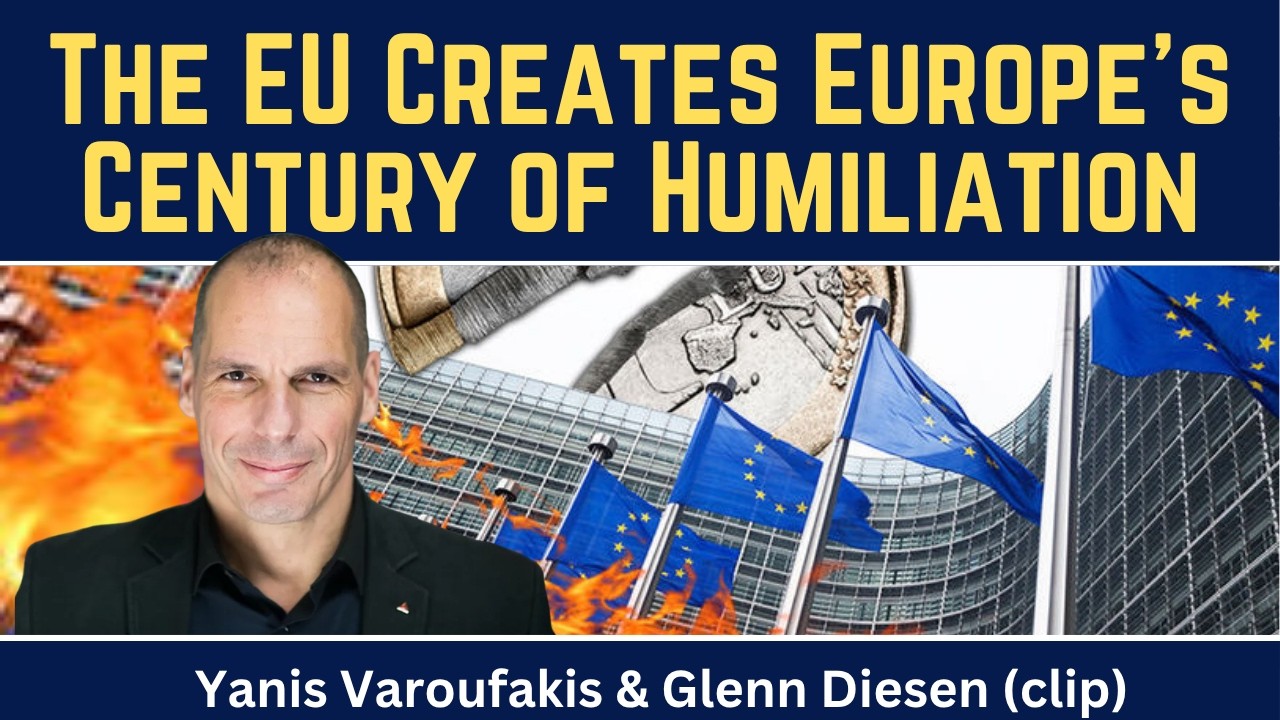






Greece's five-year austerity program under IMF and European creditors failed to stabilize the economy, instead causing continued recession, falling incomes, and rising debt; the country argues that austerity is self-defeating because it attacks incomes needed to repay debts, and proposes instead an investment package and structural reforms targeting oligarchy and inequality rather than punishing ordinary citizens.
Yanis Varoufakis on Greece's Austerity Crisis and Eurozone Reform
Added:The structure of the Eurozone and the role of the European Central Bank (ECB), particularly the separation of centralized monetary policy from decentralized national fiscal policies.
The basic principles of Keynesian economics versus Neoliberalism, specifically how government spending and austerity impact aggregate demand during a recession.
The origins of the European Sovereign Debt Crisis (2009-2015) and how nations like Greece accumulated high debt-to-GDP ratios.
The definitions of key macroeconomic terms such as fiscal deficits, sovereign default, bond yields, and structural adjustment programs.
The specific policy proposals championed by Yanis Varoufakis, such as 'The Modest Proposal for Resolving the Euro Crisis' and the concept of Eurobonds.
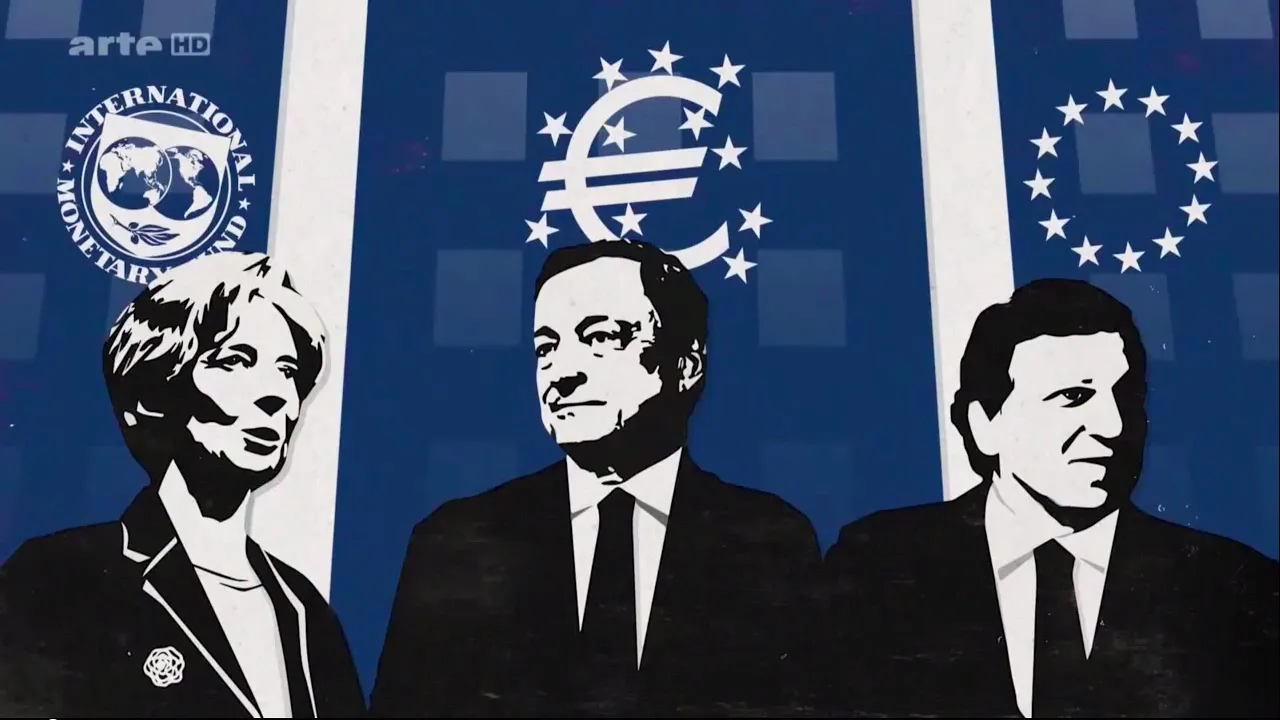
The institutional role and democratic legitimacy of the 'Troika' (the European Commission, ECB, and International Monetary Fund) in managing national economies.
The application of Game Theory to international political negotiations, analyzing Varoufakis's negotiation strategies against European creditors.
The long-term socio-economic outcomes of austerity in Southern Europe, evaluating whether the policies achieved fiscal consolidation or led to secular stagnation.
14.5K views162likes14:29Original Release: 2015-04-21
with the debt Clock ticking Greece is fast running out of money the country has ordered all state bodies to place their cash reserves in the nation's Central Bank the Bank of Greece as it struggles to stay afloat Greece is supposed to receive the last installment of its bailout funds from European creditors but the country's new leftist anti-austerity seresa party has expressed concerns about its terms the creditors are reportedly pressuring the country to restructure its labor market and curil its pension system sesa has instead done the opposite by increasing pension payments to lower wage workers speaking in Washington DC last week the head of the international monetary fund Christine lagard urged Greece to restore stability what needs to happen now is that the political views need to actually deliver the measures the tools the reforms that would actually reach the objectives that have been set between the International Community and Greece restore stability improve the economy make sure that one of these days Greece re accesses the financial Market on its own and without support so that's what needs to happen and we are completely available to work with the Greek authorities uh on those objectives on Friday Eurozone Finance ministers will decide whether to release emergency funds to Greece without the funds Greece May default on its debt payments in coming weeks and put its membership in the Euro Zone at risk for more we go directly to Athens Greece where we're joined by Greece's Finance Minister jannis varakis he's not only a political Economist but also something of a global celebrity Prospect magazine listem is number two on its list of the world's leading thinkers right after French Economist Thomas py and before Canadian author Naomi kleene jannis far Focus will come back to democracy Now can you tell us what you are calling for right now how high are the stakes I would like to phrase my answer in terms that do not resemble a Hollywood movie and a kind of conflictual Confrontation the way I see it is this Greece has been in a in a clasps of a major crisis for the last 5 years we had a very serious recession that led to a depression so the question is how can we put an end to this uh NeverEnding downward spiral so as to stabilize our economy create conditions for the return of a degree of social justice and also repay our debts to our creditors and there are two narratives here two competing narratives the official uh version until we got elected was that Greece was on the men that austerity was working our proposition to the Greek people on which basis we were elected were given a mandate was the opposite that the medicine wasn't working it wasn't just that it was bitter and we didn't want to take it it was that it was toxic and it was making a bad thing worse it was worse than the disease so this is what's at stake here you ask me how high are the stakes it's a question of establishing what needs to be done in order to return Greece to a sustainable path now jiannis vacus you've talked in your speech that you gave at the Brooking institution of the designed failures of the European Union could you talk about that look this is uh This Is An Open Secret it's a common secret that the Euro Zone was never designed in order to sustain the shock waves of the major financial markets uh uh earthquake of 2008 so it was uh like all monetary unions that lack um shock absorbing mechanisms mechanis for recycling surpluses let me give you an example in the American cont uh remember what happened 1929 there was a global currency of sorts the gold standard that created very sharp very quick flows of capital even back then even though the internet was not available at the time and there were no computers and that created uh bubbles that eventually burst beginning of course with Wall Street and the result was that the burden of adjustment went onto the deficit Nations and the deficit Parts within the United States so what did FDR do what did the revelt administration do with a new deal it created mechanisms for recycling deficits and surpluses within the United States of America uh through Social Security through the fed the FDIC so that when the next Crisis happened in 2008 which was of course Monumental even the United States then the next 1929 in 2008 happened uh the state of Nevada did not have to bail out the banks domiciled in Nevada and the state of Nevada did not have to worry about paying for the unemployment benefits you had these shock absorbing mechanism you had the FDIC looking after the uh the banks of Nevada and you had uh Social Security at the federal level paying through Surplus recycling by automatically without even a political decision taxes from New York State and California were diverted to pay for the unemployment benefits in Nevada these are the kinds of mechanisms that you need in order to render a monetary Union stable and Europe never had us I want to turn to the opposition lawmaker um kakos mitsotakis of the new Democracy party which is the former governing party of Greece he criticized uh your party the governing party sisis party's approach to Greece's financial troubles it's devastating for economic activity in Greece all this uncertainty the downgrading the fact that the government uh is is using all the available cash paying no one the fact that the banks are funneling all their liquidity to support the government it's completely catastrophic for um for the real economy so inaction has a real cost so yianis far yianis farus your response well look if it were true that uh the Greek economy was on the men prior to our election and it was on a sustainable path then my colleague would be right unfortunately it isn't true the Deb inflationary crisis was continuing um inexorably uh nominal incomes continued to fall private and public debt contined to rise the banks could not function as credit providing institutions investment was negative and generally speaking uh the Greek economy was uh like a drug addict that relied on the next dose uh of loans from its International and European creditors and what we tried to do was to say to our International and European creditors to our partners in Europe and to the whole world that uh this recipe was simply not working and we took a very considered View and very principal position we said that look if we sign on the dotted line of this existing program IMF inspired program then of course we will secure another 7 billion this is a new uh dose if you want uh and our addiction will continue but at least we will have our dose for a few more months we didn't take that dose we didn't sign on the dotted line because we want to get rid of the addiction we want to stabilize the Greek economy and if this means that there's going to be a standoff for a few months between us and our creditors who don't like to hear that the program they have been enforcing and implementing in Greece for the last 5 years was a failure nobody likes to be told that what I've been doing for five years is a failure well this is a price however we had to pay in order to reboot Greece and to reboot our relationship with our creditors the only way it could be heard was to say we're not interested in getting this loan trench until and unless we have a rethink of the whole program so that Greece stops going down the path of the downward spiral of debt deflation and if in the meantime this means that our bonds have been downgraded well from what from minus a million to minus 1 million and one right then so be it we were not elected to lie we were elected to say to our own people and to the people around the world that this medicine has not been working we need the new treatments well but meanwhile uh many world leaders keep putting pressure uh on Greece US Treasury secretary Jack Lou warned that a full-blown crisis in your country would impact the wider European and global economy this is what he said if there is a crisis uh you know it will first hit Greece and it will hit the Greek people very hard but it will is is something that the European global economy do not need to have another crisis so it's in everyone's interest to find that space uh but the Greek uh uh government needs to come forward with the kinds of details that the institutions and they can work through uh to find uh the kind of program that can have that kind of confidence and your response to treasury secretary Lou well secretary Lou is absolutely spot on quite right this is a crisis we don't have to have it's a standoff that we should uh have ended some time ago it is completely correct to say that uh if this negotiation fails to achieve a mutually advantageous outcome then the repercussions will be dire not just of course for the Greek people but for for the international economy we are completely in agreement with that and what I believe that Jack L has been doing over the last few days and weeks is he been applying pressure to both the Greek government of course but on the other hand the institutions the IMF the European Central Bank the European commission our European partners to get to an agreement on the question of proposals to settle this agreement I can assure you now for quite a few weeks actually months the Greek government has very clear proposals on how to settle this it is a matter of convincing the institutions the three institutions the ECB the European Central Bank the international monetary fund and the European commission that the ways of yesterday year the ways of the last 5 years were not solving the problem that we need deeper reforms we need a to get rid of the the idea that austerity is going to end the debt crisis we need an investment package for Greece and we need to together with our partners in the institutions to agree on a reform mechanism a reform package that attacks here in Greece the worst cases of rent seeking the oligarchy the various cartels instead of targeting the little people the pensioners who are living on $600 a month uh as if that is a reform that would work again yanis verus what will you do if Europe expels you from the Euro Europe is not going to expel us from from the Euro I refuse to believe that uh Europe would ever operate that way and remember that since uh the end of the second world war European peoples and their governments have been uh working tirelessly to bring closer integration together nobody in Europe wants to begin the process of disintegration over what is after all a very small philosophical difference of opinion regarding how to stabilize a small economy like Greece our position is that folks The Last 5 Years offer decisive proof that this program that you had agreed with previous governments was not working and now we need to REO it we need another one and we need one that makes perfect sense that it's completely undogmatic and which does two major things firstly it uh removes the austerity driven logic from the scene because it's self-defeating and it's it's pushing debts up rather than down by attacking incomes from which the debts will have to be repaid and secondly deep reforms that attack the malignancies of the Greek social economy and in particular the oligarchy and the very gross level of inequality which is adding to the crisis when you turning a society like Greece into less equal into a more unequal society and you reduce the tax base by allowing the rich to get away without paying their taxes to have tax immunity uh and constantly to be looking at small uh scale parasitic Behavior while neglecting the grand scale parasitic Behavior then you're are simply making a bad thing worse and and believe you me our prop proposals are eminently sensible we are bombarding the other side with reasonableness we want to come to a conclusion very quickly we were prepared months ago to come to an agreement we're working tirelessly to forge this agreement for the benefits of Greeks of Europeans and the global Community jannis farus we want to thank you for being with us the Finance Minister of Greece in the January 2015 general election he was elected to the Greek Parliament representing sisa and took office in the new govern of Alexis cpro soon afterwards he's a political Economist professor and author of some 15 books including the global minor America the true origins of the financial crisis and the future of the world economy as well as the book a modest proposal for resolving the Euro crisis this is democracy now when we come back we remember Pedro alisu compos stay with us
Up Next

46:51
Fiscal Multiplier Debate and Eurozone Crisis Analysis
@nipfpmf
270 views•2016-07-01
5:07
Impact of Yuan in Indo-Russian Trade Amid Sanctions
@WION
261.9K views•2022-07-01
10:33
Behavioral Economics Explained: Rationality, Nudges, and Risk
@crashcourse
1.1M views•2016-03-12

113:18
The Age of Easy Money: Fed & Inflation | Full Documentary
@frontline
21.2M views•2023-03-15
Related Study Plans & Knowledge Roadmaps
Structured learning paths in Economics
economics
Sovereign Debt: Defaults, IMF & Restructuring
01Introduction to Sovereign Debt & Government Bonds
02Debt Sustainability & Credit Ratings
03Anatomy and History of Debt Crises
+ 2 more learning modules
12h5 modules
Explore Roadmap
economics
Market Design: Matching Theory & Gale-Shapley
01Introduction to Market Design and Price-Free Markets
02Two-Sided Matching & The Gale-Shapley Algorithm
03School Choice Systems and Mechanism Design
+ 2 more learning modules
10h5 modules
Explore Roadmap
economics
Impossible Trinity: Forex, Capital & Policy
01Introduction to Monetary Policy and Central Banking
02Exchange Rates and International Capital Flows
03The Mundell-Fleming Model
+ 2 more learning modules
8h5 modules
Explore Roadmap
economics
Healthcare Economics: Market Failures & Systems
01Introduction to Healthcare Markets and Market Failure
02Asymmetric Information and Adverse Selection
03Moral Hazard and Insurance Design
+ 2 more learning modules
12h5 modules
Explore Roadmap