Housing Policy Economics: Zoning & Rent Control
Learning Goal: Evaluate the microeconomic impacts of urban housing policies, analyzing how zoning regulations, rent control, and housing vouchers affect supply, demand, and affordability.
- Prerequisites: Basic algebra (solving systems of linear equations). No prior economics experience required.
- Estimated Total Study Time: 12 hours
Module 1: Foundations of Microeconomics: Supply and Demand
Understand how competitive markets reach equilibrium, and how shifts in supply and demand curves alter prices and quantities.
Recommended Videos
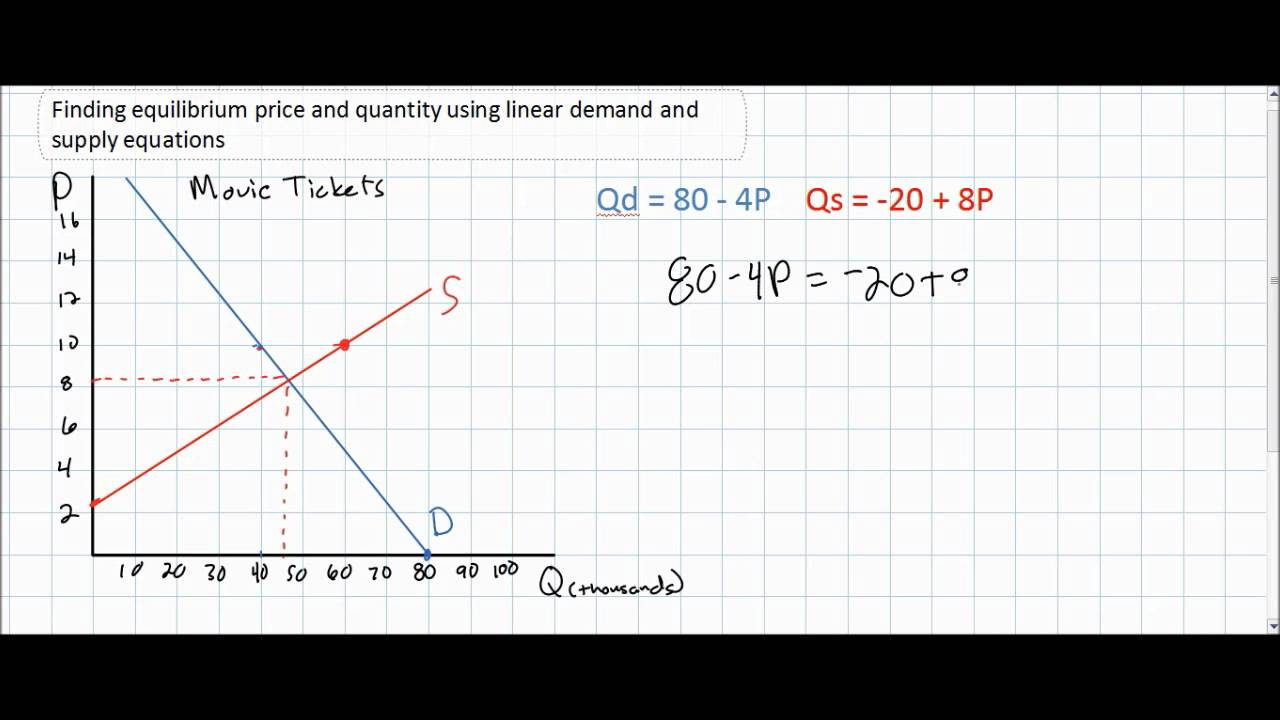
Why this video: This video bridges the gap between conceptual supply and demand and quantitative microeconomics. By demonstrating how to mathematically set the quantity demanded () equal to the quantity supplied (), the learner gains the core algebraic skills required to solve for equilibrium price () and quantity ().

Why this video: This video reinforces mathematical modeling by showing both the step-by-step linear algebra to solve for equilibrium and its direct graphical representation. It ensures that learners understand how changes in coefficients affect the slope and intercept of supply and demand curves.

Why this video: A clear introduction to the supply and demand model as the "workhorse" of microeconomic analysis. This lecture outlines how individual decision-making aggregates into market-level predictions, serving as an excellent foundational concept before diving into market interventions.
Knowledge Checkpoint
- Solve for equilibrium price () and quantity () given and .
- Distinguish between a change in "demand" (shifting the curve) and a change in "quantity demanded" (moving along the curve).
- Graphically plot a linear demand and supply curve and identify the market-clearing equilibrium.
Module 2: Price Controls, Surplus, and Market Inefficiency
Learn how government-mandated price ceilings and floors disrupt equilibrium, causing shortages, surpluses, and deadweight loss.
Recommended Videos
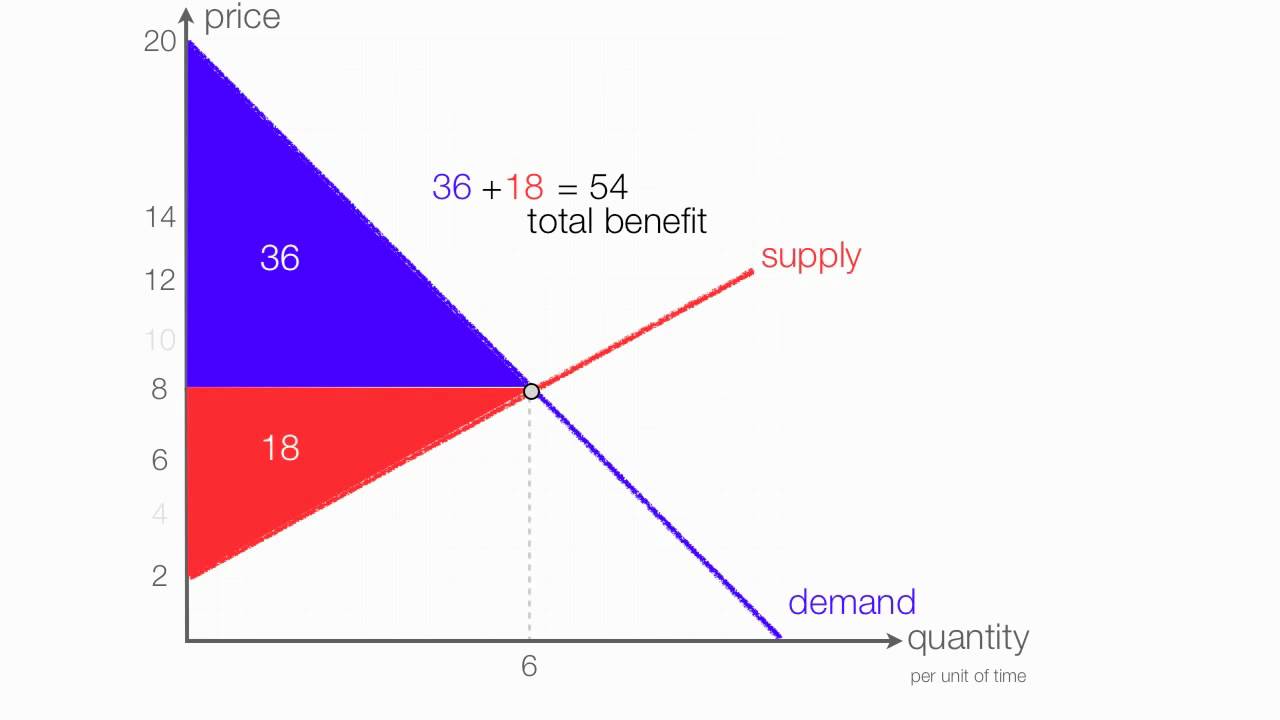
Why this video: This tutorial walks through the exact mathematical steps to calculate consumer surplus (CS), producer surplus (PS), and deadweight loss (DWL) when a price ceiling is introduced below the competitive equilibrium. This quantitative calculation is essential for understanding the efficiency loss in housing markets.
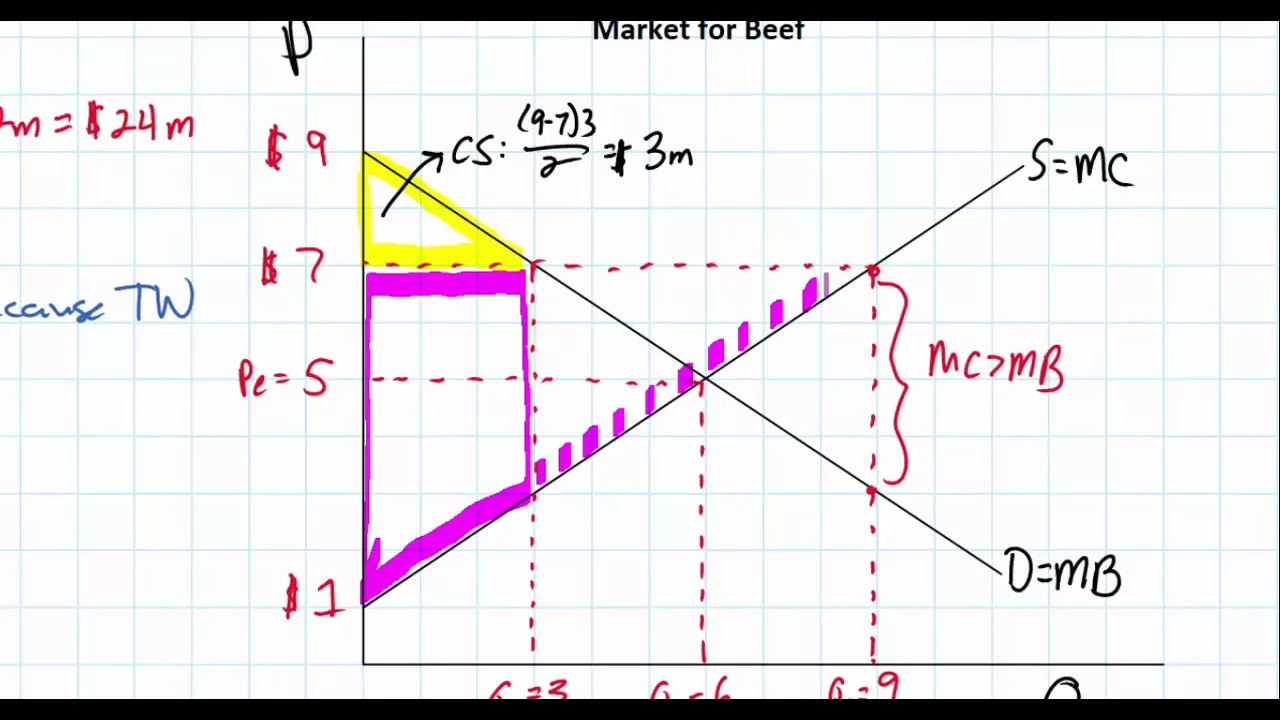
Why this video: An in-depth exploration of welfare economics. It explains why any deviation from the competitive market-clearing price reduces total social surplus (allocative inefficiency) and details how to calculate the triangular area of deadweight loss.

Why this video: This fast-paced, highly visual overview introduces price ceilings (maximum legal prices) and price floors (minimum legal prices). It outlines the broad, often unintended consequences of government price interventions, establishing the conceptual bridge to rent control.
Knowledge Checkpoint
- Define Consumer Surplus, Producer Surplus, and Economic Surplus.
- Calculate the area of Deadweight Loss (DWL) using the triangle formula: .
- Explain why a binding price ceiling (set below equilibrium) always creates a market shortage ().
Module 3: The Economics of Rent Control
Analyze the microeconomic impacts of rent control on housing supply elasticity, apartment quality, black markets, and tenant mobility.
Recommended Videos

Why this video: This segment offers a direct microeconomic evaluation of rent control as a price ceiling. It defines how rent control artificially limits housing prices below market equilibrium and describes the resulting structural housing shortages.
Why this video: This video introduces empirical evidence on rent control, specifically discussing the landmark Diamond & McQuade study of San Francisco's 1994 rent control expansion. It highlights how landlords responded by reducing supply, converting rental units to condos, and decreasing overall housing availability.
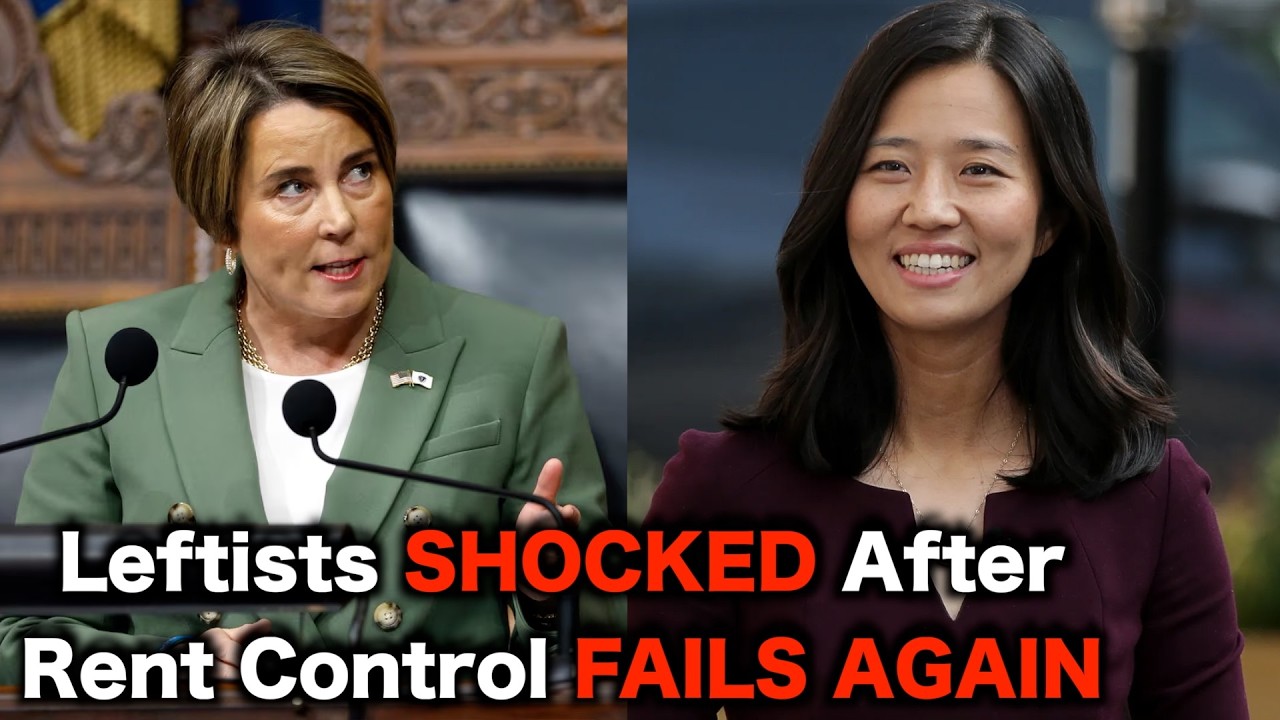
Why this video: Discusses the microeconomic incentives landlords face under rent stabilization. It illustrates how price caps discourage property maintenance and capital investments, leading to a long-term decline in the quality of the housing stock.
🔍 Independent Study Gap: Rigorous Graphical Rent Control Analysis
Curriculum Note: While the video pool contains great conceptual and empirical critiques of rent control, it lacks a highly technical, blackboard-style graphical lecture detailing long-term housing supply elasticity adjustments.
Self-Directed Study Action: Please go to YouTube and search for: "rent control supply and demand graph microeconomics" or "rent control deadweight loss and quality reduction lecture".
Focus your self-study on understanding:
- How the short-run supply of housing is highly inelastic (vertical), meaning rent control causes small initial shortages.
- How the long-run supply of housing becomes highly elastic (flatter), as landlords convert apartments to condos or abandon buildings, causing the shortage gap () to widen dramatically over time.
Knowledge Checkpoint
- Draw a standard housing market supply and demand graph showing a binding rent control ceiling. Label the shortage, deadweight loss, and changes in CS and PS.
- Explain how the Diamond & McQuade study empirically proves the long-run supply elasticity of housing.
- Detail three non-price rationing mechanisms that emerge under rent control (e.g., key money, discrimination, deterioration of quality).
Module 4: Zoning Laws and Housing Supply Elasticity
Evaluate how land-use regulations, zoning restrictions, and density limits constrain housing supply and inflate urban land values.
Recommended Videos

Why this video: This video provides an excellent economic breakdown of how zoning regulations have become increasingly restrictive over the past several decades. It details how land-use laws act as artificial supply constraints, driving up prices by preventing denser developments.

Why this video: This video evaluates the institutional mechanics of zoning, showing how minimum lot sizes, single-family home mandates, and density restrictions legally limit housing density. It explains how these local political rules shift the supply curve of housing, reducing its price elasticity.

Why this video: A short but powerful diagnostic clip highlighting that up to 70-90% of residential land in major US cities is zoned exclusively for single-family homes. This legal restriction prevents multi-family construction and directly constrains the supply of affordable housing.
🔍 Independent Study Gap: Microeconomic Graph of Zoning & Supply Elasticity
Curriculum Note: To fully grasp this topic, you must understand how zoning alters the price elasticity of supply ().
Self-Directed Study Action: Search YouTube for: "how zoning laws affect supply elasticity economics".
Focus your self-study on understanding:
- How a zoning constraint acts as a physical quota on housing units, making the supply curve completely vertical (perfectly inelastic) once the regulatory limit is reached.
- Why any increase in urban demand () in a vertically-constrained market leads entirely to higher prices () rather than new construction ().
Knowledge Checkpoint
- Explain how single-family zoning restrictions act as an artificial barrier to entry in the housing construction market.
- Describe the difference in price impact when demand increases in a city with elastic housing supply (e.g., Houston) vs. inelastic housing supply (e.g., San Francisco).
- Define "upzoning" and explain how it shifts the housing supply curve.
Module 5: Housing Vouchers and Public Housing Solutions
Examine how housing vouchers (like Section 8) affect renter demand, landlord pricing behavior, and overall rental market affordability, and contrast them with municipal supply-side builds.
Recommended Videos

Why this video: This video introduces the administrative and economic basics of the Section 8 Housing Choice Voucher program. It explains how demand-side subsidies work by having tenants pay roughly 30% of their income toward rent, while the government covers the remaining market rate.

Why this video: This video addresses a major debate in urban planning: supply-side vs. demand-side policy. It compares demand-side rent vouchers to municipal, state-built public housing, exploring the funding and structural differences between the two.

Why this video: This clip introduces the concept of voucher-induced demand shifts and landlord capture. It explains how guaranteed government voucher payments can create incentives for landlords to raise rents up to the maximum allowable subsidy level.
🔍 Independent Study Gap: Microeconomic Incidence of Housing Vouchers
Curriculum Note: To understand how the benefits of a housing voucher are shared between the tenant and the landlord, you need to study "Tax/Subsidy Incidence."
Self-Directed Study Action: Search YouTube for: "economic incidence of housing vouchers landlord tenant" or "subsidy incidence microeconomics".
Focus your self-study on understanding:
- How a housing voucher shifts the tenant's demand curve upward/outward.
- Why, when housing supply is highly inelastic (due to zoning laws), landlords are able to capture the majority of the voucher value through higher rent prices.
- Why vouchers are highly effective at expanding housing choices only when the underlying housing supply is elastic.
Knowledge Checkpoint
- Contrast "demand-side" subsidies (vouchers) with "supply-side" interventions (public housing construction).
- Using supply/demand curves, show how a voucher shift leads to price inflation when supply is inelastic.
- Explain why landlords might discriminate against Section 8 voucher holders despite guaranteed government funding.
Module 6: Synthesizing Housing Policy Trade-offs
Compare and contrast rent control, zoning reform, and vouchers to design balanced urban policies that promote affordability and growth.
Recommended Videos

Why this video: Journalist Jerusalem Demsas synthesizes the housing crisis by contrasting supply-side constraints (local zoning vetoes) with demand-side protections. This helps learners see how different policies can conflict or complement one another.

Why this video: This video explores the triple-constraint of urban planning: desirable climates, walkable transit-rich urban design, and housing affordability. It evaluates how different cities use policy combinations to manage these trade-offs.

Why this video: An overview of Vienna's social housing model, which combines public ownership, zoning tools, and limited private developer incentives. It offers a real-world case study of alternative housing policy integration.
Knowledge Checkpoint
- Complete a comparison matrix of Rent Control, Zoning Reform, and Vouchers across three dimensions: Supply Impact, Fiscal Cost to Government, and Targeted Benefit to Low-Income Households.
- Explain how restrictive zoning laws can undermine the goals of a housing voucher program.
- Argue both sides of the "Vienna Model" vs. "Market-Rate Construction" debate regarding urban affordability.
Course Map
Key People Index
- Carl Menger: Austrian economist credited with co-founding the marginalist utility revolution in the 1870s, establishing subjective value theory which underpins demand modeling.
- Thomas Sowell: Prominent free-market economist and social theorist whose work often critiques government price controls, rent control, and building restrictions as generators of structural inefficiency.
- Rebecca Diamond & Timothy McQuade: Academic economists whose landmark 1994 San Francisco empirical study demonstrated that rent control expansion reduces market-wide rental supply by incentivizing landlord condo conversions.
- Jerusalem Demsas: Urban policy writer and journalist specializing in institutional barriers to housing construction, nimbyism, and land-use economics.
Final Self-Assessment
- Can you algebraically calculate the equilibrium price and quantity of a market given its linear demand and supply equations?
- Can you identify the graphical changes in Consumer and Producer Surplus when a price ceiling is introduced?
- Do you understand why a binding price ceiling leads to a deadweight loss triangle, and can you calculate its area?
- Can you explain the difference between short-run and long-run housing supply elasticity, and why rent control's negative supply impacts worsen in the long run?
- Can you identify the three main empirical findings of the Diamond & McQuade San Francisco rent control study?
- Can you explain how zoning restrictions (such as single-family minimum lot sizes) make the housing supply curve highly inelastic?
- Can you use supply and demand curves to show how a demand-side subsidy (housing voucher) can lead to rent price inflation when housing supply is inelastic?
- Can you contrast the market impacts of a voucher program (demand-side) with municipal public housing construction (supply-side)?
- Can you describe the core trade-offs of the Vienna social housing model compared to a market-rate construction approach?