















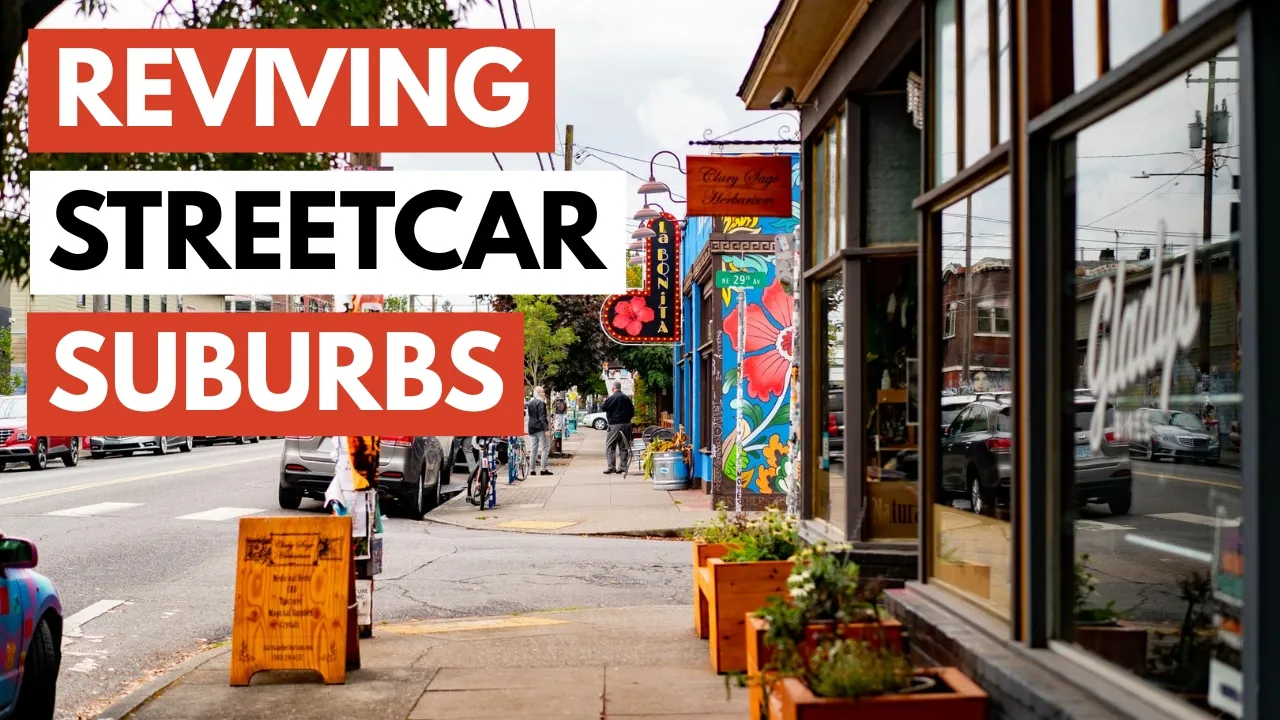





In urban planning and real estate, there is a fundamental trade-off between three desirable city characteristics: sunny weather, good urbanism (walkability, transit access, bikeability), and housing affordability, meaning it is difficult to find cities that excel in all three areas simultaneously; Pareto efficiency analysis shows that cities like Albuquerque offer the best affordability with acceptable weather, while Salt Lake City provides strong urbanism with good weather, and Tampa delivers the most consistent sunny weather, but none achieve excellence across all three dimensions.
Pareto Efficiency in Urbanism, Weather, and Housing Affordability
Added:The fundamental economic concept of Pareto Efficiency (or Pareto Optimality) and the concept of a Pareto Frontier.
Basic principles of urban planning and 'urbanism', including walkability, density, and public transit-oriented development.
The economic drivers of housing markets, specifically how supply constraints and location desirability dictate pricing.
The concept of trade-offs and multi-objective optimization, where maximizing one desirable factor (e.g., affordability) often compromises another (e.g., premium geographic location).
Advanced spatial economics models, such as the Alonso-Muth-Mills model, which mathematically describe urban density and rent gradients.
The role of municipal zoning reform and land-use policies in shifting a city's Pareto frontier to allow for both density and affordability.
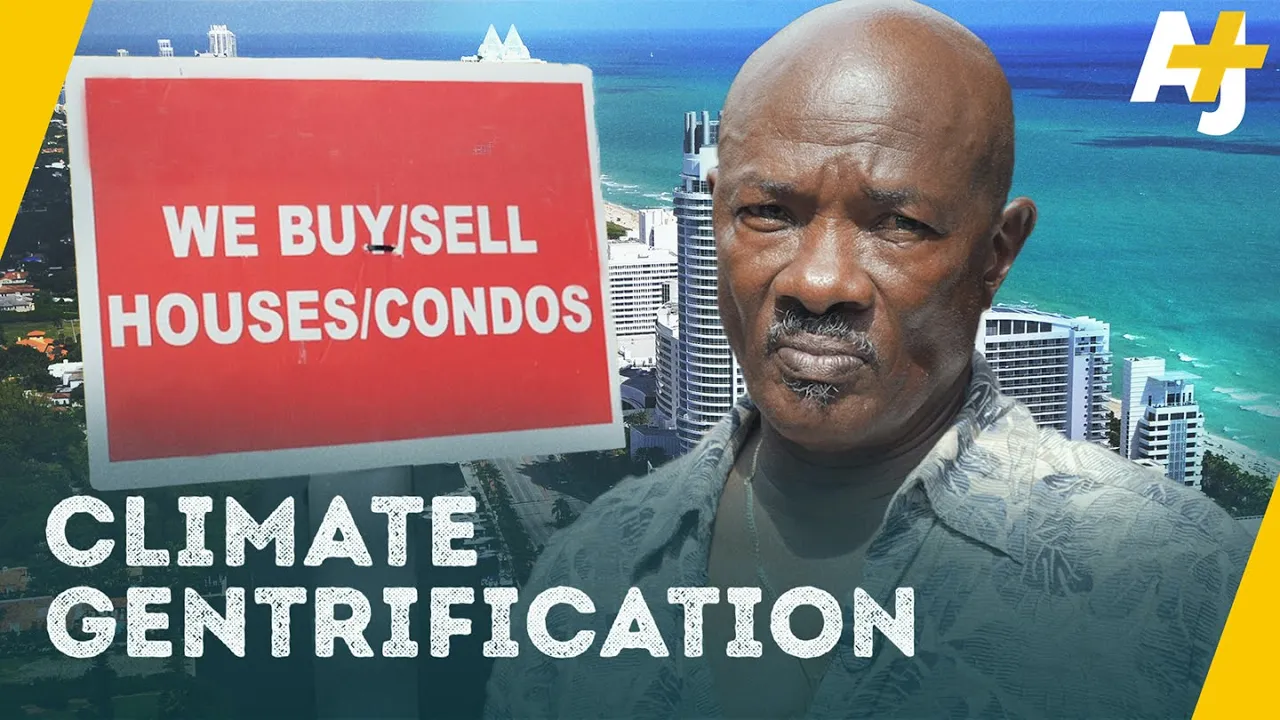
The emerging phenomenon of 'climate gentrification,' where changing global weather patterns and environmental resilience shift urban desirability and property values.
The application of Multi-Criteria Decision Analysis (MCDA) in public policy to objectively balance competing civic demands.
279.9K views12.4Klikes11:22Original Release: 2023-08-09
when you're ready to move to a new city and you're trying to choose where to live you can have good urbanism you can have sunny weather and you can have housing affordability but you kind of have to pick two well today we're going to do something a little different to see how close we can get to having all three and it's coming up next this is City nerd weekly content on cities and transportation viewer suggested topics always welcome including this one from my patreon in response to one of my affordable urbanism videos hi Mr nerd would you consider doing a West Coast version of these affordable urbanism videos whenever you add a cost of living metric it basically just signals that there won't be any California or Washington on the list a lot of people are willing to pay a premium to live in California and income scale somewhat with cost of living so I don't think the audience would be too limited do incomes really scale though yeah cost of living in wages in a region usually do move in the same direction but ask a school teacher in the Bay Area if their income scales so one of the big themes of this channel is that the places that are walkable and have good urbanism however you define it tend not to be affordable and the hidden gems you find are almost always in places with terrible weather and my slightly toned deaf answer to that has always been the weather in those cities is tolerable most of the year and with the money you save you can just like go to Mexico in the winter this is pretty disingenuous on my part though you would think as someone who grew up in Seattle and lived in Portland for a long time I'd be acclimated to the Rain like a true Pacific northwesterner but the truth is as great as the weather is in that region in the summer the six to eight months of drizzly winter really wore on me year after year I don't want to try to pathologize it by calling it seasonal affective disorder but let's just say gray skies and near continuous precipitation don't do much for my day-to-day frame of mind so yes people will pay a premium to live in a place that has weather and walkability I mean you can be forgiven for wondering what's the point of quote unquote good urbanism if it just sucks to be outside so I get a lot of people who just want me to jump straight to the answers in my top 10 list of videos or people who post a spoiler comment that lists the top 10 with time stamps super helpful on the other hand I do have people who are super interested in how I think about this stuff and how I do the analysis and to be perfectly honest I'm a lot more interested in making the second type of person happy so here's what I'm doing today for housing affordability and using the median monthly rent per square foot for the Central City of all U.S Metro areas larger than 500 000 population because I do want to live in a reasonable sized Metro and I just don't want to live in a suburb I talked about the dualsi data set in a recent video where I looked at affordable urbanism by ZIP code and this time I just aggregated it by city for urbanism I kept it pretty simple I took walk score Transit score and bike score ratings and I just averaged them to make an urbanism score for each city for weather I Define good weather as San Diego basically which for 11 out of 12 months of the year has an average low above 50 Fahrenheit an average high below 90 and less than three inches of precipitation and I just counted the number of months where each city meets this criteria this isn't to say you can't have stretches of Pleasant weather in cities that just don't hit the criteria at all like New York but I'm looking for something a little more consistently sunny in today's video so months of San Diego weather is a pretty good proxy and here's a shocker I'm not going to make a top 10 list out of this one or even a tier list instead I want to talk about an analytical framework that's sometimes called multi-objective optimization or multi-criteria analysis but which I'm just going to call Pareto efficiency it's all about assessing trade-offs and the idea in this case is across the three variables or Dimensions I'm using I'm going to show you cities where you can't improve on any single Dimension by choosing a different city without degrading another dimension so for example Oakland is actually a Pareto efficient City in this analysis with eight months of San Diego weather a year you can't find a cheaper city that has the same weather or better without sacrificing on urbanism and you can't find a city with better urbanism without sacrificing on affordability and in some cases you have to sacrifice on both final disclaimer if I haven't made this all abundantly clear by now this list is for people who are willing to sacrifice urbanism for weather otherwise the answer is it's always going to be Chicago and Philadelphia okay this is going to be different and interesting I think so let's get into it the way I'm going to do this is I'm going to try to maximize for one of the three variables at a time while still meeting some minimum criteria for the other two for example I'm not going to give you any cities that score poorly on urbanism or that cost more than two dollars a square foot or have fewer than three months of San Diego weather a year so if I'm optimizing for weather the winner is Tampa Florida with eight months a year of the prescribed weather and the look none of the Cities I'm going to show you is gonna be Amsterdam in terms of urbanism but on the other hand Amsterdam doesn't have good Cuban food and Dutch people have terrible personalities I'm going to give you a sort of an honorable mention for each variable so for weather it's Sarasota also eight months a year it's above two bucks a square foot so kind of broke my rule but it does rate better than Tampa on urbanism so it is also Pareto efficient okay let's move on to my winner win I'm optimizing for price and that's Albuquerque you still get three months of San Diego weather and some other pretty good months too to be honest the urbanism score is not great but it is dragged down by the transit which I think is fair but a lot of the really livable parts of the city are in walkable or bikeable range from each other the city does have a pretty good bike score it's pretty flat the weather's fairly dry all year so may maybe you can live with Daisy Transit my backup City on Price is Las Vegas more expensive than Albuquerque and a worse urbanism score but four months a year of San Diego weather so it is Pareto efficient outside those four months though take it from someone who lived there there are definitely stretches of the year when people in Vegas just don't hang out outside which I think is a bit of a detriment to whatever urbanism the city has okay I've got some honorable and dishonorable mentions as well as the city that really maximizes for urbanism while still being somewhat affordable and having a lot of pretty nice weather and a couple backup options as well but first quick reminder to click a bunch of stuff that makes the algo happy if you're enjoying this tour of Sunny cities that have limited but interesting urbanism I can be found on a lot of different apps and joining patreon done is a great way to support the channel and engage with a tight-knit community of like-minded folks honorable mentions I'm just going to give you the other two cities that met my threshold criteria and are also Pareto efficient but just aren't standouts in any single Dimension One is Orlando Florida and the other is Fresno California which is probably nobody's idea of an urbanist Utopia but maybe the high-speed rail capital of the US and the not too distant future dishonorable mentions are cities that just get like dominated in a multi-criteria analysis Austin Texas it's okay weather significantly more expensive than Albuquerque it's worse on the urbanism score I guess on the other hand Albuquerque is kind of deficient when it comes to insufferable Tech Bros marginally talented musicians and being the seat of handmaid's tale type Statewide Politics the breakfast tacos are pretty good though so I guess it's a wash and dishonorable for San Francisco the best urbanism score out of all my nice weather cities and Far Far and Away the most expensive it's like the ultimate walkable urbanism for the rich city okay let's get to our top recommendation if you're prioritizing urbanism and it's Salt Lake City Utah you get a lot of very nice weather in the warmer months and access to the mountains in the colder months which I didn't count but honestly walking biking and Transit are all pretty strong especially for a city this size and you know what both Ogden and Provo which are separate Metro areas over half a million are also Pareto efficient and yeah maybe there's a common denominator here in terms of diversity or cultural fit I don't know what the euphemism is and that probably helps keep prices down but Salt Lake City might be more diverse and tolerant than you think so try to keep an open mind my backup plan for maximizing this Criterion is Spokane Washington which I would not have expected say 10 years ago but there was a lot of urbanism activist energy there right now and it is in a state where you can expect a bit more progressiveness and tolerance in the politics although it is kind of close to northern Idaho so don't get care carried away and that's all I've got thanks for joining today and thanks to the patrons I've got more on the location videos coming Montreal Portland and Seattle are already booked and the direct support really helps make that happen keep the great topic suggestions coming I'll be back with a new installment next week and I'll see you then
Up Next

84:35
Embracing Change and Finding Purpose: A Behavioral Scientist's Guide
@JayShettyPodcast.
88.1K views•2021-11-01

21:53
Tiebout Model & Club Theory: Local Public Goods | Public Finance
@Vidyamitra
12.6K views•2016-04-14
10:33
Behavioral Economics Explained: Rationality, Nudges, and Risk
@crashcourse
1.1M views•2016-03-12

113:18
The Age of Easy Money: Fed & Inflation | Full Documentary
@frontline
21.2M views•2023-03-15
Related Study Plans & Knowledge Roadmaps
Structured learning paths in Economics
economics
Intellectual Property: Innovation vs Monopoly
01Foundations of Market Power: Monopolies & Deadweight Loss
02The Economic Trade-Off of Intellectual Property
03Patents: R&D Incentives vs. Market Monopolization
+ 3 more learning modules
12h6 modules
Explore Roadmap
economics
Sovereign Debt: Defaults, IMF & Restructuring
01Introduction to Sovereign Debt & Government Bonds
02Debt Sustainability & Credit Ratings
03Anatomy and History of Debt Crises
+ 2 more learning modules
12h5 modules
Explore Roadmap
economics
Market Design: Matching Theory & Gale-Shapley
01Introduction to Market Design and Price-Free Markets
02Two-Sided Matching & The Gale-Shapley Algorithm
03School Choice Systems and Mechanism Design
+ 2 more learning modules
10h5 modules
Explore Roadmap
economics
Impossible Trinity: Forex, Capital & Policy
01Introduction to Monetary Policy and Central Banking
02Exchange Rates and International Capital Flows
03The Mundell-Fleming Model
+ 2 more learning modules
8h5 modules
Explore Roadmap