


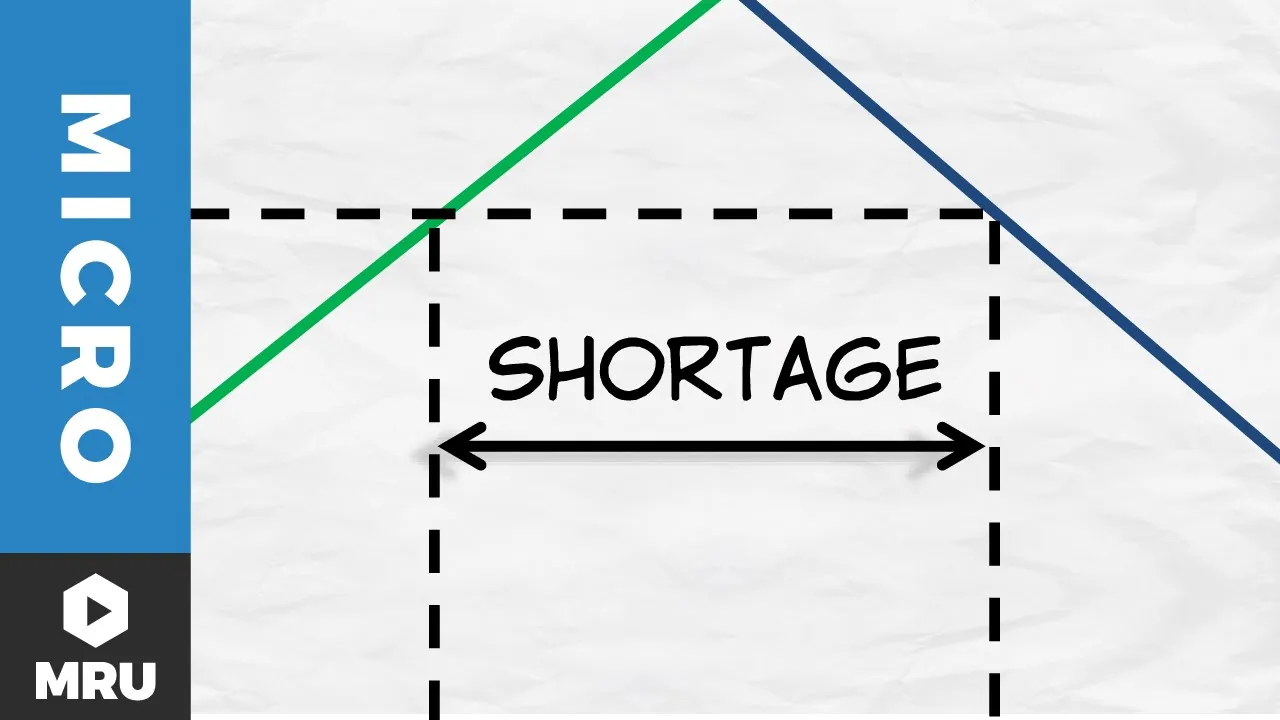

























Rent control policies that limit annual rent increases typically reduce housing supply by discouraging new construction, as developers cannot expect to profit from their investments when rents are artificially capped; cities that implement zoning reforms to increase housing supply tend to see rents decrease, while those with restrictive zoning and rent control policies experience continued housing affordability crises.
Massachusetts Rent Control Proposal: Economic Analysis and Housing Policy Implications
Added:Basic principles of supply and demand, specifically how price discovery operates in competitive housing markets.
The economic concept of price ceilings, including their theoretical outcomes such as supply shortages, deadweight loss, and quality deterioration.
The fundamentals of urban zoning laws and land-use regulations, and how they constrain the elasticity of housing supply.
The political process of state-level ballot initiatives and referendum-based policymaking in the United States.
Empirical case studies of historical rent control policies in major metropolitan areas like New York City, San Francisco, and Berlin.
Alternative policy mechanisms for housing affordability, such as housing choice vouchers (Section 8), inclusionary zoning, and direct supply-side subsidies.
The financial economics of real estate development, focusing on how rent caps alter developer margins, property valuation, and landlord maintenance incentives.
The political economy of zoning reform, including regional initiatives like the Massachusetts MBTA Communities Act and the YIMBY (Yes In My Backyard) movement.
64.2K views3.8Klikes21:54Original Release: 2026-02-12
Well, it looks like Massachusetts voters will get to weigh in on rent control.
Supporters say they have more than enough signatures to put the issue on next year's ballot. But as WBZ's Anna Miler shows us, not everyone is in favor of this plan.
>> You know, there are certain occasions when a news story crosses my desk, even though I definitely don't even have a desk at which I review news, where I realize that nothing is ever going to get better at any point in time for many places in this country. And a perfect example of this is the fact that the state of Massachusetts has coming up on their ballot a ballot initiative that is a statewide rent control proposal. Now, of course, Massachusetts magically in a miracle vote back in the '90s actually banned rank control statewide. It was passed by a 51% majority to 49% opposition. However, even though it is clear and obvious that rent control fails every single place that it's been tried, that repealing rent control actually improves the situation for not just the landlords, but for the renters.
We have yet again another rent control proposal that is going to be on the ballot. And guess what? formerly sensible on this topic, Mayor Michelle Woo of the city of Boston has decided to jump right on board in order to support this because of course we have a bunch of dumb asses that want to appeal to populists even though again exactly what they're proposing is part of the problem of unaffordability in this nation. So this is what we're going to talk about today. This is what we're going to discuss because contrary to what you dumb dumb idiots who actually know the reality of how rank control fails each and every time that it's put into place, we now have a pitch about a new innovative form of rent control that is totally 100% not going to be a problem at all whatsoever. It's definitely going to work. Just trust us, it's going to be amazing even though again it absolutely will not. But before we get into that, I want to thank everybody who helps me pay my rent over on actualjusticewarrior.com/join.
>> I give me the money. Give you give me the money. Okay. This ballot measure would limit annual rent increases statewide. Supporters say it will help fix the housing crisis and keep people from leaving Massachusetts, but opponents warn it will make the crisis worse.
>> We have signatures from every county in the state. Organizers of a grassroots campaign to put rent control on the 2026 ballot say they collected more than 124,000 signatures to submit by today's deadline. Much more than the 74,574 required to advance the proposal.
>> We know that this means that voters, people across the state are hungry, right, for solutions. So look, each and every time we do a story about these rent control proposals, what we ultimately end up seeing is that the local news media interviews a bunch of activists and they say it's about time.
This is definitely needed. There is a hunger for these kind of policies and yet we never get the economic reality laid out in plain detail that these policies will be a disaster as they have been a disaster each and every place they've been tried. In addition to that, I will also point out that we get little segments where they talk about how much it costs in order to rent this level of apartment in the state of Massachusetts.
And of course, without context, that sounds really bad.
>> A July 2025 report from the National Lowincome Housing Coalition shows renters need to make an average of $45.90 an hour to afford a two-bedroom apartment in Massachusetts. We're in an affordability crisis and we're in a displacement crisis across the state.
>> So again, right off the top, we end up being greeted with an advocacy statistics, something that says in order to afford a two-bedroom apartment, you need to make $49.50 an hour, which is a lot of money, without context of what the median income is in the state of Massachusetts. Because this averages out to about $95,000 a year, give or take a couple of dollars here or there. But the thing is, the average median household income in the state of Massachusetts, and by the way, it skews higher when you go to places like Boston, the major city centers where people are going to be renting apartments, is over $100,000.
It's about $106,000, which is significantly higher than the national average. In addition to that, we're also talking about a two-bedroom apartment, which of course was obviously chosen in order to jump up the cost of what you would need. But in reality, if you're renting a two-bedroom apartment and you supposedly need 95K in order to do so, that means two people making around $48,000 can afford a two-bedroom apartment, which again is still rather pricey. It is expensive. However, the heart of the issue is not in fact the lack of rent control because they had rent control and very strict rent control up until the 80s. And guess what? All of these problems were significantly worse across the state of Massachusetts and in major metropolitan areas like the city of Boston. However, what ended up happening after the repeal of rent control is absolutely telling and crucial because guess what? They did not do the second part of it, which is further try to stimulate supply by cleaning up the zoning code in places like Boston and thus alleviating the crisis. And by the way, Boston is rated as one of the worst, most restrictive areas for zoning in the entire country. It is illegal in the city of Boston in designated residential areas to build above 2.5 stories. So, you can't even get a three-story triplex in and around these areas to be constructed. And that's not even to get into the variance restrictions in the city of Boston, which are among the most absurd in any nation. So, for those of you who are unaware, when it comes to local zoning, if you want to build something that is outside the parameters of said zoning code, typically what you would do is apply for a variance. Now, of course, this is meant to be for certain individual cases, not every single case.
But guess what? Every single case of somebody trying to build something in the city of Boston needs to get a variance approval because their code on its own is so restrictive. So, every single person has to get a permit in order to build and then apply for a variance permit in order to build the thing that they want to build. And guess what? Out of the thousands of applications that come into the Boston zoning office, we're talking about maybe a hundred get approved if you're lucky.
And this is obviously what is constricting supply and leading to price increases. And the thing is, while we're being promised in all these different various segments that we're going to do both clean up zoning and of course we're also going to do the thing where we have rent control, the fact is rent control undercuts the entire premise of cleaning up the zoning code. Remember on this channel, we actually did a video recently about Montgomery County, Maryland, which of course is surrounded by counties that are seeing a construction boom due to the fact that there have been moves made in order to clean up the zoning in the surrounding areas. However, Montgomery County wanted to take it a step further and they decided that they were going to pass, and I believe they did it with only one person voting against it, a rent control/ rentstabilization ordinance.
Now, of course, this run control/stabilization ordinance in Montgomery County only applied to buildings that were over three units.
So, if you were building a duplex and below, you did not have to deal with the consequences of this particular law. And as you can see by this chart right here, you can actually pick out to the quarter where this was implemented because while you had a construction boom just prior to this law's passage, what you see after it is a drop in the very multif family housing that all their other policies that they changed were trying to incentivize more building of. So we see this for ourselves that it's an absolute failure. But an even more glaring example that we talked about on this channel is Minneapolis versus St. Paul. Now, Minneapolis ended up cleaning up their zoning code. They did amazing work in that regard. And what we saw was a building boom in that particular city.
And of course, rents falling below COVID level, which by the way is very similar to what we saw in the city of Austin, which exists in the state of Texas where rent control and rent stabilization are outright banned. So, they only could change their zoning code as a response to higher prices. And they've also seen their rent dip below to prepandemic levels. So obviously they copied a model that works. However, in St. Paul, the twin city of Minneapolis, they ended up implementing what was referred to as one of the strictest rent control laws in the entire country where they capped rent increases at 3%. And what we saw in St. Paul, again, the Twin City to Minneapolis was a drop in construction of about 61% while Minneapolis saw a boom in construction increasing about 66%. And in fact, when a Minneapolis Democratic Socialist tried to pitch the St. Paul rent control program as a solution, even though prices were already falling in Minneapolis, John Sel confronted her with this and she had no response because she was totally unaware of how disastrous that data was.
>> Builders still build in Minneapolis.
Building permits were up 65% last winter, but in St. fall, they're down 60%. Because of rent control, you're not going to get more apartments by pushing this.
This pause is one of those rare interview moments where silence reveals so much.
>> I mean, >> don't elected officials research issues before imposing government force on others?
>> I'm going to maintain that guaranteeing housing for people and making sure that they can stay in their homes matters more than anything else does. This woman's stupid ass face should be framed and put in a museum because it is in fact a work of art. But the thing is, the idea that somebody is a representative in a city that implemented the correct policies that are actually driving down rent and they still want to copy the bad policies that have had the exact opposite effect in a neighboring city in St. Paul, which by the way has rents rising faster than Minneapolis, is not shocking. This happens all of the time. Even though we have the examples of where you allow building rent falling, these Democrats, and by the way, sometimes it's not just Democrats when it comes to zoning issues, but it's definitely them when it comes to rent control and rent stabilization, double down and triple down on the bad policies. And that's exactly what we're seeing playing out in the state of Massachusetts with this ballot initiative. And of course with an ordinance that Boston has already passed that should kick in if the state law ends up passing that again is going to be disastrous in every possible way.
>> The proposal limits annual rent increases statewide to a maximum of 5%.
Owner occupied buildings with four units or less would be exempt and rent limits would apply to new construction after 10 years. Our ballot question exempts new construction for the first 10 years so we can continue to build the housing we need.
>> So the ballot initiative right now at this moment would actually if implemented put statewide caps on rent thus creating problems in every single county in the state of Massachusetts.
But of course the city of Boston and other cities are free to implement even further rent controls if they are so inclined. And we actually got a proposal a couple of years ago, which was one big virtue signal for Michelle Woo, who by the way is now saying she would vote for this on the ballot initiative. And when you look at what these people are actually proposing and how they're trying to pitch it as new innovative rent control for the future, for the 21st century, what you ultimately end up realizing is that it's the same exact policy. It's always the same policy and they never address the actual core issue. Councilors approved a petition that would set rent increases at 6% plus inflation and caps increases at 10%.
There are exceptions including owner occupied properties and new development.
>> So look, it's no great mystery what this policy proposal from the city of Boston will do if implemented. Nor is it a mystery of what the statewide policy will do. Even though they're saying they're exempting new constructions for the first 10 years, that's obviously going to depress the rates of new construction. Remember that law that I talked about in St. Paul earlier on in this video? Well, they actually amended it multiple different times because what they realized was that projects that were actually in the works, that were currently being built stalled immediately when they didn't exempt new constructions. and they ended up giving a 20-year window for those new constructions to charge market rents.
And that way after 20 years of them making money, they would then become a part of the rent control system. So after they made that change, again, a part of this new innovative rent control system that they were implementing in St. Paul, guess what? Construction still didn't go up. And the reason construction still didn't go up is because typically when you get a mortgage, it's over the course of 30 years. And people plan their investments for a little bit in the long term. And having an asset that essentially will explode downward in value after 20 years is not good if you're looking to offload that asset. So these exemption periods do not work. Not at all. Not even a little bit. And yet they're being attempted in Massachusetts in the city of Boston for a smaller window than the window that doesn't work. In fact, many rent control policies date back to the 70s. And typically, they exempt buildings that were built after 1974 or after 1978, except with some adjustments, like in New York City, if you want to get certain tax credits, you can hold units within your building at the rent control or rent stabilized rate. But guess what? What happens is new construction still ends up being stalled. And again, one need only look to the cities that have a high proportion of their apartments under these programs to realize that they are destined for failure. We talk about New York on this channel and guess what? 44% of New York City apartments are under the rent stabilization program. Among the highest rents in the entire country, San Francisco and Los Angeles, upwards of 60% approaching 70% of the apartments are under rent control and rent stabilization. Guess what? among the highest rents in the country. However, when you actually clean up your zoning code and you have an outright ban on rent control or rent stabilization, which by the way, in terms of an economic sense, this is the same thing.
It's just that cities like Los Angeles, like San Francisco, and like New York City have two different programs. one is way more restrictive and way more idiotic, that being the rent control program. And then their new modern version of it that they put it in in the 70s is called rent stabilization, but effectively from an economic point of view, their price controls on rent. So they are the same exact thing. They are to be labeled rent control. Guess what?
That doesn't work. But places that don't have these policies tend to be more affordable. Places that clean up their zoning code tend to be significantly more affordable. And yet Boston is not addressing the issue at hand. We've known about the issues over there for a very long time. Again, the maximum amount in their largest city that you can build in many neighborhoods is 2.5 stories. And that doesn't even get in to the parking requirements that are also associated with building in those areas.
They are known for very exclusionary zoning practices.
>> The city of Boston needs the tools to address our housing crisis. It's a victory for Mayor Michelle Woo, who proposed the rent control policy.
>> We see families who are getting pushed out of the communities that they grew up in and helped to build. This is affecting everything from how our businesses and economy can recover to our school enrollment and the stability of every part of our our neighborhoods.
>> I mean, seriously, shut up, Michelle Woo. Just shut the hell up, you absolute dumbass, in every possible way. It's the same rhetoric every single time that they propose these laws. They talk about people who built the community that are being pushed out. Which by the way, according to Michelle Woo, the people who built the city of Boston are Somali.
So what the hell does her opinion on that matter anyway?
>> You cannot talk about any achievement that the city of Boston has had in safety, jobs, and economic development, in education without talking about the Somali community that has lifted our city up. We are proud and we are grateful for our Somali community and for our Somali-American neighbors.
Boston and the country are clear that hate has no place in our society. We will use every attack to actually strengthen and expand the services available to empower and work alongside our community members who are already doing so much good in the world and set an example for the rest of the country.
>> But again, rent control constricts supply. It raises prices. every single problem that she's talking about that's going on in the city of Boston is made worse by this particular policy. But I guess if you're among the lucky, if you're among the few that actually get to hang on to one of these rent control departments, then you get to mooch off your landlord for an extended period of time as they go broke and your building goes into decay. And again, we see the destruction of your city. I don't know how many times I have to do videos like this. I don't know how many times the same exact policy proposals again verbatim the same exact thing are going to be pitched as new and innovative forms of rent control or rent stabilization before people get it through their heads that it absolutely doesn't work. And again, I don't know how many times I have to point out that if you have ridiculous zoning like the city of Boston who has some of the most ridiculous and restrictive zoning in the entire country, price is going to go up.
If you end up cleaning up your zoning code, Alla Minneapolis, Allah the city of Austin, Allah places in Florida, Nashville, Tennessee, and all these different other various locations that actually let you build all over the state of Texas, by the way, Houston, Dallas. Look up the prices there and compare and contrast the rate of increase or sometimes even the rate of decrease as we're actually seeing housing prices fall in a lot of those locations and you realize what the solution is. Yet, we never do it. We never move in that direction in these left-wing areas because again, these people are absolute demagogues. They're absolute idiots. And I'm talking about the voters right here that are about to basically roll back the little bit of progress they made in the '90s. And again, it's embarrassing in every possible way. How many times are you going to hear advocacy statistics from the association in favor of rent control, which is under some stupid ass other name, saying tenant advocates, and not realize that it's going to be a disaster when implemented? Now, look, I know some of you out there in the audience are going to say, "Sean, what about the illegal aliens? What about them bidding up the price of housing because there are artificially increasing demand because they're not supposed to be here?" And yes, while that is a factor, make no mistake about it. The fact is there's a ton of illegal aliens in the state of Texas. There's a ton of illegal aliens and illegal aliens in the state of Florida as well. And guess what? We're still seeing housing prices fall because those are build first oriented states. So, while illegal aliens definitely bit up the price of housing in all these different various locations because that's how supply and demand works, the fact is the places that have constricted supply are always going to be worse. They're always going to go up faster, especially when you don't do anything to address the core issue. And then on top of that, you're going to put in rent control, which disincentivizes building even more in places that are already difficult to build. Do you realize that there is a segment from 6 years ago where they were trying to get this on the ballot initiative where they were talking about how they were going to model their new rent control and rent stabilization after the modern version that was introduced in the state of California at the same time. And one need only look at the last 6 years of rent in the state of California to realize that that new innovative model that they're still trying to copy over in Massachusetts was an absolute failure. It's insane. It's madness. All these stupid ass segments that are promoting this new innovative idea that's failed already. It's six years failing in the state of California and yet they're still trying to implement it. But you know what? It doesn't matter because we've seen this fail time and time again. And we've seen the repeal of these laws lead to success. And it's not just in the United States of America. It's worldwide.
Everywhere it's been repealed. Buenoa's Argentina repealed all of their rent control laws under Malay. and they ended up seeing supply triple and rents actually cut in half because again this is what you have to do in order to improve this. But the fact is everybody's going to focus on all these ancillary issues. Target anything that they could demagogue on like Airbnb, the evil Black Rockck buying up all the housing, which again is not actually happening in significant rates in places with high rent control because they're bad investments. It actually happens in places where prices tend to fall faster.
But whatever. I guess certain parts of this country are all going to be on this sinking ship forever. So, I guess I'll see you guys at the bottom of the ocean.
Welcome aboard, Massachusetts, you absolute idiots. But you know what?
That's just my thoughts. Those are my opinions. They happen to be 100% rooted in facts. Make no mistake about it. I'm 100% correct on this issue, and anybody who disagrees with me is absolutely wrong and stupid. Or maybe just ignorant, but I want to say and stupid.
But yeah, as per usual, if you like this video, show them by leaving a like.
Subscribe for more content. Follow me on the social medias. Support me via support links in the description of this video. This has been me talking about the absolute madness of Massachusetts, trying to go back on like the one thing that they've done good in the last 30 years in statewide politics. Till next time.
Up Next

9:43
Zoning Rules! The Economics of Land Use Regulation (William Fischel)
@catoinstitutevideo
13.3K views•2015-11-10

5:07
Impact of Yuan in Indo-Russian Trade Amid Sanctions
@WION
261.9K views•2022-07-01

10:33
Behavioral Economics Explained: Rationality, Nudges, and Risk
@crashcourse
1.1M views•2016-03-12

113:18
The Age of Easy Money: Fed & Inflation | Full Documentary
@frontline
21.2M views•2023-03-15
Related Study Plans & Knowledge Roadmaps
Structured learning paths in Economics
economics
Sovereign Debt: Defaults, IMF & Restructuring
01Introduction to Sovereign Debt & Government Bonds
02Debt Sustainability & Credit Ratings
03Anatomy and History of Debt Crises
+ 2 more learning modules
12h5 modules
Explore Roadmap
economics
Market Design: Matching Theory & Gale-Shapley
01Introduction to Market Design and Price-Free Markets
02Two-Sided Matching & The Gale-Shapley Algorithm
03School Choice Systems and Mechanism Design
+ 2 more learning modules
10h5 modules
Explore Roadmap
economics
Impossible Trinity: Forex, Capital & Policy
01Introduction to Monetary Policy and Central Banking
02Exchange Rates and International Capital Flows
03The Mundell-Fleming Model
+ 2 more learning modules
8h5 modules
Explore Roadmap
economics
Healthcare Economics: Market Failures & Systems
01Introduction to Healthcare Markets and Market Failure
02Asymmetric Information and Adverse Selection
03Moral Hazard and Insurance Design
+ 2 more learning modules
12h5 modules
Explore Roadmap