
























Basic economic theories like supply and demand often fail to accurately predict real-world policy outcomes, as demonstrated by the minimum wage debate where empirical studies show minimal employment effects despite theoretical predictions of job losses, and rent control research revealing unintended consequences like gentrification and reduced housing supply; this highlights the importance of relying on rigorous empirical evidence over simplified textbook models when evaluating economic policies.
Minimum Wage and Rent Control: A Critical Look at Econ 101
Added:The basic laws of supply and demand, including how market equilibrium is established in a competitive market.
The theoretical concepts of price controls, specifically price floors (minimum wage) and price ceilings (rent control).
The concept of economic surplus (consumer and producer surplus) and how standard models predict deadweight loss from market intervention.
Price elasticity of demand and supply, which determines how sensitive buyers and sellers are to changes in price.
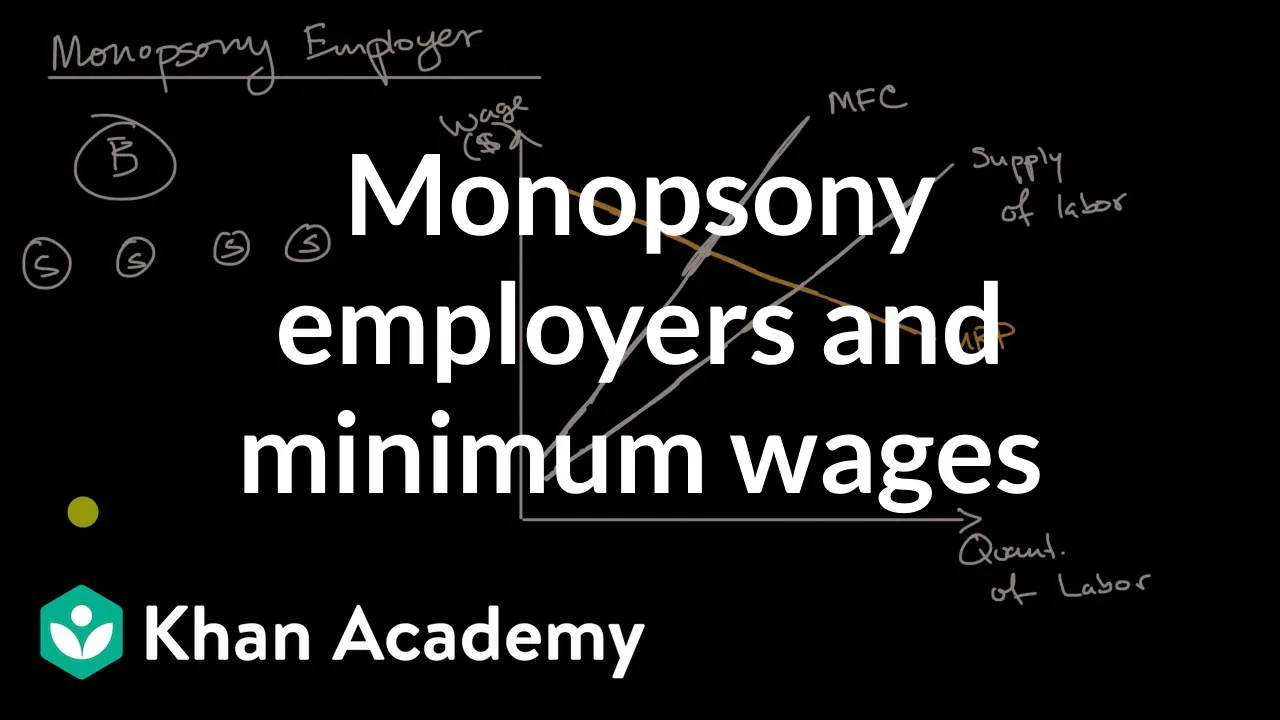
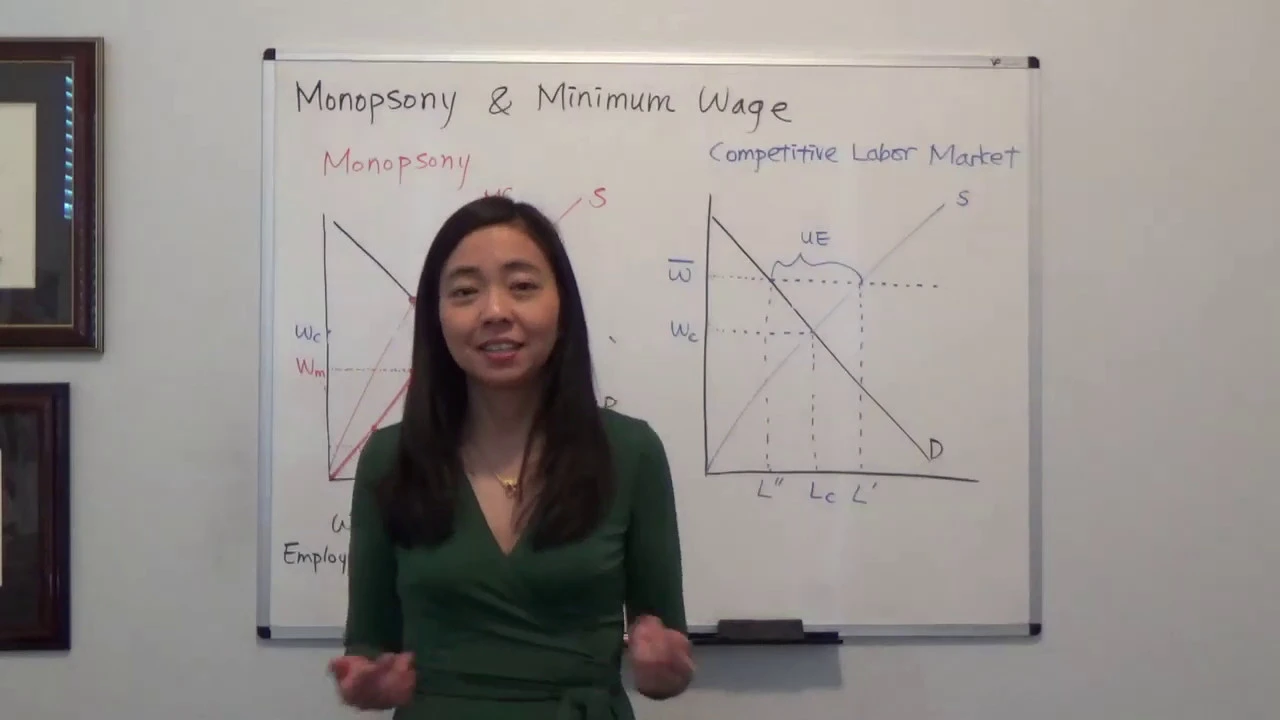
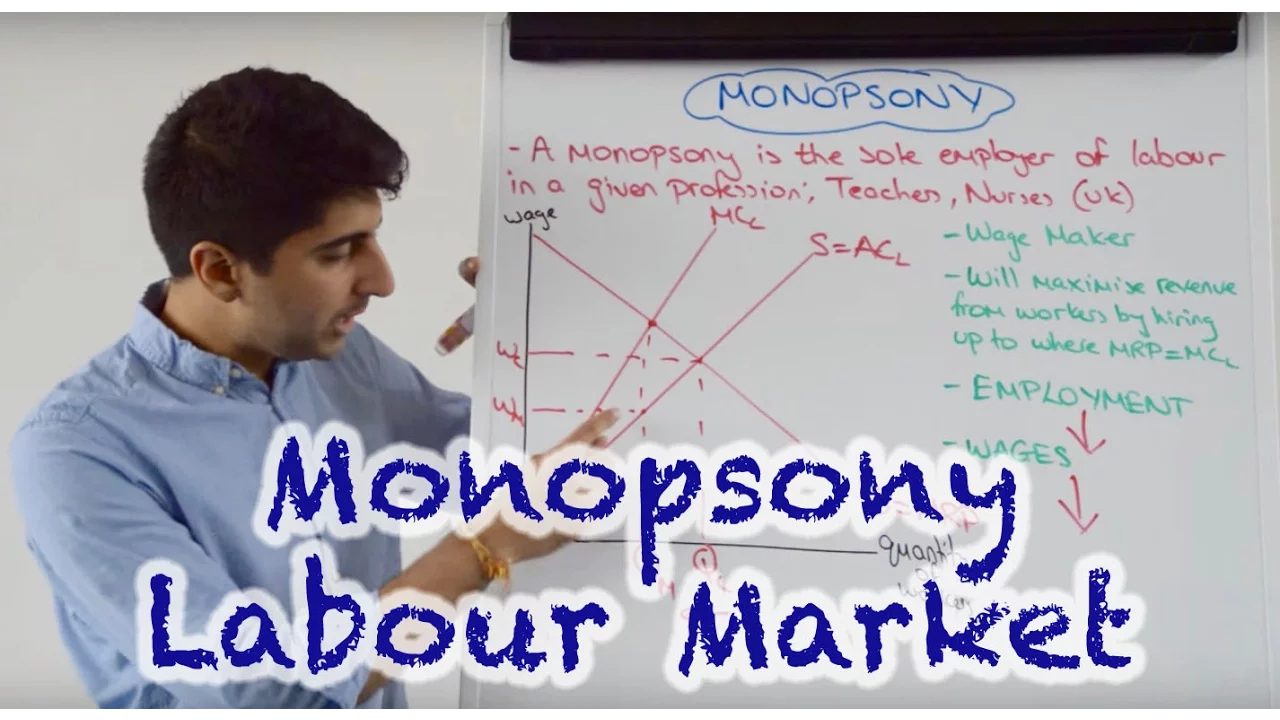
Monopsony theory in labor markets, which explains why raising the minimum wage does not always lead to unemployment.
Empirical economic methodologies, such as natural experiments and difference-in-differences analysis (e.g., the landmark Card-Krueger minimum wage study).
Search and matching models, which analyze how market frictions affect housing search and employment recruitment.
Alternative policy designs for poverty reduction and housing affordability, such as the Earned Income Tax Credit (EITC) and housing vouchers.
141.5K views2.5Klikes33:09Original Release: 2021-04-14
newly elected u.s president joe biden promised to introduce a 15 federal minimum wage once elected which sparked a renewed debate over the pros and cons of the policy as i write this the proposal has been voted down in the senate which is extremely disappointing but shows that econ 101ism is alive and kicking i suppose since the dawn of time the usa's federal minimum wage has stagnated or even fallen as you can see here in the early 80s it was around three dollars an hour and despite steady rises in the headline value it has only kept pace with inflation since then as this table shows the ratio of minimum to median wages is only 33 percent for the us compared to 54 percent for my own country of the uk or 69 percent for chile in costa rica yo you know what we got here we got an elastic product you know what that means that means when people can go elsewhere and get they print in and copy and done they're going to do it you acting like we got an inelastic product and we don't in economics this means the percentage change in one thing because of a percentage change in another thing stringer was talking about the change in demand owing to the change in the price of their product but here we will mostly be talking about the change in employment owing to a change in the minimum wage so an elasticity of minus one means that if the minimum wage increases by one percent employment will fall by one percent an elasticity of minus 0.1 means that if the minimum wage increases by one percent employment will fall by 0.1 percent you can see that the formal would be hugely problematic while the latter could easily be considered a price worth paying for higher wages beginning with a famous paper by david card and alan craiger in 1994 a wave of studies sometimes dubbed the new minimum wage research have used careful empirical techniques to investigate the elasticity of employment with respect to minimum wage changes carden craiger looked at the effect of a minimum wage change using two adjacent u.s states new jersey and pennsylvania in 1992.
new jersey increased its minimum wage while pennsylvania did not this is a kind of natural experiment when a policy applied to one area is not applied to a similar area and comparisons between the two approximate the ideal of a lab experiment the argument goes that if two areas differ only in the policy in this case the minimum wage any difference in outcomes between them in this case employment can be attributed to that policy card and craig are phoned fast food restaurants which employ a lot of minimum wage workers both before and after the change what they found was that far from reducing employment in new jersey the minimum wage may actually have increased it the study made quite an impact reid garfield senior economist of the joint economic committee commented in 1996 the results of the study were extraordinary cardinal kreger seemed to have discovered a refutation of the law of demand economists were stunned because of these extraordinary results they debated the results many economists argued that differences between the states were more than simply differences of minimum wage rates other economists argued that the study design was flawed since this thousands of papers have been written in the usa and elsewhere on the employment effects of the minimum wage one of the most pertinent critiques of cardinal was how narrow their study was a single change in fast food restaurants in two relatively small u.s states should not be generalized to minimum wages everywhere more recently the frontier of minimum wage research has been led by people like aaron dube and his co-authors they have mostly followed in cardinal craig's footsteps by taking advantage of natural experiments but have substantially broadened the number of states they include as well as the time frame of the studies and the depth they go into estimating the effects for example in the 2010 paper jube leicester and bright found no employment effects of the minimum wage using 316 adjacent pairs of states that's cardinal krieger times by hundreds my god that's i don't even know what that is nobody dies a 2019 paper by singers dude linda and zapera estimated the effects of minimum wages on the entire distribution of jobs using 138 different minimum wage changes in the usa the x axis here shows the part of the wage distribution we're in relative to the minimum two means it's two dollars higher than the minimum wage the y-axis shows the effect on employment at a given part of the wage distribution just below the minimum wage zero on the x-axis a substantial number of jobs disappear as shown by the negative blue bar which makes sense as it's now illegal to employ people at that wage but this is offset entirely by the appearance of jobs at or above the new minimum wage as shown by the positive blue bar to its right there are no effects anywhere else in the distribution so this gain in wages for low-income workers is not offset by other workers losing out the same paper looks at these effects over the long term and it shows that the new jobs which appear do not disappear after a few years i favor this type of natural experiment approach it's transparent and the core of close comparison between pairs of real re one thing that's really important to keep in mind when we talk about like wage impacts is um and i notice they do this a lot when they go back and forth on the seattle studies or how those wages have impacted new workers i think it's really important that we disaggregate workers from each other to make sure that you're not positively impacting some section of the economy while dramatically negatively impacting some other section so for instance i think that it's pretty well understood that as long as minimum wages aren't set too high generally they have favorable impacts um however even in those cases even if on the aggregate wages paid to certain workers are higher and even if on the aggregate employment seems to be either equal or boosted the problem that you run into is that you start to disproportionately impact more narrower sets of workers so for instance workers with only high school education tend to lose out on these deals and then more um more educated workers or people that are doing better socioeconomically already are getting like bigger gains with the minimum wage boost tends to be the arguments that i hear regions keeps the method grounded in empirical reality instead of blinding us with complex statistical methods but i should say that it's not the case that every study has found no effect like this there are dissenters within this literature specifically economists like david newmark and his co-authors overall though most systematic meta-analyses find a small but statistically significant negative elasticity of employment with respect to minimum wage changes having said that these studies also show evidence that there is a bias towards publishing negative estimates why that's the case i'll leave you to figure out so how does one make sense of such a vast and tricky literature well not the way the cbo does it [Music] to give you some background the congressional budget office is an official about non-partisan entity in the usa which produces research on important policy topics their recent report claimed that raising the minimum wage to 15 would lead to 1.4 million job losses a pretty concerning figure where did they get their estimates from voor said that he'd have to get something else today i also take issue with so far now it's possible to address the things i've said is again when we're talking about boosting the minimum wage across state lines whatever we're doing these comparisons between control cities and whatnot um the 15 an hour minimum wage bump is huge huge huge huge huge huge like if i were to say like is drinking 20 gallons of water bad for you in one day and then somebody would start flooding me with studies showing oh look increased water consumption is good when these people drink more water it helps actually you're totally wrong blah blah blah it's like okay well hold on like we're not talking about just increasing consumption of water we're talking about a dramatic increase in consumption of water i don't know if these other studies are necessarily valid i don't know if it's if it's valid to look at prior like small bumps and minimum wages between different states and say oh well look well 15 an hour should be fine right because then at that point we could theoretically argue for 25 an hour or 35 an hour or 50 an hour right you like you i think we need i think we need like more to see more dramatic increases in minimum wage it's like i think the seattle study is good although even that isn't as dramatic as what's being proposed um aren't all these changes only like a dollar a year per less i think it's within two dollars a year we looked at that new jersey one at one point for the fast food i don't remember what the increase in the minimum wage was but yeah it's it's nowhere near the dramatic level that the um that the 15 an hour stuff is expert out to understand this debate i'd hate to be the reason that anyone had to read an econometrics textbook so let's save him from having to do so uh oh too late bro the first thing to say is that this report was kind of opaque even for someone who is used to reading this type of thing it's full of phrases like cbo concluded and in cbo's estimation often with little to no explanation they select 11 studies from the literature but why these 11 were chosen is not explained the cbo then computes the effect of minimum wages on employment from an average of the 11 studies but they increase the magnitude of the actual average because of a really weird thing they do where they randomly drop some of the studies they use and recalculate the average with those studies missing i don't know why this method is chosen or how it really works because again it isn't explained cube himself has commented a similar effect though in more measured academic terms he says the cbo overemphasizes the negative estimates and what we already know is a literature biased towards finding negative estimates he points out that more recent better quality research has found employment elasticity of the minimum wage closer to zero as an alternative he suggested his own 2009 review for the uk treasury this only includes studies which estimated the effect on employment for the same workers whose wages are increased by the minimum wage which gives a clear picture of the trade-offs faced by the workers actually affected by the policy this is known as the own wage elasticity along the y axis is the study the dots represent the estimated effect size for that study with the bars either side of the dots representing the uncertainty surrounding that estimate dude concludes that based on this review the average elasticity is minus 0.04 meaning that a 25 increase in average wages for a group affected by the minimum wage should reduce employment by one percent for that group also i feel like this elasticity this this [ __ ] i i don't know if there's um i i would hope that like people who do econometrics probably would know this but that elasticity is probably going to be a function and not just a um an integer what the [ __ ] am i thinking of f of x equals five what would you call that like like your elasticity is oh a constant yeah jesus um your elasticity is probably going to change depending upon um how far away you move from whatever your baseline value is uh it's part of basic elasticity theory okay good so like for instance like i can probably demonstrate a very um a very low elasticity elasticity a very low elasticity in a product at very low price changes so for instance if we start with a dollar for a can of coke the difference between like i can't the demand for coke at a dollar versus a dollar five the elasticity is probably going to be um uh very very very low i would imagine but once we start to move further and further away i imagine that value is going to start to change more dramatically that like if we increase it from one dollar to a dollar ten um you know it's gonna change between a dollar ten to a dollar twenty or a dollar twenty to a dollar fifty that that elasticity is probably going to um grow a bit and then slope i guess how would that look on a graph what what if i had to like guess what this curve would look like i i guess it would look like probably something like this or whatever where like you you're if this is our elasticity here i don't know if there's like a textbook on this i'm sure but like i imagine that like little changes right here probably wouldn't matter much but as you start to change it's going to get like it's going to start the elasticity is going to grow significantly until it like tapers off here whatever that would be like my guess um i say that would be my guess but i'm almost positive that's what would happen right an s curve sure okay there's a lot of debate over whether 15 an hour is enough and jube also comments on how high the minimum wage could be across u.s states the best evidence suggests that the employment effects are small up to around 59 of the median wage evidence using substate county level variation found this to hold even in lower wage counties where the minimum stood up to 81 of the median wage research conducted for this report also finds that in the seven u.s states with the highest minimum wage where the minimum is binding for around 17 of the workforce employment effects have been similarly modest now to return to demand and supply strictly speaking this evidence alone doesn't contradict the supply and demand model it could just imply that the curves have a specific shape albeit an unlikely one that contradicts other evidence i'll provide a reference for that below but here's my bottom line when if excises are this small and uncertain it's suggestive of something that's just not that interesting whether theoretically or politically as the economist thomas leonard pointed out this whole debate does prompt the question what evidence would convince you that your theory is refuted let me illustrate this with one more recent study this shows a bunch of different elasticities for 16 to 19 year olds the group most likely to be effective i'd also like to say too that like when an economist uses like a model like supply and demand i would hope okay and maybe economists are really [ __ ] stupid maybe we're all smarter than economists right i would hope that when an economist uses a supply and demand curve for things like employment it's not literally like our graph isn't literally going to be called u.s employment here's here it is this is the whole supply demand for all of the right the supply and demand is going to be like relevant it's going to be incredibly localized to different sectors of the economy right that like um your quantity demanded of labor is going to change significantly based on our locality like what cities we're on on our industry based on what types are talking about on the types of workers we're talking about right like so these supply demand curves probably still work pretty accurately but they're going to be incredibly localized to different areas it's not like we just draw one giant [ __ ] aggregate supply demand curve for the entire us [ __ ] economy right that would if people do do that it would be incredibly [ __ ] stupid like jesus christ but yeah let's it by the policy as you can see in most cases the blue horizontal lines cross zero which is given by the red vertical line indicating that the effects estimated are not statistically distinguishable from none at all as a contrast consider a more straightforward question what is the effect of the minimum wage on wages themselves this might seem tautological but if the minimum wage is low or is not properly enforced we may not observe an effect unlike our previous figure the estimates here are universally positive and statistically distinct from zero this is the pattern one would expect to observe when the relationship one is estimating is strong and reliable the minimum wage effects do not look like this higher labor costs as a result of the minimum wage are obviously a thing but employers often have more bargaining power than workers so they can afford it increase pay can motivate workers leading to higher productivity it can make them more likely to stay reducing turnover costs from hiring and firing and at the economy wide level the minimum wage increases the spending power of workers which will increase okay you know what i would like to see done as an experiment just in one place d 10 this guy is completely ignoring dead weight loss the cost of a deal not done the hire not made kitten to incurring cost also businesses on average don't stop growing they change their priorities well i imagine that we try to account for that with unemployment right if we're increasing the unemployment then we're probably talking about people not hired generally right um something that i would like to see done just try it as a mass experiment in some huge firm or whatever i wish that there was like a combination of like hourly wage plus like wage for jobs done because i guarantee you in every single [ __ ] job in the united states there's a lot of people that just [ __ ] lazy about because why the [ __ ] would you work any faster when you're not getting paid anymore like i know that at the casino like when you have when you're assigned like certain tasks from for like restaurants like there are some things that you could do them in like [ __ ] five or ten minutes but like why would you why would you bust your ass and bust tables hard you know like rap silverwork quick do your prep work fast like [ __ ] no like you know that you can spend about two hours doing you know prep for the kitchen like [ __ ] it why the [ __ ] wouldn't you why would you bust your ass and do it in 20 minutes right i wish there was like some type of like payment per task or something that a system like that would be tried out because i feel like you could take certain workers that work 40 hours a week pay them their same wages but they could work 20 hours a week and do the same amount of work i know this is the case i wish there was like more i could drive towards this in the economy or something like jesus [ __ ] yeah because if you work harder and most hourly jobs that means you just get more [ __ ] to do you don't get a break like if i'm assigned to do some tasks for two hours and i get it done in one hour i don't get to jerk off for an hour they give me some other [ __ ] to do like the [ __ ] what the [ __ ] is the point of that like it's demand for businesses i'm happy to debate the importance of these different effects but the standard economic approach only helps us with a tiny part of them if at all and arguably the effect on employment is so yeah or the worst case scenario is your supervisor's like oh well no more work to do time to send you home early it's like wait i got bills to pay [ __ ] uninteresting because it's distracted us from other questions such as the effect of the minimum wage on mental health or poverty so now we know that the minimum wage just doesn't have the kind of reliable negative effect on employment we'd expect if the theory were useful but now i want to talk about another similar okay so again i just want to qualify now we know that minimum wage set close to what price floors we'd already imagine are or the price one that's set close to what the natural minimum wage would be is it has little effect that we haven't proven that a 15 an hour minimum wage wouldn't have that effect right the closest he got was when he talked about when median wages are set at 59 or when a minimum wage is set to 59 the median wage which nationally would work out to around 12 an hour i believe or like 11 59 an hour or something or or something like that it wouldn't be 15 an hour but prominent example rent control [Music] it's no secret that both house prices and rents in many countries have skyrocketed over the past couple of decades especially in anglo countries housing is probably the main cost for most people so this has prompted questions about whether governments should do more to help people cope with these costs the most direct policy to do this would be rent control rent control isn't a hugely popular policy although it exists in a few countries and localities for example new york city as discussed by the friends in the popular sitcom friends but more important because of rent control it was a friggin steal in their debate on housing philosopher ben burgess and streamer destiny also discussed the policy rent control it's like 1490 not 11. four i'm almost positive it was around 12 dollars we looked this up deduced render you want to link a source for it go for it or we can just do the math i guess the median wage in the u.s is 35 [Music] 977. um so if we times this by point five nine and then we divide that by twelve so this is seventeen hundred per month and then in a month you work um 48 like about 160 hours divided by 160. it's around 11 an hour so it's lower than what i estimated i'm citing no opinion um i don't really like what he's written on minimum wage much um but i mean we can literally do the math on this now to figure it out i i made you like something and then you got muted for it could mean one of these few issues that economists broadly agree is garbage policy it doesn't help we wanted to help it usually hurts we want to help and just doesn't usually get what you want done destiny was correct opposition to rent control is possibly the area where economists agree the most a 1990 poll had 93.5 percent agree that a ceiling on rents reduces the quantity and quality of housing available a 2012 poll asked for economist views on the statement local ordinances that limit rent increases for some rental housing units such as in new york city and san francisco have had a positive effect over the past three decades on the amount and quality of broadly affordable rental housing i'm really curious why he shows the igm polls on this these are the igm polls aren't they they are why does he show the igm pulse on this but he doesn't show the igm polls on the 15 an hour thing that really makes me wonder because on here 50 or more of economists agree that 15 an hour would increase unemployment and that it should be pegged at something different i wonder why he didn't show the igm pulls on the minimum waging but he did for rent control i've used them 81 of economists disagreed or strongly disagreed with this statement with answers including next question does the sun revolve around the earth unless all the textbooks are wrong this is wrong the planets are lined up here theory and evidence point in the same direction the awards for the strongest statement about ring control however goes to the economist assar lindbeck who claimed in many cases ring control appears to be the most efficient technique presently known to destroy a city except for bombing oh we've understand where all this strong opposition is coming from let's return to our supply and demand diagram instead of the market for labor we are now looking at the market for houses apparently they work in exactly the same way we have rentals on the y-axis instead of wages we also have quantity of houses rented on the x-axis instead of employment again the supply and demand for houses should balance with rinser our star and quantity at qstar what does ring control do in this situation it's represented by the horizontal line rc which forces rents down at this low rental rate the quantity of houses supplied is lower than the previous equilibrium bub savvy d five dollars i don't agree with mw but why are you leftists not recommending a tiered wage by age adjusted for inflation uh i don't think i qualify as a leftist uh i don't really like minimum wage that much at all i think there should be other forms of cash transfers so things like the earned income tax credit like um not deductible refundable tax credits i think are way better ways to target this type of policy i think minimum wage is just way too like brought a hammer you're just swinging around like a sledgehammer trying to fix a much more nuanced problem even though more people want to rent we have a shortage and a fall in rented units compared to the free market i want to say outright that there is more evidence for the predictions of the supply and demand model for rent control than for the minimum wage depending on how you interpret it but the blanket opposition to rent control that derives from this is hugely overstated and econ 101 reasoning is again more of a hindrance than the help for understanding the debate first what does it mean for the quantity of housing to be reduced i would contend that the supply demand model can mislead people into thinking that the reduction is in housing supply rather than the number of houses specifically used for renting the 1990 poll mentioned above failed to distinguish these two clearly and in the debate with destiny member just largely accepted this framing contending that you could compensate by building more housing because if we just have rent control there's going to be far less investments in private housing this could be far less private housing built but if you're building a lot of public housing to make up the shortfall then it's literally you can you can accept your premise you can accept what the economists are saying and still think that it's just irrelevant to that package of policies why not undefined this has just happened but reduction in rental housing doesn't mean that houses disappear there may just be a corresponding rise in ownership i'll concern assure you whether people are getting the houses they need not whether they're renting or owning them we can have a debate about the relative merits of renting versus ownership and which demographics are more likely to use one or the other but it's not immediately obvious to me which is more desirable second rank control captures a wide variety of different policies the standard demand supply analysis only depicts a straight-up cap on rents whereas modern rent control just limits increases and allows for inflation in landlords costs to encourage maintenance such provisions are common and common sense for example if you're worried about rent control discouraging construction exempt new buildings like berlin recently bloomberg there's a hope well he might be yeah maybe he's about to talk about that hi destiny i started watching your content about a year ago and i just want to say that i really appreciate you and your honesty regarding your thoughts and stance on topics i used to be far right now more centrist much love my man thanks buddy um the problem with rent controlling like buildings before that were constructed before a certain date and then making all the newer construction to be exempt from the rent controls is that you cause like a huge explosion of cost or price of those um later buildings as well so for instance um undefined this has joined the omniliberal nation hold on jesus i'm pausing these um so for instance like if you've got a if you've got a city and there's you know 50 of your housing stock is now restricted by rent control and the other 50 isn't the the price to rent on the non-restricted ones is going to increase and increase increase because um because because that's where all the new development is going to take place right like people that are going to develop new buildings um because all the other buildings um um [ __ ] what am i hold on [ __ ] oh my god the donuts just totally [ __ ] my train of thought i don't remember what i was going to say now if you if you have a city and you restrict some buildings to rent control and the newer buildings are no longer rent control restricted the old supply is not going to be renovated anymore a lot of it is going to be converted to condominiums things that can be bought and sold because people are going to rent it and then the newer stuff that gets constructed is going to end up being like a higher cost for people coming in it's going to be more expensive than the prior rent control supply that's what i was looking for seriously appeared in everyone's trends on twitter discuss the impact of rent control in berlin which throws rents on older houses and allow tenants to force landlords to lower existing rents true to form the article claims if populism on the political right corrupts democracies populism on the left ruins economies it's based on the report which is in german unfortunately i'm fluent so i was able to consult the original document just kidding i'm english we'll have a go on the article itself some of the outcomes it chooses are kind of strange the results clearly show that rents have plummeted for those affected a huge benefit which is downplayed the article charges real quick rent plummeting for those affected isn't necessarily a good thing because we didn't want to reduce rents for people this is what i mean when i say rent control doesn't help always we wanted to help we don't want to reduce rent for everybody in a city we just want to reduce rent for people that can't afford it that's the issue right so just because a reduction rent has taken place you can argue that's the success of the policy which it arguably is but we don't really want to reduce rent for everybody we want to target certain sectors of the population rent controls have reduced house prices as if that's definitely a bad thing or somehow unexpected it seems to me that both more affordable housing and lower rents might be considered a good thing by some people the article uses a couple of graphs which apparently show the policy has had negative effects the reason why those places being worth less is because it means that people aren't going to reinvest in them they're not going to update them they're not going to renovate them like that reinvestment just doesn't take place that's why people argue that those units can be worth less and less it's a bad thing x one shows that price is in uncontrolled units he must know this though since the policy but from this graph it's hard to see whether this is really a change or just a continuation of a previous trend the graph doesn't go back far enough for us to know and even if it is true it may just be because the uncontrolled units are new you could say exactly the same thing for their graph showing that the number of rental apartments has declined especially since they follow this up with a graph showing that the supply of unregulated units has outpaced other german cities somehow this is also framed as a bad thing as you're all now budding natural experiment enthusiasts so i know what you're going to ask is there any more credible evidence than this crap on rent control and the answer is some but not enough and it's mixed one of the most recent and commonly cited papers on this topic is diamond detail which uses the sudden introduction of ring control to older houses in san francisco in 1994 and compares them with more recently built units which were exempt let's take an in-depth look at this paper as i think it raises some interesting questions the paper claims that the policy led to a 15 reduction in rental units although if you unpack this it's actually a combination of eight percent being converted into owner-occupied buildings with a further seven percent being converted into rental units which were exempt from rent control which isn't a 15 reduction in rental units the paper does show that residents of both owner-occupied and exempted units are likely to have higher income which is a cause for concern because it favors richer residents there are conflicting effects though part of the reason for the higher income residents is that rent control leads to higher maintenance and upgrades so landlords can increase rents we can see on these graphs that top left rents fell while top right redevelopments rose and bottom left conversions ropes and bottom right repairs rows this suggests rent control does increase quality in contrast with economist poll answers that we saw earlier rent control also means existing tenants are more likely to stay which is more okay i'm too lazy to go through this paper i should do this instead of just citing somebody in my subreddit but supposedly he got this apparently the diamond at all study he this guy says he takes issue with recording now he's going right around 28 minutes and i think he gets some things wrong with figure eight the top level isn't showing rent's going down it's showing renters going down maybe he means rents is in the number of people renting and not the price of rent but if you meant the lottery's just wrong perhaps it must turn into the point of the top two grass but i think the implication is that the number of renters in redeveloped housing went up less than the number of renters and rent-controlled buildings went down suggestions there's one group of people who were priced out of their homes also he claims that rank control increases quality but not by increasing the quality of rent control buildings landlords redevelop buildings to avoid rent control and the redeveloped housing was probably more expensive than what people could afford he then takes issue with the papers framing of rising income inequality arguing that the alternative is only having rich residents but that's the inevitable result of high inequality the paper suggests that this is a problem because this prevents new middle-class residents from moving in this already unfair um this is already unfair to future residents and potentially deleterious to business growth but if only rich people can afford to migrate to a city that means that demand for higher cost amenities will eventually outstrip low-cost amenities and people living in rectal housing won't be able to afford anything except their rant unlearning economics presents their arguments as if the authors are just dogmatically shouting inequality bad without really justifying it but the problem isn't just some inequality statistic goes up it's that inequality is bad knock on effects pronouns for minority groups the strangest spin in the diamond paper is to frame this is a bad thing too it appears rent control has actually contributed to the gentrification of san francisco the exact opposite of the policy's intended goal indeed by simultaneously bringing in higher income residents and preventing displacement of minorities rent control has contributed to widening income inequality of the city keeping existing residents in the area while rich residents join is a bad thing the solution is obviously to have only rich residents so the income inequality in the area is low look at this place all right so so yeah so we i i don't know how he misunderstands this or maybe i'm just being um uncharitable i don't understand i don't know what he means by this point um one of the problems with rent control is one of the people that one group of people that are hurt by rent control that you don't really see much is people that would move into your city who otherwise would move in if there were units available are no longer moving in because one rent controlled units are being over consumed so the people that live in them are never going to move no matter what because they have a really good deal and two the additional housing stock that's being created is overpriced because now there's a huge section of the uh rented rent controlled units that are just cut off from the supply so supply of housing goes down cost of housing goes up in the newly made units and now you've got a whole bunch of like middle class or working-class people that can't afford to move into that city anymore causing the inequality to grow is the argument that most people put forth when they talk about somebody ought to build a town that works somebody did [Music] i'm being facetious but only little other times the paper argues that existing tenants are ultimately forced into poorer areas and here they frame gentrification as a good thing saying this evidence is consistent with the idea that landlords undertake efforts to remove their tenants or convince them to leave in improving gentrifying areas in addition the rent control tenants are more likely to remain at their address within the less change refining areas so it's bad when existing tenants stay but also bad when they leave gentrification wait i don't know if that was saying it was bad or good at all maybe we should just go read this whole paper i don't understand that action is good but also bad i found this paper quite confusing and it seems to be a go-to reference for opponents of ring control with such a variety of competing effects the authors eventually conclude that the overall effects of rent controller are awash but the important lesson here is that ultimately god damn it i need to do they really conclude that i spelled it all here incorrectly at all guys published a ton of papers congrats for that dude he's doing work in this paper we've studied the impacts of rent control on its tenants beneficiaries as well as the landlord response to answer this question we exploit a unique grand control expansion in san francisco in 1994 that suddenly provided rent control protections for small multi-family housing built prior to 1980 by combining new panel migrated we find that on average in the medium to long term the beneficiaries of rent control are between 10 and 20 percent more likely to remain at their 1994 address relative to the control group and moreover are more likely to remain in san francisco further we find the effects of regulatory and tenants are stronger for racial minorities suggesting regulation will help prevent minority displacement from san francisco all our estimated effects are significantly stronger among older households and among households that have already spent a number of years at their current address on the other hand individuals in areas with quickly rising house prices and with few years and with few years of their 1994 address are less likely to remain at the current address consistent with the idea that landlords try to remove tenants when the reward is high through other evictions or negotiated payments we find that landlords actively respond to the imposition of rent control by converting their properties to condos and tics or by redeveloping the buildings in such a way as to exempt them from regulations in some we find that impacted landlords reduce supply available rental housing by 15 further we find that there is a 25 decline in the number of renters living in units protected by rent control as many buildings were converted to new constructions or condos that are exempt from rent control this production and rental supply likely increased rents in the long run leading to a transfer between future san francisco renters and renters living in san francisco in 1994.
in addition the conversion of existing rental properties to higher end owner-occupied condominium housing ultimately led to a housing stock increasingly directed towards higher income individuals in this way rent control contributed to the gentrification of san francisco contrary to the stated policy goal rent control appeared to have increased income inequality in the city by both limiting displacement of minorities and attracting higher income residents these results highlight that forcing landlords to provide insurance against rent con rent increases can ultimately be counterproductive if society desires to provide social insurance against rent increase it may be less distortionary to offer this subsidy in the form of government subsidies or tax credits this would remove landlords incentives to decrease their housing supply and could provide a lot i don't know why he would read this paper and would conclude that they said at the end it was a wash but okay that's that is very strange to me i found this paper quite confusing and it seems to be a go-to reference for opponents of ring control with such a variety of competing effects the authors eventually conclude that the overall effects of rent controller are a watch but the important lesson here is that ultimately neither theory that's very it's these kinds of conclusions make me not 100 trust anything else that the person says i don't understand why he would say that this paper is washed or why they say it's a wash i think that's a pretty misleading way to state the conclusion i think the conclusion of the paper clearly states that rent control leads to unintended policy things that are counteractive in terms of what they're trying to achieve but okay or empirical analysis are going to make the issue of competing values and perspectives go away when considering the effects of rent control do we prefer rented or owned housing do we want higher quality houses which are more expensive do we want to favor existing residents over new ones i don't have easy answers to these questions but econ 101 leads people to believe that they do the economist josh mason argues that rent control research is in a similar place now to minimum wage research in the 1990s a few well-formulated studies are displacing conventional wisdom and this will likely expand as time goes on he summarizes a few studies similar to the diamond one which you can look at if you're interested in pursuing this topic further so here we have two of the most important markets labor and housing where the crude econ 101 approach has failed to make sense of hotly debated policies but what about more generally where has the influence of econ 101 come from and how does it affect our understanding of other policies like taxes and social spending i don't think i can answer this one so i'm going to have to hand over to someone else [Music] the influence of basic economics is everywhere both pervasive and perverse it really is why we cannot have nice things for every earnest call to make a political economic system ever slightly more just or livable for working people or the planet there is a capitalist an economist a politician and a corporate news outlet or an average joe saying that's cute but that's just not how the economy works james quack calls the reductive invocation of basic economics to explain all social phenomena in our society economism economist relies on the abstract concepts taught in economic classes to explain why things are the way they are and why any attempt to redress the externalities of capitalism is futile this is despite the fact that many of the concepts taught has to be increased by the distribution whether why is economics 101 so pervasive as a set of propositions it's kind of an introductory diagram based on obscenely unrealistic assumptions would have so much influence right well he often plays the rich and powerful which has mexi pointed out isn't a bad feature for a theory to happen okay she is the same person on philosophy tips horrible housing market video gosh remember to hit that like and subscribe and don't forget the notification bell so that my videos show up right in your feed no i missed one i [ __ ] it i hate black people that's it it that must be the case
Up Next
21:54
Massachusetts Rent Control Proposal: Economic Analysis and Housing Policy Implications
@ActualJusticeWarrior
64.2K views•2026-02-12

5:07
Impact of Yuan in Indo-Russian Trade Amid Sanctions
@WION
261.9K views•2022-07-01

54:39
The Supreme Court Case That Ended Affirmative Action: Peter Arcidiacono Explains
@destiny
722.4K views•2023-09-25

113:18
The Age of Easy Money: Fed & Inflation | Full Documentary
@frontline
21.2M views•2023-03-15
Related Study Plans & Knowledge Roadmaps
Structured learning paths in Economics
economics
Sovereign Debt: Defaults, IMF & Restructuring
01Introduction to Sovereign Debt & Government Bonds
02Debt Sustainability & Credit Ratings
03Anatomy and History of Debt Crises
+ 2 more learning modules
12h5 modules
Explore Roadmap
economics
Market Design: Matching Theory & Gale-Shapley
01Introduction to Market Design and Price-Free Markets
02Two-Sided Matching & The Gale-Shapley Algorithm
03School Choice Systems and Mechanism Design
+ 2 more learning modules
10h5 modules
Explore Roadmap
economics
Impossible Trinity: Forex, Capital & Policy
01Introduction to Monetary Policy and Central Banking
02Exchange Rates and International Capital Flows
03The Mundell-Fleming Model
+ 2 more learning modules
8h5 modules
Explore Roadmap
economics
Healthcare Economics: Market Failures & Systems
01Introduction to Healthcare Markets and Market Failure
02Asymmetric Information and Adverse Selection
03Moral Hazard and Insurance Design
+ 2 more learning modules
12h5 modules
Explore Roadmap